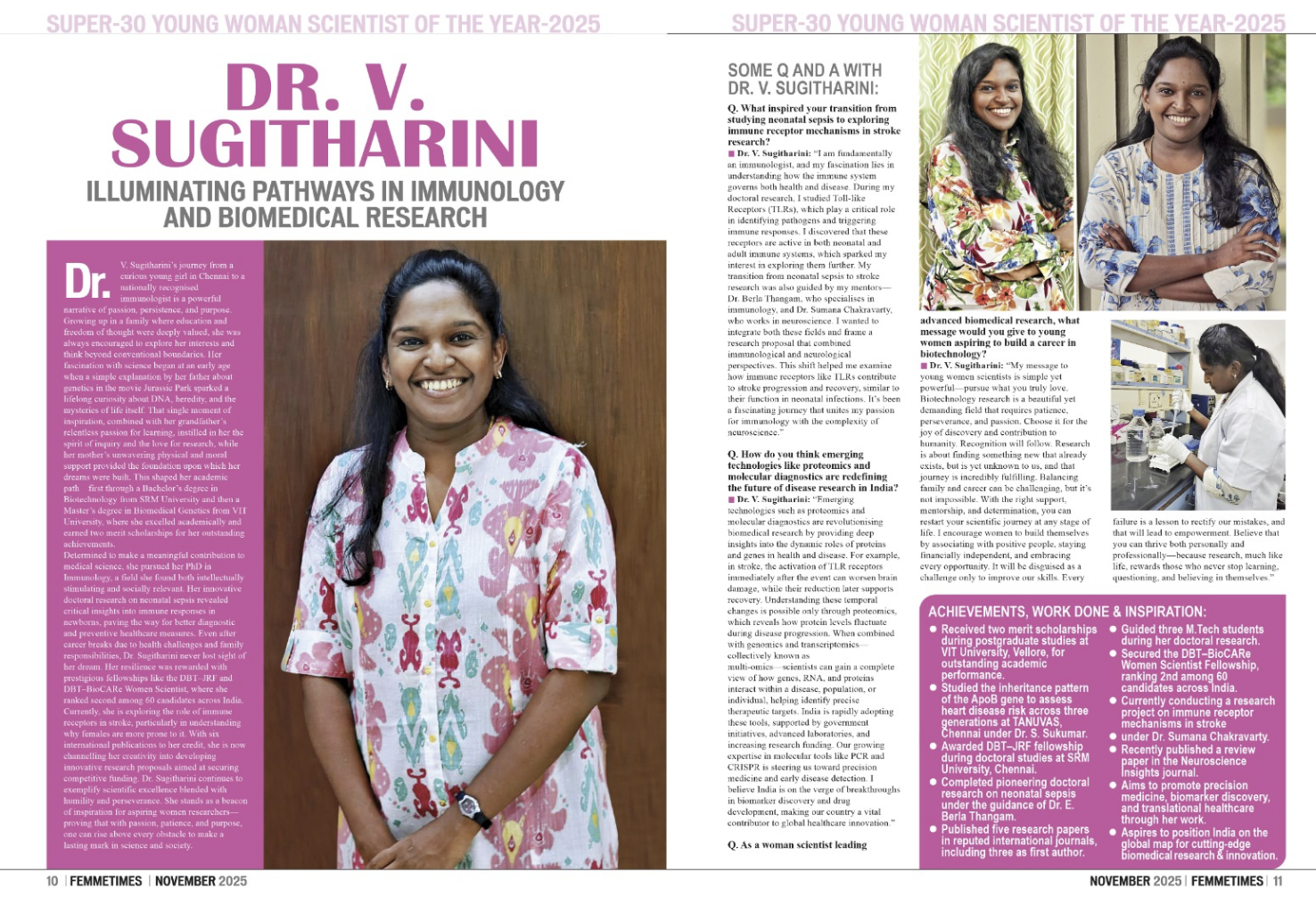
In this Journey of a Young Investigator 2026 article, Sugitharini V reflects on her journey from an early fascination with genetics to building a research career in immunology after multiple career breaks. Through mentorship and continuous learning, she navigates motherhood and science, highlighting the realities and possibilities of rebuilding a research career in India.
Early life and inspiration
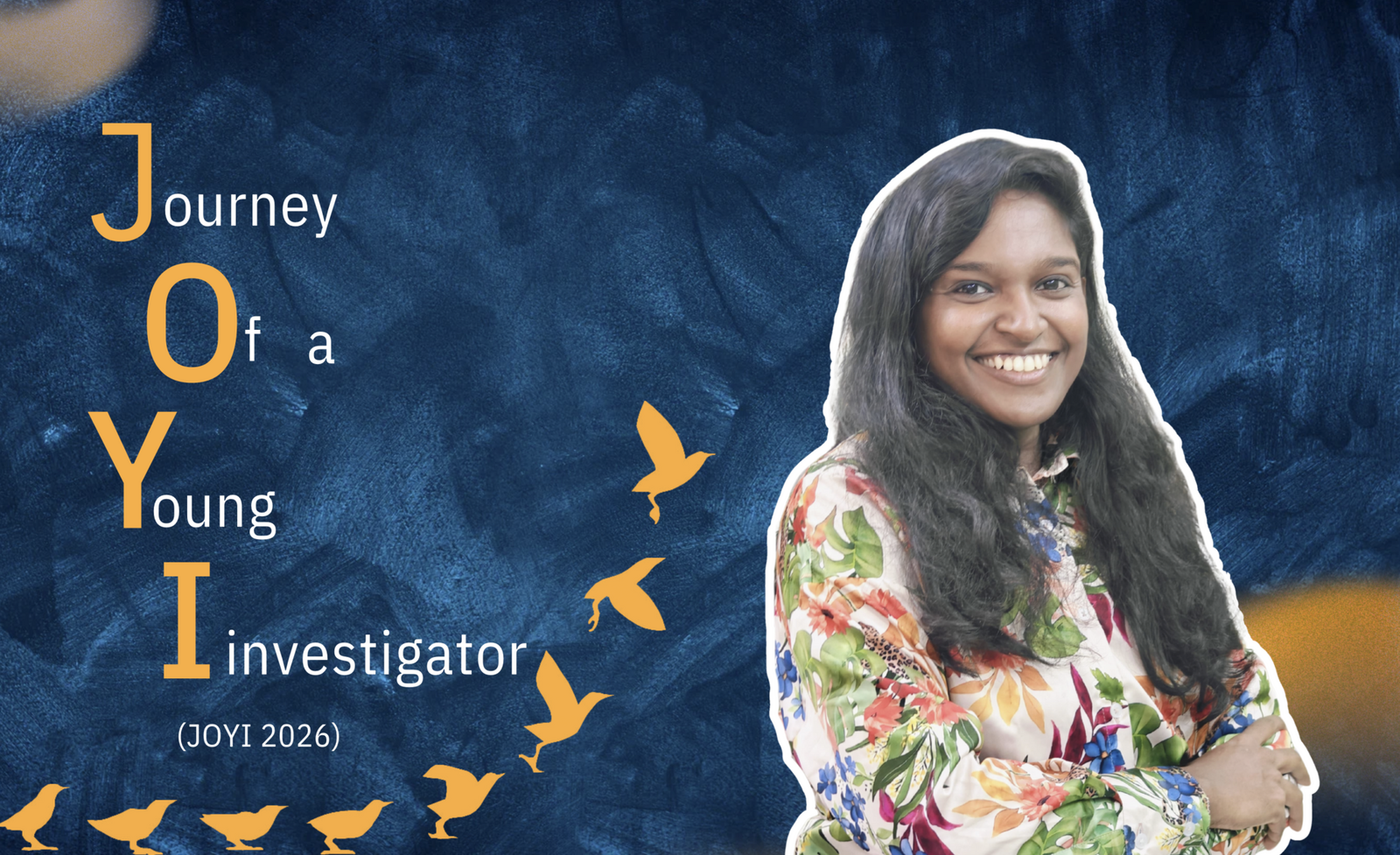
I was born and raised in Chennai. My parents gave us the freedom to follow our dreams and never compelled us to choose careers that merely satisfied societal expectations. They consistently supported our aspirations. My grandfather, a veterinary scientist, has been my role model and early inspiration.
My fascination with science began in Grade 8, around the time Jurassic Park was released. When my father explained the principles behind the genetic modifications depicted in the movie, I was captivated. I became curious about how such a small molecule — DNA — could control every aspect of human life. This curiosity motivated me to pursue research, particularly DNA-based studies, and ultimately a doctoral degree. I genuinely enjoy studying and learning new things.
Academic foundation: Discovering genetics
This passion led me to pursue my undergraduate degree in Biotechnology at SRM Institute of Science and Technology, Chennai. Biotechnology is a vast and multidisciplinary field, and during my studies I gained exposure to its many branches. Among them, genetics intrigued me the most, as it allows us to understand how traits are inherited across generations — something I was deeply curious about.
This interest prompted me to pursue my postgraduate studies in Biomedical Genetics at Vellore Institute of Technology (VIT), Vellore. I was awarded two merit scholarships for my academic performance. For my dissertation which I did at Tamil Nadu Veterinary and Animal Sciences University (TANUVAS), Chennai, under S Sukumar, I studied Variable Number Tandem Repeats (VNTRs), repetitive DNA sequences present throughout the genome. Specifically, I worked on a VNTR within the ApoB gene, where the number of repeats varies among individuals and correlates with lipid and cholesterol levels. I analysed the inheritance pattern of this VNTR across three generations to understand the genetic risk of heart disease in younger individuals. This study may contribute to assessing individual susceptibility to cardiovascular disease.
Overcoming setbacks and transition to immunology
Due to ill health, I experienced a two-year career gap. However, I reignited my dream of earning a doctoral degree and attended interviews across Tamil Nadu. I was selected by both SRM Institute of Science and Technology and SASTRA Deemed University, Thanjavur, ranking first among 45 candidates at SRM. I chose SRM because the project focused on neonatal infections, with potential implications for reducing newborn mortality and improving early diagnosis.
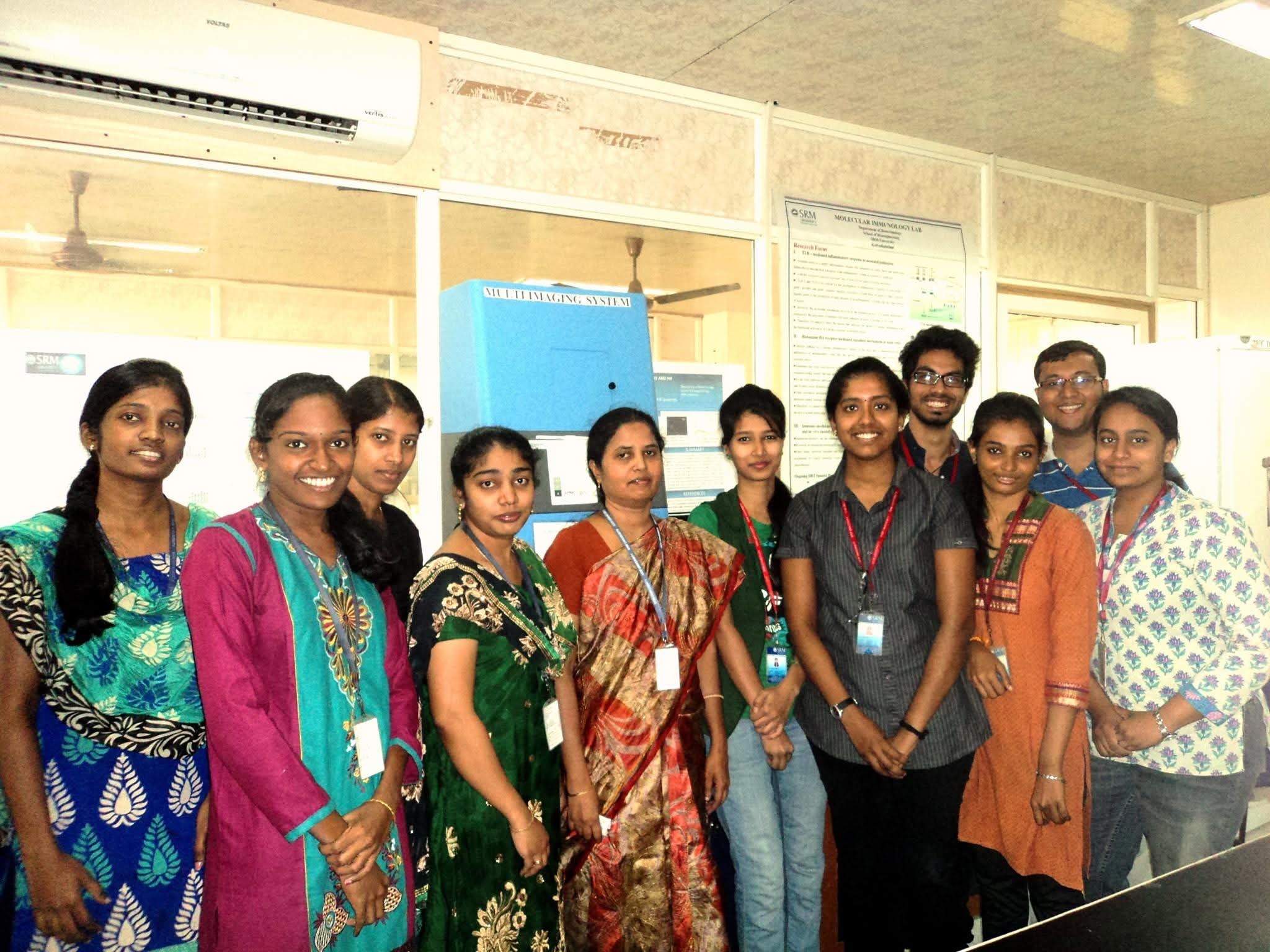
This transition marked my shift from genetics to immunology — my second favorite subject. Under the guidance of Berla Thangam, I was awarded the Department of Biotechnology (DBT) Junior Research Fellowship. During my PhD, I published five research papers, three as first author, and mentored three M Tech and several B Tech students.
Doctoral research: Understanding neonatal sepsis
When the body encounters an infectious agent, it initiates an innate immune response involving immune cells, receptors, and inflammatory mediators that work together to eliminate the pathogen. Neonatal sepsis is a life-threatening infection that affects newborns within 72 hours of birth, often leading to multi-organ failure and death.
My research focused on understanding the immune mechanisms underlying the severity of neonatal sepsis. The findings may help validate differentially expressed inflammatory mediators — individually or in combination — for early diagnosis, thereby reducing unnecessary antibiotic use and clinical burden.
While writing my thesis, I worked as an Assistant Professor at Sri Sankara Arts and Science College, Tamil Nadu, gaining valuable teaching experience. I also received an offer for a postdoctoral position under Daniel Premkumar at the University of Pittsburgh, USA, focussing on glioma research, but was unable to accept it due to marriage commitments.
Career break and return to research
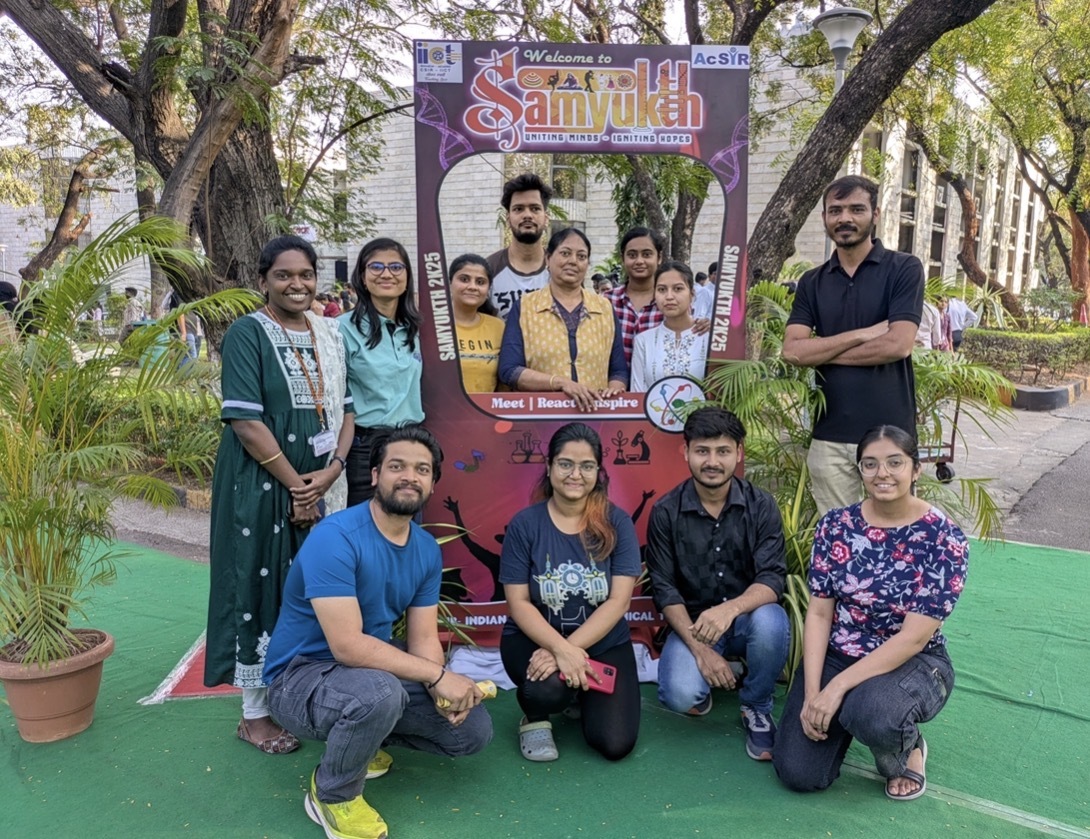
After a six-year career gap due to marriage and childbirth, I once again decided to return to research. I met Sumana Chakravarty, Senior Principal Scientist at CSIR – Indian Institute of Chemical Technology (IICT), Hyderabad, to discuss potential projects and began applying for central government funding. Although I was not selected initially, I learned from my mistakes and focused on improving my skills. I practiced presentations, studied consistently, and eventually secured the DBT BioCARe (Biotechnology Career Re-orientation Programme) Women Scientist Fellowship under her mentorship, ranking second among 60 candidates nationwide.
Currently, I am working on understanding the role of immunity-related receptors in stroke in a sex-specific manner, as females are more prone to stroke than males during old age. I recently published a review article in Neuroscience Insights, and two original research papers based on my ongoing work are expected to be published by the end of next year.
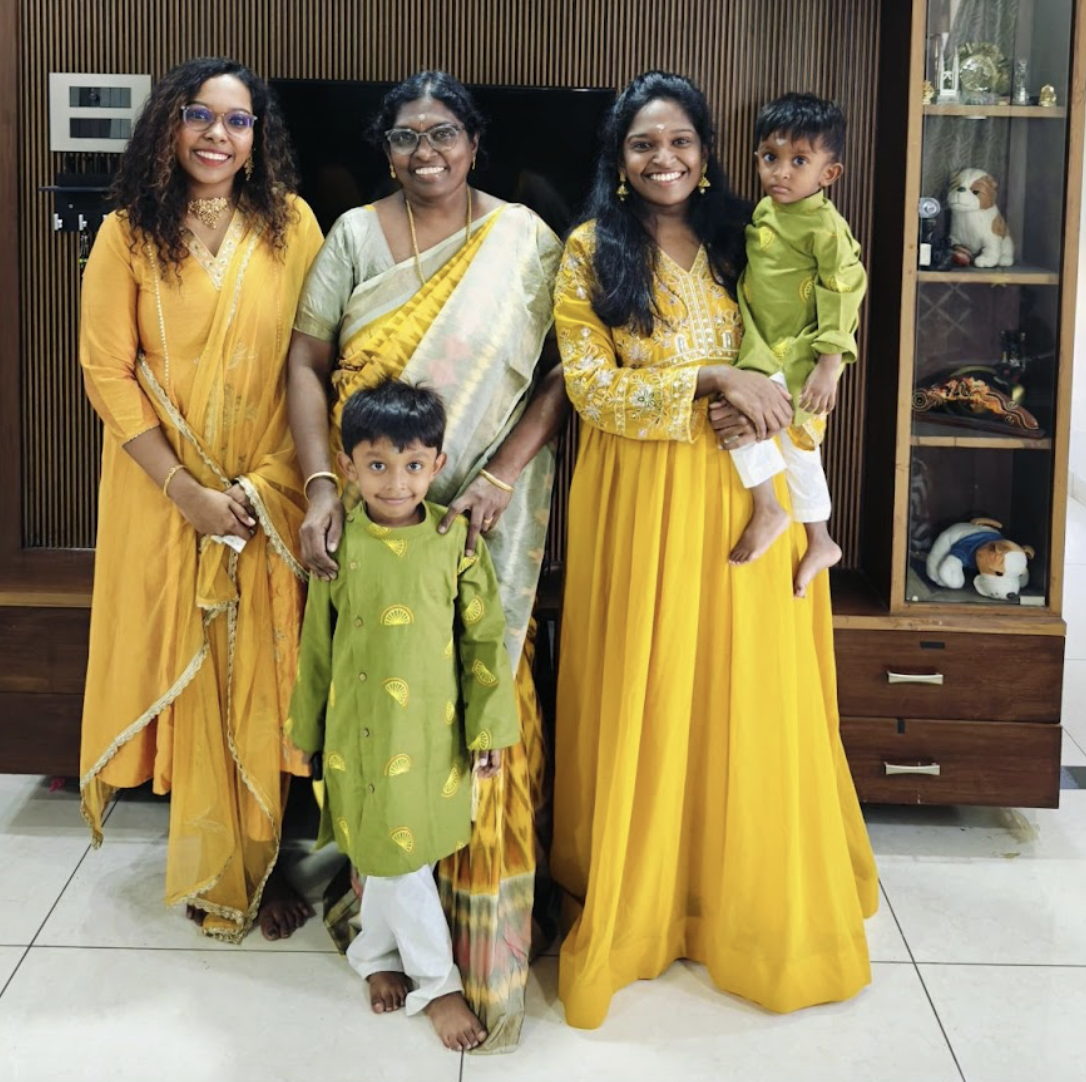
Due to unexpected circumstances in my personal life, I transferred my project from IICT to the University of Madras, Chennai, my native place, where my parents and extended family reside. Leaving IICT was the most painful and emotional farewell of my life, but had to do for the welfare of my children. Today, along with the support of my family and friends, I am a full-time working mom and a supportive mother to young kids aged 6 years and 2 years old, raising them with empathy, responsibility and dignity all while balancing the dedication and demands of research with the happiness and joy of motherhood.
As an immunologist, my long-term goal is to contribute meaningful breakthroughs in healthcare and medical research that improve quality of life and help cure human diseases. I aspire to establish India on a global scientific platform through international collaborations and impactful research.
Navigating Challenges, Mentorship, and Growth
Like many research journeys, mine was not linear. Returning to research after career breaks was one of the most difficult phases of my life. The opportunities available to me during that period were often low-paying, shift-based, unrelated to research, or lacked work-from-home flexibility. These limited options slowly eroded my self-belief. After such a long gap, I had even forgotten basic laboratory techniques, including operating an autoclave. Rebuilding my confidence required months of self-study, conversations with colleagues, and patient guidance from my mentor. Slowly, I began to trust my abilities again.
The period during my DBT BioCARe fellowship interview was particularly intense. I was two months pregnant with my second child, while my elder son was in lower kindergarten. Even during maternity leave, when my younger child was only a month old, I began visiting the laboratory for an hour each day. During this time, I also worked on writing my review article and got it published in Neuroscience Insights. When I joined IICT, my second child was six months old and still breastfeeding. The institute had an on-campus daycare facility, which was immensely helpful, but emotionally, leaving such a young child there was extremely difficult. I would feed him, put him to sleep, rush to the lab, and often be called back within thirty minutes because he had woken up crying. For nearly a month, I walked almost eight kilometres daily between the lab and daycare. Watching him struggle during that transition was emotionally painful, and that remains one of the hardest challenges I have faced. Over time, as routines stabilised, I resumed wet-lab work, carefully planning experiments around feeding schedules and ensuring I completed work by early evening. Managing school schedules, daycare, laboratory work, activities, meetings, tuition, and family responsibilities became a carefully coordinated routine — one made possible only because of the unwavering support of my family.
Throughout my journey, mentorship played a transformative role. Early in my training, I learnt laboratory discipline, sterile techniques, and research ethics from my mentors. During my doctoral training, I was guided in interpreting results critically, developing independent thinking, and mentoring students. As an early career researcher, I learnt the importance of patience, empathy, forgiveness, resilience, and quality-driven research. Good mentorship, I realised, does not just shape scientific skills; it shapes character, confidence, and leadership. During motherhood, the emotional and professional support from my mentor and colleagues helped me sustain balance between family and research. Their positivity and encouragement made the laboratory a space I wanted to return to every day, even during difficult phases.
Over time, I learnt that research is sustained by continuous learning. I strongly believe that studying is fundamental to scientific growth. Reading regularly helps us interpret results accurately, refine our ideas, and explain science to broader audiences. I make it a point to read at least one research paper every day. I often explain research funding to non-academic audiences using a simple analogy: I see myself as a film director with a script. Funding agencies are like producers. If they believe in the story — the research proposal — they invest in it. Once the project is completed, the findings are shared with the world, much like a film reaching its audience. Understanding this ecosystem helped me gain clarity and confidence in navigating research systems.
Hard work is equally indispensable. Research is rarely a straightforward process. Even when timelines are defined, generating reproducible and reliable data takes time. From procuring reagents and standardising protocols to managing administrative processes and reporting requirements, research demands persistence. Earlier, failed experiments would discourage me. Over time, I realised that each failure reveals what needs to be improved. Today, I see failed experiments as hidden opportunities to refine methods and strengthen results.
Patience is another quality that research constantly tests. Delays in funding, approvals, or experimental outcomes can be frustrating. Interestingly, motherhood taught me patience in ways research never could. After picking my children up from daycare, they would cling to me, seeking reassurance after a long day apart. Even when exhausted, I learnt to listen to their stories, understanding that these moments helped them feel secure. That patience gradually extended into my scientific life — helping me stay calm through uncertainty and delays.
At the core of everything is passion. My love for biology began early and has remained constant through every challenge. As a child, reading about scientific discoveries fascinated me. I always dreamed of experiencing that moment of discovery myself. That passion continues to drive me forward and helps me navigate difficult phases.
I also believe strongly in the importance of aptitude, attitude, and support systems. Research should be pursued only if one genuinely enjoys it, because it demands intellectual curiosity, patience, and emotional resilience. There are increasing opportunities for women scientists to return to research after career breaks, and I hope more women take advantage of these. With the right mentorship, supportive networks, and determination, it is possible to rebuild and grow stronger professionally.
Looking back, I am deeply grateful to my family, mentors, colleagues, friends, and daycare teachers and staffs, who supported me during my most challenging phases. Their belief in me helped me believe in myself again. My children remind me every day why perseverance matters, and their pride motivates me to keep moving forward.
If there is one lesson my journey has taught me, it is this: building self-belief is the foundation of growth. Positivity attracts opportunities. Financial independence provides security. And every opportunity — whether success or failure — builds experience. My journey is still evolving, but I hope it reminds others that progress is always possible, even after setbacks.