From biochemistry to shaping innovation ecosystems, this Resilience and Representation in Research article traces Shreya Malik’s journey across industry, research, and policy spaces. Now Program Head – Life Sciences at Wadhwani Innovation Network, Wadhwani Foundation, she reflects on mentorship, allyship, and alternative careers in building more inclusive scientific ecosystems.
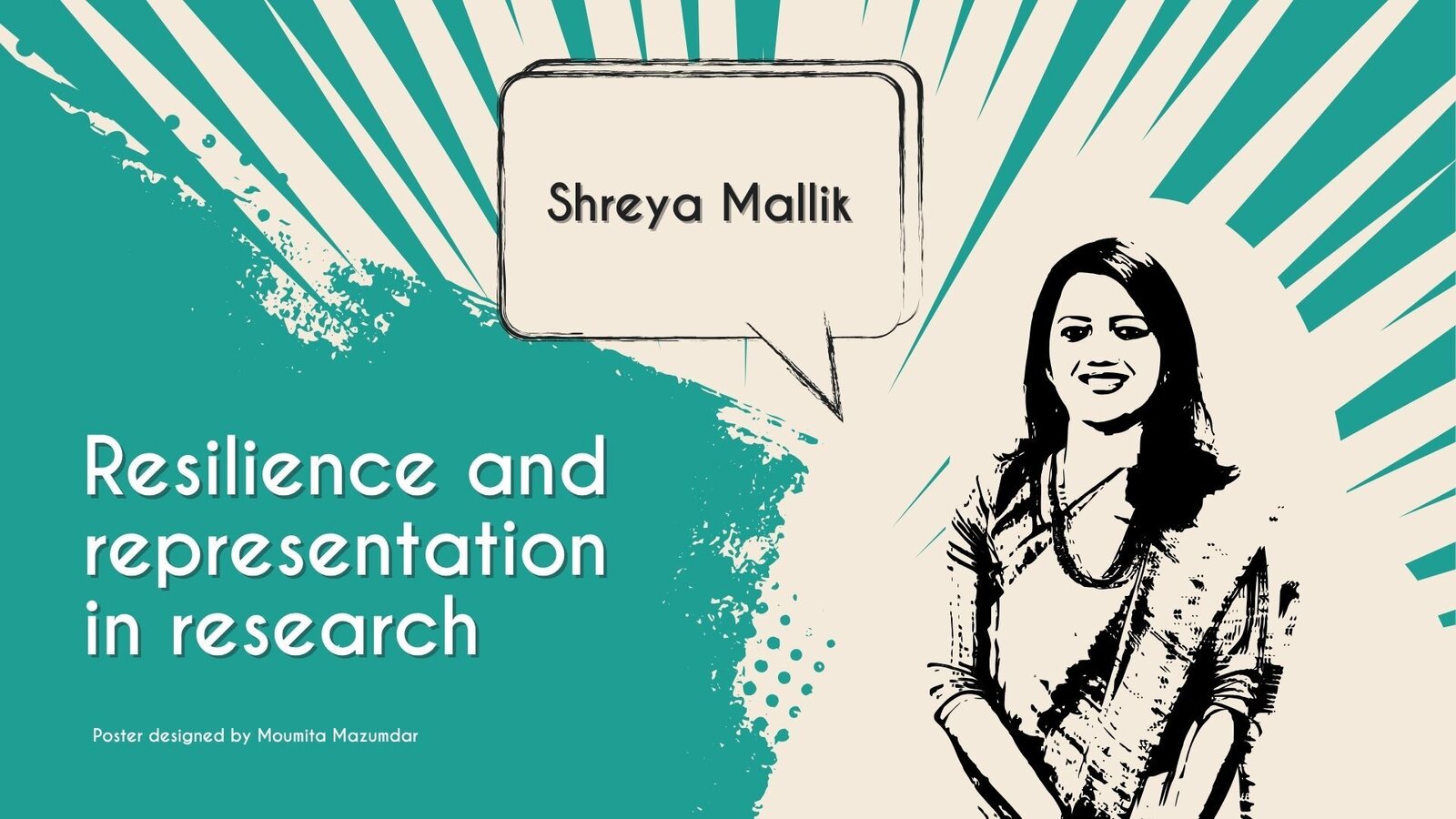
Shreya’s journey began in Ahmedabad, where she completed her bachelor’s degree in Biochemistry from St. Xavier’s College, Gujarat, in 2002. Soon after, she made a decision that was relatively uncommon for many students at the time — she left India to pursue a master’s degree in Biotechnology at the University of Queensland, Australia. Convincing her parents, she recalls, was not as difficult as one might assume. “I was very determined to explore new experiences, and my parents trusted my commitment. That’s how I convinced them.”
For Shreya, moving to Australia meant seeking a different ecosystem, one where scientific training extended beyond textbooks and laboratory work. She wanted exposure to systems where subjects like intellectual property rights (IPR), commercialisation and entrepreneurship were part of the curriculum, something still not widely integrated into Indian education back then. She describes those two years abroad as formative — learning new technologies, adapting to a new culture, and observing a well-developed startup ecosystem.
But soon after completing her master’s, she returned to India, largely because her parents wanted her closer to home. By then, her career direction was already taking shape.
Choosing the business side of science
While many of her peers gravitated towards traditional research pathways, Shreya found herself drawn to a different question: what happens after a scientific discovery?
She knew early on that she wanted to work at the intersection of biotechnology and commercialisation. “I was always interested in the business aspects of science,” she says. That curiosity led her to pursue a postgraduate diploma in Patent Law from NALSAR University, Hyderabad. Patent law, she notes, opens multiple professional routes. One could become a patent analyst — working on patent applications, prior art searches, or freedom-to-operate studies. Another path could be patent prosecution, supporting law firms with filing and managing patents.
Shreya chose patent analysis and joined a biopharmaceutical company. It was a large organisation with a broad portfolio including biosimilars, generics, and innovative molecules. Working in the IP team gave her a front-row view of how scientific knowledge becomes an asset. She was involved in building IP portfolios, analysing future products, and learning about patent strategies such as evergreening, concepts that were not widely discussed in India at the time.
Looking back, she sees this phase as a foundation. It gave her the much needed technical exposure along with a sharper understanding of how scientific progress is shaped by regulation, markets, and long-term strategy.
From academia to industry — and across the ecosystem
Shreya’s career journey spans about 17 years, moving steadily across different parts of India’s growing innovation landscape. After her early professional experience at Intas Biopharmaceuticals, she moved to Delhi and worked at the Biotech Consortium India Limited for about a decade. Then came roles at the Regional Centre for Biotechnology for a couple of years, followed by the Startup Centre at IIT Kanpur. Today, she works at Wadhwani Foundation. What stands out in her career trajectory is the diversity of systems she has worked within.
It’s interesting that I’ve been part of different components of the innovation ecosystem — industry, research institutions, incubators, and now a funding agency,”
she says.
This cross-sector movement has shaped her ability to see the same problem from multiple angles. “I understand the mind-set of a funding agency, the outlook of a startup, how an incubator works, and the challenges scientists face in translation,” she explains. “I bring that experience to my current workplace — knowing the perspectives of the stakeholders we are actually funding.”
The visible and invisible gender gaps across systems
Over the years, Shreya has witnessed a shift in the gender composition of the workforce. When asked whether she has seen more women entering the systems she has worked in, she responds thoughtfully: “Over the years, I’ve definitely seen more women in the workforce — colleagues, juniors, and early-career professionals.” She adds that she hasn’t seen a very strong or obvious gender bias in the institutions she has worked in. At the same time, she is careful not to oversimplify the issue.
Bias, she notes, does not always show up in blatant ways. It can be subtle, systemic, or even rooted in assumptions about competence. For her, navigating workplace dynamics requires more than talent alone. “You have to inculcate leadership, team bonding, and resilience so you don’t let office politics or biases bog you down. As family responsibilities increase, women tend to take up less work responsibilities or stop aspiring for the top jobs. There is a need to provide women the much-needed support system so that they have the confidence to break the glass ceiling” she says.
Leadership skills, resilience, trust-building, and relationship-building abilities are what help professionals — especially women — move through organisational structures with confidence.
Mentorship and ‘allyship’
If there is one factor Shreya returns to repeatedly, it is mentorship. But she prefers a different word. “I like to use the term ‘allies’,” she says.
It’s important to have people you can depend on — and who can depend on you.”
She considers herself fortunate to have strong support from her family, including her husband and in-laws, which she believes helped her navigate her career with greater stability. Professionally too, she has worked with mentors, colleagues, and seniors who supported her growth. But she also emphasises that mentorship is not a one-way arrangement.
If you expect guidance, you should also give back — through respect, support, or collaboration. It’s like any relationship — it thrives on mutual effort.”
She also brings up another aspect that is often left out: relationships should not be transactional. “You shouldn’t view people in terms of ‘what can I gain from them.’Build genuine connections. The benefits follow naturally.”
She shares a moment from an earlier leadership role, where her definition of allyship translated into action. “In a previous role, even though we had a biometric system, I would tell women with young babies, ‘It’s okay, go home and work from there.’ I would take their side to the organisation because it was essential.” For Shreya, that is what allyship looks like: practical support, offered without hesitation.
Research management and technology transfer: A growing community
Shreya has watched the broader ecosystem of research management and technology transfer evolve in India. She describes it as a relatively small community, but one that is gaining recognition. Earlier, she says, these roles were not fully understood or valued. Today, the situation has shifted. “Researchers and faculty increasingly seek support for commercialisation — whether it’s IP, regulatory pathways, or licensing,” she notes.
Yet she believes growth requires individuals to remain adaptable. Even within a niche field, professionals cannot afford to stay confined to what they already know. She recalls a personal realisation around 2023, when she deliberately stepped out of her comfort zone. She began exploring areas like artificial intelligence, quantum technologies, and mining ecosystems — fields that were not directly part of her earlier work but increasingly relevant to innovation. “Professionals need to continuously upskill and expand their horizons,” she says. “That’s how both individual careers and the community grow.”
The WomenLift Health programme and what it changed
One of the most significant experiences in her professional life was her participation in the WomenLift Health cohort, which she describes as a blessing.
For Shreya, the programme was as much about structured learning as it was about the relationships it created. “A one-year programme with residencies in three cities. We interacted with highly accomplished women professionals and learned from expert trainers,” she says. But what stayed with her the most was how her understanding of leadership evolved during this period.
The most important takeaway was that leadership is not about breaking glass ceilings — it’s about personal growth, mind-set, and supporting others.”
The cohort worked on communication, conflict management, and ecosystem thinking. Over time, the experience reinforced a lesson she believes many women need to hear: leadership is not only about individual progress, but also about lifting others along the way. “We’ve built strong peer networks, and we continue to support each other,” she says.“We built great friendships and now we motivate each other.” She explains how this support looks in real life: “If a friend has a problem with a boss, I can say, ‘I dealt with this years ago, try this.’ It’s a great peer group.”
On resilience and representation
When asked how she might have handled a challenge differently as an early-career professional compared to now, Shreya answers with honesty. She believes she could have benefited from more patience and stronger listening skills. With time, she says, self-awareness increases, and that changes how one responds to conflict or uncertainty.
“Resilience is about recalibrating your mind to new environments,” she reflects. Every new role, she believes, comes with a learning curve — in terms of tasks, people, organisational culture, and expectations. Looking back, she feels she would have done better in some situations if she had slowed down, listened more carefully, and responded with greater calm.
On whether challenges for women have improved across different systems, Shreya answers in the affirmative. She sees a gradual shift in organisational attitudes, especially towards working mothers. Flexible work options have increased, she notes, particularly after COVID. But she is clear that policies alone are not enough. Supportive leadership plays a major role in whether women feel empowered to continue and grow.
To early-career women professionals, Shreya’s advice is straightforward: don’t give up.
“Speak up when you face challenges. Communication is key,” she says. She also encourages women to take ownership of their careers. If an environment does not support them, they should not hesitate to explore other opportunities. “Your destiny is in your hands,” she adds.
Shreya also points out that research careers can be challenging, especially because of limited permanent positions and slower growth. “That’s why I strongly advocate alternative careers in STEM — like research management, startups, and innovation,” she says. For PhD graduates, she believes the landscape has expanded significantly compared to 15 years ago. Today, there are more than a thousand incubators and an emerging deep-tech ecosystem, creating opportunities in grant management, startups, and innovation-driven roles. These career paths, she notes, may not follow the conventional academic ladder, but they can offer meaningful impact and long-term growth.
As she reflects on what defines leadership today, Shreya describes it as multidimensional. But certain qualities, she believes, matter across roles and sectors: confidence, courage, resilience, agility, and strong interpersonal skills.
For Shreya, leadership is not a title. It is the ability to navigate complexity, adapt across systems, and bring people together while continuing to grow, learn, and support others along the way.