How does perseverance in research and passion for teaching come together? Keithellakpam Sanatombi, Professor at Manipur University, answers this with her journey. Read on to know more about diversity in leadership, focusing on teaching through MOOCs at an important phase of life, discovering one’s own leadership voice, and the power of community and support systems.
The seeds of teaching nurtured with grit from childhood
Sanatombi’s passion for teaching started early in school, despite her family, particularly her parents’ wishes to follow the same profession of medicine as her sisters. The decision-making process after finishing 12th grade was lengthy, taking months.
“I was very interested in learning and sharing knowledge, and fascinated by how a teacher could inspire students and how sharing knowledge could lead to empowerment or inspire the younger generation”.
Proving to her parents that teaching was indeed her true calling was an uphill task. Sanatombi began her academic journey with a BSc from MCM DAV College in Chandigarh, followed by an MSc from Punjab University. After securing a CSIR-JRF fellowship, she returned to Manipur to pursue her PhD, aiming to understand the education system in her home state. The PhD years saw her travel across various institutions in Jorhat and Kolkata to learn new techniques and technology as the research evolved.
Perseverance pays off
After completing her PhD, she qualified for the prelims and mains of the state civil services examinations. Yet her steadfast resolve to become a teacher did not waver, and she decided to withdraw her name from the interview stage, making the hard choice to be jobless for a while.
Next year, she applied and got the CSIR Research Associateship. At the same time, her applications to a government college in Manipur and Manipur University for Assistant Professor positions also came through. She joined Manipur University as a teacher and researcher, but it came with its own set of challenges, as the department was also being established at the University. In 2021, she was appointed as an Associate Professor, and in 2023, as a Professor, through direct recruitment.
Silver lining to the challenges of starting from scratch
Starting the new department was a challenge from the ground up, literally, as the Department lacked a proper building. Another challenge, which Sanatombi sometimes views as a regret, was the lack of postdoctoral experience abroad, as she secured a faculty job right after her PhD. She laments missing out on the confidence-building benefits of active networking, which are generally gained during postdoctoral research years.
One of the major tasks of starting out was securing lab funding first. At that time, they were also focused on the demanding work of establishing the department, which included setting the syllabus and running the 5‑Year Integrated MSc Biotechnology programme with limited infrastructure and a small workforce. Despite this, starting her research was essential, hence from 2009 – 2011, Sanatombi concentrated on writing and submitting numerous proposals and, fortunately, secured two grants at the same time- the SERB Fast Track Young Scientist grant and the DBT BioCARE-Women Scientist grant. These two grants from different agencies helped her establish her lab. In 2013, she received a DBT agricultural biotechnology project, which has supported her research on plant cell cultures to date.
Temporary pivot meets lifelong passion
When both her kids were little, being in a nuclear family meant Sanatombi could not actively network by attending conferences or commit more time to research in her role. She remembers the difficulties of managing two kids without any daycare facilities at the university. For someone who derived great satisfaction from teaching and research, particularly guiding and mentoring students, making the profession intellectually and personally rewarding, this phase was not easy.
Teaching is a deeply fulfilling experience for me. Even when faced with personal difficulties, such as a sleepless night tending to a sick child, I feel rejuvenated the moment I enter the classroom”.
Considering that she would not be able to conduct research as actively as before, but that APIs needed to be accumulated for professional growth, Sanatombi began taking on assignments to develop online modules for the university in collaboration with the Electronics and Multimedia Research Centre (EMRC) at the university. By 2019, she floated two Massive Open Online Courses (MOOCs) on the SWAYAM platform — one on Plant Biochemistry and Biotechnology and the other on Cell Biology. Every alternate semester, these courses are run and see 2000 – 3000 students enroll across India. Working on educational content was very helpful to her at that time, helping her balance her work and look after the kids in their early years
The various shades of leadership
Being in the inaugural cohort of the 2024 Women Leadership in STEM programme conducted by BIRAC, Grand Challenges India, and WomenliftHealth, helped Sanatombi immensely and made her confident to share her journey and experiences with other women. She shares that communities like these foster a sense of belonging, assuring individuals that they are not isolated by creating avenues for shared learning, interaction, and the exchange of experiences.
We never had formal training like this for leadership. After attending the leadership sessions, it made me realise that science and leadership go together”.
A key takeaway from the programme was realising this diversity in leadership among all participants. The training highlighted the different approaches to leadership, and reflecting on it afterward, she says it now makes her more conscious of the various tools available and, specifically, how to cultivate resilience in leadership.
“We can choose different leadership styles depending upon the different situations”.
The most valuable gain from the programme was self-awareness. In her words, “Whenever we face any conflict or any challenge, it becomes very challenging with no one to reach out to, which makes us very reactive. But now I have become more aware and intentional- I just ask myself if I want to be affected by this”. Sanatombi says she feels much more confident than her earlier self and believes she will be able to take on leadership assignments more assuredly in the future.
Pushing out of the comfort zone
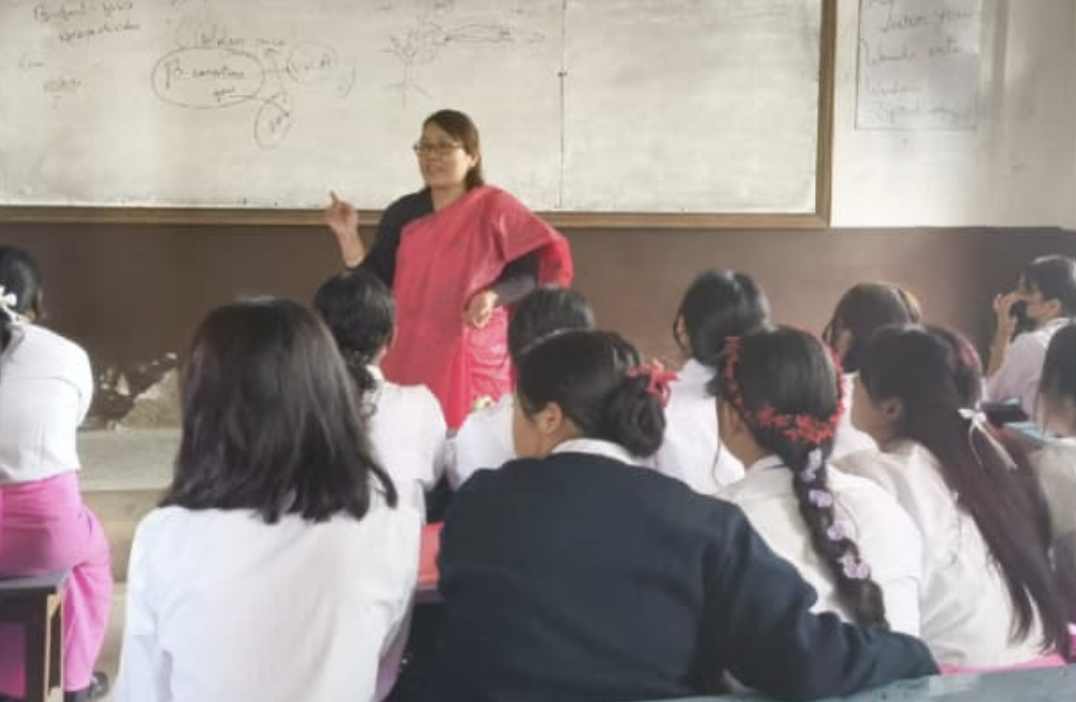
The mandatory leadership project, as part of the leadership programme, saw Sanatombi popularising the role of biotechnology for sustainable development in Manipur, specifically targeting girl students in schools and colleges. While some schools and colleges were receptive, she also had to face the institutions that were challenging, too. “I had to visit the schools and colleges, then arrange and deliver the talks. This gave me a chance to network actively and made me work on how to make such talks interactive and inspirational”.
On inspiration, mentorship and support systems
Sanatombi has drawn inspiration from numerous individuals throughout her career.
“My teachers, in particular, made a lasting impression with their highly effective classroom instruction. This inspired me to follow their example, constantly seeking innovative ways to convey knowledge effectively and to make my own teaching both inspirational and beneficial to my students; this remains a key focus for me”.
Throughout her research career, despite facing her own set of challenges, Sanatombi acknowledges receiving significant support and valuable guidance from her PhD supervisor and, later, from other seniors at Manipur University. Further, meeting collaborators and other professionals was greatly helpful; some helped her refine her technical skills or experimental ideas, and others offered timely encouragement. Her journey, therefore, has been one of continuous learning from a wide network of supportive people, including seniors, peers, and collaborators.
The PhD Scholars in her lab are mostly girls, where five have already graduated from their PhD programmes. Sanatombi says she still sees them grappling with similar work-life balance issues as she faced in her days. She tries to offer support, advice, or connection as needed by them.
I also encourage my junior students and doctoral scholars to be aware of their choices, avoid undue pressure or guilt, and reach out for help”.
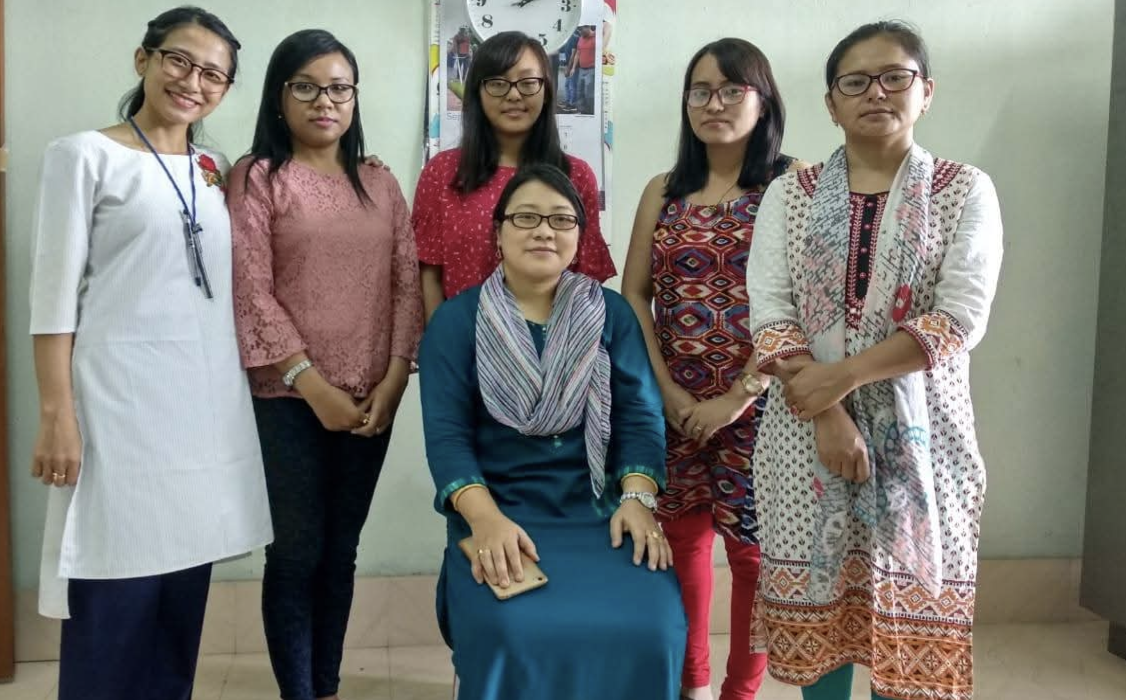
On support systems, Sanatombi says with gratitude reflecting in her smile, “I have been very fortunate to have a supportive private life, particularly my husband and parents”. She describes teaching as both deeply fulfilling and intellectually enriching, a pursuit inseparable from her research. In the classroom and laboratory alike, it becomes a space for nurturing curiosity, sharpening critical thinking, and generating new knowledge through dialogue and inquiry.
Combined with rigorous training and opportunities that have expanded her leadership capacity and strengthened her scientific voice, the interconnected systems of support have enabled her to navigate challenges with resilience. Sanatombi underscores the significance of initiatives such as WomenLift Health, which do more than create opportunities. They actively confront the structural gender inequities that continue to shape STEM fields. Through such collectives, she notes, individual potential is translated into lasting impact, ensuring that women scientists are not only included but empowered to lead and thrive.