From preparing culture media as an undergraduate to leading research on antimicrobial resistance, in this Journey of a Young Investigator (JOYI) 2026 article, Nidhi Gupta reflects on a scientific journey shaped by curiosity, resilience, mentorship, and personal loss. Now a Scientist at TERI School of Advanced Studies, New Delhi, she explores how persistence, in both microbes and people, can drive discovery, growth, and purpose.
Beginnings: When opportunity meets belief
I still remember preparing potato dextrose agar using fresh potatoes during my first year of BSc Microbiology. I was strangely excited by the thought that we were actually preparing food for microorganisms. A few days later, a raised, rough, white surface with a green centre revealing fungal growth appeared on the Petri plates, and soon after, I also observed bacteria under the microscope after Gram staining. Microbes, which had only existed in textbooks, were suddenly alive. I found myself wondering how these tiny organisms lived, adapted, and survived. I did not know it then, but those practical classes had quietly planted a question that would stay with me for years.
I grew up in a small town where girls were often encouraged to pursue only the education available locally. Moving away for higher studies was uncommon. Around that time, a BSc Microbiology programme was introduced at the only degree college in my hometown. My grandfather, my biggest cheerleader, would affectionately say, “Shayad ye Nidhi ke liye hi shuru hua hai” (Perhaps they only started this course for Nidhi). In a family rooted in business traditions, where academic careers were uncommon, his faith quietly nurtured my curiosity.
Early lessons: Strength beyond circumstances
My undergraduate years, however, were marked by profound personal losses. On the day of my first practical examination, I lost my only sibling, my brother. A year later, my grandfather passed away. Looking back, I realise that those experiences taught me something early: circumstances are not always in our hands, but sincerity of effort is.
My mother, despite being left with her only child, encouraged me to move away for higher studies. I joined the MSc Applied Microbiology course, and my fascination with microbes slowly moved from observing them to understanding what happens inside them.
Choosing science, with clarity
I still remember isolating plasmid DNA from E. coli cultures and waiting near the UV transilluminator, thinking, “Today, I will actually see DNA”. Watching those glowing bands felt magical. Microbes were no longer merely a subject; they had become a way of asking questions.
Following my master’s, I qualified for CSIR-JRF and UGC-NET and had the opportunity to work in the laboratory of Suman Kumar Dhar at JNU’s Special Centre for Molecular Medicine (SCMM). I worked on replication proteins of Plasmodium falciparum, the parasite responsible for malaria.
What I remember most from my time at SCMM were the discussions. Every week, Suman would ask about our work. Why did an experiment work? Why did it fail? Was there another explanation? Saturday lab meetings had their own atmosphere. Presenting papers and data before the entire group meant reading extensively and thinking deeply. There was always a realisation that we didn’t know enough, which pushed us to understand concepts rather than memorise facts. Looking back, I realise that those discussions were teaching us not what to think, but how to think.
Doctoral training: Building a scientific foundation
I pursued my PhD in the Department of Biochemistry at the University of Delhi South Campus, supervised by Amita Gupta and Vijay Kumar Chaudhary. My doctoral work focused on understanding how toxin-antitoxin systems are regulated at transcriptional level in Mycobacterium tuberculosis. While the research itself was exciting, what truly shaped me was the way science was practised in the lab: rigorous, detail-oriented, and deeply driven by curiosity. I still remember how much emphasis was placed on asking the right questions before even beginning an experiment. That mindset stayed with me. Over time, I learned to think more critically, design experiments more carefully, and be patient with the process when things did not work.
The laboratory itself shaped me deeply. Watching Amita Gupta work alongside her students taught me lessons that never appear in publications, how careful labelling, meticulous inventories, and organised records form the foundation of rigorous and reproducible science. During a particularly difficult phase, when repeated failures to amplify an M. tuberculosis promoter library made me doubt myself, she reminded me to keep believing in my abilities. More than protocols, she gave me confidence and taught me that while experiments may fail, scientists learn and grow through those failures.
Vijay Chaudhary’s mentorship extended far beyond innovative cloning strategies. His habit of carefully sketching experimental plans on paper grids and his methodical approach to solving complex cloning problems taught me to break challenging experiments into manageable steps. Together, these mentors instilled in me the values of precision, resilience, and thoughtful scientific problem-solving that continue to guide my research today.
This phase of my journey built not just my technical skills but also my confidence. It taught me to trust my ideas, work independently, and hold myself to high standards.
Transitions: Balancing roles and redefining paths
I have come to realise that good science doesn’t always happen in ideal conditions. Sometimes, it simply comes from choosing to keep going.
During the later phase of my PhD, I got married, and a few years later, we were blessed with a child. Around the same time, my spouse secured a position in academia at the Central University of Rajasthan (CURAJ), a newly established central university located in Bandarsindari, a relatively remote region of Rajasthan.
While many of our peers were considering moving abroad, I chose differently given our circumstances. I moved with my family to a newly established institution where research infrastructure was still developing. There were limited facilities, no ongoing projects to join, and almost no research opportunities nearby. The nearest cities were far, and continuing in science felt uncertain. But, instead of waiting for ideal conditions, I chose to build.
I began applying for independent fellowships while managing the responsibilities of caring for my child. Around this time, I joined Vijay Kumar Prajapati’s Lab at CURAJ. His support allowed me to continue my research during a period of transition. I was introduced to bioinformatics, which gradually became an important extension of my experimental background.
I was fortunate to secure two independent grants consecutively. The COVID-19 pandemic delayed their implementation, sanctions, etc., but my progress never took a backseat.
Setback, strength and continuity
Around the same time, life tested me in ways I had never imagined as I lost my three-year-old child. I decided to get back to work, and staying connected with science and research became part of healing itself. I also began meditating regularly. I believe that changed how I responded to uncertainty over time. Experiments fail. Grants get delayed. Timelines rarely unfold as planned. Meditation taught me to focus on the sincerity of effort rather than becoming overly attached to outcomes. I feel, in many ways, it made me a calmer scientist.
During this period, I worked as a Principal Investigator in a Young Scientist Scheme at CURAJ, Rajasthan. Life brought hope again, and we were blessed with our son. Around the same time, my spouse moved to Delhi after securing a faculty position at the University of Delhi. I continued my research in Rajasthan while caring for our little one. It was a phase that taught me to balance motherhood and science in ways I had never imagined. A year later, my son and I also moved to Delhi, bringing us together again as a family. I was fortunate to continue my Young Scientist project at the University of Delhi South Campus, New Delhi, with Rajeev Kaul, whose belief in me ensured that this transition did not interrupt my research. Looking back, I realise that scientific careers are rarely linear and grow alongside families, responsibilities, and unexpected turns.
Rediscovering direction
At one point, I explored a role outside academia as a content strategist at a medical publishing company. It offered stability, comfort, and a supportive work environment. Yet I realised that what I missed most was asking my own questions. I missed discussing hypotheses, troubleshooting experiments, mentoring students, and the excitement of discovering something unknown. Reading science was fulfilling, but I missed doing science.
Around this time, I came across the HRD-Women Scientist Scheme of the Department of Health Research (DHR). I applied, and with the support of TERI School of Advanced Studies, New Delhi, as the host institution, I was awarded the project as a Principal Investigator. This was not just a return to research from a desk job, it felt like returning to myself.
Current work: Science with purpose
Today, I work on Helicobacter pylori, a WHO-designated Group I carcinogen and one of the very few bacteria directly linked to cancer. I realise that I am still asking the same question that first fascinated me years ago: how do pathogens survive hostile conditions and persist? Interestingly, I continue to explore toxin-antitoxin systems, hoping to understand whether disrupting these interactions could provide unconventional approaches to tackle persistent infections. My organism of interest changed from M. tuberculosis, but the question remained the same.
I have also been fortunate to work with Chaitanya Madhurantakam, whose trust and encouragement have allowed me to grow with confidence and independence.
Joining TERI marked another important phase in my journey. Along with research, I rediscovered the joy of teaching. I enjoy teaching molecular biochemistry and microbial physiology in a dialogue rather than a monologue. I no longer see myself as someone who stands in front of a classroom simply to dispense knowledge. Each student teaches me something new. Their questions challenge assumptions, open new perspectives, and remind me that science requires endless learning. In many ways, I have come to see myself as a fellow learner, fortunate to keep discovering alongside my students.
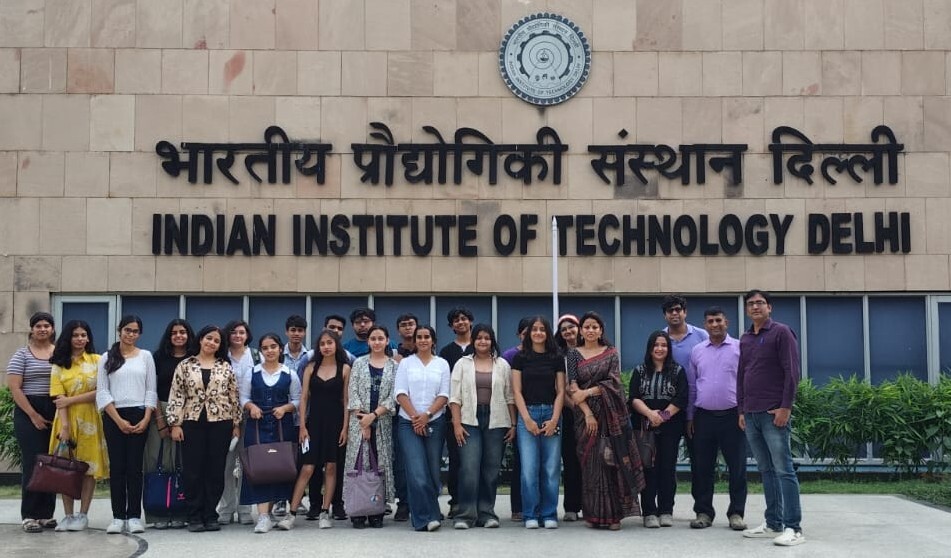
Mentorship, I realise, is one of the most beautiful aspects of science. I still remember my first intern, Afeefa, who worked on antimicrobial peptides. Once we discussed the plan, she would quietly work and return, smiling and saying, “Ma’am, I have done this.” Watching her confidence grow brought me immense joy because I saw reflections of my younger self in her.
Reflections
Looking back, I realise that the question that first fascinated me as an undergraduate, how microorganisms survive and adapt, has stayed with me throughout my journey. The study organisms changed. The tools changed, and life changed too. But the curiosity remained the same.
Somewhere between preparing potato dextrose agar as a first-year student and discussing persistence mechanisms with my students today, I realised that becoming a scientist is not a single moment. It happens slowly, through failed experiments, thoughtful mentors, supportive family, curious students, and the joy of continuing to ask why.