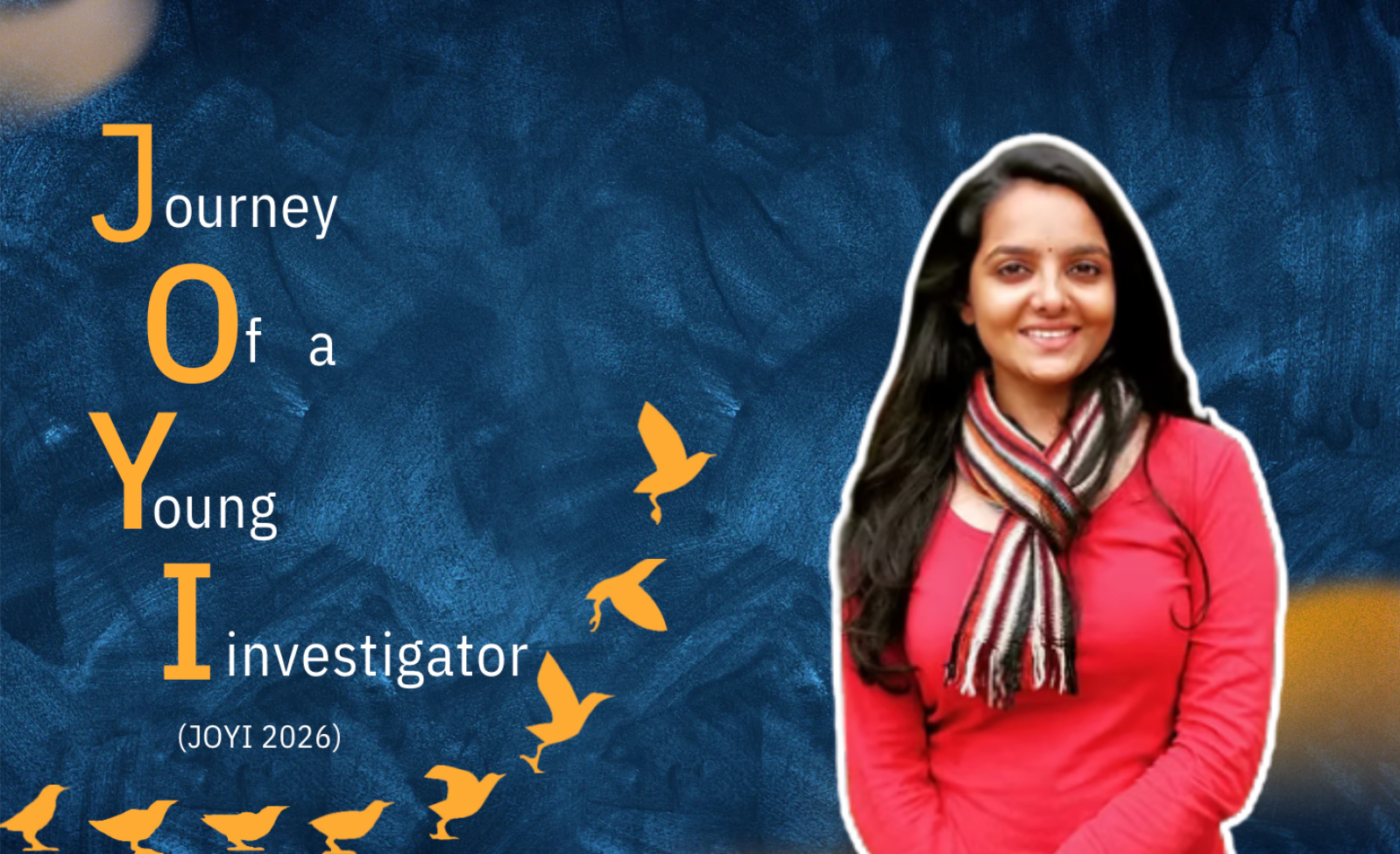
In this Journey of a Young Investigator (JOYI) 2026 article, Ashitha S N M, Assistant Professor, DST INSPIRE Faculty Fellow, Department of Psychiatry, NIMHANS, reflects on the uncertain decisions, quiet resilience, and unexpected mentorship that shaped her journey through academia. From navigating a lonely PhD and motherhood to building a research career, she shares honest lessons about persistence, imperfect choices, and finding strength in community while balancing personal life and scientific ambition.
Decisions
How can a twenty year old aspiring scientist be sure that ‘this’ is the right decision and that it will ensure future success? I was naïve too. My journey as a researcher has been shaped as much by uncertainty as by perseverance.
With limited academic mentorship, many of my early decisions were instinctive rather than strategic. I chose courses out of curiosity, and when the “PhD bug” bit me, I accepted the first offer that came my way, without fully understanding what a PhD entailed. Nearly a year later, the weight of that decision set in. At 24, I felt intellectually isolated, and unsure of an exit route, even though my guide was kind-hearted.
What followed became the most defining phase of my life. With minimal guidance, I learned to rely on myself. I immersed myself in my research topic, framed my own questions, designed experiments, and wrote manuscripts, all of which were accepted on first submission.
That period shaped me. The loneliness of my doctoral years instilled self-reliance, resilience, and a quiet belief in myself and my work. Retrospectively, I realise that it was this experience that enabled me to design and defend my DST-INSPIRE Faculty Fellowship proposal with conviction and confidence and within a year of completing my PhD, I was awarded this highly competitive grant.
Although my doctoral journey was lonely, it instilled a deep belief that ‘hard work pays’. Over time, one principal has stayed with me- take a decision and make it work. Those early lessons continue to anchor me.
Find your clan
A PhD is a hard-won battle, and no one can reach the top without support. I was fortunate. When I made choices that, in hindsight, were not ideal, mentorship arrived in unexpected ways. My senior, Raviraj VS, became the wind under my wings. Having faced similar challenges, he helped me navigate the difficult situation I found myself stuck in. It was all I needed to stay afloat, gather my strength and refocus on academic excellence.
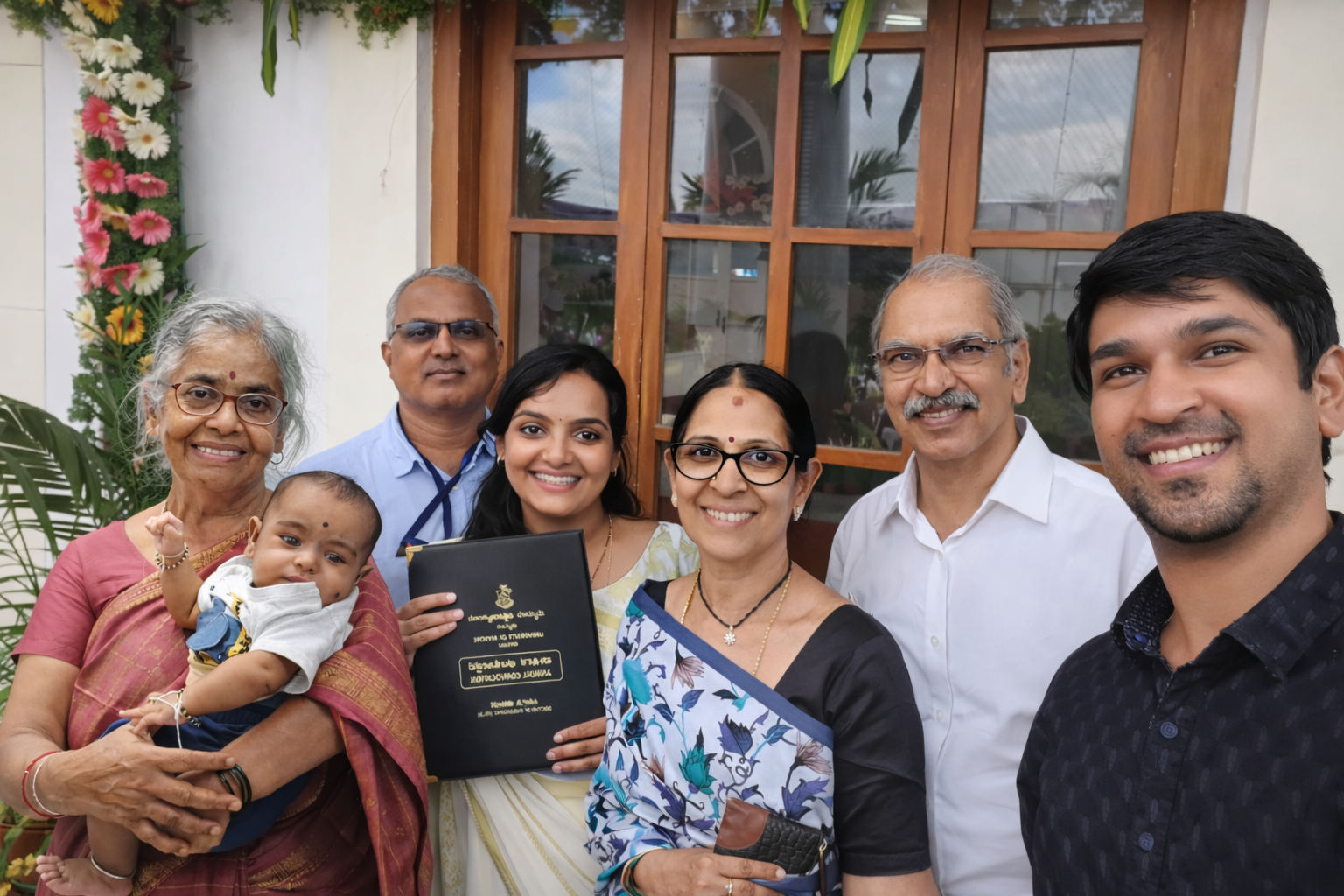
The second such instance was when I found my ‘girl gang’, not when younger, but in my thirties. These were women who consistently showed up for me, without agenda. Through them, I experienced the strength of sisterhood rooted in pure intentions, a genuine desire to support one another through thick and thin with mutual respect and genuine support.
The bane and boon of the thirties
The thirties can be a very demanding decade. It is when the safety-net of being ‘young’ begins to fade and responsibilities intensify. Irrespective of gender, this is often the stage when personal commitments pile up demanding attention just as professional expectations peak.
In Indian academia, this pressure is particularly acute. Age limits for fellowships, faculty positions, and travel grants begin to narrow options. The academic clock for finding a regular position ticks alongside personal milestones of finding a partner, getting married, followed by the responsibility of making the house a home. Uncertainty on both fronts takes away one’s focus and tests one’s composure.
Yet, I have to admit there is a certain charm in being in our thirties. Emotional maturity begins to ground ambition in realism.
This decade brings in the much needed clarity that helps us declutter thoughts, identify and filter-out distractions and judge better. The thirties becomes a period of introspection and re-assessment, one that equips us to navigate life’s curveballs with steadier resolve and prepares us for the tougher challenges of middle age.
Homegrown academic by circumstance
It was not only personal, but also professional realities that shaped my decision to forego a postdoctoral fellowship abroad. When one completes a PhD in one’s thirties and marries soon after, career decisions become collective rather than individual. Aging parents, the need for job stability for both partners, and questions about how, when and where to raise a child all enter the equation. No amount of conversations prior to marriage and future planning can resolve these uncertainties. For me, prioritising family stability became the guiding choice.
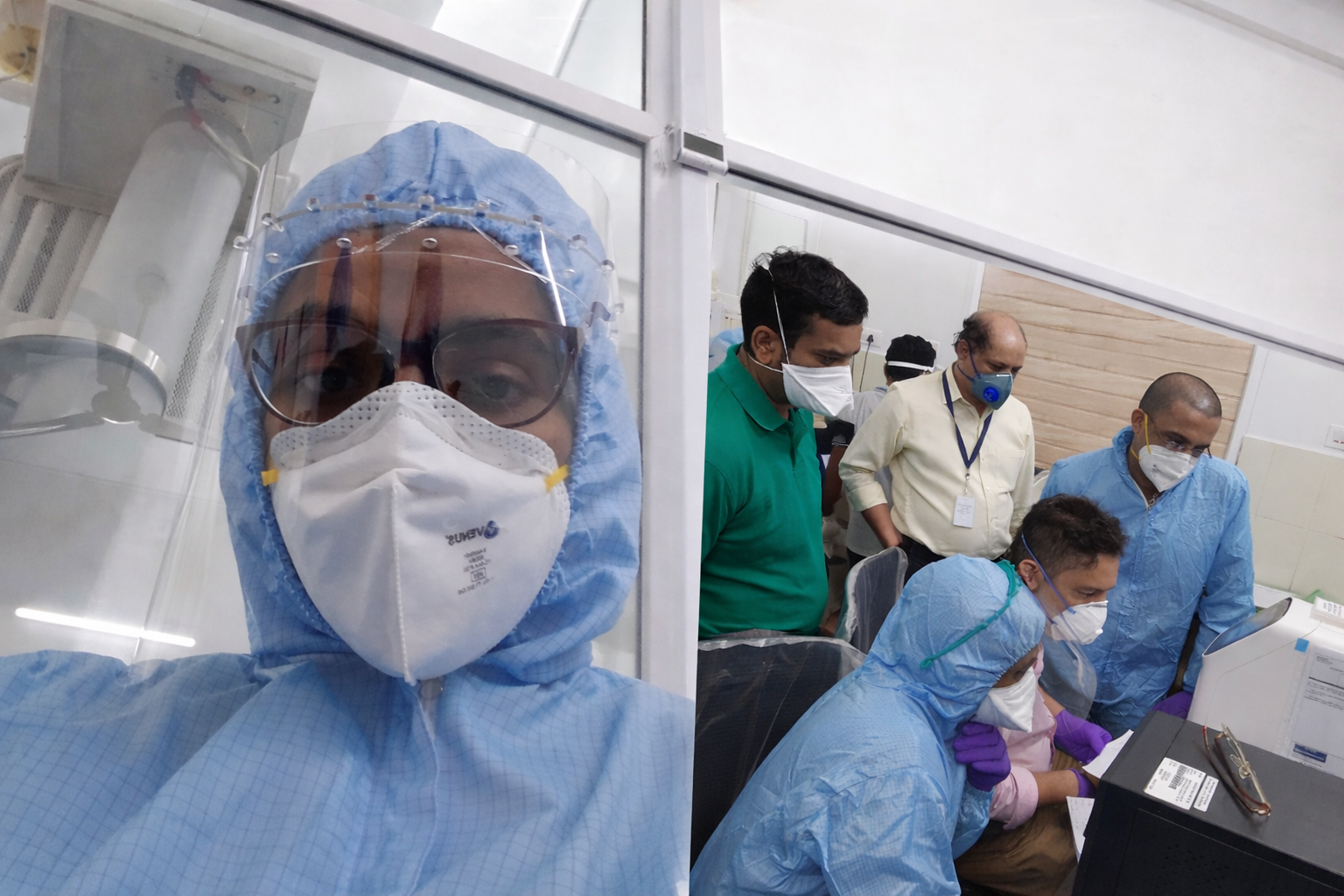
The timing of my PhD completion compounded this situation, as it coincided with the onset of the COVID-19 pandemic. For nearly two years, conferences were inaccessible, limiting opportunities to present my work, build networks, and engage with potential postdoctoral mentors. Cold emails became my primary mode of outreach, often with limited response. In retrospect, several factors were at play: the global crisis, laboratories focused on continuity, and my keen interest in transitioning from genetics to patient-derived stem-cell models of psychiatric disorders, an area in which I lacked hands-on experience. Now, as a principal investigator (PI) myself, I understand why such a major pivot may not always align with a hiring PI’s expectation from a postdoctoral candidate- who is required to be independent and take on mentorship responsibilities.
Do I regret staying back? Absolutely not. I learned a lot more that extends well beyond what a conventional postdoctoral trajectory might have offered. I learned adaptability, persistence, and perseverance. More importantly, I gained a better understanding of Indian academia. I remain intentional about staying current and competitive ‑presenting my work at conferences and building meaningful international collaborations.
The journey reassures me that there is no single path to scientific growth, only paths shaped by commitment, adaptability, and purpose.
Lessons from motherhood
My parents and extended family — my greatest cheerleaders — patiently supported my decision to complete my PhD before marriage. I was in my early thirties when my baby was born, and to say that life changed would be an understatement. My brain changed.
When I confidently told my very supportive mentor Meera Purushottam, that I would return from maternity leave and complete X, Y, and Z, she gently warned me, “your brain will split into two, and you will function at half capacity”. Only in hindsight do I understand the truth of that statement. It is as real as day and night. A large part of my mental space became devoted to my baby’s well-being, leaving limited room for sustained academic focus. Memory faltered, and conversations seemed like they never happened. It improved with time, but a part of me remains permanently attuned to my child and unavailable for academic pursuits.
The first year after returning to work was difficult. My body and mind did not support me as they once had. To my utter surprise, this time I questioned my professional ambitions and grappled with the guilt of leaving behind an infant at home. My mother stepped in with quiet resolve:, “I will take care of this child and you go take care of your lab babies”. Her support steadied me, but each day is a struggle to juggle two counterintuitive roles.
On days of self-doubt, I recall words from my mentor T Shivanandappa: “Anybody can be a mother, but not everybody can be a scientist mom. You have a once-in-a-lifetime opportunity; make the best use of it.”
My friend and colleague Bhagyalakshmi Shankarappa is a living example for me. Watching her navigate academic aspirations and family responsibilities with discipline and determination showed me the kind of balance I wanted to strive for.
Inspirations are all around us. It is important to speak to one another and share experiences. Random hall-way conversations with colleagues have helped me in unimaginable ways. It helps to learn about a tried and tested strategy. That is the power of ‘open’ conversations and sisterhood.
Many say motherhood taught them patience and kindness. For me, it taught urgency and clarity- to become more productive and efficient at work. Initially, I tried to balance motherhood and work, but like Indira Nooyi says, “Balance doesn’t exist for working moms.’ It’s all about juggling priorities and making it work. Embrace the chaos”. Ultimately, find the balance that works for you.
When is the right time?
So, when is the right time for PhD, marriage, and children? In my view, it is when you feel ready. Life will change, but no single moment guarantees perfect timing. Personal milestones need not be postponed for a PhD. In fact, when you find the ‘right’ partner don’t wait.
What matters is clarity and communication. Speak openly about your aspirations post-PhD and discuss what it might mean to him/her. A scientific career is long drawn, unpredictable and thankless, and taking one’s family along on that requires honesty about its challenges. Look for a partner who is your champion and takes great interest in your success. No two journeys are alike, but shared understanding helps stabilise the course.
In my experience, handling faculty responsibilities — far more demanding than a PhD — alongside a new marriage and motherhood in my early thirties was difficult. Each role carried equal significance, and balancing them required intentional prioritisation and not just perfection.
The power of mentorship
Merely surviving academia isn’t enough, one must thrive in its environment to be able to think freely and creatively. For this having a genuine and selfless mentor is crucial as they help shape our careers and perspectives. I found mentorship in more than one unexpected form.
Biju Viswanath, in particular, has been a steady presence — someone who does not say “never”, who steadies me before I falter and encourages me to rise when I do. I learn and draw inspiration from him each day as I watch him place kindness, humility, integrity, and mentorship above personal recognition has influenced how I think about leadership and responsibility.
The personal vs the professional conundrum
As an early-career woman scientist and a new mother in my thirties, I continue to navigate the tension between professional ambition and personal responsibility. The challenges evolve, but the tools remain constant: discipline, persistence, and trust in one’s own journey. These tensions are not limited to one gender; they are shared by many who attempt to build both a career and a family.
I hope that this story holds value because it normalises uncertainty, imperfect decisions, and non-linear growth. Scientific careers rarely begin with clarity. They endure through courage, consistency, and the willingness to keep moving forward, even when the path feels unclear.
My advices
To anybody thinking of a PhD: PhD is a sacrifice of the most youthful five years of our lives. It is a covenant written in one’s own sweat and blood that if one quits, the loss is our own.
To anybody with PhD ambiguity: Do an honest self-introspection: why this PhD? Can I persist and prevail? My future aspirations and financial situation? Even within PhD topics, try out as many alternatives to ensure you won’t lose interest!
To anybody choosing a PhD mentor: This is a ‘once in a life-time’ opportunity to choose your own academic father/mother. You will carry their name all along your academic journey. So, check if your ethos, personality and working styles match.
The most invaluable advice I once received from my senior Madhumala K S is that “It is ok if you don’t choose your PhD topic right, but it is crucial that you choose the right academic parent”.
Unfortunately, for me I made this mistake twice. I acknowledge that there is no way of knowing, but retrospectively, I think the best source of information would be from people before you. What they experienced is precisely what you will experience too.