In this Journey of a Young Investigator (JOYI) 2026 article, Harshiny Muthukumar reflects on building a research lab from scratch while navigating motherhood and early-career challenges. Her journey highlights how science grows through patience, mentorship, and resilience — reminding us that meaningful research is often built slowly, step by step, brick by brick.
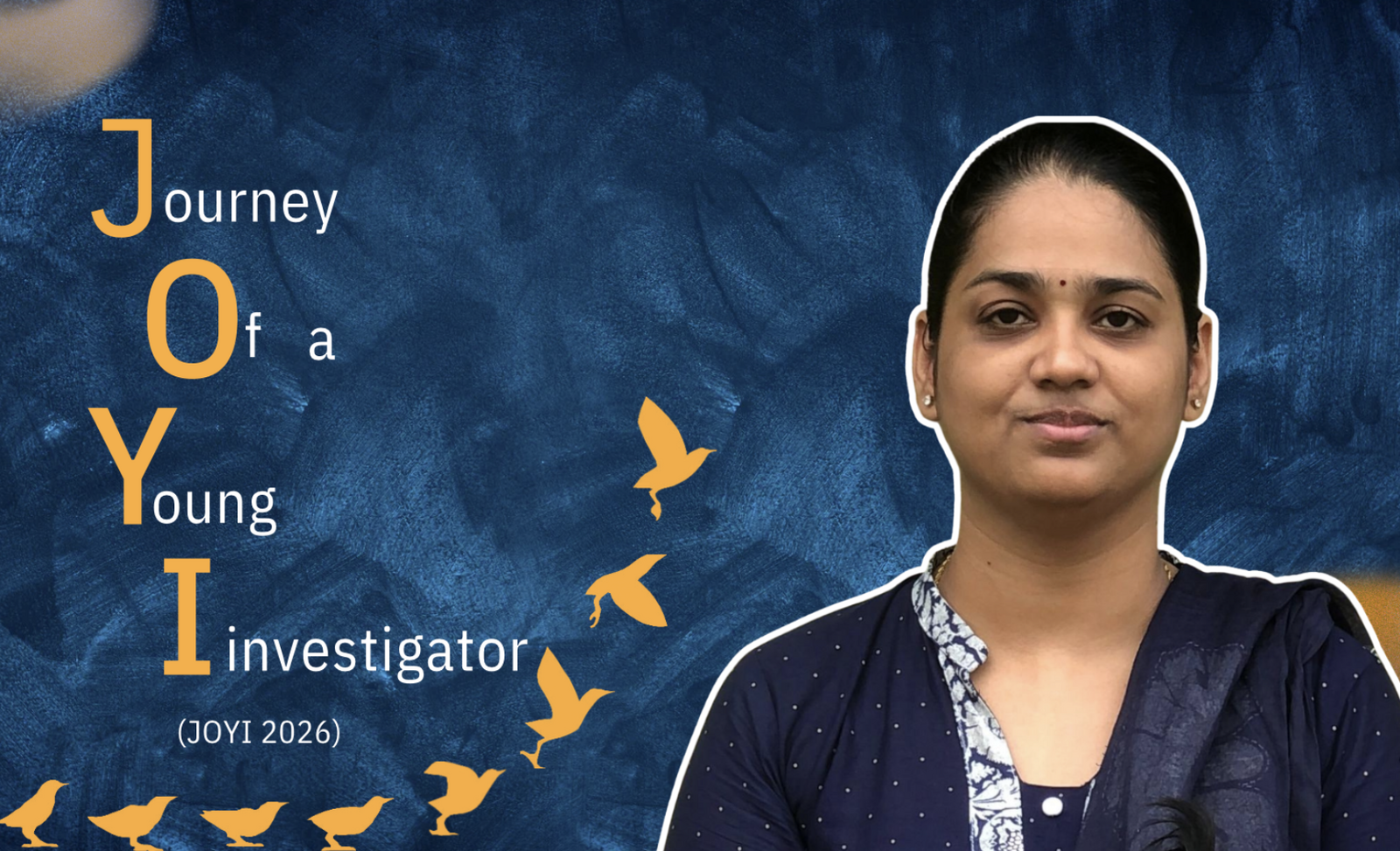
Not all scientific journeys begin in active laboratories; some begin in empty rooms.
I stepped into my new role as an assistant professor at SRM Easwari Engineering College with many hopes and plans after my maternity break. I was eager to visit the laboratory and think about how I would continue my research.
But when I first walked into the department, I found a space — bare benches, unopened areas, and silence where activity should have been. I realised I wasn’t entering an existing research environment; I was expected to build it from the start.
Standing there, it did not feel like I was about to continue research. It felt like I was about to create the space where research could begin. Progress, in that moment, was not about discovery — it was about planning, waiting, and slowly putting things together.
Looking back now, I understand that this is how my journey in science has unfolded — not through sudden breakthroughs, but through steady, incremental steps, building understanding and confidence, brick by brick.
My interest in biotechnology began long before I understood what research truly meant. As a school student, I was fascinated by how molecules such as DNA and proteins could orchestrate the complexity of life within a single cell. I did not always understand the answers, but those questions lingered and slowly shaped my academic path.
During my undergraduate years at Periyar Maniammai University, my curiosity began to find direction. Learning across diverse areas of biotechnology revealed the interconnectedness of the field, but more importantly, I began to feel that research could extend beyond academic learning and contribute to real-world solutions. One of my early projects explored plant-based approaches to prevent kidney stone formation. The work was modest, yet it introduced me to the realities of research — repeated attempts, unexpected outcomes, and the patience required to witness incremental progress. I realised that the fulfillment of research lies not only in results but in the quiet evolution of ideas.
My perspective widened when I worked as a junior research fellow on a nanobiotechnology project. This experience introduced me to interdisciplinary collaboration and helped me understand that uncertainty is not an obstacle in research but an essential part of discovery. It was during this period that research began to feel less like a requirement and more like a meaningful pursuit.
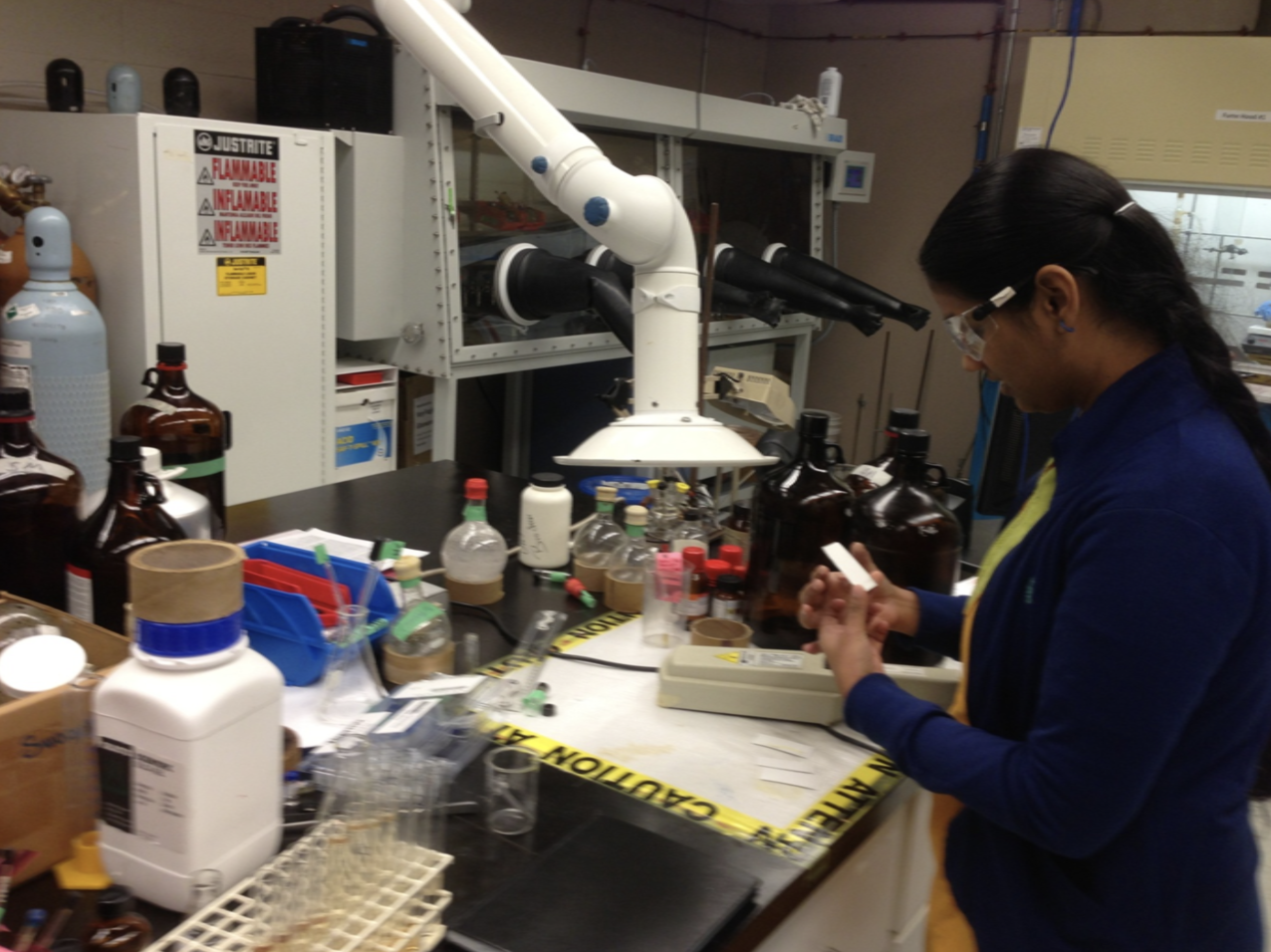
A defining turning point came during my Master’s studies, when I received a Canadian Commonwealth Scholarship to work at Cape Breton University. It was my first time travelling alone — not just outside my state, but outside the country.
In the beginning, everything was unfamiliar — the environment, the expectations, and even communicating in English in a research setting. I remember feeling unsure of myself, but the support and guidance from my mentors helped me gradually find my footing. They gave me both direction and freedom — encouraging me to explore, make mistakes, and learn through the process.
After a few weeks, something began to change. I started working more independently, designing experiments, and understanding my results with greater clarity. One of the projects I worked on led to promising antimicrobial activity, and eventually to my first patent (US), a milestone that made me realise that even with initial uncertainty, consistent effort and the right mentorship can lead to meaningful contributions. It was during this phase that I truly began to believe in myself as a researcher
Around this time, I was awarded an International Research Scholarship to pursue a PhD at the University of Technology Sydney. However, due to family circumstances, I was unable to take up the opportunity. While it was a difficult decision, it shaped my path in unexpected ways, leading me to pursue my doctoral research at the National Institute of Technology, Tiruchirappalli. My PhD years were demanding but transformative. They taught me to sit with unanswered questions, refine ideas repeatedly, and persist through failure without losing curiosity. Working within a structured environment where mentorship and infrastructure supported research helped me gradually recognise my identity as a researcher.
I continued my research journey at the Indian Institute of Technology Madras through two postdoctoral phases — first under an institute-supported women’s postdoctoral fellowship, and later as a National Postdoctoral Fellow. This period shaped both my scientific thinking and personal resilience, as I navigated research alongside pregnancy. I still remember being in the laboratory just days before my delivery, not out of obligation, but because it had become a space that gave me energy and purpose.
The support of mentors, colleagues, and a collaborative research environment helped me grow in confidence and independence. During this time, my work was recognised in a national poster competition, where it was shortlisted among the top 17% — a small but meaningful affirmation of my progress. At the time, I saw these as advantages of a well-established system — it was only later, when I began building a laboratory from scratch, that I truly understood their value. The structure, mentorship, and support I experienced during this phase became the very foundations I sought to recreate in my own research space.
Expecting research to continue within similarly structured environments, I transitioned into Indian academia and joined a young biotechnology department. This phase quietly reshaped my understanding of research. Instead of stepping into an established laboratory, I found myself helping create one. I still remember walking into an empty space and beginning with basic questions — where equipment would be placed, how workflows would function, and how safety practices would be implemented. Even simple steps, such as arranging essential instruments or waiting for approvals and resources, required time and patience. Research, in this context, began long before experiments.
There were moments when progress felt slow and difficult to measure. Ideas often had to wait for infrastructure, and the pace of development did not always match the urgency of curiosity. I occasionally wondered whether I was conducting research or building the space required for research to exist. Over time, I realised that both roles were equally meaningful.
Mentoring students encountering laboratory work for the first time gave this phase a deeper purpose. I remember guiding students through their first experiments — from hesitation in handling basic equipment to the excitement of seeing results for the first time. Watching their confidence grow reminded me of my own early journey. Building a research culture felt like nurturing curiosity — both require patience, encouragement, and acceptance of slow progress.
During a period when uncertainty felt particularly heavy, I was selected to participate in the Women in Space and Allied Science Leadership Programme supported by the Department of Science and Technology and the British Council. The experience became more than a leadership workshop.
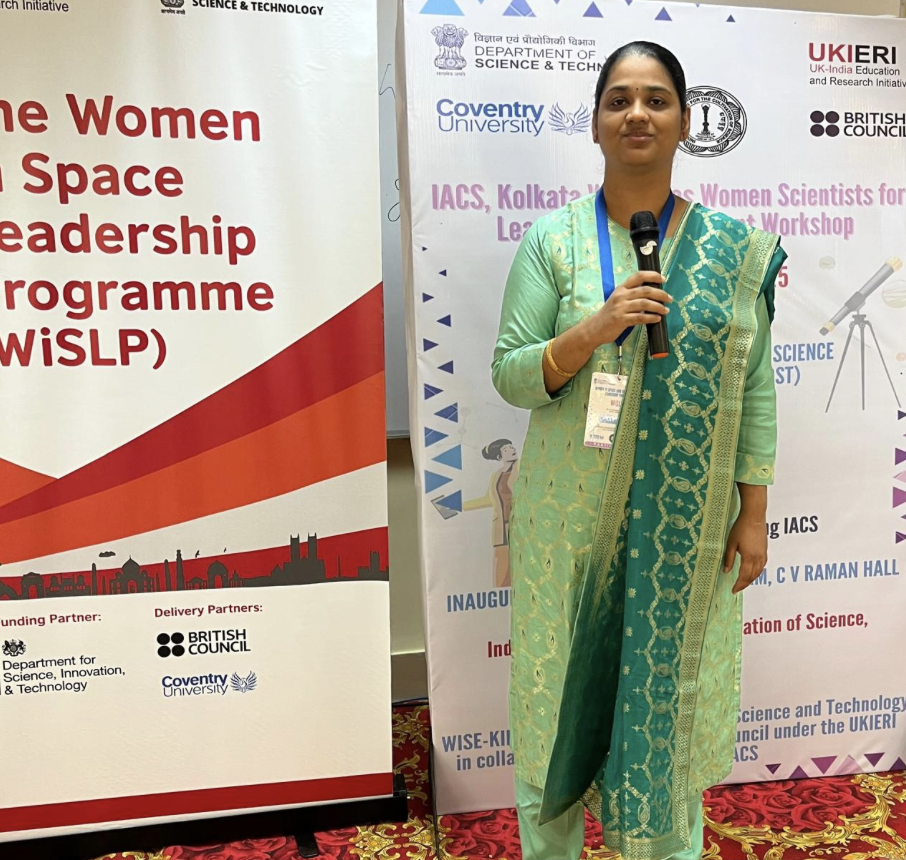
Over those days, I met women across different career stages — from students to senior leaders — each navigating their own challenges while continuing to move forward. Listening to their journeys made me realise that I was not alone in feeling uncertain or overwhelmed. Many of them were balancing research, leadership, and family responsibilities, yet they had found ways to persist and grow.
Their stories shifted my perspective. Instead of seeing my challenges as limitations, I began to see them as part of a shared journey. Their resilience and confidence made me question my own doubts — if they could move forward despite their struggles, why couldn’t I?
Meeting peers navigating similar struggles reminded me that feeling stuck is not a personal failure but a shared phase of growth. Their stories rekindled my confidence and reinforced the belief that I still had the ability and responsibility to contribute meaningfully to science.
Alongside these professional transitions, another deeply personal journey unfolded. As my research laboratory slowly began to take shape, my daughter was growing alongside it. I found myself nurturing both in parallel — one through experiments, planning, and persistence, and the other through care, attention, and presence.
There were days when progress in the lab felt slow, waiting for things to fall into place, and days when motherhood demanded more than I had anticipated. In both, I learned to accept that growth is not always immediate or visible. It unfolds quietly, through consistency and care.
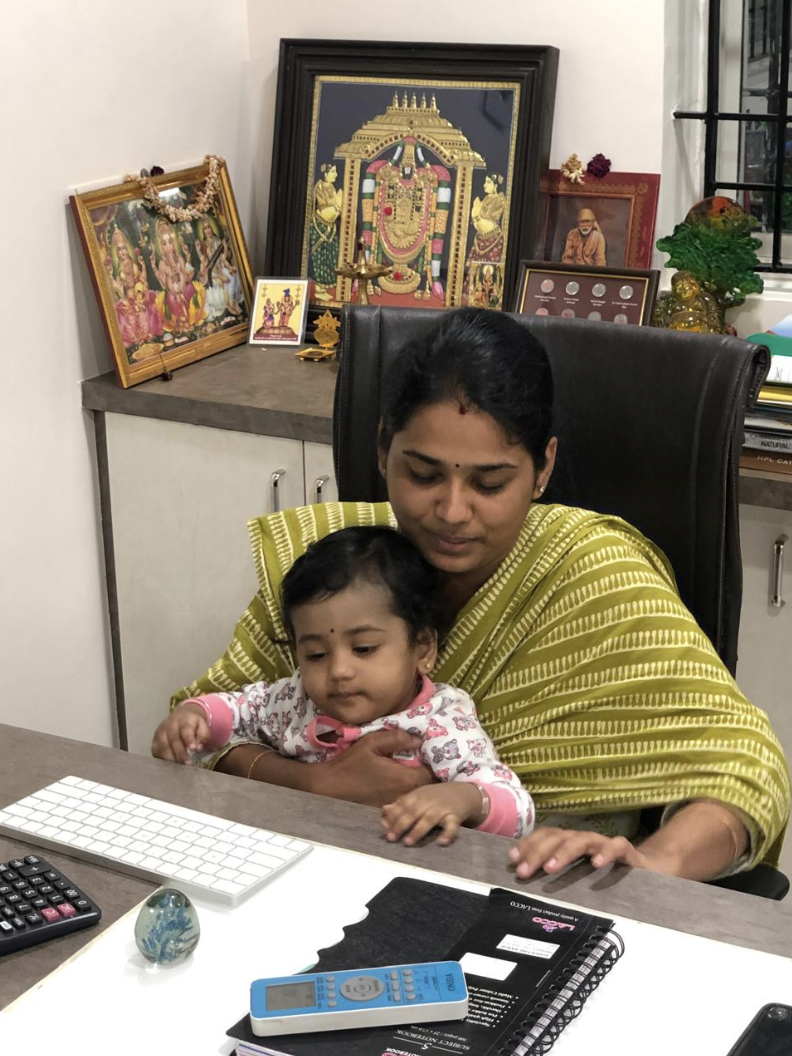
Experiencing these two forms of growth simultaneously reshaped my understanding of patience. It taught me that both science and life begin with fragile starts, move through uncertainty, and eventually find strength through sustained effort.
Biotechnology research is not an easy path. For early-career researchers navigating similar paths, particularly within evolving institutions, the absence of ideal conditions does not limit the possibility of meaningful science. What matters is the willingness to build steadily — creating spaces, supporting people, and continuing even when progress feels slow.
I have come to understand that building science is not always about breakthroughs, but about patience — putting things together step by step, and trusting that these efforts will eventually take shape.