From teaching classrooms to building a hands-on research culture, Tahsin Bennur from Rajiv Gandhi Institute of Information Technology & Biotechnology, Bharati Vidyapeeth Deemed to be University, shares her journey of mentoring students into independent thinkers. Set within a teaching-focused institution, this Journey of a Young Investigator (JOYI) 2026 piece highlights how inquiry, persistence, and “learning by doing” can transform both students and the practice of science itself.
An unconventional start
I am an entirely “homegrown” researcher. Unlike the common aspiration of returning from a prestigious lab abroad with a substantial start-up grant, I completed my entire education within India and stepped directly into a faculty position at Rajiv Gandhi Institute of IT and Biotechnology, Bharati Vidyapeeth (Deemed to be University), Pune.
My starting point was not a high-tech facility but a demanding academic schedule: teaching large groups of students while quietly planning research protocols in the gaps between classes. In those early days, I often felt like an outsider in the world of established researchers.
Over time the perspective shifted. I began to see that my position offered something unique: a direct connection to the most critical stage of the scientific pipeline — the moment when a student decides that science is their calling.
Leading from the bench
In my department, I am surrounded by senior faculty members with decades of experience. At this stage, roles naturally shift toward high-level strategy and grant management, the standard definition of a Principal Investigator (PI) who directs research strategically while delegating daily experiments to a steady team of students and staff.
My reality is different. As a ‘Bench-PI,’ I remain deeply involved in the daily life of the lab — from preparing media to maintaining equipment while working primarily with MSc dissertation students.
This hands-on approach means my expertise is not something I only teach; it is something I practice every day. While immensely demanding, working alongside my students at the bench allows me to model the scientific process in real-time. They don’t just hear about troubleshooting; they see it happening.
We are learning the language of the lab together.
The mirror of the dissertation
The most profound lesson of my journey did not come from a successful experiment but from the faces of my students.
I came to understand that teaching information is fundamentally different from teaching inquiry. Every year, I teach the research methodology course to first-year students, explaining the nuances of literature searches, the ethics of citation, and the logic of experimental design. I assumed that they had mastered the craft since they passed the exam.
Yet, when those same students join my lab for their research projects a year later, I often face a crisis. I would watch a student struggle to navigate a basic PubMed search or fumble while drawing a flow chart, and I would wonder, “Did I actually teach these students last year, or was I speaking to an empty room?”
I realised that classroom teaching, no matter how passionate, is often a form of spoon-feeding. It provides information, but not necessarily the tools to hunt for knowledge.
To bridge this gap, I changed my approach. I stopped providing correct answers immediately and instead gave students the space to struggle with a protocol and fail. It was a slow, frustrating process, but it eventually worked.
There is no professional joy greater than the day a student walks into my office not to ask what to do, but to propose an idea of their own.
The “Suit and Tie” moment
I have learned that if you give students a genuine challenge and treat them like colleagues, they rise far above expectations. And nothing taught me this more vividly than what I witnessed at an international conference last year. A new batch of students joined my lab right as a major international conference was announced. We had very little data, just the early, shaky results from our shift into composite fabrication for tissue regeneration.
We decided to submit a poster anyway. I saw a spark of excitement in them that I had never seen during a lecture. These students took complete ownership of the project. They spent late nights refining graphs, double-checking references, and practicing their explanations until they were exhausted but ready.
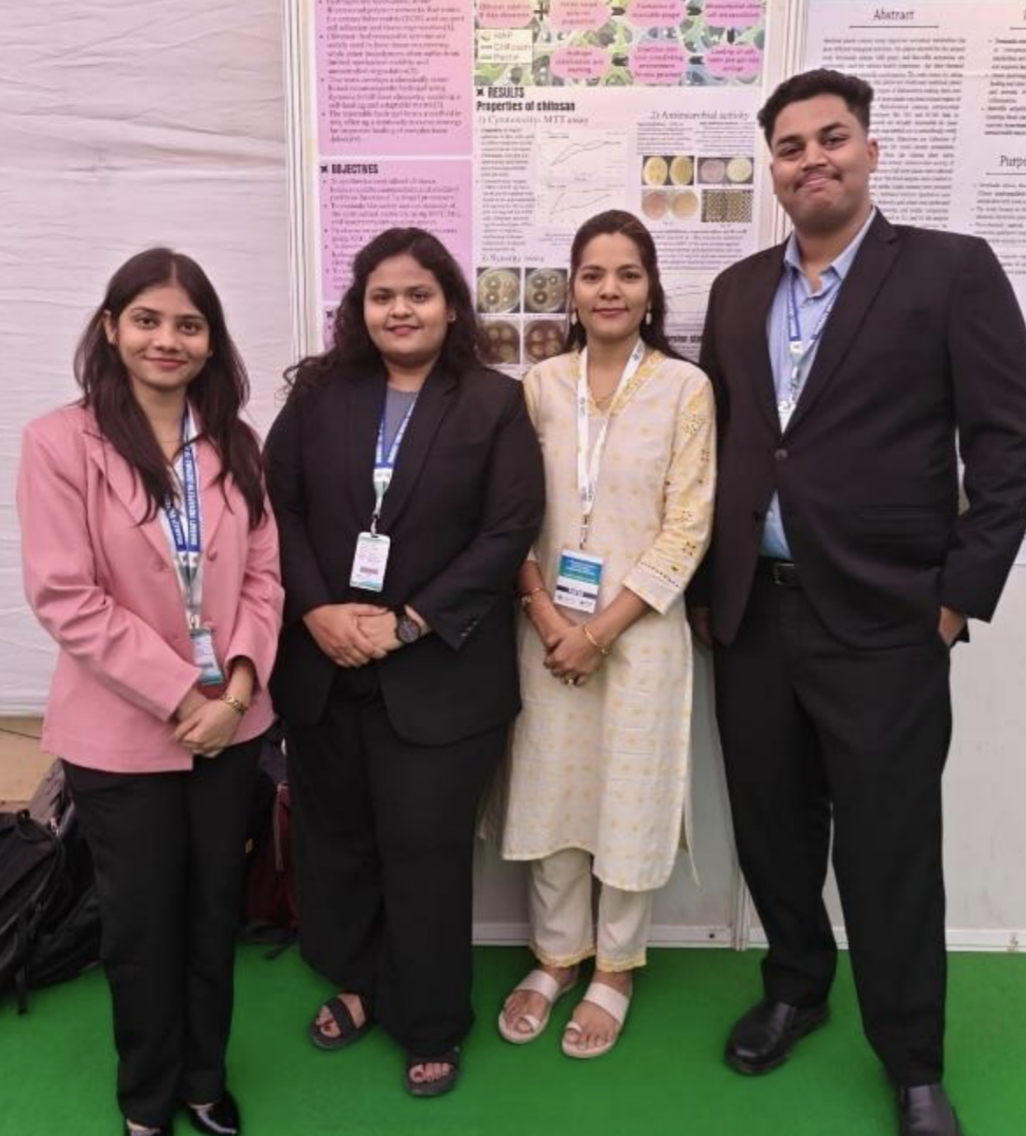
The most moving part of this experience, however, was something purely human. On the morning of the conference, my students arrived looking completely transformed. They had purchased new formal clothes specifically for the event, like crisp shirts, polished shoes, and well-fitted suits. Standing there by their posters, nervously but proudly facing juries and answering tough questions from senior scientists, they underwent a metamorphosis. For the first time, they were not just students trying to pass a viva; they were members of the scientific community.
Evolving with National Education Policy: A journey of purposeful research
My research has evolved as my teaching. I expanded my research from nanoparticle synthesis to tissue engineering to align my hands-on cell-culture skills with real-world healthcare challenges. This move also created a stronger platform for collaborating with other universities on complex biomedical problems.
Working without any large extramural grants has also shaped my approach. I have learned to practice what I think of as ‘lean science’, treating our limited resources with care. My students learn that resourcefulness is a core scientific skill.
The National Education Policy 2020 gave formal language to something I had already been practising: moving from content delivery toward competency-building. Now, every teaching session is guided by a single question: “Will this student be able to handle a cell line or develop a protocol in an industrial research setup?”
The curriculum reform aligned with my belief that training independent thinkers requires giving students room to struggle, fail, and discover, not just the right answers to remember.
Conclusion: The long game
I am sharing my story because it represents the silent majority of investigators in India who work in teaching-focused institutions. Mentorship and student transformation are not peripheral to our research culture; they are at its very heart. Our journey is the long game: sustaining the spirit of discovery while bearing the full weight of teaching, pipetting, troubleshooting, and grading, all at once. If we can turn even a few students from passive learners into independent thinkers, we have done our job.
In the process, I have realised that my students are the mentors in my own journey of mentorship.