In this reflection, IndiaBioscience Executive Director Siuli Mitra shares insights from the Young Investigators’ Meeting (YIM) 2026 in Pune. She reflects on how mentorship, collaboration, and candid conversations shaped the meeting, where early-career researchers discussed challenges, explored opportunities, and built lasting connections within India’s growing life sciences community.
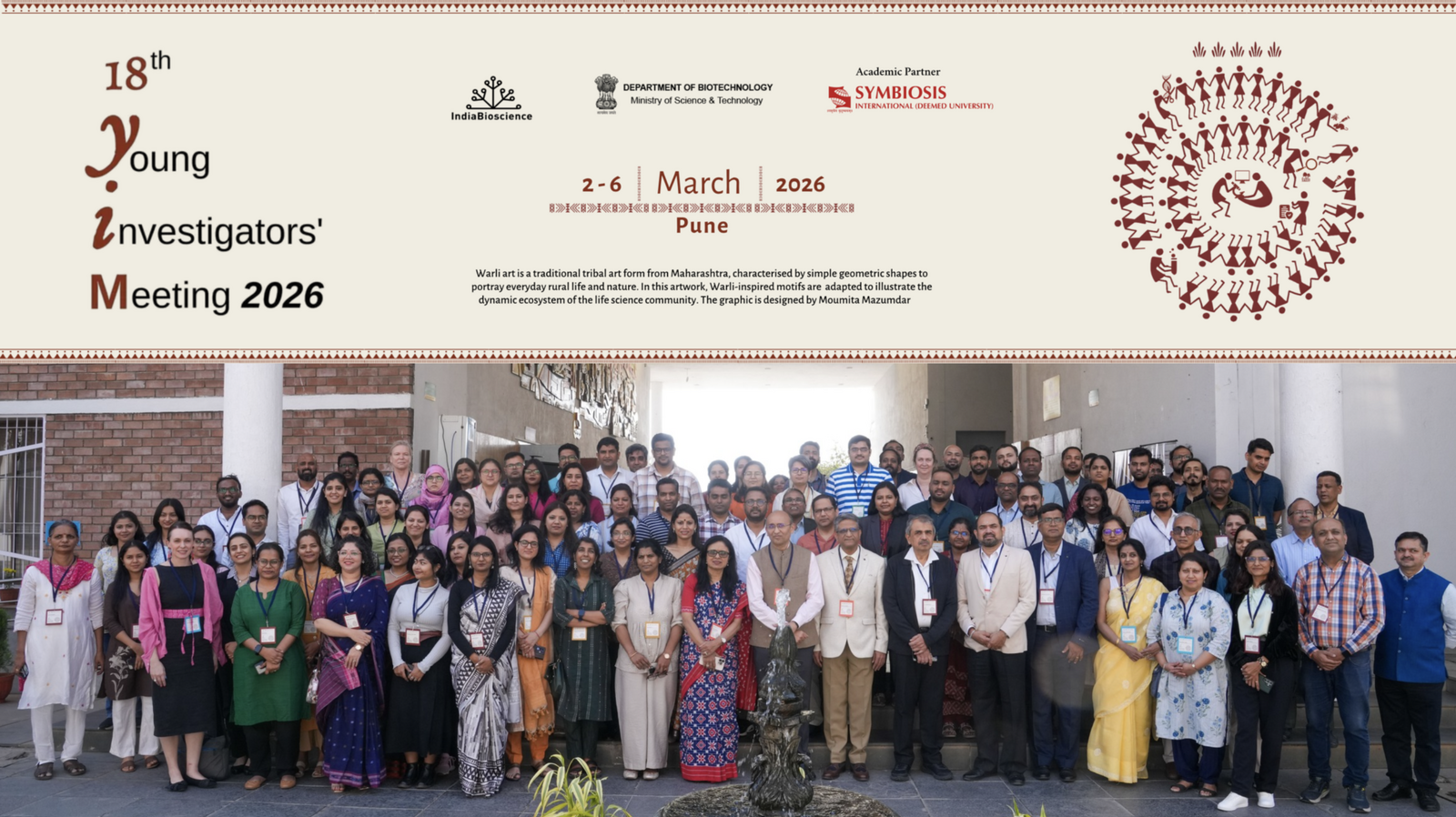
Attending the Young Investigators’ Meeting (YIM) for the first time as an organiser (and never as an investigator) offered a perspective that was different from reading past reports or hearing about the meeting from colleagues.
YIM 2026 was hosted at the Symbiosis International (Deemed University), Pune, in collaboration with Symbiosis Centre for Research and Innovation (SCRI). The meeting was co-organised by a team of faculty members from institutions across India, who worked with IndiaBioscience to shape the programme and discussions. Their involvement reflects the collaborative spirit within the life science community that has characterised YIM and IndiaBioscience since its inception.
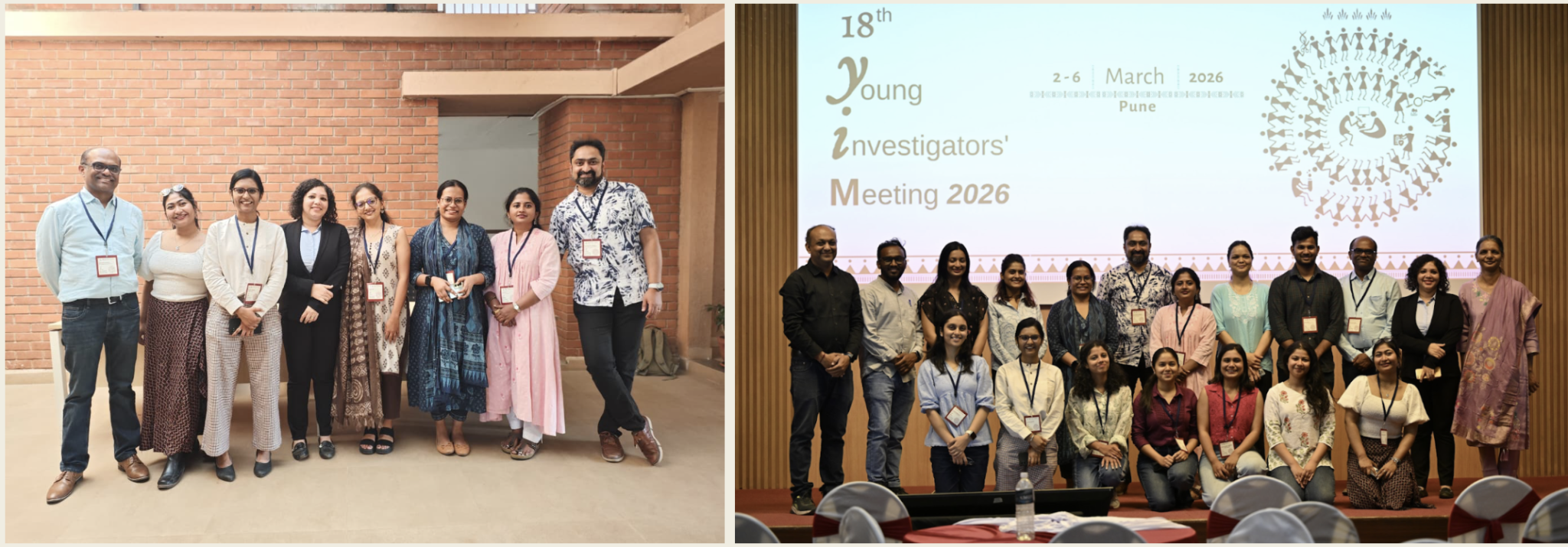
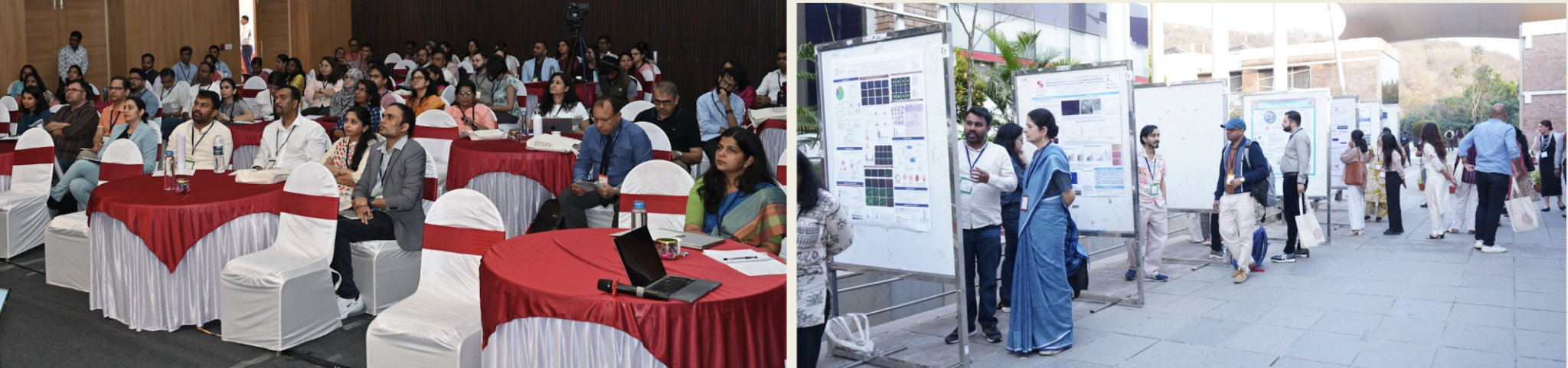
Over five days in Pune, what stood out for me was not only the formal programme of talks and discussions, but also the quieter conversations unfolding in corridors, during coffee breaks, and at shared tables. YIM has been less about the sequence of sessions and more about creating a space where early-career investigators candidly shared the uncertainties of building independent careers, while mentors reflected on their own journeys through the ecosystem.
A space for community building and mentorship for early-career researchers
The 18th edition of IndiaBioscience’s annual flagship Young Investigators’ Meeting (YIM) concluded earlier this month in Pune (2 – 6 March 2026). Now close to two decades old, YIM has become a space where early-career life science researchers come together to reflect on the challenges of building independent research careers and to find mentorship from across the scientific ecosystem.
Over the years, recurring themes at YIM have ranged from framing strong research questions and identifying funding opportunities to navigating institutional hiring systems, mentoring PhD students, and balancing professional and personal milestones. Mentorship at the meeting emerges from many directions — senior scientists, institutional leaders, peers working in different disciplines, and professionals from sectors beyond academia. Each edition of the meeting adds around 80 investigators to the growing YIM community, which now includes more than 1,400 researchers across India and abroad.
The continued relevance of the meeting reflects a simple reality: while the ecosystem of life sciences in India has evolved, the need for spaces where early-career researchers can openly discuss career uncertainties and opportunities remains constant.
For many participants, YIM has led to collaborations, mentoring relationships, and professional connections that extend long after the meeting ends.
A diverse community of researchers
YIM 2026 brought together a wide cross-section of the life sciences community. Forty Young Investigators from 39 institutions across India and 35 postdoctoral fellows from 34 institutions in eight countries outside India were selected to participate. They were joined by nine mentors, mid- to senior-career researchers from academia representing diverse research backgrounds, along with speakers from government agencies, industry, science funding organisations, research management, science engagement, and policy.
Institutional representatives from 18 institutions also participated, sharing insights into their research programmes and outlining faculty hiring practices and career development opportunities within their institutions.
This diversity of institutions, geographies, and disciplinary expertise is a deliberate feature of the meeting’s design. Participants included researchers working across molecular biology, ecology, evolutionary biology, biomedical sciences, biotechnology, and interdisciplinary areas that intersect with policy and public engagement. The aim is not simply to gather early-career scientists in one place but to expose them to the range of environments in which scientific careers unfold.
Mentorship is central to YIM’s design
Rather than relying solely on formal talks, the meeting is structured to create multiple opportunities for conversation between participants and mentors.
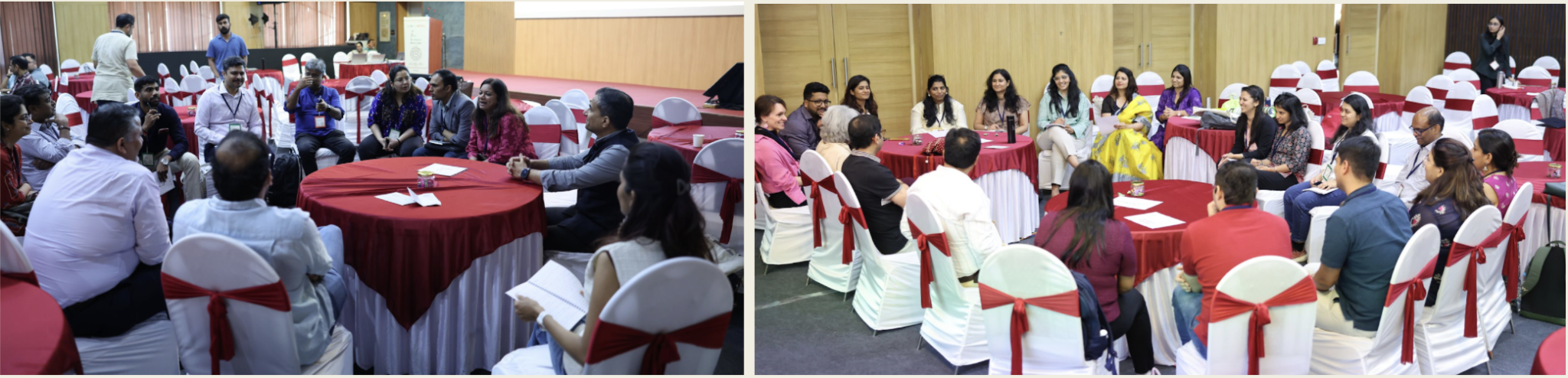
Structured sessions introduce researchers to key themes, including funding opportunities, leadership, and career development. These are complemented by breakout group discussions and informal networking breaks, where participants can ask candid questions about navigating the early stages of academic life. Such exchanges often draw on the lived experiences of mentors and speakers, who reflect on the challenges they faced while building research programmes, securing funding, and managing teams.
Our rapporteurs captured several of these conversations during the breakout discussions. In one room, participants deliberated on how to sustain research momentum when infrastructure, administrative support, or institutional facilities are limited. Mentors underscored collaboration, networking, and resource-sharing as practical strategies in such situations. When experiments stall, they suggested that literature reviews, journal clubs, and computational work can help sustain productivity. Celebrating small milestones was recommended as a way to maintain morale within research groups, while internships and short-term projects can re-energise students facing dips in motivation. Administrative delays, participants were reminded, often require persistence and constructive engagement with institutional leadership, particularly when researchers can demonstrate how their work benefits the broader institutional ecosystem.
A more detailed report on the breakout room discussions will follow.
Several speakers also reflected on how personal aspirations and institutional realities together shape scientific careers. Anna Barron spoke about establishing the Singapore Brain Bank in 2018 and the challenges of building research infrastructure while navigating cultural assumptions about brain donation. Manjari Jain described the balancing act of academic life, where teaching responsibilities, committee work, and administrative duties can limit time in the field. Mohan Balasubramanian reflected on a different kind of decision: choosing not to switch research areas during his postdoctoral years and instead pursuing a single scientific question — what mechanism generates the force required to divide a cell into two — for more than three decades.
Taken together, these reflections offered participants pragmatic advice on navigating uncertainty and working within institutional constraints. Many speakers emphasised that collaboration and supportive networks are often critical to sustaining scientific work over the long term.
The design of YIM allows these conversations to continue beyond the formal programme. Informal discussions during meals and networking breaks frequently become spaces where early-career researchers exchange experiences about grant writing, laboratory management, and the realities of establishing independent research programmes.
Conversations shaping early-career research
Across the five days of discussions, several themes emerged that reflect the evolving landscape of life sciences research in India.
One major focus was the funding ecosystem for early-career researchers. Representatives from national and international funding organisations discussed fellowship schemes, collaborative grants, and emerging translational funding models. These sessions emphasised the importance of clear research questions, well-designed collaborations, and careful proposal preparation in navigating competitive funding environments.
Our detailed report on the sessions on life science funding to follow.
Another recurring theme was the increasing importance of interdisciplinary and translational research. Speakers from academia, industry, and policy backgrounds discussed how scientific discoveries move from the laboratory to real-world applications. Conversations highlighted both the opportunities and the structural barriers to translating fundamental discoveries into technologies or therapies. Praveen Vemula, in his mentor talk, emphasised that impactful translation depends on choosing unmet clinical problems, fostering multidisciplinary teams, enabling collaborations, and sustaining funding within a supportive ecosystem.
Panel discussions also explored the evolving relationship between academia and industry. Participants examined how startups and collaborative partnerships can help bridge gaps between discovery and application, while also addressing practical issues such as intellectual property, funding strategies, and the role of academic researchers in entrepreneurial ventures.
Research integrity and open science emerged as another important topic. As India’s research output continues to expand, speakers discussed the importance of maintaining trust and transparency in the research process. Open data, shared research resources, and the responsible use of emerging technologies, such as artificial intelligence, were identified as critical components of a healthy research ecosystem.
The meeting also highlighted the growing role of science engagement and science policy. Speakers working in public engagement described their motivations, indicating how researchers can contribute to public understanding of science, participate in policy discussions, and connect scientific knowledge with societal challenges. These conversations underscored that scientific careers today often extend beyond the laboratory into broader public and policy contexts.
Career pathways and institutional ecosystems
An important component of YIM is the opportunity for participants to interact with institutional leaders and learn about faculty hiring practices and research environments across India.
Representatives from 18 academic and research institutions presented their research programmes, infrastructure, and recruitment processes, providing participants with insights into how institutions evaluate potential faculty members and support early-career researchers. These sessions also highlighted the diversity of institutional models across the country, from traditional research institutes to emerging interdisciplinary programmes and translational research centres.
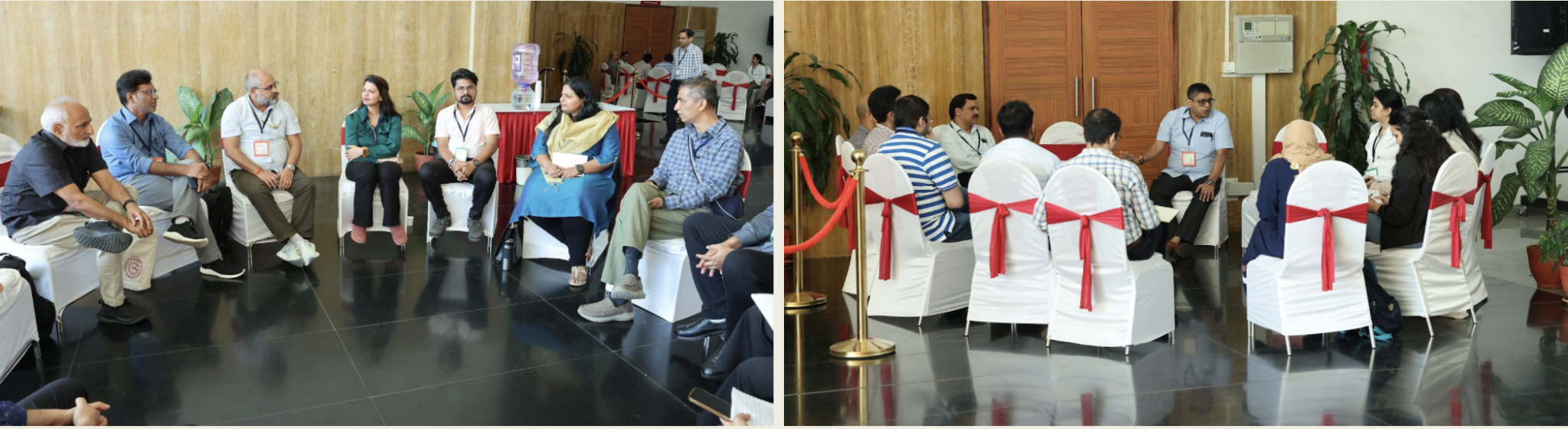
As participants were paired with smaller groups of representatives over mentorship circles, the interactions offered a practical view of how research ecosystems operate, including expectations around teaching, funding acquisition, collaboration, and research leadership from early investigators.
Our report on the PDF Satellite Meeting is to follow.
Strengthening the early-career research ecosystem
As the life sciences ecosystem in India continues to expand, platforms like YIM play an important role in connecting researchers at a formative stage in their careers.
The meeting provides a space for early-career scientists to openly discuss the uncertainties of building research programmes while gaining exposure to opportunities across academia, industry, policy, and science engagement. By bringing together researchers from diverse institutions and disciplines, YIM also helps build a network that can support collaboration and collective learning within the community.
Eighteen years after its inception, the continued growth of the YIM community reflects the enduring need for such spaces. While the research landscape evolves, the fundamental questions early-career scientists face about mentorship, funding, collaboration, and institutional culture remain strikingly similar across generations.
For many participants, the most valuable outcome of the meeting is not only the knowledge shared during the sessions but the relationships formed through these conversations. As the YIM community continues to grow, these connections remain central to strengthening the broader life sciences ecosystem in India.