Can art change the way we understand ADHD? Anuradha Sharma and her team share how the IndiaBioscience Outreach Grants helped bring together neuroscience, art therapy, education, and bilingual science communication to create supportive spaces for children, parents, and teachers, encouraging empathy, awareness, and a more compassionate understanding of ADHD.
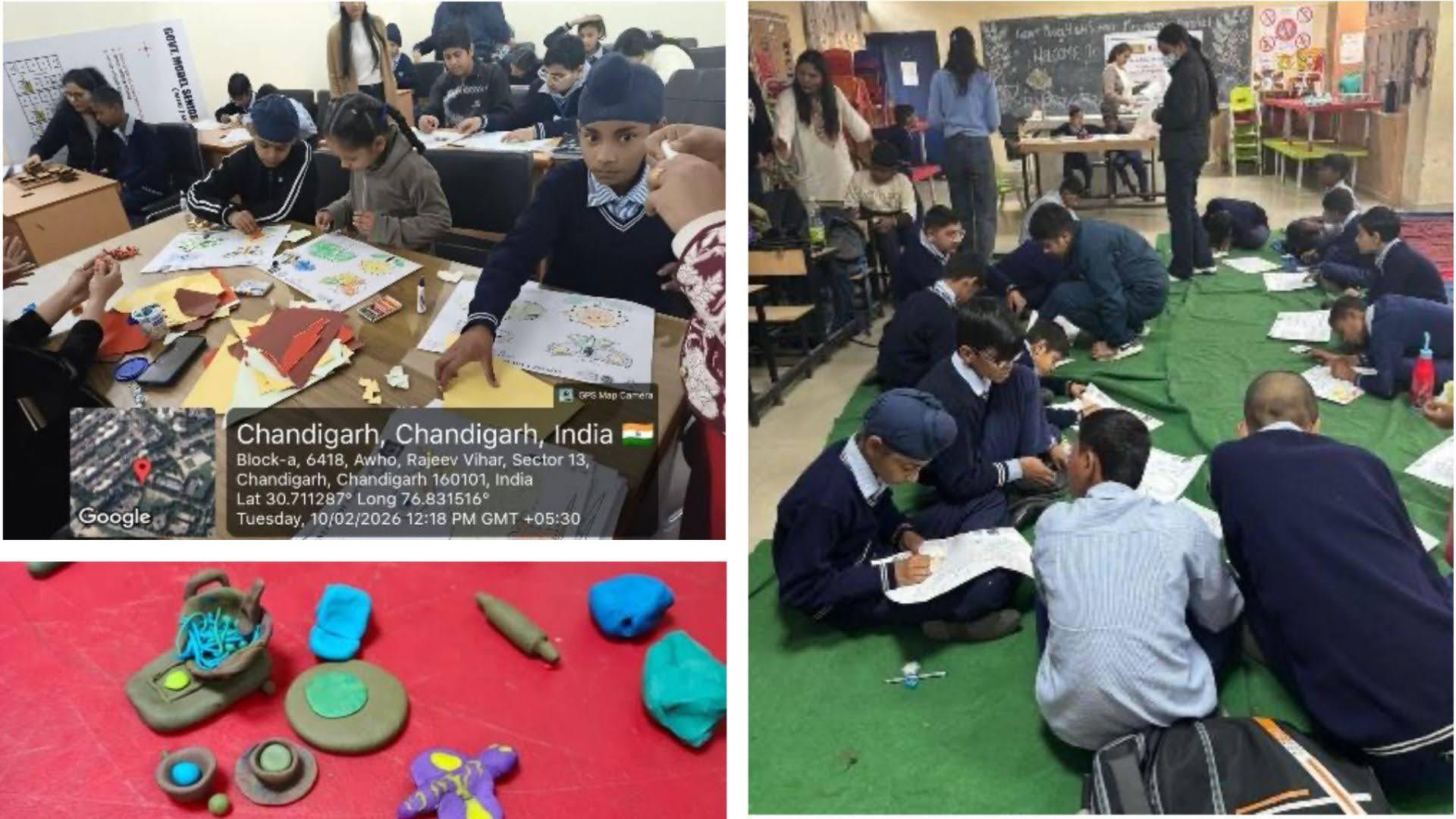
In one of our school sessions in Manimajra, Chandigarh, a child sat quietly with a small piece of clay in his hands. He pressed it, rolled it, flattened it, and began again. Around him, children were busy with colours, dots, paper, and glue. Some joined numbers to complete a picture, some tore and pasted coloured paper, and some shaped clay into objects they were eager to show. The room buzzed with chatter and movement, but it did not feel restless. Children often described as distracted were absorbed in the activities. A few asked for more sheets, while others waited to show their work. For us, this was the moment the project began to make sense: when children are not first seen as “a problem,” they often show us a different side of themselves.
Art in Action for ADHD: Bilingual Approach Blending Science, Biomarkers and Creative Therapy, led by Anuradha Sharma, with Akanksha Prasad, Prabhsimran Kaur, Anirban Sen from Autism Care Network Foundation, and Nitin Gupta, grew from a concern many of us have seen in schools and homes. ADHD is still misunderstood. A child who cannot sit still may be called naughty; one who forgets instructions, “careless”; and one who leaves work incomplete, “lazy”. Parents feel blamed, teachers feel helpless, and children may come to experience school as a place of correction rather than confidence. We wanted a gentler entry point into this conversation, one that was scientific but not intimidating.
Art offered that entry point- A colouring sheet, a connect-the-dots activity, a tear-and-paste task, a clay model or a visual attention exercise may look simple, but each quietly draws on skills that children with attention-related difficulties often struggle with: planning, waiting, sequencing, hand-eye coordination, frustration tolerance, and task completion. These activities do not feel like tests. The child first experiences engagement, after which it becomes easier to speak with parents and teachers about attention, impulsivity, and classroom behaviour.
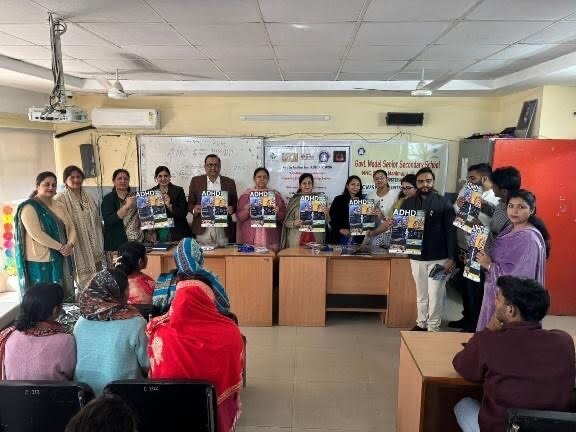
The 6th IndiaBioscience Outreach Grants (IOG) helped us move this idea from discussion into school spaces. With permission and support from the Department of Education, Chandigarh, the project was able to enter schools in a structured way, including settings where children under the Children with Special Needs (CWSN) programme were present. This collaboration mattered because school outreach is built on trust: permissions, schedules, principals, teachers, parents, and the academic calendar all have to come together. The grant helped us prepare materials, organise sessions, create bilingual resources in Hindi and English, and bring together experts from science, mental health, art therapy, and community work. The sessions were guided by a specialised art therapist, with remedial special educators supporting children who needed more additional structure or prompting.
The children responded with an enthusiasm that stayed with us. Some were visibly excited as soon as the colours and clay were brought out. Others took time to begin, but slowly became absorbed. Clay modelling, in particular, seemed to have a calming effect. The repeated pressing, rolling, and shaping gave their hands something purposeful to do. Colouring and connect-the-dots activities brought out another kind of engagement. Children tried to stay within lines, complete patterns, find the next number, choose colours, and show their finished work. At times, the classroom became surprisingly quiet because they were genuinely involved. For children often described primarily in terms of distraction or hyperactivity, these moments of focused involvement were deeply meaningful.
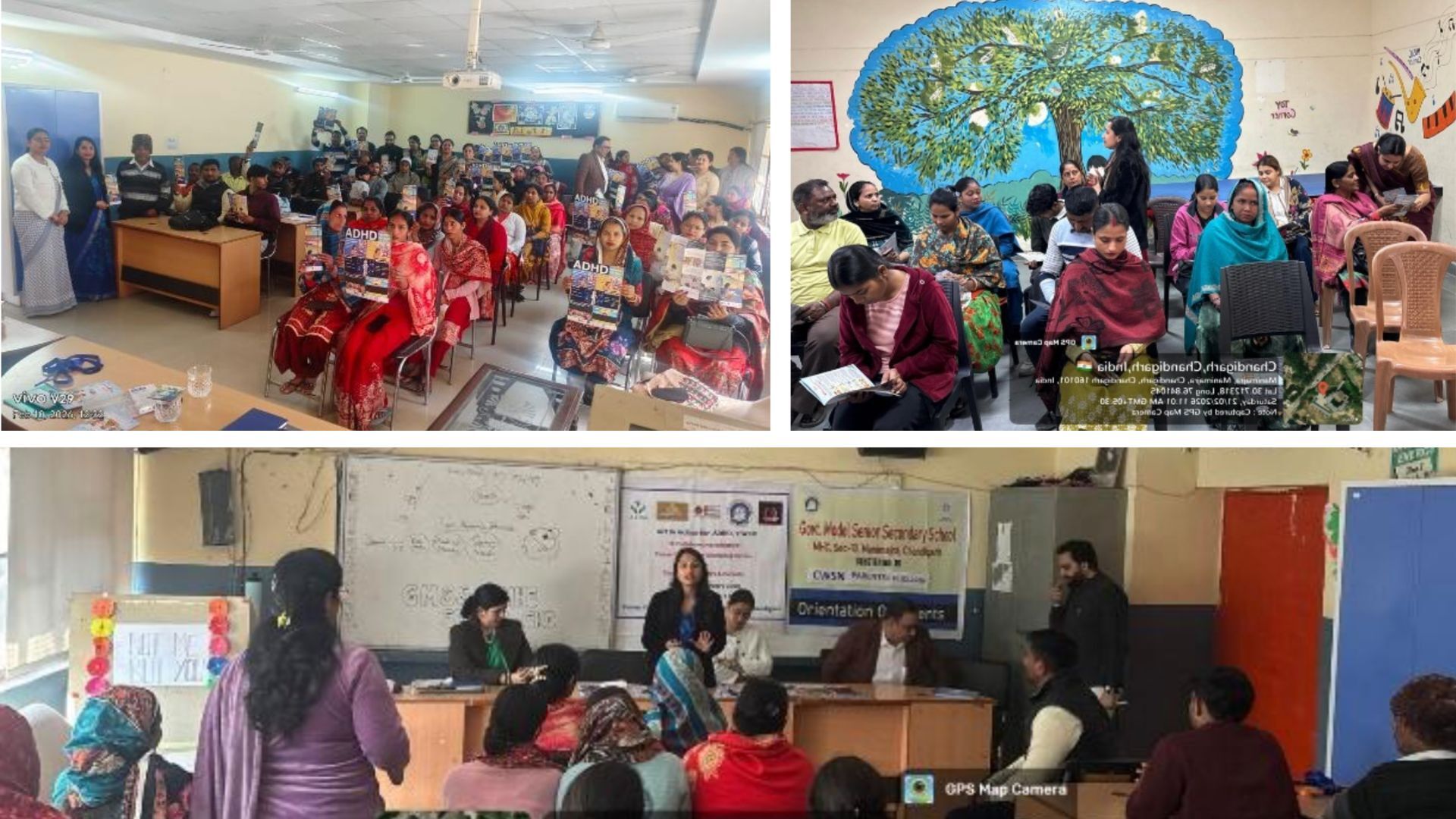
The parent interactions gave the project another layer. In one session, a parent spoke about how difficult it was to manage their child’s behaviour at home, especially when instructions were not followed and schoolwork remained unfinished. The concerns were familiar: “He listens only when he wants to,”“We keep repeating the same thing,” and“We do not know whether to be strict or patient.” Instead of focusing on blame or discipline, the discussion shifted towards understanding attention difficulties as a neurodevelopmental condition rather than a behavioural problem. We spoke about breaking tasks into smaller steps, using structured creative activities at home, reducing criticism, and noticing the situations in which the child was calmer. Some parents returned for a second interaction, suggesting that the initial conversation had created a safe space for them to return with further questions, concerns, and hope.
Teachers, too, brought their own experiences into the discussion. They spoke of children who frequently leave their seats, interrupt others, forget their notebooks, stare out of the window, or begin work but do not complete it. These are everyday classroom realities, and through this project, we encouraged teachers to view ADHD not as a label to be feared, but as a pattern of behaviours that can be understood and supported. We discussed how classroom routines, visual instructions, movement breaks, positive reinforcement, and regular parent communication can help. Teachers were also introduced to tools for systematically documenting attention and behaviour. The aim was to help teachers see each child with greater clarity and reduced stress.
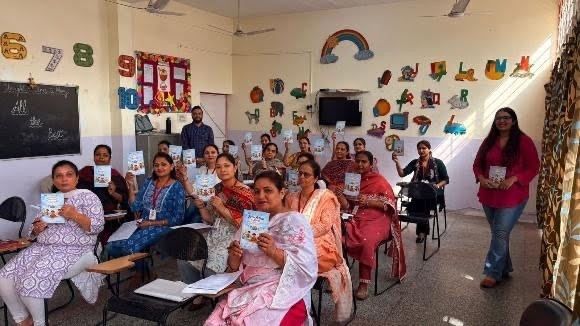
Bilingual science communication was central to the project. We worked on handbooks, posters, and brochures in Hindi and English because awareness cannot grow if it remains trapped in technical language. Parents should not need a scientific background to understand why their child struggles with attention, and teachers should not have to read dense clinical material to better support their students. The project also keeps an exploratory scientific component linked to the biological understanding of ADHD. For our team, the 6th IOG became more than just funding. It helped us explore a way of bringing neuroscience, child mental health, education, and art into the same room, and of talking about ADHD without fear or judgment. It helped create spaces where children could participate through their hands, and parents could ask questions without feeling blamed.
Looking back, the most important impact may be a shift in how the conversation began. Instead of asking, “Why is this child not behaving?” we began asking, “What is this child trying to manage?” Sometimes, the first step towards understanding a child is not a diagnosis or formal assessment. Sometimes, it is a quiet classroom moment when a child chooses a colour, completes a pattern, and realises that someone is watching not to correct them, but to understand them.