Every second Sunday, The Scicomm Synapse brings science to life through conversations with researchers and communicators. From career journeys to curiosity-driven insights, their student-led initiative bridges scientists and society, celebrating diverse paths in STEM while fostering scientific temper, collaboration, and storytelling across India.
In the era of AI and digital platforms, intellectual curiosity is growing among the people of India. Nowadays, it is almost impossible to skip any reels or posts talking about the health benefits of either eating all kinds of seeds or quitting refined sugar. Creators across India are gaining traction by focusing on niche areas, whether it is educating scientific concepts to school students in a simplified way by Talk To A Scientist or the captivating Chai and Why show to make science more visible across all generations, complements a very interesting clause of Article 51(A) of the Indian Constitution that states: to develop scientific temper, humanism, and the spirit of inquiry & reform.
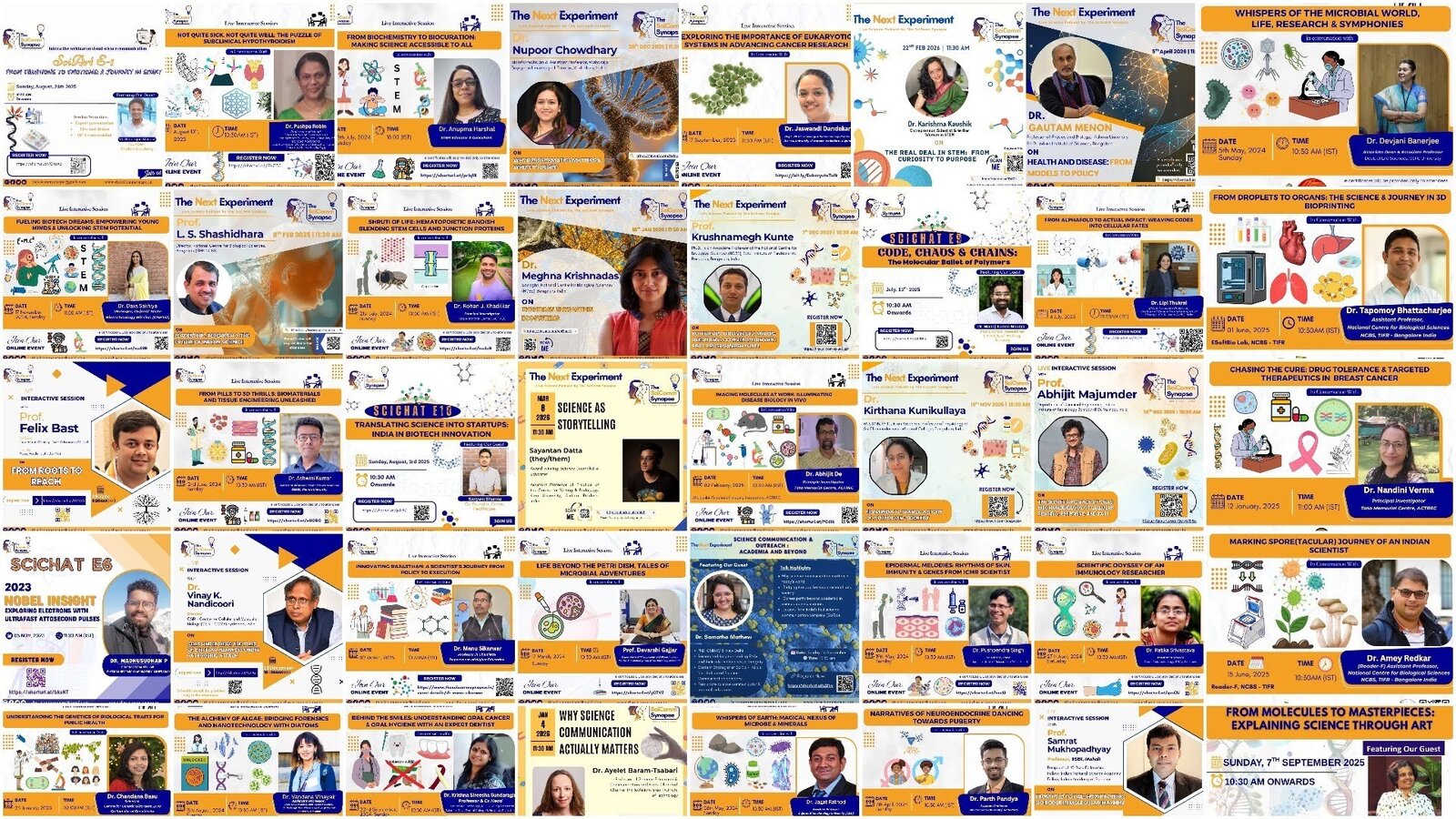
We, The Scicomm Synapse, registered under the Ministry of Micro, Small, and Medium Enterprises, Government of India, runs solely by students and scholars from diverse age groups and different parts of India, believe that science communication is not only limited to information but also involves bringing out the stories behind the backbones of knowledge creators. The Scicomm Synapse is a creative impulse to bridge the gap between scientists and the public. Recently, we completed hosting more than 50 live sessions. Through our initiative, The Next Experiment (a live science podcast series), we encourage scientists to step beyond their lab coats and engage in meaningful, informal conversations with our audience.
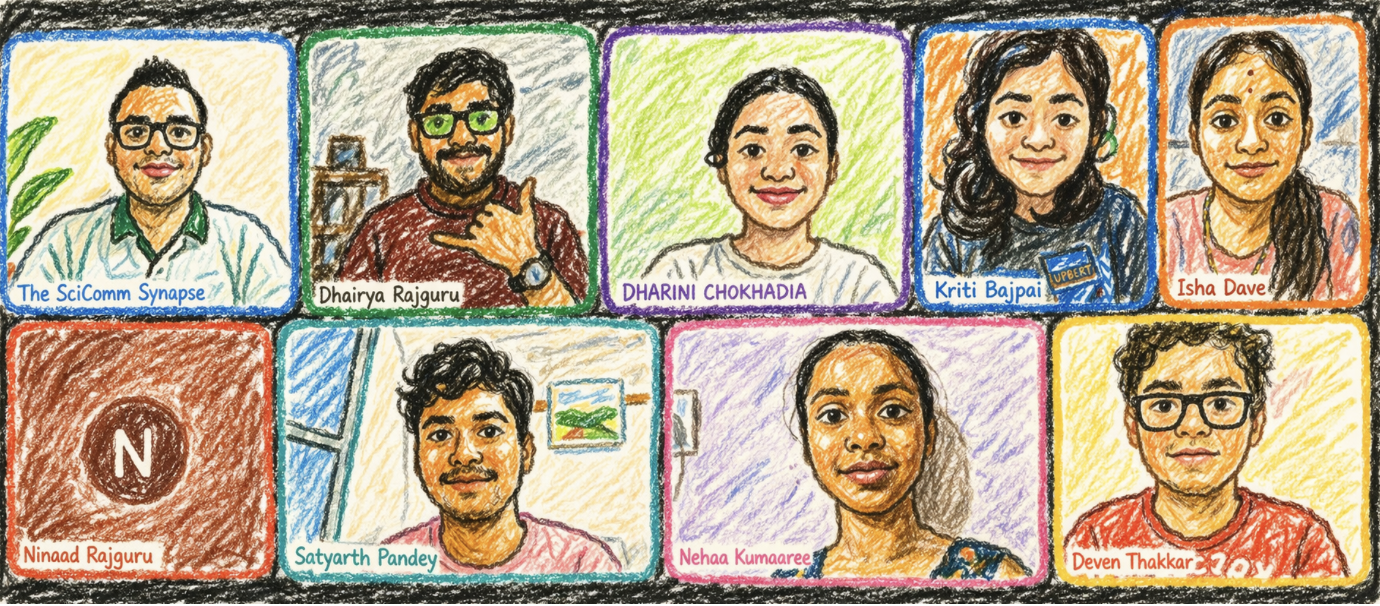
The joy of the community members in organising such events is immeasurable, demonstrating a highly collaborative spirit by engaging in various activities, from reaching out to speakers to hosting a live show to marketing on social media platforms. Hence, we find our niche in spending quality time every second Sundays of the month with our favorite scientist or science communicator and listening to their STEM journey.
We have hosted a diverse panel of speakers. Our list of notable speakers include eminent scientists as L.S. Shashidhara, Vinay K. Nandicoori. Shashidhara extended learnings on the importance of an interdisciplinary approach to science and how skills acquired in one field can be profitably applied to another. He also shared that mentoring, for him, is about giving his students a free hand for experimental design while playing an advisory role. Nandicoori emphasised that good science starts with curiosity, not just techniques. He also shared that his own journey wasn’t perfectly planned and suggested to students that they shouldn’t feel pressured to have everything figured out early.
We also hosted Karishma S Kaushik, a staunch advocate for women in STEM. A key takeaway message from her was that careers in science are never linear. However, we are not only limited to eminent leaders in STEM but have also extended our platform to young startup founders like Sanyam Sharma, whose desire to do something of his own burned brighter than accepting a PhD position abroad.
The primary aim behind organising such sessions is to showcase academia as a diverse career option. Gone are the days when parents and students viewed careers as limited to “doctor” or “engineer”. More than achievements, what truly stayed with us was how different a journey one can opt for and pursue in science.
Under our flagship initiative, KalaTatva, a sci-art project, we got the opportunity to cover stories of a scientist-turned-science communicator, Ipsa Jain, who tells scientific stories through her art and illustration, and how Rafeeque Mavoor, a scientific illustrator, opened his own Sci-art services, collaborating with various institutions and researchers.
What began as a small idea to create a platform for STEM peers has now grown into a vibrant, student-led community comprising individuals from diverse career backgrounds and regions — all working voluntarily. However, sustaining such a community comes with challenges, including annual website maintenance costs, limited access to high-quality content creation tools, and the need to better recognise team contributions.
Looking ahead, we aim to apply for science communication grants to address these challenges, improve content quality, and expand outreach across India. We also aspire to bridge the urban – rural divide in science communication by engaging with rural communities and conducting workshops in regional languages. We welcome collaborators who share our vision of bringing scientists’ stories to wider audiences and strengthening science communication across the country.