Open research in India is at a pivotal moment. There is a broad agreement that publicly funded knowledge must be more accessible, reusable, and trustworthy. However, structural, financial, and cultural barriers continue to slow progress. As India strengthens its life science ecosystem through data management infrastructures, evolving policies, and a rapidly expanding research community, the question is no longer whether openness is necessary, but how to implement it in ways that are equitable, practical, and suited to India’s diverse scientific landscape.

To explore this further, IndiaBioscience and Taylor & Francis Group convened two meetings in Bengaluru and Delhi in 2025 to get researchers, science policy experts, institutional leaders, science-funding representatives, and publishing professionals at the same table. These discussions examined how open research has evolved in India, where current mandates and practices align or diverge, and the lived realities of implementation across open access, research integrity, data stewardship, and assessment.
This article draws on those discussions to highlight how different science institutions in India, academic, funding agencies, policymaking bodies, publishers, and intermediaries, are collectively reflecting on what an Indian model of open research could look like. The insights shared point toward a future in which openness is embedded not only as a policy requirement but as a cultural and operational norm that strengthens India’s life science research for the long term.
Rethinking policy: Going beyond Open Access to ‘true openness’
India’s current open access (OA) frameworks remain fragmented and unevenly implemented. While authors are encouraged to publish openly, there is limited institutional or funder support to help them do so, particularly in covering publishing-related costs or navigating OA options.
The national One Nation, One Subscription (ONOS) scheme was widely regarded as a step forward in improving reader access across the country. However, it was described as a subscription mechanism rather than a policy that improves access for Indian researchers while leaving most Indian-authored work inaccessible to the global community. Moreover, the scheme offers limited support for authors to publish their work in open access, constraining the global visibility and dissemination of Indian research outputs.
Participants emphasised the need to move beyond treating openness as a voluntary or aspirational practice and toward positioning it as an expected outcome of publicly funded research. Few participants compared with models in the UK and Europe, where depositing accepted manuscripts and providing open access are integrated into evaluation frameworks. However, participants cautioned against replicating these models without contextualising local publishing practices, stressing the importance of recognising India’s linguistic diversity, supporting regional and community-generated datasets, strengthening local repository infrastructure, and treating openness as a dimension of research quality and trustworthiness.
Aligning incentives and assessment with openness
A recurring theme was the misalignment between policy aspirations and academic incentives. Many institutions remain functionally “closed”, because hiring, promotion, and grant evaluations continue to rely heavily on journal prestige and impact-factor-driven metrics. This discourages practices such as depositing accepted manuscripts, sharing data and code, adopting FAIR/CARE principles, or experimenting with open publishing formats, particularly when these activities do not clearly contribute to career progression.
Participants highlighted the need to rebalance research assessment systems to recognise a wider range of contributions, including high-quality datasets, preprints, software and protocols, evidence of societal uptake, outputs in Indian languages, and community-oriented research products that rarely appear in top-tier journals. India’s ongoing higher-education reforms and the establishment of newer funding agencies present a timely opportunity to embed principles of openness, transparency, and responsible assessment from the outset.
Taylor & Francis’s open research framework was highlighted as an example of how publishers can support this shift. The framework includes funder-compliant publishing options, transformative agreements, and open science practices such as open data policies and new article types, all aimed at making research more transparent, reusable, and impactful.
Preprints, Green OA and underused infrastructure
Discussions in Bengaluru examined the distinction between green OA and preprints, and why both remain underused in India despite their wider global uptake.
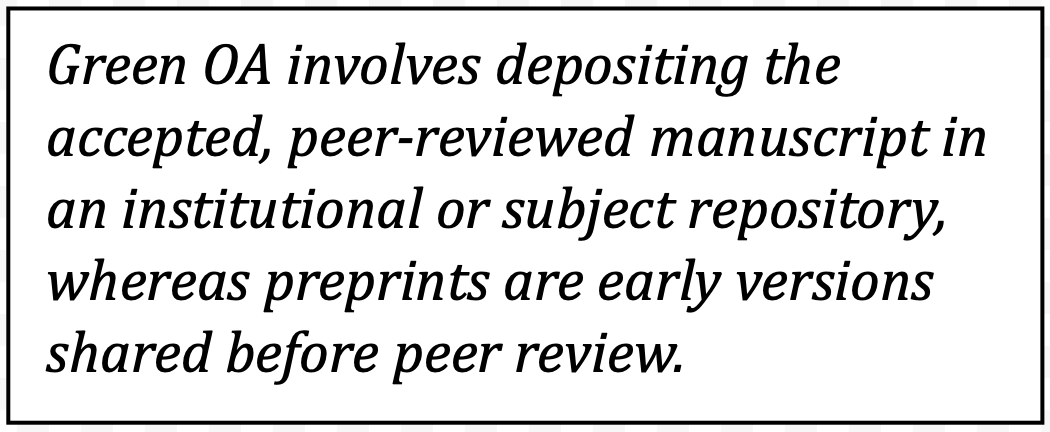
Participants observed that Indian preprint adoption remains comparatively low, citing limited awareness, fragmented institutional practices, inconsistent or unclear journal policies, and the absence of incentives from funders or employers. Researchers also expressed concerns about plagiarism-detection flags triggered during submission or about how different publishers and platforms handle preprints during review.
Existing repositories such as CSIR-Central and Science Central were viewed as promising but currently under-resourced, under-promoted, and insufficiently integrated into day-to-day research workflows. Some felt that strengthening these national infrastructures, along with clearer policies, streamlined deposition processes, and linking deposits to evaluation and funding criteria, could meaningfully accelerate India’s pathway to openness without relying solely on pay-to-publish routes.
Funding, APCs and the economics of openness
Both roundtables surfaced significant concerns about the affordability and equity of prevailing OA business models, particularly Article Processing Charges (APCs). Experimental scientists described the difficult trade-off between paying high APCs, often higher in hybrid journals and supporting core research activities, especially in settings with modest grants or limited institutional support. Questions were also raised about perceived duplication of costs, as institutions pay for large subscription packages while individual researchers still pay APCs for OA visibility.
Taylor & Francis representatives responded by outlining what APCs generally cover: peer review management, editorial processes, technical infrastructure, long-term preservation, and handling large volumes of rejected manuscripts in selective journals. They highlighted “read-and-publish” and other consortial agreements as approaches that redirect subscription spending to support OA publishing without charging authors directly, noting that such models have facilitated wider transitions to openness in parts of Africa, Europe and Asia.
Even so, participants agreed that these models are unevenly implemented and not yet optimised for India’s diverse institutional landscape. While a few funding agencies in India now permit grant budgets for publication costs, most lack coherent policies to support OA. As a result, researchers are often expected to publish openly without clear financial pathways to do so, underscoring the need for more coordinated national strategies. An example suggested at the Bangalore event was earmarking funds for publishing OA, which supports better planning.
Ownership, licensing and control of data
Discussions in Bengaluru highlighted the importance of ownership and licensing in Open Research. Traditional copyright transfer agreements can often limit how authors and institutions can reuse or build on their own publicly funded work. Participants emphasised the need for transparent frameworks governing the access and use of texts and datasets, including licenses such as CC-BY that allow for reuse, adaptation, and sharing.
Rights-retention policies were suggested as a way to empower authors to retain key reuse rights when publishing in established journals. Such approaches could support a more equitable balance among global publishers, Indian institutions, and the communities whose knowledge and data underpin scientific research.
Capacity building, community engagement and culture change
Policy shifts and technical infrastructure alone cannot deliver openness without sustained capacity building and cultural change. IndiaBioscience and Taylor & Francis shared ongoing initiatives, including large-scale webinars, local-language materials, train-the-trainer programmes and in-person events such as the Young Investigators’ Meetings. These efforts aim to strengthen the understanding of why openness matters for visibility, reuse, and public trust in science by anchoring focused discussions with the community.
Participants highlighted the value of supporting locally led open-science and outreach projects through small grants, which can grow into longer-term, independently sustained initiatives. However, they noted that such activities require institutional recognition within workload and evaluation systems to be fully integrated into research culture.
Quality, integrity and responsible openness
While OA increases the visibility of literature and data, it does not guarantee rigorous peer review, sound methodology, or responsible reuse. Participants emphasised the need to advance openness and quality together. Examples of emerging integrity infrastructures included institutional research integrity units, centralised project-tracking systems, and mandatory coursework for graduate students on OA models and critical appraisal.
Taylor & Francis described measures such as strengthened data policies, expanded roles for desk editors, and targeted training for editors and reviewers on responsible open-data practices. These efforts aim to ensure that openness is accompanied by trustworthiness and rigour.
Across groups, integrity was framed as a shared responsibility: a culture that must extend throughout the research lifecycle rather than being treated as a final-stage checkpoint.
Towards an Indian model of Open Research
The Delhi and Bengaluru roundtables paint a picture of a research system that is ideologically open but structurally constrained. India has a broad community interest in openness, improved access through ONOS, increasing global visibility for its science, and important policy windows through evolving assessment reforms and new funding mechanisms. At the same time, misaligned incentives, uneven financial support for APCs and repositories, underused infrastructures, and continued reliance on impact-factor – driven evaluation remain barriers.
The conversations represent early steps toward articulating a unique vision for open research in India. By building cross-sector collaborations and embedding openness as a cultural and operational norm, India can create a more equitable, trusted, and impactful research ecosystem.