How do cells translate genetic information into the proteins that sustain life? At IISc Bengaluru, structural biologist Tanweer Hussain is uncovering the molecular machinery behind protein synthesis, disease, and viral infection. From ribosomes to cryo-EM, his journey highlights the power of curiosity, mentorship, collaboration, and persistence in modern science.
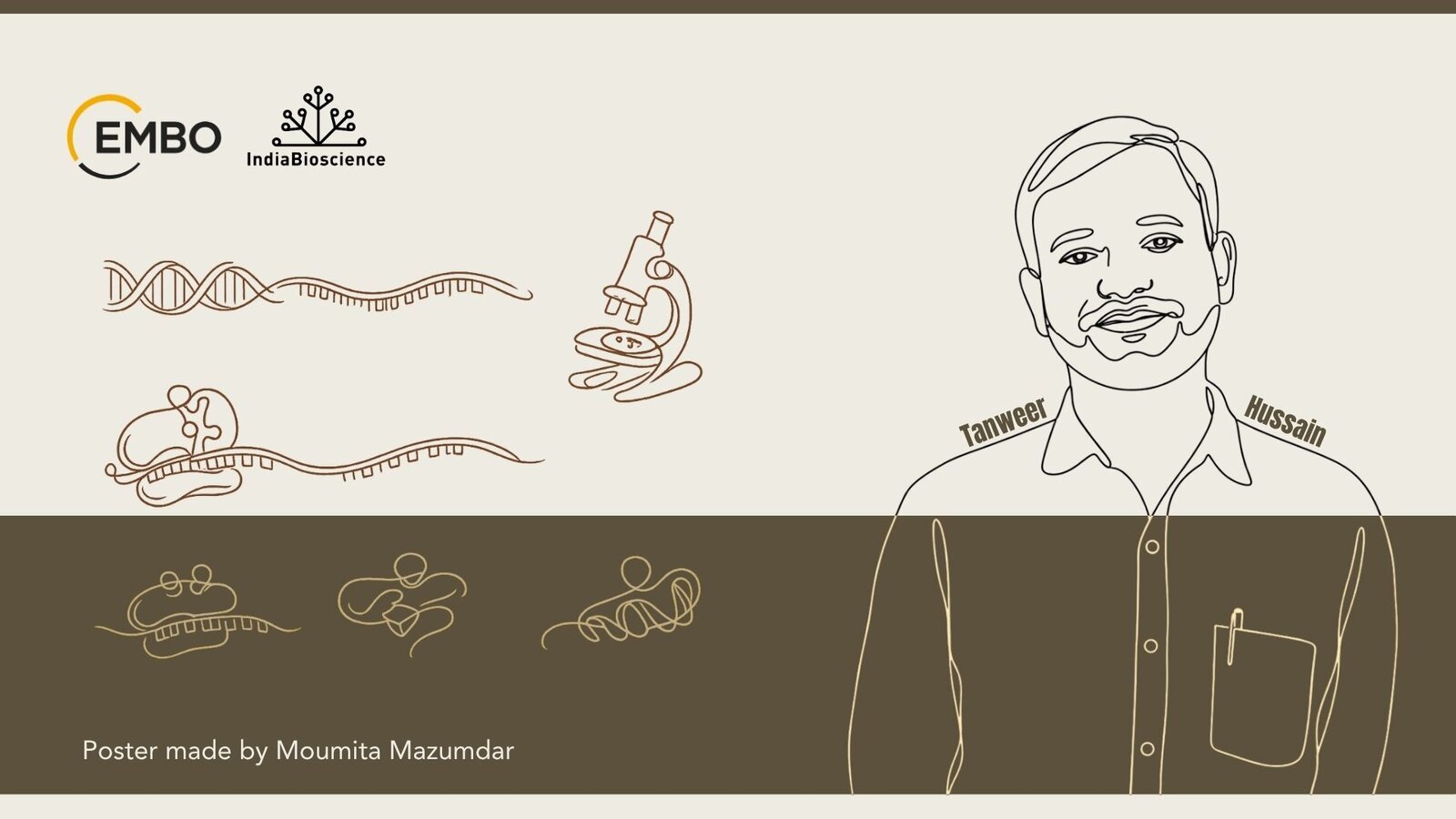
Life speaks in the language of molecules, and its grammar is written in DNA. Every gene is a sentence written in the alphabet of nucleotides. When the cell needs to act, that sentence is copied into mRNA, which carries the script from the nucleus to the ribosomes. Then ribosomes take over as translators, reading codons like words, while tRNA delivers amino acids as building blocks waiting to be assembled. Together, they form proteins that give cells their shape and strength. Yet within this process, the cell holds profound mysteries.
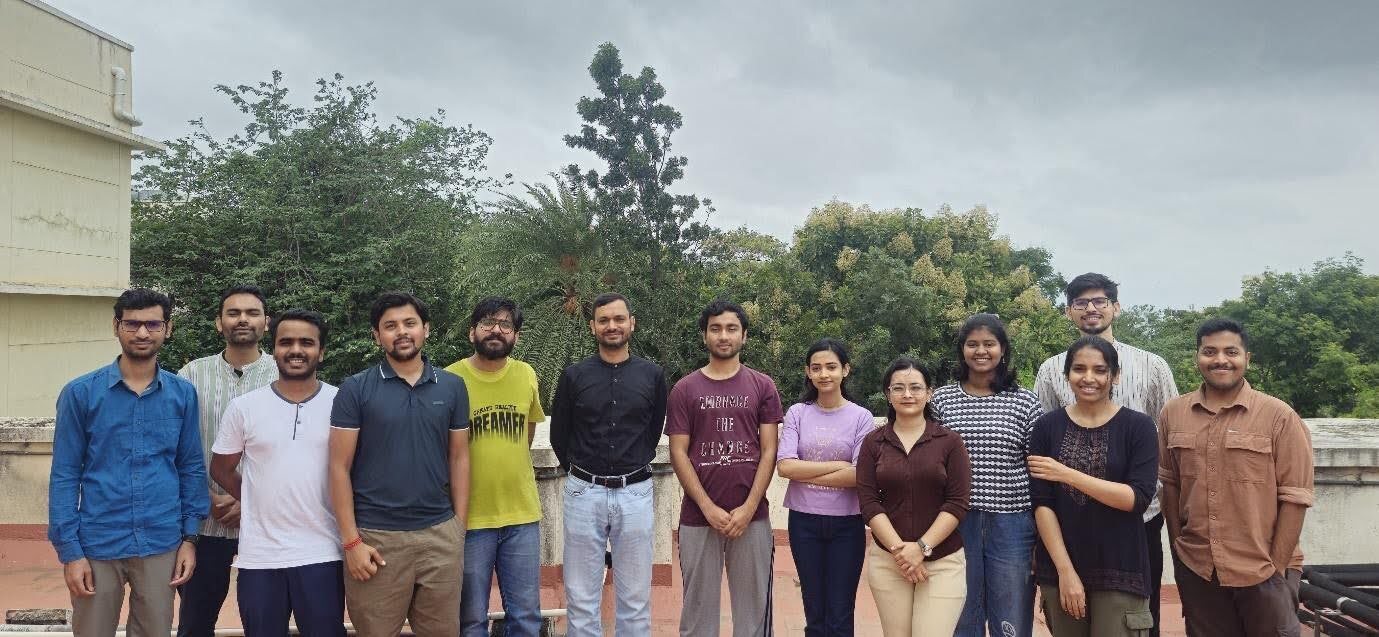
We might know the outlines of protein synthesis, but the structural complexity of the molecular machinery that drives it remains elusive. At the Indian Institute of Science, Bengaluru (IISc Bengaluru), Tanweer Hussain’s young and dynamic group is trying to understand the molecular and structural basis of protein synthesis and its regulation. This work plays a significant role in understanding disease progression and developing therapeutics- a pursuit that reflects a story of curiosity, challenge, and persistence.
Tanweer Hussain’s scientific journey began during his PhD at the CSIR-Centre for Cellular and Molecular Biology (CSIR-CCMB), where he worked on the editing mechanism of aminoacyl-tRNA synthetase, an enzymes that act like a proofreader, ensuring proteins are built correctly. Gradually, his interest shifted to the broader picture of the protein synthesis machinery. Hussain recounts how his interests evolved as he transitioned throughout his scientific journey.
As I read more about protein synthesis, I was intrigued by how these molecular processes are controlled, which gradually shifted my interest from small domains to mega-complexes like ribosomes.”
During his PhD, he had an opportunity to discuss his research with Venkatraman Ramakrishnan during a visit to CCMB. At that time, Venki had not yet received the Nobel Prize, but his research on ribosomes was widely recognised. Inspired by his work, Tanweer decided to join for a postdoctoral study in Venki’s laboratory for postdoctoral training at the MRC Laboratory of Molecular Biology in Cambridge, UK. There, he worked on decoding the structure of the preinitiation complex (PIC), a crucial assembly that initiates protein synthesis, using cryo-electron microscopy (cryo-EM). Cryo-EM is a technique that flash-freezes biomolecules and visualises them under a transmission electron microscope, allowing researchers to determine their structures at high resolution. Around the same time, the cryo-EM “resolution revolution” was transforming structural biology through advances in detector technology and computational methods, enabling unprecedented views of biomolecular structures.
After years abroad, Hussain returned to India to establish his research group at IISc. His group is trying to understand the hidden regulatory layers of protein synthesis. They focus on how a network of molecular factors called the eIF4F complex regulates mRNA recruitment and ribosomal scanning. If something goes wrong during this process, it can contribute to diseases such as cancer. Hence, these studies have important implications for the development of translation-based therapies. The group is also trying to uncover how viruses exploit these molecular factors to support their own translation and survival. Such insights could eventually help design new antiviral strategies.
During the COVID-19 pandemic, his group looked at how SARS-CoV‑2 protein Nsp1 suppresses host protein synthesis through its interaction with host ribosomes. Their findings revealed a molecular tug-of-war between the virus and the host cell.
However, pursuing these questions in a rapidly evolving field has never been straightforward. He spoke about the challenges posed by modern biology, which increasingly demands expertise across multiple disciplines. Nowadays, addressing a research question might require a combination of experimental, structural, and computational approaches, as well as cross-disciplinary collaboration. He further elaborated that staying relevant requires researchers to continuously learn new techniques and make the most of available resources, especially in India, where resources can often be limited.
The discussion on resource and infrastructure constraints in India raises broader questions about the research ecosystem and how these limitations affect early-career scientists seeking to establish independent research programmes. Tanweer acknowledges that the overall research environment is encouraging and supportive for young investigators. However, he believes there is considerable scope for improving financial support for early-career researchers. Given that many positions are now tenure-track ones, researchers often face pressure to establish productive laboratories within a limited timeframe while working with constrained funding, which can restrict their ability to pursue new research directions.
Tanweer recalls the challenges he faced while setting up his own lab. When his group needed computational expertise to study ribosomal mechanisms, access to the necessary resources was limited. As a result, he often adopted a collaborative approach. He firmly believes that collaborating with labs possessing complementary expertise or stronger infrastructure can provide an effective solution to the resource and infrastructure challenges encountered by many Indian scientists.
That trajectory, from navigating resource constraints as an early-career scientist to being an EMBO Global Investigator, marks a journey of resilience and adaptability. Reflecting on his journey as an independent scientist, Hussain shares that being a part of the EMBO Global Investigator Network has meant far more than receiving a prestigious title. It has facilitated meaningful networking with scientists not only in Europe but also provided a platform for showcasing and discussing their research work, while also strengthening connections with peers within India.
However, aside from techniques, institutions, and collaborations, another factor that subtly influenced his scientific path was mentorship. Recounting those years, he speaks about the value of active mentorship, which involves one-on-one interactions and direct guidance on research projects. However, such engagement can often be limited by mentors’ time constraints. What worked better for him, instead, waspassive mentorship — learning not through direct instruction but through observation. Reflecting on this approach, he said:
As a mentee, observing your mentor is crucial to understanding how they address obstacles and stay focused on the real question, which has played a major role in shaping my journey.”
While sharing his experience as a mentee, he advises young researchers to pay close attention and observe how mentors navigate uncertainty, noting that observation often teaches more than instruction. He also emphasises that, despite rapid technological advances, there is still no substitute for hard work and deep reading. Nowadays, AI has become an important tool for gathering and processing information, but he remains cautious about relying on it for scientific judgment. Tanweer acknowledged that AI could excel at mining data; however, when it comes to interpreting results and evaluating subtle scientific nuances, he believes the human mind remains indispensable.
He points out that “In the early days, people had to understand the techniques deeply, but now algorithms make things so easy that it’s tempting to become just a user instead of an expert.” For this reason, he encourages researchers to look beyond algorithm-generated outputs and develop a strong understanding of the underlying science. True expertise, he argues, comes from rigorous study and a deep appreciation not only of results but also of the processes that produce them.
Even with advanced microscopes, algorithms, and cutting-edge technologies, Tanweer still believes that the most powerful instrument in any laboratory is a mind that refuses to stop asking questions.