A recent study from the Tata Institute of Fundamental Research (TIFR), Mumbai has uncovered that the timing of treatment with the antidepressant Prozac during childhood and adolescence can fundamentally alter the architecture of nerve cells and the emotional behaviour of male, but not female, rats in adulthood, long after the drug treatment has stopped. Male rats administered Prozac shortly after birth showed greater anxiety- and depressive-like behaviour in adulthood. In sharp contrast, male rats administered the very same dose of Prozac during adolescence had long-lasting decreases in anxiety- and depressive-like behaviour. The starkly opposite outcomes highlight that when it comes to the behavioural effects of a drug like Prozac, timing really matters!
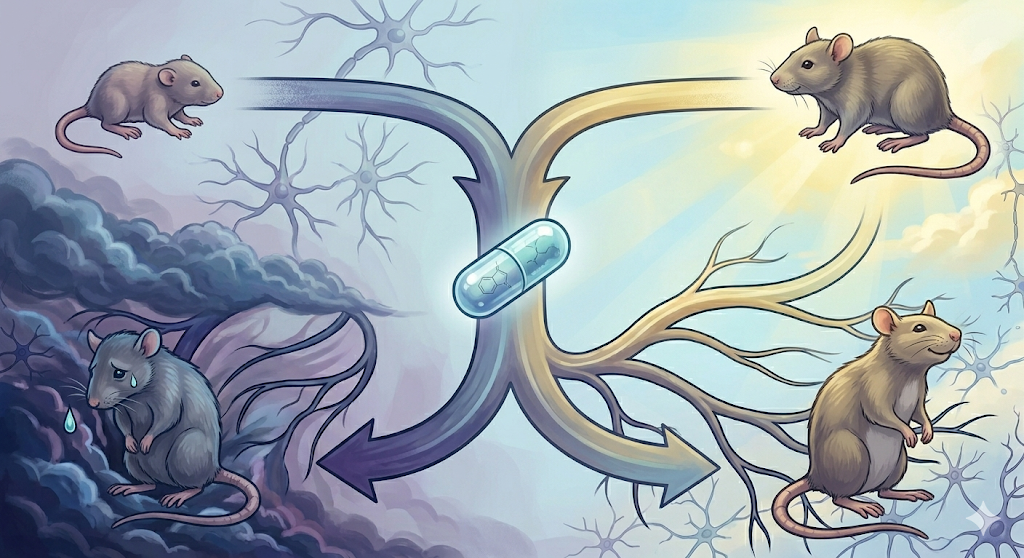
Amongst the most difficult decisions for both psychiatrists and caregivers is weighing the risks and benefits of treating childhood and teenage mood disorders with antidepressant drugs. Given the burgeoning increase in major depression and anxiety disorders amongst children and teenagers globally, there is a pressing need to understand whether antidepressant drugs given at these ages have any long-term effects that might be of concern. The first-line treatment for both depression and anxiety at these vulnerable early ages is the selective serotonin reuptake inhibitor, fluoxetine (Prozac). A recent study from a team at the Tata Institute of Fundamental Research (TIFR), Mumbai, tackled the question of whether the specific age at which the developing brain is exposed to antidepressants, in this case childhood or adolescence, influences long-term behavioural, molecular, and cellular outcomes.
In rat models, the answer is strikingly affirmative — timing matters.
“We have known for a while that serotonin plays a profoundly important role in fine-tuning emotional neurocircuits in the developing brain,” stated Vidita Vaidya, professor at the Tata Institute of Fundamental Research and the principal investigator of the study published in Biological Psychiatry. The team hypothesised that exposure of the infant and teenage rat brain to Prozac would enhance serotonin levels in the synaptic cleft and likely have long-term effects on neuron architecture and mood-related behaviour, especially since these treatments overlapped with developmental windows during which the brain is particularly sensitive to perturbation of serotonin. The clinical relevance of this work lies in the possibility that infants born to mothers prescribed Prozac for gestational or postpartum depression may be exposed to the drug via the placenta or breastmilk, potentially leading to lasting effects. While, in popular parlance, serotonin is often referred to as the ‘happy’ neurotransmitter, this is an oversimplification of a fascinating molecule that has many different effects on the brain. In the developing brain, it also seems to work like a construction supervisor, actively guiding the physical wiring of neural circuits and shaping the nature and strength of synaptic connections that are formed.
To address the consequences of treating rat pups and adolescents with Prozac, the first author, Utkarsha Ghai, a PhD student in the Vaidya Lab, orally administered Prozac or a control treatment at two developmental stages. One group received treatment during a developmental window corresponding to human infancy (2 — 21-day-old rat pups), while the second group was treated during early adolescence (28 — 48-day-old juvenile rats). Rats were then allowed to mature into adulthood before assessing their mood-related behaviours, cellular energy production, and neural morphology within the medial prefrontal cortex, a region of the brain that plays a key role in the top-down regulation of emotional behaviour. “The results were completely unexpected” stated Utkarsha Ghai, the first author. She further added that she was particularly surprised that administering Prozac at two different developmental stages could produce such dramatically different effects, and that these behavioural changes persisted long after the treatment had ended.
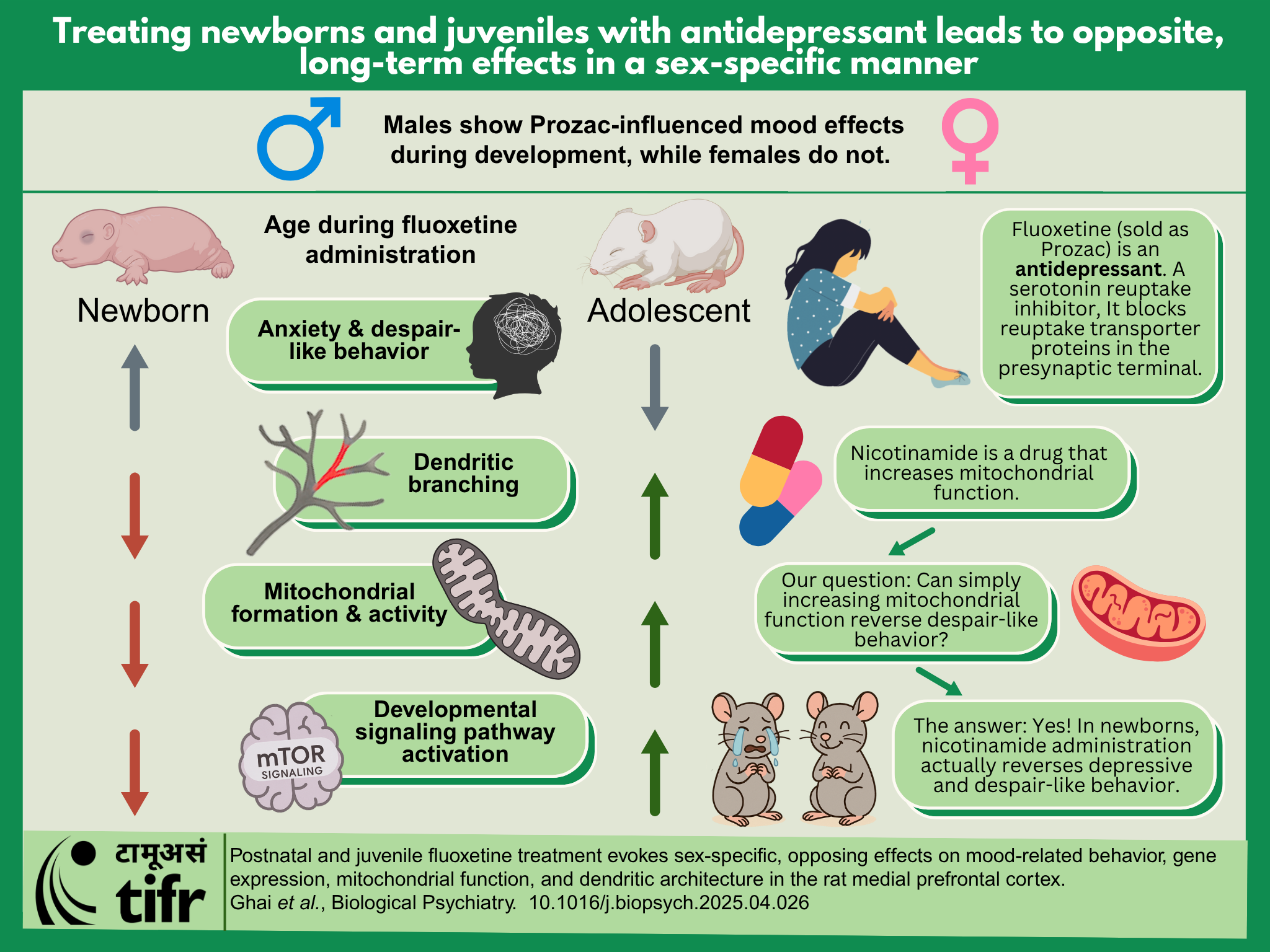
Male rats exposed to the drug in infancy showed increased anxiety- and depressive-like behaviour in adulthood across behavioural tests such as the open field test, elevated plus maze, and forced swim test. Conversely, male rats treated during adolescence exhibited the exact opposite pattern. They showed long-lasting decreases in anxiety- and depressive-like behaviour. The exact same dosage of the same drug yielded entirely opposite outcomes simply depending on the developmental window in which it was administered, indicating that the brain responds very differently to Prozac at different ages. Interestingly, the research group observed that these effects were largely restricted to male rats and were not observed in female rats. This finding highlights important sex-specific differences in how the developing brain responds to Prozac.
Investigating why the developing male brain diverged down two separate paths, the research team uncovered several changes in neuronal structure. The genetic programs activated by the drug in infancy barely overlapped with those activated in adolescence, suggesting that Prozac engages different molecular pathways at different developmental stages. Moreover, the physical architecture of pyramidal neurons within the infralimbic and prelimbic regions of the medial prefrontal cortex changed depending on the timing of drug administration. Ghai and colleagues found that dendritic branches, which receive signals from other neurons, were fewer in the postnatally treated group but were more abundant than those in the control group in the adolescent treatment group. Mitochondria responded in opposing manners as well. Brains exposed to postnatal fluoxetine exhibited significantly reduced cellular energy production in adulthood, while brains exposed during adolescence showed higher energy capacity at this time.
Seeking to reverse this cellular exhaustion, the researchers administered nicotinamide, a form of vitamin B3 known to improve mitochondrial energy metabolism, to adult rats that had received fluoxetine in infancy. Interestingly, this intervention not only restored mitochondrial function but also reversed the animal’s despair-like behaviour, though their anxiety levels remained unchanged.
These findings could help parents and psychiatrists develop a more nuanced understanding of the potential long-term effects of antidepressant exposure during different developmental periods, thereby informing decisions about prescribing such drugs to children and adolescents. The successful reversal of despair-like behaviour in adult rats using nicotinamide, a simple metabolic booster, opens an exciting new therapeutic avenue. It suggests that future treatments for certain mood disorders might shift towards targeting brain cell metabolism and energy production, rather than solely focusing on traditional chemical imbalances. However, it is important to interpret these results with caution. Because human brain development is highly complex, these preclinical findings in rats cannot be directly translated to human patients or current clinical prescribing practices at this stage. Nevertheless, this research provides a valuable new perspective on the future of psychiatric care.