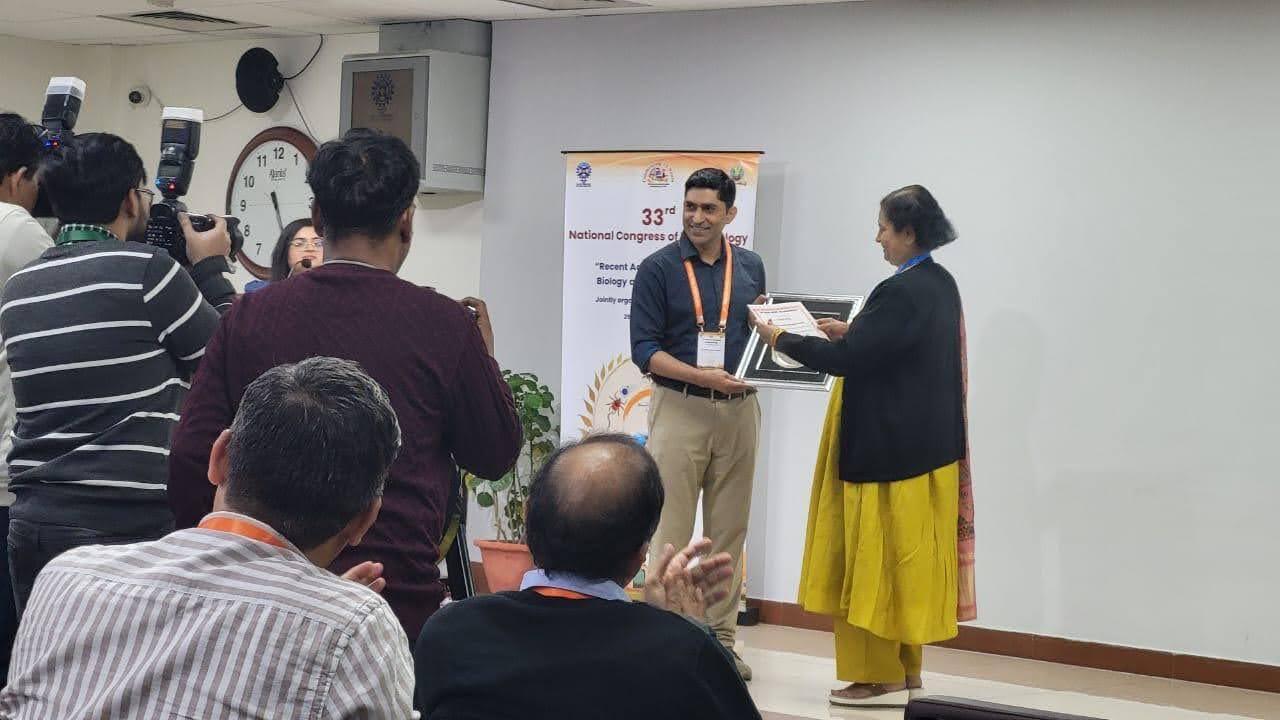
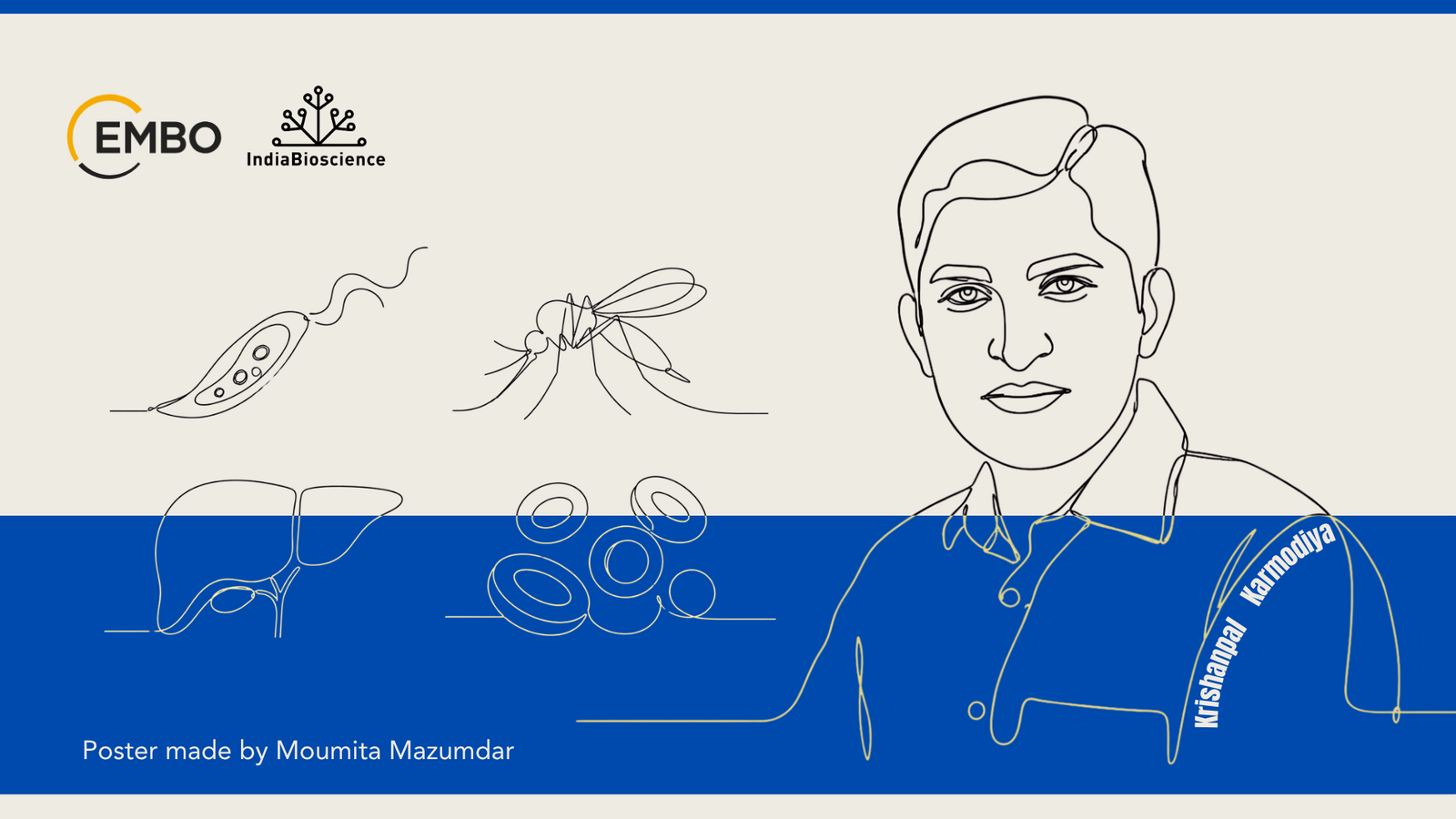
From a small village in Madhya Pradesh to leading a research group at IISER Pune and an EMBO GIN awardee, Krishanpal Karmodiya’s journey reflects resilience, curiosity, and perseverance. His lab investigates how the malaria parasite Plasmodium rapidly adapts to changing environments and drug pressures, offering new insights into disease biology and control.
Every year, scores of hilsa in our oceans swim against the tide towards the head of the Ganga to find suitable breeding grounds. Many will not survive this arduous journey. Yet none shy away from embarking on it. They are guided by ancestral memory, empowering them to instinctively respond to minute changes around them, thus allowing them to survive despite the constant threats in their environment.
While not as dramatic as a life-or-death situation, the early scientific journey of a ten-year-old boy from a small village in Madhya Pradesh was nothing short of an arduous upstream journey against the odds.
Krishanpal hails from a remote and tiny village on the outskirts of Bhopal with fewer than 1,000 inhabitants. He recalls that in his youth, reaching his village from Sehore railway station required a journey involving two buses. He fondly recounts how he and a few other boys his age spent their early Gurukul days in his village learning to read Hindi, practice basic arithmetic and engage in ‘kushti’ (traditional wrestling) in the evenings. It was standard practice for them to help with their Guru’s household chores.
Since no one in his village had earned a graduate degree, he had no template to emulate. However, Krishanpal’s life took an exciting turn when he joined Navodaya Vidyalaya in the sixth grade. He was one of only four children selected from his taluk based on an aptitude test that involved logical reasoning, solving puzzles, sequences, and matching patterns— skills that, as he notes, continue to underpin his scientific thinking and research even today.
Krishanpal Karmodiya is currently an Associate Professor at the Indian Institute of Science Education and Research, Pune (IISER Pune) and an EMBO Global Investigator Network (GIN) member. His team works on piecing together a broader puzzle of what happens to whole cellular systems when one systematically tinkers with its components. They piece together this mystery in Plasmodium, a single-celled parasite that causes Malaria and spends half its life cycle in mosquitoes, with the other half spent wreaking havoc in our bodies.
While often viewed as formidable invaders from our perspective, Plasmodial cells face their fair share of extraordinary challenges too. These cells must figure out not only how to survive in harsh conditions, but also how to thrive in rapidly changing environments. They sequentially move between the gut and salivary glands of a mosquito at 25°C, and then to our liver and blood at 37°C. Despite aeons of evolutionary time to perfect this cycle, these cells now face a new challenge: drugs.
This forms the basis of the central question Krishanpal’s lab is interested in: How can a tiny cell — almost 50 times thinner than human hair at its smallest and equipped with limited genetic material — alter its behaviour rapidly enough to overcome challenges such as the mosquito and human immune systems, as well as chemical drugs?
Much like Plasmodium that must navigate a world filled with obstacles, Krishanpal’s own scientific journey was fraught with hurdles at every turn. While deeply grateful for the opportunity to study in Navodaya, he also recalls struggling to catch up. “Many of my friends were reading and writing comfortably in English, while I was still learning my ABCs”, he says.
Call it desperation or an unwavering determination to escape his circumstances, he managed to pass his class 10 examinations — much to his own disbelief. When asked what Eureka moment set him on the path to science, he says it was not a single moment, but a gradual process. In fact, he admits he only started to enjoy science in his bachelor’s degree.
He became fascinated by the remarkable abilities of microorganisms, recalling how astonished he was to learn that certain bacteria could break down petroleum. He admired the systematic nature of experimental design and marvelled at some of the simplest experiments that revealed profound results.
While he was doing well academically, pursuing science was not something he considered as a long-term possibility. More than anything else, he was primarily driven by a desire for a better life. So when, in his early 20s, he received a call from the National Defence Academy for an interview to become an army officer, he seized the opportunity with both hands. He immediately booked a train ticket to Varanasi from Indore, skipping college tests he declared unimportant at the time. He viewed a stable army job as a far better prospect than farming — the only two livelihoods he had known growing up in his village. The notion of a career in academia was but a distant dream.
But life had other plans.
In hindsight, Krishnapal believes it was sheer luck that he did not get that job. As he boarded his train from Indore for the interview, the Godhra riots broke out, with many cities on high alert. He vividly remembers arriving early in the morning at 0600 hours, tensely waiting for the basic screening scheduled for 0730 hours. Unfortunately, he was rejected at the screening stage because he was missing a required document that had been sent to his village without his knowledge. With no phones and delayed communication in those days, he only learnt about it later.
Looking back, Krishanpal believes that, given his circumstances then, securing that position would likely have diverted him away from science altogether.
He resumed his masters on returning back to Indore, tucking away the disappointment of not making it in the army. After his first year, his seniors at the Indian Institute of Science, Bengaluru (IISc Bengaluru) urged him to apply for a master’s dissertation in Bengaluru. Sheepishly revealing his lack of communication etiquette, he recounts how he simply packed up his belongings at the end of his first year and went to Bengaluru to ask for an opportunity to work in a lab without sending an email first. Living with his seniors, he visited laboratories at premier institutes such as the IISc Bengaluru and the National Centre for Biological Sciences — Tata Institute of Fundamental Research (NCBS-TIFR) on a daily basis, but to no avail. On one occasion, he even made a plea to a lab manager, who patiently listened before kindly explaining that he had no authority to hire anyone.
Just as he was preparing to give up and return to Indore, fate intervened.
While he was standing in front of a notice board in the Molecular Biophysics Unit at IISc, a tall, formidable man walked by, took notice of him, and spoke to him. It was Avadhesha Surolia, who was then the Head of the Department.
“I still do not know what he saw in me within a couple of minutes of conversation”, Krishanpal reflects.
I recently visited the department and found myself thinking about how small moments like that can completely change the trajectory of a person’s life.”
Instead of heading back dejected, Krishanpal was filled with a sense of anticipation after securing a dissertation at IISc Bengaluru. There was no looking back after that. Even though he remembers feeling discouraged after getting rejected from multiple institutions while searching for a PhD, his deep understanding of his dissertation worked in his favour during his interview at Jawaharlal Nehru Centre for Advanced Scientific Research (JNCASR), Bengaluru.
His current research lies at the interface of the small-scale molecular tinkering he trained in as a doctoral student and the large-scale molecular patterns he investigated as a postdoctoral student. Such ambitious projects require extensive resources and collaborations. Krishanpal believes that securing the EMBO Global Investigators Network Award would facilitate networking opportunities for his group and advance knowledge in their field and improve disease management.
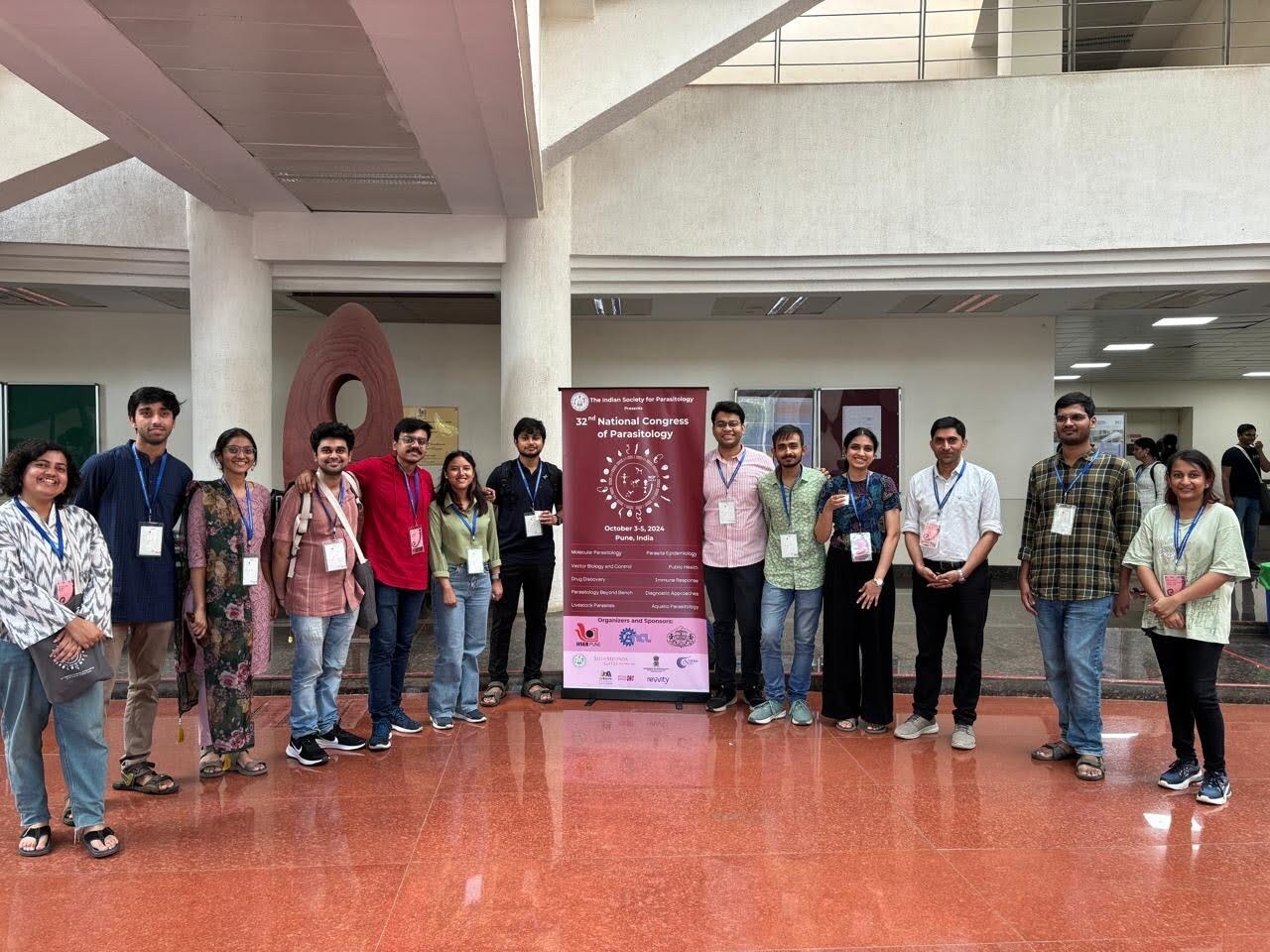
His group focuses on mapping the genes that Plasmodium rapidly switch on and off under different conditions to combat drugs and adopt chemical disguises that allow them to attack different tissues of the body. The alternative to this rapid on/off mechanism is to wait like a sitting duck for the slow arrival of a mutation that could perhaps be weaponised. This flexibility and resilience of Plasmodial cells to respond to the myriad of changes with “simple” coordinated switches is what Krishanpal’s team wants to understand. Studying this would require one to keep shifting focus from single molecules to organelles and entire cells. While Krishanpal now enjoys traversing up and down the cellular scale to understand the many complexities of Plasmodium, he set his sights on swimming upstream in his own life.