AI-driven screening tools are transforming oral cancer detection in India by enabling rapid, accessible, and low-cost diagnosis at the point of care. By bridging gaps in awareness and infrastructure, Mukhia Plus (Mukhia+) is an AI-driven technology that helps healthcare workers identify high-risk lesions early, improving outcomes and reducing the burden of late-stage oral cancer.
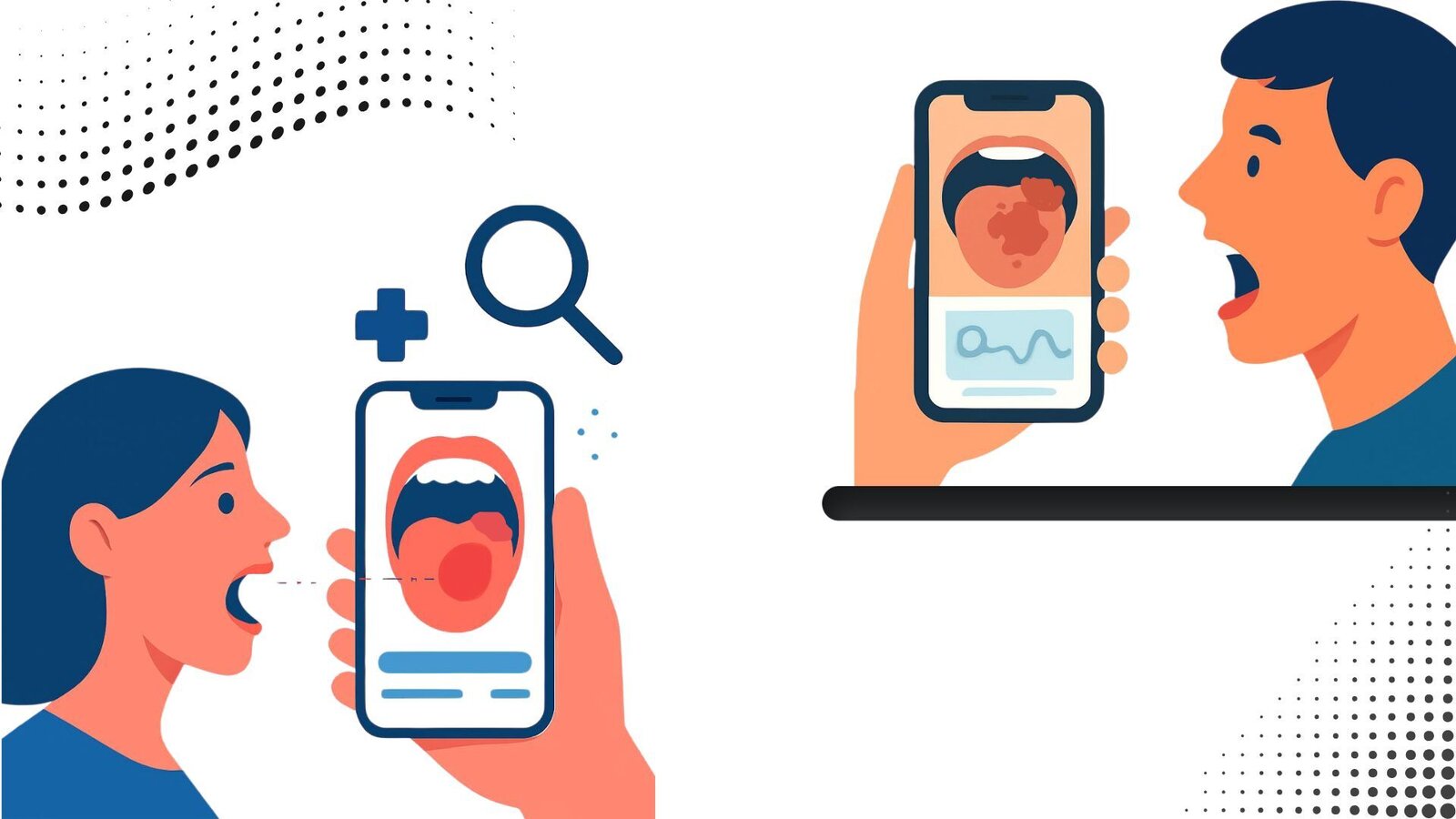
Picture this. A farmer walks into a busy community healthcare centre in rural Maharashtra seeking medical care for a toothache. He shares his history of long-term use of oral tobacco with a healthcare worker. A cursory examination of the mouth follows. The farmer is sent home with some painkillers. His stained teeth and white and red patches in the mouth, may have been noticed by the healthcare worker, but remain unaddressed. The patient — a long-term tobacco user — leaves the clinic with little further awareness of the imminent severity of these findings or actionable information to address them.
Far beyond a mere case study, this scenario is very common in healthcare practice across India. Precancerous oral lesions and oral cancer are easy to spot for a trained eye, however healthcare professionals are either unaware of, or poorly-versed with, screening for these findings, or lack the tools to evaluate high-risk lesions and initiate an urgent referral for confirmatory diagnosis and treatment.
India has over 250 million tobacco users, making it the world’s second largest consumer of tobacco products, with smokeless tobacco in the form of gutkha, pan masala mixed with zarda, and mishri, being the most common form of use.
With a large number of users, tobacco consumption is responsible for a staggering number of deaths in the country, estimated at 1.35 million deaths annually — which is over 3500 deaths daily or roughly 154 people per hour. This burden accounts for nearly 30% of adults (1 in 3 persons) using tobacco in some form.
In India, oral cancer caused by tobacco use is a leading cause of these deaths. Both smoked (cigarettes, bidis) and smokeless tobacco (such as gutkha, betel quid) are primary drivers for oral cancer, with a high prevalence of use in both urban and rural areas. Consequently, the country reports over 1,50,000 new oral cancer cases each year, with over 50,000 deaths due to the disease.
Tobacco-driven oral cancer is a multi-stage disease that starts when components in tobacco smoke or smokeless tobacco initiate a series of changes in the oral cavity, such as white patches, red patches, ulcers, thickened bands of tissue, among other lesions. Collectively referred to as ‘potentially malignant disorders’ (or ‘pre-cancer’), these lesions — while not cancerous themselves — possess a tendency to develop into oral cancer, usually over a period of several years. Detecting these lesions early can lead to medical interventions at a curable stage, thereby improving cancer survival and reducing morbidity and mortality.
Yet, in spite of the scale of the healthcare challenge and recognition of the value of early detection, screening for oral cancer in India is severely under-recognised and underutilised. India reports critically-low screening rates for the disease, with data from the National Family Health Survey‑5 indicating that only 1% of women and men between 30 – 49 years have ever undergone screening for oral cancer. As a consequence, approximately 80% of oral cancers in India are diagnosed only when at advanced stages, an outcome associated with limited treatment options and poor survival rates. This discrepancy is in large part due to a paucity of effective screening tools for tobacco-driven oral cancer, particularly those that can be deployed at scale in underserved and resource-limited settings such as rural and remote areas.
It is this gap — between the healthcare need and technology-led innovation — that Mukhia+ is aiming to fill
Built by a team of clinicians and software developers based in India and the UK, Mukhia+ is a screening app for oral pre-cancer and cancer lesions, such as those resulting from long-term tobacco use. The app has been developed with the healthcare system in India in mind, including key considerations such as accessibility, rapidity, and affordability. The user-friendly tool requires only a smartphone and internet connectivity. Once downloaded, the app guides the user — intended to be a clinician, nurse, healthcare worker or trained operator — to capture select images from the oral cavity and upload them via a secure cloud-based server.
At this stage, the power of artificial intelligence kicks in. In ten seconds or less, an AI-based algorithm analyses the images and provides a colour-coded risk indicator that guides subsequent management. Lesions flagged as ‘high-risk’, such as those associated to be ‘potentially malignant disorders’ or with imminent risk of cancer progression require the user to advise the patient to seek urgent specialist attention. The app also provides each patient with a screening report that indicates key findings and subsequent recommendations.
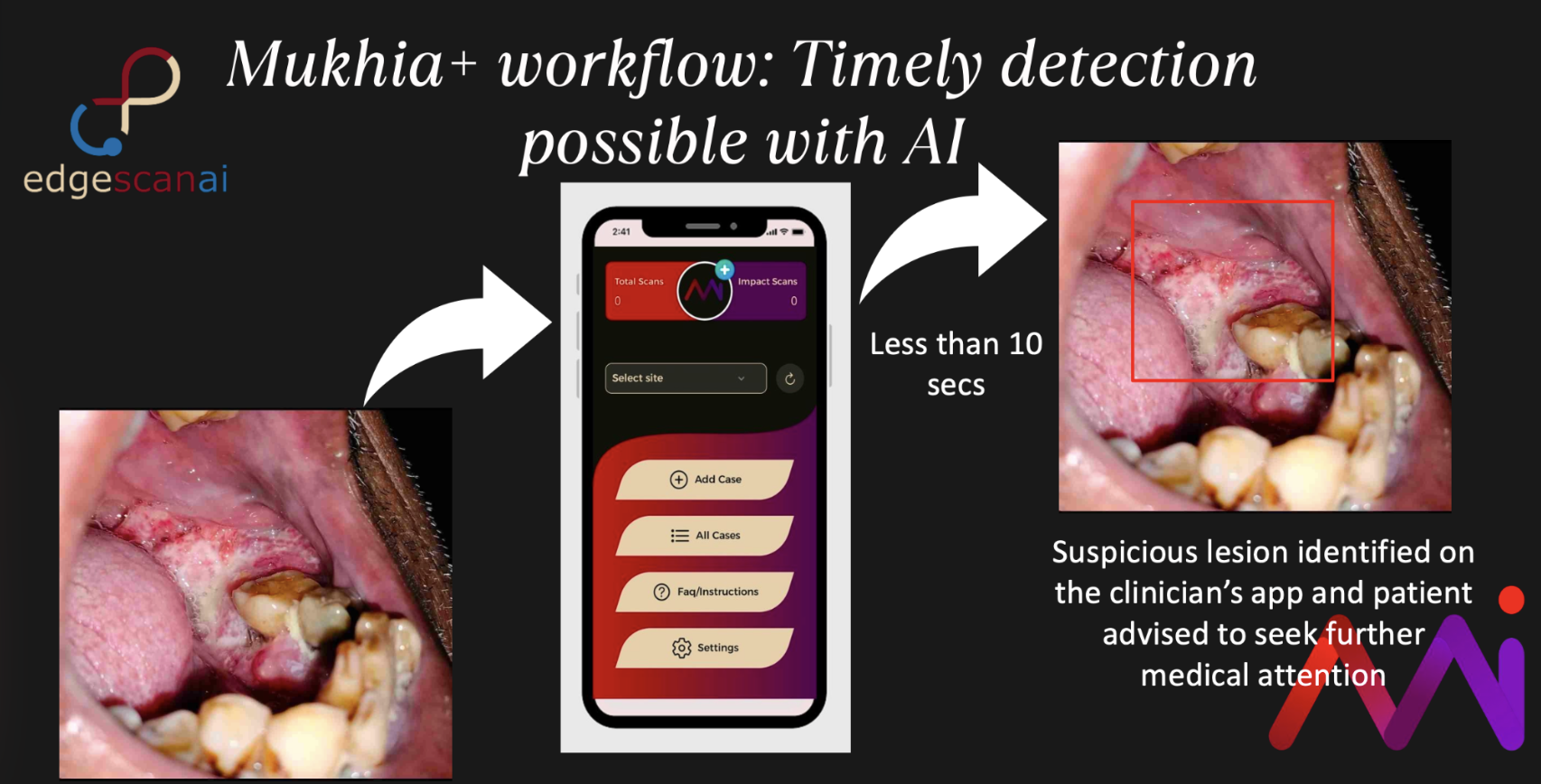
Mukhia+ is powered by state-of-the-art technology from Edgescan.ai, a health tech startup company based at Lifepoint Multispecialty Hospital in Pune, and developed in collaboration with medical universities and dental colleges across India. The custom-built AI-based model is trained with over 50,000 images — each annotated by experts as well — from 5000 patients, covering more than 60 types of different oral lesions. The trained model has been validated across twenty diverse healthcare settings including hospitals, clinics, and corporate health initiatives. The results are more than encouraging.
Across multiple field sites, Mukhia+ demonstrated over 90% accuracy in detecting lesions suspicious for pre-cancer or cancer, with not a single case of cancer missed during real-world screening.
In one large corporate screening, Mukhia+ was used to screen 1014 tobacco users, where the AI-based model identified 850 lesions as ‘high-risk’ of which 777 turned out to be clinically-confirmed potentially-malignant lesions; a precision estimate of 92%, which is deemed acceptable for a screening tool. With its recently acquired ISO 13485 certification and CDSCO Class B license (as software as a medical device), the smartphone-based app is now positioned for use in industrial, hospital, and community-based health programmes.
Looking further, the deployment of Mukhia+ as a screening tool across India, as well as other countries with a high burden of tobacco use and tobacco-driven oral cancer, through national screening programs or cancer screening guidelines, can be a game-changer.
Going back to our initial case study, now picture this possibility. Prompted by the patient’s history of long-term tobacco use, the trained healthcare worker unlocks a smartphone that has the Mukhia+ app installed. Following the prompts on the app, the healthcare worker ensures the necessary security and data protection features and patient consent processes are in place. Then, using the Mukhia+ app, the worker photographs select sites in the patient’s mouth. In the next ten seconds, the app analyses the images. The patient’s lesions are determined to be ‘high-risk’ for oral cancer. The patient is provided recommendations for further referral and follow up.
Karthik Krishna M, Dean of Rungta College of Dental Sciences and Research, Bhilai — a partner site where the model was field tested, says —
What I am most looking forward to is the potential of this app to scale up expert oral health screening in India and take it to the masses. For too long we have complained about oral cancers presenting in late stages. Mukhia+ has the potential to eliminate late presentations through timely action”.
While Mukhia+ undergoes further validation and evaluation in different settings, its ability to offer ease-of-use, large-scale and low-cost screening of tobacco-driven oral cancer makes it well-poised to transform the screening landscape and burden of oral cancer in India — and it promises to do so one picture at a time.
To know more about how you can engage with Mukhia+, write to ask@edgescan.ai.