This article redefines survival beyond biological persistence, examining it through ecological and sociological lenses. Drawing on case studies from India, the authors highlight how power, inequality, and environmental injustice shape survival. It argues for a just, regenerative, and inclusive understanding of survival that prioritises dignity, equity, and long-term ecological sustainability.
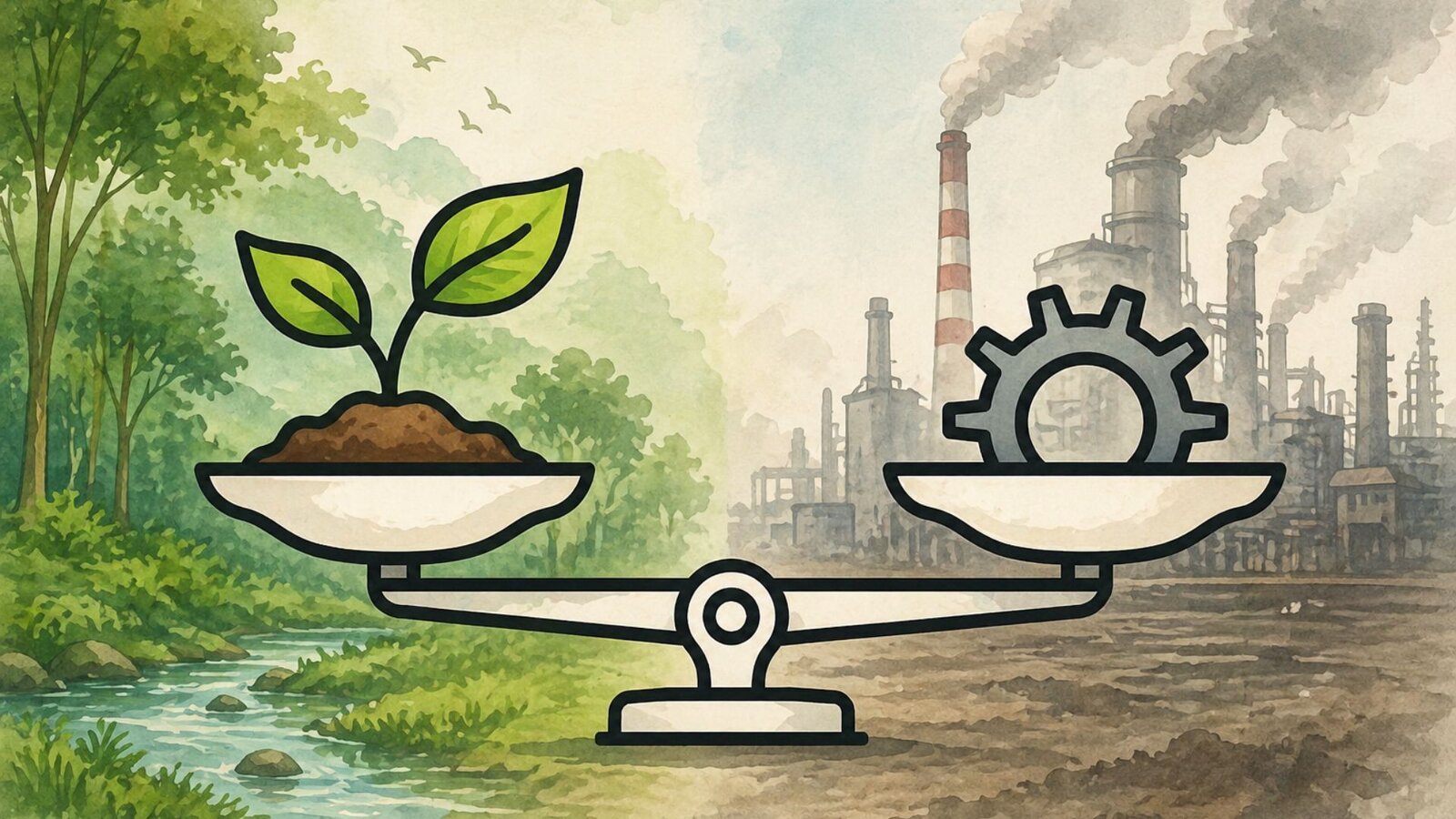
Survival refers to the persistence of life, whether it be of an individual, a population, or an entire ecosystem, and is mostly shaped by adaptation, resource availability, and environmental interactions from an ecological standpoint. Popularly captured in the phrase ‘survival of the fittest’, it underpins evolution and sustains the resilience and diversity of the natural world.
But what happens when we extend this idea to human societies? At its simplest, survival means access to essential elements like food, water, shelter, and safety. These elements align with the core dimensions of human security introduced in the United Nations Development Programme’s landmark Human Development Report of 1994. However, sociology reminds us that this definition is incomplete. Émile Durkheim’s writings on social solidarity and Pierre Bourdieu’s work on inequality tell us that survival is not only material but also social. True survival also interweaves dignity, equity, participation, and autonomy. If ecology teaches us about interdependence, sociology highlights how power and inequality shape access to resources.
Survival and power: In human societies, survival is often mediated by three main questions: (A) Who controls the land? (B) Who decides on development? (C) Who bears the costs of ecological damage? Thus, these questions lie in both realms – sociological as well as ecological. Marginalised groups such as Adivasi communities, small farmers, fishing families, and the urban poor are most dependent on natural resources, yet they remain the most vulnerable to environmental degradation. Ironically, they contribute the least to the crises they endure.
In Central India, Adivasi communities have long faced displacement due to mining and dam projects framed as ‘national development’. Such projects not only strip them of ancestral lands but also dismantle their forest-based livelihoods. On paper, their claims are legally recognised under the Forest Rights Act (2006), but the ground reality is different; weak implementation leaves their ecological survival tied to struggles for cultural identity and political recognition.
In Cuddalore, Tamil Nadu, fishing families, Dalit settlements, and low-income groups live alongside the SIPCOT (State Industries Promotion Corporation of Tamil Nadu). This industrial complex forms one of India’s largest clusters of chemical factories producing pesticides, pharmaceuticals, and plastics. Residents have reported respiratory illnesses, skin diseases, and cancers, as documented by Community Environmental Monitoring reports and independent studies by the CSIR-National Environmental Engineering Research Institute (NEERI). The investigations also detected unsafe levels of carcinogenic pollutants, including benzene and other volatile organic compounds. Community leaders argue that the siting of hazardous industries here is a clear case of environmental injustice. They point out that zoning decisions and weak enforcement have placed a disproportionate burden on vulnerable communities, leaving them to bear the toxic costs of industrialisation.
Beyond endurance: Survival is not only about endurance but also about resistance. The Save Aarey movement in Mumbai illustrates this vividly. When authorities proposed clearing parts of Aarey Colony, a 1200-hectare urban forest inhabited by Adivasi communities, youth, environmental groups, and local leaders mobilised. For Adivasi groups, Aarey was an ancestral home; for young and budding environmental protectors, it was Mumbai’s green lungs and vital to climate resilience. Through sit-ins, art installations, and social media campaigns, they reframed the struggle: not just saving trees, but protecting cultural sovereignty, ecological justice, and the right of future generations to breathe. The urgency was amplified by Mumbai’s worsening air pollution, with the city repeatedly ranking among the most polluted globally in IQAir’s annual reports. Despite police crackdowns, environmental defenders persisted, underscoring that survival today must also mean a liveable tomorrow.
For oppressed and marginalised groups, survival often takes the form of political struggle. Practices such as seed-saving, community farming, water sovereignty, and grassroots environmental movements are not merely ecological strategies but acts of reclaiming dignity and autonomy.
Rethinking survival: True survival is more than avoiding death. It is a socially and ecologically just existence that allows people to thrive. It demands cultural continuity, collective memory, intergenerational justice, and environmental stewardship. Movements such as ecofeminism, indigenous resurgence, and degrowth challenge narrow definitions of survival as competition. Instead, they emphasise cooperation, care, and regeneration.
This reframing is essential in an age of climate crisis and widening inequality. As extreme weather events intensify and resource conflicts sharpen, the question is no longer just how we survive, but who gets to survive and under what conditions.
Towards true survival: Governments often justify large-scale infrastructure and industrial projects in the name of development and growth. For instance, the Economic Survey 2023 – 24 identifies infrastructure expansion as a key driver of growth, while NITI Aayog’s strategy documents highlight industrial corridors as important enablers of development. Yet development that undermines the ecological base of marginalised communities’ risks turning survival into a privilege rather than a universal right. Bridging ecology and sociology shows us that survival is not only biological but also political, cultural, and ethical.
Survival attains its fullest meaning when it is just, regenerative, and emancipatory, and when societies collectively ensure that life is not merely possible but genuinely liveable for all.