The Regional Young Investigators Meeting (RYIM) 2026 Tirupati, titled Furthering Evolutionary Ecology and Conservation Science in India, was held at the Indian Institute of Science Education and Research (IISER), Tirupati, from 29 to 31 January 2026, situated at the foothills of the Eastern Ghats, a biodiverse and relatively underexplored mountain range. The location provided an ideal platform to highlight research across this region, while drawing attention to the growing fields of evolutionary ecology and conservation science in smaller towns and cities across southern India.
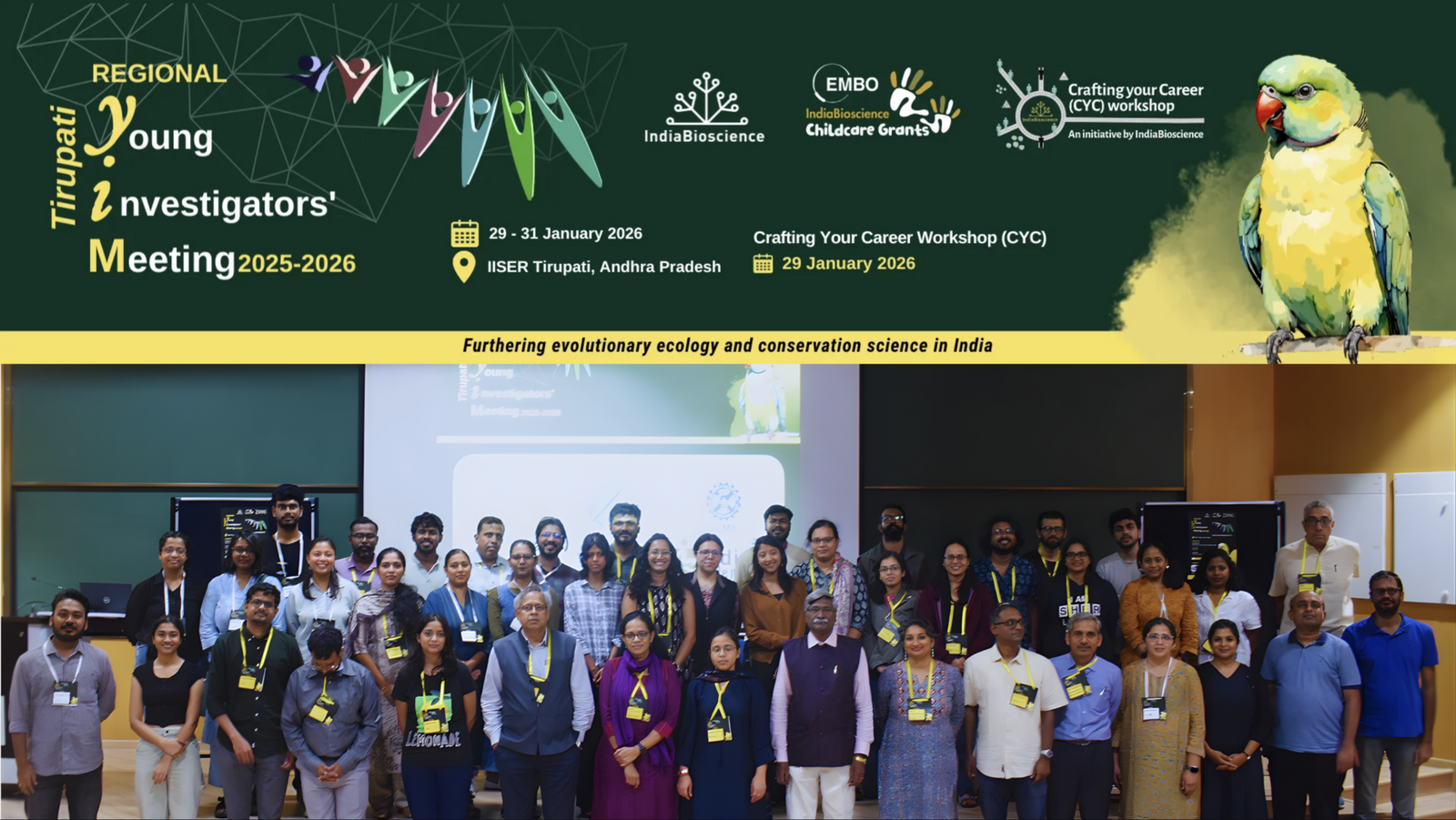
Historically, ecological sciences in India were concentrated at a handful of institutions: Indian Institute of Science (IISc), Bengaluru; Wildlife Institute of India (WII), Dehradun; National Centre for Biological Sciences (NCBS-TIFR), Bengaluru; Salim Ali Centre for Ornithology and Natural History (SACON), Coimbatore and several non-government entities such as World Wide Fund for Nature-India (WWF-India), Wildlife Conservation Society, (WCS), Nature Conservation Foundation (NCF), and Ashoka Trust for Research in Ecology and the Environment (ATREE).
Over the past fifteen years, however, a significant shift has taken place, with over fifty faculty members, mostly young investigators, establishing research programmes across a broader range of institutions, including IISERs, new private universities such as Krea University, Ashoka University, Azim Premji University, GITAM Deemed to be University, and several others. This expansion is timely, given the urgency and scope of impact of climate change and anthropogenic habitat loss in India’s biodiverse landscapes.
Despite this growth, several challenges remain. Researchers at many institutions often work in isolation, frequently as the only domain specialists, bearing disproportionate administrative and training loads, with limited opportunities for collaboration or resource-sharing.
The RYIM at Tirupati was conceived as a response to this fragmentation, bringing together young ecologists alongside senior researchers, funding bodies, and administrators.
Building on an earlier gathering in 2024, the RYIM Tirupati 2026 was designed with five objectives:
To discuss career trajectories and enable learning from senior researchers.
To address funding challenges and explore long-term strategies.
To examine administrative challenges specific to the domain.
To develop collaborative approaches to teaching and training.
To identify research directions and enable partnerships.
The meeting was structured across three days, combining plenary talks, panel discussions, breakout sessions, and field exposure to the Eastern Ghats. The event allowed both formal learning and informal networking across a growing community of ecologists.
Career journeys and scientific pathways
RYIM Tirupati began with the IndiaBioscience-led interactive Crafting Your Career (CYC) workshop. Moumita Mazumdar from the IndiaBioscience team introduced participants to diverse career pathways, while also providing insights into essential skill sets and the importance of networking, through a mix of informational interviews, résumé-building sessions, and discussions grounded in case studies and lived experiences.
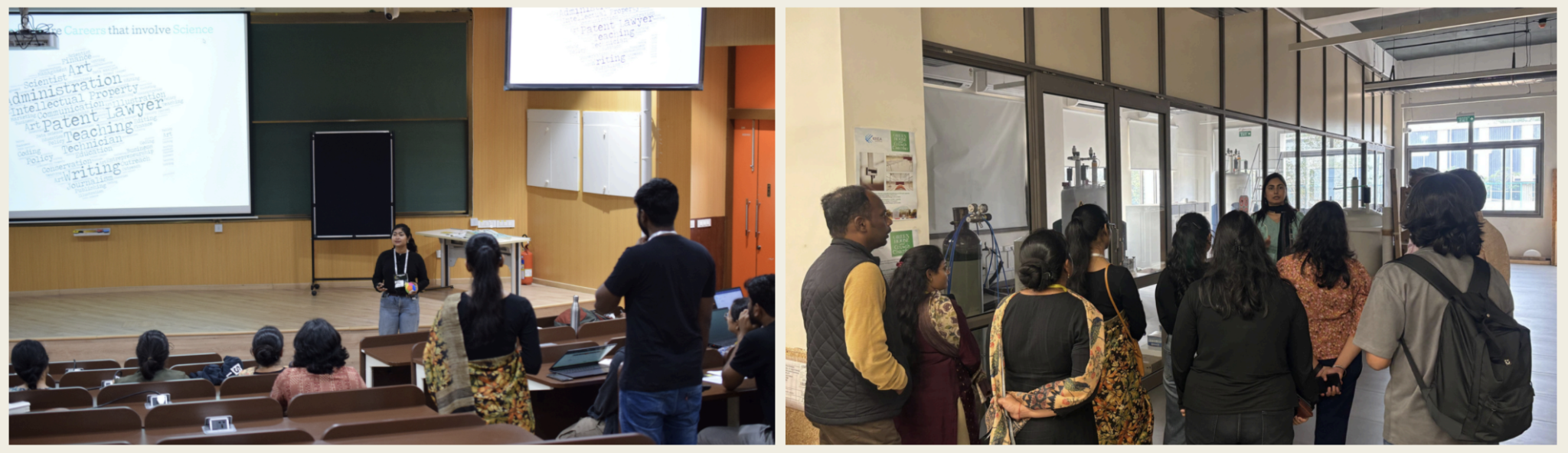
The afternoon featured an outreach visit to Krea University. At Krea, delegates were given a tour of the facilities led by Vaishali Sharma, followed by structured interactions with faculty from three departments: Biological Sciences, Environmental Studies, and the Centre for Writing & Pedagogy. These interactions included lab visits, showcasing of laboratory instruments and facilities, and informal conversations around participants’ research areas and ongoing work.
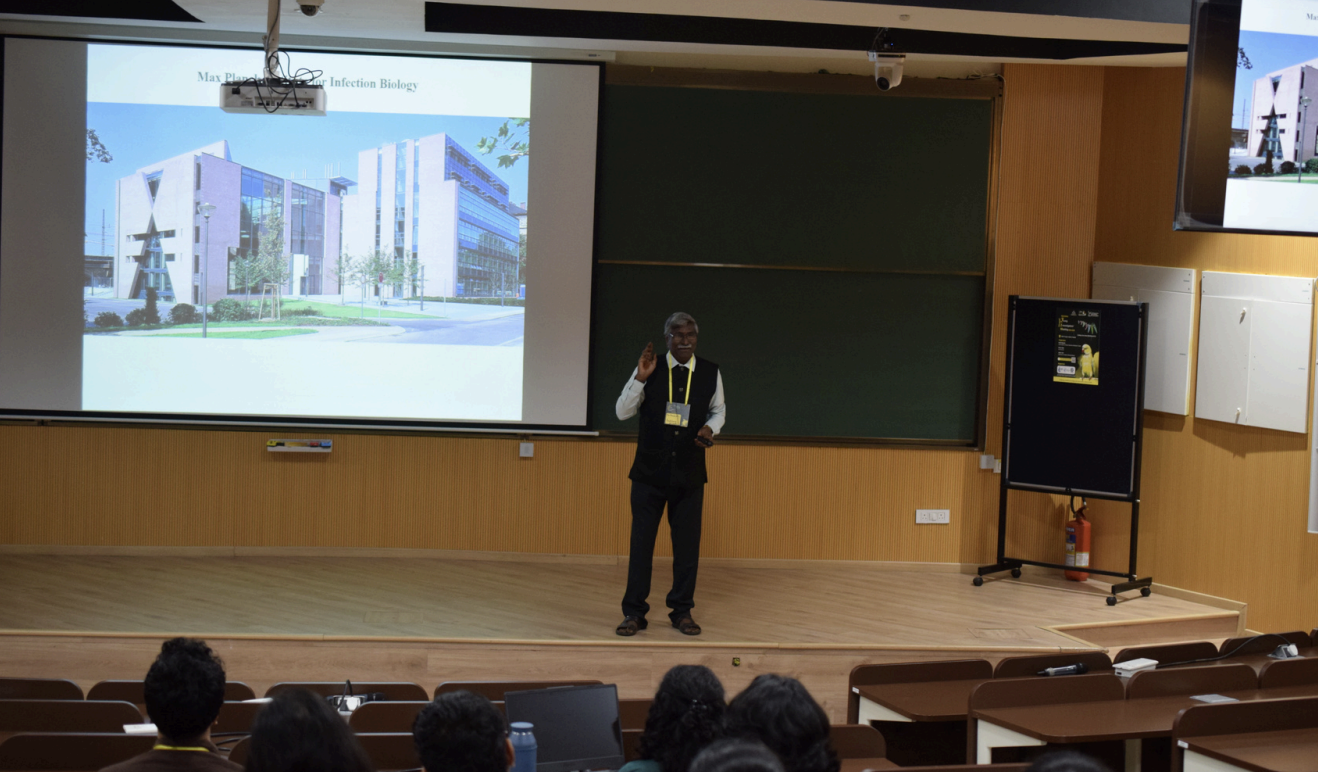
Day 1 opened with a keynote address by N Parthasarathy, Emeritus Professor at Pondicherry University, Puducherry, who reflected on building a long-term research career in ecology. Drawing on decades of field-based work, his talk emphasised persistence, collaboration, and adaptability. Establishing long-term ecological datasets across multiple landscapes was highlighted as critical, along with the importance of relationships with collaborators and forest departments. He advised patience and perseverance in navigating administrative challenges, keeping organised records, and building relationships with Forest Departments over time. Diversifying funding across DST, DBT, MoEFCC, ONGC, and European sources was equally important, he said. He closed with a thought that captured his entire philosophy — “From seed to tree — sow now”.
Subsequent sessions by young investigators Anusha Shankar, Vincy K Wilson, and Eapsa Berry reflected diverse research problems within ecology, showcasing work spanning systems from birds to insects. These discussions created space for early-career researchers to situate their own journeys within a broader context.
Funding landscape and strategies
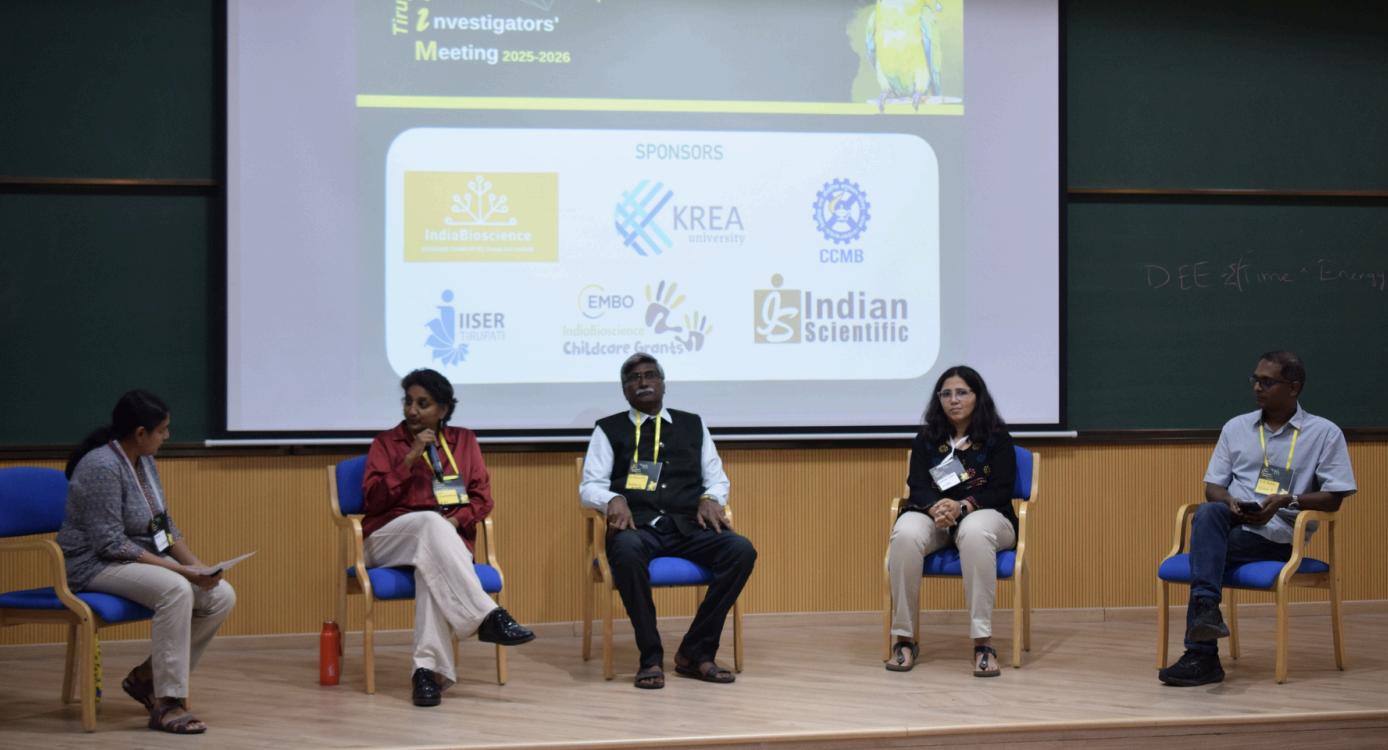
A key session focused on funding challenges in ecological research, featuring Uma Ramakrishnan (NCBS-TIFR, Bangalore), N Parthasarathy (Pondicherry University, Puducherry), Robin VV (IISER Tirupati), and Jahnavi Joshi (CSIR-CCMB, Hyderabad), and moderated by Shivani Jadeja (Krea University, Tirupati). Discussions centred on three themes: types of funding, the role of networks, and institutional support.
Fellowships were seen as more flexible compared to grants, which often come with rigid deliverables. Small grants, particularly from Forest Departments, were recognised as crucial for exploratory work, even as larger grants carry greater visibility. Short funding cycles were noted as a limiting factor for long-term ecological research.
The “patchwork quilt” approach, combining multiple small grants, emerged as a common strategy, though administratively demanding. The consensus was that while fundraising is constant, opportunities exist, and researchers must learn to navigate them.
Views differed on the role of networking. While some emphasised the significance of strong science and proposals, others acknowledged that reputation, institutional affiliation, and relationships do influence outcomes. Practical advice from panellists included targeting appropriate calls and understanding funding probabilities.
Institutional support was identified as a key factor. Start-up grants and sustained internal funding were seen as essential for establishing research programmes. Models where institutions provide long-term support were highlighted as enabling more stable and impactful research.
From uncertainty to impact: A journey in science
Day 1 concluded with a plenary lecture by Uma Ramakrishnan from NCBS – TIFR, who shared a candid account of her scientific journey, highlighting its non-linear nature. Her PhD years were marked by disruptions, including a shift in research direction and an unsupportive environment. A positive postdoctoral experience later helped her rebuild confidence, underscoring the importance of a supportive research ecosystem.
On returning to India, Uma established a population genetics lab at NCBS while balancing motherhood and research. Her early, student-driven work led to key contributions in tiger genetics and directly informed conservation policy, including wildlife corridor design. Her recent work spans the genetic basis of the black tiger phenotype in Similipal and disease ecology in Northeast India, including bat surveillance during COVID-19. She also reflected on navigating institutional and public pressures, emphasising the role of institutional support. Her talk highlighted how long-term ecological research can translate into meaningful conservation impact.
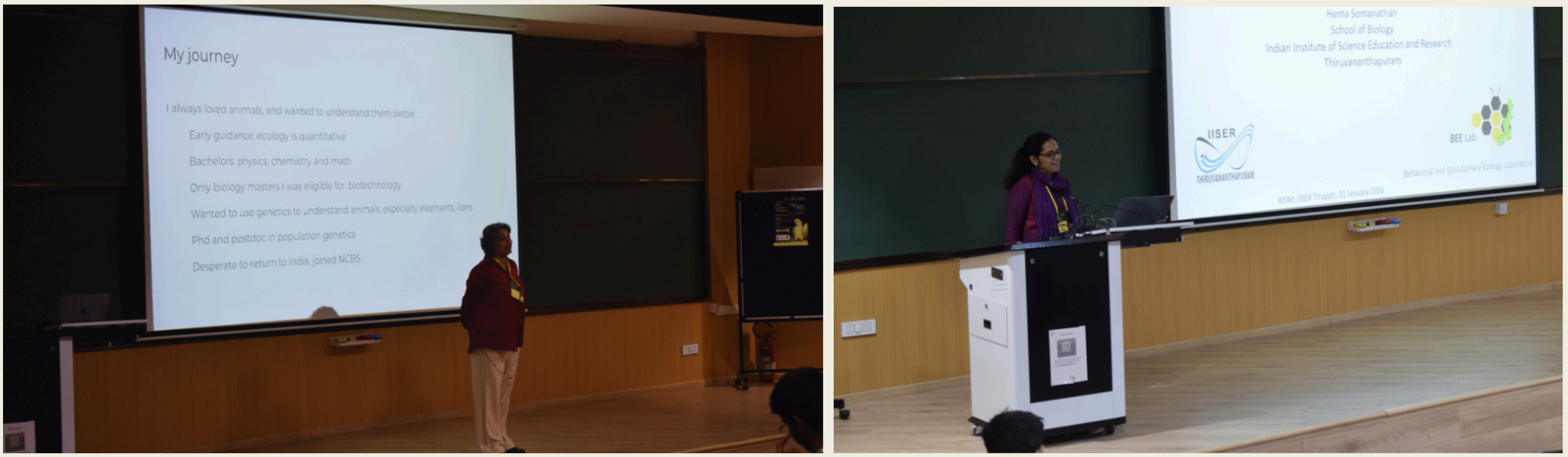
Day 2 began with an insightful keynote by Hema Somanathan from IISER Thiruvananthapuram, who shared a deeply personal account of how her career was shaped by serendipity, frugality, and intellectual curiosity, reiterating the non-linear nature of research pathways. From early work at the Bombay Natural History Society (BNHS) in Mumbai to navigating a career break for caregiving, her trajectory reflected both challenges and renewal, particularly during her postdoctoral work in Europe. At IISER Thiruvananthapuram, she has since built a research programme focused on insect – plant interactions and social systems. She emphasised the value of interdisciplinary work, frugal science, and the exploration of understudied questions, noting that meaningful insights often emerge from such approaches.
Together with the previous day’s plenary, her talk underscored themes of resilience, adaptability, and curiosity, offering important perspectives, particularly on challenges faced by women in science.
The session was followed by Young Investigator talks by Mansi Mungee, Gopal Murali, and Ashwini V Mohan.
Administrative challenges and institutional realities
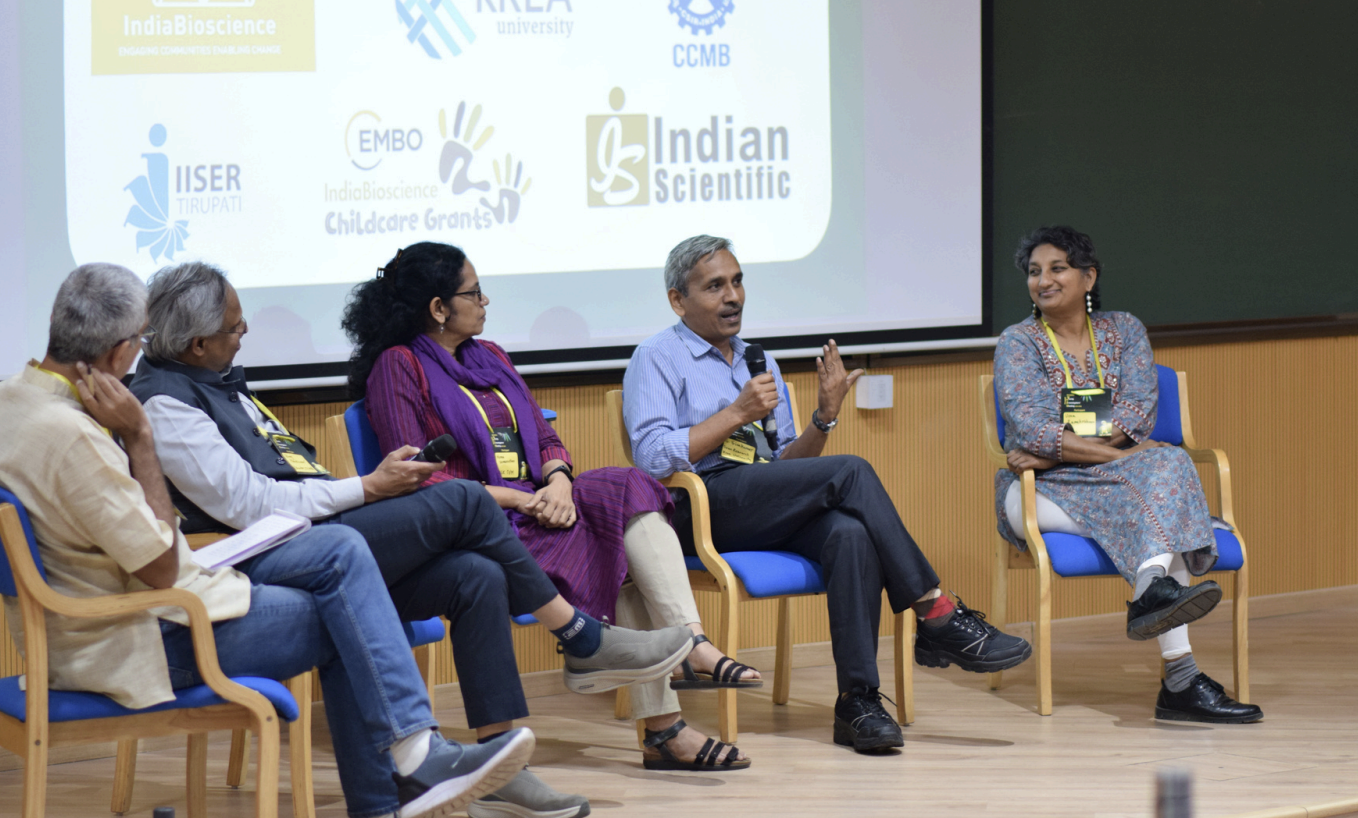
A panel on the second day, featuring Vinay Nandicoori (CSIR-CCMB, Hyderabad), S Sivakumar (Krea University, Tirupati), Hema Somanathan, and Uma Ramakrishnan, moderated by Guha Dharmarajan (Krea University, Tirupati), discussed administrative challenges and the perception of ecological research within institutions. A central theme was the importance of relationships with administrative staff. Participants were encouraged to view administrative personnel as collaborators rather than obstacles.
Navigating procurement systems and institutional processes requires patience and familiarity. Faculty roles were described as inherently managerial, involving responsibilities beyond research, including permits, logistics, and people management.
Institutions where administrative systems actively support scientific work were presented as effective models. Overall, the discussions underscored that conducting research in India often depends as much on human relationships as on formal systems.
Training, teaching, and community building
The meeting also addressed challenges in ecology training and education. Many institutions have limited faculty strength in ecology, leading to high teaching loads and reduced research time. The idea of a Teaching Consortium was revisited, aiming to pool expertise across institutions and enable collaborative teaching.
Breakout sessions allowed participants to identify key structural challenges, including establishing long-term field stations, obtaining ethics clearances for ecological research, and balancing teaching with research responsibilities.
Students participated in parallel discussions, raising concerns specific to early-career stages. These interactions highlighted the need for structured mentorship and institutional support mechanisms.
Key takeaways and broader impact
RYIM Tirupati highlighted both progress and persistent structural challenges.
For young investigators, the meeting provided access to mentorship, institutional perspectives, and peer networks — resources often limited in smaller or remote institutions. For aspiring researchers, it offered insight into the realities of academic careers in ecology.
At a broader level, strengthening ecological research networks has direct implications for conservation and policy in India. As the complex challenges of climate change and habitat loss intensify, the need for long-term, collaborative, and multi-site research becomes increasingly urgent.
Recommendations that emerged from RYIM Tirupati
The meeting concluded with several recommendations to address structural challenges and sustain momentum:
Targeted publications in journals to raise awareness among scientists and administrators about field-based ecological research challenges.
Focused white papers on teaching frameworks,ethics clearances for ecological fieldwork, administrative and funding/budgeting challenges.
Community platforms, such as a dedicated WhatsApp group, to share administrative knowledge and troubleshoot challenges.
Periodic follow-up meetings across different locations to maintain engagement and strengthen networks.
All pictures are taken by the RYIM Tirupati team at IISER Tirupati except the one from the visit which was taken by the team at Krea University.