SUSTAiN 2026 at BLiSC, Bengaluru, an annual initiative by the Tata Institute for Genetics and Society (TIGS), brought together scientists, policymakers, and practitioners to rethink agriculture and nutrition under climate stress. Discussions highlighted resilient crops, sustainable pest management, and nutrition security, emphasising the urgent need to bridge science, policy, and practice to build food systems that sustain both people and the planet.
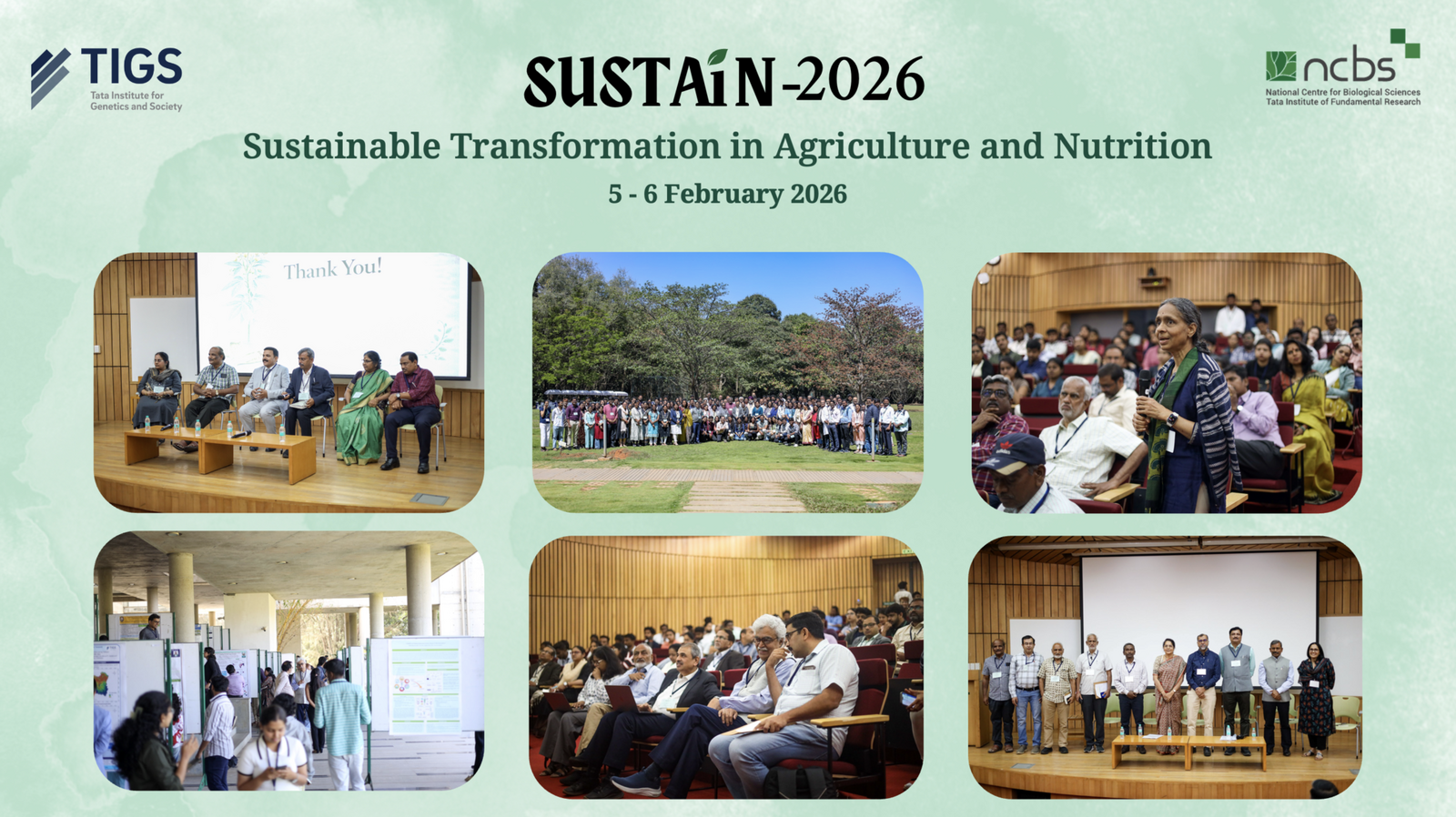
On a warm February morning at the Bangalore Life Sciences Cluster (BLiSC) campus in Bengaluru, a platform was set for thought-provoking discussions on the future of food encompassing climate change, healthy diet, and food security. The platform was the first edition of SUSTAiN (Sustainable Transformation in Agriculture and Nutrition), held on February 5 – 6, 2026, a new annual initiative by the Tata Institute for Genetics and Society (TIGS) in collaboration with the National Centre for Biological Sciences (NCBS) — TIFR. This initiative had leading institutes like University of Agricultural Sciences — GKVK, Bengaluru, ICAR — National Bureau of Agricultural Insect Resources (NBAIR), Bengaluru, and ICAR-Indian Institute of Rice Research (IIRR), Hyderabad as knowledge partners. The two-day conference witnessed over 250 participants, including scientists, students, policymakers, industry representatives, extension professionals, and other agricultural and environmental enthusiasts, who came together to discuss an important question: How do we design an agriculture system that can withstand the whims of climate change while providing sustenance for both people and the planet?
The central theme that surfaced during these discussions was the recognition that ‘agriculture is at the crossroads’. While contributing about 5% of global greenhouse gas emissions, the cultivation of crops remains highly vulnerable to rising temperatures, fluctuating rainfall, and pest attacks. Globally, agrifood systems are being pushed to do more with less; that is, to increase productivity, adapt to climate change, provide adequate nutrition, and reduce greenhouse gas emissions simultaneously. In addition, India is focusing on broader aspects related to resilience, nutrition, and farmer livelihoods. However, formulating and translating policies into practice is a process that involves discussions, brainstorming, and active engagement among stakeholders, as currently, there are limited opportunities to connect science, policy, and practice.
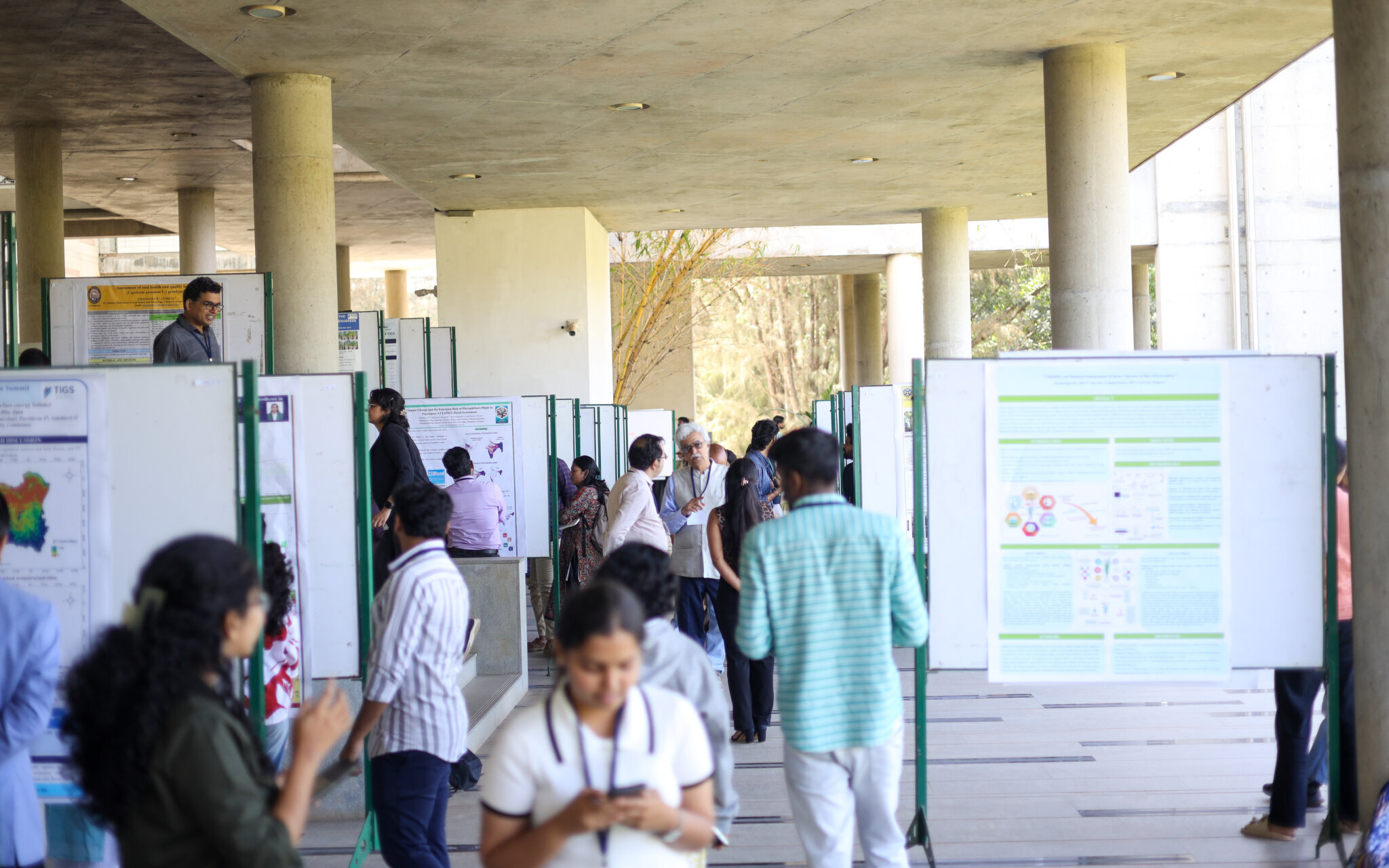
SUSTAiN is an annual conference designed to serve as a platform to integrate these components and provide a roadmap for an agricultural system that meets societal needs. The conference featured three key themes: climate-resilient agriculture, sustainable pest management, and sustainable nutrition security. Over 90 posters were displayed, covering topics ranging from molecular genetics and microbial applications to agricultural policy.
Enhancing climate resilience: A strategic shift toward multi-stress-resilient crop varieties
Climate-resilient agriculture is a critical frontier in food security, and the session emphasised that the era of single-trait solutions has ended in the face of agriculture’s mounting challenges. To confront modern challenges, crops must be resilient to diverse stresses, such as heat and drought, diseases and pests, flooding and nutrient imbalance, etc. Discussions highlighted new breeding techniques that combine multiple traits to yield high-performing varieties while maintaining grain quality and farmer acceptance. A new player on the block is genome editing, which offers precision and accelerates the development of these traits in plants. The session showcased precise genome-editing approaches that, when implemented responsively, could be highly beneficial. Scientists spoke about targeting hormone systems such as cytokinin metabolism in rice, which helps in increasing yield and stress tolerance. However, the journey of genome editing from the laboratory to the field is a work in progress, as identifying the correct target genes requires extensive genotype-to-phenotype data.
Another potential approach to improve crop stress resilience, yield, and nutrition among the plants is by enhancing soil and rhizosphere health through beneficial microbes. Microbial applications have been proposed as a sustainable solution for decades, but microbial synthetic community (SynCom) appears to be a more sustainable solution that may work across diverse environments. The prospect of reducing fertilizer dependency, one of the biggest environmental stressors, is particularly promising and offers scope for improved biological nitrogen fixation and plant-microbe interactions. Another focus was on multi-location trials and stress indices that evaluate crop performance under real-world conditions. The impact of rising night-time temperatures during grain filling, often overlooked in favour of daytime temperatures, was cited as an important factor in maintaining stable yields under stress.
Transforming pest management: an eco-friendly, sustainable approach
Climate change affects crop yield, diseases, and pest prevalence. A key discussion in the pest management sessions focused on the misuse of pesticides, which has led to insect resistance and ecological side effects.
Though integrated pest management has been touted as the most eco-friendly and sustainable way forward, the speakers also emphasised its limited adoption in India. In addition to established methods of physical and biological control, new scientific innovations such as microbial applications, bio-pesticides, RNA interference, and CRISPR technologies are advancing pest management and addressing pesticide resistance. Targeted pest control using plant RNAi machinery or dsRNA-based biopesticides may allow specific pest suppression without harming beneficial insects or microbial communities.
The forum strongly emphasised that a multidimensional integrated approach is essential for sustainable pest management. It was also highlighted that technology alone is insufficient; effective implementation requires coordination among research institutions, regulatory bodies, industry stakeholders, and farmers. Successful translation depends on scientific transparency, clear communication, and openness, which help build trust between scientists, industry actors, and farmers.
Nutrition security: Reframing agriculture through a nutritional lens
Beyond developing plants that withstand stress and increase productivity under climate change, another critical question remains: nutritional security. Questions arise about what we produce, for whom, and whether it is nutritionally adequate. A large part of the Indian population continues to suffer from deficiencies in key micronutrients. Although most of our daily energy requirements are derived from cereals, diets remain deficient in iron, zinc, protein, and essential vitamins. This disconnect between energy sufficiency and nutrient insufficiency remains a major public health challenge.
The third session of SUSTAiN 2026 emphasised the nutritional value of crops. Speakers stressed that the food system of today should not focus merely on producing enough grain, but must ensure the grains are nutrient-rich and capable of meeting human metabolic needs.
Biofortification, where crops are engineered to increase their levels of essential nutrients, was deemed essential during the discussions. Recent advances in genomics-assisted breeding have produced cereals with an adequate amount of iron, zinc, and protein, while maintaining parity in quality and productivity with conventional varieties. Nutrition security, therefore, concerns itself with access, where nutritious crops become a mainstream component of the food system, and delivering better health outcomes does not require individual effort but becomes a part of a regular diet.
Bridging divides: Science, policy, and practice
The final session, an interactive panel discussion, explored a fundamental question, “Why, despite scientific progress, are sustainable practices not scaling up sufficiently?” Issues such as institutional fragmentation, regulatory uncertainty, and limited private-public partnerships were identified as major barriers.
One key insight was that malnutrition can often be viewed as a “failure of exposure”. Caloric sufficiency does not necessarily translate into nutritional adequacy. Expanding access to reliable, science-based information about balanced dietary practices is therefore essential. The topic of direct-seeded rice was debated enthusiastically. While it promises methane reduction and water savings, concerns remain regarding yield stability and farmers’ confidence. Opportunities to use microbes as biofertilizers and biocontrol agents to reduce greenhouse gas emissions while maintaining yields were also emphasised. Public-sector scientists highlighted the need for faster engagement between public institutions and private stakeholders.
A beginning
As the conversations drew to a close and the posters rolled up, one message lingered: transformation is not about the next breakthrough. It is about the continuous integration among genes and soil, crops and markets, and science and society within ethical and policy frameworks.
Across presentations, a recurring theme was the need to translate laboratory success into real-world applications that benefit farmers and consumers.
SUSTAiN 2026 did not claim to deliver a single solution to the climate-food-nutrition challenge. What it offered instead was something equally important: a space to collectively examine the interconnected pieces of the puzzle. In a world where the climate is uncertain, the only constant may be the adaptive evolution of food and nutrition security.