Termites play vital roles in ecosystem functioning, from recycling organic matter to shaping soil health. Satyajeet Gupta and Shatarupa Sarkar explore termite – fungus mutualism and how termites protect their fungal partners from parasites. They also examine emerging RNAi-based approaches to managing wood-feeding termite pests and protecting forest ecosystems.
“Look deep into nature, and then you will understand everything better.”
As rightly said by Albert Einstein, delving deeply into the nature surrounding us truly opens up the universe right before our eyes. Intrigued by the cryptic lifestyles of the termites, researchers from India and Europe have asked interesting questions and explored the ecology of these termites, in turn, helping us realise the importance of basic research in biological sciences.
Termites, belonging to the order Isoptera and originating from wood-feeding cockroaches, are keystone eusocial insects prevalent in the tropical, subtropical and warmer temperate terrestrial ecosystems. They represent almost a third of the terrestrial arthropod biomass. As soil ecosystem engineers, termites aid in the breakdown and recycling of organic matter in deadwood, leaf litter, and soil. They also increase ecosystem heterogeneity through soil translocation and modifications to soil topography, enriching soil nutrient levels and thereby supporting plant growth. Apart from being a key biotic driver of wood decomposition, termites are important greenhouse gas emitters (methane, carbon dioxide, and nitrous oxide), contributing about 3%-4% of the total global methane budget.
Several ecologists have been fascinated by the natural flora and fauna on the campus of the Indian Institute of Science (IISc), Bengaluru, India. Enthralled by the symbiotic association between termites and fungi, found here, Lakshya Katariya, a former Integrated-PhD student at IISc and currently a Researcher at the Faculty of Economics and Business, KU Leuven, Belgium, explored relevant ecological questions surrounding this unique study system — the termite – fungus mutualism — as part of his doctoral research.
Termites and their fungal friends
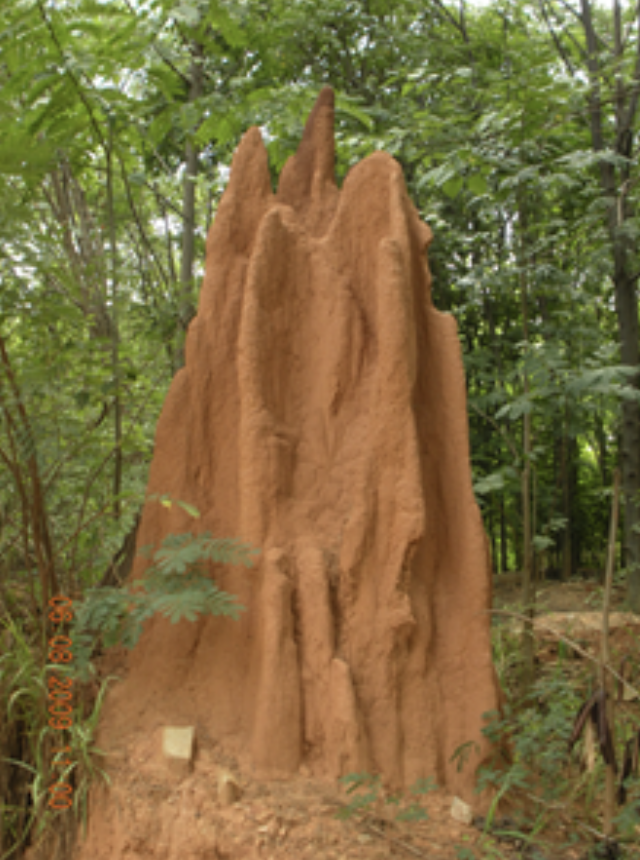
Lakshya Katariya was fascinated by the mutualistic interaction between leaf-cutter ants and fungi, in which ants grow fungi on cut leaf fragments, deriving nutrition from them while providing the fungi with a safe habitat. During his PhD, he explored a similar mutualistic system — the termite-fungus mutualism — a study system found in India and Africa. Here, the mound-building Macrotermitinae termites cultivate the fungus to grow within their abode. They get food from the fungi, which in turn remains protected from predators inside the termite mound.
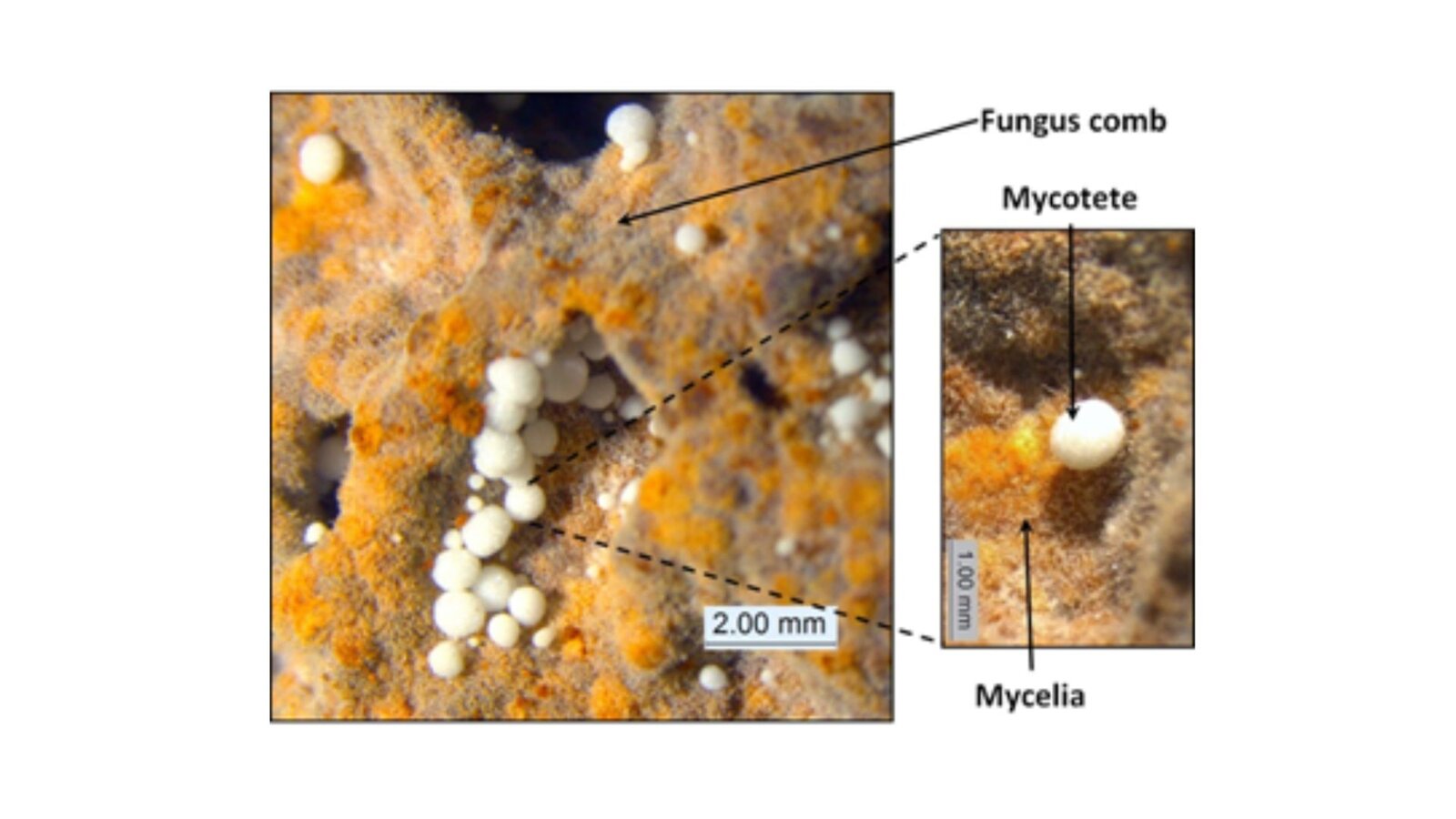
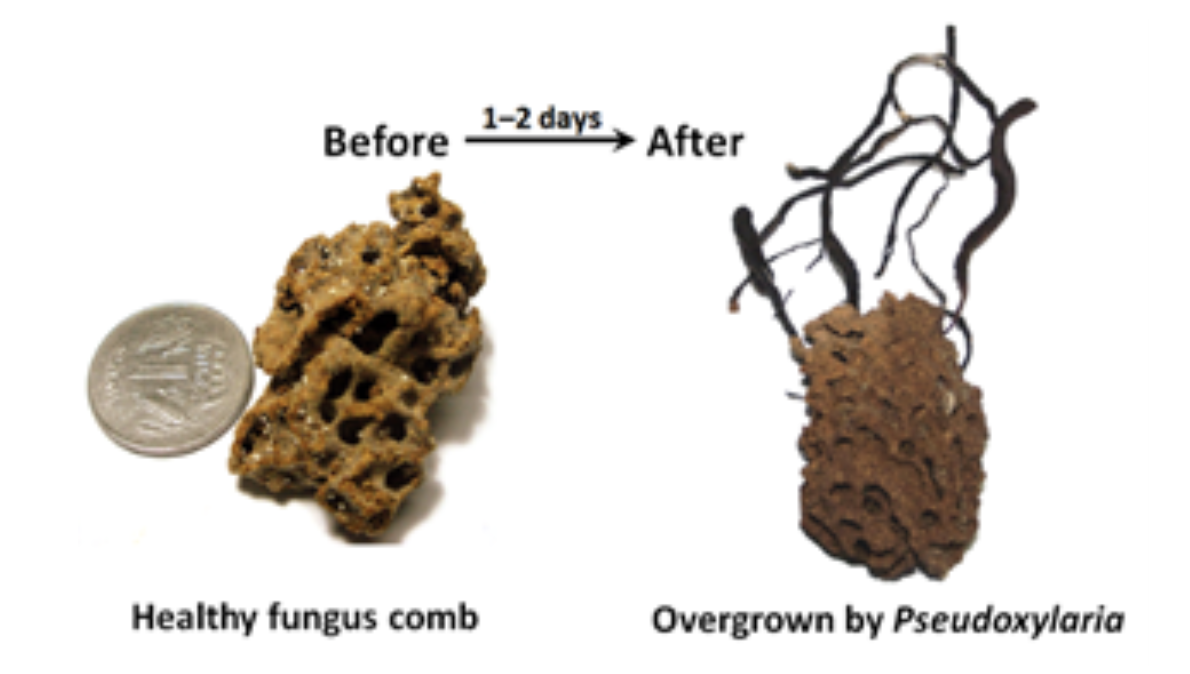
Katariya picked up a piece of fungal garden from Odontotermes obesus termite mound and observed the small white spheres along with the mycelium of the mutualistic fungi called Termitomyces on it. However, upon leaving this piece of fungal garden for a few days out of the mound, he found that a parasitic fungus called Pseudoxylaria started to grow on it. He therefore asked the question: How do these termites protect their mutualistic fungus from the parasitic fungus inside the mound?
To address this question, Katariya first identified the mutualistic and parasitic fungal strains by growing the fungal cultures in the lab. He found differences in the chemical profiles of the two fungus types. He discovered that these termites use these volatile chemical differences to distinguish their mutualistic fungi from harmful fungi and effectively suppress the latter within their mounds. He demonstrated this through a novel biological assay that he developed, which clearly demonstrated that the termites could differentiate between the two types of fungi. “We took small petri-plates, poured agar on it and offered the termites a choice between the two fungus types in the form of small fungal plugs. Over time, we saw that the termites used the agar to make spherical balls —‘boluses’ — like they do with soil, and placed it specifically on the parasitic fungus,” explains Katariya. In this way, termites cut off the oxygen supply needed for the parasitic fungus to grow.
After a year of regular monitoring of temperature and carbon dioxide levels inside termite mounds, Katariya found extremely high carbon dioxide concentrations, far above levels tolerated by humans. These elevated levels also appear to play a role in restricting the growth of harmful fungi within the mounds. “Thus, a combination of both — termite nest environment and the termites themselves — protect the mutualistic fungi inside the mound,” he concludes. Overall, his research tells a fascinating story of how mound-building termites support the growth of specific fungal gardens that provide them with nutrition, thereby sustaining a remarkable mutualistic association in nature.
Wood-feeding termites and how to manage these pests to protect the natural forested ecosystems
Interestingly, wood-dwelling termites can decompose wood at unprecedented rates, particularly in warm temperatures. Some species can become serious pests, causing outbreaks worldwide that are estimated to result in economic damage exceeding $40 billion annually. Of the more than 3000 described termite species, approximately 28 species have been found to be invasive globally, inflicting severe damage to wood through the construction of tunnels during wood-feeding activity. Xylophagous termites are well-known economically significant structural pests of several countries such as the United States, China, Australia, Malaysia, Indonesia, Thailand, India, Taiwan and Japan. They are considered as emerging pests of southern Europe in multiple regions such as Spain and France.
Traditional methods of employing the limited armory of chemical termiticides, baits, physical barriers and biological control agents, have been largely unsuccessful in controlling these termite infestations and have raised human/environmental biosafety concerns as well. Therefore, the search for novel alternative techniques is imperative for the effective management of such forest pests. As part of the Forest Molecular Entomology Team at the Czech University of Life Sciences, Prague, Czechia, Shatarupa Sarkar has contributed to a review that extensively discusses the use of RNA interference (RNAi), in combination with nanotechnology, to manage wood-feeding termite populations in forest ecosystems.
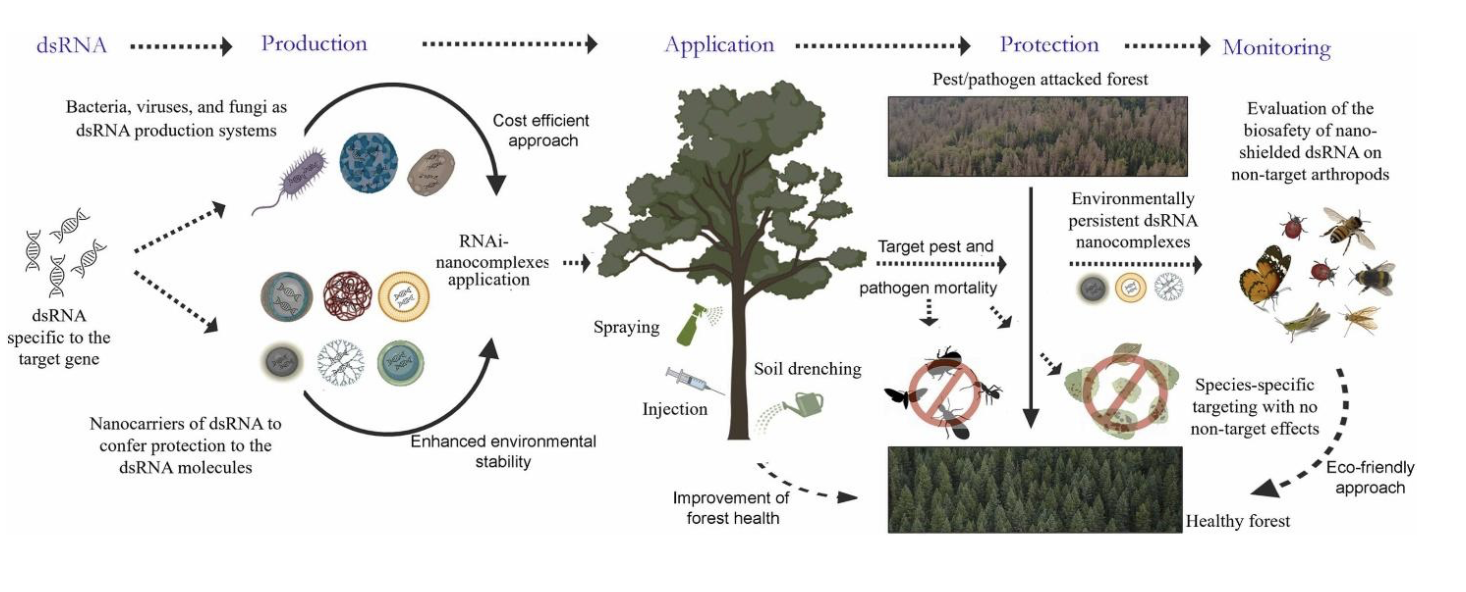
RNAi is an innate post-transcriptional cellular mechanism present within termites that can be activated by the external application of specific double-stranded RNA (dsRNA) molecules, leading to the eventual silencing of the target gene of interest implicated in the termites’ fitness, causing mortality. However, these dsRNA molecules can degrade easily. Nanoparticles that offer environmental protection to dsRNA have therefore emerged as an important tool for ensuring the successful application of RNAi-based biopesticides in both laboratory and natural settings.
Through this review, Sarkar has also discussed the requirement of long-term risk assessment studies before deploying such dsRNA-nano formulations into the forest habitats. Driven with the passion to protect forests from wood-boring termite pests, Sarkar, in her Doctoral research, is currently utilising transcriptomics as a molecular tool to build a catalogue of potential candidate termite genes that could be used for future functional genomics studies to manage these insect pests.
In today’s world of declining research funding, Katariya’s ecological study of mound-building termites illustrates how basic research can deepen our appreciation of the natural world, its diverse ecological communities and their nuanced interactions. Meanwhile, Sarkar’s research on wood-feeding termites demonstrates how fundamental research can provide a foundation for future applied research, with direct societal relevance for forest protection and pest management.