Our best wishes to all our readers for the ongoing festivities. We hope you had a wonderful celebration. As we step into November, we bring you another edition of the IndiaBioscience newsletter, with updates, stories and opportunities from across the life sciences.
This month's science communication section takes us in several directions: from how aquaporin proteins regulate the movement of molecules across cell membranes, to the long history of rabies and the many intellectual pursuits of mathematician D. D. Kosambi. We also hear from a PhD researcher about finding her way into science outreach and look at the institutional barriers that continue to affect women's participation and retention in Indian science.
Our skill-building initiatives have kept us busy too. The ANRF PMECRG Proposal Development Workshops, organised at Bengaluru, Bhubaneswar, Delhi, Hyderabad, and Pune, have concluded and were attended by 80 participants from more than 10 cities.
We bring you highlights from our recent collaborations with EMBO as well, including a webinar on EMBO Fellowship Programmes and the online Starting Your Own Lab course for early-career group leaders.
And, as always, our #ScienceJobsTuesdays campaign and monthly Jobs and Internships newsletter continue to bring you new openings, grants and events from across the life-science sector.
Here’s what we have been working on this month. We hope you find something interesting to read, watch or share!
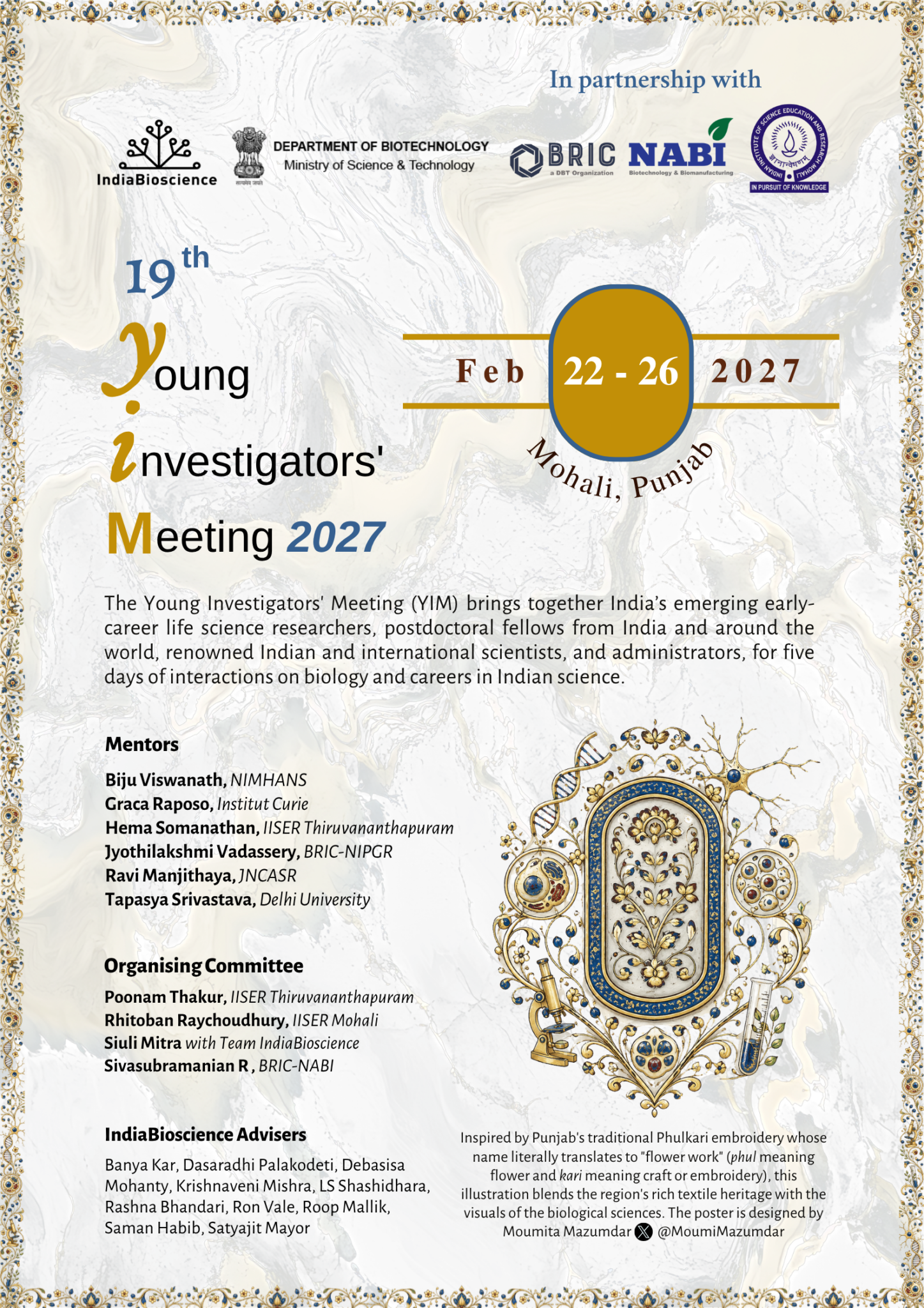
The Young Investigators’ Meeting (YIM) brings together early-career life scientists, including young faculty members and postdoctoral researchers from India and abroad, for a few days of scientific discussions, interactions with established researchers and opportunities to build professional connections for collaboration, mentorship and career development.
Applications for YIM 2027 are now closed, and shortlisted applicants have been notified.
The JOYI 2026 e-booklet will also be out shortly. Keep an eye out for our next newsletter!
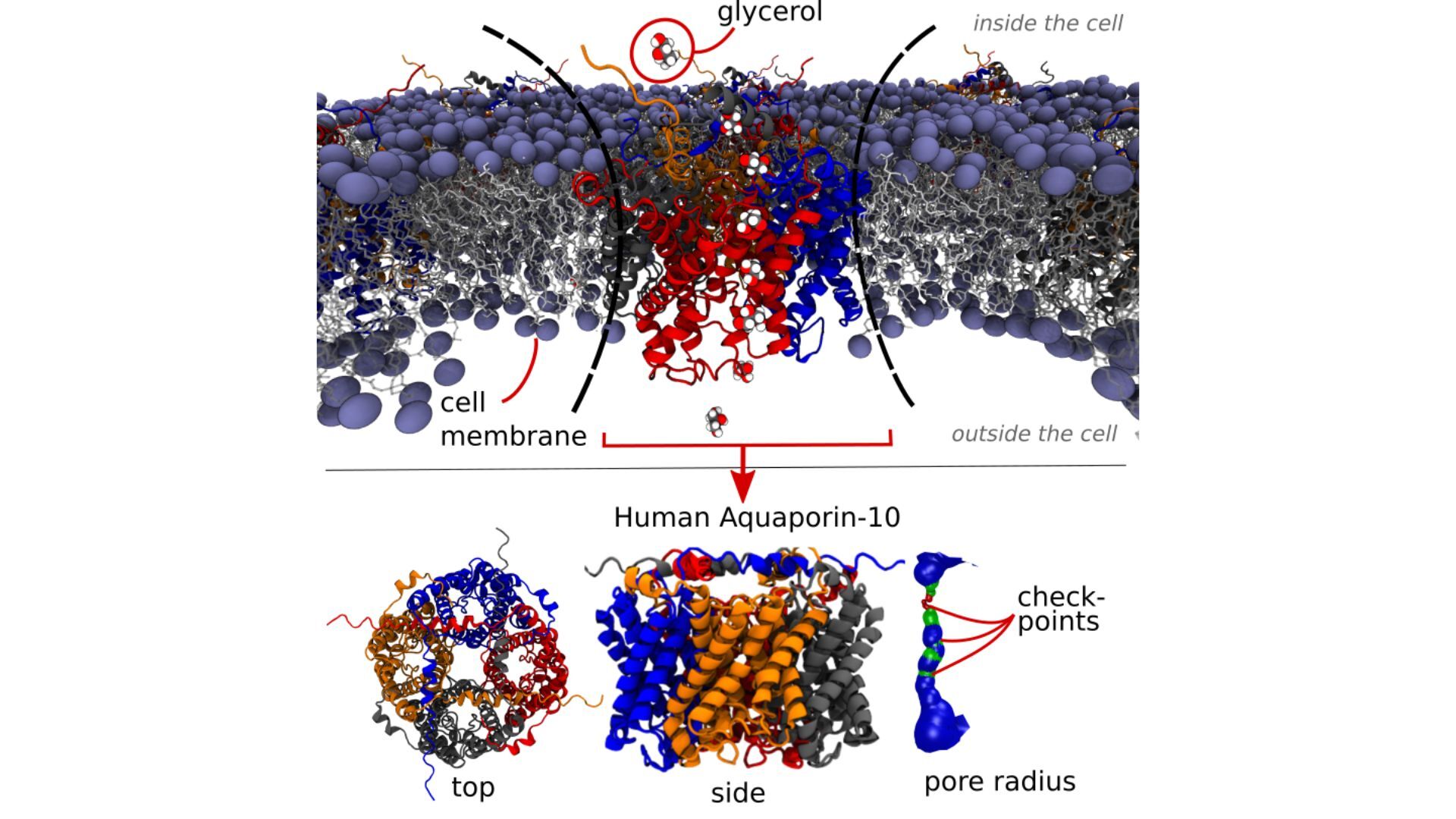
How do cells regulate the movement of water and other molecules across their membranes? This article looks at how an aquaporin, a nanoscale membrane protein, selectively transports molecules across cell membranes, with a particular focus on glycerol transport and its role in lipid synthesis and osmoregulation.
The article is by Bharti Sharapuram, a science writer interested in research across disciplines and the people behind it. She currently covers news and features on science and engineering research at the Indian Institute of Technology Hyderabad.
The research was featured on SciComm@IITH, IIT Hyderabad’s science communication platform.
Researchers used computational tools to study how a nanoscale membrane protein transports water and glycerol between a cell and its environment. They identified checkpoints that regulate this movement, helping maintain osmotic balance and lipid metabolism. Image Credit: Molecular Simulation Lab, IITH
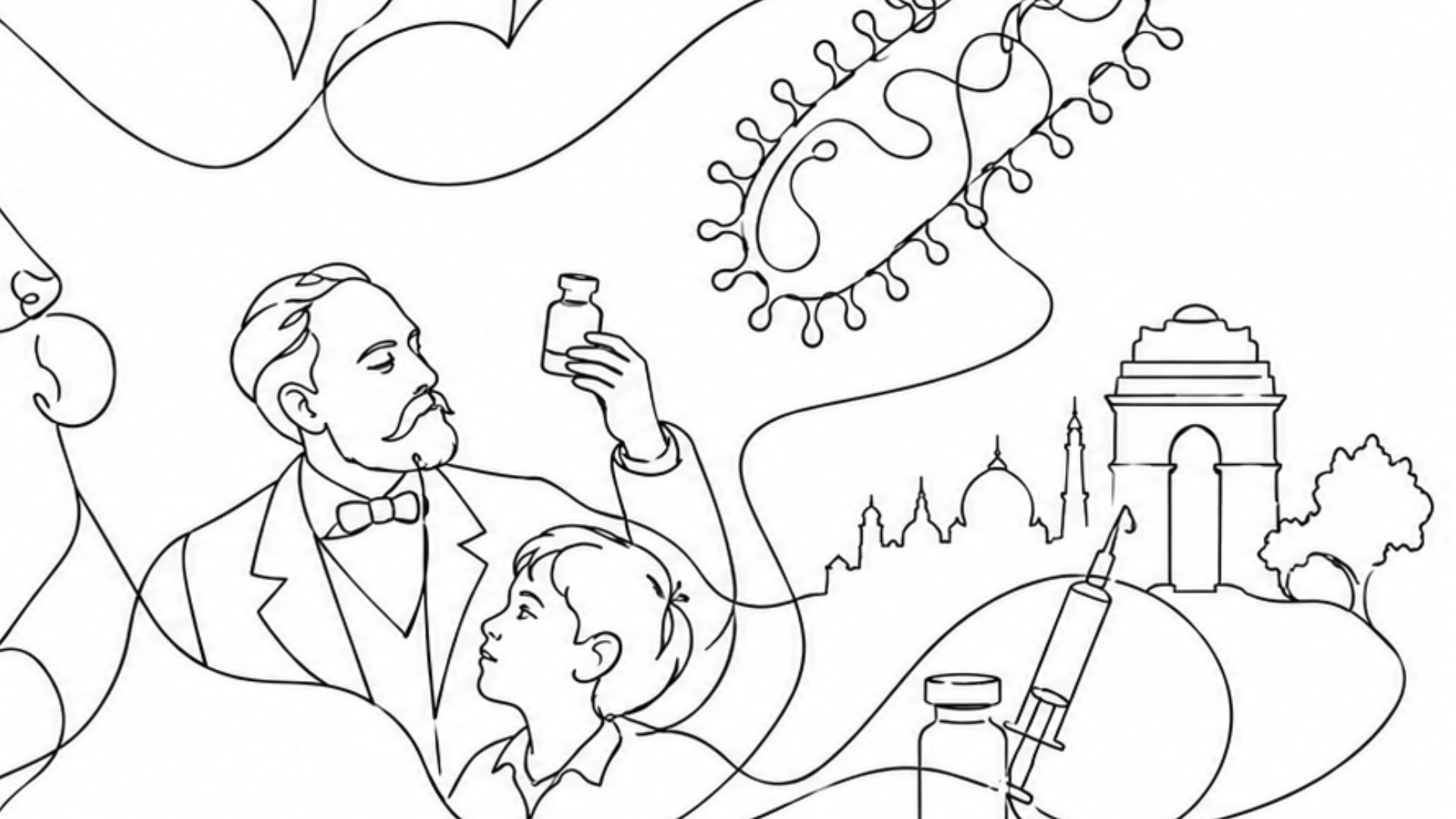
How has our understanding of rabies changed over four millennia? Robinson Mohanraj, an MSc Neuroscience candidate at NIMHANS, Bengaluru, and founder of the online mental-health awareness platform EfferVnteers, traces the history of the disease, from ancient Mesopotamian observations of dangerous dog bites to Louis Pasteur’s development of the first rabies vaccine. His article follows the gradual shift from fear and superstition towards scientific approaches to preventing a disease that is almost invariably fatal once neurological symptoms appear.
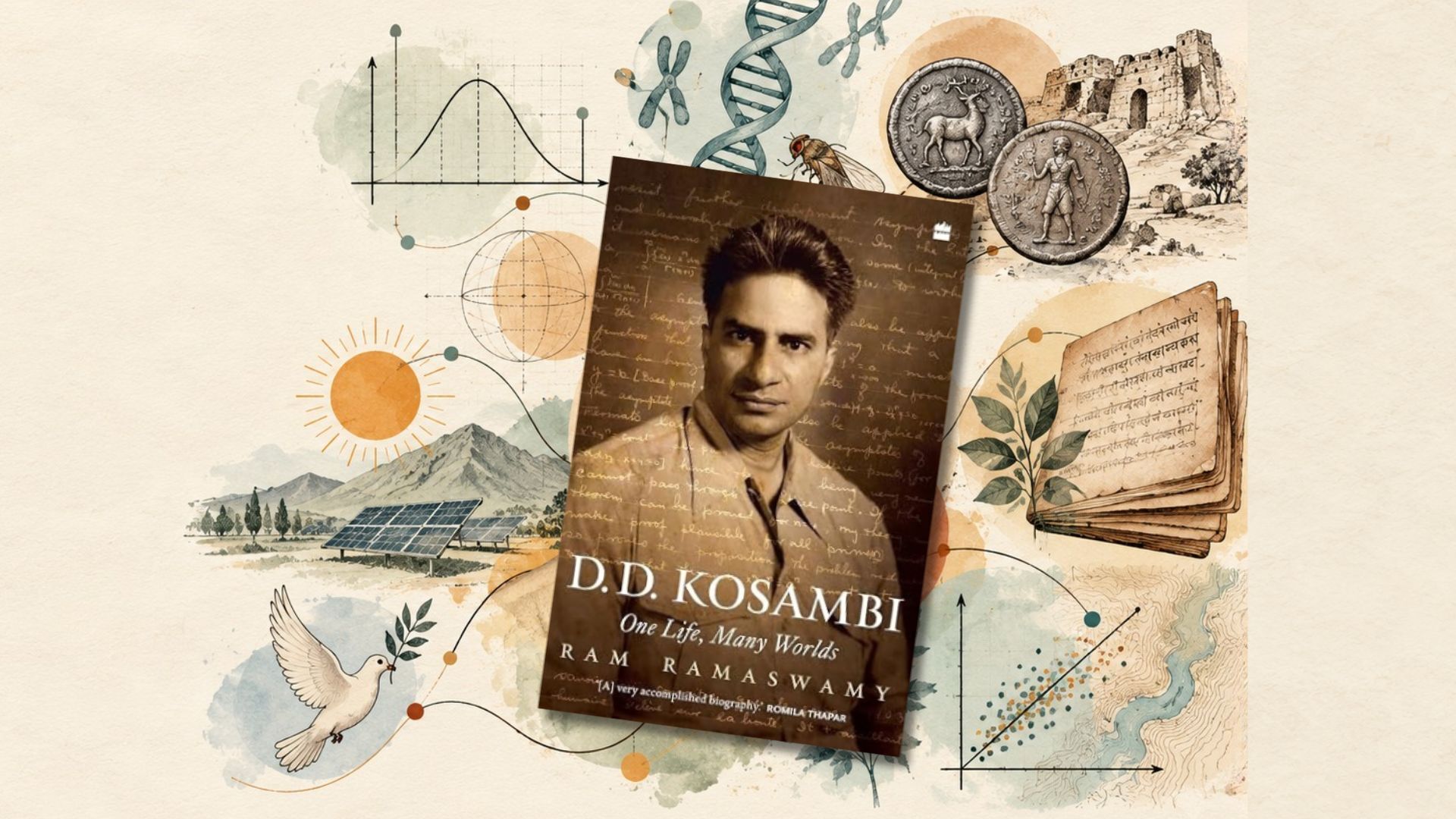
What makes D. D. Kosambi such an unusual figure in the history of Indian science? In this article, New Delhi-based columnist and author Dinesh C. Sharma reviews D. D. Kosambi: One Life, Many Worlds, written by Ram Ramaswamy. Moving beyond a conventional scientific biography, the book captures Kosambi’s wide-ranging intellectual interests and contributions across mathematics, science, history and other fields of thought.
Created by Moumita Mazumdar using ChatGPT (GPT-5.6 Luna), OpenAI. Prompt: Editorial illustration of D. D. Kosambi’s interdisciplinary life, combining mathematics, genetics, history, Sanskrit, science and peace activism in a vintage ink-and-watercolour collage. This was then edited to add the cover image of the book.
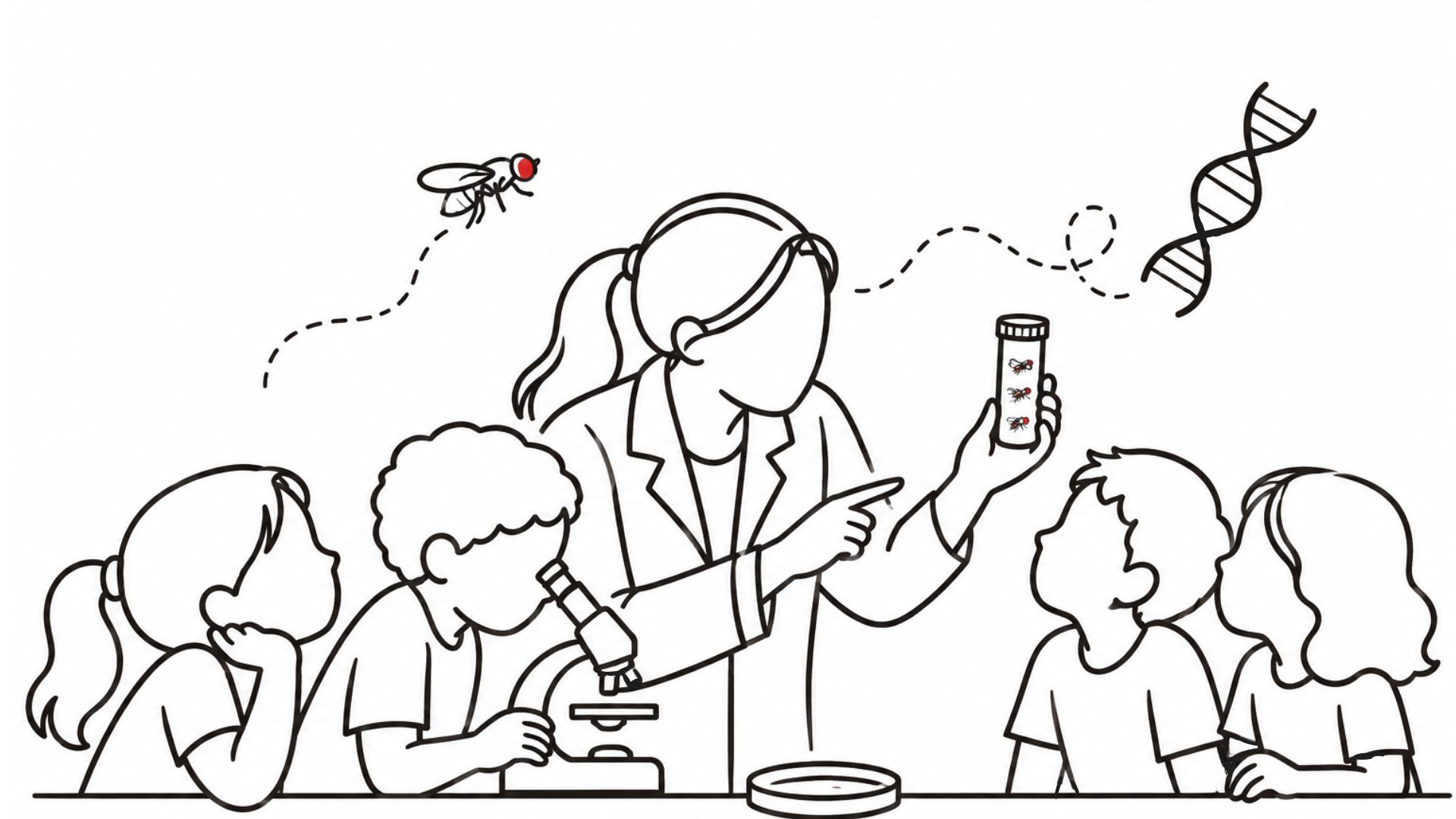
How does a PhD researcher find time and ways to communicate science beyond the laboratory? Shahira Helal Arzoo, a PhD student in Biological Sciences at Texas Tech University and a science communicator, shares how she began her outreach journey during her PhD. Drawing on her research on fruit flies, metabolism and healthy ageing, she describes how she brought together her research and teaching experience to develop hands-on science activities, particularly for young learners.
Graphic by Moumita Mazumdar
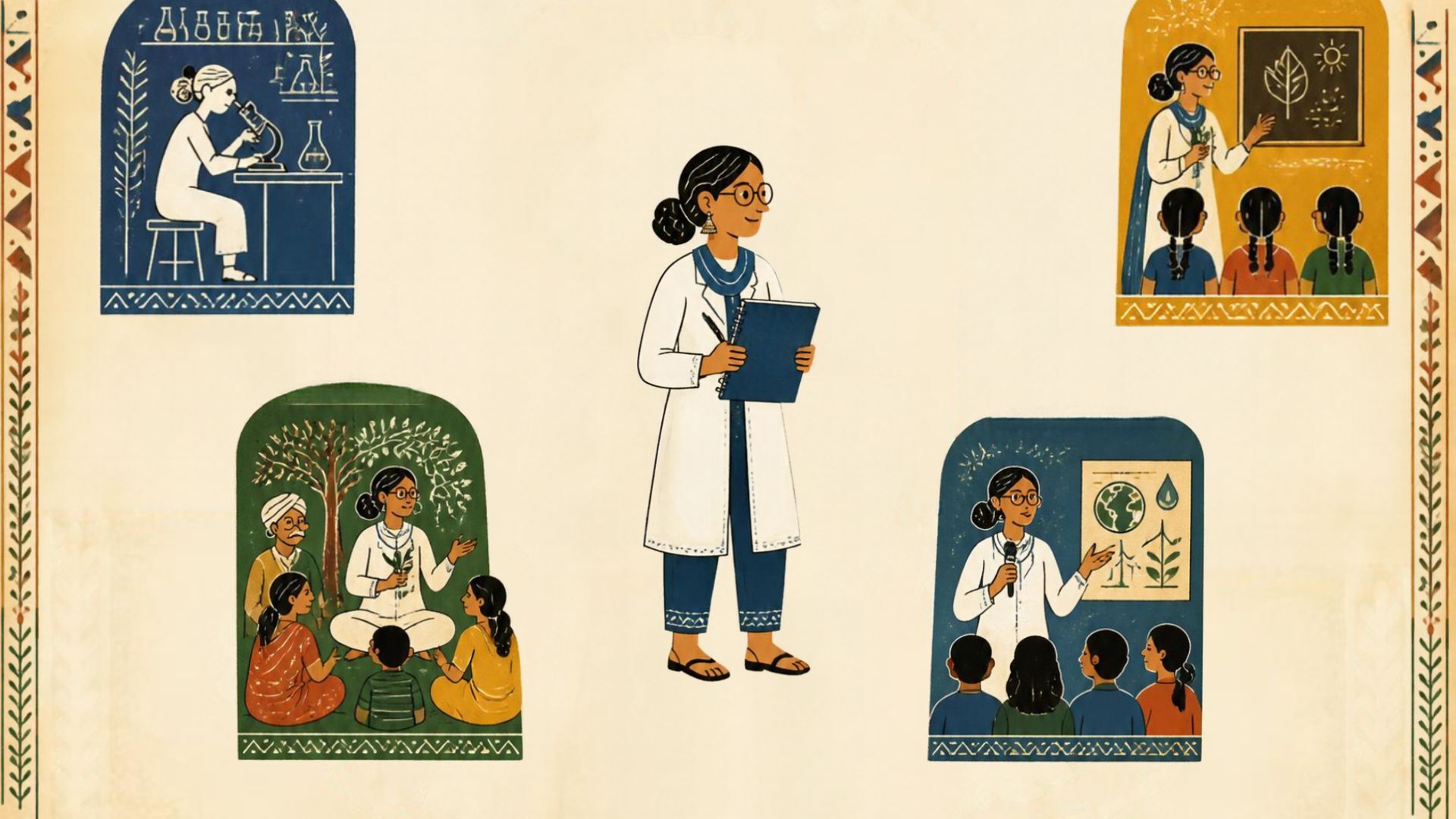
As part of our ongoing partnership with CSIR-CCMB, Hyderabad, to showcase work by young science writers and visual communicators, we have been sharing articles originally published on SciTales by CCMB.
Why do so many women leave India’s research ecosystem despite strong representation in science education? Neetisha Besra, India Director at the Gupta-Klinsky India Institute, Johns Hopkins University, and Srishti Kapil, Programs and Communications Specialist at the institute, examine the institutional barriers behind this gap. Drawing on their work with the India RISE Fellowship, they argue that the problem lies not in a lack of talent, but in systemic shortcomings that make it difficult for women to enter, remain and progress in STEMM careers.
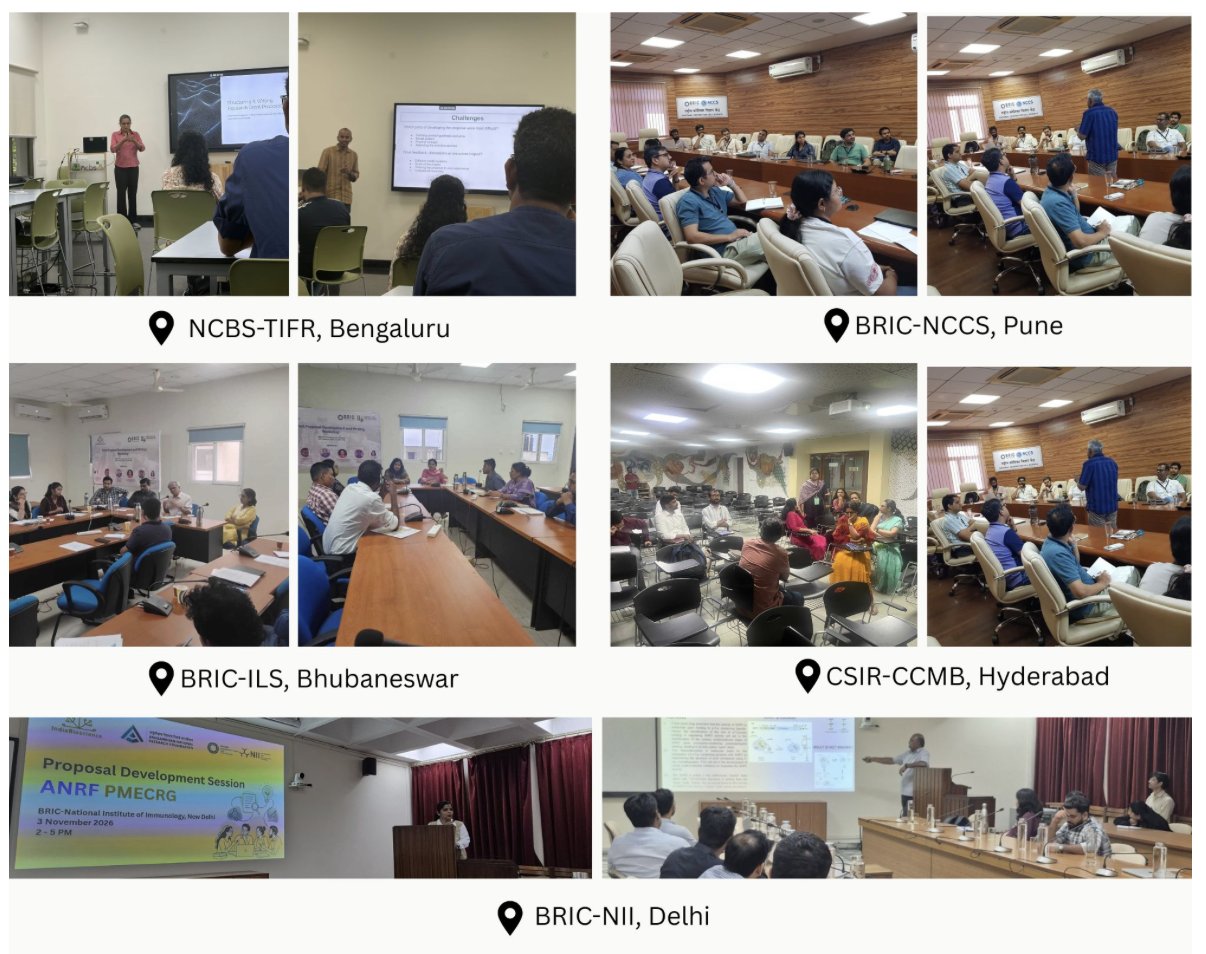
The ANRF PMECRG Proposal Development Workshops, organised by IndiaBioscience, have concluded across five cities, in partnership with NCBS-TIFR (Bengaluru), BRIC-NII (Delhi), IBRIC-ILS (Bhubaneswar), BRIC-NCCS (Pune), and CSIR-CCMB (Hyderabad).
The sessions brought together about 80 early-career life-science researchers, current PMECRG grantees, experienced researchers and research management professionals for discussions, feedback on research proposals and peer learning.
Here are some glimpses from the workshops at the host institutes, capturing moments of interaction, learning and collaboration.
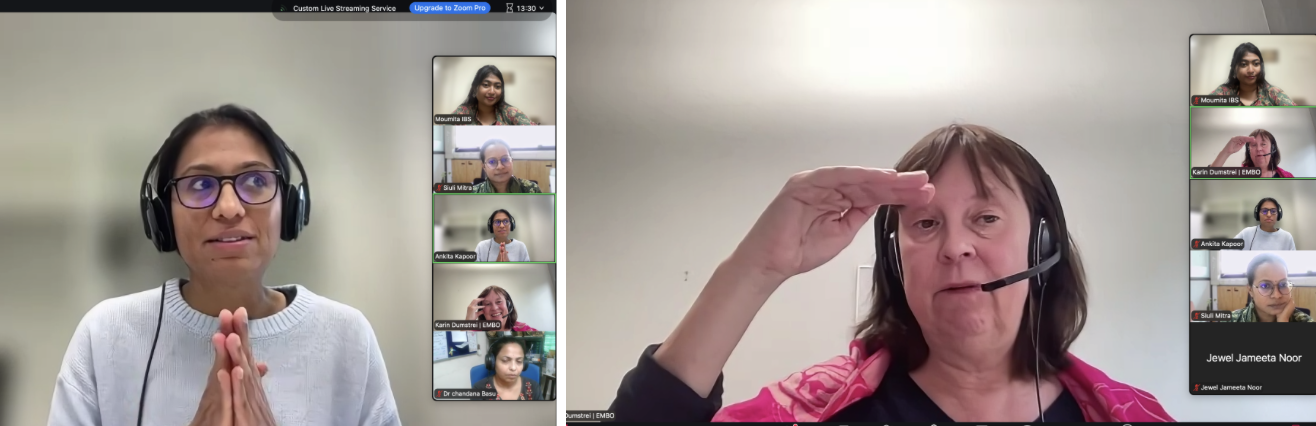
The EMBO–IndiaBioscience webinar on EMBO Fellowship Programmes, held on 3 November 2026, featured Karin Dumstrei (EMBO) and Ankita Kapoor (Max Planck Institute of Immunobiology and Epigenetics) as panellists.
The discussion covered EMBO Postdoctoral Fellowships and Scientific Exchange Grants, including eligibility, application processes, key benefits, and what makes for a competitive application. The speakers also explained how applications are evaluated and how funding decisions are made.
Missed the webinar? Watch the recording on YouTube.
EMBO Global Activities and Leadershipsculptor GmbH online course, Starting Your Own Lab, has concluded.
Conducted online over three half-days, and attended by 16 young group leaders from 14 institutions in India, the course focused on the transition to independent research leadership. Sessions covered team building, hiring, delegation, negotiation, resource and time management, and collaborations. Co-taught by Petra Pandur, Diana Baumann and CJ Fitzsimons, the course brought together early career group leaders to discuss the challenges of setting up and running their own research groups.
A participant shares their experience:
“It is a wonderfully curated course. It definitely helps a new PI reflect on their research vision, the kind of lab they want to build and how to navigate everyday responsibilities. An added bonus is the opportunity to meet peers who are in a similar situation. I highly recommend it!”
Following #ScienceJobsTuesdays? We share jobs, grants, and events from across the life science community on X, Instagram, Facebook, and LinkedIn. You can also subscribe to our monthly Jobs and Internships newsletter here if you haven’t already.
Applications are invited for the Prof. Saroj Chandrasekhar Memorial Student Award 2027, which recognises women researchers pursuing PhDs in Biosciences, Biotechnology, Life Sciences and Medical Sciences.
Applicants must be in the third year or beyond of their PhD programme. Researchers who have already submitted their theses are also eligible. Two awards will be presented, each carrying a cash prize of ₹1.25 lakh and a certificate, along with reimbursement of travel and accommodation expenses for the award ceremony. The awards will be presented on National Science Day, 28 February 2027, at IIT Kanpur.
Applications are invited from women scientists at the assistant professor level and above, within five years of starting their independent positions, in Biosciences, Biotechnology, Life Sciences and Medical Sciences. The award carries a cash prize of ₹3.5 lakh and a certificate, with travel and accommodation expenses for the award ceremony reimbursed. The award will be presented on 28 February 2027 (National Science Day) at IIT Kanpur.
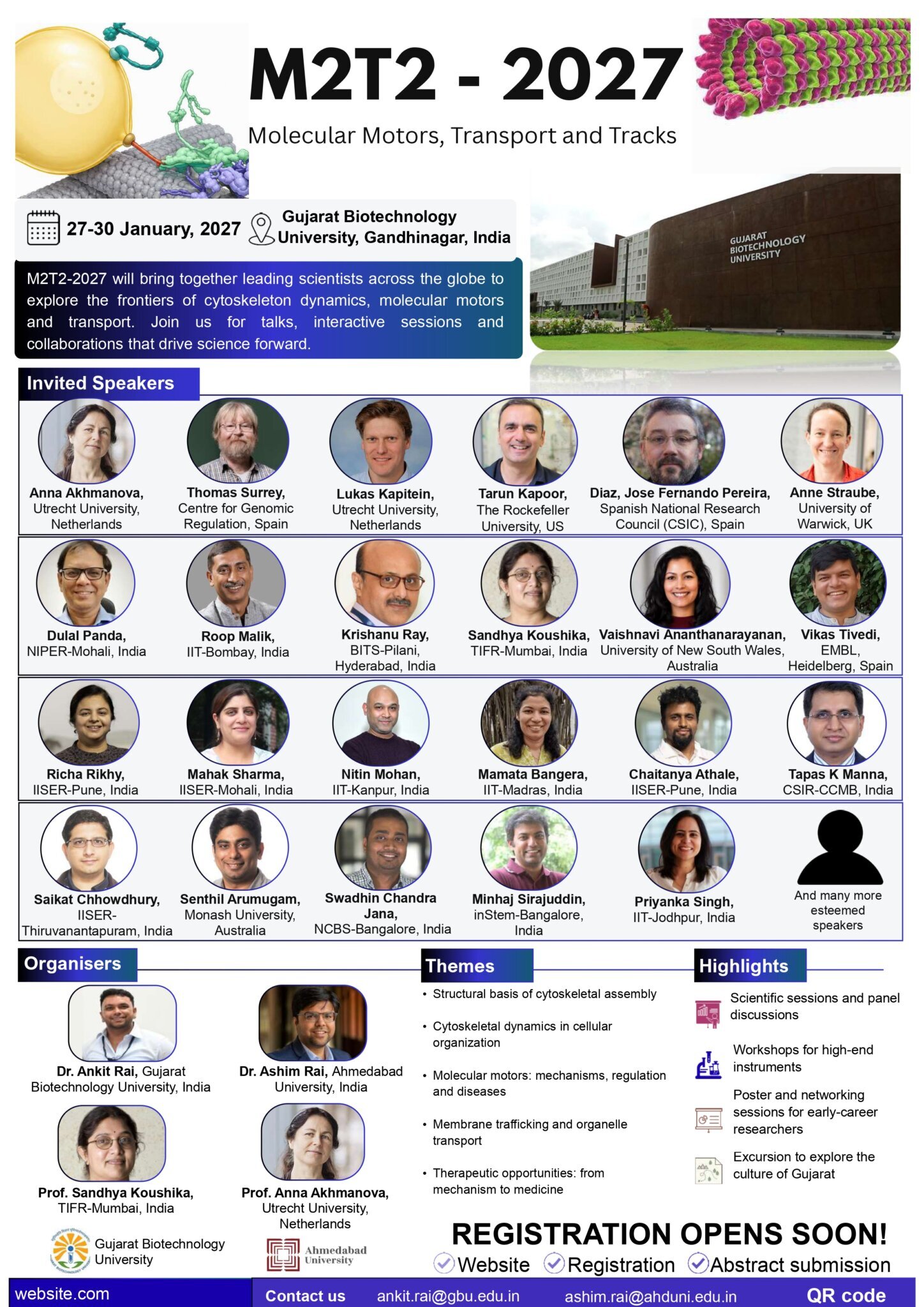
The Molecular Motors, Tracks and Transport (M2T2 2027) conference will take place from 27–30 January 2027 in Ahmedabad, Gujarat. Jointly organised by Ahmedabad University and Gujarat Biotechnology University, the conference will bring together researchers working on cytoskeletal dynamics, molecular motors, intracellular transport and their roles in cellular organisation and disease. The programme will feature scientific talks, panel discussions, workshops, poster presentations and networking opportunities for early-career researchers.
Applications are open for the Ramanujan Fellowship, which supports Indian and Indian-origin scientists and engineers working abroad to pursue independent research in India. The fellowship supports outstanding researchers below the age of 40 with an excellent track record, enabling them to join scientific institutions and universities across the country while establishing their research programmes.
Application deadline: 31 December 2026 More details here.
Have a story or opportunity to share with the community?
If you have a story to share, an article to contribute, or an idea for a collaborative event, write to us at hello[at]indiabioscience[dot]org.