<?xml version="1.0" encoding="UTF-8"?><feed xmlns="http://www.w3.org/2005/Atom" xml:lang="en"><title>IndiaBioscience - Journey of a YI from 2026</title><link
    rel="alternate"
    href="https://indiabioscience.org/columns/journey-of-a-yi/2026"
    type="text/html"
    /><link
    rel="self"
    href="https://indiabioscience.org/columns/journey-of-a-yi/2026/feed"
    type="application/atom+xml"
    /><id>https://indiabioscience.org/columns/journey-of-a-yi/2026/feed</id><updated>2026-06-17T08:50:57+05:30</updated><entry><title>Building science brick by brick: A lab and a life growing together</title><link
                  rel="alternate"
                  href="https://indiabioscience.org/columns/journey-of-a-yi/building-science-brick-by-brick-a-lab-and-a-life-growing-together"
                  type="text/html"
                  /><summary type="html"><![CDATA[
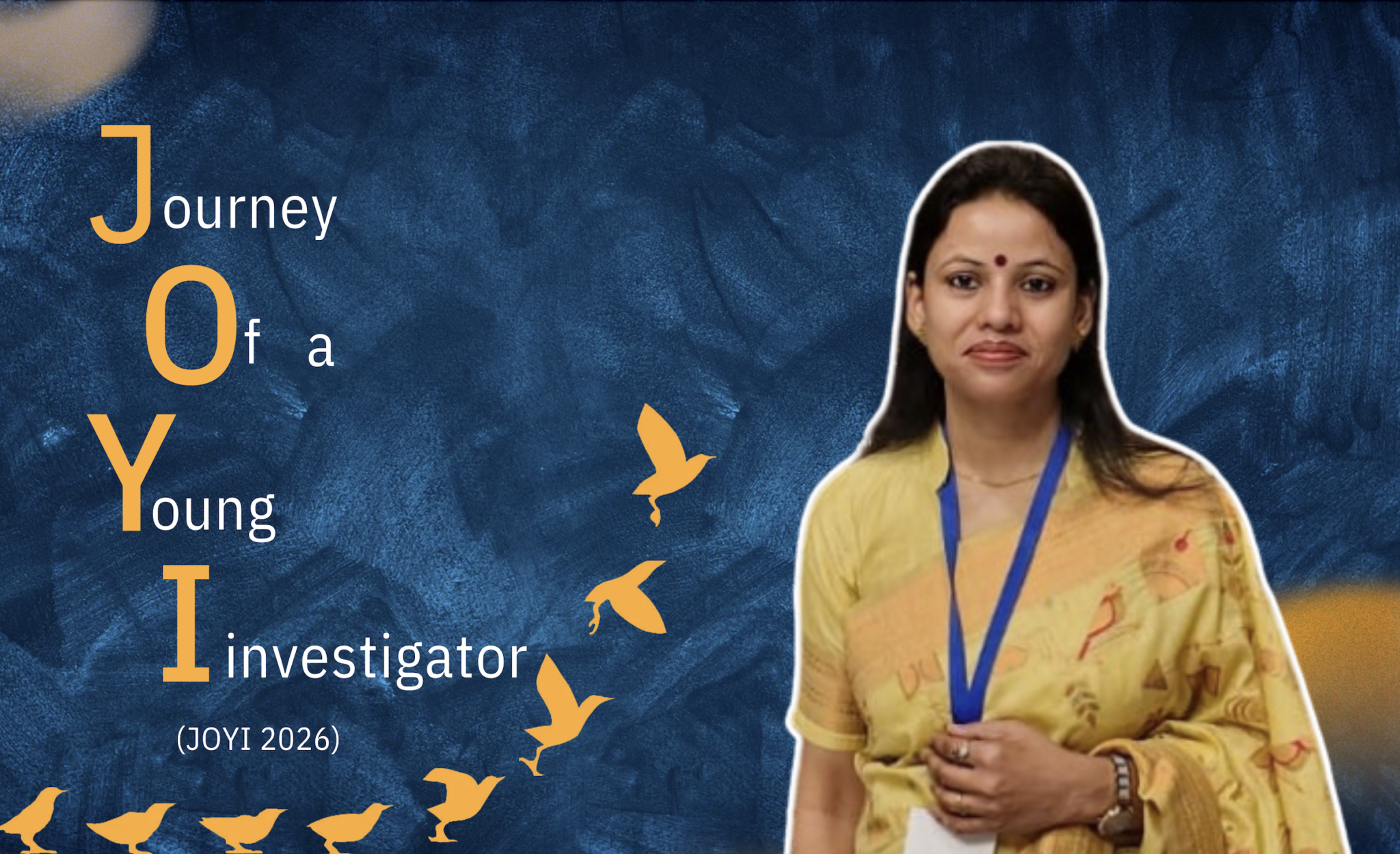
                <p>In this <a href="https://indiabioscience.org/meetings/yim-2018/journey-of-yi">Journey of a Young Investigator (JOYI)</a> 2026 article, <a href="https://www.linkedin.com/in/dr-harshiny-muthukumar-45018a3a/" target="_blank" rel="noreferrer noopener">Harshiny Muthukumar</a> reflects on building a research lab from scratch while navigating motherhood and early-career challenges. Her journey highlights how science grows through patience, mentorship, and resilience—reminding us that meaningful research is often built slowly, step by step, brick by brick.</p>              ]]></summary><id>tag:indiabioscience.org,2026-06-05:/columns/journey-of-a-yi/building-science-brick-by-brick-a-lab-and-a-life-growing-together</id><published>2026-06-05T10:00:00+05:30</published><updated>2026-04-15T23:27:25+05:30</updated><author><name>Harshiny Muthukumar</name><uri>https://indiabioscience.org/authors/JXdEKReJNxLrjVD</uri></author><content type="html"><![CDATA[
                
<p>In this <a href="https://indiabioscience.org/meetings/yim-2018/journey-of-yi">Journey of a Young Investigator (JOYI)</a> 2026 article, <a href="https://www.linkedin.com/in/dr-harshiny-muthukumar-45018a3a/" target="_blank" rel="noreferrer noopener">Harshiny Muthukumar</a> reflects on building a research lab from scratch while navigating motherhood and early-career challenges. Her journey highlights how science grows through patience, mentorship, and resilience—reminding us that meaningful research is often built slowly, step by step, brick by brick.</p><figure><a href="https://indiabioscience.org/columns/journey-of-a-yi/building-science-brick-by-brick-a-lab-and-a-life-growing-together"><img
                width="1726"
                height="1050"
                style="max-width: 100%; height: auto"
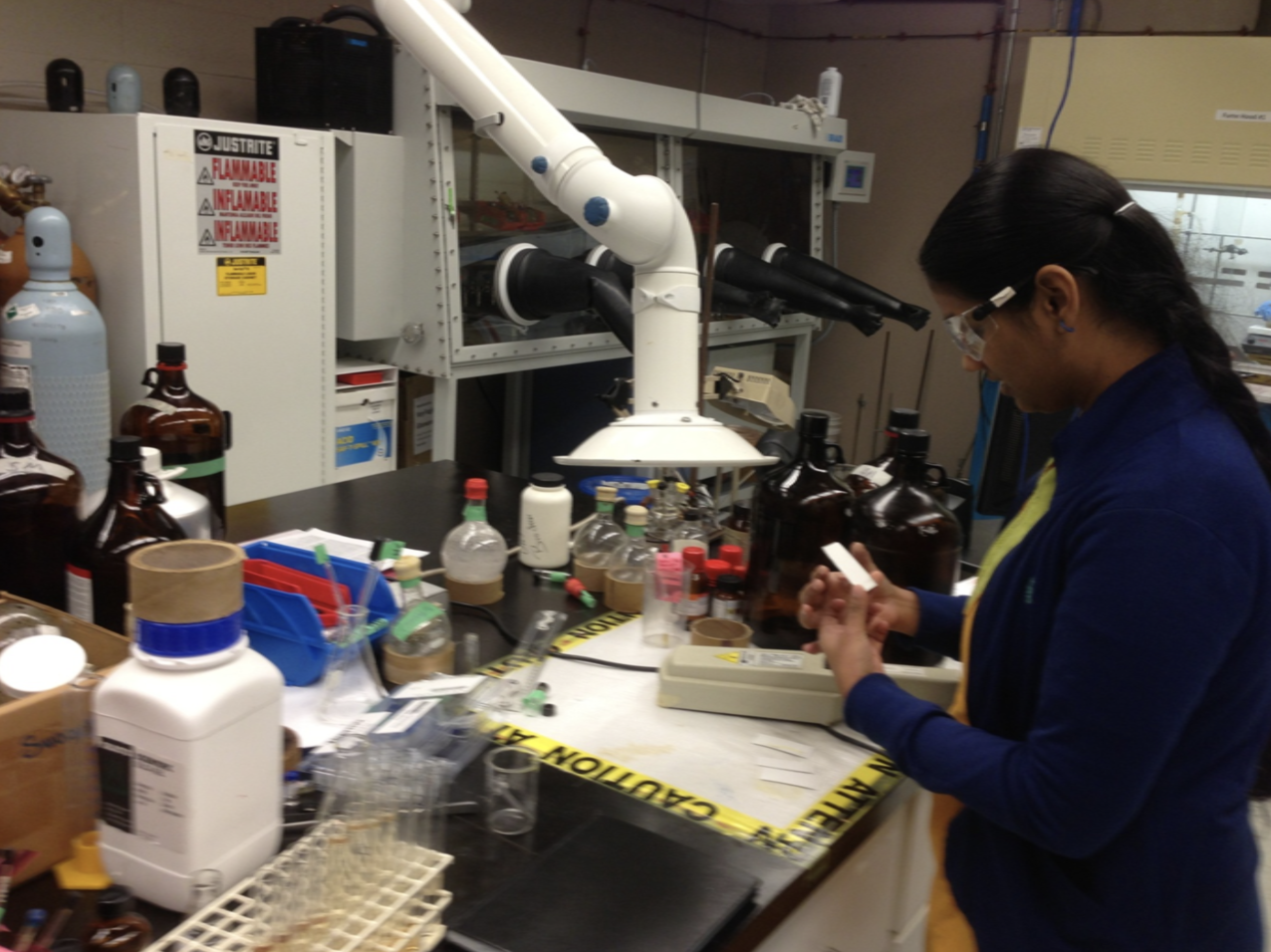
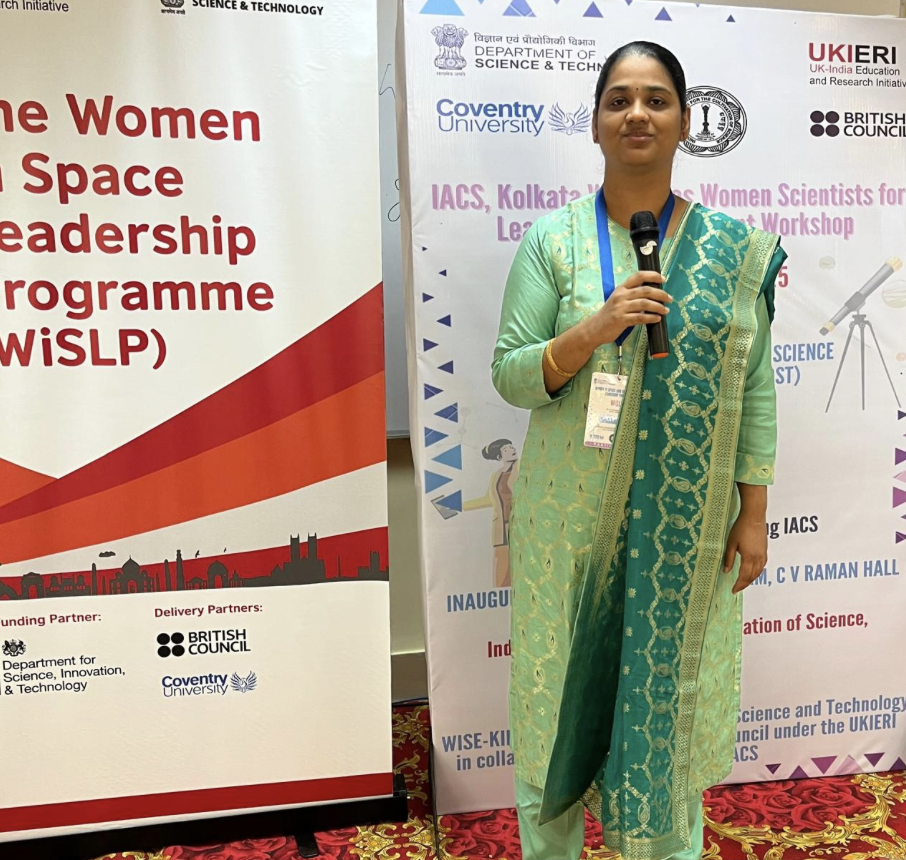
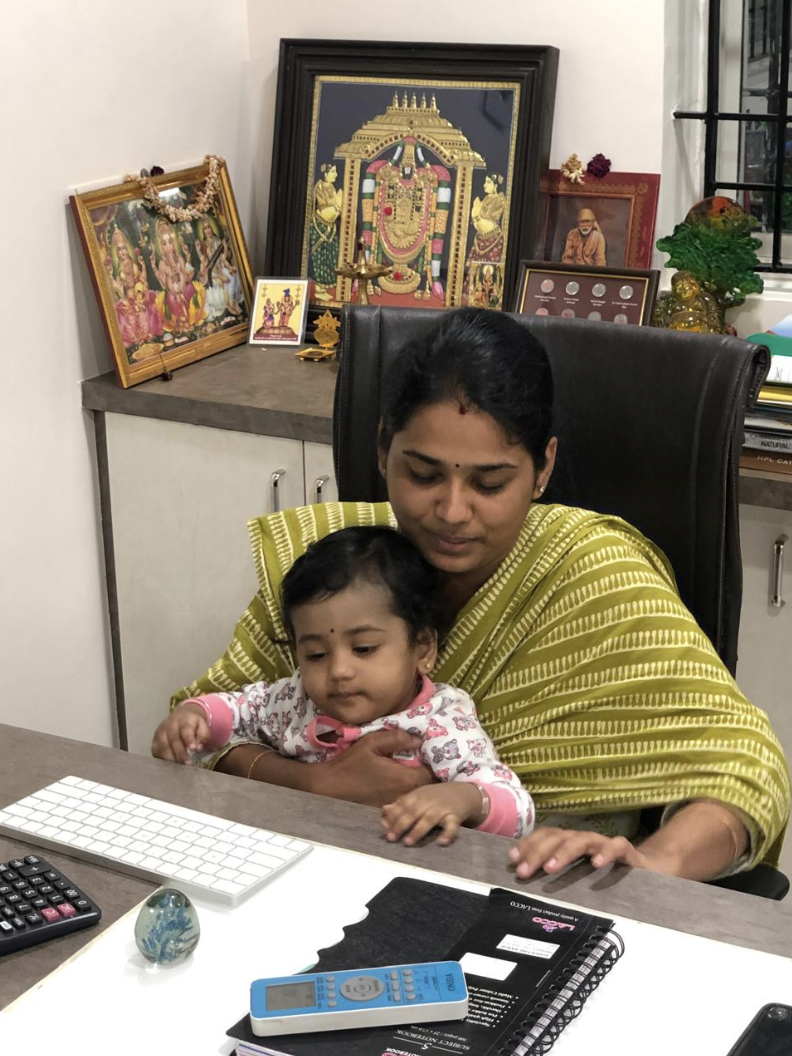
                src="https://cdn.indiabioscience.org/media/articles/Screenshot-2026-04-12-at-7.01.17-PM.png"></a></figure><p dir="ltr">Not all scientific journeys begin in active laboratories; some begin in empty rooms.</p><p dir="ltr">I stepped into my new role as an assistant professor at SRM Easwari Engineering College with many hopes and plans after my maternity break. I was eager to visit the laboratory and think about how I would continue my research.</p><p dir="ltr">But when I first walked into the department, I found a space — bare benches, unopened areas, and silence where activity should have been. I realised I wasn't entering an existing research environment; I was expected to build it from the start.</p><p dir="ltr">Standing there, it did not feel like I was about to continue research. It felt like I was about to create the space where research could begin. Progress, in that moment, was not about discovery — it was about planning, waiting, and slowly putting things together.</p><p dir="ltr">Looking back now, I understand that this is how my journey in science has unfolded — not through sudden breakthroughs, but through steady, incremental steps, building understanding and confidence, brick by brick.<br></p><p dir="ltr">My interest in biotechnology began long before I understood what research truly meant. As a school student, I was fascinated by how molecules such as DNA and proteins could orchestrate the complexity of life within a single cell. I did not always understand the answers, but those questions lingered and slowly shaped my academic path.<br></p><p dir="ltr">During my undergraduate years at <a href="https://pmu.edu/" rel="noopener" target="_blank">Periyar Maniammai University</a>, my curiosity began to find direction. Learning across diverse areas of biotechnology revealed the interconnectedness of the field, but more importantly, I began to feel that research could extend beyond academic learning and contribute to real-world solutions. One of my early projects explored plant-based approaches to prevent kidney stone formation. The work was modest, yet it introduced me to the realities of research — repeated attempts, unexpected outcomes, and the patience required to witness incremental progress. I realised that the fulfillment of research lies not only in results but in the quiet evolution of ideas.<br></p><p dir="ltr">My perspective widened when I worked as a junior research fellow on a nanobiotechnology project. This experience introduced me to interdisciplinary collaboration and helped me understand that uncertainty is not an obstacle in research but an essential part of discovery. It was during this period that research began to feel less like a requirement and more like a meaningful pursuit.<br></p><figure style="margin-left: auto; margin-right: auto; text-align: center;"><img src="https://cdn.indiabioscience.org/media/articles/Screenshot-2026-04-12-at-6.48.17-PM.png" data-image="837858" alt="Harshiny photo 1"><figcaption style="text-align: center;">Harshiny working in the laboratory during her early research training — a space that gave her confidence, curiosity, and the belief that she could meaningfully contribute to science </figcaption></figure><p dir="ltr">A defining turning point came during my Master’s studies, when I received a Canadian Commonwealth Scholarship to work at <a href="https://www.cbu.ca/" rel="noopener" target="_blank">Cape Breton University</a>. It was my first time travelling alone — not just outside my state, but outside the country.<br></p><p dir="ltr">In the beginning, everything was unfamiliar — the environment, the expectations, and even communicating in English in a research setting. I remember feeling unsure of myself, but the support and guidance from my mentors helped me gradually find my footing. They gave me both direction and freedom — encouraging me to explore, make mistakes, and learn through the process.</p><p dir="ltr">After a few weeks, something began to change. I started working more independently, designing experiments, and understanding my results with greater clarity. One of the projects I worked on led to promising antimicrobial activity, and eventually to my first patent (US), a milestone that made me realise that even with initial uncertainty, consistent effort and the right mentorship can lead to meaningful contributions. It was during this phase that I truly began to believe in myself as a researcher</p><p dir="ltr">Around this time, I was awarded an International Research Scholarship to pursue a PhD at the University of Technology Sydney. However, due to family circumstances, I was unable to take up the opportunity. While it was a difficult decision, it shaped my path in unexpected ways, leading me to pursue my doctoral research at the National Institute of Technology, Tiruchirappalli. My PhD years were demanding but transformative. They taught me to sit with unanswered questions, refine ideas repeatedly, and persist through failure without losing curiosity. Working within a structured environment where mentorship and infrastructure supported research helped me gradually recognise my identity as a researcher.<br></p><p dir="ltr">I continued my research journey at the <a href="https://www.iitm.ac.in/" rel="noopener" target="_blank">Indian Institute of Technology Madras</a> through two postdoctoral phases — first under an institute-supported women’s postdoctoral fellowship, and later as a National Postdoctoral Fellow. This period shaped both my scientific thinking and personal resilience, as I navigated research alongside pregnancy. I still remember being in the laboratory just days before my delivery, not out of obligation, but because it had become a space that gave me energy and purpose.</p><p dir="ltr">The support of mentors, colleagues, and a collaborative research environment helped me grow in confidence and independence. During this time, my work was recognised in a national poster competition, where it was shortlisted among the top 17% — a small but meaningful affirmation of my progress. At the time, I saw these as advantages of a well-established system — it was only later, when I began building a laboratory from scratch, that I truly understood their value. The structure, mentorship, and support I experienced during this phase became the very foundations I sought to recreate in my own research space.</p><p dir="ltr">Expecting research to continue within similarly structured environments, I transitioned into Indian academia and joined a young biotechnology department. This phase quietly reshaped my understanding of research. Instead of stepping into an established laboratory, I found myself helping create one. I still remember walking into an empty space and beginning with basic questions — where equipment would be placed, how workflows would function, and how safety practices would be implemented. Even simple steps, such as arranging essential instruments or waiting for approvals and resources, required time and patience. Research, in this context, began long before experiments.</p><p dir="ltr">There were moments when progress felt slow and difficult to measure. Ideas often had to wait for infrastructure, and the pace of development did not always match the urgency of curiosity. I occasionally wondered whether I was conducting research or building the space required for research to exist. Over time, I realised that both roles were equally meaningful.</p><p dir="ltr">Mentoring students encountering laboratory work for the first time gave this phase a deeper purpose. I remember guiding students through their first experiments — from hesitation in handling basic equipment to the excitement of seeing results for the first time. Watching their confidence grow reminded me of my own early journey. Building a research culture felt like nurturing curiosity — both require patience, encouragement, and acceptance of slow progress.</p><p dir="ltr">During a period when uncertainty felt particularly heavy, I was selected to participate in the Women in Space and Allied Science Leadership Programme supported by the Department of Science and Technology and the British Council. The experience became more than a leadership workshop.</p><figure style="margin-left: auto; margin-right: auto; text-align: center;"><img src="https://cdn.indiabioscience.org/media/articles/Screenshot-2026-04-12-at-6.58.54-PM.png" data-image="837860" alt="Harshiny photo 2"><figcaption style="text-align: center;">Harshiny participating in a leadership programme that connected her with peers facing similar challenges like here and reminded her that growth in science is strengthened through shared encouragement. </figcaption></figure><p dir="ltr">Over those days, I met women across different career stages — from students to senior leaders — each navigating their own challenges while continuing to move forward. Listening to their journeys made me realise that I was not alone in feeling uncertain or overwhelmed. Many of them were balancing research, leadership, and family responsibilities, yet they had found ways to persist and grow.</p><p dir="ltr">Their stories shifted my perspective. Instead of seeing my challenges as limitations, I began to see them as part of a shared journey. Their resilience and confidence made me question my own doubts — if they could move forward despite their struggles, why couldn’t I? </p><blockquote dir="ltr" class="pull-quote"><em>Meeting peers navigating similar struggles reminded me that feeling stuck is not a personal failure but a shared phase of growth. Their stories rekindled my confidence and reinforced the belief that I still had the ability and responsibility to contribute meaningfully to science.</em></blockquote><p dir="ltr"></p><p dir="ltr">Alongside these professional transitions, another deeply personal journey unfolded. As my research laboratory slowly began to take shape, my daughter was growing alongside it. I found myself nurturing both in parallel — one through experiments, planning, and persistence, and the other through care, attention, and presence.</p><p dir="ltr">There were days when progress in the lab felt slow, waiting for things to fall into place, and days when motherhood demanded more than I had anticipated. In both, I learned to accept that growth is not always immediate or visible. It unfolds quietly, through consistency and care.</p><figure style="margin-left: auto; margin-right: auto; text-align: center;"><img src="https://cdn.indiabioscience.org/media/articles/Screenshot-2026-04-12-at-7.00.13-PM.png" data-image="837862" alt="Harshiny photo 2"><figcaption style="text-align: center;">Harshiny and her child: Nurturing a life and building a laboratory — both teach patience, care, and the courage to grow together.</figcaption></figure><p dir="ltr">Experiencing these two forms of growth simultaneously reshaped my understanding of patience. It taught me that both science and life begin with fragile starts, move through uncertainty, and eventually find strength through sustained effort.</p><p dir="ltr">Biotechnology research is not an easy path. For early-career researchers navigating similar paths, particularly within evolving institutions, the absence of ideal conditions does not limit the possibility of meaningful science. What matters is the willingness to build steadily — creating spaces, supporting people, and continuing even when progress feels slow.</p><p dir="ltr">I have come to understand that building science is not always about breakthroughs, but about patience — putting things together step by step, and trusting that these efforts will eventually take shape.<br></p>
              ]]></content><category term="other" label="Other" /><category term="science" label="Science" /><category term="networking" label="Networking" /><category term="personal-experience" label="Personal Experience" /><category term="young-investigators" label="Young Investigators" /></entry><entry><title>Cultivating a research ecosystem: A journey of mentorship and innovation</title><link
                  rel="alternate"
                  href="https://indiabioscience.org/columns/journey-of-a-yi/cultivating-a-research-ecosystem-a-journey-of-mentorship-and-innovation"
                  type="text/html"
                  /><summary type="html"><![CDATA[
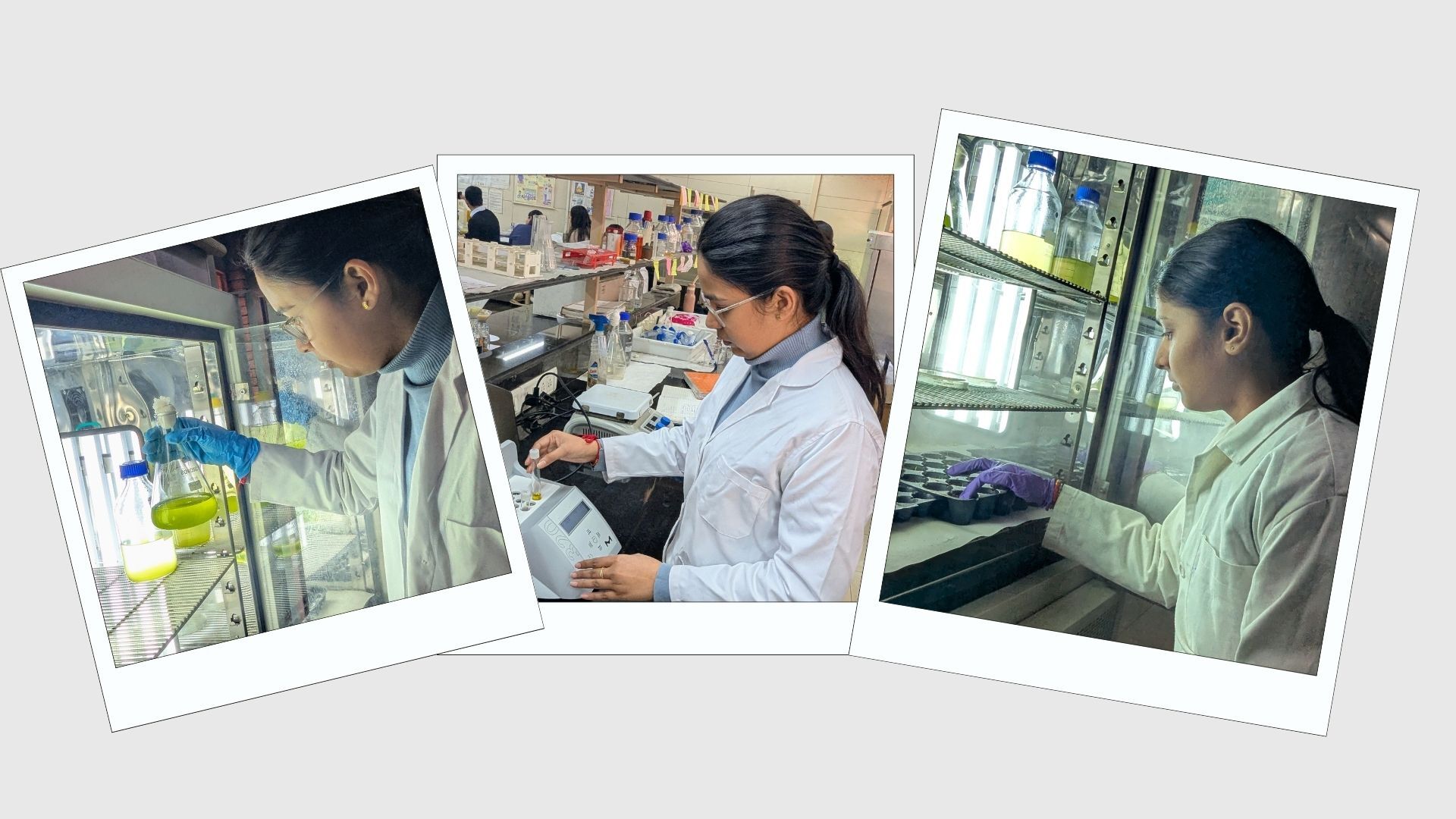
                <p>From teaching classrooms to building a hands-on research culture, <a href="https://scholar.google.com/citations?user=lXrk-5sAAAAJ&amp;hl=en" target="_blank" rel="noreferrer noopener">Tahsin Bennur</a> from <a href="https://www.bvuniversity.edu.in/rgitbt/" target="_blank" rel="noreferrer noopener">Rajiv Gandhi Institute of Information Technology &amp; Biotechnology</a>, <a href="https://www.bvuniversity.edu.in/" target="_blank" rel="noreferrer noopener">Bharati Vidyapeeth Deemed to be University</a>, shares her journey of mentoring students into independent thinkers. Set within a teaching-focused institution, this <a href="https://indiabioscience.org/meetings/yim-2018/journey-of-yi">Journey of a Young Investigator (JOYI)</a> 2026 piece highlights how inquiry, persistence, and “learning by doing” can transform both students and the practice of science itself.<br /></p>              ]]></summary><id>tag:indiabioscience.org,2026-05-25:/columns/journey-of-a-yi/cultivating-a-research-ecosystem-a-journey-of-mentorship-and-innovation</id><published>2026-05-25T10:00:00+05:30</published><updated>2026-04-13T10:11:17+05:30</updated><author><name>Tahsin Yusuf Bennur</name><uri>https://indiabioscience.org/authors/P4QaKrQeoWLmjYy</uri></author><content type="html"><![CDATA[
                
<p>From teaching classrooms to building a hands-on research culture, <a href="https://scholar.google.com/citations?user=lXrk-5sAAAAJ&amp;hl=en" target="_blank" rel="noreferrer noopener">Tahsin Bennur</a> from <a href="https://www.bvuniversity.edu.in/rgitbt/" target="_blank" rel="noreferrer noopener">Rajiv Gandhi Institute of Information Technology &amp; Biotechnology</a>, <a href="https://www.bvuniversity.edu.in/" target="_blank" rel="noreferrer noopener">Bharati Vidyapeeth Deemed to be University</a>, shares her journey of mentoring students into independent thinkers. Set within a teaching-focused institution, this <a href="https://indiabioscience.org/meetings/yim-2018/journey-of-yi">Journey of a Young Investigator (JOYI)</a> 2026 piece highlights how inquiry, persistence, and “learning by doing” can transform both students and the practice of science itself.</p><figure><a href="https://indiabioscience.org/columns/journey-of-a-yi/cultivating-a-research-ecosystem-a-journey-of-mentorship-and-innovation"><img
                width="1390"
                height="848"
                style="max-width: 100%; height: auto"
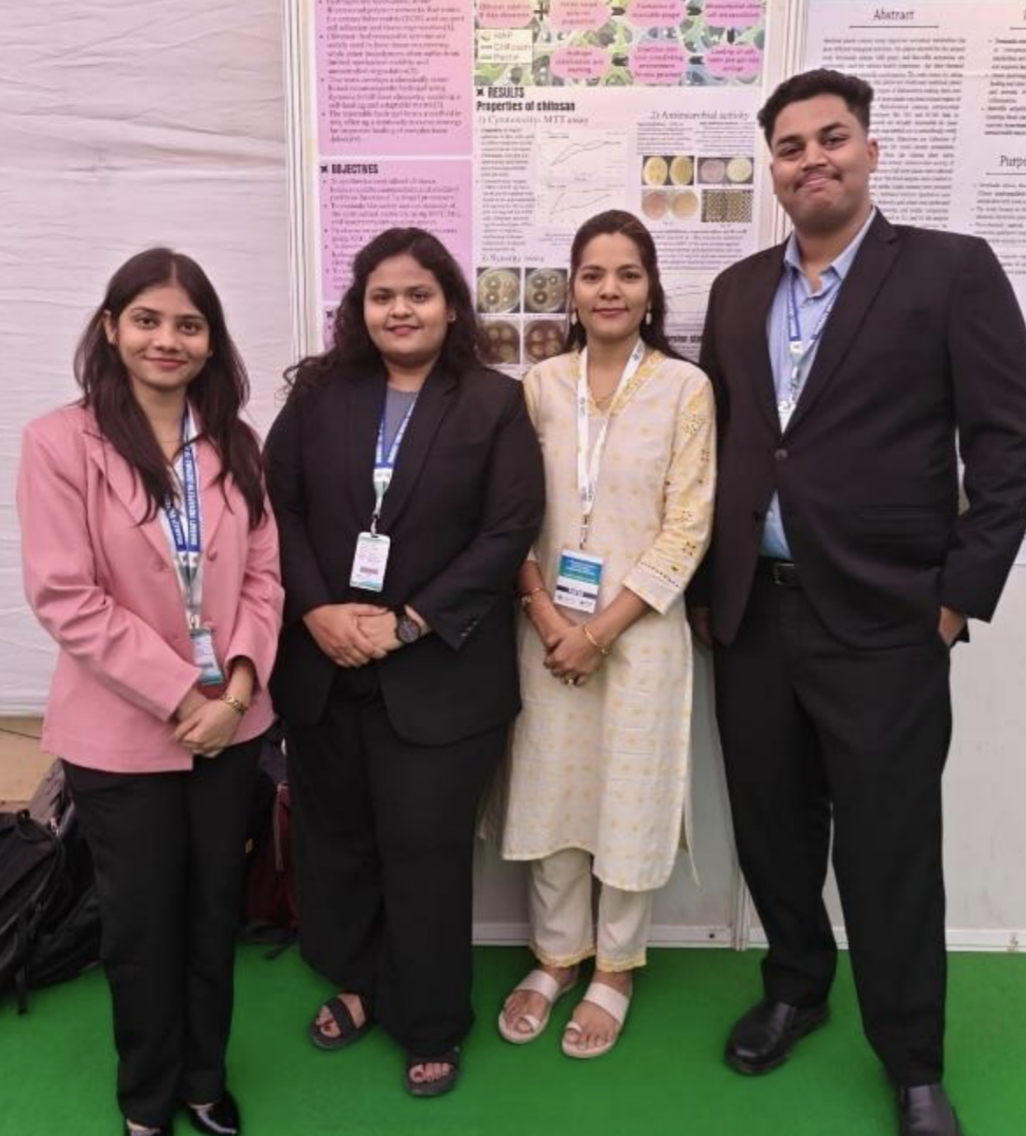
                src="https://cdn.indiabioscience.org/media/articles/Screenshot-2026-04-12-at-9.37.31-PM.png"></a></figure><p dir="ltr"><strong>An unconventional start </strong></p><p dir="ltr">I am an entirely “homegrown” researcher. Unlike the common aspiration of returning from a prestigious lab abroad with a substantial start-up grant, I completed my entire education within India and stepped directly into a faculty position at Rajiv Gandhi Institute of IT and Biotechnology, Bharati Vidyapeeth (Deemed to be University), Pune.</p><p dir="ltr">My starting point was not a high-tech facility but a demanding academic schedule: teaching large groups of students while quietly planning research protocols in the gaps between classes. In those early days, I often felt like an outsider in the world of established researchers. </p><p dir="ltr">Over time the perspective shifted. I began to see that my position offered something unique: a direct connection to the most critical stage of the scientific pipeline - the moment when a student decides that science is their calling.</p><p dir="ltr"><strong>Leading from the bench </strong></p><p dir="ltr">In my department, I am surrounded by senior faculty members with decades of experience. At this stage, roles naturally shift toward high-level strategy and grant management, the standard definition of a Principal Investigator (PI) who directs research strategically while delegating daily experiments to a steady team of students and staff.</p><p dir="ltr">My reality is different. As a 'Bench-PI,' I remain deeply involved in the daily life of the lab - from preparing media to maintaining equipment while working primarily with MSc dissertation students. </p><p dir="ltr">This hands-on approach means my expertise is not something I only teach; it is something I practice every day. While immensely demanding, working alongside my students at the bench allows me to model the scientific process in real-time. They don’t just hear about troubleshooting; they see it happening. </p><p dir="ltr">We are learning the language of the lab together. </p><p dir="ltr"><strong>The mirror of the dissertation </strong></p><p dir="ltr">The most profound lesson of my journey did not come from a successful experiment but from the faces of my students. </p><p dir="ltr">I came to understand that teaching information is fundamentally different from teaching inquiry. Every year, I teach the research methodology course to first-year students, explaining the nuances of literature searches, the ethics of citation, and the logic of experimental design. I assumed that they had mastered the craft since they passed the exam.</p><p dir="ltr">Yet, when those same students join my lab for their research projects a year later, I often face a crisis. I would watch a student struggle to navigate a basic PubMed search or fumble while drawing a flow chart, and I would wonder, <em>"Did I actually teach these students last year, or was I speaking to an empty room?" </em></p><p dir="ltr">I realised that classroom teaching, no matter how passionate, is often a form of spoon-feeding. It provides information, but not necessarily the tools to hunt for knowledge.</p><p dir="ltr">To bridge this gap, I changed my approach. I stopped providing correct answers immediately and instead gave students the space to struggle with a protocol and fail. It was a slow, frustrating process, but it eventually worked. </p><p dir="ltr">There is no professional joy greater than the day a student walks into my office not to ask what to do, but to propose an idea of their own. </p><p dir="ltr"><strong>The "Suit and Tie" moment </strong></p><p dir="ltr">I have learned that if you give students a genuine challenge and treat them like colleagues, they rise far above expectations. And nothing taught me this more vividly than what I witnessed at an international conference last year. A new batch of students joined my lab right as a major international conference was announced. We had very little data, just the early, shaky results from our shift into composite fabrication for tissue regeneration. </p><p dir="ltr">We decided to submit a poster anyway. I saw a spark of excitement in them that I had never seen during a lecture. These students took complete ownership of the project. They spent late nights refining graphs, double-checking references, and practicing their explanations until they were exhausted but ready.</p><figure style="margin-left: auto; margin-right: auto; text-align: center;"><img src="https://cdn.indiabioscience.org/media/articles/Screenshot-2026-04-12-at-9.23.43-PM.png" data-image="837886" alt="Tahsin photo 1"><figcaption style="text-align: center;">Tahsin with her MSc students transitioning from 'spoon-fed learners' to confident members of the scientific community at their first international conference </figcaption></figure><p dir="ltr">The most moving part of this experience, however, was something purely human. On the morning of the conference, my students arrived looking completely transformed. They had purchased new formal clothes specifically for the event, like crisp shirts, polished shoes, and well-fitted suits. Standing there by their posters, nervously but proudly facing juries and answering tough questions from senior scientists, they underwent a metamorphosis. For the first time, they were not just students trying to pass a viva; they were members of the scientific community.</p><p dir="ltr"><strong>Evolving with National Education Policy: A journey of purposeful research</strong></p><p dir="ltr">My research has evolved as my teaching. I expanded my research from nanoparticle synthesis to tissue engineering to align my hands-on cell-culture skills with real-world healthcare challenges. This move also created a stronger platform for collaborating with other universities on complex biomedical problems. </p><p dir="ltr">Working without any large extramural grants has also shaped my approach. I have learned to practice what I think of as ‘<em>lean science</em>’, treating our limited resources with care. My students learn that resourcefulness is a core scientific skill.</p><p dir="ltr">The National Education Policy 2020 gave formal language to something I had already been practising: moving from content delivery toward competency-building. Now, every teaching session is guided by a single question: "<em>Will this student be able to handle a cell line or develop a protocol in an industrial research setup</em>?" </p><p dir="ltr">The curriculum reform aligned with my belief that training independent thinkers requires giving students room to struggle, fail, and discover, not just the right answers to remember. </p><p dir="ltr"><strong>Conclusion: The long game </strong></p><p dir="ltr">I am sharing my story because it represents the silent majority of investigators in India who work in teaching-focused institutions. Mentorship and student transformation are not peripheral to our research culture; they are at its very heart. Our journey is the long game: sustaining the spirit of discovery while bearing the full weight of teaching, pipetting, troubleshooting, and grading, all at once. If we can turn even a few students from passive learners into independent thinkers, we have done our job.</p><blockquote dir="ltr" class="pull-quote"><em>In the process, I have realised that my students are the mentors in my own journey of mentorship.</em></blockquote>
              ]]></content><category term="other" label="Other" /><category term="science" label="Science" /><category term="networking" label="Networking" /><category term="personal-experience" label="Personal Experience" /><category term="young-investigators" label="Young Investigators" /></entry><entry><title>The accidental plant scientist</title><link
                  rel="alternate"
                  href="https://indiabioscience.org/columns/journey-of-a-yi/the-accidental-plant-scientist"
                  type="text/html"
                  /><summary type="html"><![CDATA[
                <p dir="ltr">This article is part of the <a href="https://indiabioscience.org/meetings/yim-2018/journey-of-yi">Journey of a Young Investigator (JOYI)</a> 2026 series, highlighting <a href="https://www.msruas.ac.in/faculty-staff/amrita-saxena" target="_blank" rel="noreferrer noopener">Amrita Saxena</a>’s journey shaped by curiosity, mentorship, and unexpected turns. Now an Assistant Professor at the Department of Biotechnology, Faculty of Allied and Health Sciences, <a href="https://www.msruas.ac.in/" target="_blank" rel="noreferrer noopener">Ramaiah University of Applied Sciences, Bengaluru</a>, she studies plant stress biology to understand crop resilience while mentoring and inspiring the next generation of scientists.<br /></p>              ]]></summary><id>tag:indiabioscience.org,2026-05-18:/columns/journey-of-a-yi/the-accidental-plant-scientist</id><published>2026-05-18T10:00:00+05:30</published><updated>2026-04-01T13:40:06+05:30</updated><author><name>Amrita Saxena</name><uri>https://indiabioscience.org/authors/ANQdMn7oPEL6OE7</uri></author><content type="html"><![CDATA[
                
<p><a href="https://www.jiit.ac.in/dr-pooja-choudhary" target="_blank" rel="noreferrer noopener"></a>This article is part of the <a href="https://indiabioscience.org/meetings/yim-2018/journey-of-yi">Journey of a Young Investigator (JOYI)</a> 2026 series, highlighting <a href="https://www.msruas.ac.in/faculty-staff/amrita-saxena" target="_blank" rel="noreferrer noopener">Amrita Saxena</a>’s journey shaped by curiosity, mentorship, and unexpected turns. Now an Assistant Professor at the Department of Biotechnology, Faculty of Allied and Health Sciences, <a href="https://www.msruas.ac.in/" target="_blank" rel="noreferrer noopener">Ramaiah University of Applied Sciences, Bengaluru</a>, she studies plant stress biology to understand crop resilience while mentoring and inspiring the next generation of scientists.</p><figure><a href="https://indiabioscience.org/columns/journey-of-a-yi/the-accidental-plant-scientist"><img
                width="1602"
                height="978"
                style="max-width: 100%; height: auto"
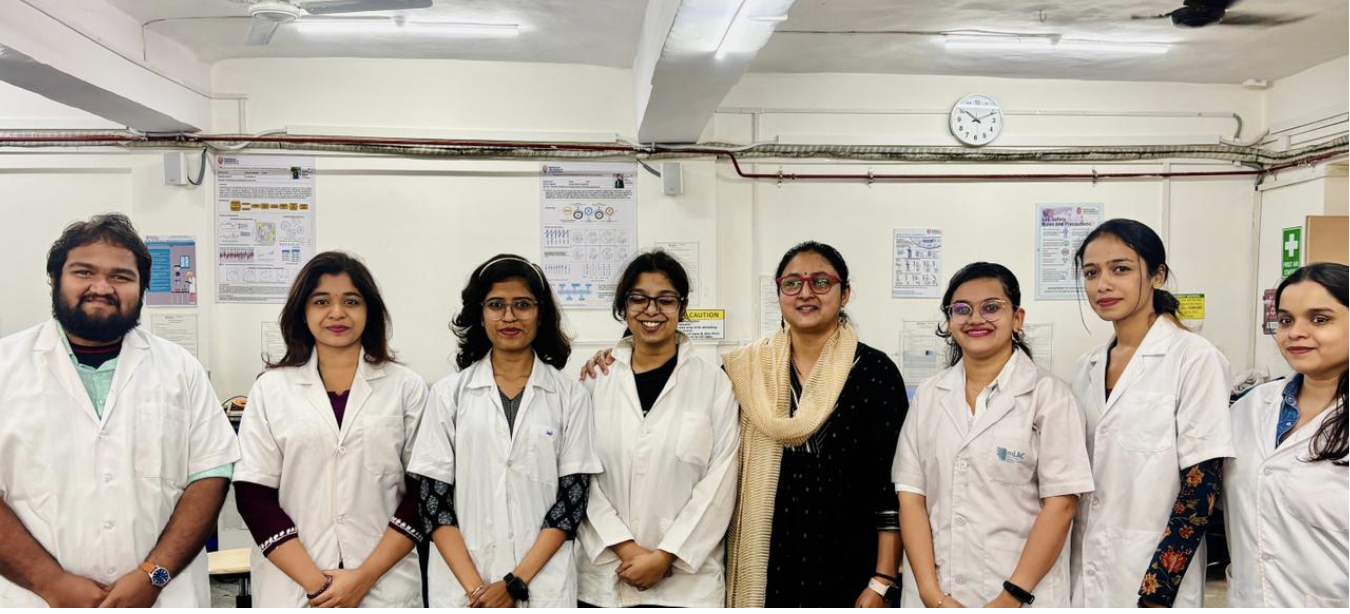
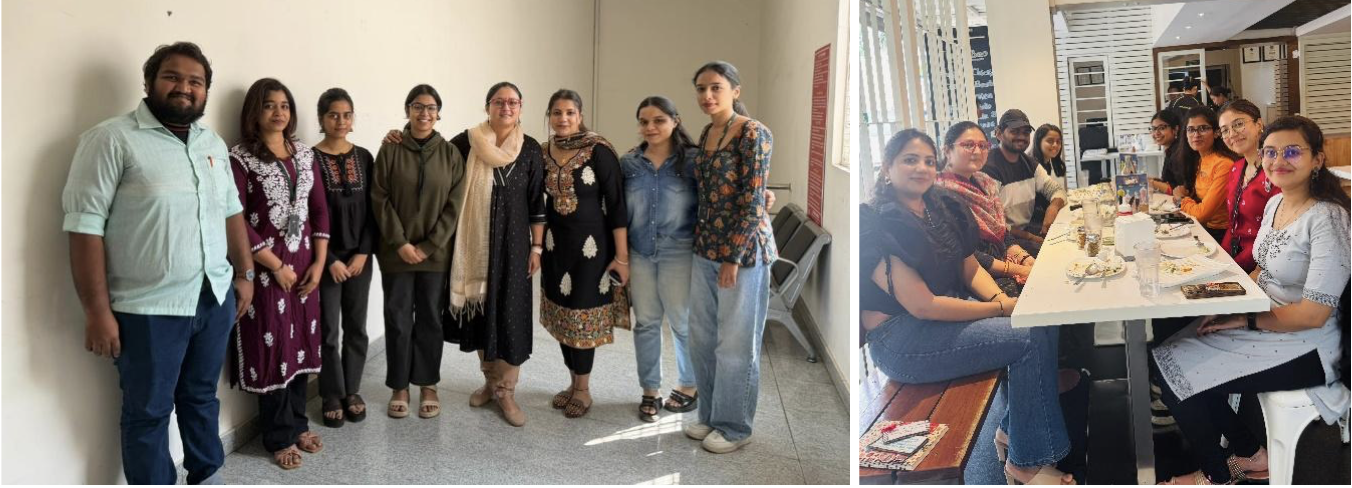
                src="https://cdn.indiabioscience.org/media/articles/Screenshot-2026-02-23-at-11.35.12-AM.png"></a></figure><p dir="ltr"><strong>From microbes to morphogenesis</strong></p><p dir="ltr">I did not begin with a map. I began with a small, stubborn curiosity: what unseen forces shape the world we touch? That question nudged me from one discipline to another, and it kept me moving through moments of failure, surprise, and quiet discovery.</p><p dir="ltr"><strong>The chemistry that led me elsewhere</strong></p><p dir="ltr">As an undergraduate, I was drawn to the clean logic of chemical structures—the way a reaction could be predicted, written down, and then watched unfold in a flask. I chose Chemistry Honours even though I was a merit-holder in Botany. The choice was partly practical—access to placement drives and a clearer path to a job—but it also reflected a desire to learn a rigorous way of thinking. After graduation, I briefly secured a job offer; yet a chance conversation during address verification changed the script. The officer suggested I consider further study rather than stepping into the workforce immediately. That nudge, combined with a restless curiosity, led me to an MSc in Applied Microbiology at Banaras Hindu University.</p><p dir="ltr">Microbiology let me keep the chemist’s eye—molecules and mechanisms—while opening a window into living systems. During my MSc, I completed a dissertation at <a href="https://www.du.ac.in/index.php?page=south-campus" rel="noopener" target="_blank">Delhi University South Campus</a> on heterologous gene expression in <em>Escherichia coli</em> and <em>Mycobacterium</em>. Handling mycobacterial cultures and cloning constructs for tuberculosis research was my first encounter with research that mattered beyond the bench. The work was exciting and often frustrating, but intoxicating. Those months convinced me that I wanted to pursue research, not just a job. The gold medal in my Master’s affirmed the choice, but it was the unfinished questions from the lab that kept me awake at night: how do microbes behave outside controlled plates, and how do they influence the health of whole plants in real fields?</p><p dir="ltr"><strong>The trial that taught me to listen</strong></p><p dir="ltr">For my PhD at the Institute of Agricultural Sciences, <a href="https://www.bhu.ac.in/Site/Home/1_2_16_Main-Site" rel="noopener" target="_blank">Banaras Hindu University (BHU)</a>, I chose agricultural microbiology and set out to study anthracnose in chilli. I wanted to know whether beneficial microbes could control disease under real field conditions, not just in petri dishes. </p><p dir="ltr">A year into the project, my supervisor handed me a new challenge: a complex phytopathogen in a crop no one else in the institute worked on. Overnight, I became the only person responsible for chilli anthracnose. There were no local protocols, no seniors’ lab book—only primary literature, scattered advice, and a great deal of trial and error.</p><p dir="ltr">One field trial remains vivid. I had screened promising biocontrol agents <em>in vitro</em> and designed a field experiment to test them. Lacking agronomy training, I guessed the transplant age for seedlings. The next morning, every seedling drooped and died. I walked to my supervisor expecting a reprimand. Instead, he looked at the wilted trays and said, <strong>“Seedlings have developmental stages. You cannot force them before they are ready.”</strong> That sentence landed like a small revelation. Plants, I learned, are not passive objects to be manipulated at will; they have timing, thresholds, and rhythms that must be respected.</p><p dir="ltr">When I repeated the experiment with properly aged seedlings, the trial succeeded, and we observed a significant reduction in disease incidence. The data mattered, but the deeper lesson was that failure is information. The drooping seedlings taught me to observe first and intervene second—to let the organism’s biology guide the experimental design rather than imposing my assumptions on it.</p><p dir="ltr"><strong>The shock and the new phase of life</strong></p><p dir="ltr">I was deeply absorbed in my research, working to understand how pathogens survive inside host plants. The seedlings were planted, the pathogen inoculated, and I was preparing samples for RT-PCR when, early the next morning, a call from my family changed everything—my mother had passed away. At that moment, the ground beneath me seemed to give way. Science, which had been my anchor, suddenly felt meaningless, and I thought seriously about leaving research behind.</p><p dir="ltr">My mentors, <a href="https://www.bhu.ac.in/Site/FacultyProfile/1_224?FA001175" rel="noopener" target="_blank">Richa Raghuwanshi</a> and <a href="https://scholar.google.com/citations?user=mhDg-v0AAAAJ&hl=en" rel="noopener" target="_blank">H B Singh</a> were compassionate and gave me the space I needed. One day, Singh Sir gently reminded me, “Amrita, you should finish what you started”. Those words stayed with me. Slowly, I gathered myself, completed my thesis, and learned a hard truth: life does not pause for anyone. It keeps moving, and we must find the strength to move with it.</p><p dir="ltr">A year later, I got married and moved to Bangalore. Restless but uncertain of my next step, I began exploring postdoctoral opportunities. My husband suggested <a href="https://iisc.ac.in/" rel="noopener" target="_blank">Indian Institute of Science, Bengaluru (IISc)</a>—the pinnacle of science in India—, and that idea reignited my spark. It felt like the beginning of a new chapter, one in which I could rebuild my journey with fresh purpose.</p><p dir="ltr"><strong>The conversations that opened a door</strong></p><p dir="ltr">The idea of a postdoc at the Indian Institute of Science felt aspirational and distant. My work had been rooted in crop pathology and field trials; IISc seemed like a world of molecular precision and cell biology I had not yet earned. Still, I wrote to Utpal Nath’s lab, expecting a polite decline. Instead, I was told to talk to the students and find a question that excited me.</p><p dir="ltr">Those hallway conversations became my real interview. Students explained auxin signalling, floral mutants, and how spatial and temporal gene expression sculpt organs. I remember sitting in a lab meeting, listening to someone describe how a transcription factor’s expression in a narrow tissue domain could change leaf shape, and feeling the same thrill I had felt watching the action of BCAs in pathogen control. The question that intrigued me was deceptively simple: how does TCP4-mediated cell-to-cell signalling regulate organ morphogenesis in <em>Arabidopsis</em>?</p><p dir="ltr">Joining the lab as a DBT-Research Associate meant learning new tools—confocal microscopy, reporter lines, quantitative expression analysis—and a new kind of patience. Fieldwork had taught me to read environments; developmental biology taught me to read patterns inside tissues. The shift was not a break but a continuation: both fields ask how signals—genetic, microbial, environmental—are integrated to produce form and function.</p><p dir="ltr"><strong>Returning to crops with new eyes</strong></p><p dir="ltr">After IISc, I returned to BHU as an IOE-Malviya Postdoctoral Fellow to work on rice SWEET genes and their role in drought and blast resistance. It felt like closing a loop. I was back in crop and stress biology, but now with a molecular toolkit that let me ask deeper questions about regulation and resilience. The same curiosity that had driven me from chemistry to microbes now helped me connect gene expression patterns to field-level outcomes.</p><p dir="ltr">In December 2024, I joined Ramaiah University of Applied Sciences in Bengaluru as an Assistant Professor in Biotechnology. My current research sits at the intersection of plant–microbe interactions, transcriptional regulation under combined stresses, and developmental logic that shapes plant architecture. I teach students to respect both the field and the microscope—to understand how a seedling’s transplant age matters as much as the timing of a transcription factor’s activation.</p><figure style="margin-left: auto; margin-right: auto; text-align: center; width: 418px; max-width: 418px;"><img src="https://cdn.indiabioscience.org/media/articles/Screenshot-2026-02-23-at-2.06.42-PM.png" data-image="835377" width="418" height="190"><figcaption style="text-align: center;">Plant BT group: The students of MSc and BSc, who got inspired to work in the area of Plant BT and explore what this field of sciences has to offer! (left to right: Muktish Jain, Nandana, Sayali, Pronkita, myself, Neha, Asmita and Saranya) Photo credit: Shivaraj, lab attendant</figcaption></figure><p dir="ltr"><strong>What the journey taught me</strong></p><blockquote dir="ltr" class="pull-quote">If there is a single thread through this journey, it is resilience—of plants and of careers. </blockquote><p dir="ltr">Plants wait for the right season; seedlings wait for the right age. Careers, too, are iterative. My path—chemistry to tuberculosis research to chilli pathology to <em>Arabidopsis</em> morphogenesis to rice stress biology—was not a detour but a curriculum. Each pivot added a layer of understanding: field failures taught agronomy, confocal confusion taught precision, hallway conversations taught me how to find a question that fits.</p><p dir="ltr">Mentors who trusted me with new problems, competitive fellowships, and small recognitions helped. But the deepest growth came from everyday struggles: failed trials, long nights of reading, and the humility of being a beginner again and again. Those moments taught me to treat failure as data, to build questions through conversation, and to respect the developmental timing of both plants and careers.</p><blockquote dir="ltr" class="pull-quote">To early-career researchers, I would say: your zigzag path is not a weakness. It is a source of strength. Send the cold email, sit in the lab meeting, repeat the experiment when it fails. Science is messy, humane, and slow—but it is also generous. It rewards curiosity, persistence, and the courage to become a beginner more than once.</blockquote><figure style="margin-left: auto; margin-right: auto; text-align: center; width: 444px; max-width: 444px;"><img src="https://cdn.indiabioscience.org/media/articles/Screenshot-2026-02-23-at-2.09.05-PM.png" data-image="835379" width="444" height="160"><figcaption style="text-align: center;">Amrita with the group of students of master's and bachelor's to celebrate their successful competition of group projects (left) and dissertation theses (right). The left picture includes Muktish Jain, Nandana, Nandini, Pronkita, me, Rashmi, Saranya and Asmita (left to right). The right photo includes Rashmi, me, Mahendra, Nandini, Pronkita, Sayali, Tanisha and Neha (left to right)</figcaption></figure>
              ]]></content><category term="other" label="Other" /><category term="science" label="Science" /><category term="networking" label="Networking" /><category term="personal-experience" label="Personal Experience" /><category term="young-investigators" label="Young Investigators" /></entry><entry><title>The academic 30s: The highs, lows, and the unknowns</title><link
                  rel="alternate"
                  href="https://indiabioscience.org/columns/journey-of-a-yi/the-academic-30s-the-highs-lows-and-the-unknowns"
                  type="text/html"
                  /><summary type="html"><![CDATA[
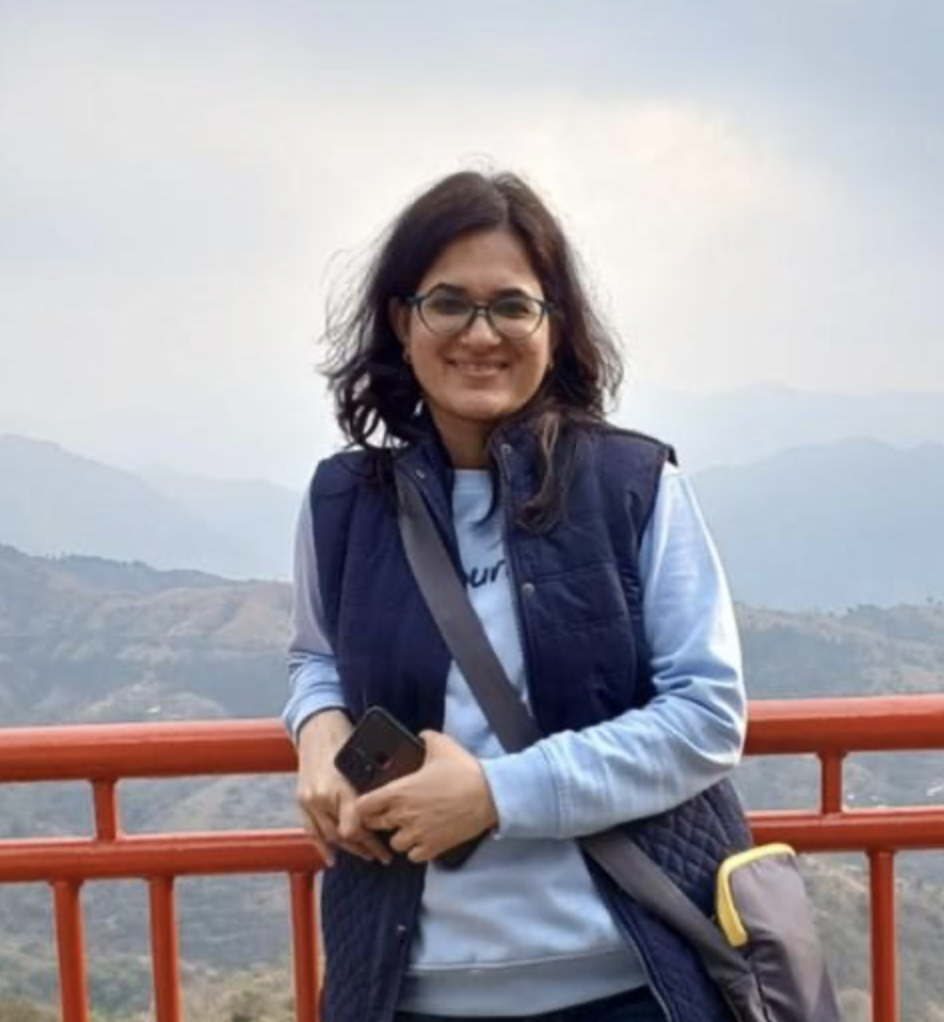
                <p dir="ltr">In this <a href="https://indiabioscience.org/meetings/yim-2018/journey-of-yi">Journey of a Young Investigator (JOYI)</a> 2026 article, <a href="https://www.cbmnimhans.org/cbm-team/dr-ashitha-s-n-m" target="_blank" rel="noreferrer noopener">Ashitha S N M</a>, Assistant Professor, DST INSPIRE Faculty Fellow, Department of Psychiatry, <a href="https://www.cbmnimhans.org/" target="_blank" rel="noreferrer noopener">NIMHANS</a>, reflects on the uncertain decisions, quiet resilience, and unexpected mentorship that shaped her journey through academia. From navigating a lonely PhD and motherhood to building a research career, she shares honest lessons about persistence, imperfect choices, and finding strength in community while balancing personal life and scientific ambition.<br /></p>              ]]></summary><id>tag:indiabioscience.org,2026-05-11:/columns/journey-of-a-yi/the-academic-30s-the-highs-lows-and-the-unknowns</id><published>2026-05-11T10:00:00+05:30</published><updated>2026-04-21T20:51:33+05:30</updated><author><name>Ashitha S N M</name><uri>https://indiabioscience.org/authors/kZyaKozPmnL6q5J</uri></author><content type="html"><![CDATA[
                
<p><a href="https://www.jiit.ac.in/dr-pooja-choudhary" target="_blank" rel="noreferrer noopener"></a>In this <a href="https://indiabioscience.org/meetings/yim-2018/journey-of-yi">Journey of a Young Investigator (JOYI)</a> 2026 article, <a href="https://www.cbmnimhans.org/cbm-team/dr-ashitha-s-n-m" target="_blank" rel="noreferrer noopener">Ashitha S N M</a>, Assistant Professor, DST INSPIRE Faculty Fellow, Department of Psychiatry, <a href="https://www.cbmnimhans.org/" target="_blank" rel="noreferrer noopener">NIMHANS</a>, reflects on the uncertain decisions, quiet resilience, and unexpected mentorship that shaped her journey through academia. From navigating a lonely PhD and motherhood to building a research career, she shares honest lessons about persistence, imperfect choices, and finding strength in community while balancing personal life and scientific ambition.</p><figure><a href="https://indiabioscience.org/columns/journey-of-a-yi/the-academic-30s-the-highs-lows-and-the-unknowns"><img
                width="1598"
                height="976"
                style="max-width: 100%; height: auto"
                src="https://cdn.indiabioscience.org/media/articles/unnamed_2026-03-17-061453_lgxu.png"></a></figure><p dir="ltr"><strong>Decisions</strong></p><p dir="ltr">How can a twenty year old aspiring scientist be sure that ‘this’ is the right decision and that it will ensure future success? I was naïve too. My journey as a researcher has been shaped as much by uncertainty as by perseverance. </p><p dir="ltr">With limited academic mentorship, many of my early decisions were instinctive rather than strategic. I chose courses out of curiosity, and when the “PhD bug” bit me, I accepted the first offer that came my way, without fully understanding what a PhD entailed. Nearly a year later, the weight of that decision set in. At 24, I felt intellectually isolated, and unsure of an exit route, even though my guide was kind-hearted. </p><p dir="ltr">What followed became the most defining phase of my life. With minimal guidance, I learned to rely on myself. I immersed myself in my research topic, framed my own questions, designed experiments, and wrote manuscripts, all of which were accepted on first submission.</p><p dir="ltr">That period shaped me. The loneliness of my doctoral years instilled self-reliance, resilience, and a quiet belief in myself and my work. Retrospectively, I realise that it was this experience that enabled me to design and defend my <a href="https://online-inspire.gov.in/" rel="noopener" target="_blank">DST-INSPIRE Faculty Fellowship</a> proposal with conviction and confidence and within a year of completing my PhD, I was awarded this highly competitive grant. </p><p dir="ltr">Although my doctoral journey was lonely, it instilled a deep belief that 'hard work pays'. Over time, one principal has stayed with me- take a decision and make it work. Those early lessons continue to anchor me.</p><p dir="ltr"><strong>Find your clan</strong></p><p dir="ltr">A PhD is a hard-won battle, and no one can reach the top without support. I was fortunate. When I made choices that, in hindsight, were not ideal, mentorship arrived in unexpected ways. My senior, <a href="https://www.linkedin.com/in/raviraj-v-suresh-35209330/?utm_source=share&utm_campaign=share_via&utm_content=profile&utm_medium=android_app" target="_blank">Raviraj VS</a>, became the wind under my wings. Having faced similar challenges, he helped me navigate the difficult situation I found myself stuck in. It was all I needed to stay afloat, gather my strength and refocus on academic excellence. </p><blockquote dir="ltr" class="pull-quote">The second such instance was when I found my ‘girl gang’, not when younger, but in my thirties. These were women who consistently showed up for me, without agenda. Through them, I experienced the strength of sisterhood rooted in pure intentions, a genuine desire to support one another through thick and thin with mutual respect and genuine support.</blockquote><figure style="margin-left: auto; margin-right: auto; text-align: center; width: 431px; max-width: 431px;"><img src="https://cdn.indiabioscience.org/media/articles/15908.png" data-image="835799" width="431" height="287"><figcaption style="text-align: center;">Ashitha celebrating her PhD convocation with her parents, in-laws, and her husband | Photo: Santosh Kumar S</figcaption></figure><p dir="ltr"><strong>The bane and boon of the thirties</strong></p><p dir="ltr">The thirties can be a very demanding decade. It is when the safety-net of being ‘young’ begins to fade and responsibilities intensify. Irrespective of gender, this is often the stage when personal commitments pile up demanding attention just as professional expectations peak. </p><p dir="ltr">In Indian academia, this pressure is particularly acute. Age limits for fellowships, faculty positions, and travel grants begin to narrow options. The academic clock for finding a regular position ticks alongside personal milestones of finding a partner, getting married, followed by the responsibility of making the house a home. Uncertainty on both fronts takes away one's focus and tests one’s composure. </p><blockquote dir="ltr" class="pull-quote">Yet, I have to admit there is a certain charm in being in our thirties. Emotional maturity begins to ground ambition in realism. </blockquote><p dir="ltr">This decade brings in the much needed clarity that helps us declutter thoughts, identify and filter-out distractions and judge better. The thirties becomes a period of introspection and re-assessment, one that equips us to navigate life’s curveballs with steadier resolve and prepares us for the tougher challenges of middle age.</p><p dir="ltr"><strong>Homegrown academic by circumstance</strong></p><p dir="ltr">It was not only personal, but also professional realities that shaped my decision to forego a postdoctoral fellowship abroad. When one completes a PhD in one’s thirties and marries soon after, career decisions become collective rather than individual. Aging parents, the need for job stability for both partners, and questions about how, when and where to raise a child all enter the equation. No amount of conversations prior to marriage and future planning can resolve these uncertainties. For me, prioritising family stability became the guiding choice.</p><p dir="ltr">The timing of my PhD completion compounded this situation, as it coincided with the onset of the COVID-19 pandemic. For nearly two years, conferences were inaccessible, limiting opportunities to present my work, build networks, and engage with potential postdoctoral mentors. Cold emails became my primary mode of outreach, often with limited response. In retrospect, several factors were at play: the global crisis, laboratories focused on continuity, and my keen interest in transitioning from genetics to patient-derived stem-cell models of psychiatric disorders, an area in which I lacked hands-on experience. Now, as a principal investigator (PI) myself, I understand why such a major pivot may not always align with a hiring PI’s expectation from a postdoctoral candidate- who is required to be independent and take on mentorship responsibilities.</p><p dir="ltr">Do I regret staying back? Absolutely not. I learned a lot more that extends well beyond what a conventional postdoctoral trajectory might have offered. I learned adaptability, persistence, and perseverance. More importantly, I gained a better understanding of Indian academia. I remain intentional about staying current and competitive -presenting my work at conferences and building meaningful international collaborations. </p><blockquote dir="ltr" class="pull-quote">The journey reassures me that there is no single path to scientific growth, only paths shaped by commitment, adaptability, and purpose.</blockquote><figure style="margin-left: auto; margin-right: auto; text-align: center; width: 431px; max-width: 431px;"><img src="https://cdn.indiabioscience.org/media/articles/15912.png" data-image="835801" width="431" height="287"><figcaption style="text-align: center;">COVID warrior in 'War Room', May 2020. When the whole world stayed indoors, but her parents sent her out to fight back.</figcaption></figure><p dir="ltr"><strong>Lessons from motherhood</strong></p><p dir="ltr">My parents and extended family - my greatest cheerleaders - patiently supported my decision to complete my PhD before marriage. I was in my early thirties when my baby was born, and to say that life changed would be an understatement. My brain changed.</p><p dir="ltr">When I confidently told my very supportive mentor <a href="https://www.cbmnimhans.org/cbm-team/dr-meera-purushottam" rel="noopener" target="_blank">Meera Purushottam</a>, that I would return from maternity leave and complete X, Y, and Z, she gently warned me, “<em>your brain will split into two, and you will function at half capacity”.</em> Only in hindsight do I understand the truth of that statement. It is as real as day and night. A large part of my mental space became devoted to my baby’s well-being, leaving limited room for sustained academic focus. Memory faltered, and conversations seemed like they never happened. It improved with time, but a part of me remains permanently attuned to my child and unavailable for academic pursuits.</p><p dir="ltr">The first year after returning to work was difficult. My body and mind did not support me as they once had. To my utter surprise, this time I questioned my professional ambitions and grappled with the guilt of leaving behind an infant at home. My mother stepped in with quiet resolve:, <em>“I will take care of this child and you go take care of your lab babies”.</em> Her support steadied me, but each day is a struggle to juggle two counterintuitive roles.</p><blockquote dir="ltr" class="pull-quote">On days of self-doubt, I recall words from my mentor <a href="https://www.linkedin.com/in/t-shivanandappa-25817315/?originalSubdomain=in" target="_blank">T Shivanandappa</a>: <em>“Anybody can be a mother, but not everybody can be a scientist mom. You have a once-in-a-lifetime opportunity; make the best use of it.” </em></blockquote><p dir="ltr">My friend and colleague <a href="https://medium.com/@bhagyalakshmishankarappa/the-long-road-to-dr-mom-when-academia-and-life-collide-9dbd51dc3c8b" rel="noopener" target="_blank">Bhagyalakshmi Shankarappa</a> is a living example for me. Watching her navigate academic aspirations and family responsibilities with discipline and determination showed me the kind of balance I wanted to strive for. </p><p dir="ltr">Inspirations are all around us. It is important to speak to one another and share experiences. Random hall-way conversations with colleagues have helped me in unimaginable ways. It helps to learn about a tried and tested strategy. That is the power of ‘open’ conversations and sisterhood.</p><p dir="ltr">Many say motherhood taught them patience and kindness. For me, it taught urgency and clarity- to become more productive and efficient at work. Initially, I tried to balance motherhood and work, but like Indira Nooyi says, “<em>Balance doesn't exist for working moms.' It's all about juggling priorities and making it work. Embrace the chaos”. </em>Ultimately, find the balance that works for you.</p><p dir="ltr"><strong>When is the right time?</strong></p><blockquote dir="ltr" class="pull-quote">So, when is the right time for PhD, marriage, and children? In my view, it is when you feel ready. Life will change, but no single moment guarantees perfect timing. Personal milestones need not be postponed for a PhD. In fact, when you find the ‘right’ partner don’t wait. </blockquote><p dir="ltr">What matters is clarity and communication. Speak openly about your aspirations post-PhD and discuss what it might mean to him/her. A scientific career is long drawn, unpredictable and thankless, and taking one’s family along on that requires honesty about its challenges. Look for a partner who is your champion and takes great interest in your success. No two journeys are alike, but shared understanding helps stabilise the course. </p><p dir="ltr">In my experience, handling faculty responsibilities - far more demanding than a PhD - alongside a new marriage and motherhood in my early thirties was difficult. Each role carried equal significance, and balancing them required intentional prioritisation and not just perfection.</p><p dir="ltr"><strong>The power of mentorship</strong></p><p dir="ltr">Merely surviving academia isn’t enough, one must thrive in its environment to be able to think freely and creatively. For this having a genuine and selfless mentor is crucial as they help shape our careers and perspectives. I found mentorship in more than one unexpected form. </p><p dir="ltr"><a href="https://www.cbmnimhans.org/cbm-team/dr-biju-viswanath" rel="noopener" target="_blank">Biju Viswanath</a>, in particular, has been a steady presence - someone who does not say “never”, who steadies me before I falter and encourages me to rise when I do. I learn and draw inspiration from him each day as I watch him place kindness, humility, integrity, and mentorship above personal recognition has influenced how I think about leadership and responsibility.</p><p dir="ltr"><strong>The personal vs the professional conundrum</strong></p><p dir="ltr">As an early-career woman scientist and a new mother in my thirties, I continue to navigate the tension between professional ambition and personal responsibility. The challenges evolve, but the tools remain constant: discipline, persistence, and trust in one’s own journey. These tensions are not limited to one gender; they are shared by many who attempt to build both a career and a family.</p><p dir="ltr">I hope that this story holds value because it normalises uncertainty, imperfect decisions, and non-linear growth. Scientific careers rarely begin with clarity. They endure through courage, consistency, and the willingness to keep moving forward, even when the path feels unclear.</p><p dir="ltr"><strong>My advices</strong></p><p dir="ltr"><em>To anybody thinking of a PhD: </em> PhD is a sacrifice of the most youthful five years of our lives. It is a covenant written in one’s own sweat and blood that if one quits, the loss is our own. </p><p dir="ltr"><em>To anybody with PhD ambiguity:</em> Do an honest self-introspection: why this PhD? Can I persist and prevail? My future aspirations and financial situation? Even within PhD topics, try out as many alternatives to ensure you won't lose interest!</p><p dir="ltr"><em>To anybody choosing a PhD mentor: </em>This is a ‘once in a life-time’ opportunity to choose your own academic father/mother. You will carry their name all along your academic journey. So, check if your ethos, personality and working styles match. </p><blockquote dir="ltr" class="pull-quote">The most invaluable advice I once received from my senior <a href="https://www.linkedin.com/in/madhumalaks/?utm_source=share&utm_campaign=share_via&utm_content=profile&utm_medium=android_app" target="_blank">Madhumala K S</a> is that <em>“It is ok if you don’t choose your PhD topic right, but it is crucial that you choose the right academic parent”.</em></blockquote><p dir="ltr">Unfortunately, for me I made this mistake twice. I acknowledge that there is no way of knowing, but retrospectively, I think the best source of information would be from people before you. What they experienced is precisely what you will experience too.<br></p>
              ]]></content><category term="other" label="Other" /><category term="science" label="Science" /><category term="networking" label="Networking" /><category term="personal-experience" label="Personal Experience" /><category term="young-investigators" label="Young Investigators" /></entry><entry><title>When freedom meets persistence: Building a research career from an unconventional start</title><link
                  rel="alternate"
                  href="https://indiabioscience.org/columns/journey-of-a-yi/when-freedom-meets-persistence-building-a-research-career-from-an-unconventional-start"
                  type="text/html"
                  /><summary type="html"><![CDATA[
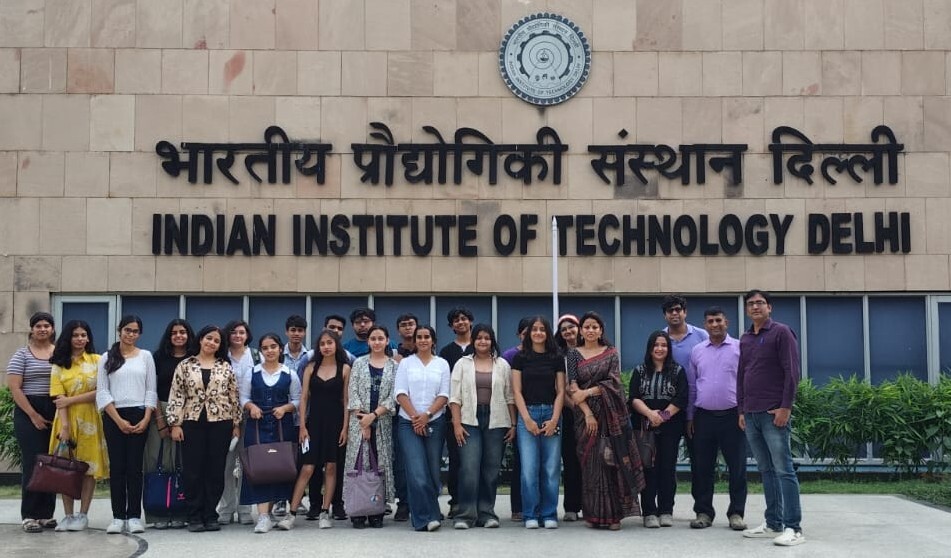
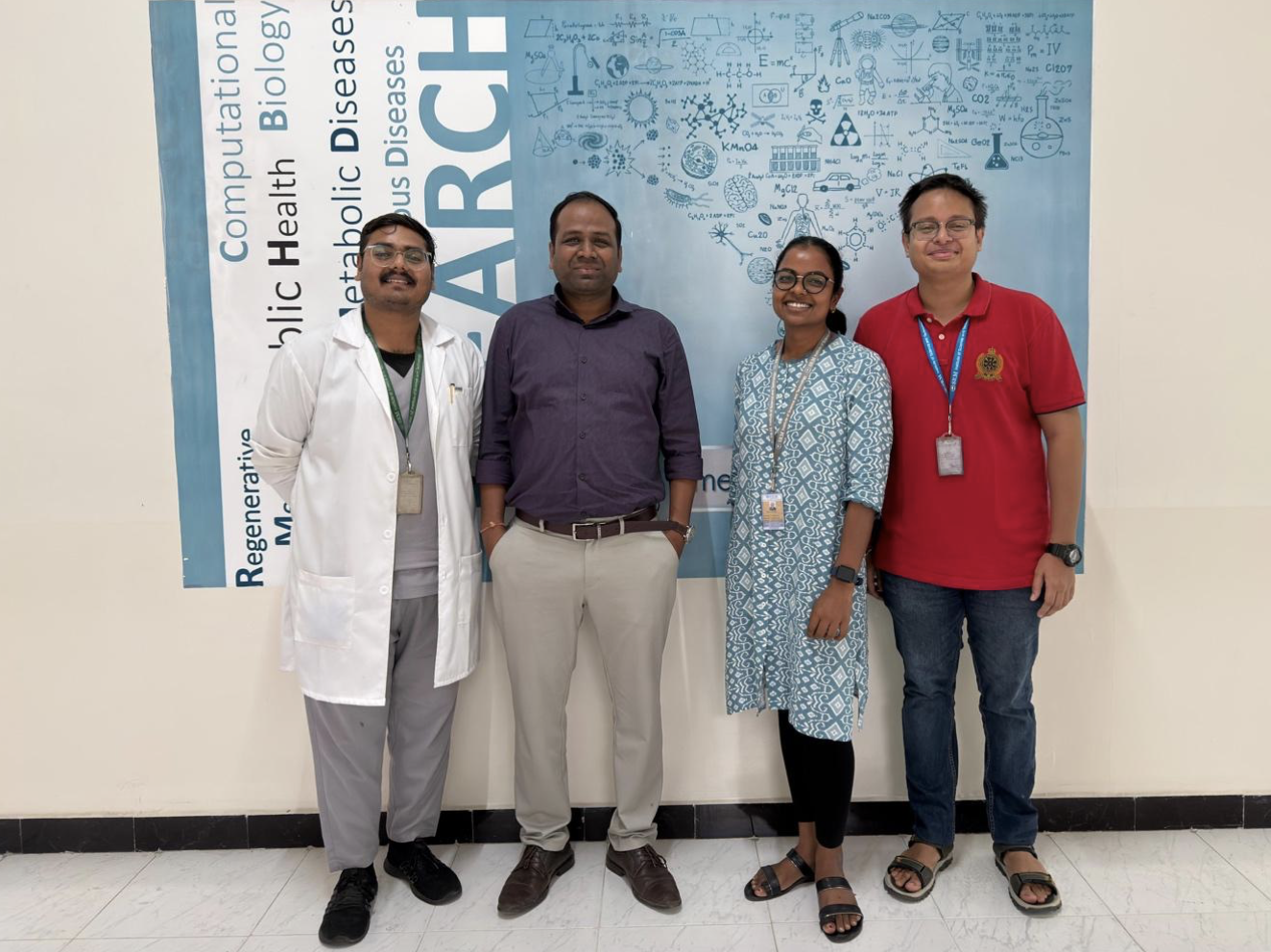
                <p><a href="https://www.jiit.ac.in/dr-pooja-choudhary" target="_blank" rel="noreferrer noopener"></a>Part of the <a href="https://indiabioscience.org/columns/journey-of-a-yi">Journey of a Young Investigator 2026 series</a>, this story traces how an early academic rejection redirected <a href="https://www.linkedin.com/in/chintan-bhavsar/?originalSubdomain=au" target="_blank" rel="noreferrer noopener">Chintan Bhavsar’s</a> path toward interdisciplinary cancer research, global collaborations, and eventually building a translational research lab in India. Shaped by strong mentorship, persistence, and risk-taking, his journey highlights the power of unconventional beginnings in scientific careers.<br /></p>              ]]></summary><id>tag:indiabioscience.org,2026-04-24:/columns/journey-of-a-yi/when-freedom-meets-persistence-building-a-research-career-from-an-unconventional-start</id><published>2026-04-24T10:00:00+05:30</published><updated>2026-04-10T11:56:10+05:30</updated><author><name>Chintan Bhavsar</name><uri>https://indiabioscience.org/authors/n8deK8VpDVMrGjk</uri></author><content type="html"><![CDATA[
                
<p><a href="https://www.jiit.ac.in/dr-pooja-choudhary" target="_blank" rel="noreferrer noopener"></a>Part of the <a href="https://indiabioscience.org/columns/journey-of-a-yi">Journey of a Young Investigator 2026 series</a>, this story traces how an early academic rejection redirected <a href="https://www.linkedin.com/in/chintan-bhavsar/?originalSubdomain=au" target="_blank" rel="noreferrer noopener">Chintan Bhavsar’s</a> path toward interdisciplinary cancer research, global collaborations, and eventually building a translational research lab in India. Shaped by strong mentorship, persistence, and risk-taking, his journey highlights the power of unconventional beginnings in scientific careers.</p><figure><a href="https://indiabioscience.org/columns/journey-of-a-yi/when-freedom-meets-persistence-building-a-research-career-from-an-unconventional-start"><img
                width="2047"
                height="1252"
                style="max-width: 100%; height: auto"
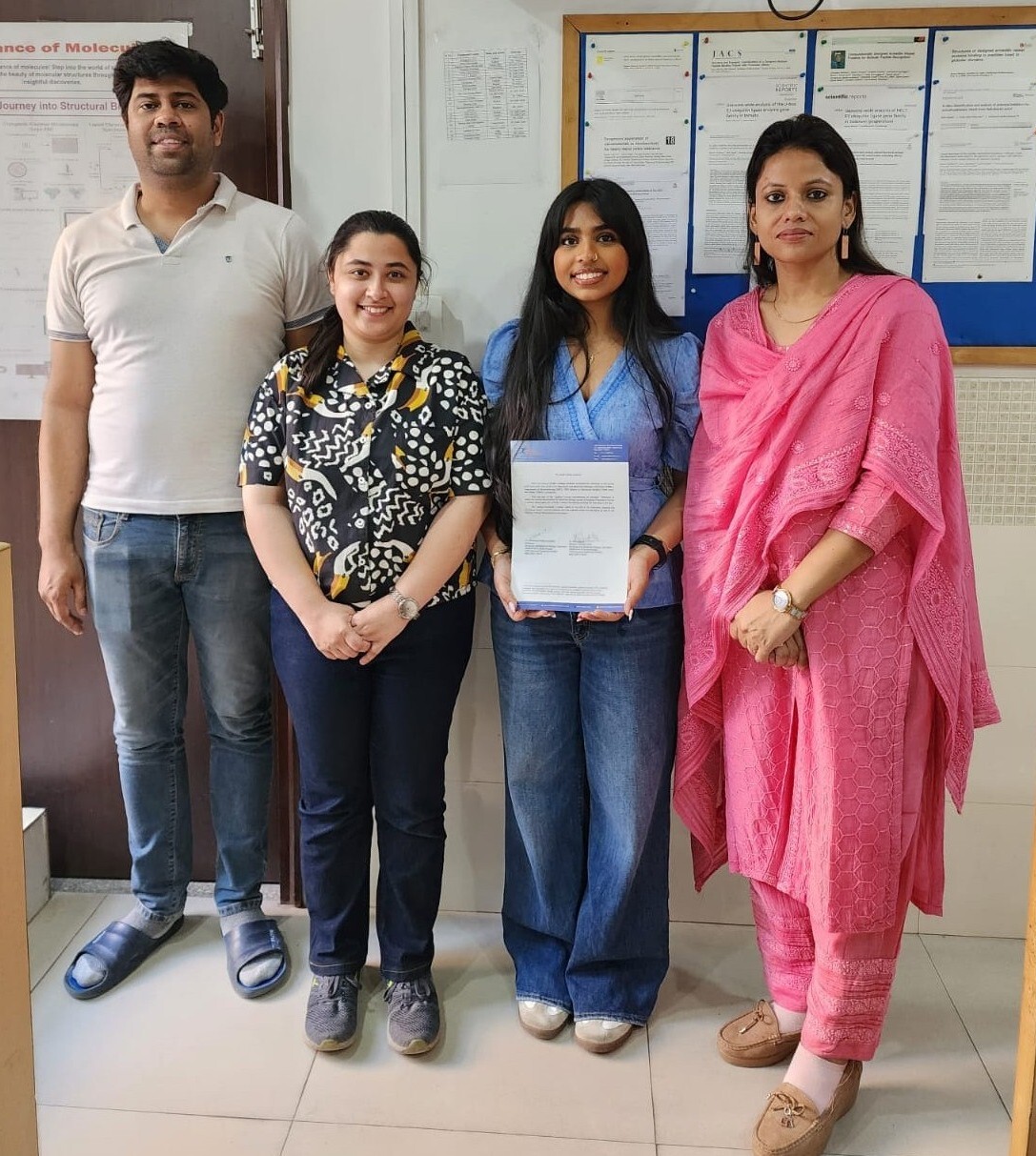
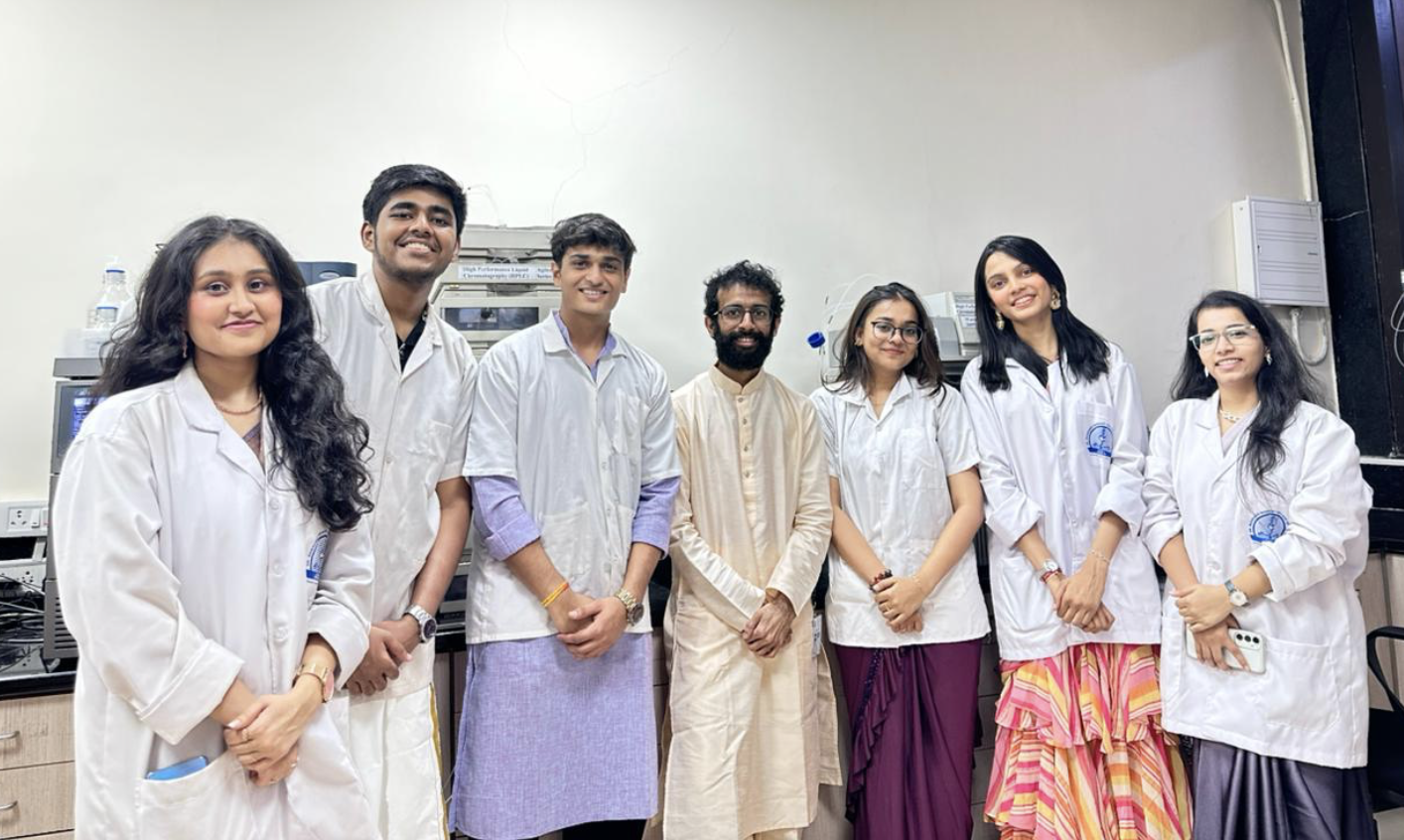
                src="https://cdn.indiabioscience.org/media/articles/Screenshot-2026-02-16-at-10.30.22-AM.png"></a></figure><p dir="ltr">Most research careers don’t begin with freedom; mine began with a rejection. </p><p dir="ltr">June 2015. I stared at my GRE scores and knew what they meant: no MS programmes in Immunology in the United States – a dream I had always wanted to pursue. Instead, I enrolled in a Master of Pharmacy programme at my alma mater, trying to convince myself that this was the end of my research ambitions! Looking back, I realise that this rejection was, in fact, a blessing in disguise.</p><p dir="ltr"><strong>An Unconventional Choice</strong></p><p dir="ltr">The system had assigned me a supervisor whose primary focus was teaching, with limited research experience. One thought kept recurring: – ‘<em>perhaps this was all I could expect, given my academic record.</em>’ </p><p dir="ltr">Then <a href="https://www.linkedin.com/in/prof-munira-momin-ba915020/?originalSubdomain=in" rel="noopener" target="_blank">Munira Momin</a> made an unconventional decision. Although I had already been allocated a supervisor, she offered to mentor me instead. That single phone call changed everything.</p><p dir="ltr">At the institute, students rarely switched supervisors after allocation. I felt grateful, overwhelmed, surprised, and uncertain, wondering whether I would be able to live up to her expectations.</p><p dir="ltr">The institute itself was young, just a decade old, primarily teaching-focused, with limited research infrastructure. Most faculty concentrated on coursework and examinations. Munira offered me something I had not expected within Indian academia: the freedom to explore interdisciplinary work combining basic cancer biology and pharmaceutics. This was a direction the institute had not attempted before. </p><p dir="ltr">That freedom came with responsibility. No established protocols. No previous work to build upon. I had to identify approaches independently, learning largely through trial and error. Some days I wondered if the project was really achievable. Yet she expected experimentation to be part of the process, and over time, this expectation built my confidence.</p><figure style="margin-left: auto; margin-right: auto; text-align: center; width: 322px; max-width: 322px;"><img src="https://cdn.indiabioscience.org/media/articles/Screenshot-2026-02-16-at-10.47.46-AM.png" data-image="835231" width="322" height="378"><figcaption style="text-align: center;">February 2019 – Chintan’s farewell before flying off for his PhD. The guru and student combination. (L to R): Munira and Chintan. Photo Credit: Tabassum Khan.</figcaption></figure><p><strong>Building collaborations</strong></p><p dir="ltr">One day, Munira handed me a contact at the <a href="https://actrec.gov.in/home" rel="noopener" target="_blank">Advanced Centre for Treatment, Research and Education in Cancer (ACTREC)</a> in Mumbai. “Reach out”, she said. </p><p dir="ltr">I sat at my laptop and drafted a research proposal, unsure whether this was even worth a shot. With little expectation, I reached ACTREC. The initial meeting did not go as planned. However, in an unexpected turn, <a href="https://scholar.google.com/citations?user=--Gb3agAAAAJ&hl=en" rel="noopener" target="_blank">Raghumani Singh Ningthoujam</a> from the <a href="https://www.barc.gov.in/" rel="noopener" target="_blank">Bhabha Atomic Research Centre (BARC)</a>, Mumbai, extended his support. </p><p dir="ltr">I was taken aback. A scientist from a premier institute under the Government of India was willing to collaborate with us.</p><p dir="ltr">This experience reinforced an important lesson: curiosity, resilience, and persistence matter more than institutional pedigree. The collaboration gave me access to facilities and expertise I wouldn’t have had otherwise. It also taught me how to communicate across institutional hierarchies, sustain collaborations over time, and navigate academic ecosystems.</p><p dir="ltr">Over the years, this collaboration trained more than fifteen students, creating a lasting impact. Watching other students benefit from something I had helped establish was unexpectedly rewarding. </p><p dir="ltr"><strong>Writing grants</strong></p><p dir="ltr">With collaborative projects underway, we took a leap and wrote our first extramural grant, followed by another within a few months. I took responsibility for the process and taught myself the intricacies of grant writing. Munira, <a href="https://www.linkedin.com/in/tabassum-khan-b17a2123b/" rel="noopener" target="_blank">Tabassum</a> and I worked intensively to draft coherent applications which were submitted to <a href="https://serb.gov.in/" rel="noopener" target="_blank">DST-SERB (now ANRF)</a> and <a href="https://brns.res.in/brns_rp.php" rel="noopener" target="_blank">BRNS</a>. </p><p dir="ltr">I still remember imagining what I would do if the grant came through, and it did. These grants were the first extramural grants the institute had received, fifteen years after its inception. The grants amounted to 60 lakhs INR and motivated other faculty members to pursue external funding.</p><p dir="ltr">For me, this moment affirmed that persistence had paid off. What began as an unconventional journey, had led to outcomes I could not have anticipated. </p><p dir="ltr"><strong>Australia and COVID-19</strong></p><p dir="ltr">Being selected as a Junior Research Fellow on the DST-SERB project offered a stable path within India. At the same time, receiving a scholarship from the <a href="https://biomedical-sciences.uq.edu.au/" rel="noopener" target="_blank">School of Biomedical Sciences</a> at the <a href="https://www.uq.edu.au/" rel="noopener" target="_blank">University of Queensland</a> represented an opportunity I thought was impossible.</p><p dir="ltr">Choosing between the two paths was difficult. Munira, like the ideal <em>guru</em> she is, asked me to take the leap. “Go”, she said and gave me the freedom I needed.</p><p dir="ltr">Then COVID-19 disrupted everything.</p><p dir="ltr">My PhD involved a clinical component requiring human ethics committee approval, which came to a standstill. Uncertainty again hit. During this period, <a href="https://biomedical-sciences.uq.edu.au/profile/6093/sherry-wu" rel="noopener" target="_blank">Sherry Wu</a>, my PhD advisor, supported me. With her guidance, I restructured my project and used the lockdown period productively. Although delayed, I was able to finish the clinical component of my work. </p><p dir="ltr">The guidance I received from both Munira and Sherry, emphasising persistence, patience, and resilience, continued to shape my PhD and postdoctoral journey.</p><p dir="ltr">Their mentorship reinforced how important supervisors are in a researcher’s development. Having learned through observation and experience, it was now time to pass these values on to the next generation. </p><p dir="ltr"><strong>Returning to India</strong></p><p dir="ltr">Life as a scientist in Australia offers considerable stability, supported by better funding and infrastructure. Staying on, however, meant working in another country, which wasn’t India. </p><p dir="ltr">Returning was not easy. Re-entering Indian academia meant navigating a competitive funding landscape and institutional complexities that I was not familiar with. However, I was determined to give back what I had received. </p><p dir="ltr">I now find myself exactly where I began - my alma mater, <a href="https://www.bncp.ac.in" rel="noopener" target="_blank">SVKM’s Dr Bhanuben Nanavati College of Pharmacy (Autonomous)</a>, Mumbai. Since returning, I have been fortunate to work in a research conducive environment alongside students eager to learn beyond academia, students willing to face uncertainty, like I once did. </p><p dir="ltr"><strong>What stayed with me</strong></p><p dir="ltr">Looking back, I realise that my journey was not shaped by exceptional talent. It worked because I had the right mentors who trusted me with freedom, and because I was persistent. The combination of persistence and resilience makes navigating academia both possible and meaningful.</p><figure style="margin-left: auto; margin-right: auto; text-align: center; width: 473px; max-width: 473px;"><img src="https://cdn.indiabioscience.org/media/articles/Screenshot-2026-02-16-at-10.48.47-AM.png" data-image="835233" width="473" height="283"><figcaption style="text-align: center;"> L-TRH – Laboratory of Translational Research in Healthcare at the Department of Pharmaceutics, SVKM’s Dr Bhanuben Nanavati College of Pharmacy, (Autonomous), Mumbai. (L to R): Srushti, Nikhil, Darsh, Chintan, Urvi, Aleesha, and Mansi. Missing lab members: Harshita and Ishwari. Photo Credit: Crystal Fernandes.</figcaption></figure><p dir="ltr">Today, my laboratory, L-TRH: Laboratory of Translational Research in Healthcare, is working to design tools and kits for early detection of cancer and nanoparticulate systems for precise delivery to tumours. The interdisciplinary path that I pursued from my Master's degree to my PhD is central to what L-TRH does now, bridging basic cancer biology and translational science to build something tangible.<br></p><p dir="ltr">At every decisive moment, I ensure that my team gets the same support as I did. The voices of Munira, Raghumani, Tabassum, and Sherry continue to guide me, reminding me that freedom, when met with persistence, can shape enduring scientific journeys.</p>
              ]]></content><category term="other" label="Other" /><category term="science" label="Science" /><category term="networking" label="Networking" /><category term="personal-experience" label="Personal Experience" /><category term="young-investigators" label="Young Investigators" /></entry><entry><title>Paused but not stopped: A scientist’s journey toward balancing pipettes and motherhood</title><link
                  rel="alternate"
                  href="https://indiabioscience.org/columns/journey-of-a-yi/paused-but-not-stopped-a-scientists-journey-toward-balancing-pipettes-and-motherhood"
                  type="text/html"
                  /><summary type="html"><![CDATA[
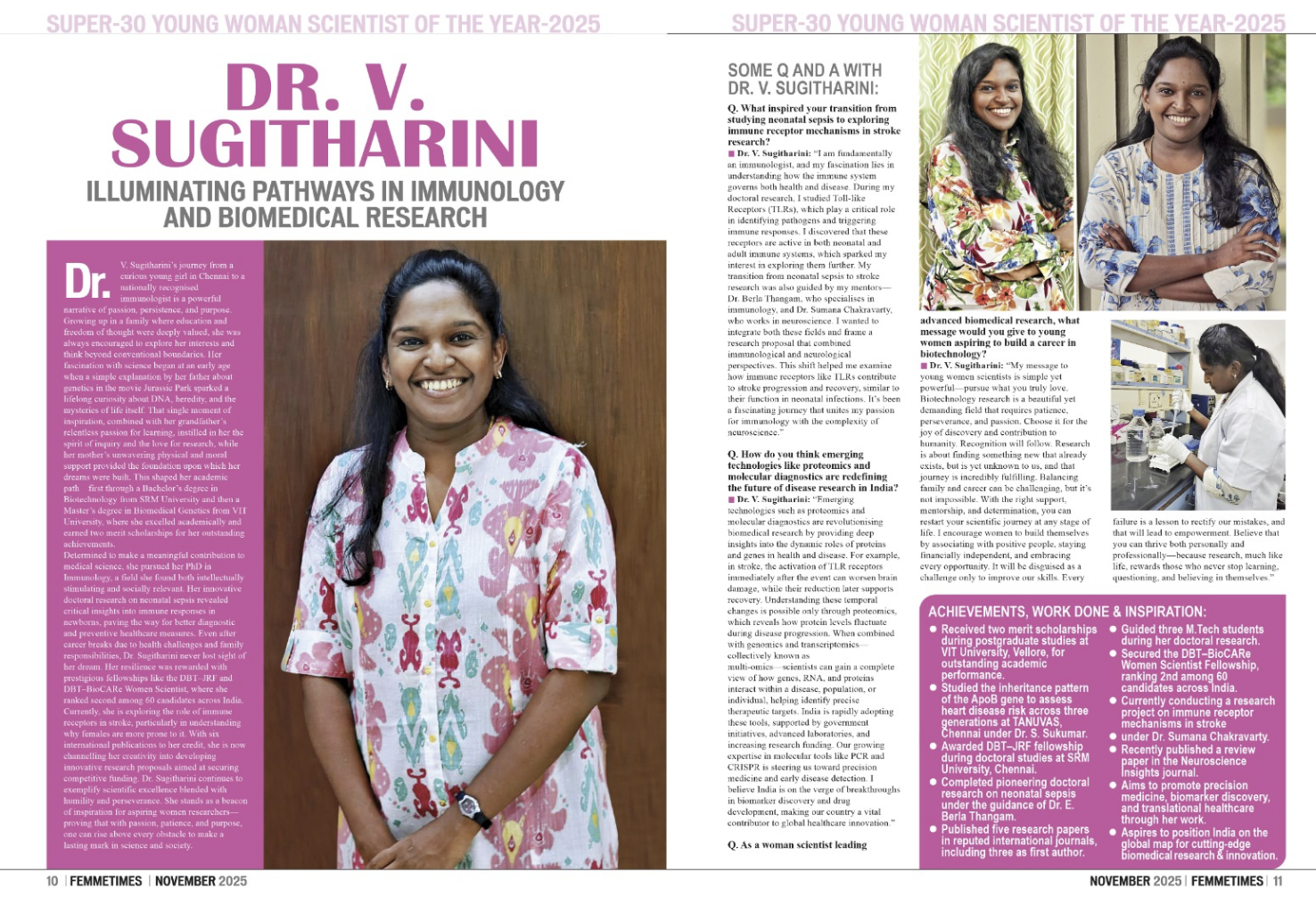
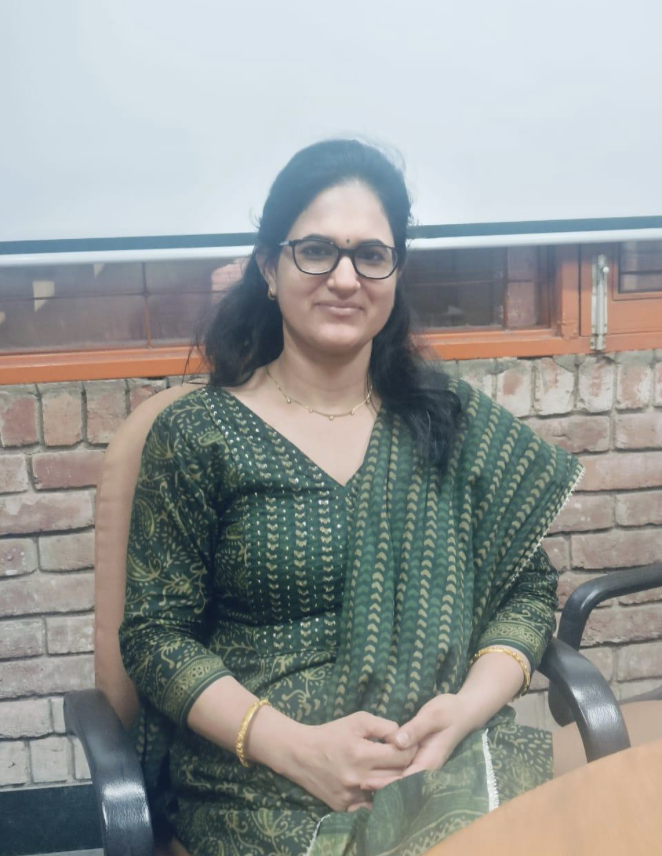
                <p dir="ltr"><a href="https://www.jiit.ac.in/dr-pooja-choudhary" target="_blank" rel="noreferrer noopener"></a>In this <a href="https://indiabioscience.org/columns/journey-of-a-yi">Journey of a Young Investigator 2026 article</a>, <a href="https://scholar.google.com/citations?user=CyTtvFEAAAAJ&amp;hl=en" target="_blank" rel="noreferrer noopener">Sugitharini V</a> reflects on her journey from an early fascination with genetics to building a research career in immunology after multiple career breaks. Through mentorship and continuous learning, she navigates motherhood and science, highlighting the realities and possibilities of rebuilding a research career in India.</p>              ]]></summary><id>tag:indiabioscience.org,2026-04-10:/columns/journey-of-a-yi/paused-but-not-stopped-a-scientists-journey-toward-balancing-pipettes-and-motherhood</id><published>2026-04-10T10:00:00+05:30</published><updated>2026-04-10T14:01:50+05:30</updated><author><name>Sugitharini V</name><uri>https://indiabioscience.org/authors/RY9PMaxa2n1GVoy</uri></author><content type="html"><![CDATA[
                
<p>In this <a href="https://indiabioscience.org/columns/journey-of-a-yi">Journey of a Young Investigator 2026 article</a>, <a href="https://scholar.google.com/citations?user=CyTtvFEAAAAJ&amp;hl=en" target="_blank" rel="noreferrer noopener">Sugitharini V</a> reflects on her journey from an early fascination with genetics to building a research career in immunology after multiple career breaks. Through mentorship and continuous learning, she navigates motherhood and science, highlighting the realities and possibilities of rebuilding a research career in India.</p><figure><a href="https://indiabioscience.org/columns/journey-of-a-yi/paused-but-not-stopped-a-scientists-journey-toward-balancing-pipettes-and-motherhood"><img
                width="2047"
                height="1250"
                style="max-width: 100%; height: auto"
                src="https://cdn.indiabioscience.org/media/articles/Screenshot-2026-02-02-at-3.35.53-PM.png"></a></figure><p><strong>Early life and inspiration</strong></p><p dir="ltr">I was born and raised in Chennai. My parents gave us the freedom to follow our dreams and never compelled us to choose careers that merely satisfied societal expectations. They consistently supported our aspirations. My grandfather, a veterinary scientist, has been my role model and early inspiration.</p><p dir="ltr">My fascination with science began in Grade 8, around the time <em>Jurassic Park</em> was released. When my father explained the principles behind the genetic modifications depicted in the movie, I was captivated. I became curious about how such a small molecule—DNA—could control every aspect of human life. This curiosity motivated me to pursue research, particularly DNA-based studies, and ultimately a doctoral degree. I genuinely enjoy studying and learning new things.</p><p dir="ltr"><strong>Academic foundation: Discovering genetics</strong></p><p dir="ltr">This passion led me to pursue my undergraduate degree in Biotechnology at <a href="https://www.srmist.edu.in/" rel="noopener" target="_blank">SRM Institute of Science and Technology, Chennai</a>. Biotechnology is a vast and multidisciplinary field, and during my studies I gained exposure to its many branches. Among them, genetics intrigued me the most, as it allows us to understand how traits are inherited across generations—something I was deeply curious about.</p><p dir="ltr">This interest prompted me to pursue my postgraduate studies in Biomedical Genetics at <a href="https://vit.ac.in" target="_blank">Vellore Institute of Technology (VIT)</a>, Vellore. I was awarded two merit scholarships for my academic performance. For my dissertation which I did at <a href="https://www.tanuvas.ac.in" target="_blank">Tamil Nadu Veterinary and Animal Sciences University (TANUVAS)</a>, Chennai, under S Sukumar, I studied <a href="https://www.sciencedirect.com/topics/neuroscience/variable-number-tandem-repeat" target="_blank">Variable Number Tandem Repeats (VNTRs)</a>, repetitive DNA sequences present throughout the genome. Specifically, I worked on a VNTR within the <em>ApoB</em> gene, where the number of repeats varies among individuals and correlates with lipid and cholesterol levels. I analysed the inheritance pattern of this VNTR across three generations to understand the genetic risk of heart disease in younger individuals. This study may contribute to assessing individual susceptibility to cardiovascular disease.</p><p dir="ltr"><strong>Overcoming setbacks and transition to immunology</strong></p><p dir="ltr">Due to ill health, I experienced a two-year career gap. However, I reignited my dream of earning a doctoral degree and attended interviews across Tamil Nadu. I was selected by both <a href="https://www.srmist.edu.in" target="_blank">SRM Institute of Science and Technology</a> and <a href="https://www.sastra.edu/" rel="noopener" target="_blank">SASTRA Deemed University</a>, Thanjavur, ranking first among 45 candidates at SRM. I chose SRM because the project focused on neonatal infections, with potential implications for reducing newborn mortality and improving early diagnosis.</p><p dir="ltr">This transition marked my shift from genetics to immunology—my second favorite subject. Under the guidance of <a href="https://www.srmist.edu.in/lab/molecular-immunology-lab/" rel="noopener" target="_blank">Berla Thangam</a>, I was awarded the <a href="https://www.dbtjrf.gov.in" target="_blank">Department of Biotechnology (DBT) Junior Research Fellowship</a>. During my PhD, I published five research papers, three as first author, and mentored three M Tech and several B Tech students.</p><figure style="margin-left: auto; margin-right: auto; text-align: center; width: 278px; max-width: 278px;"><img src="https://cdn.indiabioscience.org/media/articles/IMG_5814.jpeg" data-image="835171" width="278" height="214"><figcaption style="text-align: center;">Sugitharini with her mentor, Sumana Chakravarty, colleagues, and students at CSIR - IICT during Poster day. </figcaption></figure><p dir="ltr"><strong>Doctoral research: Understanding neonatal sepsis</strong><br></p><p dir="ltr">When the body encounters an infectious agent, it initiates an innate immune response involving immune cells, receptors, and inflammatory mediators that work together to eliminate the pathogen. Neonatal sepsis is a life-threatening infection that affects newborns within 72 hours of birth, often leading to multi-organ failure and death. </p><p dir="ltr">My research focused on understanding the immune mechanisms underlying the severity of neonatal sepsis. The findings may help validate differentially expressed inflammatory mediators—individually or in combination—for early diagnosis, thereby reducing unnecessary antibiotic use and clinical burden.</p><p dir="ltr">While writing my thesis, I worked as an Assistant Professor at <a href="http://www.sankaracollege.edu.in/" rel="noopener" target="_blank">Sri Sankara Arts and Science College</a>, Tamil Nadu, gaining valuable teaching experience. I also received an offer for a postdoctoral position under <a href="https://hillmanresearch.upmc.edu/researchers/daniel-premkumar-d8bc612b-34ff-b6f9-d654-bd8f51a2" rel="noopener" target="_blank">Daniel Premkumar</a> at the <a href="https://www.pitt.edu/" rel="noopener" target="_blank">University of Pittsburgh, USA</a>, focussing on glioma research, but was unable to accept it due to marriage commitments.</p><p dir="ltr"><strong>Career break and return to research</strong></p><p dir="ltr">After a six-year career gap due to marriage and childbirth, I once again decided to return to research. I met <a href="https://www.linkedin.com/in/sumana-chakravarty-9aa50437/?originalSubdomain=in" rel="noopener" target="_blank">Sumana Chakravarty</a>, Senior Principal Scientist at <a href="https://www.iict.res.in/" rel="noopener" target="_blank">CSIR–Indian Institute of Chemical Technology (IICT), Hyderabad</a>, to discuss potential projects and began applying for central government funding. Although I was not selected initially, I learned from my mistakes and focused on improving my skills. I practiced presentations, studied consistently, and eventually secured the <a href="https://rcb.res.in/DBTBioCARe/" rel="noopener" target="_blank">DBT BioCARe</a> (Biotechnology Career Re-orientation Programme) Women Scientist Fellowship under her mentorship, ranking second among 60 candidates nationwide.</p><p dir="ltr">Currently, I am working on understanding the role of immunity-related receptors in stroke in a sex-specific manner, as females are more prone to stroke than males during old age. I recently published a review article in <em>Neuroscience Insights</em>, and two original research papers based on my ongoing work are expected to be published by the end of next year.</p><figure style="margin-left: auto; margin-right: auto; text-align: center; width: 261px; max-width: 261px;"><img src="https://cdn.indiabioscience.org/media/articles/IMG_5812.jpeg" data-image="835169" width="261" height="196"><figcaption style="text-align: center;">Sugitharini with her guide, Berla Thangam, colleagues, and students during doctoral studies in their lab.</figcaption></figure><p dir="ltr">Due to unexpected circumstances in my personal life, I transferred my project from IICT to the <a href="https://www.unom.ac.in/" rel="noopener" target="_blank">University of Madras, Chennai</a>, my native place, where my parents and extended family reside. Leaving IICT was the most painful and emotional farewell of my life, but had to do for the welfare of my children. Today, along with the support of my family and friends, I am a full-time working mom and a supportive mother to young kids aged 6 years and 2 years old, raising them with empathy, responsibility and dignity all while balancing the dedication and demands of research with the happiness and joy of motherhood.<br></p><p dir="ltr">As an immunologist, my long-term goal is to contribute meaningful breakthroughs in healthcare and medical research that improve quality of life and help cure human diseases. I aspire to establish India on a global scientific platform through international collaborations and impactful research.</p><p><strong>Navigating Challenges, Mentorship, and Growth</strong></p><p dir="ltr">Like many research journeys, mine was not linear. Returning to research after career breaks was one of the most difficult phases of my life. The opportunities available to me during that period were often low-paying, shift-based, unrelated to research, or lacked work-from-home flexibility. These limited options slowly eroded my self-belief. After such a long gap, I had even forgotten basic laboratory techniques, including operating an autoclave. Rebuilding my confidence required months of self-study, conversations with colleagues, and patient guidance from my mentor. Slowly, I began to trust my abilities again.</p><p dir="ltr">The period during my DBT BioCARe fellowship interview was particularly intense. I was two months pregnant with my second child, while my elder son was in lower kindergarten. Even during maternity leave, when my younger child was only a month old, I began visiting the laboratory for an hour each day. During this time, I also worked on writing my review article and got it published in Neuroscience Insights. When I joined IICT, my second child was six months old and still breastfeeding. The institute had an on-campus daycare facility, which was immensely helpful, but emotionally, leaving such a young child there was extremely difficult. I would feed him, put him to sleep, rush to the lab, and often be called back within thirty minutes because he had woken up crying. For nearly a month, I walked almost eight kilometres daily between the lab and daycare. Watching him struggle during that transition was emotionally painful, and that remains one of the hardest challenges I have faced. Over time, as routines stabilised, I resumed wet-lab work, carefully planning experiments around feeding schedules and ensuring I completed work by early evening. Managing school schedules, daycare, laboratory work, activities, meetings, tuition, and family responsibilities became a carefully coordinated routine — one made possible only because of the unwavering support of my family.</p><figure style="margin-left: auto; margin-right: auto; text-align: center; width: 255px; max-width: 255px;"><img src="https://cdn.indiabioscience.org/media/articles/Screenshot-2026-02-04-at-11.21.17-AM.png" data-image="831802" width="255" height="254"><figcaption style="text-align: center;">Sugitharini with her family, from the left - her sister (she is a graphic and fashion designer), her mother (she is in business) and her kids- Sidhvik and Nithvik.</figcaption></figure><p dir="ltr">Throughout my journey, mentorship played a transformative role. Early in my training, I learnt laboratory discipline, sterile techniques, and research ethics from my mentors. During my doctoral training, I was guided in interpreting results critically, developing independent thinking, and mentoring students. As an early career researcher, I learnt the importance of patience, empathy, forgiveness, resilience, and quality-driven research. Good mentorship, I realised, does not just shape scientific skills; it shapes character, confidence, and leadership. During motherhood, the emotional and professional support from my mentor and colleagues helped me sustain balance between family and research. Their positivity and encouragement made the laboratory a space I wanted to return to every day, even during difficult phases.</p><p dir="ltr">Over time, I learnt that research is sustained by continuous learning. I strongly believe that studying is fundamental to scientific growth. Reading regularly helps us interpret results accurately, refine our ideas, and explain science to broader audiences. I make it a point to read at least one research paper every day. I often explain research funding to non-academic audiences using a simple analogy: I see myself as a film director with a script. Funding agencies are like producers. If they believe in the story — the research proposal — they invest in it. Once the project is completed, the findings are shared with the world, much like a film reaching its audience. Understanding this ecosystem helped me gain clarity and confidence in navigating research systems.</p><p dir="ltr">Hard work is equally indispensable. Research is rarely a straightforward process. Even when timelines are defined, generating reproducible and reliable data takes time. From procuring reagents and standardising protocols to managing administrative processes and reporting requirements, research demands persistence. Earlier, failed experiments would discourage me. Over time, I realised that each failure reveals what needs to be improved. Today, I see failed experiments as hidden opportunities to refine methods and strengthen results.</p><p dir="ltr">Patience is another quality that research constantly tests. Delays in funding, approvals, or experimental outcomes can be frustrating. Interestingly, motherhood taught me patience in ways research never could. After picking my children up from daycare, they would cling to me, seeking reassurance after a long day apart. Even when exhausted, I learnt to listen to their stories, understanding that these moments helped them feel secure. That patience gradually extended into my scientific life — helping me stay calm through uncertainty and delays.</p><p dir="ltr">At the core of everything is passion. My love for biology began early and has remained constant through every challenge. As a child, reading about scientific discoveries fascinated me. I always dreamed of experiencing that moment of discovery myself. That passion continues to drive me forward and helps me navigate difficult phases.</p><p dir="ltr">I also believe strongly in the importance of aptitude, attitude, and support systems. Research should be pursued only if one genuinely enjoys it, because it demands intellectual curiosity, patience, and emotional resilience. There are increasing opportunities for women scientists to return to research after career breaks, and I hope more women take advantage of these. With the right mentorship, supportive networks, and determination, it is possible to rebuild and grow stronger professionally.</p><p dir="ltr">Looking back, I am deeply grateful to my family, mentors, colleagues, friends, and daycare teachers and staffs, who supported me during my most challenging phases. Their belief in me helped me believe in myself again. My children remind me every day why perseverance matters, and their pride motivates me to keep moving forward.</p><p dir="ltr">If there is one lesson my journey has taught me, it is this: building self-belief is the foundation of growth. Positivity attracts opportunities. Financial independence provides security. And every opportunity — whether success or failure — builds experience. My journey is still evolving, but I hope it reminds others that progress is always possible, even after setbacks.<br></p><figure style="margin-left: auto; margin-right: auto; text-align: center; width: 386px; max-width: 386px;"><img src="https://cdn.indiabioscience.org/media/articles/Screenshot-2026-02-04-at-11.16.14-AM.png" data-image="831798" width="386" height="263"><figcaption style="text-align: center;">Sugitharini got featured in the Femmemtimes for Super 30 Young Woman Scientist of the year - 2025</figcaption></figure>
              ]]></content><category term="other" label="Other" /><category term="science" label="Science" /><category term="networking" label="Networking" /><category term="personal-experience" label="Personal Experience" /><category term="young-investigators" label="Young Investigators" /></entry><entry><title>Curiosity-driven scientist: My journey in bridging material and biology</title><link
                  rel="alternate"
                  href="https://indiabioscience.org/columns/journey-of-a-yi/curiosity-driven-scientist-my-journey-in-bridging-material-and-biology"
                  type="text/html"
                  /><summary type="html"><![CDATA[
                <p dir="ltr"><a href="https://www.jiit.ac.in/dr-pooja-choudhary" target="_blank" rel="noreferrer noopener"></a>In this <a href="https://indiabioscience.org/columns/journey-of-a-yi?token=kLHHHxOjLmnu3eJz61JC3dgkaTc7BWgJ&amp;x-craft-preview=0fad5b91a7bf6f44e72f104cbc16026f0a3726a380508c44cd54f72fd7ce152aafapttxffz">Journey of a Young Investigator (JOYI) 2026 article</a>, <a href="https://www.researchgate.net/profile/Pranav-Tiwari-2" target="_blank" rel="noreferrer noopener">Pranav Tiwari</a> traces his journey from early curiosity about quantum science to leading interdisciplinary nanobiotechnology research. Navigating systemic barriers, global training, and personal setbacks, his path reflects resilience, scientific ownership, and a commitment to bridging materials science with biology to address real-world health challenges.</p>              ]]></summary><id>tag:indiabioscience.org,2026-03-27:/columns/journey-of-a-yi/curiosity-driven-scientist-my-journey-in-bridging-material-and-biology</id><published>2026-03-27T10:00:00+05:30</published><updated>2026-03-25T17:02:09+05:30</updated><author><name>Pranav Tiwari</name><uri>https://indiabioscience.org/authors/9rGXLBBaOdLvZE4</uri></author><content type="html"><![CDATA[
                
<p>In this <a href="https://indiabioscience.org/columns/journey-of-a-yi?token=kLHHHxOjLmnu3eJz61JC3dgkaTc7BWgJ&amp;x-craft-preview=0fad5b91a7bf6f44e72f104cbc16026f0a3726a380508c44cd54f72fd7ce152aafapttxffz">Journey of a Young Investigator (JOYI) 2026 article</a>, <a href="https://www.researchgate.net/profile/Pranav-Tiwari-2" target="_blank" rel="noreferrer noopener">Pranav Tiwari</a> traces his journey from early curiosity about quantum science to leading interdisciplinary nanobiotechnology research. Navigating systemic barriers, global training, and personal setbacks, his path reflects resilience, scientific ownership, and a commitment to bridging materials science with biology to address real-world health challenges.</p><figure><a href="https://indiabioscience.org/columns/journey-of-a-yi/curiosity-driven-scientist-my-journey-in-bridging-material-and-biology"><img
                width="1382"
                height="842"
                style="max-width: 100%; height: auto"
                src="https://cdn.indiabioscience.org/media/articles/Screenshot-2026-02-02-at-11.14.07-AM.png"></a></figure><p dir="ltr"><strong>Curiosity sparks a scientific journey</strong></p><p dir="ltr">My journey began with a fascination for quantum mechanics, which came through the book <em>Quantum mystery</em> and that curiosity led me to join the Nanotechnology degree program (Integrated MTech) at the <a href="https://cuj.ac.in/" rel="noopener" target="_blank">Central University of Jharkhand</a>. At the time, nanotechnology was a buzzword that few truly understood. Since I was in the first batch for this program, we had limited lab facilities but the theory courses were very diverse and covered basic chemistry and physics, along with courses related to biology and material science. Luckily, I was trained through a highly interdisciplinary syllabus. </p><p dir="ltr">Among these theory courses, I studied nanobiotechnology and DNA nanotechnology, where I was introduced to the idea of nanobots and their potential to transform healthcare applications. This interdisciplinary foundation became my greatest asset, though I did not yet know it would also become my greatest professional hurdle. </p><p dir="ltr"><strong>Finding direction through mentorship and research exposure</strong></p><p dir="ltr">During my undergraduate days, I got the chance to do my internship and final year project at <a href="https://www.google.com/search?client=safari&rls=en&q=CSIR-NML&ie=UTF-8&oe=UTF-8" rel="noopener" target="_blank">CSIR-National Metallurgical Laboratory (CSIR-NML)</a>, Jamshedpur under the mentorship of the <a href="https://www.linkedin.com/in/suprabha-nayar-9a36041b/?originalSubdomain=in" rel="noopener" target="_blank">late Suprabha Nayar</a>. I was fortunate to work under her, as she was the first person to truly trust my potential. She introduced me to biomimetics and biomineralisation. Under her mentorship, I didn't just learn to handle analytical instruments; I learned the importance of scientific ownership. She encouraged me to present my thesis at international conferences, which fascinated me as at that time I was not fully aware of conferences. </p><p dir="ltr">While working there, I learnt about electrospinning and this helped in getting the project assistant position at the <a href="https://iisc.ac.in/" rel="noopener" target="_blank">Indian Institute of Science Bangalore (IISc), Bengaluru</a> under the mentorship of <a href="https://www.linkedin.com/in/shilpeejain/" rel="noopener" target="_blank">Shilpee Jain</a>. At IISc, I expanded my research domain and I also learned about the <em>in vitro</em> cell culture techniques. I integrated my work on electrospun magnetic nanofibers for hyperthermia applications. My main focus at IISs was to learn different analytical techniques, and within 10 months I submitted my first-ever research article as a lead author from IISs and then joined the <a href="https://www.iiti.ac.in/" rel="noopener" target="_blank">Indian Institute of Technology, Indore (IIT Indore)</a> for my PhD in the Center for Material Science and Engineering which later became Metallurgical Engineering and Materials Science department. </p><p dir="ltr">Those early exposures shaped my confidence and made research feel less intimidating and more meaningful. My doctoral work focused on carbon-based nanomaterials for optical biosensing, protein–nanomaterial interactions, and cellular applications. While the technical details evolved over time, the central theme remained constant—understanding how materials behave in biological environments and how we explore different nanomaterials for biological applications. </p><p dir="ltr">People often say a PhD is frustrating and depressing, but in my case, I enjoyed my PhD days all thanks to Indore, the food capital of India, and my friends. During my PhD apart from research, I was actively involved in student mentoring, grant writing, instrumentation purchasing, and lab management. These experiences quietly prepared me for the academic journey ahead. </p><p dir="ltr"><strong>Pandemic pause and recalibrating research goals</strong></p><p dir="ltr">The COVID-19 pandemic disrupted many plans, including the timely completion of my PhD viva. During this uncertain period, I continued in the same laboratory as a research associate, which allowed me to consolidate my work and reflect on my future direction. I had already decided that my postdoctoral training should fill a critical gap in my skill set—molecular biology. I wanted to better understand how materials influence biological systems at a mechanistic level. </p><p dir="ltr">This decision took me to the United States for postdoctoral research. I initially joined the <a href="https://www.nd.edu/" rel="noopener" target="_blank">University of Notre Dame</a>, but my time there was short and challenging. I moved to the <a href="https://www.utrgv.edu/" rel="noopener" target="_blank">University of Texas Rio Grande Valley (UTRGV)</a> in the school of medicine under the mentorship of <a href="https://www.utrgv.edu/school-of-medicine/directory/_research-profiles/murali-yallapu-rp.pdf" rel="noopener" target="_blank">Murali Yallapu</a>. My postdoctoral research focused on integrating chiral nanomaterials with cancer systems using molecular biology tools and animal models. This phase finally allowed me to bridge materials science with biology in a way I had long envisioned. </p><p dir="ltr"><strong>Returning to India: Building independent research in nanobiotechnology</strong></p><p dir="ltr">During my tenure there, I was awarded the DST INSPIRE Faculty Fellowship. At the same time, a growing desire to return home led me back to India. I joined <a href="https://www.iitk.ac.in/" rel="noopener" target="_blank">Indian Institute of Technology, Kanpur (IIT Kanpur)</a> to initiate my INSPIRE project on chiral nanomaterial-based theranostic strategies for protein aggregation-related diseases. After a year, I moved to VIT Vellore as an assistant professor in the Centre for Nanobiotechnology. </p><p dir="ltr">Here, I now lead the <a href="https://sites.google.com/view/hopehealthcare/home?authuser=0" rel="noopener" target="_blank">HOPE lab (Healthcare Oriented Platform Excellence)</a> and actively mentor PhD and master’s students while exploring chiral nanosystems for healthcare and environmental applications, and independently running two research grants from ANRF and DST. Our central research idea is simple yet ambitious: to investigate chirality as a biorecognition element beyond traditional antibodies and aptamers. </p><p dir="ltr"><strong>Teaching, mentoring, and building future scientists</strong></p><p dir="ltr">I also greatly enjoy teaching biotechnology courses at VIT, as teaching helps me understand ideas more deeply. Alongside research, it strengthens my belief that good research starts with a strong subject area. </p><figure style="margin-left: auto; margin-right: auto; text-align: center; width: 399px; max-width: 399px;"><img src="https://cdn.indiabioscience.org/media/articles/Screenshot-2026-02-02-at-11.04.42-AM.png" data-image="831735" width="399" height="287"><figcaption style="text-align: center;">Pranav with his students whom he taught basic biology for the first time.</figcaption></figure><blockquote dir="ltr" class="pull-quote">If I have to sum up my journey, it started with a simple desire to become a scientist and pursue a PhDbecause I saw scientists as “rock stars” who drive innovation and design future technologies. </blockquote><p dir="ltr">After Class 12, I was certain that I wanted a career in research. My curiosity about quantum phenomena drew me toward nanotechnology, and my fascination with nanobots pushed me to integrate the material and biological worlds.. </p><p dir="ltr">Even my current research on chiral material is based on curiosity—we still do not fully understand how life developed handedness (chirality), and amino acids and nucleic acids are prime examples.. </p><p dir="ltr">One major obstacle I faced—and still face—is that the Indian academic system can be perception-driven. Coming from an interdisciplinary nanotechnology degree, many government institutes rejected my applications despite advocating interdisciplinary education. Although <a href="https://vit.ac.in/" rel="noopener" target="_blank">Vellore Institute of Technology (VIT, Vellore)</a> gave me an opportunity, there were times I felt my nanotechnology degree was treated like a liability rather than a strength.</p><figure style="margin-left: auto; margin-right: auto; text-align: center; width: 485px; max-width: 485px;"><img src="https://cdn.indiabioscience.org/media/articles/Screenshot-2026-02-02-at-11.06.08-AM.png" data-image="831737" alt="VIT Vellore Center for Nanobiotechnology Research group" width="485" height="254"><figcaption style="text-align: center;">VIT Vellore Center for Nanobiotechnology Research group</figcaption></figure><p dir="ltr">Even as we move toward the new education policy, there remains an obsession with “specific degree titles” or “backing from big names.” There were moments when my degree felt like a limitation instead of an asset.</p><p dir="ltr"><strong>Personal resilience and defining success on one’s own terms</strong></p><p dir="ltr">Another major challenge was my stint at the <a href="https://www.nd.edu/" rel="noopener" target="_blank">University of Notre Dame</a>, particularly due to loneliness and systemic neglect from my mentor. Yet these experiences strengthened my resolve to define my own path rather than wait for validation.</p><p dir="ltr">A key lesson from my journey is the importance of scientific ownership. Designing my own research questions and taking responsibility for outcomes has been deeply empowering. My interdisciplinary training allows me to approach problems with flexibility and confidence.</p><p dir="ltr">Throughout this journey, my wife Anuradha has been a pillar of support—helping me navigate frustrations and academic insecurities with calmness, good food, and unwavering belief in me.</p><p dir="ltr"><strong>Lessons from setbacks</strong></p><p dir="ltr">I believe everyone has their own journey. As <a href="https://sandeepmaheshwari.com/" rel="noopener" target="_blank">Sandeep Mashewari</a> said, <em>“Success comes from experience, and experience comes from bad experiences”.</em> I have had my share of difficult moments, but clarity of purpose requires courage, determination, and patience.</p><p dir="ltr">Interestingly, the ideas behind the three research projects I lead today were born during my difficult months at Notre Dame. This proves that ideas matter, and persistent effort can bring them to life.</p><p dir="ltr">Overall, my journey reflects three core truths: interdisciplinary curiosity overcomes limited resources; pivoting is strategic, not a setback; and scientific independence comes from clarity, courage, and curiosity.</p><blockquote dir="ltr" class="pull-quote">Lastly, during my time at IISc, I read a quote that stayed with me: <em>“Science is long and life is short, We all are working together to improve the ratio”.</em> This is a philosophy I hope to follow throughout my life.<br></blockquote>
              ]]></content><category term="other" label="Other" /><category term="science" label="Science" /><category term="networking" label="Networking" /><category term="personal-experience" label="Personal Experience" /><category term="young-investigators" label="Young Investigators" /></entry><entry><title>A Scientist’s unlikely path</title><link
                  rel="alternate"
                  href="https://indiabioscience.org/columns/journey-of-a-yi/a-scientists-unlikely-path"
                  type="text/html"
                  /><summary type="html"><![CDATA[
                <p dir="ltr"><a href="https://www.jiit.ac.in/dr-pooja-choudhary" target="_blank" rel="noreferrer noopener"></a><a href="https://sites.google.com/view/saritapuri/home" target="_blank" rel="noreferrer noopener">Sarita Puri</a> is a DST Inspire faculty fellow in the biology department, <a href="https://www.iiserpune.ac.in/" target="_blank" rel="noreferrer noopener">Indian Institute of Science Education and Research Pune (IISER Pune)</a>. For this <a href="https://indiabioscience.org/columns/journey-of-a-yi">Journey of a Young Investigator (JOYI) 2026 article</a>, she narrates how she became a scientist by an unconventional path and is still finding her niche in Indian Academia.</p>              ]]></summary><id>tag:indiabioscience.org,2026-02-27:/columns/journey-of-a-yi/a-scientists-unlikely-path</id><published>2026-02-27T10:00:00+05:30</published><updated>2026-02-20T17:44:17+05:30</updated><author><name>Sarita Puri</name><uri>https://indiabioscience.org/authors/J6wpLXglqdMEar7</uri></author><content type="html"><![CDATA[
                
<p><a href="https://sites.google.com/view/saritapuri/home" target="_blank" rel="noreferrer noopener">Sarita Puri</a> is a DST Inspire faculty fellow in the biology department, <a href="https://www.iiserpune.ac.in/" target="_blank" rel="noreferrer noopener">Indian Institute of Science Education and Research Pune (IISER Pune)</a>. For this <a href="https://indiabioscience.org/columns/journey-of-a-yi">Journey of a Young Investigator (JOYI) 2026 article</a>, she narrates how she became a scientist by an unconventional path and is still finding her niche in Indian Academia.</p><figure><a href="https://indiabioscience.org/columns/journey-of-a-yi/a-scientists-unlikely-path"><img
                width="1570"
                height="962"
                style="max-width: 100%; height: auto"
                src="https://cdn.indiabioscience.org/media/articles/Screenshot-2026-01-30-at-4.14.06-PM.png"></a></figure><p dir="ltr"><strong>Research journey</strong></p><p dir="ltr">Being born and brought up in a remote village of Haryana, my family and neighbors had no background in pursuing higher education or careers in academia. The magnitude of this gap is evident from the fact that even in 2026, I am the only girl from my village who holds a PhD. Hence, the fact that I completed a five-year postdoctoral training across two countries (Taiwan and Italy), and have now established my own laboratory at one of the country’s most prestigious research and educational institutions, IISER Pune, is far beyond the expectations of my family. What once seemed like a distant dream became possible through dedication, honesty, sustained hard work, and the support of people around me.</p><p dir="ltr">With no well-informed person around to guide me, my schooling was largely about passing each class and moving on to the next, without much thought about what one should do in the future. As I performed well academically, I chose PCB (Physics, Chemistry & Biology) in Class 11 simply because many of my friends were opting for it. However, after realising the high costs associated with medical entrance exam preparation and the fee structures of medical colleges, I decided instead to pursue a BSc in Chemistry, Zoology, and Biotechnology.</p><p dir="ltr">My real research journey began during my MSc dissertation at <a href="https://www.teriin.org/" rel="noopener" target="_blank">The Energy and Resources Institute (TERI)</a>, New Delhi, where my mentor recognised my potential as a researcher and encouraged me to pursue a PhD. I cleared the CSIR-UGC NET JRF fellowship examination, the PhD interview at the <a href="https://home.iitd.ac.in/" rel="noopener" target="_blank">Indian Institute of Technology Delhi (IIT Delhi)</a>, and subsequently joined <a href="https://web.iitd.ac.in/~tkchaudhuri/" rel="noopener" target="_blank">Tapan Chaudhuri’s lab</a> in <a href="https://bioschool.iitd.ac.in/" rel="noopener" target="_blank">Kusuma School of Biological Sciences at the Indian Institute of Technology Delhi</a>. My PhD research focused on investigating the folding pathways of multidomain proteins. This phase of my career has given me the joy of being a researcher and the confidence to become an independent researcher—one who can contribute meaningfully to science while also training the next generation of students. </p><p dir="ltr"><strong>Postdoc era</strong></p><p dir="ltr">After completing my PhD, I joined <a href="https://www.ibc.sinica.edu.tw/facultyV.php?type=PI&lang=En&DatetimeStr=20210916145602" rel="noopener" target="_blank">Shang-Te Danny Hsu’s</a> laboratory at the <a href="https://www.chem.sinica.edu.tw/" rel="noopener" target="_blank">Institute of Biological Chemistry, Academia Sinica, Taiwan</a>, for my first postdoctoral position (2019–2021). These years were immensely enriching, during which I independently handled multiple research projects. Hsu’s hands-on and hardworking leadership made science genuinely enjoyable in his lab. Even today, he remains a major inspiration to me, and I would consider myself very fortunate if I could become even half the scientist he is. Overall, this tenure was highly productive, resulting in multiple first-author publications and me also receiving the Best Poster Award for one of my works by the <a href="https://www.biophys.org.tw/english" rel="noopener" target="_blank">Taiwan Biophysical Society</a> in their meeting in 2021.</p><p dir="ltr">Towards the end of 2021, I planned a second postdoctoral stint. This decision was also shaped by a personal commitment: my spouse and I wished to live in the same location. Since he decided to do his PhD at <a href="https://humantechnopole.it/en/" rel="noopener" target="_blank">Human Technopole, Milan, Italy</a>. Consequently, Milan became the only viable option for my second postdoctoral position. Although postdoctoral opportunities in Italy are generally fewer compared to other parts of Europe, I was fortunate to secure a position in <a href="https://sites.unimi.it/stericagno/index.html" rel="noopener" target="_blank">Stefano Ricagno</a>’s group at the <a href="https://www.unimi.it/en" rel="noopener" target="_blank">University of Milan</a>. There, I worked on the systemic amyloid disease AL amyloidosis, in which antibody light chains aggregate in multiple organs, including the heart and kidneys. Importantly, this position allowed me to closely collaborate with clinicians who treat AL amyloidosis patients and conduct clinical trials for this currently incurable disease, where insights from basic research are critically needed. In addition to completing successful research projects, publications, and invited talks, this experience enabled me to directly witness the translational impact of my work on patients. Through this work, I also became a member of the International Society of Amyloidosis, which organises a unique biennial conference bringing together clinicians, basic scientists, and patients enrolled in clinical trials to collectively discuss advances in research, diagnosis, and therapeutic strategies. My contribution to AL amyloidosis research also resulted in a Presidential award and an early-career travel award by ISA in 2024 and 2025. This rare combination of experience—working on systemic amyloidosis in a leading laboratory, maintaining close interactions with clinicians, and engaging in truly translational research—played a crucial role in my appointment as a <a href="https://online-inspire.gov.in/" rel="noopener" target="_blank">DST-INSPIRE Faculty Fellow</a> at IISER Pune in September 2024.</p><p dir="ltr"><strong>IISER Pune era</strong></p><p dir="ltr">IISER Pune provides a vibrant and supportive environment for young researchers, with generous backing from the Biology Department, senior faculty members, and highly motivated students. Within the first year of establishing my laboratory, we have already published two research articles in reputed journals contributing to the field of AL amyloidosis. Additionally, I have been successful in providing rigorous training to my three trainees, which has resulted in their placement in leading laboratories in Germany, France, and Taiwan for their master’s thesis work. This outcome is particularly fulfilling for me, as my vision as an independent researcher extends beyond building my own laboratory to actively fostering the growth, confidence, and professional development of the individuals working with me.</p><figure style="margin-left: auto; margin-right: auto; text-align: center; width: 457px; max-width: 457px;"><img src="https://cdn.indiabioscience.org/media/articles/Screenshot-2026-02-02-at-10.30.39-AM.png" data-image="831704" width="457" height="205"><figcaption style="text-align: center;">Sarita with her group at IISER Pune: Left to Right: Vibhuti Nagal (Master’s student), Urja Moon (BTech dissertation student), Basudha Patel (BS-MS student), Shivansh Singh (PhD student), Twinkle Agarwal (PhD student), Sarita Puri (PI), Swetha Sathessaan (BS-MS student), Gaurav Deori (BS-MS student), Somyojyoti Pal (BS-MS student), Saara Shyam (BS-MS student).</figcaption></figure><p dir="ltr"><strong>Future of my research career</strong></p><p dir="ltr">Having said all that, while successfully transitioning and establishing a reasonably productive laboratory within the first year is a significant milestone, several systemic challenges make the journey of young researchers difficult. These include delays in the timely reimbursement of funds under the DST-INSPIRE grant, slow processing of grant applications, and the inherently low success rates of competitive funding schemes. Such challenges are common across academia. Early-career researchers supported through programs such as INSPIRE, Ramalignaswami, Ramanujan, and DBT Alliance Early Career Fellowships face an added layer of uncertainty, as these positions are not regular faculty appointments and most institutions lack clear policies to transition them into stable, long-term roles. At this stage of my career, the major challenge I face is securing a regular academic position within the country—one that ensures stability in research, teaching, and professional responsibilities—so that I can work with greater focus and efficiency. I hope that in the coming years, institutional leaders will recognise this gap and develop robust structures and policies to support young faculty members and early-career researchers better.<br><br></p>
              ]]></content><category term="other" label="Other" /><category term="science" label="Science" /><category term="networking" label="Networking" /><category term="personal-experience" label="Personal Experience" /><category term="young-investigators" label="Young Investigators" /></entry><entry><title>A journey defined by consistency</title><link
                  rel="alternate"
                  href="https://indiabioscience.org/columns/journey-of-a-yi/a-journey-defined-by-consistency"
                  type="text/html"
                  /><summary type="html"><![CDATA[
                <p dir="ltr"><a href="https://www.jiit.ac.in/dr-pooja-choudhary" target="_blank" rel="noreferrer noopener"></a>As part of the <a href="https://indiabioscience.org/meetings/yim-2018/journey-of-yi">Journey of a Young Investigator (JOYI) 2026</a><em></em>series<em>, </em><a href="https://mitwpu.edu.in/faculty/neha-bokey" target="_blank" rel="noreferrer noopener">Neha Bokey</a> reflects on a non-linear scientific path shaped by research, caregiving, and entrepreneurship. Trained in biotechnology, she moved from academia to translational work, built resilience through fellowships and grants, and now advances gut microbiome research while mentoring students and driving innovation in India.<br /></p>              ]]></summary><id>tag:indiabioscience.org,2026-02-20:/columns/journey-of-a-yi/a-journey-defined-by-consistency</id><published>2026-02-20T10:00:00+05:30</published><updated>2026-02-02T11:27:08+05:30</updated><author><name>Neha Bokey</name><uri>https://indiabioscience.org/authors/kZyaKobEV5L6q5J</uri></author><content type="html"><![CDATA[
                
<p>As part of the <a href="https://indiabioscience.org/meetings/yim-2018/journey-of-yi" target="_blank" rel="noreferrer noopener">Journey of a Young Investigator (JOYI)</a> 2026 series<em>, </em><a href="https://mitwpu.edu.in/faculty/neha-bokey" target="_blank" rel="noreferrer noopener">Neha Bokey</a> reflects on a non-linear scientific path shaped by research, caregiving, and entrepreneurship. Trained in biotechnology, she moved from academia to translational work, built resilience through fellowships and grants, and now advances gut microbiome research while mentoring students and driving innovation in India.</p><figure><a href="https://indiabioscience.org/columns/journey-of-a-yi/a-journey-defined-by-consistency"><img
                width="1566"
                height="956"
                style="max-width: 100%; height: auto"
                src="https://cdn.indiabioscience.org/media/articles/Screenshot-2026-01-30-at-4.19.38-PM.png"></a></figure><p dir="ltr">My journey in science has not followed a straight line. It has curved, paused, restarted, and reshaped itself many times, with defining moments that helped me grow not only as a researcher, but also as a person navigating science, caregiving, and entrepreneurship in India.</p><p dir="ltr">I began my professional life with a conventional academic foundation. I completed my postgraduation and PhD in Biotechnology, specialising in plant molecular biology and microbiology. Like many young researchers, I was driven by curiosity and a strong belief that science and technology could create real-world impact. My doctoral training gave me technical depth, critical thinking skills, and an appreciation for experimental discipline.</p><p dir="ltr">After my PhD, I joined a private research organisation, where I was introduced to animal tissue culture and industry-oriented research. This phase was important because it shifted my perspective from purely academic questions to translational science. I learned how research timelines, regulatory expectations, and real-world applications intersect. It was also my first exposure to working in multidisciplinary teams outside the university environment.</p><p dir="ltr">In 2019, my life changed in a way that no career plan can fully anticipate - I became a mother. Shortly afterwards, the COVID-19 pandemic disrupted professional ecosystems across the world. With an infant at home, restricted mobility, and limited access to laboratory facilities, continuing my scientific work through conventional routes as a biotechnologist was no longer possible. What followed was an involuntary career pause, a phase that many women in science experience.</p><p dir="ltr">This pause was not just professional; it was deeply personal. In the Biosciences field stepping away from the laboratory forced me to confront questions about self-worth, relevance, and the fear of being left behind. Like many early-career researchers in India, I found myself grappling with uncertainty, both about my career and my identity as a scientist.</p><p dir="ltr"></p><p dir="ltr">Rather than seeing this interruption as an endpoint, I slowly began to reimagine what my scientific career could look like. I asked myself a simple but powerful question: How could I continue to grow intellectually, even if I could not physically be in the lab? This mindset shift became my first major turning point.</p><p dir="ltr">I actively sought learning opportunities that allowed remote engagement, and this search led me to the Technology Entrepreneurship Program at the <a href="https://htic.iitm.ac.in/mti/" rel="noopener" target="_blank">HTIC MedTech Incubator, IIT Madras</a>. The six-week programme introduced me to startup ideation, grant writing, and entrepreneurial thinking - areas I had never formally explored before. For the first time, I saw how my research training could extend beyond experiments and papers into problem-solving, innovation, and impact.</p><p dir="ltr">More importantly, the programme gave me confidence. Mentors and peers treated my ideas seriously, even though I was navigating motherhood and career uncertainty. That validation mattered. It helped me see that scientific rigour and entrepreneurship are not opposites, but complementary tools for translating knowledge into solutions.</p><p dir="ltr">In 2022, I reached another significant milestone when I was awarded the <a href="https://nidhi.dst.gov.in/nidhieir/" rel="noopener" target="_blank">DST NIDHI Entrepreneur in Residence Fellowship</a> through the same incubator for a gut microbiome-based startup concept. This fellowship marked a new chapter—one where I could combine my scientific background with structured entrepreneurial support. During this period, I refined both the scientific and commercial aspects of my idea and conducted a case study involving obese subjects.</p><p dir="ltr">The fellowship was demanding but deeply rewarding. Regular mentoring, ecosystem exposure, and accountability helped sharpen my thinking. By the time I completed the fellowship in 2023, I felt a renewed sense of clarity-not just about my research direction, but about the kind of scientist I wanted to be.</p><p dir="ltr">Parallel to this journey, I persisted with grant writing, despite multiple rejections and revisions. That persistence paid off when I was selected for the second round of the Biotechnology Ignition Grant, where I pitched my proposal to national-level reviewers. Although competitive funding environments can be intimidating, these experiences strengthened my resilience and communication skills.</p><p dir="ltr">The next defining achievement came in October 2023, when I received the <a href="https://nidhi-prayas.org/#parentVerticalTab11" rel="noopener" target="_blank">DST NIDHI PRAYAS Grant</a>. For the first time, I was working independently as a principal investigator. Initiating the proof-of-concept study tested every aspect of my patience and perseverance. Ethical approvals, coordination with hospitals, and conducting observational studies required sustained effort, repeated negotiations, and extensive fieldwork.</p><figure style="margin-left: auto; margin-right: auto; text-align: center; width: 350px; max-width: 350px;"><img src="https://cdn.indiabioscience.org/media/articles/Screenshot-2026-01-23-at-12.27.37-PM.png" data-image="831236" width="350" height="252"><figcaption style="text-align: center;">Neha with a team member of the DST NIDHI Prayas grant and an M.Sc. Biotechnology intern contributing to the gut microbiome review study.</figcaption></figure><p dir="ltr">This phase opened new research avenues for me, particularly in personalised medicine, food-health interfaces, and human microbiome studies. One of the most fulfilling outcomes was the opportunity to create employment for four postgraduate students from biotechnology and microbiology backgrounds. Watching young researchers gain hands-on exposure to translational research reminded me why mentorship and representation matter so deeply in science.</p><p dir="ltr">In 2024, I joined <a href="https://mitwpu.edu.in/" rel="noopener" target="_blank">Dr Vishwanath Karad MIT World Peace University</a> as an Assistant Professor in the Department of Biosciences and Technology. Establishing an independent research programme within an academic setting came with fresh challenges. Initiating gut microbiome research required addressing biosafety concerns, navigating social taboos around sample handling, and sensitising students in shared laboratory environments.</p><p dir="ltr">Support from departmental leadership and approval from the Institutional Biosafety Committee (IBSC) played a crucial role in enabling this transition. A supportive ecosystem made it possible to introduce emerging research domains while maintaining ethical and safety standards. This experience reinforced an important lesson: institutional openness can significantly accelerate scientific innovation.</p><p dir="ltr">Alongside teaching and research, I took on the role of coordinator for Research, Innovation, Design and Entrepreneurship initiatives and Hackathons. This role allowed me to integrate my entrepreneurial experience into student mentoring, encouraging innovation-driven problem solving. In 2025, my team received an appreciation award, a recognition that affirmed the value of interdisciplinary collaboration and structured mentorship.</p><p dir="ltr">Today, I am the founder of Onegutwell Innovations Pvt Ltd., a startup focused on gut health-based diagnostic solutions, and a co-founder of Ember Bytes LLP, which develops technology-driven food products. These ventures represent the convergence of years of scientific training, lived experience and consistent effort.</p><blockquote dir="ltr" class="pull-quote"><em>Consistency turns perseverance into progress and effort into achievement”.</em></blockquote><figure style="margin-left: auto; margin-right: auto; text-align: center; width: 398px; max-width: 398px;"><img src="https://cdn.indiabioscience.org/media/articles/Screenshot-2026-01-23-at-12.29.36-PM.png" data-image="831238" width="398" height="279"><figcaption style="text-align: center;">Neha with the student team “Gel-wizard” at Hackathon 2025 receiving an appreciation award under the theme “Biothon”.</figcaption></figure><p dir="ltr">As a woman navigating science and entrepreneurship in India, my journey has been shaped by caregiving responsibilities, systemic barriers, and moments of self-doubt. It has also been shaped by mentors who believed in me, institutions that offered flexibility, and students who brought energy and curiosity into shared spaces.<br></p><p dir="ltr">If there is one lesson my journey has taught me, it is this: </p><blockquote dir="ltr" class="pull-quote">Resilience is not built through dramatic breakthroughs, but through consistent decision-making, even in uncertainty. Progress often looks quiet and fragmented while it is happening. </blockquote><p dir="ltr">My story is not unique, but it is honest. It stands as a reminder that career breaks do not erase capability, and that non-linear paths can lead to meaningful innovation. </p><blockquote dir="ltr" class="pull-quote">With clarity of purpose, sustained effort, and the courage to adapt, pauses can become platforms-and consistency can quietly transform perseverance into progress.<br></blockquote>
              ]]></content><category term="other" label="Other" /><category term="science" label="Science" /><category term="networking" label="Networking" /><category term="personal-experience" label="Personal Experience" /><category term="young-investigators" label="Young Investigators" /></entry><entry><title>From petri-plates to computer: Writing code for a successful career in India</title><link
                  rel="alternate"
                  href="https://indiabioscience.org/columns/journey-of-a-yi/from-petri-plates-to-computer-writing-code-for-a-successful-career-in-india"
                  type="text/html"
                  /><summary type="html"><![CDATA[
                <p>As part of the <a href="https://indiabioscience.org/meetings/yim-2018/journey-of-yi" target="_blank" rel="noreferrer noopener">Journey of a Young Investigator 2026</a> series, <a href="https://scholar.google.com/citations?user=Jr6kNsUAAAAJ&amp;hl=en" target="_blank" rel="noreferrer noopener">Piyush Agarwal’s</a> story highlights that building a scientific career in India extends beyond research outputs. It involves navigating funding gaps, infrastructure limits, and uncertainty. Through patience and persistence, he focuses on creating enabling ecosystems for science, showing that meaningful progress often grows from long-term commitment.</p>              ]]></summary><id>tag:indiabioscience.org,2026-02-13:/columns/journey-of-a-yi/from-petri-plates-to-computer-writing-code-for-a-successful-career-in-india</id><published>2026-02-13T10:00:00+05:30</published><updated>2026-02-02T11:03:48+05:30</updated><author><name>Piyush Agrawal</name><uri>https://indiabioscience.org/authors/Ppx8KpXGwjKVQ5W</uri></author><content type="html"><![CDATA[
                
<p><a href="https://www.jiit.ac.in/dr-pooja-choudhary" target="_blank" rel="noreferrer noopener"></a>As part of the <a href="https://indiabioscience.org/meetings/yim-2018/journey-of-yi" target="_blank" rel="noreferrer noopener">Journey of a Young Investigator 2026</a> series, <a href="https://scholar.google.com/citations?user=Jr6kNsUAAAAJ&amp;hl=en" target="_blank" rel="noreferrer noopener">Piyush Agarwal’s</a> story highlights that building a scientific career in India extends beyond research outputs. It involves navigating funding gaps, infrastructure limits, and uncertainty. Through patience and persistence, he focuses on creating enabling ecosystems for science, showing that meaningful progress often grows from long-term commitment.</p><figure><a href="https://indiabioscience.org/columns/journey-of-a-yi/from-petri-plates-to-computer-writing-code-for-a-successful-career-in-india"><img
                width="1570"
                height="958"
                style="max-width: 100%; height: auto"
                src="https://cdn.indiabioscience.org/media/articles/Screenshot-2026-01-30-at-5.27.43-PM.png"></a></figure><p dir="ltr">My scientific journey began at the bench, during my undergraduate training in Microbiology at the University of Delhi, where biology meant petri plates, cultures, and carefully timed experiments. A late exposure to bioinformatics during my bachelor’s degree quietly altered that trajectory, leading me to shift from wet-lab biology to computational science during my master’s. What followed was an unconventional and often uncertain path shaped by limited resources, delayed fellowships, and repeated rejections.</p><p dir="ltr">A defining challenge came after my master’s degree, when I spent nearly a year waiting for my DST-INSPIRE fellowship certificate to formally begin a PhD. During this period, I faced twelve consecutive interview rejections, forcing me to confront doubt, vulnerability, and questions about belonging in science. Persistence eventually led me to a PhD at <a href="https://www.indiascienceandtechnology.gov.in/organisations/ministry-and-departments/council-scientific-industrial-research-csir/csir-institute-2" rel="noopener" target="_blank">CSIR-Institute of Microbial Technology (CSIR-IMTECH)</a>, where strong mentorship and a collaborative environment helped rebuild my confidence and scientific foundation.</p><p dir="ltr">My postdoctoral journey at the <a href="https://www.cancer.gov/" rel="noopener" target="_blank">National Cancer Institute, National Institute of Health (NIH)</a>, brought a new set of challenges, including field transitions, isolation during the COVID-19 lockdown, and slow initial productivity. Yet, this phase also highlighted the importance of community, collaboration, and patience, culminating in meaningful scientific contributions and recognition.</p><p dir="ltr">Returning to India as an independent investigator, I now navigate the realities of building a lab, mentoring students, securing funding, and developing infrastructure. This story is meaningful because it reflects the non-linear, often invisible struggles behind scientific careers in India. It speaks to early-career researchers who feel delayed, uncertain, or out of place, and reminds them that persistence, community, and thoughtful decision-making matter as much as speed or early success.</p><p dir="ltr"><strong>When biology met programming: Late, but just in time</strong></p><p dir="ltr">I did not grow up imagining myself as a bioinformatician. My scientific journey began when I joined <strong>Microbiology (Hons.)</strong> programme at Ram Lal Anand College, University of Delhi, where biology lived at the bench among pipettes, gels, and petri plates. Until the final year of my bachelor’s degree, I had never encountered the field of bioinformatics at all. Like many students trained in the life sciences, I believed that biology only existed at the bench among pipettes, gels, and culture plates. That belief shifted quietly when I was introduced to bioinformatics. What struck me immediately was the possibility that biology could be explored through logic, algorithms, and simulations, and that meaningful questions could still be asked when physical resources were limited.</p><p dir="ltr">That realisation arrived late in my undergraduate training, but it arrived decisively. I chose to pursue a master’s degree in bioinformatics, stepping away entirely from the wet lab. Around the same time, I discovered something unexpected: I genuinely enjoyed programming. Writing code, debugging late into the night, and watching a model finally run felt deeply satisfying. It was the first time science felt both creative and self-driven.</p><p dir="ltr"><strong>A lab that fit in a backpack</strong></p><p dir="ltr">The transition from wet lab to purely computational work, however, was far from easy. Resources were scarce. Access to high-end computing was minimal, and formal training in computational methods was limited. At one point, I made a decision that now feels symbolic of that phase: I spent my personal savings to buy a laptop capable of running simulations. That laptop became my laboratory.</p><p dir="ltr">Most of my learning happened independently, teaching myself programming languages, running small simulations, breaking things repeatedly, and fixing them again. There were no clusters, no GPUs, and no safety net. Yet, paradoxically, this constraint gave me freedom. I learned to be resourceful, patient, and precise. More importantly, I learned to trust my ability to figure things out.</p><p dir="ltr"><strong>The year nothing moved and everything did</strong></p><p dir="ltr">After my master’s degree, progress stalled abruptly. I had been selected for the <a href="https://online-inspire.gov.in/" rel="noopener" target="_blank">DST-INSPIRE fellowship</a> because I was the university topper in my subject, but the formal certificate, essential to joining a PhD programme, took nearly a year to arrive. That year was one of the most destabilising periods of my life. With no institutional affiliation and no active project, I found myself in academic limbo. I attended fourteen PhD interviews during that time. The first twelve ended in outright rejection, often quick, sometimes without explanation. Each rejection chipped away at my confidence. I began questioning whether I had chosen the wrong field, whether bioinformatics was too risky, or whether I simply was not good enough.What kept me going was not confidence, but persistence. I continued studying, refining my skills, and applying, sometimes more out of habit than hope.</p><p dir="ltr"><strong>A door finally opens</strong></p><p dir="ltr">That persistence eventually led me to CSIR-IMTECH, where I began my PhD under the mentorship of G P S Raghava. That acceptance felt like more than an admission, it felt like permission to believe in myself again. My PhD years were foundational. I was fortunate to work in an environment shaped by strong mentorship, generous seniors, collaborative peers, and enthusiastic juniors. I learned how to think independently, frame meaningful questions, and translate ideas into publications. More importantly, I learned what a healthy research ecosystem looks like. Those years did not just strengthen my CV; they shaped my scientific identity.</p><p dir="ltr"><strong>Leaving comfort behind, again</strong></p><p dir="ltr">As my PhD came to an end in 2019, I began applying for postdoctoral positions. Once again, rejections and silence dominated the early phase. Eventually, I received multiple offers and made a deliberate choice to join Sridhar Hannenhalli at the National Cancer Institute (NCI), NIH, USA, selecting a project that pushed me far outside my comfort zone.</p><p dir="ltr">Just as plans were finalised, the COVID-19 pandemic shut the world down. Travel bans, visa uncertainty, and global fear defined early 2020. After discussions with Sridhar, we proposed a COVID-19, focused project that allowed travel under exceptional circumstances. Against the odds, my visa was approved, and in August 2020, I travelled to the United States during one of the most uncertain moments in recent history.</p><figure style="margin-left: auto; margin-right: auto; text-align: center; width: 394px; max-width: 394px;"><img src="https://cdn.indiabioscience.org/media/articles/Screenshot-2026-01-30-at-5.13.18-PM.png" data-image="831644" width="394" height="262"><figcaption style="text-align: center;">Lab party during COVID-19 lockdown. From left: Vishaka, Gulden, Omar, Piyush, Arvind, Sridhar and Arashdeep</figcaption></figure><p dir="ltr"><strong>Alone in a new country, together in small ways</strong></p><p dir="ltr">The first year at NIH was isolating. Lockdowns were strict, and I lived alone in a single room in an Airbnb, working remotely for months. Even when laboratory access resumed, it was limited. Learning an entirely new domain, unfamiliar techniques, and a different research culture was overwhelming. By traditional metrics, the first two years were slow and unproductive, but they were years of deep learning.</p><p dir="ltr">What made this phase survivable were the people. My friends during my postdoc years became my extended family. We cooked together, shared frustrations, laughed at failed experiments, explored the city when restrictions eased, and showed up for one another during difficult days. Those moments of joy and companionship anchored me when imposter syndrome felt loud.</p><p dir="ltr">Scientifically, collaboration mattered just as much. Working closely with students Navami and Ilana across several projects was particularly formative. Together, we navigated new datasets, built analytical pipelines, and learned how to translate computational outputs into biological insight. These collaborations reminded me that science is rarely a solitary pursuit, even when it feels that way.</p><figure style="margin-left: auto; margin-right: auto; text-align: center; width: 377px; max-width: 377px;"><img src="https://cdn.indiabioscience.org/media/articles/Screenshot-2026-01-30-at-5.15.12-PM.png" data-image="831646" width="377" height="295"><figcaption style="text-align: center;">Home away from home. From left: Sumit, Piyush, Ranjan and Sumeet</figcaption></figure><p dir="ltr"><strong>When patience finally pays</strong></p><p dir="ltr">Gradually, the pieces began to align. The ideas connected, productivity improved, and manuscripts took shape. One of my papers received the <a href="https://www.training.nih.gov/felcom/fare/" rel="noopener" target="_blank">NIH Fellows Award for Research Excellence (FARE)</a> in 2023, the highest recognition for a postdoctoral fellow at NIH. The award was meaningful not because of the accolade itself, but because it affirmed a lesson I had learned repeatedly: growth is often delayed but rarely wasted.</p><p dir="ltr"><strong>Choosing home, choosing continuity</strong></p><p>By 2023, personal priorities began to reshape professional decisions. My family pulled me back toward India. I attended the <a href="https://sciroi.net/" rel="noopener" target="_blank">Sci-ROI</a> annual meeting at <a href="https://www.stjude.org/" rel="noopener" target="_blank">St. Jude Children’s Research Hospital</a>, where my profile was shortlisted by several Indian institutions. Soon after, SRM Institute of Science and Technology reached out. After multiple rounds of discussions, I accepted the offer and transitioned from NIH, USA to <a href="https://www.google.com/search?q=srm+institute%C2%A0&client=safari&hs=0mFp&sca_esv=7e3b4dea3a648857&rls=en&sxsrf=ANbL-n6q3fF2OYwhCH1VtO5EesP_qBvi9w%3A1769690785011&ei=oVZ7acU566Cd6w_D2frIBw&ved=0ahUKEwiFjun047CSAxVrUGcHHcOsHnkQ4dUDCBE&uact=5&oq=srm+institute%C2%A0&gs_lp=Egxnd3Mtd2l6LXNlcnAiD3NybSBpbnN0aXR1dGXCoDIIEC4YgAQYsQMyChAAGIAEGEMYigUyExAuGIAEGEMYxwEYigUYjgUYrwEyChAAGIAEGEMYigUyChAAGIAEGEMYigUyChAAGIAEGEMYigUyBRAuGIAEMgoQABiABBhDGIoFMgUQABiABDIKEAAYgAQYQxiKBTIXEC4YgAQYsQMYlwUY3AQY3gQY4ATYAQFIqSVQrBRYsCBwBXgBkAEAmAG8AqAB7BOqAQUyLTguMrgBA8gBAPgBAZgCD6ACkhXCAgoQABiwAxjWBBhHwgINEAAYgAQYsAMYQxiKBcICExAuGIAEGLADGEMYyAMYigXYAQHCAhkQLhiABBiwAxjRAxhDGMcBGMgDGIoF2AEBwgIcEC4YgAQYsAMYQxjHARjIAxiKBRiOBRivAdgBAcICDhAAGLADGOQCGNYE2AEBwgILEC4YgAQYxwEYrwGYAwCIBgGQBhO6BgYIARABGAiSBwc1LjAuOC4yoAefqAGyBwUyLTguMrgH2BTCBwUyLTYuOcgHeIAIAA&sclient=gws-wiz-serp" rel="noopener" target="_blank">SRM Institute of Science and Technology</a>, Chennai in April 2024.</p><figure style="margin-left: auto; margin-right: auto; text-align: center; width: 273px; max-width: 273px;"><img src="https://cdn.indiabioscience.org/media/articles/Screenshot-2026-01-30-at-5.16.45-PM.png" data-image="831648" width="273" height="301"><figcaption style="text-align: center;">29 April 2024, The day Piyush joined SRM Institute of Science and Technology, Chennai</figcaption></figure><p dir="ltr"><strong>Learning to build, not just research</strong></p><p dir="ltr">Joining SRM marked my transition into independence. Establishing a lab from scratch was both exhilarating and humbling. The presence of SRM’s hospital ecosystem allowed me to collaborate closely with clinicians and work directly with patient data, which reshaped the kinds of questions I could ask.</p><p dir="ltr">Mentorship quickly became central to my role. I have had the privilege of mentoring interns Tushita, Chinmay, Darshika, and Parth, guiding them through research projects and helping them develop scientific confidence. Chinmay secured a fellowship of ₹50,000 from SRM for carrying out an exceptional work on oral submucosal fibrosis under my supervision. Recently, I welcomed Ekta as my first PhD student, a milestone that marks my own transition from trainee to mentor.</p><figure style="margin-left: auto; margin-right: auto; text-align: center; width: 410px; max-width: 410px;"><img src="https://cdn.indiabioscience.org/media/articles/Screenshot-2026-01-30-at-5.18.47-PM.png" data-image="831650" width="410" height="307"><figcaption style="text-align: center;">BSB (Bioinformatics and Systems Biology) lab. From left: Chinmay, Piyush, Ekta and Parth</figcaption></figure><p dir="ltr"><strong>The unfinished work: Funding, infrastructure, and patience</strong></p><p dir="ltr">Alongside these milestones come ongoing challenges. Securing extramural funding as an early-career investigator remains one of the most demanding aspects of academic life. Grant timelines are uncertain, competition is intense, and expectations are high, often while labs are still being built. </p><p dir="ltr">Equally challenging is access to advanced computational infrastructure. As a bioinformatician working with large-scale omics data, AI models, and clinical datasets, high-performance computing is foundational. Establishing access to High-Performance Computing Center (HPCC) resources, secure storage, and scalable pipelines takes time and institutional coordination. In the interim, progress often depends on creative workarounds and shared resources.</p><p dir="ltr">These challenges have taught me that building a lab is not just about experiments or publications; it is about gradually constructing an ecosystem where good science can grow.</p><p dir="ltr"><strong>Staying with the work</strong></p><p dir="ltr">Looking back, my journey has been anything but linear. It has been shaped by limited resources, delayed fellowships, repeated rejections, solitary years, friendships that became lifelines, and the ongoing work of building systems, not just science.</p><p dir="ltr">I have learned that science is not a sprint; it is a long arc that rewards persistence more than perfection. Doubt is inevitable. What matters is the decision to stay, with the questions, with the work, and with yourself, long enough for clarity to emerge.</p>
              ]]></content><category term="other" label="Other" /><category term="science" label="Science" /><category term="networking" label="Networking" /><category term="personal-experience" label="Personal Experience" /><category term="young-investigators" label="Young Investigators" /></entry><entry><title>The dual helix: Navigating the intersection of personal life and scientific identity</title><link
                  rel="alternate"
                  href="https://indiabioscience.org/columns/journey-of-a-yi/the-dual-helix-navigating-the-intersection-of-personal-life-and-scientific-identity"
                  type="text/html"
                  /><summary type="html"><![CDATA[
                <p dir="ltr"><a href="https://www.jiit.ac.in/dr-pooja-choudhary" target="_blank" rel="noreferrer noopener">Pooja Choudhary</a> is an Assistant Professor in the Department of Biotechnology at the <a href="https://www.jiit.ac.in/" target="_blank" rel="noreferrer noopener">Jaypee Institute of Information Technology (JIIT)</a>, Noida. In this <a href="https://indiabioscience.org/columns/journey-of-a-yi">Journey of a Young Investigator (JOYI) 2026 series</a>, she reflects on how her scientific career has grown alongside motherhood—two strands she describes as a “dual helix” shaping her identity. From her early training at NIPGR to building her lab and mentoring students, Pooja highlights how resilience, mentorship, and institutional support can help women scientists thrive—without having to separate life from the lab.<br /></p>              ]]></summary><id>tag:indiabioscience.org,2026-02-02:/columns/journey-of-a-yi/the-dual-helix-navigating-the-intersection-of-personal-life-and-scientific-identity</id><published>2026-02-02T10:00:00+05:30</published><updated>2026-02-02T11:03:31+05:30</updated><author><name>Pooja Choudhary</name><uri>https://indiabioscience.org/authors/nl8y13pEbPMQvzE</uri></author><content type="html"><![CDATA[
                
<p><a href="https://www.jiit.ac.in/dr-pooja-choudhary" target="_blank" rel="noreferrer noopener">Pooja Choudhary</a> is an Assistant Professor in the Department of Biotechnology at the <a href="https://www.jiit.ac.in/" target="_blank" rel="noreferrer noopener">Jaypee Institute of Information Technology (JIIT)</a>, Noida. In this <a href="https://indiabioscience.org/columns/journey-of-a-yi">Journey of a Young Investigator (JOYI) 2026 series</a>, she reflects on how her scientific career has grown alongside motherhood—two strands she describes as a “dual helix” shaping her identity. From her early training at NIPGR to building her lab and mentoring students, Pooja highlights how resilience, mentorship, and institutional support can help women scientists thrive—without having to separate life from the lab.</p><figure><a href="https://indiabioscience.org/columns/journey-of-a-yi/the-dual-helix-navigating-the-intersection-of-personal-life-and-scientific-identity"><img
                width="1574"
                height="964"
                style="max-width: 100%; height: auto"
                src="https://cdn.indiabioscience.org/media/articles/Screenshot-2026-01-30-at-4.15.39-PM.png"></a></figure><p dir="ltr">Science is often portrayed as an objective and neutral pursuit, where the search for knowledge is a focused and dedicated endeavour. For many women in academia, this journey is a deeply meaningful integration of professional ambition and lived experience. My own career as a scientist in India has been a "dual helix"—a journey where my scientific identity and my personal life act as inseparable strands, strengthening and shaping one another at every turn.</p><p dir="ltr">My academic path began at the <a href="https://nipgr.ac.in/nipgrv4/" rel="noopener" target="_blank">National Institute of Plant Genome Research (NIPGR)</a> in New Delhi, an institution that instilled in me a deep sense of intellectual rigour. Driven by a fascination with plant biotechnology, I immersed myself in understanding the complexities of biological systems. This period was defined by the rewarding pursuit of research goals, where I developed the discipline and technical expertise necessary to contribute to the field of plant science.</p><p dir="ltr">Midway through my PhD, my life took a beautiful and transformative turn with the birth of my first child. This moment marked the beginning of my journey at the intersection of motherhood and science. I found that these roles coexisted in a way that significantly enhanced my professional perspective. Early motherhood brought a new sense of purpose and a refined focus to my research. The precision required in research work, where meticulous detail is paramount, complemented the patience and adaptability I was practicing at home. During this phase, I discovered a newfound level of professional resilience. I learned to work with heightened intention, planning my experiments with a level of efficiency and clarity that enriched my scientific output. Completing my PhD during this time was a significant milestone. It affirmed that scientific excellence and a rich personal life are not mutually exclusive; instead, they thrive together when we embrace our multiple roles as a unified identity.</p><p dir="ltr">This foundation was further strengthened during my postdoctoral journey. My mentor played a transformative role in my life, teaching me to understand plant science through an entirely different perspective. His mentorship extended far beyond the bench, fostering my development as a holistic academician. It was during this time that I truly transitioned from student to peer, as I learned to see the bigger picture of my research and navigate the professional scientific world with clarity and confidence.</p><p dir="ltr">As I transitioned into my role as an Assistant Professor at <a href="https://www.jiit.ac.in/" rel="noopener" target="_blank">Jaypee Institute of Information Technology (JIIT),</a> Noida, my responsibilities grew to include teaching, mentoring, and leading independent research in biotechnology. The birth of my second child added another positive dimension to this path. I found that parenthood actually refined my professional skills, improving my ability to multitask, manage complex projects with composure, and lead with empathy. These qualities have been invaluable in my interactions with students and in building a collaborative research environment.</p><figure style="margin-left: auto; margin-right: auto; text-align: center; width: 277px; max-width: 277px;"><img src="https://cdn.indiabioscience.org/media/meetings/Screenshot-2026-01-19-at-12.57.43-PM.png" data-image="830963" width="277" height="358"><figcaption style="text-align: center;">Pooja as an academician and a scientist. Picture Credit: Ankisha Vijay</figcaption></figure><p dir="ltr">Institutional support has been a vital partner in this progress. </p><blockquote dir="ltr" class="pull-quote">For a woman scientist, growing in "all directions" requires an ecosystem that values holistic development. When institutions provide flexible environments, robust maternity support, and proactive mentorship, they don't just help women stay in science; they empower them to lead it. </blockquote><p dir="ltr">Such support allows us to balance the rigours of the lab with the responsibilities of caregiving, ensuring that our professional trajectory remains upward and expansive.</p><figure style="margin-left: auto; margin-right: auto; text-align: center; width: 513px; max-width: 513px;"><img src="https://cdn.indiabioscience.org/media/meetings/PCST-and-Biotales.jpg" data-image="830968" width="513" height="289"><figcaption style="text-align: center;"><em>Students working in Pooja's lab—Vaishali Singh (left two photos) and Urvashi Dixit (right). Photo Credit: Anjali Rajput</em></figcaption></figure><p dir="ltr">Today, I see my identity as a whole: I am a biotechnologist, an educator, and a mother. Because of the learnings from my supervisors and the resilience built through my personal journey, I can perform these roles with a sense of confidence and purpose. For women in science, the journey of balancing caregiving and research cultivates essential academic qualities: persistence, ethical responsibility, and inclusive leadership. My journey serves as a testament to the fact that personal milestones are a profound source of professional strength. When we weave these different parts of ourselves together, we become more than just technically skilled researchers; we become scientists who are deeply rooted and prepared for a lifetime of growth. </p><p dir="ltr">I am sharing my journey with the IndiaBioscience community because I believe we need to celebrate a version of success that values the person as much as the publication. We should live in a world where personal happiness and scientific breakthroughs go hand in hand. To the next generation: your life outside the lab is what gives you your edge. Never hide it. Those lived experiences are the very things that will give your research its heart and your scientific voice its strength.</p><figure style="margin-left: auto; margin-right: auto; text-align: center; width: 362px; max-width: 362px;"><img src="https://cdn.indiabioscience.org/media/meetings/Screenshot-2026-01-19-at-12.59.22-PM.png" data-image="830965" width="362" height="393"><figcaption style="text-align: center;">Balancing science and self—Pooja takes a moment in the mountains, reflecting the “dual helix” of personal life and scientific identity that shapes her journey as a researcher. Photo Credit: Sonam Chawla </figcaption></figure>
              ]]></content><category term="other" label="Other" /><category term="science" label="Science" /><category term="networking" label="Networking" /><category term="personal-experience" label="Personal Experience" /><category term="young-investigators" label="Young Investigators" /></entry></feed>