IndiaBioscience - News from 2026https://indiabioscience.org/news/2026/feed2026-10-03T10:31:41+05:30Light meets the microbiome: A new path for affordable healthcare in IndiaImagine treating diseases not with pills or invasive procedures, but with carefully calibrated light. This is not science fiction; it is the emerging field of photobiomodulation (PBM), a non-invasive therapy that uses specific wavelengths of light to influence biological systems. As healthcare systems worldwide search for safer, cost-effective, and scalable solutions, PBM is gaining attention as a technology that could bridge cutting-edge science with real-world accessibility, particularly in countries like India. ]]>tag:indiabioscience.org,2026-09-14:/news/2026/light-meets-the-microbiome-a-new-path-for-affordable-healthcare-in-india2026-09-14T10:00:00+05:302026-08-27T12:26:23+05:30Prabhat Upadhyayhttps://indiabioscience.org/authors/ANQdMnv8pNM6OE7Imagine treating diseases not with pills or invasive procedures, but with carefully calibrated light. This is not science fiction; it is the emerging field of photobiomodulation (PBM), a non-invasive therapy that uses specific wavelengths of light to influence biological systems. As healthcare systems worldwide search for safer, cost-effective, and scalable solutions, PBM is gaining attention as a technology that could bridge cutting-edge science with real-world accessibility, particularly in countries like India.
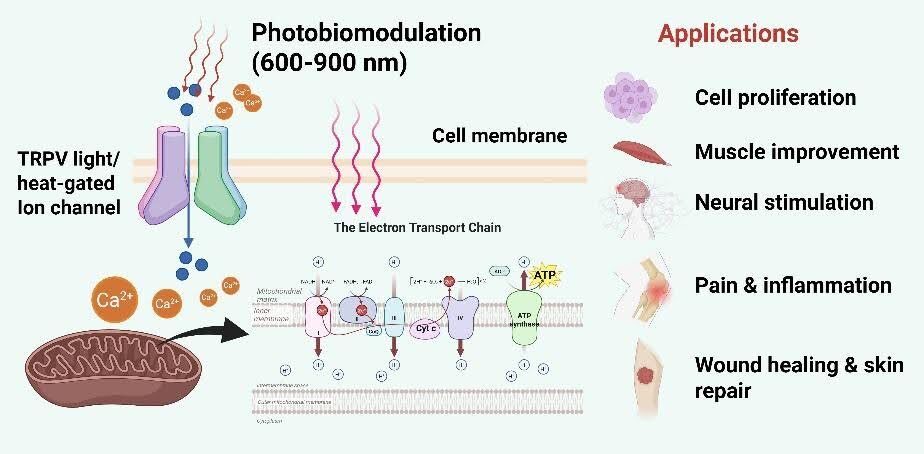
At its core, PBM works by delivering low-intensity light to tissues, where it interacts with mitochondrial chromophores such as cytochrome c oxidase. This interaction enhances cellular respiration and boosts adenosine triphosphate (ATP) production, the cell’s primary energy currency. Alongside increased energy metabolism, PBM triggers controlled reactive oxygen species (ROS) signalling, releases nitric oxide to improve blood flow, and activates transcription pathways linked to cellular repair and survival. Together, these effects support tissue regeneration, modulate immune responses, and optimise metabolic function.
Beyond these cellular effects, PBM is also being explored for its antimicrobial properties.
Mechanism and application of Photobiomodulation (600-900 nm). Drawn by the author
Unlike conventional antibiotics, light-based approaches can reduce microbial load and disrupt biofilms without contributing to antimicrobial resistance, offering a critical advantage in today’s healthcare landscape.
A major force behind the development of PBM is the Wellman Center for Photomedicine at Harvard Medical School, which has played a pioneering role in translating light-based technologies into clinical applications. With a legacy of innovation and the development of hundreds of light-based solutions, the centre has helped establish photomedicine as a credible and rapidly expanding discipline. Their work has laid the foundation for PBM’s integration into mainstream healthcare, from wound healing and pain management to neurological and metabolic disorders.
Clinically, PBM has demonstrated promising outcomes in most developing countries. In wound healing, it accelerates re-epithelialisation, enhances collagen production, and promotes angiogenesis effects that are particularly valuable for chronic conditions such as diabetic ulcers. Its immunomodulatory role is equally significant, as PBM helps rebalance inflammatory pathways by regulating cytokines and immune cell activity. This dual ability to reduce harmful inflammation while preserving host defence makes PBM a compelling approach for chronic inflammatory and autoimmune diseases.
Perhaps the most intriguing frontier lies in the interaction between PBM and the microbiota. The gut microbiome is increasingly recognised as a central regulator of health, influencing metabolism, immunity, and even brain function. Emerging evidence suggests that light can modulate microbial composition and activity, opening a new dimension in our understanding of host-microbe interactions.
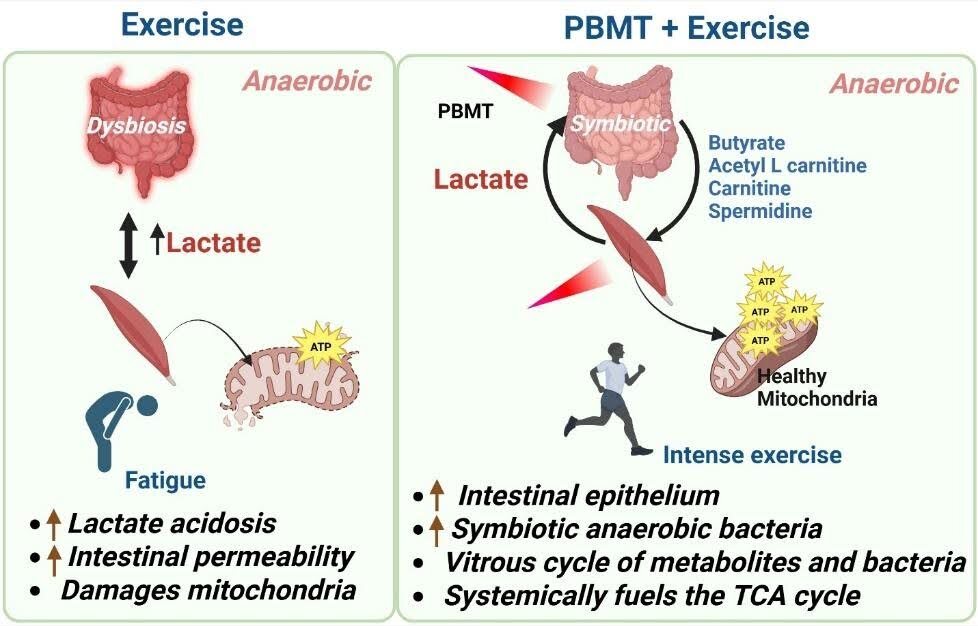
PBMT + exercise promotes symbiotic gut bacteria, healthy mitochondria, and TCA cycle fueling, unlike exercise alone, which causes dysbiosis, lactate buildup, and mitochondrial damage. Summary image of the manuscript published in Advanced Sciences (PMID: 40985334), image drawn by the author for the manuscript.
Recent experimental studies indicate that PBM can enhance the growth of beneficial microbes under controlled conditions and support metabolic adaptations in stressed environments. For instance, in high-lactate conditions, such as those that occur following intense physical activity, PBM appears to promote microbial utilisation of lactate. This process may indirectly support host energy metabolism by facilitating the conversion of lactate into usable intermediates for ATP production. Such findings suggest the existence of a “gut-muscle axis,” where microbial and host metabolism are closely interconnected.
This concept introduces the idea of a “virtuous cycle,” in which light exposure improves microbial balance, strengthens gut integrity, and enhances systemic metabolic performance. While still an emerging area of research, this intersection of photomedicine and microbiome science holds potential for applications ranging from the management of metabolic disorders to performance optimisation and improved gut health.
Technologically, PBM has evolved into a versatile, device-driven field. Current applications include low-level laser therapy (LLLT) systems for pain relief, LED-based platforms for dermatological conditions, transcranial devices for neurological disorders, and wearable systems for muscle recovery. These devices are typically non-invasive, portable, and increasingly user-friendly, making them suitable for both clinical and home settings.
For India, the relevance of PBM extends beyond scientific novelty. The country faces a dual challenge: a high burden of chronic and lifestyle diseases alongside constraints in healthcare infrastructure. Solutions that are non-invasive, cost-effective, and scalable are urgently needed. PBM aligns well with these requirements. Its device-based nature reduces reliance on hospital infrastructure, while its safety profile and ease of use make it adaptable for decentralised care, including rural health settings. There is also an opportunity to build indigenous research and innovation ecosystems around photomedicine. Integrating PBM with microbiome science, metabolic research, and maternal-child health could enable the development of targeted, affordable interventions tailored to India’s healthcare needs. Such efforts could address a wide range of conditions, including microbiota-associated disorders, metabolic syndromes, neurodegenerative diseases, and oral health challenges.
Importantly, PBM should not be seen as a replacement for conventional medicine, but as a complementary(adjuvant) tool that enhances therapeutic outcomes while reducing costs and invasiveness. Its integration into healthcare systems will require rigorous clinical validation, standardised protocols, and interdisciplinary collaboration between clinicians, engineers, and biologists.
PBM represents more than just a new therapy- it signals a shift in how we think about medicine. By leveraging light to influence biological systems at cellular, microbial, and systemic levels, PBM offers a pathway toward treatments that are precise, non-invasive, and widely accessible. For a country like India, where innovation must meet scale and affordability, this approach holds particular promise.
As research continues to uncover the complex interplay between light, cells, and microbes, PBM may well become a cornerstone of future healthcare, reshaping not only how we treat disease, but how we understand health itself.
]]>Same pill, opposite stories: The timing of Prozac treatment shapes the developing brainA recent study from the Tata Institute of Fundamental Research (TIFR), Mumbai has uncovered that the timing of treatment with the antidepressant Prozac during childhood and adolescence can fundamentally alter the architecture of nerve cells and the emotional behaviour of male, but not female, rats in adulthood, long after the drug treatment has stopped. Male rats administered Prozac shortly after birth showed greater anxiety- and depressive-like behaviour in adulthood. In sharp contrast, male rats administered the very same dose of Prozac during adolescence had long-lasting decreases in anxiety- and depressive-like behaviour. The starkly opposite outcomes highlight that when it comes to the behavioural effects of a drug like Prozac, timing really matters! ]]>tag:indiabioscience.org,2026-08-31:/news/2026/same-pill-opposite-stories-the-timing-of-prozac-treatment-shapes-the-developing-brain2026-08-31T10:00:00+05:302026-07-30T17:07:45+05:30Vir Gahrotrahttps://indiabioscience.org/authors/eZV71GW8GJ1dk8aA recent study from the Tata Institute of Fundamental Research (TIFR), Mumbai has uncovered that the timing of treatment with the antidepressant Prozac during childhood and adolescence can fundamentally alter the architecture of nerve cells and the emotional behaviour of male, but not female, rats in adulthood, long after the drug treatment has stopped. Male rats administered Prozac shortly after birth showed greater anxiety- and depressive-like behaviour in adulthood. In sharp contrast, male rats administered the very same dose of Prozac during adolescence had long-lasting decreases in anxiety- and depressive-like behaviour. The starkly opposite outcomes highlight that when it comes to the behavioural effects of a drug like Prozac, timing really matters!
Amongst the most difficult decisions for both psychiatrists and caregivers is weighing the risks and benefits of treating childhood and teenage mood disorders with antidepressant drugs. Given the burgeoning increase in major depression and anxiety disorders amongst children and teenagers globally, there is a pressing need to understand whether antidepressant drugs given at these ages have any long-term effects that might be of concern. The first-line treatment for both depression and anxiety at these vulnerable early ages is the selective serotonin reuptake inhibitor, fluoxetine (Prozac). A recent study from a team at the Tata Institute of Fundamental Research (TIFR), Mumbai, tackled the question of whether the specific age at which the developing brain is exposed to antidepressants, in this case childhood or adolescence, influences long-term behavioural, molecular, and cellular outcomes.
In rat models, the answer is strikingly affirmative - timing matters.
"We have known for a while that serotonin plays a profoundly important role in fine-tuning emotional neurocircuits in the developing brain," stated Vidita Vaidya, professor at the Tata Institute of Fundamental Research and the principal investigator of the study published in Biological Psychiatry. The team hypothesised that exposure of the infant and teenage rat brain to Prozac would enhance serotonin levels in the synaptic cleft and likely have long-term effects on neuron architecture and mood-related behaviour, especially since these treatments overlapped with developmental windows during which the brain is particularly sensitive to perturbation of serotonin. The clinical relevance of this work lies in the possibility that infants born to mothers prescribed Prozac for gestational or postpartum depression may be exposed to the drug via the placenta or breastmilk, potentially leading to lasting effects. While, in popular parlance, serotonin is often referred to as the ‘happy’ neurotransmitter, this is an oversimplification of a fascinating molecule that has many different effects on the brain. In the developing brain, it also seems to work like a construction supervisor, actively guiding the physical wiring of neural circuits and shaping the nature and strength of synaptic connections that are formed.
To address the consequences of treating rat pups and adolescents with Prozac, the first author, Utkarsha Ghai, a PhD student in the Vaidya Lab, orally administered Prozac or a control treatment at two developmental stages. One group received treatment during a developmental window corresponding to human infancy (2 - 21-day-old rat pups), while the second group was treated during early adolescence (28 - 48-day-old juvenile rats). Rats were then allowed to mature into adulthood before assessing their mood-related behaviours, cellular energy production, and neural morphology within the medial prefrontal cortex, a region of the brain that plays a key role in the top-down regulation of emotional behaviour. “The results were completely unexpected” stated Utkarsha Ghai, the first author. She further added that she was particularly surprised that administering Prozac at two different developmental stages could produce such dramatically different effects, and that these behavioural changes persisted long after the treatment had ended.
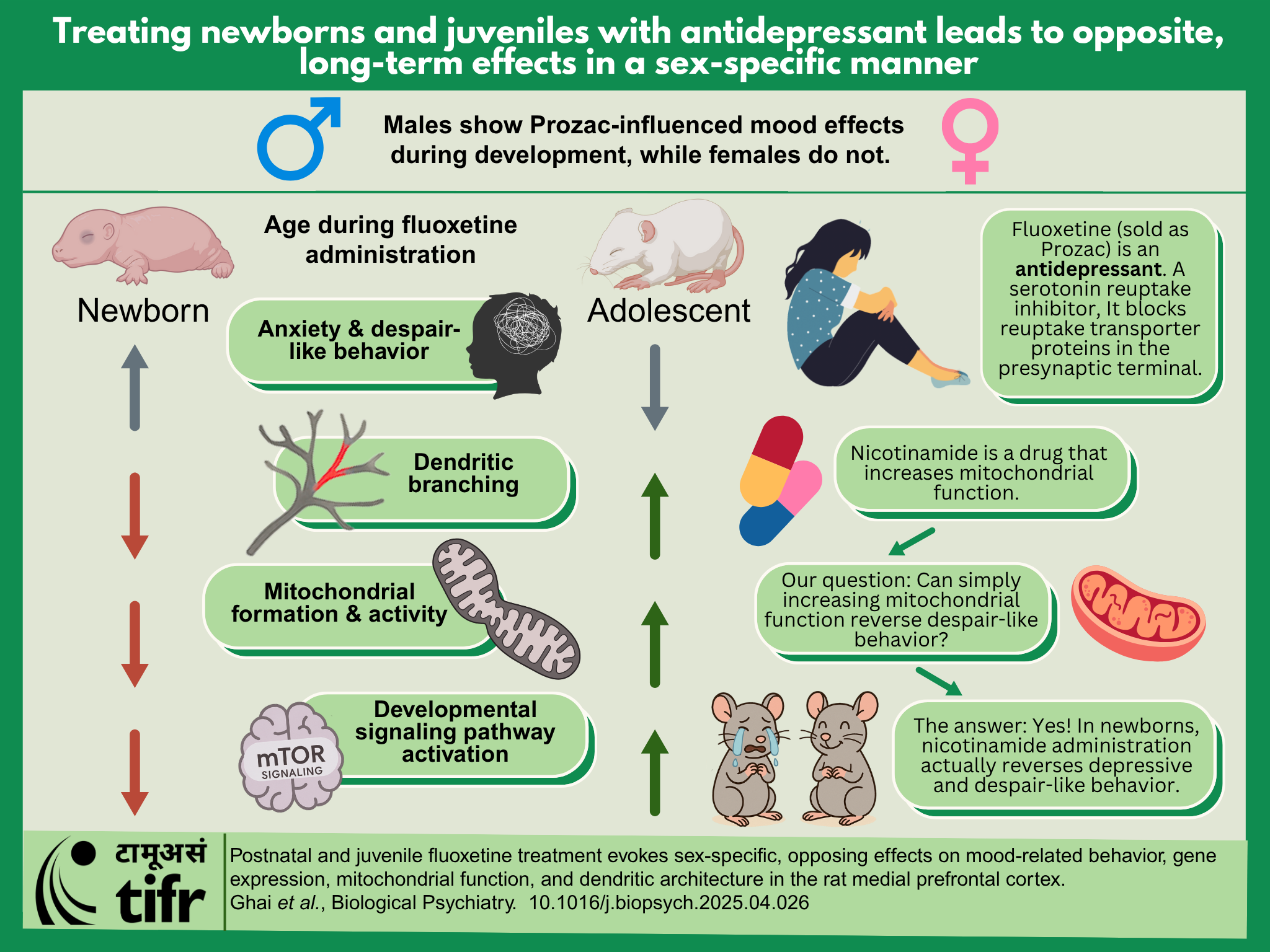
Male rats exposed to the drug in infancy showed increased anxiety- and depressive-like behaviour in adulthood across behavioural tests such as the open field test, elevated plus maze, and forced swim test. Conversely, male rats treated during adolescence exhibited the exact opposite pattern. They showed long-lasting decreases in anxiety- and depressive-like behaviour. The exact same dosage of the same drug yielded entirely opposite outcomes simply depending on the developmental window in which it was administered, indicating that the brain responds very differently to Prozac at different ages. Interestingly, the research group observed that these effects were largely restricted to male rats and were not observed in female rats. This finding highlights important sex-specific differences in how the developing brain responds to Prozac.
Investigating why the developing male brain diverged down two separate paths, the research team uncovered several changes in neuronal structure. The genetic programs activated by the drug in infancy barely overlapped with those activated in adolescence, suggesting that Prozac engages different molecular pathways at different developmental stages. Moreover, the physical architecture of pyramidal neurons within the infralimbic and prelimbic regions of the medial prefrontal cortex changed depending on the timing of drug administration. Ghai and colleagues found that dendritic branches, which receive signals from other neurons, were fewer in the postnatally treated group but were more abundant than those in the control group in the adolescent treatment group. Mitochondria responded in opposing manners as well. Brains exposed to postnatal fluoxetine exhibited significantly reduced cellular energy production in adulthood, while brains exposed during adolescence showed higher energy capacity at this time.
Seeking to reverse this cellular exhaustion, the researchers administered nicotinamide, a form of vitamin B3 known to improve mitochondrial energy metabolism, to adult rats that had received fluoxetine in infancy. Interestingly, this intervention not only restored mitochondrial function but also reversed the animal’s despair-like behaviour, though their anxiety levels remained unchanged.
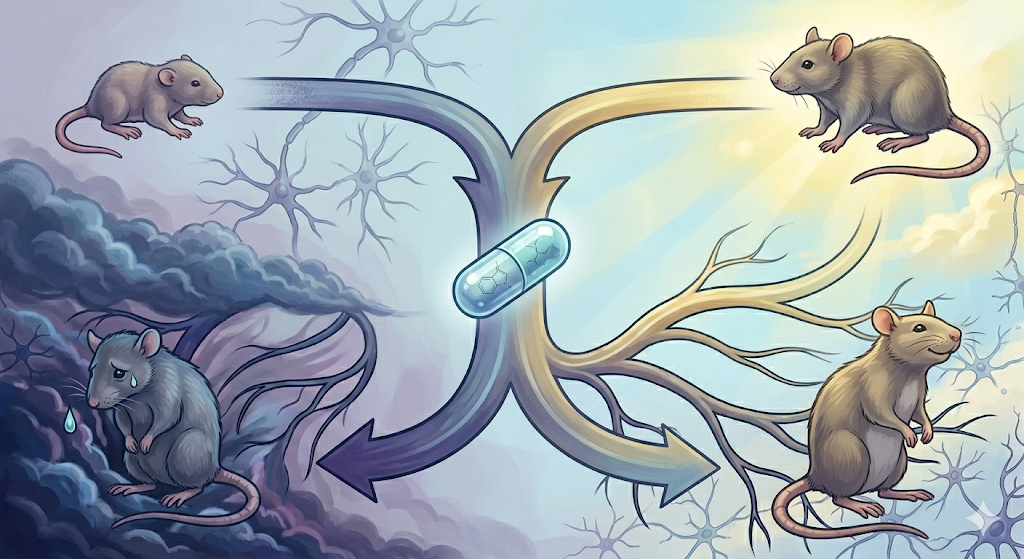
An infographic summarising the findings of this study. Image credit: Vir Gahrotra and Chitrita Nair
These findings could help parents and psychiatrists develop a more nuanced understanding of the potential long-term effects of antidepressant exposure during different developmental periods, thereby informing decisions about prescribing such drugs to children and adolescents. The successful reversal of despair-like behaviour in adult rats using nicotinamide, a simple metabolic booster, opens an exciting new therapeutic avenue. It suggests that future treatments for certain mood disorders might shift towards targeting brain cell metabolism and energy production, rather than solely focusing on traditional chemical imbalances. However, it is important to interpret these results with caution. Because human brain development is highly complex, these preclinical findings in rats cannot be directly translated to human patients or current clinical prescribing practices at this stage. Nevertheless, this research provides a valuable new perspective on the future of psychiatric care.
]]>Governing the code of life: Key takeaways from the EBRC–IISc workshop on nucleic acid synthesis governanceAs DNA synthesis becomes faster and more accessible, ensuring it is used responsibly has become a global priority. This article explores key discussions and recommendations from an international workshop on strengthening nucleic acid synthesis screening, highlighting India's opportunity to build robust biosecurity frameworks while supporting innovation. ]]>tag:indiabioscience.org,2026-07-13:/news/2026/how-ai-led-technology-is-enabling-oral-cancer-screening-at-ones-finger-tips-22026-07-13T10:00:00+05:302026-07-02T14:15:08+05:30Tanya Sarawagihttps://indiabioscience.org/authors/zPA9KPOjG7LZJNXAs DNA synthesis becomes faster and more accessible, ensuring it is used responsibly has become a global priority. This article explores key discussions and recommendations from an international workshop on strengthening nucleic acid synthesis screening, highlighting India's opportunity to build robust biosecurity frameworks while supporting innovation.
A scientist can now order a custom DNA sequence as easily as ordering laboratory reagents online. The same technology that helps researchers develop vaccines, engineer crops, and design new therapies can also be used to recreate dangerous pathogens. As the barriers to synthesising biological material continue to fall, a pressing question is emerging worldwide: who decides which sequences should never be made? It was this question that brought scientists, policymakers, industry representatives, and biosecurity experts together in Bengaluru on 24 - 25 February 2026, for a workshop conducted jointly by the Engineering Biology Research Consortium (EBRC) and the Bio-Responsibility Initiative, Indian Institute of Science (IISc) titled ‘Building International Best Practices for Robust Nucleic Acid Synthesis Screening’.
At the heart of the problem is a gap in oversight. Imagine a researcher placing an online order for a synthetic DNA sequence. How can a supplier know whether the order is part of legitimate scientific research or an attempt to recreate a harmful pathogen? Two safeguards are supposed to answer that question: sequence screening and customer screening. Broadly asking if the sequence itself is safe or potentially dangerous ? And is the person ordering it for a legitimate purpose or not? respectively. Sequence screening means checking whether a DNA order matches known dangerous sequences, while customer screening means verifying that the person placing the order has a legitimate scientific reason to do so. According to the Global DNA Synthesis Map published by The International Biosecurity and Biosafety Initiative for Science (IBBIS) in December 2025, over 700 companies worldwide provide synthetic nucleic acids, and more than 500 of them are required under local policy to screen their orders but currently do not do so consistently. There is also no globally agreed list of which sequences should be considered dangerous, meaning even companies that want to screen do not know where to start.
Around the world, governments are responding at different speeds. The United States has moved towards mandatory screening for federally funded research. The United Kingdom has issued voluntary guidance, while the European Union is exploring biosecurity registries. New Zealand is experimenting with an even more ambitious idea, building screening mechanisms directly into synthesis machines. Together, these efforts reveal an emerging global consensus: DNA synthesis can no longer be treated as an ordinary commercial transaction.
For India, the debate is especially urgent. The country's bioeconomy has expanded from USD 10 billion in 2014 to USD 165 billion in 2025, placing it among the world's fastest-growing biotechnology sectors. Yet this growth has occurred without a dedicated DNA synthesis screening framework. The result is a paradox: India is becoming a major biotechnology player while lacking many of the safeguards now being discussed internationally. No Indian company is a member of the International Gene Synthesis Consortium (IGSC), the leading global industry body for responsible synthesis practices. Most Indian firms do not manufacture DNA at all; they distribute products made abroad, often without applying the safety standards the original manufacturer follows. Basic customer-screening tools like institutional order forms are largely absent. What India decides to do next will matter not just domestically, but globally.
Major themes and discussions
The discussions across two days centred on four key themes.
Theme 1: Making screening work without slowing the science.
One of the workshop’s central concerns was to strengthen security measures without creating unnecessary barriers for legitimate scientific research. Participants broadly agreed that the most practical near-term approach for India is a bottom-up model, where Institutional Biosafety Committees (IBSCs), the bodies already present in research institutions under India's existing biosafety rules, serve as the first layer of verifying who is placing an order and why. Rather than building an entirely new system, this approach works with existing infrastructure. Critically, participants agreed that screening must be designed to feel easy for honest users, not punitive. As one participant noted, poorly designed guardrails tend to hinder responsible researchers; bad actors will simply find another route.
Theme 2: The Distributor dilemma
Perhaps the most difficult question concerned responsibility within India's distributor driven DNA supply chain. Unlike countries with significant domestic DNA synthesis capacity, most synthetic DNA used in India is manufactured abroad, primarily in the United States or China and sold through local distributors. This creates a gap: the foreign manufacturer may screen orders before shipping, but once the product enters India, there is no check on who ultimately uses it or why. The participants could not reach a consensus on resolving this question, but agreed it needs urgent multi-stakeholder dialogue, potentially backed by legal frameworks that clearly assign liability at each step of the chain.
Theme 3: Can existing systems support biosecurity screening?
Rather than building an entirely new regulatory architecture, participants explored whether India’s existing biosafety infrastructure could be adapted to address emerging biosecurity challenges. The Indian Biosafety Knowledge Portal (IBKP), a web-based platform already aimed at researchers and industry, was identified as a potential platform that could be used for screening-related reporting across the country. However, a significant gap was also flagged: IBSCs currently meet only once or twice a year, and their members are trained in biosafety, managing known biological risks in laboratories, rather than biosecurity, which involves anticipating and preventing deliberate misuse. Participants agreed that targeted biosecurity training for IBSC members is an immediate priority, supported by free and open-source screening tools such as the IBBIS Common Mechanism, which could be customised for Indian setting.
Theme 4: Screening as a strategic opportunity
A recurring theme throughout the workshop was the need to frame screening not as a regulatory burden but as a strategic opportunity. Countries and companies that build trusted, verified supply chains become more attractive partners for international investment and collaboration. Participants recommended that the Indian government should be approached with a clear message: establishing a national screening framework would position India as one of the safest and most reliable partners in synthetic biology globally, opening doors in the G20, Quad, and EU-India diplomatic channels rather than closing them. India's experience in building large-scale digital public infrastructure was cited as proof that scalable systems can be built quickly when the political will exists.
Unresolved challenges and open questions
Despite broad agreement on the need for screening, participants acknowledged that several difficult questions remain unresolved.
Distributor accountability: One of the most persistent challenges concerns accountability within India's distributor-driven DNA supply chain. While overseas manufacturers may conduct screening, responsibilities of distributors and end users remain unclear, highlighting the need for clearer legal and regulatory frameworks.
False positives: Participants cautioned that overly restrictive screening systems could generate excessive false alerts, creating delays for legitimate research and potentially driving users toward unscreened providers. Balancing security and usability was therefore identified as a critical design challenge.
AI-generated sequences: Advances in AI are enabling the design of novel biological sequences that may not match existing databases, limiting the effectiveness of traditional screening methods. Participants suggested benchmarking exercises, similar to cybersecurity stress tests, to support the development of next-generation screening approaches.
Split orders: Deliberately dividing a hazardous sequence into smaller fragments and ordering them from multiple providers remains a significant vulnerability. Addressing this challenge would require greater information sharing among providers, raising commercial and legal concerns.
Incident response: Discussions noted that screening efforts have focused largely on prevention. Given that no system can guarantee complete security, participants emphasised the need for response frameworks that define actions when suspicious orders are detected or dangerous sequences are synthesised despite existing safeguards.
Major recommendations
By the end of the workshop, a broad roadmap had begun to emerge:
For the Indian government, the priorities should be to develop a national biosecurity policy that makes DNA synthesis screening a condition of operating in the Indian market; to create an official national Sequence of Concern (SOC) list maintained through a coordinated inter-ministerial process; to invest in biosecurity training for IBSC members and build digital infrastructure to support screening; and to consolidate the currently fragmented responsibilities across biosafety, biosecurity, biodefence, and bioethics into a single national authority. Amending the existing laws or enacting new ones to create a specific legal basis for synthesis screening was also recommended.
For industry, the ask is straightforward: join or establish an industry consortium for sharing information on flagged sequences and suspicious customers, adopt IGSC protocols voluntarily as a starting point, and integrate basic customer verification into existing ordering platforms as a first, low-friction step. For funders and academic institutions, the recommendation is to condition research grants on the use of synthesis providers that follow best-practice screening, and to engage with bodies like the Association of Biotechnology Led Enterprises (ABLE) to build voluntary norms ahead of formal regulation. For the international community, the call is to ensure that open-source tools are available to providers in lower-income countries, and design frameworks are developed to make screened synthesis accelerated, convenient and cost effective rather than relying on penalties alone.
Conclusion
The EBRC–IISc conference of February 2026 took place at a genuine turning point. AI-based biodesign tools are lowering the barriers to engineering biological sequences faster than governance frameworks can keep up. A biosecurity gap in one country quickly becomes a problem for everyone, and the frameworks built for a slower, more centralised era are simply not equipped for what is coming.
For India, the stakes are especially high. A bioeconomy of USD 165 billion, growing under the BioE3 policy, currently rests on a regulatory foundation with serious gaps, and India's rapid growth is happening with limited visibility into how its supply chains could be misused. Yet the grounds for optimism are real: IBSCs offer a functioning institutional backbone, India's voice in the G20, Quad, and bilateral strategic dialogues gives it the standing to shape global norms, and the country's track record in building digital public infrastructure shows that a national screening system is entirely achievable.
The path forward is clear: build screening into India's bioeconomy as an asset, not a constraint, and act before the window for shaping global norms closes. The costs of inaction, in lives, in economic disruption, and in strategic positioning, are far higher than the costs of acting now.
]]>How AI-led technology is enabling oral cancer screening at one’s fingertipsAI-driven screening tools are transforming oral cancer detection in India by enabling rapid, accessible, and low-cost diagnosis at the point of care. By bridging gaps in awareness and infrastructure, Mukhia Plus (Mukhia+) is an AI-driven technology that helps healthcare workers identify high-risk lesions early, improving outcomes and reducing the burden of late-stage oral cancer. ]]>tag:indiabioscience.org,2026-05-01:/news/2026/how-ai-led-technology-is-enabling-oral-cancer-screening-at-ones-finger-tips2026-05-01T10:00:00+05:302026-05-07T14:39:05+05:30Karishma Kaushikhttps://indiabioscience.org/authors/qw8pNKgnooLdJRAAI-driven screening tools are transforming oral cancer detection in India by enabling rapid, accessible, and low-cost diagnosis at the point of care. By bridging gaps in awareness and infrastructure, Mukhia Plus (Mukhia+) is an AI-driven technology that helps healthcare workers identify high-risk lesions early, improving outcomes and reducing the burden of late-stage oral cancer.
Picture this. A farmer walks into a busy community healthcare centre in rural Maharashtra seeking medical care for a toothache. He shares his history of long-term use of oral tobacco with a healthcare worker. A cursory examination of the mouth follows. The farmer is sent home with some painkillers. His stained teeth and white and red patches in the mouth, may have been noticed by the healthcare worker, but remain unaddressed. The patient - a long-term tobacco user - leaves the clinic with little further awareness of the imminent severity of these findings or actionable information to address them.
Far beyond a mere case study, this scenario is very common in healthcare practice across India. Precancerous oral lesions and oral cancer are easy to spot for a trained eye, however healthcare professionals are either unaware of, or poorly-versed with, screening for these findings, or lack the tools to evaluate high-risk lesions and initiate an urgent referral for confirmatory diagnosis and treatment.
India has over 250 million tobacco users, making it the world’s second largest consumer of tobacco products, with smokeless tobacco in the form of gutkha, pan masala mixed with zarda, and mishri, being the most common form of use.
With a large number of users, tobacco consumption is responsible for a staggering number of deaths in the country, estimated at 1.35 million deaths annually - which is over 3500 deaths daily or roughly 154 people per hour. This burden accounts for nearly 30% of adults (1 in 3 persons) using tobacco in some form.
In India, oral cancer caused by tobacco use is a leading cause of these deaths. Both smoked (cigarettes, bidis) and smokeless tobacco (such as gutkha, betel quid) are primary drivers for oral cancer, with a high prevalence of use in both urban and rural areas. Consequently, the country reports over 1,50,000 new oral cancer cases each year, with over 50,000 deaths due to the disease.
Tobacco-driven oral cancer is a multi-stage disease that starts when components in tobacco smoke or smokeless tobacco initiate a series of changes in the oral cavity, such as white patches, red patches, ulcers, thickened bands of tissue, among other lesions. Collectively referred to as ‘potentially malignant disorders’ (or ‘pre-cancer’), these lesions - while not cancerous themselves - possess a tendency to develop into oral cancer, usually over a period of several years. Detecting these lesions early can lead to medical interventions at a curable stage, thereby improving cancer survival and reducing morbidity and mortality.
Yet, in spite of the scale of the healthcare challenge and recognition of the value of early detection, screening for oral cancer in India is severely under-recognised and underutilised. India reports critically-low screening rates for the disease, with data from the National Family Health Survey-5 indicating that only 1% of women and men between 30-49 years have ever undergone screening for oral cancer. As a consequence, approximately 80% of oral cancers in India are diagnosed only when at advanced stages, an outcome associated with limited treatment options and poor survival rates. This discrepancy is in large part due to a paucity of effective screening tools for tobacco-driven oral cancer, particularly those that can be deployed at scale in underserved and resource-limited settings such as rural and remote areas.
It is this gap - between the healthcare need and technology-led innovation - that Mukhia+ is aiming to fill
Built by a team of clinicians and software developers based in India and the UK, Mukhia+ is a screening app for oral pre-cancer and cancer lesions, such as those resulting from long-term tobacco use. The app has been developed with the healthcare system in India in mind, including key considerations such as accessibility, rapidity, and affordability. The user-friendly tool requires only a smartphone and internet connectivity. Once downloaded, the app guides the user - intended to be a clinician, nurse, healthcare worker or trained operator - to capture select images from the oral cavity and upload them via a secure cloud-based server.
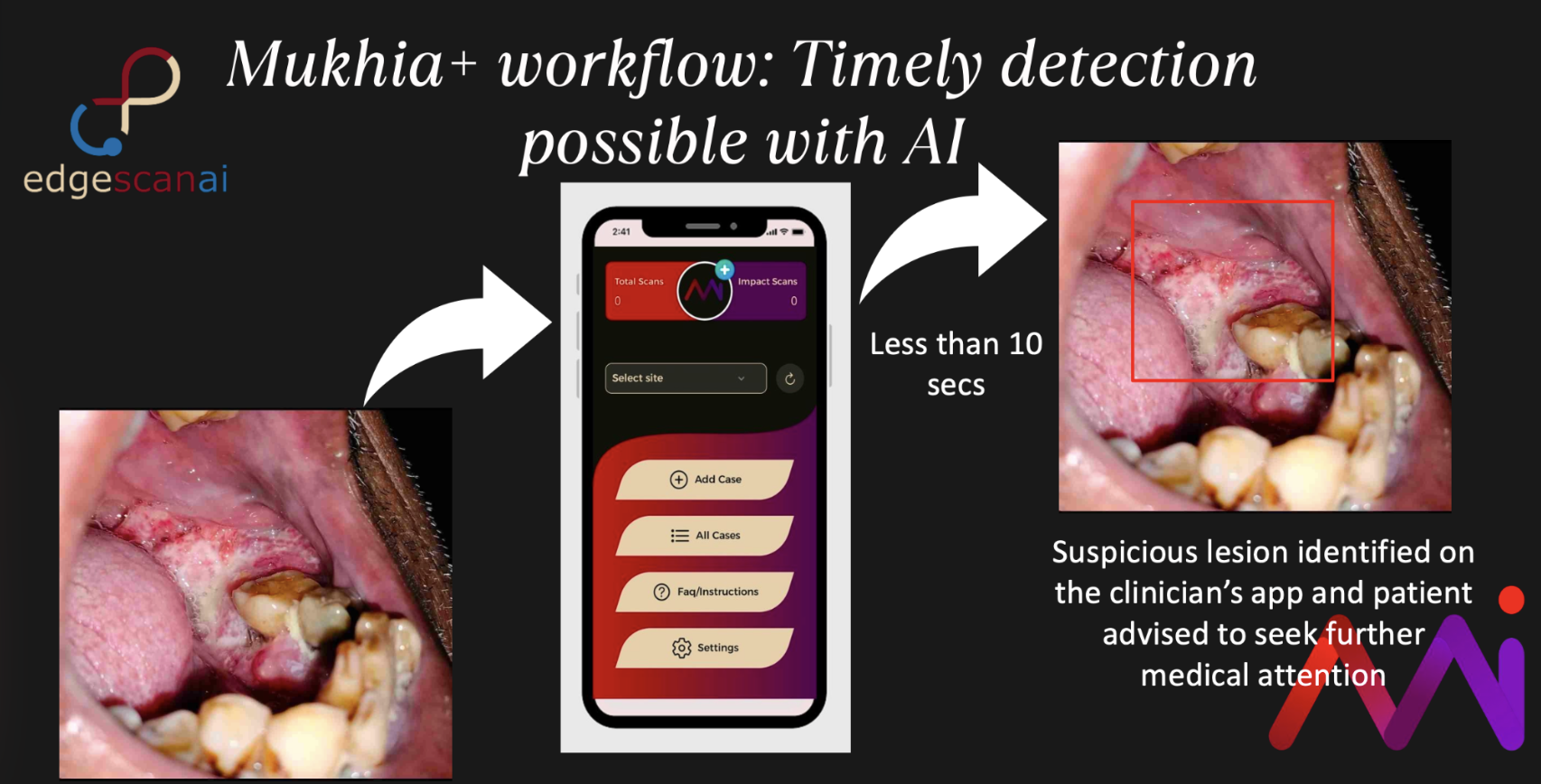
At this stage, the power of artificial intelligence kicks in. In ten seconds or less, an AI-based algorithm analyses the images and provides a colour-coded risk indicator that guides subsequent management. Lesions flagged as ‘high-risk’, such as those associated to be ‘potentially malignant disorders’ or with imminent risk of cancer progression require the user to advise the patient to seek urgent specialist attention. The app also provides each patient with a screening report that indicates key findings and subsequent recommendations.
Mukhia+ is powered by state-of-the-art technology from Edgescan.ai, a health tech startup company based at Lifepoint Multispecialty Hospital in Pune, and developed in collaboration with medical universities and dental colleges across India. The custom-built AI-based model is trained with over 50,000 images - each annotated by experts as well - from 5000 patients, covering more than 60 types of different oral lesions. The trained model has been validated across twenty diverse healthcare settings including hospitals, clinics, and corporate health initiatives. The results are more than encouraging.
Across multiple field sites, Mukhia+ demonstrated over 90% accuracy in detecting lesions suspicious for pre-cancer or cancer, with not a single case of cancer missed during real-world screening.
In one large corporate screening, Mukhia+ was used to screen 1014 tobacco users, where the AI-based model identified 850 lesions as ‘high-risk’ of which 777 turned out to be clinically-confirmed potentially-malignant lesions; a precision estimate of 92%, which is deemed acceptable for a screening tool. With its recently acquired ISO 13485 certification and CDSCO Class B license (as software as a medical device), the smartphone-based app is now positioned for use in industrial, hospital, and community-based health programmes.
Looking further, the deployment of Mukhia+ as a screening tool across India, as well as other countries with a high burden of tobacco use and tobacco-driven oral cancer, through national screening programs or cancer screening guidelines, can be a game-changer.
Going back to our initial case study, now picture this possibility. Prompted by the patient’s history of long-term tobacco use, the trained healthcare worker unlocks a smartphone that has the Mukhia+ app installed. Following the prompts on the app, the healthcare worker ensures the necessary security and data protection features and patient consent processes are in place. Then, using the Mukhia+ app, the worker photographs select sites in the patient's mouth. In the next ten seconds, the app analyses the images. The patient’s lesions are determined to be ‘high-risk’ for oral cancer. The patient is provided recommendations for further referral and follow up.
What I am most looking forward to is the potential of this app to scale up expert oral health screening in India and take it to the masses. For too long we have complained about oral cancers presenting in late stages. Mukhia+ has the potential to eliminate late presentations through timely action”.
While Mukhia+ undergoes further validation and evaluation in different settings, its ability to offer ease-of-use, large-scale and low-cost screening of tobacco-driven oral cancer makes it well-poised to transform the screening landscape and burden of oral cancer in India - and it promises to do so one picture at a time.
To know more about how you can engage with Mukhia+, write to ask@edgescan.ai.
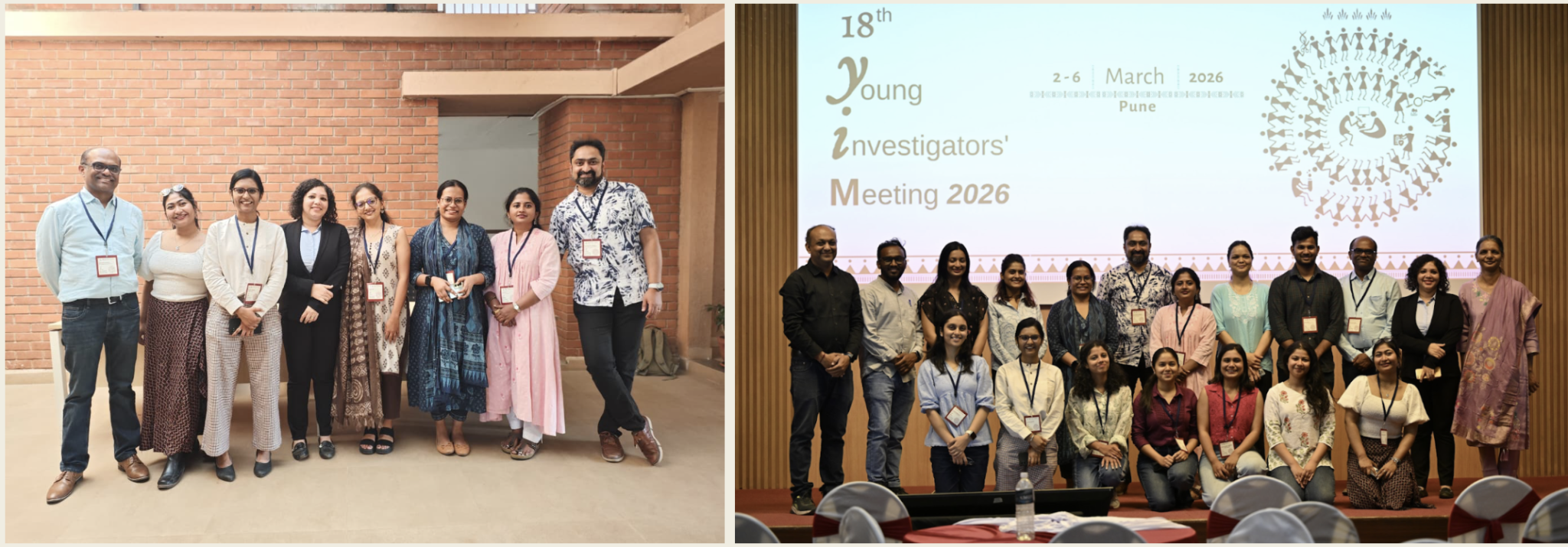
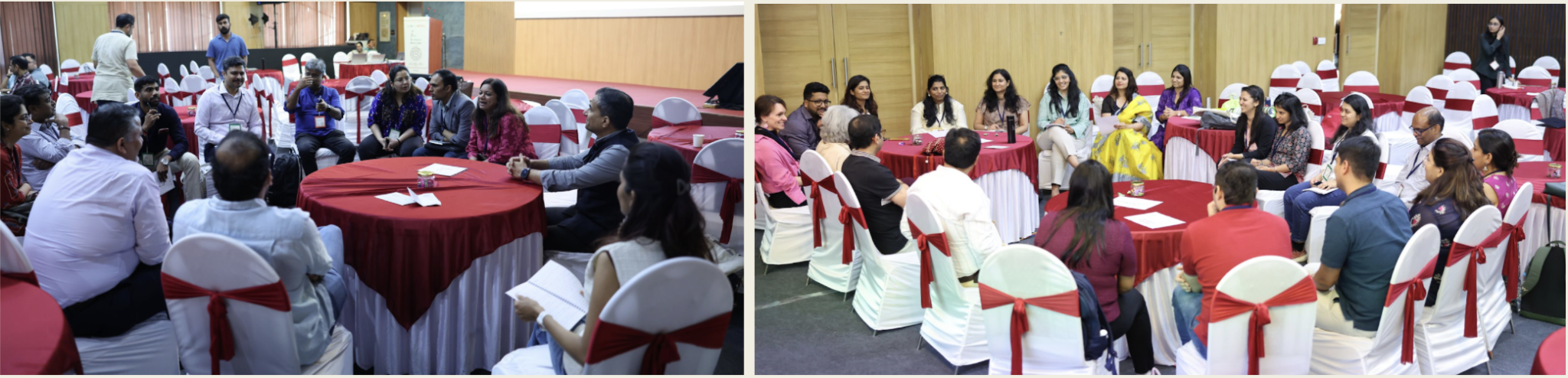
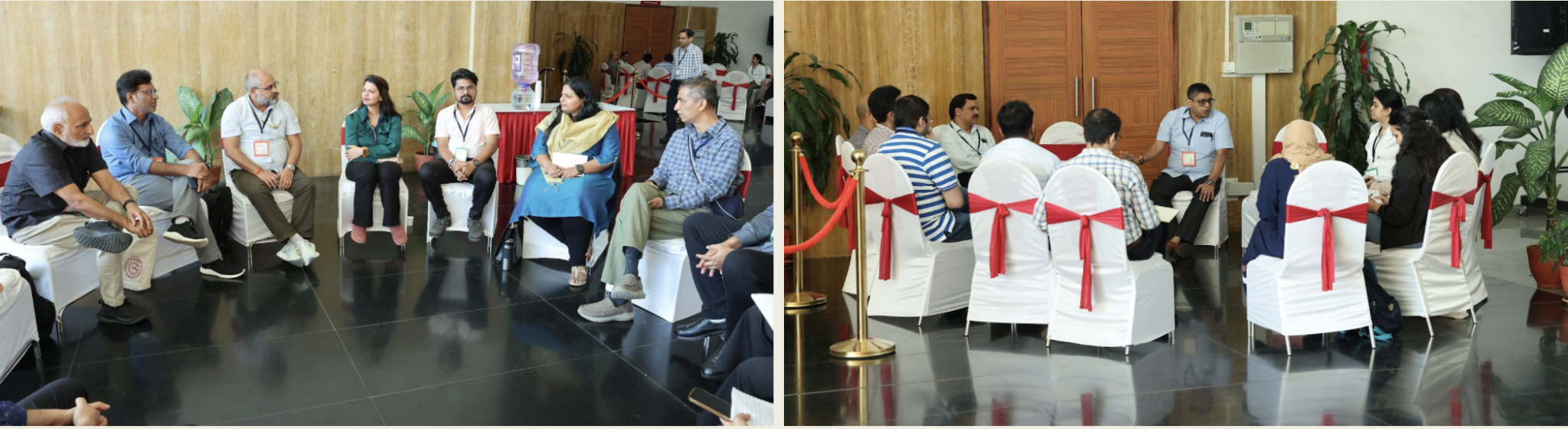
]]>Navigating life science funding: Insights from YIM 2026The second day of the Young Investigators' Meeting (YIM) 2026 in Pune was dedicated to one of the most pressing practical concerns for early-career researchers in India: how to find, apply for, and receive research funding. A series of spotlight talks by representatives from Indian and international funding organisations, followed by an open ask-me-anything session, brought together researchers at different stages of their careers with funders and senior scientists in what turned out to be a candid and wide-ranging conversation. ]]>tag:indiabioscience.org,2026-04-06:/news/2026/navigating-life-science-funding-insights-from-yim-20262026-04-06T10:00:00+05:302026-04-07T15:23:28+05:30Siuli Mitrahttps://indiabioscience.org/authors/PRYwLlb3kA1gO0QThe second day of the Young Investigators' Meeting (YIM) 2026 in Pune was dedicated to one of the most pressing practical concerns for early-career researchers in India: how to find, apply for, and receive research funding. A series of spotlight talks by representatives from Indian and international funding organisations, followed by an open ask-me-anything session, brought together researchers at different stages of their careers with funders and senior scientists in what turned out to be a candid and wide-ranging conversation.
An expanding landscape for science funding
Rajesh Gokhale, Secretary, Department of Biotechnology, during his keynote on the first day of YIM 2026, opened with a provocation that reframed the conversation before it had properly begun.
I just wish I were 25 today, as the world is so much more amazing. We could only have dreamt of doing impactful science. This is the opportunity of life”.
It's not an 'either-or' proposition. It is an 'and' proposition. DBT and DST will continue to have their own programmes. We will try not to overlap with those. We tend to do things at the intersection of these entities... ANRF is an entity which, I keep joking, is like a movie. We bring everybody into a happy family and get them to collaborate. We are more of a collaborative entity that helps stitch together programmes across multiple stakeholders”.
The funding sessions that followed on day 2 were shaped by that tension: a landscape that, by many measures, is richer in opportunity than ever, yet one that early-career researchers continue to find difficult to navigate. Representatives from various funding agencies outlined the range of mechanisms available, from fellowships for researchers in the final stages of their postdoctoral fellowships to project-based extramural grants for those with established laboratories. While the funding landscape has grown considerably over the past decade, that growth in the number of schemes has not always been matched by clarity about how to navigate them. Kriti Sikri, Indian Council of Medical Research, said,
Each of the funding agencies has a very specific mandate which is set by the Government of India. Whenever you're applying for any of the grants, do look at the mandates and the vision of each of the organisations that you're applying to, and align yourself with the agency and with the particular call”.
A recurring theme among the national agency representatives was that funding priorities are not purely scientific but also policy-driven. One example was shared by Kuldeep Lal, Director, ICAR-Central Institute of Brackishwater Aquaculture, where he shared that ICAR's focus on food security, sustainability, and resource management was an example of how agency mandates shape what gets funded and what does not.
“A lot of times [ICMR] gets complaints that ‘Why have you rejected our project? We're working with medicinal plants’. If you're not showing the medicinal value of those plants, ICMR cannot fund you. So, align yourself with the national health priorities. With every call, there is a list of emerging national-level priorities. Read every call very well. This keeps updating with every call”, Kriti advised while discussing the necessity of mandate alignment.
What international and philanthropic funders bring to the table
Gerlind Wallon, European Molecular Biology Organization (EMBO), described the organisation's India-facing programmes not only as funding opportunities but as platforms for leadership development and global networking. She said,
We as scientists learn how to write a paper, how to think about our experiments, how to write grants more or less. But we do not learn how to run a lab, how to deal with the people in our labs and make our group successful, which is, of course, the most important”.
Speaking about the Scientific Exchange Grants, she said, “The success rate of these fellowships is around 50%. With a really decent project, you have a good chance to actually get it”.
The Human Frontier Science Program (HFSP) represented a different register entirely. HFSP programmes require cross-continental collaboration and carry high selectivity.
In most of the successful countries in research and innovation, the funding comes from private philanthropies and private organisations as well, which India lacks big time. We don't ask you for exhaustive 15-page proposals. For grants below 50 lakhs, our turnaround is 45 days. Within 45 days, we will get back to you, and in the next eight days, we will release the money”.
Turnaround time is the operational definition of agility for an ECR waiting to set up a lab. Neha Pankow, Director, Murty Trust, said what it means to be a Trust and not a section 8 company or how their mechanisms are different from CSR funding, “We don't have a board. The turnaround time for project decisions can be literally overnight in our case. The funds are disbursed to the institute but controlled entirely by the fellow. If the fellow is not happy at their host institute, they can move, and the entire funds move with them”. She added,
You want to hire the best postdoc, the best technician — you're going to have to offer them something competitive. With private funds, we say: go out and hire whomever you want”.
What funders are actually looking for
Across the different funding types, the panellists converged on a small number of expectations, but the discussion was more specific than a simple checklist.
On research questions, Kriti was direct: proposals that attempt to address several problems at once tend to fare worse than those that focus on a single question and pursue it rigorously. “Don't overpromise your objectives. Be more realistic and time-bound”, she advised the audience. She added, “Define measurable deliverables; what will you give at the end of three or five years? These have to be very definitive and beyond publications”.
A specific misunderstanding while finding collaborators is that adding names of senior collaborators automatically adds credibility. Kriti noted, “Show your team and institutional strength. Even if you are younger PIs and early-career researchers looking for mentors, align yourself and your project with your mentor's skill. It is not important to have big names on your project; that is not how things work. Align the skills. You should know where to tap into the skills of your mentor”.
Contrasting meaningful collaboration with performative partnership, Apurva Sarin, CEO, DBT/WT India Alliance, explained it to be, “a direction arising from your work that is best executed or explored in partnership with an individual from another discipline or capability. We do want you to diversify your portfolio and sample hopefully some of the joys of collaborating with individuals across different disciplines”.
What researchers asked and what the answers revealed
The ask-me-anything session surfaced several tensions that the spotlight talks had not fully addressed.
The distinction between grants for basic research and support for translational work or startups generated significant confusion. Shravanti addressed this confusion by naming the structural gap:
Much of the funding in our country is directed toward applications, inventions, and startups. “But to have originals for ourselves, if we have originals, do we have the bandwidth of scientists who can take it to the next level? That is also missing. If you have done research till TRL4, going to TRL8, where a company will come and pick you up, there are four more numbers which lie in between. How you work with those four numbers is something which is very important”.
Technology Readiness Levels (TRLs) came up repeatedly, with several researchers unsure whether they were expected to demonstrate applied relevance even for basic science proposals. Shravanti was clear when she said that TRLs are a consideration for translational funding, not for basic research proposals, and conflating the two unnecessarily constrains how researchers frame their work.
The most pointed exchange of the session came around institutional disadvantage. Several participants observed that funding tends to concentrate in a small number of institutions, and asked whether researchers at smaller or less-resourced institutes are effectively competing on an equal footing. “When we looked at where our travel fellowship applications were coming from, we were getting applications mostly from the same places: Bangalore, Hyderabad, and Delhi. There are approximately 580 research organisations in India that award PhD degrees, and fewer than 20% of applications come from these institutions. The rest of India, what is it doing”? Shravanti issued a provocation to the concern. She described the example of the Sohan Modak national travel fellowship as a concrete institutional response: “We have started this travel fellowship for students who are not from IITs and IISc but who are interested in pursuing research and coming from tier-2 cities”.
Grant disbursement delays, a complaint that has persisted in the Indian research community for years, came up again here. Shivkumar, in his keynote from day 1 had spoken about it too - “To be fully transparent, in the last ARG programme we got 12,600 proposals plus another 3,000 proposals. We got over 50,000 reviews. There tends to be greater dispersion in review quality. The country is maturing in the quality of its feedback. This will be a continuing work in progress. We hope to use AI in a responsible way, but with the provision that AI will not decide on your proposals. AI will help humans decide”. A helpful instruction from multiple panellists was to “pay equal attention to both the scientific aspects of the proposal and administrative compliance”.
Beyond the grant: What building a research career actually requires
From the ask-me-anything session and informal talks on YIM, what came across was that while a lot of informally obtained advice, albeit well-meaning, could discourage ECRs from applying to well-funded, high-absorption fellowships.
Apurva, in her talk about opportunities at the DBT/WT India Alliance, asked participants not to rely on the past, as some things will be different.
We are recommending that you start framing your proposals now — the full proposal, put in the abstract. If you're called, be very ready to put in your full proposal, because that time is also hugely reduced now”.
On day 1, to a postdoctoral fellow’s query on informal advice for not applying for Ramanujan fellowships, Shiv had a candid response - “Whoever is giving you the advice not to apply is unfortunately giving misguided advice. Each programme stands on its own feet. Once you become full-time faculty, you can apply for the Prime Minister's Early Career Grant and so on. Whatever grants you get, you can transfer them to whichever institution you go to”. L S Shashidhara, Director, National Centre for Biological Sciences (NCBS)-TIFR, was in the audience and added that the Ramanujan fellowship has an 80% absorption rate, which means 80% of fellows go on to secure permanent positions, which is quite high by global standards. The Ramalingaswami fellowship sits at 90%.
]]>Integrating climate resilience, pest management, and nutrition: Takeaways from SUSTAiN 2026SUSTAiN 2026 at BLiSC, Bengaluru, an annual initiative by the Tata Institute for Genetics and Society (TIGS), brought together scientists, policymakers, and practitioners to rethink agriculture and nutrition under climate stress. Discussions highlighted resilient crops, sustainable pest management, and nutrition security, emphasising the urgent need to bridge science, policy, and practice to build food systems that sustain both people and the planet. ]]>tag:indiabioscience.org,2026-04-03:/news/2026/integrating-climate-resilience-pest-management-and-nutrition-takeaways-from-sustain-20262026-04-03T10:00:00+05:302026-04-01T14:07:03+05:30Apoorva Masadehttps://indiabioscience.org/authors/ApoorvaMasadeSUSTAiN 2026 at BLiSC, Bengaluru, an annual initiative by the Tata Institute for Genetics and Society (TIGS), brought together scientists, policymakers, and practitioners to rethink agriculture and nutrition under climate stress. Discussions highlighted resilient crops, sustainable pest management, and nutrition security, emphasising the urgent need to bridge science, policy, and practice to build food systems that sustain both people and the planet.
On a warm February morning at the Bangalore Life Sciences Cluster (BLiSC) campus in Bengaluru, a platform was set for thought-provoking discussions on the future of food encompassing climate change, healthy diet, and food security. The platform was the first edition of SUSTAiN (Sustainable Transformation in Agriculture and Nutrition), held on February 5-6, 2026, a new annual initiative by the Tata Institute for Genetics and Society (TIGS) in collaboration with the National Centre for Biological Sciences (NCBS) - TIFR. This initiative had leading institutes like University of Agricultural Sciences - GKVK, Bengaluru, ICAR - National Bureau of Agricultural Insect Resources (NBAIR), Bengaluru, and ICAR-Indian Institute of Rice Research (IIRR), Hyderabad as knowledge partners. The two-day conference witnessed over 250 participants, including scientists, students, policymakers, industry representatives, extension professionals, and other agricultural and environmental enthusiasts, who came together to discuss an important question: How do we design an agriculture system that can withstand the whims of climate change while providing sustenance for both people and the planet?
The central theme that surfaced during these discussions was the recognition that ‘agriculture is at the crossroads’. While contributing about 5% of global greenhouse gas emissions, the cultivation of crops remains highly vulnerable to rising temperatures, fluctuating rainfall, and pest attacks. Globally, agrifood systems are being pushed to do more with less; that is, to increase productivity, adapt to climate change, provide adequate nutrition, and reduce greenhouse gas emissions simultaneously. In addition, India is focusing on broader aspects related to resilience, nutrition, and farmer livelihoods. However, formulating and translating policies into practice is a process that involves discussions, brainstorming, and active engagement among stakeholders, as currently, there are limited opportunities to connect science, policy, and practice.
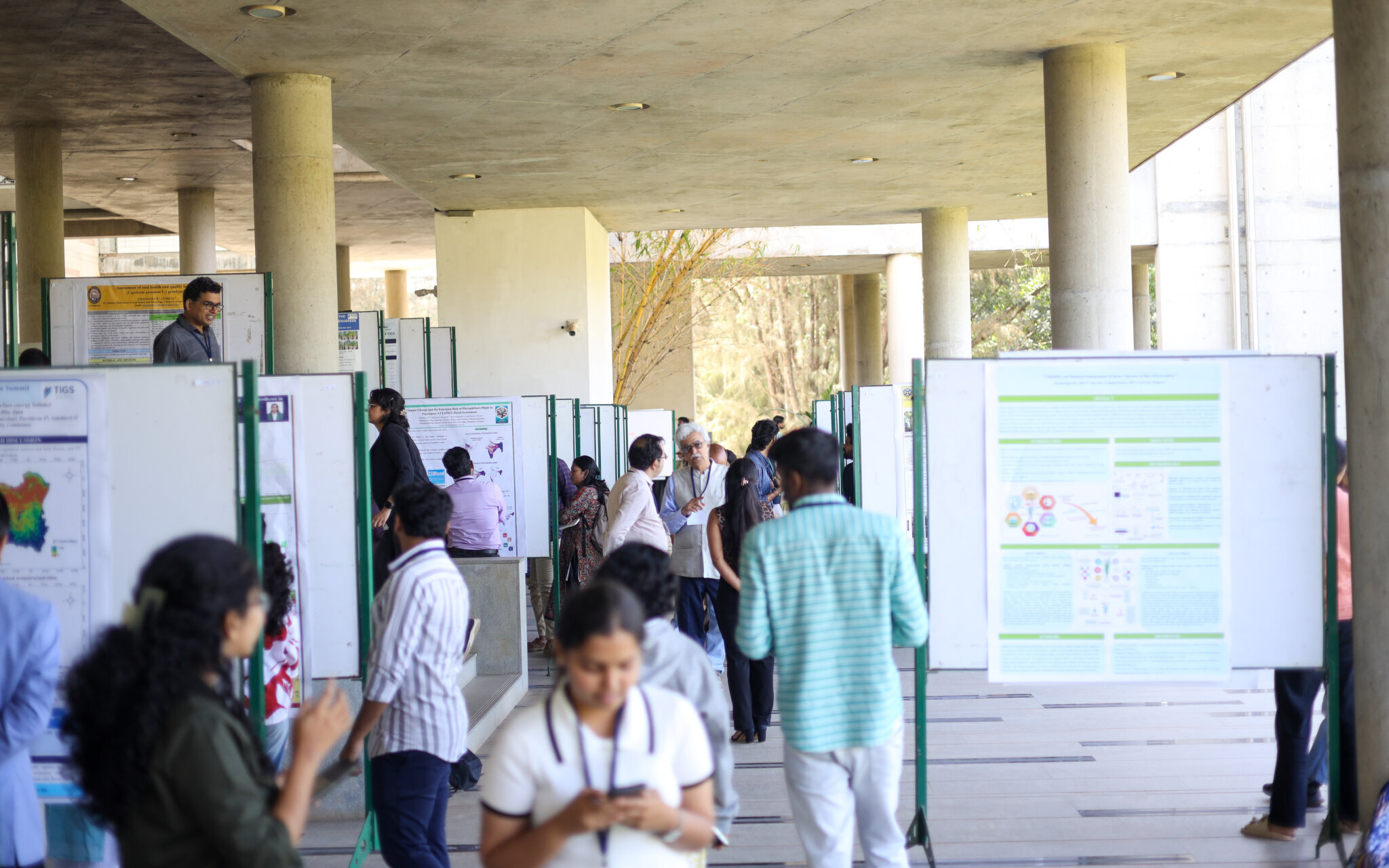
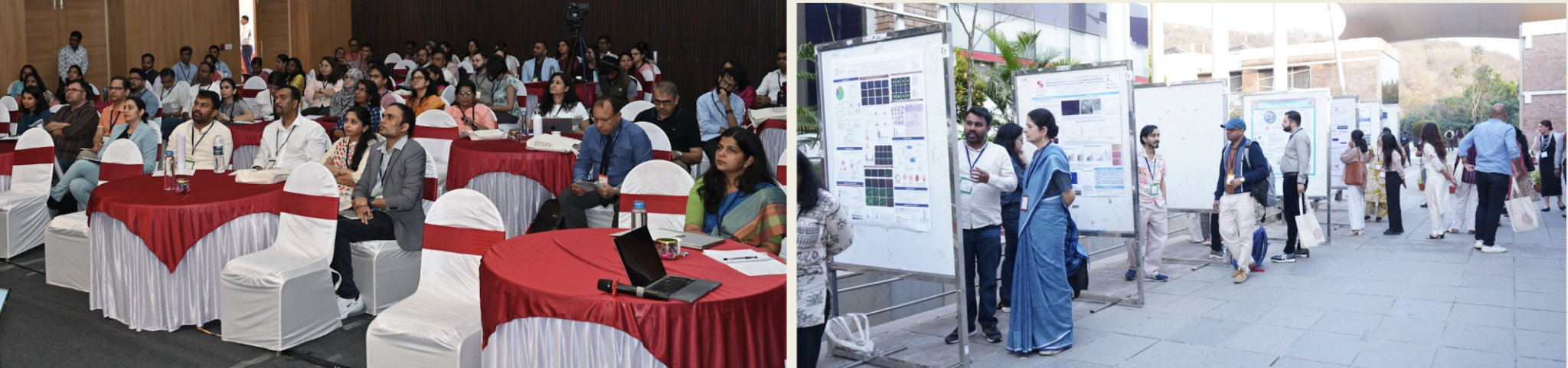
SUSTAiN is an annual conference designed to serve as a platform to integrate these components and provide a roadmap for an agricultural system that meets societal needs. The conference featured three key themes: climate-resilient agriculture, sustainable pest management, and sustainable nutrition security. Over 90 posters were displayed, covering topics ranging from molecular genetics and microbial applications to agricultural policy.
Poster session at SUSTAiN 2026
Enhancing climate resilience: A strategic shift toward multi-stress-resilient crop varieties
Climate-resilient agriculture is a critical frontier in food security, and the session emphasised that the era of single-trait solutions has ended in the face of agriculture’s mounting challenges. To confront modern challenges, crops must be resilient to diverse stresses, such as heat and drought, diseases and pests, flooding and nutrient imbalance, etc. Discussions highlighted new breeding techniques that combine multiple traits to yield high-performing varieties while maintaining grain quality and farmer acceptance. A new player on the block is genome editing, which offers precision and accelerates the development of these traits in plants. The session showcased precise genome-editing approaches that, when implemented responsively, could be highly beneficial. Scientists spoke about targeting hormone systems such as cytokinin metabolism in rice, which helps in increasing yield and stress tolerance. However, the journey of genome editing from the laboratory to the field is a work in progress, as identifying the correct target genes requires extensive genotype-to-phenotype data.
Another potential approach to improve crop stress resilience, yield, and nutrition among the plants is by enhancing soil and rhizosphere health through beneficial microbes. Microbial applications have been proposed as a sustainable solution for decades, but microbial synthetic community (SynCom) appears to be a more sustainable solution that may work across diverse environments. The prospect of reducing fertilizer dependency, one of the biggest environmental stressors, is particularly promising and offers scope for improved biological nitrogen fixation and plant-microbe interactions. Another focus was on multi-location trials and stress indices that evaluate crop performance under real-world conditions. The impact of rising night-time temperatures during grain filling, often overlooked in favour of daytime temperatures, was cited as an important factor in maintaining stable yields under stress.
Transforming pest management: an eco-friendly, sustainable approach
Climate change affects crop yield, diseases, and pest prevalence. A key discussion in the pest management sessions focused on the misuse of pesticides, which has led to insect resistance and ecological side effects.
Though integrated pest management has been touted as the most eco-friendly and sustainable way forward, the speakers also emphasised its limited adoption in India. In addition to established methods of physical and biological control, new scientific innovations such as microbial applications, bio-pesticides, RNA interference, and CRISPR technologies are advancing pest management and addressing pesticide resistance. Targeted pest control using plant RNAi machinery or dsRNA-based biopesticides may allow specific pest suppression without harming beneficial insects or microbial communities.
The forum strongly emphasised that a multidimensional integrated approach is essential for sustainable pest management. It was also highlighted that technology alone is insufficient; effective implementation requires coordination among research institutions, regulatory bodies, industry stakeholders, and farmers. Successful translation depends on scientific transparency, clear communication, and openness, which help build trust between scientists, industry actors, and farmers.
Nutrition security: Reframing agriculture through a nutritional lens
Beyond developing plants that withstand stress and increase productivity under climate change, another critical question remains: nutritional security. Questions arise about what we produce, for whom, and whether it is nutritionally adequate. A large part of the Indian population continues to suffer from deficiencies in key micronutrients. Although most of our daily energy requirements are derived from cereals, diets remain deficient in iron, zinc, protein, and essential vitamins. This disconnect between energy sufficiency and nutrient insufficiency remains a major public health challenge.
The third session of SUSTAiN 2026 emphasised the nutritional value of crops. Speakers stressed that the food system of today should not focus merely on producing enough grain, but must ensure the grains are nutrient-rich and capable of meeting human metabolic needs.
Biofortification, where crops are engineered to increase their levels of essential nutrients, was deemed essential during the discussions. Recent advances in genomics-assisted breeding have produced cereals with an adequate amount of iron, zinc, and protein, while maintaining parity in quality and productivity with conventional varieties. Nutrition security, therefore, concerns itself with access, where nutritious crops become a mainstream component of the food system, and delivering better health outcomes does not require individual effort but becomes a part of a regular diet.
Bridging divides: Science, policy, and practice
The final session, an interactive panel discussion, explored a fundamental question, “Why, despite scientific progress, are sustainable practices not scaling up sufficiently?” Issues such as institutional fragmentation, regulatory uncertainty, and limited private-public partnerships were identified as major barriers.
One key insight was that malnutrition can often be viewed as a “failure of exposure”. Caloric sufficiency does not necessarily translate into nutritional adequacy. Expanding access to reliable, science-based information about balanced dietary practices is therefore essential. The topic of direct-seeded rice was debated enthusiastically. While it promises methane reduction and water savings, concerns remain regarding yield stability and farmers' confidence. Opportunities to use microbes as biofertilizers and biocontrol agents to reduce greenhouse gas emissions while maintaining yields were also emphasised. Public-sector scientists highlighted the need for faster engagement between public institutions and private stakeholders.
A beginning
As the conversations drew to a close and the posters rolled up, one message lingered: transformation is not about the next breakthrough. It is about the continuous integration among genes and soil, crops and markets, and science and society within ethical and policy frameworks.
Across presentations, a recurring theme was the need to translate laboratory success into real-world applications that benefit farmers and consumers.
SUSTAiN 2026 did not claim to deliver a single solution to the climate-food-nutrition challenge. What it offered instead was something equally important: a space to collectively examine the interconnected pieces of the puzzle. In a world where the climate is uncertain, the only constant may be the adaptive evolution of food and nutrition security.
]]>Furthering evolutionary ecology and conservation science in India: Insights from RYIM Tirupati 2026The Regional Young Investigators Meeting (RYIM) 2026 Tirupati, titled Furthering Evolutionary Ecology and Conservation Science in India, was held at the Indian Institute of Science Education and Research (IISER), Tirupati, from 29 to 31 January 2026, situated at the foothills of the Eastern Ghats, a biodiverse and relatively underexplored mountain range. The location provided an ideal platform to highlight research across this region, while drawing attention to the growing fields of evolutionary ecology and conservation science in smaller towns and cities across southern India. ]]>tag:indiabioscience.org,2026-03-30:/news/2026/furthering-evolutionary-ecology-and-conservation-science-in-india-insights-from-ryim-tirupati-20262026-03-30T10:00:00+05:302026-03-25T21:53:14+05:30Nandini Rajamanihttps://indiabioscience.org/authors/nandiniThe Regional Young Investigators Meeting (RYIM) 2026 Tirupati, titled Furthering Evolutionary Ecology and Conservation Science in India, was held at the Indian Institute of Science Education and Research (IISER), Tirupati, from 29 to 31 January 2026, situated at the foothills of the Eastern Ghats, a biodiverse and relatively underexplored mountain range. The location provided an ideal platform to highlight research across this region, while drawing attention to the growing fields of evolutionary ecology and conservation science in smaller towns and cities across southern India.
Historically, ecological sciences in India were concentrated at a handful of institutions: Indian Institute of Science (IISc), Bengaluru; Wildlife Institute of India (WII), Dehradun; National Centre for Biological Sciences (NCBS-TIFR), Bengaluru; Salim Ali Centre for Ornithology and Natural History (SACON), Coimbatore and several non-government entities such as World Wide Fund for Nature-India (WWF-India), Wildlife Conservation Society, (WCS), Nature Conservation Foundation (NCF), and Ashoka Trust for Research in Ecology and the Environment (ATREE).
Over the past fifteen years, however, a significant shift has taken place, with over fifty faculty members, mostly young investigators, establishing research programmes across a broader range of institutions, including IISERs, new private universities such as Krea University, Ashoka University, Azim Premji University, GITAM Deemed to be University, and several others. This expansion is timely, given the urgency and scope of impact of climate change and anthropogenic habitat loss in India’s biodiverse landscapes.
Despite this growth, several challenges remain. Researchers at many institutions often work in isolation, frequently as the only domain specialists, bearing disproportionate administrative and training loads, with limited opportunities for collaboration or resource-sharing.
The RYIM at Tirupati was conceived as a response to this fragmentation, bringing together young ecologists alongside senior researchers, funding bodies, and administrators.
Building on an earlier gathering in 2024, the RYIM Tirupati 2026 was designed with five objectives:
To discuss career trajectories and enable learning from senior researchers.
To address funding challenges and explore long-term strategies.
To examine administrative challenges specific to the domain.
To develop collaborative approaches to teaching and training.
To identify research directions and enable partnerships.
The meeting was structured across three days, combining plenary talks, panel discussions, breakout sessions, and field exposure to the Eastern Ghats. The event allowed both formal learning and informal networking across a growing community of ecologists.
Career journeys and scientific pathways
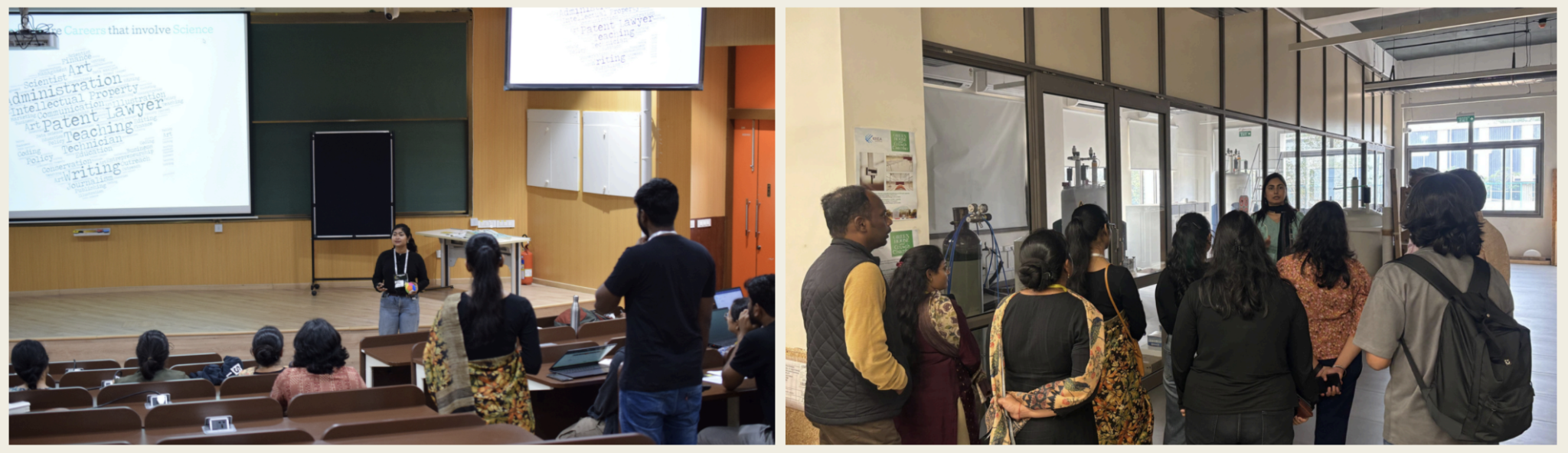
RYIM Tirupati began with the IndiaBioscience-led interactive Crafting Your Career (CYC) workshop. Moumita Mazumdar from the IndiaBioscience team introduced participants to diverse career pathways, while also providing insights into essential skill sets and the importance of networking, through a mix of informational interviews, résumé-building sessions, and discussions grounded in case studies and lived experiences.
CYC workshop (left) | Visit to Krea University (right)
The afternoon featured an outreach visit to Krea University. At Krea, delegates were given a tour of the facilities led by Vaishali Sharma, followed by structured interactions with faculty from three departments: Biological Sciences, Environmental Studies, and the Centre for Writing & Pedagogy. These interactions included lab visits, showcasing of laboratory instruments and facilities, and informal conversations around participants’ research areas and ongoing work.
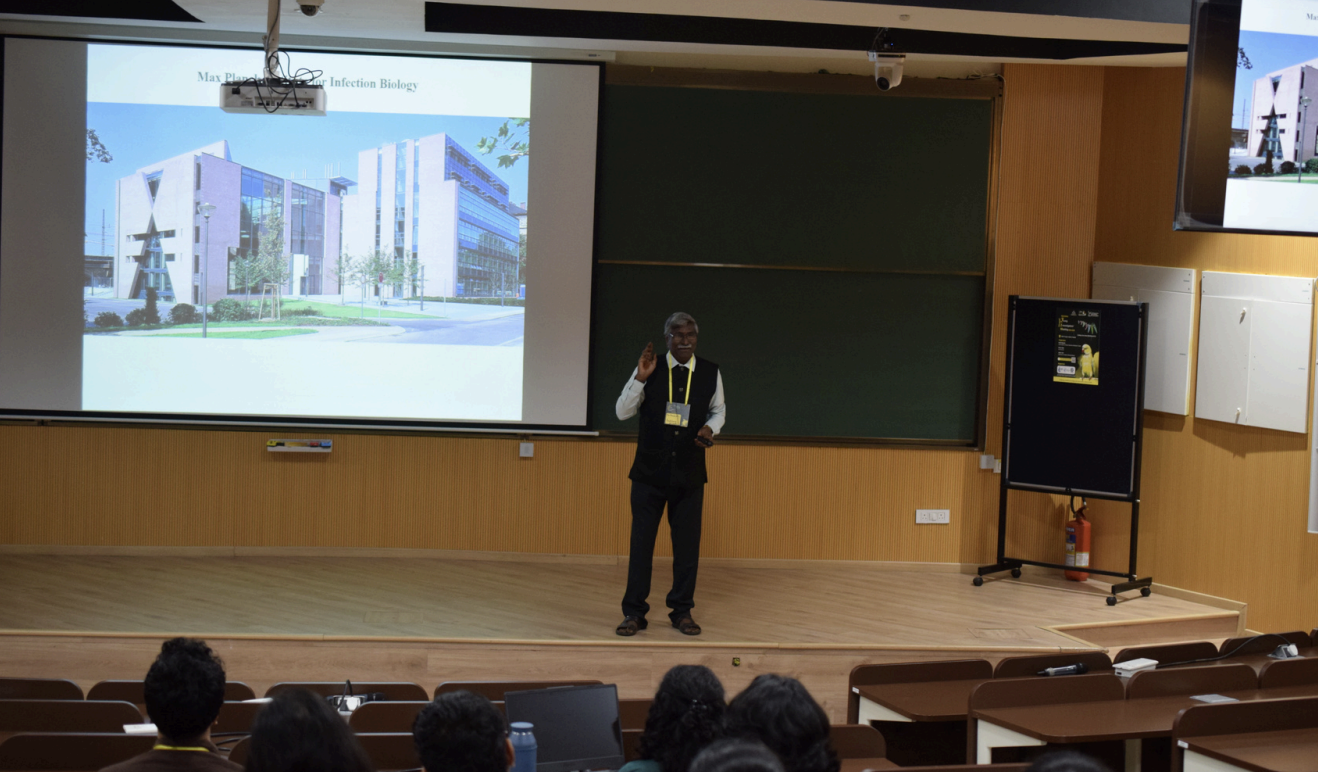
Day 1 opened with a keynote address by N Parthasarathy, Emeritus Professor at Pondicherry University, Puducherry, who reflected on building a long-term research career in ecology. Drawing on decades of field-based work, his talk emphasised persistence, collaboration, and adaptability. Establishing long-term ecological datasets across multiple landscapes was highlighted as critical, along with the importance of relationships with collaborators and forest departments. He advised patience and perseverance in navigating administrative challenges, keeping organised records, and building relationships with Forest Departments over time. Diversifying funding across DST, DBT, MoEFCC, ONGC, and European sources was equally important, he said. He closed with a thought that captured his entire philosophy — "From seed to tree — sow now".
Subsequent sessions by young investigators Anusha Shankar, Vincy K Wilson, and Eapsa Berry reflected diverse research problems within ecology, showcasing work spanning systems from birds to insects. These discussions created space for early-career researchers to situate their own journeys within a broader context.
N Parthasarathy, during his keynote
Funding landscape and strategies
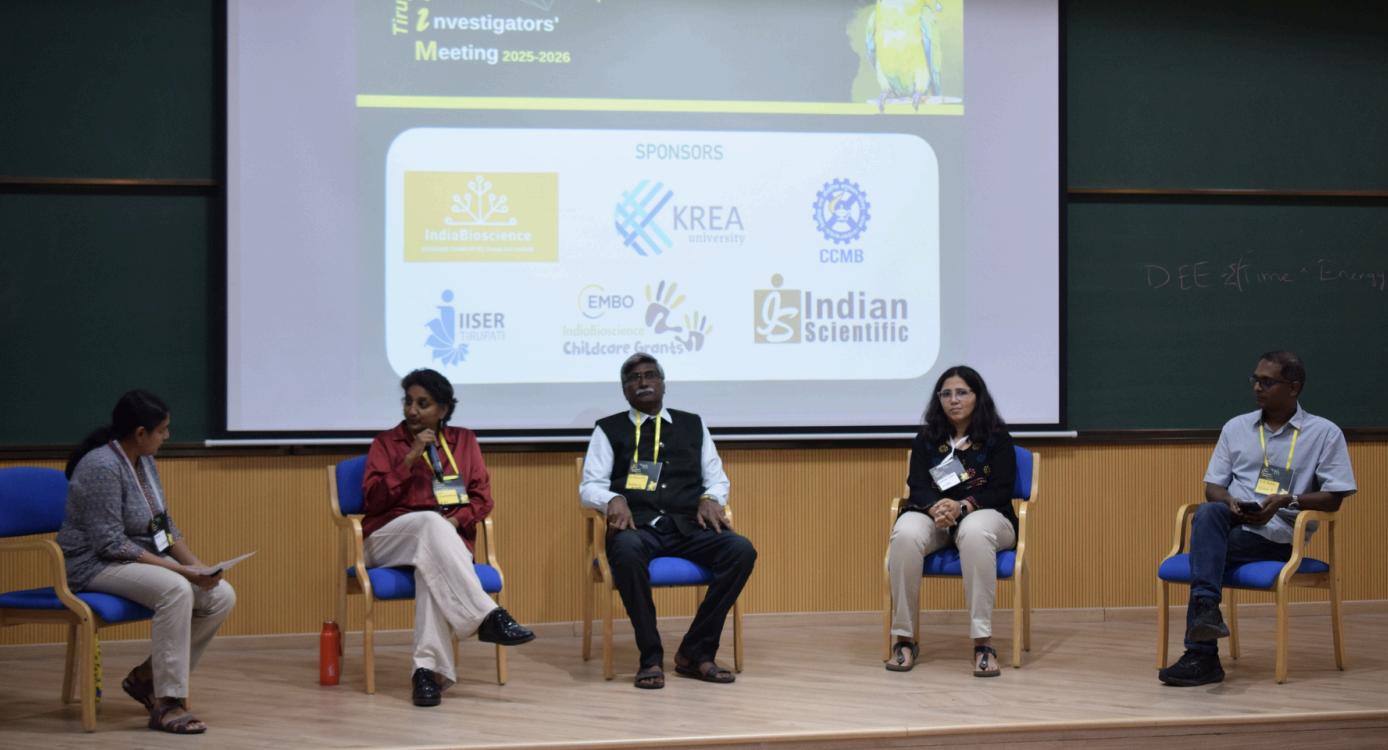
A key session focused on funding challenges in ecological research, featuring Uma Ramakrishnan (NCBS-TIFR, Bangalore), N Parthasarathy (Pondicherry University, Puducherry), Robin VV (IISER Tirupati), and Jahnavi Joshi (CSIR-CCMB, Hyderabad), and moderated by Shivani Jadeja (Krea University, Tirupati). Discussions centred on three themes: types of funding, the role of networks, and institutional support.
Fellowships were seen as more flexible compared to grants, which often come with rigid deliverables. Small grants, particularly from Forest Departments, were recognised as crucial for exploratory work, even as larger grants carry greater visibility. Short funding cycles were noted as a limiting factor for long-term ecological research.
The “patchwork quilt” approach, combining multiple small grants, emerged as a common strategy, though administratively demanding. The consensus was that while fundraising is constant, opportunities exist, and researchers must learn to navigate them.
Views differed on the role of networking. While some emphasised the significance of strong science and proposals, others acknowledged that reputation, institutional affiliation, and relationships do influence outcomes. Practical advice from panellists included targeting appropriate calls and understanding funding probabilities.
Institutional support was identified as a key factor. Start-up grants and sustained internal funding were seen as essential for establishing research programmes. Models where institutions provide long-term support were highlighted as enabling more stable and impactful research.
Panel on funding challenges in ecology and conservation science
From uncertainty to impact: A journey in science
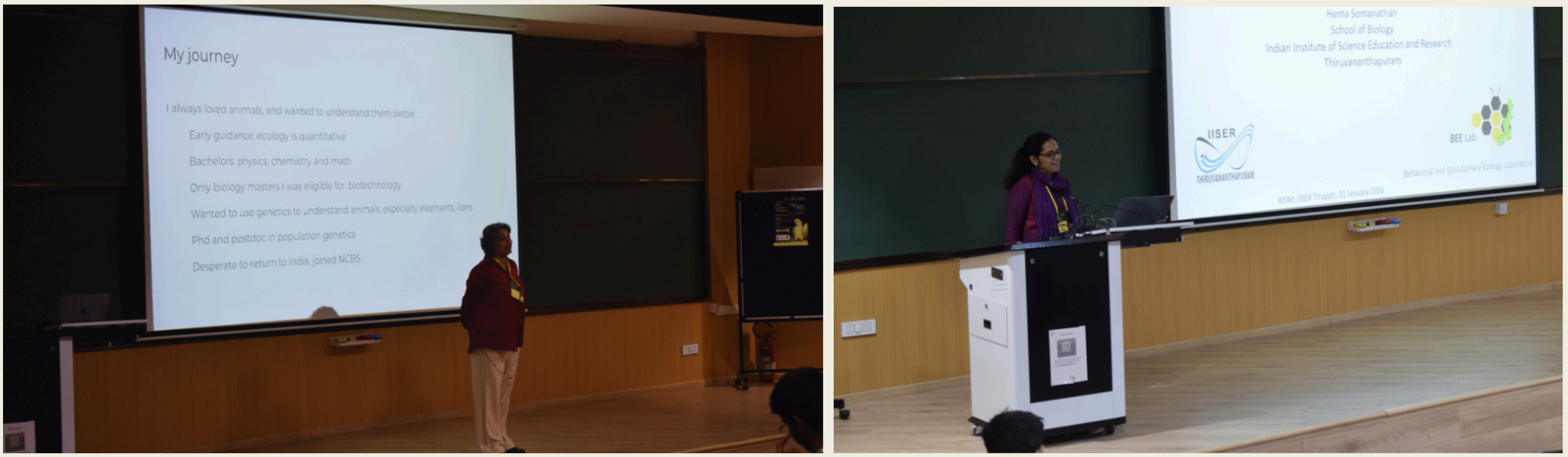
Day 1 concluded with a plenary lecture by Uma Ramakrishnan from NCBS–TIFR, who shared a candid account of her scientific journey, highlighting its non-linear nature. Her PhD years were marked by disruptions, including a shift in research direction and an unsupportive environment. A positive postdoctoral experience later helped her rebuild confidence, underscoring the importance of a supportive research ecosystem.
On returning to India, Uma established a population genetics lab at NCBS while balancing motherhood and research. Her early, student-driven work led to key contributions in tiger genetics and directly informed conservation policy, including wildlife corridor design. Her recent work spans the genetic basis of the black tiger phenotype in Similipal and disease ecology in Northeast India, including bat surveillance during COVID-19. She also reflected on navigating institutional and public pressures, emphasising the role of institutional support. Her talk highlighted how long-term ecological research can translate into meaningful conservation impact.
Talks by Uma Ramakrishnan (left) and Hema Somanathan (right)
Day 2 began with an insightful keynote by Hema Somanathan from IISER Thiruvananthapuram, who shared a deeply personal account of how her career was shaped by serendipity, frugality, and intellectual curiosity, reiterating the non-linear nature of research pathways. From early work at the Bombay Natural History Society (BNHS) in Mumbai to navigating a career break for caregiving, her trajectory reflected both challenges and renewal, particularly during her postdoctoral work in Europe. At IISER Thiruvananthapuram, she has since built a research programme focused on insect–plant interactions and social systems. She emphasised the value of interdisciplinary work, frugal science, and the exploration of understudied questions, noting that meaningful insights often emerge from such approaches.
Together with the previous day’s plenary, her talk underscored themes of resilience, adaptability, and curiosity, offering important perspectives, particularly on challenges faced by women in science.
The session was followed by Young Investigator talks by Mansi Mungee, Gopal Murali, and Ashwini V Mohan.
Administrative challenges and institutional realities
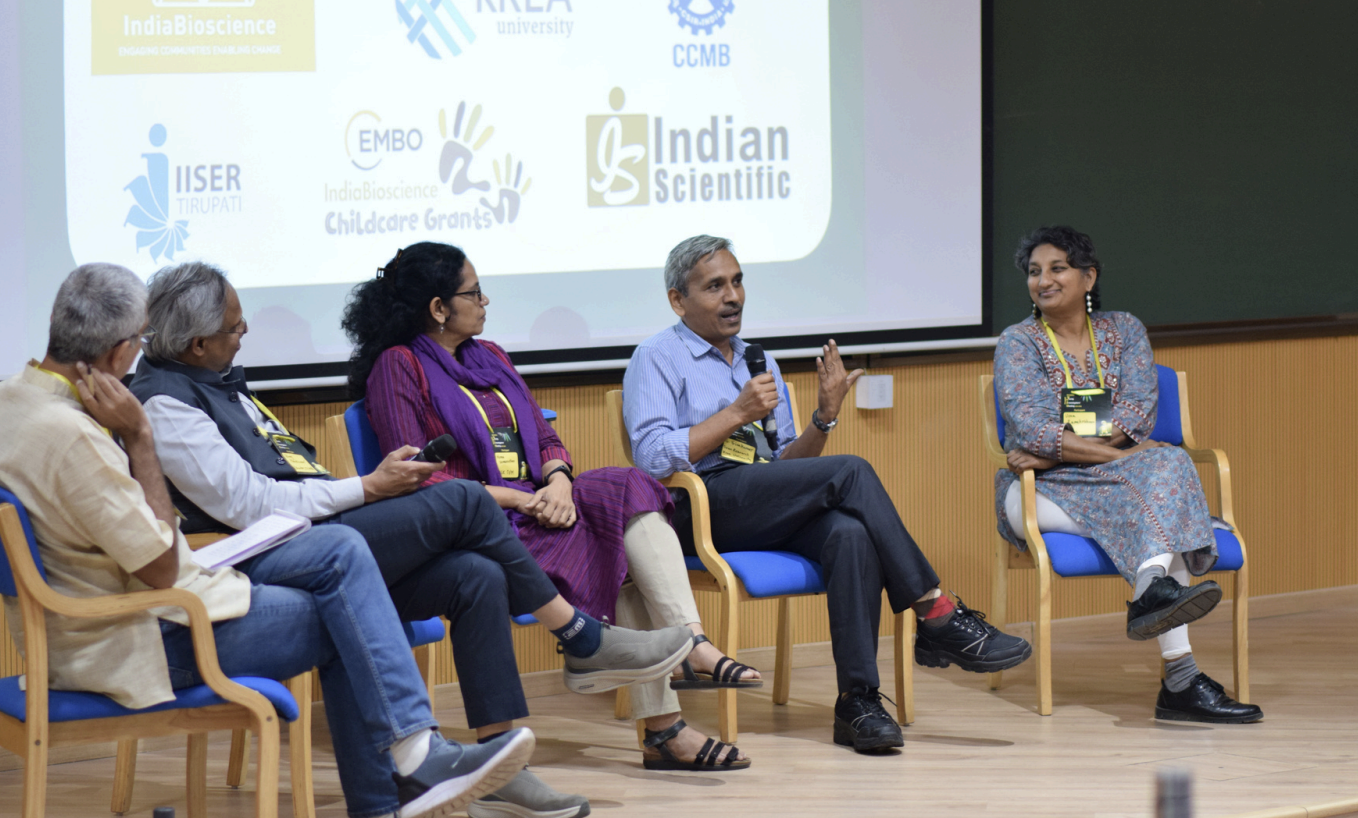
A panel on the second day, featuring Vinay Nandicoori (CSIR-CCMB, Hyderabad), S Sivakumar (Krea University, Tirupati), Hema Somanathan, and Uma Ramakrishnan, moderated by Guha Dharmarajan (Krea University, Tirupati), discussed administrative challenges and the perception of ecological research within institutions. A central theme was the importance of relationships with administrative staff. Participants were encouraged to view administrative personnel as collaborators rather than obstacles.
Navigating procurement systems and institutional processes requires patience and familiarity. Faculty roles were described as inherently managerial, involving responsibilities beyond research, including permits, logistics, and people management.
Institutions where administrative systems actively support scientific work were presented as effective models. Overall, the discussions underscored that conducting research in India often depends as much on human relationships as on formal systems.
Panel on challenges with administration and the perception of ecological research
Training, teaching, and community building
The meeting also addressed challenges in ecology training and education. Many institutions have limited faculty strength in ecology, leading to high teaching loads and reduced research time. The idea of a Teaching Consortium was revisited, aiming to pool expertise across institutions and enable collaborative teaching.
Breakout sessions allowed participants to identify key structural challenges, including establishing long-term field stations, obtaining ethics clearances for ecological research, and balancing teaching with research responsibilities.
Students participated in parallel discussions, raising concerns specific to early-career stages. These interactions highlighted the need for structured mentorship and institutional support mechanisms.
Key takeaways and broader impact
RYIM Tirupati highlighted both progress and persistent structural challenges.
For young investigators, the meeting provided access to mentorship, institutional perspectives, and peer networks — resources often limited in smaller or remote institutions. For aspiring researchers, it offered insight into the realities of academic careers in ecology.
At a broader level, strengthening ecological research networks has direct implications for conservation and policy in India. As the complex challenges of climate change and habitat loss intensify, the need for long-term, collaborative, and multi-site research becomes increasingly urgent.
Recommendations that emerged from RYIM Tirupati
The meeting concluded with several recommendations to address structural challenges and sustain momentum:
Targeted publications in journals to raise awareness among scientists and administrators about field-based ecological research challenges.
Focused white papers on teaching frameworks,ethics clearances for ecological fieldwork, administrative and funding/budgeting challenges.
Community platforms, such as a dedicated WhatsApp group, to share administrative knowledge and troubleshoot challenges.
Periodic follow-up meetings across different locations to maintain engagement and strengthen networks.
All pictures are taken by the RYIM Tirupati team at IISER Tirupati except the one from the visit which was taken by the team at Krea University.
]]>Rewriting the malaria code through RNA modifications: Insights from studies in IndiaDespite decades of global effort, malaria remains one of the world’s most devastating infectious diseases, with Plasmodium falciparum responsible for the most severe and deadly form. While extensive research has focused on the parasite’s DNA and proteins, a crucial regulatory layer of chemical modifications on RNA has only recently begun to attract attention. Understanding this hidden system of gene control could open new avenues for malaria intervention. ]]>tag:indiabioscience.org,2026-03-23:/news/2026/rewriting-the-malaria-code-through-rna-modifications-insights-from-studies-in-india2026-03-23T10:00:00+05:302026-03-20T16:00:35+05:30Gayathri Govindarajuhttps://indiabioscience.org/authors/GayathriGovindarajuDespite decades of global effort, malaria remains one of the world’s most devastating infectious diseases, with Plasmodium falciparum responsible for the most severe and deadly form. While extensive research has focused on the parasite’s DNA and proteins, a crucial regulatory layer of chemical modifications on RNA has only recently begun to attract attention. Understanding this hidden system of gene control could open new avenues for malaria intervention.
In a series of pioneering studies (1, 2, 3) led by Gayathri Govindaraju, carried out at the Rajiv Gandhi Centre for Biotechnology (RGCB), Thiruvananthapuram, and the Department of Biotechnology, IIT Madras, under the guidance of Arumugam Rajavelu, researchers uncovered how Apicomplexan parasites including Plasmodium falciparum modify their RNA to regulate gene expression. While the core work focused on P. falciparum, this represents the first systematic report of RNA methylation machinery in any Apicomplexan parasite, marking a significant milestone from Indian laboratories.
Why RNA modifications matter
RNA is commonly described as a messenger that carries instructions from DNA to produce proteins. However, RNA molecules are far from passive. They are decorated with chemical modifications that influence RNA stability, translation efficiency, and lifespan. Such modifications allow organisms to rapidly fine-tune gene expression without changing their DNA sequence, a feature especially valuable for parasites that must adapt quickly to hostile host environments.
A parasite-specific RNA methylation system
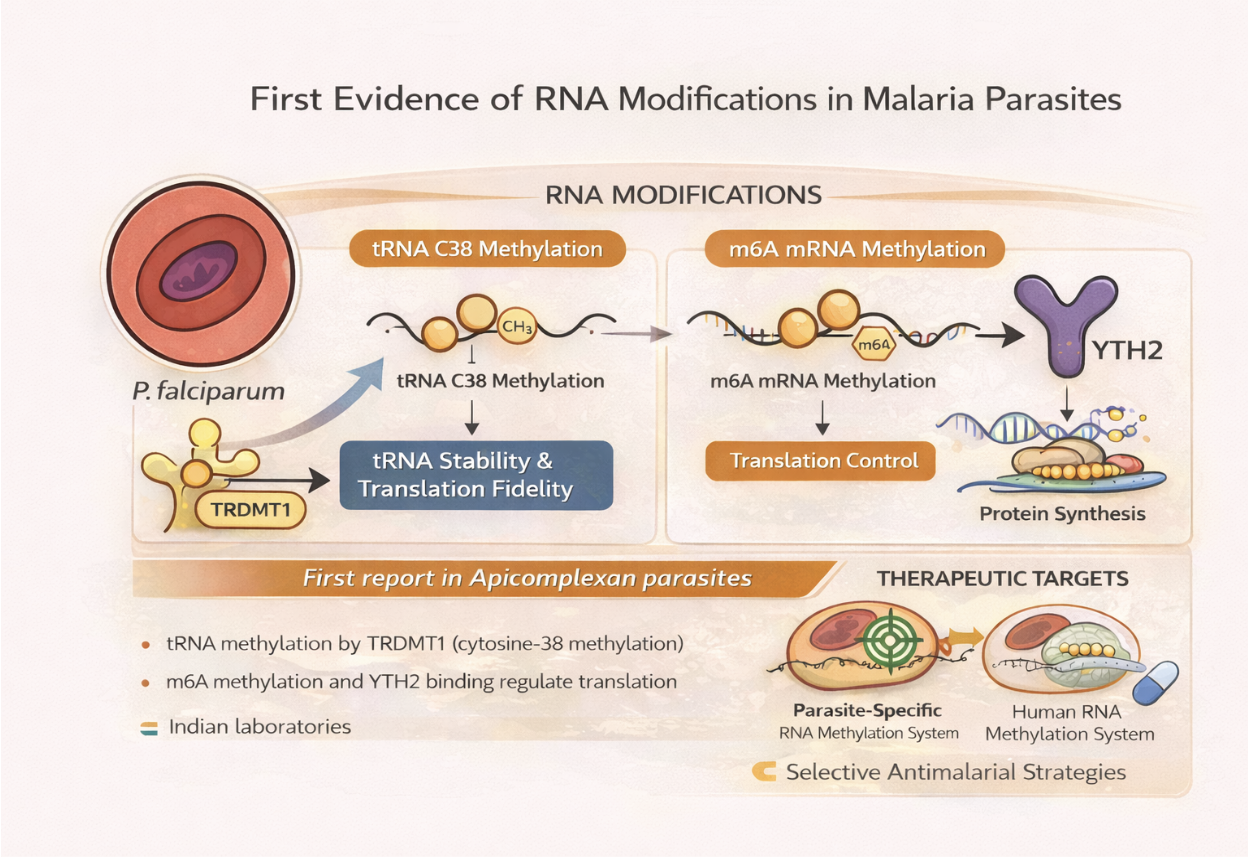
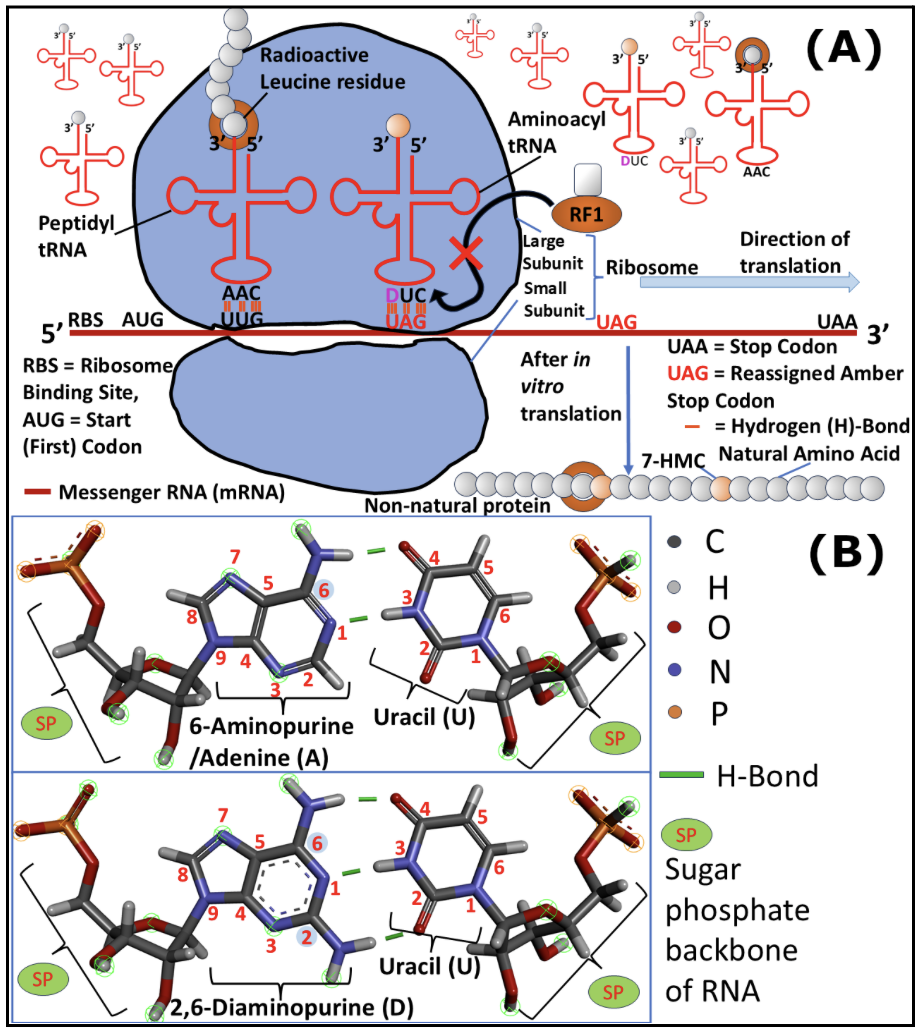
One of the earliest discoveries from this work was the identification of a DNA methyltransferase homologue, TRDMT1 (tRNA aspartic acid methyltransferase 1), in P. falciparum. Unexpectedly, this enzyme did not modify DNA. Instead, it was proven as a tRNA methyltransferase, specifically catalysing cytosine-38 (C38) methylation of endogenous aspartic acid tRNA.
This modification is critical for the efficient translation of proteins enriched in aspartic acid residues, many of which are essential for parasite survival and virulence. In addition, tRNA C38 methylation appears to protect parasite tRNAs from cellular stress, potentially contributing to resilience against drug pressure. This finding challenged long-held assumptions about methyltransferase function and highlighted how malaria parasites repurpose conserved enzymes for parasite-specific needs.
m6A: A new layer of mRNA regulation
Building on these findings, the research team explored whether messenger RNAs in P. falciparum also carry chemical modifications. Using biochemical and molecular approaches, they provided evidence for N6-methyladenosine (m6A) modifications on parasite mRNA.
How the parasite “reads” m6A marks
Chemical marks on RNA are biologically meaningful only if cells can interpret them. In higher eukaryotes, m6A marks are recognised by specialised YTH-domain proteins, which bind methylated RNA and regulate its fate. Whether malaria parasites possessed such “reader” proteins was previously unknown.
This study identified a YTH2 domain–containing protein in P. falciparum that specifically recognises and binds m⁶A-modified mRNAs. Functional analyses demonstrated that this interaction modulates protein translation by regulating the efficiency with which methylated transcripts are translated into proteins. Collectively, these findings establish that malaria parasites harbour a complete m⁶A regulatory axis-comprising writers, readers, and m⁶A-modified-RNAs previously believed to be exclusive to higher eukaryotes. Notably, P. falciparum lacks canonical m⁶A erasers (RNA demethylases), underscoring the multifaceted and central role of the YTH2 reader in parasite gene regulation.
This illustrative image was created by Gayathri using ChatGpt 5.2 version.
Why this matters for malaria control
P. falciparum undergoes rapid developmental transitions inside human red blood cells yet has limited transcriptional regulation. RNA modifications therefore act as a critical regulatory switchboard, enabling precise control of protein production throughout the parasite life cycle.
Importantly, several components of the parasite’s RNA methylation machinery are structurally and functionally distinct from human counterparts, making them attractive candidates for selective therapeutic targeting. Disrupting RNA methylation could impair parasite growth while minimising host toxicity.
In the battle between parasite and host, it’s no longer just the DNA that matters-but how RNA is written, read, and regulated”,
the author’s quote.
An Indian contribution to global parasitology
Epi-transcriptomics: the study of RNA modifications is a rapidly expanding field, largely explored in cancer and viral biology. Extending this framework to malaria parasites represents a major conceptual advance. By being the first to report RNA methylation systems in any Apicomplexan parasite, this work positions Indian research at the forefront of global parasitology.
The findings have been published in leading peer-reviewed international journals, including BBA – Gene Regulatory Mechanisms, Epigenetics & Chromatin, mBio, and the Biomedical Journal, with a recent piece in the Biomedical Journal further highlighting the translational relevance of this work.
Looking ahead
Future research could map RNA methylation across the parasite transcriptome, explore how these modifications change across life-cycle stages, and determine how disrupting RNA methylation affects parasite survival and drug resistance. Advances in sequencing technologies and computational analysis may further accelerate such studies.
By uncovering how Plasmodium falciparum writes and reads chemical marks on RNA, this research reveals a new regulatory layer in parasite biology, underscores India’s growing contribution to global biomedical science, and opens new possibilities for precision-targeted antimalarial strategies.
]]>Building careers and community: Reflections from YIM 2026In this reflection, IndiaBioscience Executive Director Siuli Mitra shares insights from the Young Investigators’ Meeting (YIM) 2026 in Pune. She reflects on how mentorship, collaboration, and candid conversations shaped the meeting, where early-career researchers discussed challenges, explored opportunities, and built lasting connections within India’s growing life sciences community. ]]>tag:indiabioscience.org,2026-03-16:/news/2026/building-careers-and-community-reflections-from-yim-20262026-03-16T10:00:00+05:302026-03-16T15:54:58+05:30Siuli Mitrahttps://indiabioscience.org/authors/PRYwLlb3kA1gO0QIn this reflection, IndiaBioscience Executive Director Siuli Mitra shares insights from the Young Investigators’ Meeting (YIM) 2026 in Pune. She reflects on how mentorship, collaboration, and candid conversations shaped the meeting, where early-career researchers discussed challenges, explored opportunities, and built lasting connections within India’s growing life sciences community.
Attending the Young Investigators’ Meeting (YIM) for the first time as an organiser (and never as an investigator) offered a perspective that was different from reading past reports or hearing about the meeting from colleagues.
YIM 2026 was hosted at the Symbiosis International (Deemed University), Pune, in collaboration with Symbiosis Centre for Research and Innovation (SCRI). The meeting was co-organised by a team of faculty members from institutions across India, who worked with IndiaBioscience to shape the programme and discussions. Their involvement reflects the collaborative spirit within the life science community that has characterised YIM and IndiaBioscience since its inception.
YIM 2026 organising team (left) | Some of the members of the organising team with volunteers (right)
Over five days in Pune, what stood out for me was not only the formal programme of talks and discussions, but also the quieter conversations unfolding in corridors, during coffee breaks, and at shared tables. YIM has been less about the sequence of sessions and more about creating a space where early-career investigators candidly shared the uncertainties of building independent careers, while mentors reflected on their own journeys through the ecosystem.
A space for community building and mentorship for early-career researchers
The 18th edition of IndiaBioscience’s annual flagship Young Investigators’ Meeting (YIM) concluded earlier this month in Pune (2–6 March 2026). Now close to two decades old, YIM has become a space where early-career life science researchers come together to reflect on the challenges of building independent research careers and to find mentorship from across the scientific ecosystem.
Over the years, recurring themes at YIM have ranged from framing strong research questions and identifying funding opportunities to navigating institutional hiring systems, mentoring PhD students, and balancing professional and personal milestones. Mentorship at the meeting emerges from many directions - senior scientists, institutional leaders, peers working in different disciplines, and professionals from sectors beyond academia. Each edition of the meeting adds around 80 investigators to the growing YIM community, which now includes more than 1,400 researchers across India and abroad.
The continued relevance of the meeting reflects a simple reality: while the ecosystem of life sciences in India has evolved, the need for spaces where early-career researchers can openly discuss career uncertainties and opportunities remains constant.
For many participants, YIM has led to collaborations, mentoring relationships, and professional connections that extend long after the meeting ends.
A diverse community of researchers
YIM 2026 brought together a wide cross-section of the life sciences community. Forty Young Investigators from 39 institutions across India and 35 postdoctoral fellows from 34 institutions in eight countries outside India were selected to participate. They were joined by nine mentors, mid- to senior-career researchers from academia representing diverse research backgrounds, along with speakers from government agencies, industry, science funding organisations, research management, science engagement, and policy.
Institutional representatives from 18 institutions also participated, sharing insights into their research programmes and outlining faculty hiring practices and career development opportunities within their institutions.
This diversity of institutions, geographies, and disciplinary expertise is a deliberate feature of the meeting’s design. Participants included researchers working across molecular biology, ecology, evolutionary biology, biomedical sciences, biotechnology, and interdisciplinary areas that intersect with policy and public engagement. The aim is not simply to gather early-career scientists in one place but to expose them to the range of environments in which scientific careers unfold.
Mentorship is central to YIM's design
Rather than relying solely on formal talks, the meeting is structured to create multiple opportunities for conversation between participants and mentors.
Participants with mentors during two of the breakout rooms.
Structured sessions introduce researchers to key themes, including funding opportunities, leadership, and career development. These are complemented by breakout group discussions and informal networking breaks, where participants can ask candid questions about navigating the early stages of academic life. Such exchanges often draw on the lived experiences of mentors and speakers, who reflect on the challenges they faced while building research programmes, securing funding, and managing teams.
Our rapporteurs captured several of these conversations during the breakout discussions. In one room, participants deliberated on how to sustain research momentum when infrastructure, administrative support, or institutional facilities are limited. Mentors underscored collaboration, networking, and resource-sharing as practical strategies in such situations. When experiments stall, they suggested that literature reviews, journal clubs, and computational work can help sustain productivity. Celebrating small milestones was recommended as a way to maintain morale within research groups, while internships and short-term projects can re-energise students facing dips in motivation. Administrative delays, participants were reminded, often require persistence and constructive engagement with institutional leadership, particularly when researchers can demonstrate how their work benefits the broader institutional ecosystem.
A more detailed report on the breakout room discussions will follow.
Several speakers also reflected on how personal aspirations and institutional realities together shape scientific careers. Anna Barron spoke about establishing the Singapore Brain Bank in 2018 and the challenges of building research infrastructure while navigating cultural assumptions about brain donation. Manjari Jain described the balancing act of academic life, where teaching responsibilities, committee work, and administrative duties can limit time in the field. Mohan Balasubramanian reflected on a different kind of decision: choosing not to switch research areas during his postdoctoral years and instead pursuing a single scientific question - what mechanism generates the force required to divide a cell into two - for more than three decades.
Taken together, these reflections offered participants pragmatic advice on navigating uncertainty and working within institutional constraints. Many speakers emphasised that collaboration and supportive networks are often critical to sustaining scientific work over the long term.
The design of YIM allows these conversations to continue beyond the formal programme. Informal discussions during meals and networking breaks frequently become spaces where early-career researchers exchange experiences about grant writing, laboratory management, and the realities of establishing independent research programmes.
Conversations shaping early-career research
Across the five days of discussions, several themes emerged that reflect the evolving landscape of life sciences research in India.
One major focus was the funding ecosystem for early-career researchers. Representatives from national and international funding organisations discussed fellowship schemes, collaborative grants, and emerging translational funding models. These sessions emphasised the importance of clear research questions, well-designed collaborations, and careful proposal preparation in navigating competitive funding environments.
Our detailed report on the sessions on life science funding to follow.
Another recurring theme was the increasing importance of interdisciplinary and translational research. Speakers from academia, industry, and policy backgrounds discussed how scientific discoveries move from the laboratory to real-world applications. Conversations highlighted both the opportunities and the structural barriers to translating fundamental discoveries into technologies or therapies. Praveen Vemula, in his mentor talk, emphasised that impactful translation depends on choosing unmet clinical problems, fostering multidisciplinary teams, enabling collaborations, and sustaining funding within a supportive ecosystem.
Panel discussions also explored the evolving relationship between academia and industry. Participants examined how startups and collaborative partnerships can help bridge gaps between discovery and application, while also addressing practical issues such as intellectual property, funding strategies, and the role of academic researchers in entrepreneurial ventures.
Research integrity and open science emerged as another important topic. As India’s research output continues to expand, speakers discussed the importance of maintaining trust and transparency in the research process. Open data, shared research resources, and the responsible use of emerging technologies, such as artificial intelligence, were identified as critical components of a healthy research ecosystem.
The meeting also highlighted the growing role of science engagement and science policy. Speakers working in public engagement described their motivations, indicating how researchers can contribute to public understanding of science, participate in policy discussions, and connect scientific knowledge with societal challenges. These conversations underscored that scientific careers today often extend beyond the laboratory into broader public and policy contexts.
Career pathways and institutional ecosystems
An important component of YIM is the opportunity for participants to interact with institutional leaders and learn about faculty hiring practices and research environments across India.
Representatives from 18 academic and research institutions presented their research programmes, infrastructure, and recruitment processes, providing participants with insights into how institutions evaluate potential faculty members and support early-career researchers. These sessions also highlighted the diversity of institutional models across the country, from traditional research institutes to emerging interdisciplinary programmes and translational research centres.
As participants were paired with smaller groups of representatives over mentorship circles, the interactions offered a practical view of how research ecosystems operate, including expectations around teaching, funding acquisition, collaboration, and research leadership from early investigators.
Participants with institutional heads during two of the breakout rooms at PDF Satellite Meeting.
Our report on the PDF Satellite Meeting is to follow.
Strengthening the early-career research ecosystem
As the life sciences ecosystem in India continues to expand, platforms like YIM play an important role in connecting researchers at a formative stage in their careers.
The meeting provides a space for early-career scientists to openly discuss the uncertainties of building research programmes while gaining exposure to opportunities across academia, industry, policy, and science engagement. By bringing together researchers from diverse institutions and disciplines, YIM also helps build a network that can support collaboration and collective learning within the community.
Participants listening to one of the talks during the meeting (left), and the poster session featuring presentations by PhD fellows (right).
Eighteen years after its inception, the continued growth of the YIM community reflects the enduring need for such spaces. While the research landscape evolves, the fundamental questions early-career scientists face about mentorship, funding, collaboration, and institutional culture remain strikingly similar across generations.
For many participants, the most valuable outcome of the meeting is not only the knowledge shared during the sessions but the relationships formed through these conversations. As the YIM community continues to grow, these connections remain central to strengthening the broader life sciences ecosystem in India.
]]>Biofilm nanogel: The next target in Candida infectionWhy do some Candida infections keep returning even after treatment? The answer often lies in the biofilm’s tough armour that protects yeast cells from drugs, immune responses, and environmental stress. ]]>tag:indiabioscience.org,2026-02-16:/news/2026/biofilm-nanogel-the-next-target-in-candida-infection2026-02-16T10:41:00+05:302025-12-17T12:37:33+05:30Nazia Hassanhttps://indiabioscience.org/authors/NaziaHasanWhy do some Candida infections keep returning even after treatment? The answer often lies in the biofilm’s tough armour that protects yeast cells from drugs, immune responses, and environmental stress.
Vaginal Candida infections affect 3 in 4 women at least once in their lifetimes. In India, vulvovaginal candidiasis accounts for an estimated 25–60% of symptomatic vaginal discharge cases, though prevalence varies by region and study population. Their significant treatment barriers are the development of dense microbial layers ‘biofilms’, which contribute to antimicrobial resistance and infection recurrence.
Understanding the challenge
(This section explains why biofilms are such a formidable barrier and why new therapeutic strategies are urgently needed).
Candida albicans (C. albicans) is a dual-natured pathogen, commensal under normal conditions yet opportunistic when the vaginal environment shifts. Even small disturbances in the natural acidic pH can allow Candida to overgrow. Its partner in crime is biofilm formation, a protective layer that acts like a bodyguard for fungal cells, shielding them from antifungal drugs, immune defences, and everyday stressors. This process is why many women continue to experience repeated infections even after completing treatment.
As highlighted in our earlier work, vaginal Candida infections remain one of the most common reproductive tract infections worldwide, yet biofilm-associated cases are often underdiagnosed and undertreated.
Biofilms are not just passive barriers; they are dynamic microbial ecosystems that mature, disperse, and seed new infections, as research has shown.
This challenge shaped my PhD research question: could we design a novel, drug-loaded vaginal nanogel that targets both fungal cells and their biofilms?
Why a new drug? Because many existing antifungals struggle once Candida settles into a biofilm.
Why a gel? Because it adheres well to the vaginal cavity and remains in place long enough to exert its therapeutic effect.
Why nanoscale? Because tiny particles can penetrate deeper into vaginal tissues and deliver higher drug concentrations directly to the infection site.
Formulation mission: Research techniques
(The following section outlines the scientific approaches used to identify, test, and refine this nanogel formulation).
To identify the right drug candidate, we used computer-aided screening approaches to compare several candidates with existing antifungals. Luliconazole stood out for its anti-microbial activity against C. albicans, making it the most promising choice for our nanogel. In laboratory (in vitro) and animal (in vivo) studies, both luliconazole and the nanogel showed a favourable skin profile, Candida inhibition, and the ability to disrupt dense biofilms.
However, choosing the right drug was only half the challenge; the formulation itself had to be compatible with the biology of the vaginal environment. To address this, we developed a luliconazole‑loaded nanogel specifically designed for vaginal application. The gel was engineered to stick to the mucosal surface, release the drug slowly over time, and penetrate deeper tissue layers where biofilms persist.
When tested on clinical isolates from symptomatic patients, the nanogel significantly inhibited fungal growth and disrupted the architecture of mature biofilms. The biofilms were visualised by fluorescence microscopy, revealing fragmented layers and not clusters. Skin-safety tests using goat vaginal tissue further confirmed that the nanogel was non-irritant when applied locally.
Research relevance: Luliconazole, reimagined for biofilms
(This section highlights the research novelty uncovered in our work).
For the first time, luliconazole showed dual activity against C. albicans clinical isolates, both inhibiting fungal growth and disrupting established biofilm structures. Using clinical isolates from patients, we captured real-world disease behaviour, revealing previously unreported antibiofilm activity of luliconazole when delivered via a vaginal nanogel system.
To assess drug performance, we measured the minimum concentrations required to inhibit C. albicans growth, prevent biofilm development, and reduce established biofilms. In all cases, luliconazole achieved these effects at lower concentrations than standard antifungal therapy, reinforcing its selection as the lead drug for our proposed nanogel.
Translational impact
(This section highlights how the nanogel could translate into a practical therapeutic option for vaginal Candida infections)
This work bridges a critical gap in vaginal antifungal therapy. The combination of luliconazole with a nano-lipid gel offers a locally acting, easy-to-apply, and potentially cost-effective formulation strategy. The designed nanogel provides a tailored approach to disrupt C. albicans biofilms and improve therapeutic outcomes.
The formulation holds promise for clinical translation, particularly in settings where vaginal Candida infections are underdiagnosed and undertreated. Future studies may explore advanced delivery platforms for both acute and chronic vaginal Candida infections, thereby strengthening the translational pipeline for innovations in women’s healthcare.
]]>Pulling out some of the “STOPs” for non-natural amino acid mutagenesisResearchers from IISER Bhopal have demonstrated, in a study published in 2022, that the efficiency of stop codon readthrough translation can be markedly improved by strengthening the binding between the UAG stop codon and its suppressor tRNA. Incorporation of non-natural amino acids into proteins using this approach can be applied to several applications, such as visual tracking of fluorescent amino acid-bearing proteins in studies of protein localisation in cells and the introduction of photocrosslinker molecules into proteins to identify protein-protein interactions. ]]>tag:indiabioscience.org,2026-02-06:/news/2026/pulling-out-some-of-the-stops-for-non-natural-amino-acid-mutagenesis2026-02-06T10:00:00+05:302026-02-09T11:08:01+05:30Siddhartha Baruahttps://indiabioscience.org/authors/gBa9MDWRye16j4vResearchers from IISER Bhopal have demonstrated, in a study published in 2022, that the efficiency of stop codon readthrough translation can be markedly improved by strengthening the binding between the UAG stop codon and its suppressor tRNA. Incorporation of non-natural amino acids into proteins using this approach can be applied to several applications, such as visual tracking of fluorescent amino acid-bearing proteins in studies of protein localisation in cells and the introduction of photocrosslinker molecules into proteins to identify protein-protein interactions.
Ishu Saraogi, Associate Professor, Organic Chemistry and Chemical Biology, Indian Institute of Science Education and Research Bhopal (IISER Bhopal) and her PhD student at the time of publication of the study, Purnima Mala (now a postdoctoral researcher in RNA biochemistry at the University of Massachusetts Amherst (UMass), USA), showed that introduction of 2,6-Diaminopurine (D) at the 3’ position of the anticodon (5’-CUD-3’) in the suppressor tRNA (tRNACUD), which recognises the 5’-UAG-3’ stop codon, significantly strengthens this codon–anticodon interaction relative to that involving the normal suppressor tRNA (tRNACUA) anticodon 5’-CUA-3’.
This stronger interaction enables the suppressor tRNA to efficiently compete with release factor 1 (RF1) for 5’-UAG-3’-binding, thereby preventing the premature termination of translation (protein synthesis). In contrast, RF1 displaces tRNACUA, triggering the subsequent disassembly of the ribosome (translation machinery).
Protein synthesis naturally utilises only 20 standard (canonical) amino acids in most organisms. Normally, a specific transfer RNA (tRNA) is covalently attached to a particular amino acid (aminoacylated) by a dedicated aminoacyl tRNA synthetase enzyme. Each codon (triplet of consecutive nucleotides) in messenger RNA (mRNA) binds to its cognate aminoacyl tRNA via the latter’s anticodon nucleotide-triplet. Codons and their anticodons have complementary sequences (RNA sequences are read from the 5’ end to the 3’ end. Complementary sequences bind each other through specific hydrogen bonds between the nucleotides ‘A’ and ‘U’, and between ‘G’ and ‘C’, when the interacting nucleotides from complementary sequences are positioned opposite one another and the 5’-to-3’ orientations of the complementary sequences run antiparallel).
Over the decades, researchers have developed and refined stop codon readthrough technologies for encoding non-natural (non-canonical) amino acids (NAAs) (Learn more through this review article). This strategy involves expanding mRNA’s genetic code by attaching an NAA to a ‘suppressor’ tRNA, which is engineered to recognise one of the stop codons - 5’-UAG-3’ (Amber), 5’-UAA-3’ (Ochre), or 5’-UGA-3’ (Opal/Umber). Since multiple different stop codons provide beneficial redundancy for translation termination, one stop codon can be repurposed to encode an NAA while another signals termination at the 3’ end of the mRNA.
In this study, the incorporated NAA was (7-hydroxycoumarin-4-yl) ethylglycine (7-HMC), which was conjugated by coumaryl tRNA synthetase to an optimised tyrosyl tRNA derived from Methanocaldococcus jannaschii. The 7-HMC was encoded by either one or two Amber stop codons (with three different two-Amber-site positional variants) introduced into green fluorescent protein (GFP) by mutation. Translation was carried out in the Escherichia coli T7 S30 cell-free translation system. 14C-leucine autoradiography revealed yields of intact GFP, relative to unmutated GFP yield (defined as 100%), as tabulated below:
Yield
tRNACUA
tRNACUD
1 Amber
23%
47%
2 Ambers
0%*
20–25%
*due to inefficient stop codon read-through
(A) Rough schematic of NAA mutagenesis used in this study (not to scale), (B) D forms more hydrogen (H)-bonds and interacts more strongly with U than A can.
Jiantao Guo, Professor, Chemical Biology, University of Nebraska-Lincoln, Nebraska, USA, who was not associated with this study, commented on the applications of this technique: “Enhancing codon–anticodon interaction enables more efficient incorporation of noncanonical amino acids. This methodological advance can augment current efforts to expand protein chemical diversity, thereby accelerating studies of protein structure, dynamics, and post-translational modifications, while empowering the design of new biotherapeutics, such as site-specifically modified antibodies and controllable protein drugs, with improved stability, specificity, and tailored biological functions”.
]]>A breakthrough against a billion-dollar disease: New genes power chickpea defenseChickpea, a staple crop for millions, is highly vulnerable to Fusarium wilt. A new study reveals how activating systemic acquired resistance through AtNPR1 and identifying the RNA helicase CaDEAD-box20 can significantly enhance disease resistance, opening pathways for durable, broad-spectrum protection in chickpea and other legumes. ]]>tag:indiabioscience.org,2026-01-09:/news/2026/biofilm-nanogel-the-next-target-in-candida-infection-22026-01-09T10:00:00+05:302025-12-17T12:34:03+05:30Subhasis Karmakarhttps://indiabioscience.org/authors/SubhasisKarmakarChickpea, a staple crop for millions, is highly vulnerable to Fusarium wilt. A new study reveals how activating systemic acquired resistance through AtNPR1 and identifying the RNA helicase CaDEAD-box20 can significantly enhance disease resistance, opening pathways for durable, broad-spectrum protection in chickpea and other legumes.
Chickpea (Cicer arietinum L.), the world’s second-most widely cultivated pulse, covers nearly 14.84 million hectares globally and forms a nutritional backbone for millions. As a protein-rich food and nitrogen-fixing crop, chickpea sustains both diets and soils, especially in India, which contributes nearly 90% of global production.
Yet this essential crop remains highly vulnerable to Fusarium wilt (FW), a destructive soil-borne disease caused by Fusarium oxysporum f. sp. ciceris. FW routinely causes 10–40% yield losses, and severe outbreaks can wipe out entire fields. The pathogen’s long-term survival in soil, high genetic diversity, and multiple physiological races make chemical control largely ineffective and often overcome resistance in conventionally bred cultivars.
Although genomics and multi-omics studies have highlighted pathways linked to wilt resistance, achieving durable and broad-spectrum immunity requires pinpointing the core molecular regulators that orchestrate defense. One promising route involves activating systemic acquired resistance (SAR), a robust, whole-plant immune response governed by the master regulator non-expressor of pathogenesis-related genes 1 (NPR1).
A recent study published in Plant Cell Reports by a team led by Subhasis Karmakar (ANRF-National Post-Doctoral Fellow; ICAR–Central Rice Research Institute), in collaboration with Sabarinathan Selvaraj (Odisha University of Agriculture and Technology), Subhankar Mondal (Utkal University), and Dipak Gayen (Central University of Rajasthan), has uncovered a powerful new defense strategy for chickpea.
Using multi-omics profiling and CRISPR–Cas9 genome editing, the team demonstrated that heterologous expression of Arabidopsis NPR1 (AtNPR1) significantly enhances Fusarium wilt resistance in transgenic chickpea. They also identified CaDEAD-box20, a previously uncharacterised RNA helicase, as one of the most strongly induced proteins in AtNPR1-expressing plants.
Further protein–protein interaction assays and structural modeling pointed to a potential interaction between AtNPR1 and CaDEAD-box20. Functional studies sealed the discovery: overexpression of CaDEAD-box20 strengthened wilt resistance, while CRISPR–Cas9 knockout plants showed heightened susceptibility. This firmly establishes CaDEAD-box20 as a positive regulator of chickpea immunity.
The author notes,
Our collaborative study reveals AtNPR1-mediated immunity and identifies CaDEAD-box20 as a key wilt-resistance regulator, offering new avenues for durable, broad-spectrum chickpea defense”.
Together, these findings provide the first functional evidence of AtNPR1-mediated defense in chickpea and identify CaDEAD-box20 as a central node in its immune pathway. The study opens up exciting avenues for engineering durable, broad-spectrum resistance against Fusarium wilt, one of the most persistent threats to global chickpea production, and potentially other legumes as well.