<?xml version="1.0" encoding="UTF-8"?><feed xmlns="http://www.w3.org/2005/Atom" xml:lang="en"><title>IndiaBioscience - Resilience and Representation in Research</title><link
    rel="alternate"
    href="https://indiabioscience.org/columns/resilience-and-representation-in-research"
    type="text/html"
    /><link
    rel="self"
    href="https://indiabioscience.org/columns/resilience-and-representation-in-research/feed"
    type="application/atom+xml"
    /><id>https://indiabioscience.org/columns/resilience-and-representation-in-research/feed</id><updated>2026-06-23T15:18:05+05:30</updated><entry><title>Resilience and representation in research: In conversation with Shreya Malik</title><link
                  rel="alternate"
                  href="https://indiabioscience.org/columns/resilience-and-representation-in-research/rrrsm"
                  type="text/html"
                  /><summary type="html"><![CDATA[
                <p dir="ltr">From biochemistry to shaping innovation ecosystems, this <a href="https://indiabioscience.org/columns/resilience-and-representation-in-research" target="_blank" rel="noreferrer noopener">Resilience and Representation in Research</a> article traces <a href="https://www.linkedin.com/in/shreya-sanghvi-malik-b52328a/" target="_blank" rel="noreferrer noopener">Shreya Malik</a>’s journey across industry, research, and policy spaces. Now Program Head – Life Sciences at Wadhwani Innovation Network, Wadhwani Foundation, she reflects on mentorship, allyship, and alternative careers in building more inclusive scientific ecosystems.</p>              ]]></summary><id>tag:indiabioscience.org,2026-06-15:/columns/resilience-and-representation-in-research/rrrsm</id><published>2026-06-15T10:00:00+05:30</published><updated>2026-05-08T13:04:44+05:30</updated><author><name>Gayathri Sreedharan</name><uri>https://indiabioscience.org/authors/GayathriSreedharan</uri></author><content type="html"><![CDATA[
                
<p>From biochemistry to shaping innovation ecosystems, this <a href="https://indiabioscience.org/columns/resilience-and-representation-in-research" target="_blank" rel="noreferrer noopener">Resilience and Representation in Research</a> article traces <a href="https://www.linkedin.com/in/shreya-sanghvi-malik-b52328a/" target="_blank" rel="noreferrer noopener">Shreya Malik</a>’s journey across industry, research, and policy spaces. Now Program Head – Life Sciences at Wadhwani Innovation Network, Wadhwani Foundation, she reflects on mentorship, allyship, and alternative careers in building more inclusive scientific ecosystems.</p><figure><a href="https://indiabioscience.org/columns/resilience-and-representation-in-research/rrrsm"><img
                width="1920"
                height="1080"
                style="max-width: 100%; height: auto"
                src="https://cdn.indiabioscience.org/media/articles/RRR_SM.jpg"></a></figure><p dir="ltr">Shreya’s journey began in Ahmedabad, where she completed her bachelor’s degree in Biochemistry from <a href="https://sxca.edu.in/" rel="noopener" target="_blank">St. Xavier’s College</a>, Gujarat, in 2002. Soon after, she made a decision that was relatively uncommon for many students at the time — she left India to pursue a master’s degree in Biotechnology at the <a href="https://www.uq.edu.au/" rel="noopener" target="_blank">University of Queensland</a>, Australia. Convincing her parents, she recalls, was not as difficult as one might assume. <em>“I was very determined to explore new experiences, and my parents trusted my commitment. That’s how I convinced them.”</em></p><p dir="ltr">For Shreya, moving to Australia meant seeking a different ecosystem, one where scientific training extended beyond textbooks and laboratory work. She wanted exposure to systems where subjects like intellectual property rights (IPR), commercialisation and entrepreneurship were part of the curriculum, something still not widely integrated into Indian education back then. She describes those two years abroad as formative — learning new technologies, adapting to a new culture, and observing a well-developed startup ecosystem.</p><p dir="ltr">But soon after completing her master’s, she returned to India, largely because her parents wanted her closer to home. By then, her career direction was already taking shape.</p><p dir="ltr"><strong>Choosing the business side of science</strong></p><p dir="ltr">While many of her peers gravitated towards traditional research pathways, Shreya found herself drawn to a different question: what happens after a scientific discovery?</p><p dir="ltr">She knew early on that she wanted to work at the intersection of biotechnology and commercialisation. <em>“I was always interested in the business aspects of science,”</em> she says. That curiosity led her to pursue a postgraduate diploma in Patent Law from <a href="https://nalsar.ac.in/" rel="noopener" target="_blank">NALSAR University, Hyderabad</a>. Patent law, she notes, opens multiple professional routes. One could become a patent analyst — working on patent applications, prior art searches, or freedom-to-operate studies. Another path could be patent prosecution, supporting law firms with filing and managing patents. </p><p dir="ltr">Shreya chose patent analysis and joined a biopharmaceutical company. It was a large organisation with a broad portfolio including biosimilars, generics, and innovative molecules. Working in the IP team gave her a front-row view of how scientific knowledge becomes an asset. She was involved in building IP portfolios, analysing future products, and learning about patent strategies such as evergreening, concepts that were not widely discussed in India at the time.</p><p dir="ltr">Looking back, she sees this phase as a foundation. It gave her the much needed technical exposure along with a sharper understanding of how scientific progress is shaped by regulation, markets, and long-term strategy.</p><p dir="ltr"><strong>From academia to industry — and across the ecosystem</strong></p><p dir="ltr">Shreya’s career journey spans about 17 years, moving steadily across different parts of India’s growing innovation landscape. After her early professional experience at <a href="https://www.intaspharma.com/" rel="noopener" target="_blank">Intas Biopharmaceuticals</a>, she moved to Delhi and worked at the <a href="https://biotech.co.in/en" rel="noopener" target="_blank">Biotech Consortium India Limited</a> for about a decade. Then came roles at the <a href="https://rcb.res.in/" rel="noopener" target="_blank">Regional Centre for Biotechnology</a> for a couple of years, followed by the <a href="https://siicincubator.com/" rel="noopener" target="_blank">Startup Centre at IIT Kanpur</a>. Today, she works at <a href="https://wadhwanifoundation.org/" rel="noopener" target="_blank">Wadhwani Foundation</a>. What stands out in her career trajectory is the diversity of systems she has worked within. </p><blockquote dir="ltr" class="pull-quote"><em>It’s interesting that I’ve been part of different components of the innovation ecosystem — industry, research institutions, incubators, and now a funding agency,”</em></blockquote><p dir="ltr">she says.</p><p dir="ltr">This cross-sector movement has shaped her ability to see the same problem from multiple angles. “<em>I understand the mind-set of a funding agency, the outlook of a startup, how an incubator works, and the challenges scientists face in translation,”</em> she explains. <em>“I bring that experience to my current workplace — knowing the perspectives of the stakeholders we are actually funding.”</em></p><p dir="ltr"><strong>The visible and invisible gender gaps across systems </strong></p><p dir="ltr">Over the years, Shreya has witnessed a shift in the gender composition of the workforce. When asked whether she has seen more women entering the systems she has worked in, she responds thoughtfully: <em>“Over the years, I’ve definitely seen more women in the workforce—colleagues, juniors, and early-career professionals.” </em>She adds that she hasn’t seen a very strong or obvious gender bias in the institutions she has worked in. At the same time, she is careful not to oversimplify the issue.</p><p dir="ltr">Bias, she notes, does not always show up in blatant ways. It can be subtle, systemic, or even rooted in assumptions about competence. For her, navigating workplace dynamics requires more than talent alone. <em>“You have to inculcate leadership, team bonding, and resilience so you don’t let office politics or biases bog you down. As family responsibilities increase, women tend to take up less work responsibilities or stop aspiring for the top jobs. There is a need to provide women the much-needed support system so that they have the confidence to break the glass ceiling”</em> she says.</p><p dir="ltr">Leadership skills, resilience, trust-building, and relationship-building abilities are what help professionals — especially women — move through organisational structures with confidence.</p><p dir="ltr"><strong>Mentorship and ‘allyship’ </strong></p><p dir="ltr">If there is one factor Shreya returns to repeatedly, it is mentorship. But she prefers a different word. “<em>I like to use the term ‘allies’,”</em> she says. </p><blockquote dir="ltr" class="pull-quote"><em>It’s important to have people you can depend on — and who can depend on you.”</em></blockquote><p dir="ltr">She considers herself fortunate to have strong support from her family, including her husband and in-laws, which she believes helped her navigate her career with greater stability. Professionally too, she has worked with mentors, colleagues, and seniors who supported her growth. But she also emphasises that mentorship is not a one-way arrangement. </p><blockquote dir="ltr" class="pull-quote"><em>If you expect guidance, you should also give back — through respect, support, or collaboration. It’s like any relationship — it thrives on mutual effort.”</em></blockquote><p dir="ltr">She also brings up another aspect that is often left out: relationships should not be transactional. <em>“You shouldn’t view people in terms of ‘what can I gain from them.’</em><em>Build genuine connections. The benefits follow naturally.”</em></p><p dir="ltr">She shares a moment from an earlier leadership role, where her definition of allyship translated into action. “<em>In a previous role, even though we had a biometric system, I would tell women with young babies, ‘It’s okay, go home and work from there.’ I would take their side to the organisation because it was essential.” </em>For Shreya, that is what allyship looks like: practical support, offered without hesitation.</p><p dir="ltr"><strong>Research management and technology transfer: A growing community</strong></p><p dir="ltr">Shreya has watched the broader ecosystem of research management and technology transfer evolve in India. She describes it as a relatively small community, but one that is gaining recognition. Earlier, she says, these roles were not fully understood or valued. Today, the situation has shifted. “<em>Researchers and faculty increasingly seek support for commercialisation — whether it’s IP, regulatory pathways, or licensing,”</em> she notes.</p><p dir="ltr">Yet she believes growth requires individuals to remain adaptable. Even within a niche field, professionals cannot afford to stay confined to what they already know. She recalls a personal realisation around 2023, when she deliberately stepped out of her comfort zone. She began exploring areas like artificial intelligence, quantum technologies, and mining ecosystems — fields that were not directly part of her earlier work but increasingly relevant to innovation. <em>“Professionals need to continuously upskill and expand their horizons,” </em>she says<em>. “That’s how both individual careers and the community grow.”</em></p><p dir="ltr"><strong>The WomenLift Health programme and what it changed</strong></p><p dir="ltr">One of the most significant experiences in her professional life was her participation in the <a href="https://www.womenlifthealth.org/" rel="noopener" target="_blank">WomenLift Health</a> cohort, which she describes as a blessing. </p><p dir="ltr">For Shreya, the programme was as much about structured learning as it was about the relationships it created. “<em>A one-year programme with residencies in three cities. We interacted with highly accomplished women professionals and learned from expert trainers,”</em> she says. But what stayed with her the most was how her understanding of leadership evolved during this period. </p><blockquote dir="ltr" class="pull-quote"><em>The most important takeaway was that leadership is not about breaking glass ceilings — it’s about personal growth, mind-set, and supporting others.”</em></blockquote><p dir="ltr">The cohort worked on communication, conflict management, and ecosystem thinking. Over time, the experience reinforced a lesson she believes many women need to hear: leadership is not only about individual progress, but also about lifting others along the way. <em>“We’ve built strong peer networks, and we continue to support each other,” </em>she says.<em> “We built great friendships and now we motivate each other.” </em>She explains how this support looks in real life: <em>“If a friend has a problem with a boss, I can say, ‘I dealt with this years ago, try this.’ It’s a great peer group.”</em></p><p dir="ltr"><strong>On resilience and representation</strong></p><p dir="ltr">When asked how she might have handled a challenge differently as an early-career professional compared to now, Shreya answers with honesty. She believes she could have benefited from more patience and stronger listening skills. With time, she says, self-awareness increases, and that changes how one responds to conflict or uncertainty. </p><p dir="ltr"><em>“Resilience is about recalibrating your mind to new environments,” </em>she reflects. Every new role, she believes, comes with a learning curve — in terms of tasks, people, organisational culture, and expectations. Looking back, she feels she would have done better in some situations if she had slowed down, listened more carefully, and responded with greater calm. </p><p dir="ltr">On whether challenges for women have improved across different systems, Shreya answers in the affirmative. She sees a gradual shift in organisational attitudes, especially towards working mothers. Flexible work options have increased, she notes, particularly after COVID. But she is clear that policies alone are not enough. Supportive leadership plays a major role in whether women feel empowered to continue and grow.</p><p dir="ltr">To early-career women professionals, Shreya’s advice is straightforward: don’t give up.</p><p dir="ltr">“<em>Speak up when you face challenges. Communication is key,”</em> she says. She also encourages women to take ownership of their careers. If an environment does not support them, they should not hesitate to explore other opportunities. <em>“Your destiny is in your hands,” </em>she adds.</p><p dir="ltr">Shreya also points out that research careers can be challenging, especially because of limited permanent positions and slower growth. <em>“That’s why I strongly advocate alternative careers in STEM — like research management, startups, and innovation,”</em> she says. For PhD graduates, she believes the landscape has expanded significantly compared to 15 years ago. Today, there are more than a thousand incubators and an emerging deep-tech ecosystem, creating opportunities in grant management, startups, and innovation-driven roles. These career paths, she notes, may not follow the conventional academic ladder, but they can offer meaningful impact and long-term growth. </p><p dir="ltr">As she reflects on what defines leadership today, Shreya describes it as multidimensional. But certain qualities, she believes, matter across roles and sectors: confidence, courage, resilience, agility, and strong interpersonal skills.</p><blockquote dir="ltr" class="pull-quote">For Shreya, leadership is not a title. It is the ability to navigate complexity, adapt across systems, and bring people together while continuing to grow, learn, and support others along the way.<br></blockquote>
              ]]></content><category term="other" label="Other" /><category term="women-in-science" label="Women in Science" /><category term="personal-experience" label="Personal Experience" /><category term="advice" label="Advice" /></entry><entry><title>Balancing Motherhood in STEMM</title><link
                  rel="alternate"
                  href="https://indiabioscience.org/columns/resilience-and-representation-in-research/balancing-motherhood-in-stemm"
                  type="text/html"
                  /><summary type="html"><![CDATA[
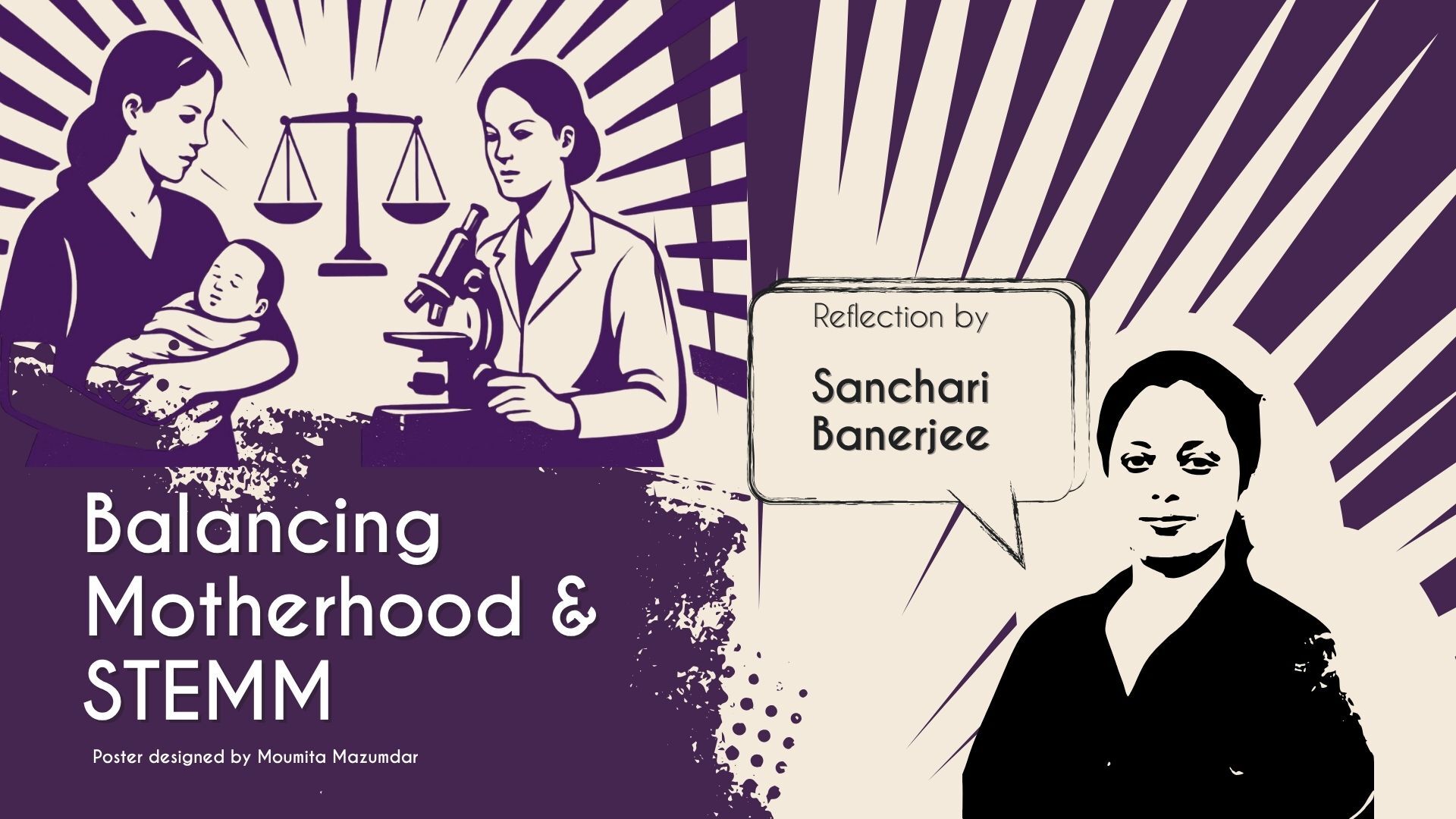
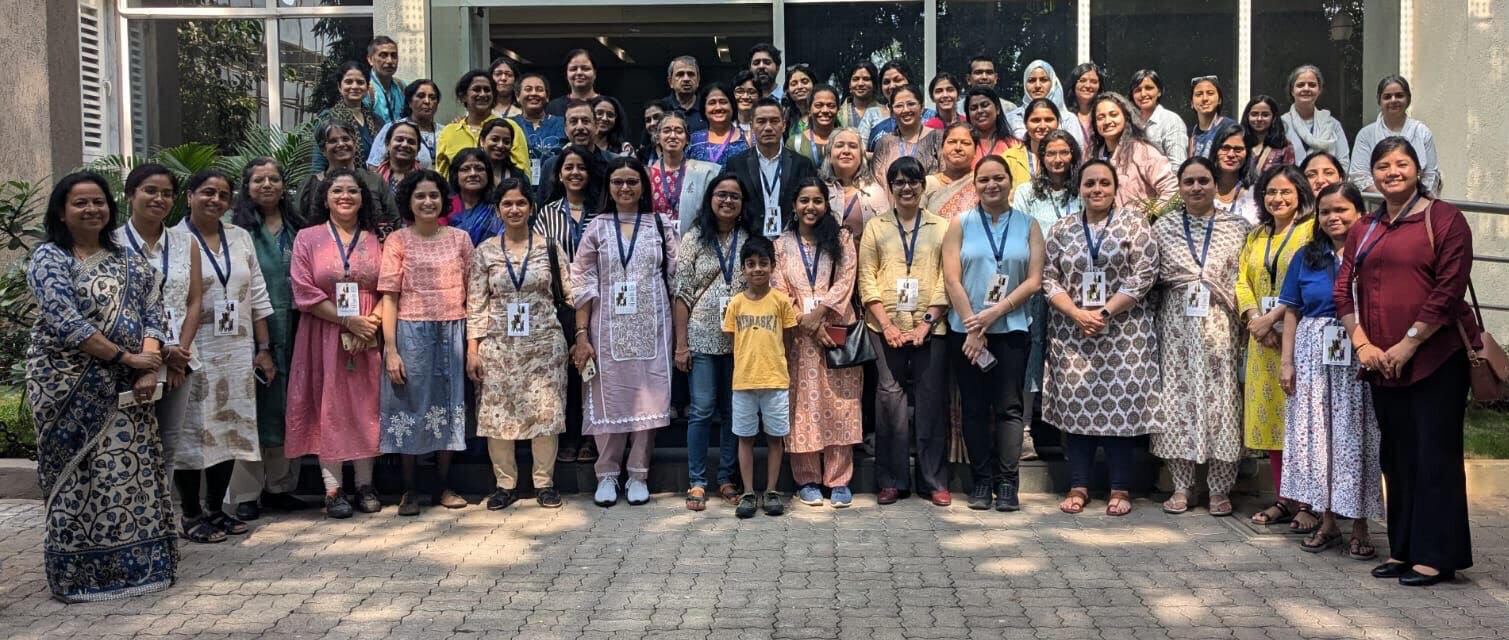
                <p dir="ltr">In this piece, moderator <a href="https://www.linkedin.com/in/sanchari-c-banerjee/" target="_blank" rel="noreferrer noopener">Sanchari Banerjee</a> (<a href="https://www.google.com/search?client=safari&amp;rls=en&amp;q=Sai+Life+Sciences%2C+Hyderabad&amp;ie=UTF-8&amp;oe=UTF-8" target="_blank" rel="noreferrer noopener">Sai Life Sciences, Hyderabad</a>) reflects on the panel “<a href="https://indiabioscience.org/meetings/balancing-the-equation-panel" target="_blank" rel="noreferrer noopener">Balancing the Equation: Motherhood, Career Shifts, and Success in STEMM</a>”, hosted by IndiaBioscience on 25 November 2025. The discussion highlights mentorship, work–life integration, and systemic change needed to support women navigating careers in STEMM.<br /></p>              ]]></summary><id>tag:indiabioscience.org,2026-05-22:/columns/resilience-and-representation-in-research/balancing-motherhood-in-stemm</id><published>2026-05-22T10:00:00+05:30</published><updated>2026-04-19T11:29:30+05:30</updated><author><name>Sanchari Banerjee</name><uri>https://indiabioscience.org/authors/9ANQdMnwyEL6OE7</uri></author><content type="html"><![CDATA[
                
<p dir="ltr">In this piece, moderator <a href="https://www.linkedin.com/in/sanchari-c-banerjee/" target="_blank" rel="noreferrer noopener">Sanchari Banerjee</a> (<a href="https://www.google.com/search?client=safari&amp;rls=en&amp;q=Sai+Life+Sciences%2C+Hyderabad&amp;ie=UTF-8&amp;oe=UTF-8" target="_blank" rel="noreferrer noopener">Sai Life Sciences, Hyderabad</a>) reflects on the panel “<a href="https://indiabioscience.org/meetings/balancing-the-equation-panel" target="_blank" rel="noreferrer noopener">Balancing the Equation: Motherhood, Career Shifts, and Success in STEMM</a>”, hosted by IndiaBioscience on 25 November 2025. The discussion highlights mentorship, work–life integration, and systemic change needed to support women navigating careers in STEMM.<br /></p><figure><a href="https://indiabioscience.org/columns/resilience-and-representation-in-research/balancing-motherhood-in-stemm"><img
                width="1920"
                height="1080"
                style="max-width: 100%; height: auto"
                src="https://cdn.indiabioscience.org/media/articles/RRR_UD_2026-04-16-065425_koln.jpg"></a></figure><p dir="ltr">Motherhood is a journey that knows no boundaries. Whether we are mothers to newborns, toddlers, older kids, or adults, every stage of motherhood is unique and has its own challenges. Having a progressive career alongside it adds to this complexity. </p><p dir="ltr">Before I moved back to India in 2024, I was working as a postdoc in Denmark for four years and it was remarkable to see the infrastructure provided by the government and the society to support working parents. This led me to reflect on the infrastructure in India for working mothers. Later, when I was contributing to a book, <a href="https://www.amazon.com/Beyond-Pipeline-Redefining-Success-STEMM-Together/dp/B0FK2PKBLF" rel="noopener" target="_blank"><em>Beyond the Pipeline</em></a>, written by the lead author <a href="https://www.linkedin.com/in/cassie-leonard/" rel="noopener" target="_blank">Cassie Leonard</a> (one of the panellists in this session) with women authors and contributors from six different continents, I realised how important sharing lived experiences can be, knowing that we are not alone in this world. </p><p dir="ltr">Thanks to IndiaBioscience for hosting a panel discussion around this important conversation and for providing a platform to engage with and understand lived experiences both within India and globally. This panel on <a href="https://indiabioscience.org/meetings/balancing-the-equation-panel" target="_blank">“Balancing the Equation: Motherhood, Career Shifts, and Success in STEMM” </a>brings together women leaders from academia and industry across Indian and international contexts to discuss the structural and cultural challenges mothers face in science, technology, engineering, mathematics, and medicine (STEMM). It also reflects on how balancing these roles is crucial for sustaining a career alongside motherhood.</p><p dir="ltr">Gender equity in science is often discussed in silos; this panel aims to create a shared space for "lived experiences" to spark reflection and institutional action. The primary goal is to identify the structural and cultural shifts needed to build an environment where everyone in the STEMM ecosystem can thrive. The conversation brought together four mothers who are leaders and successful in their careers: <a href="http://www.chg.res.in/www.chg.res.in/RadhikaNair.html" rel="noopener" target="_blank">Radhika Nair</a> (<a href="http://www.chg.res.in/www.chg.res.in" rel="noopener" target="_blank">Centre for Human Genetics, Bengaluru</a>), <a href="https://www.linkedin.com/in/ramona-parsani-1aa932a/" rel="noopener" target="_blank">Ramona Parsani</a> (<a href="https://ignitelsf.in/" rel="noopener" target="_blank">Ignite Life Science Foundation</a>), <a href="https://www.ncbs.res.in/faculty/uma" rel="noopener" target="_blank">Uma Ramakrishnan</a> (<a href="https://www.ncbs.res.in/" rel="noopener" target="_blank">National Centre for Biological Sciences-TIFR</a> (NCBS-TIFR), <a href="http://www.chg.res.in/www.chg.res.in" rel="noopener" target="_blank">Bengaluru</a>), and Cassie Leonard (<a href="https://www.elmmcoaching.com/" rel="noopener" target="_blank">ELMM Coaching</a>).</p><p dir="ltr">The metaphor, "leaky pipeline" describes the attrition of women in STEMM at higher rates as they progress toward leadership roles. Data shows that globally, only 52% of women aged 25 - 54 years are in the labour force compared to 95% of men. In India, an alarming 73% of women quit their jobs after childbirth, a statistic driven by cultural expectations around marriage and motherhood. This reflects the impact of cultural, social, organisational, and governmental factors on Indian mothers. Ramona suggested that "leaky pipeline" implies that women are at fault for dropping out. Shifting the narrative from a “leak” to “bad plumbing” highlights systemic issues such as corroded ecosystems, outdated practices, and a lack of investment in women returning from career breaks. </p><p dir="ltr">Radhika noted that the most productive professional years (late 20s to early 30s) clash exactly with our reproductive years, creating a "push and pull" that is difficult to navigate without support. Reflecting on her career trajectory, she emphasised that a two-year career break is effectively a four-year setback in science due to the time needed to rebuild networks and publish papers. Similarly, returning to India required "learning to navigate the system", where she highlighted the absolute necessity of having mentors to navigate the local academic landscape.</p><p dir="ltr">Cassie’s narrative highlights that “leaky pipeline” is a global phenomenon, having herself written a book to motivate women and mothers worldwide to navigate beyond those leaks. She shared her experience as an aerospace engineer when she tried to plan children around career milestones (e.g., reach level X before child #1). Ultimately, she left her senior leadership role of 16 years to find more joy in coaching and mentoring, emphasising that the system is never perfectly ready and one can't always plan the “perfect” time for a family.</p><p dir="ltr">Coming from a banking and Xerox background, Ramona discussed the gender barriers in corporate service roles. She highlighted that only 11% of board members in India are women, despite a larger presence at lower levels. After she has had several transitions, she returned to learning Digital Transformation to stay relevant, proving that career shifts are viable at any stage. This provides an important lesson on upskilling at every career stage that will make you stay relevant.</p><p dir="ltr">Uma shared her difficult PhD experience in the US led her to question whether she should continue in academia. She admitted to having a "major imposter syndrome," particularly when returning to India to work at an elite institution like NCBS alongside leading scientists in the field. She moved back to India, started a new faculty position, and had her first daughter all within a four-month span, describing it as a period of intense transition. She credited her perseverance to having people who believed in her, both scientific mentors and a family that didn't impose traditional restrictions on what she could achieve. She stresses that a true mentor understands the "whole personality" of a researcher and helps them build a career based on their individual strengths and interests, rather than just focusing on publications.</p><p dir="ltr">A recurring theme globally is the necessity of building “the Village” and utilising the support networks. While India provides one of the best maternity break benefits globally <a href="https://en.wikipedia.org/wiki/Maternity_Benefit_(Amendment)_Act,_2017" rel="noopener" target="_blank">(26 weeks with 100% for the first two children)</a>, it still lacks in providing proper support systems post-maternity and for mothers rising into leadership roles. A widely recognised proverb is that “it takes a village to raise a child”, became especially meaningful to me during my time in Denmark.. My parents have always been my village, even being online baby-sitters at times. In my initial years in Denmark, I was apprehensive about seeking help from unknown people. It was actually the families of my daughter’s friends who reached out first and that went on to build my village. Radhika also stressed that we should be "shameless" about asking for help.</p><p dir="ltr">Institutional and organisational support becomes very critical. Ramona points out that childcare is actually a mandate for organisations with 50 or more employees in India, yet implementation remains a matter of institutional will. This brought me back to my time post maternity break at NCBS, which offers on-campus enriching and safe childcare for kids till 14 years of age. Ramona highlighted how Ignite Life Science Foundation has started to support young researchers by paying for caregivers to travel with them to national conferences, removing a major barrier to professional growth. Looking back, the first time I took my three month old daughter to a conference in Hyderabad, my mother also travelled with me and my fellowship partly supported only the accommodation for all three of us. In hindsight, I wish I had the confidence to travel independently with my daughter, baby-wearing her throughout the conference, even during poster sessions or talks. </p><p dir="ltr">A preconceived notion is that there is only the traditional "PI-only" (Principal Investigator) definition of success in academia. We need to break this mindset and explore options beyond academia and industry like being a lab manager, a project assistant, or moving into philanthropy or coaching, which are equally valid and successful paths. Being in industry myself, I can see that women have many options beyond technical roles—including human resources, project management, and application science roles, among others.. Radhika and Uma mentioned that success in science requires a "fire" or passion to understand things, which helps researchers push through the unique social and bureaucratic challenges of the Indian system.</p><p dir="ltr">As we transition into motherhood and simultaneously build our career, there are times we feel different emotions. Managing and navigating them can help us to overcome some of these hurdles. A "live poll" was conducted with the panellists to see who has experienced common career hurdles. The results were telling:</p><ul><li dir="ltr"><p dir="ltr">Burnout: Nearly all raised their hands.</p></li><li dir="ltr"><p dir="ltr">Imposter syndrome: A common struggle even for all.</p></li><li dir="ltr"><p dir="ltr">Guilt: Unanimously felt by the panellists</p></li><li dir="ltr"><p dir="ltr">Difficulty balancing responsibilities: A universal experience at some stage.</p></li></ul><p dir="ltr">Cassie noted that burnout is a systemic issue rather than an individual failure. She explained that it stems from the layers of expectations, being the "ideal worker" while managing demands of intensive parenting.<br></p><p dir="ltr">Uma mentioned that whenever she has imposter syndrome, she manages this by focusing on the purpose of her work and the inspiration it provides to younger researchers. Radhika agreed that the feeling is common, particularly after career breaks, where women may feel they have fallen behind in terms of networks and publications.</p><p dir="ltr">Interestingly, Ramona provided a profound take on guilt, describing it as "self-created." She reflects on how she tried to be a "superwoman", rather than accepting that she couldn't attend every soccer match or school event. Her advice to younger women is to reject the “superwoman myth” and accept that they need help from friends, family, and the wider community.</p><p dir="ltr">The way forward for all mothers in STEMM is mentorship, integration, and advocacy. Finding mentors who share your core values and understand the pressures of family life is vital for navigating "the system". We should aim for work-life integration rather than work–life balance, as a perfect balance is often unrealistic. Expecting a strict 9-to-5 work structure may not support career advancement while navigating these challenges. </p><p dir="ltr">Uma suggested "folding your family into your career”, such as taking children on field research trips or conferences can bridge the gap between being a scientist and a parent. Additionally, I believe that involving children in understanding our work can help them appreciate both our passion and the pressures we navigate. </p><p dir="ltr">There is a collective need to push for better infrastructure, specifically affordable and high-quality "crèches" near workplaces to ensure women can return to work. The cost of childcare, as Radhika mentions, is like a "second mortgage", and unless funding agencies provide specific grants for childcare, the pipeline will continue to "leak".</p><p dir="ltr">The discussion ends with a message of empowerment through community. The panellists agree that the playing field is not yet equal globally, and women in India still have to work "twice as hard" to be considered equal to their male counterparts. However, by building "villages", finding mentors with shared values, and rejecting the internal pressure of guilt, women can navigate successful and fulfilling careers in STEMM.</p><p dir="ltr">The complete panel discussion video can be accessed <a href="https://indiabioscience.org/indiabiostreams/indiabiostreams/motherhood-career-transitions-and-professional-growth-in-stem-careers.">here</a>.<br></p>
              ]]></content><category term="other" label="Other" /><category term="women-in-science" label="Women in Science" /><category term="personal-experience" label="Personal Experience" /><category term="advice" label="Advice" /></entry><entry><title>Resilience and representation in research: In conversation with Deeksha Tripathi</title><link
                  rel="alternate"
                  href="https://indiabioscience.org/columns/resilience-and-representation-in-research/rrrdk"
                  type="text/html"
                  /><summary type="html"><![CDATA[
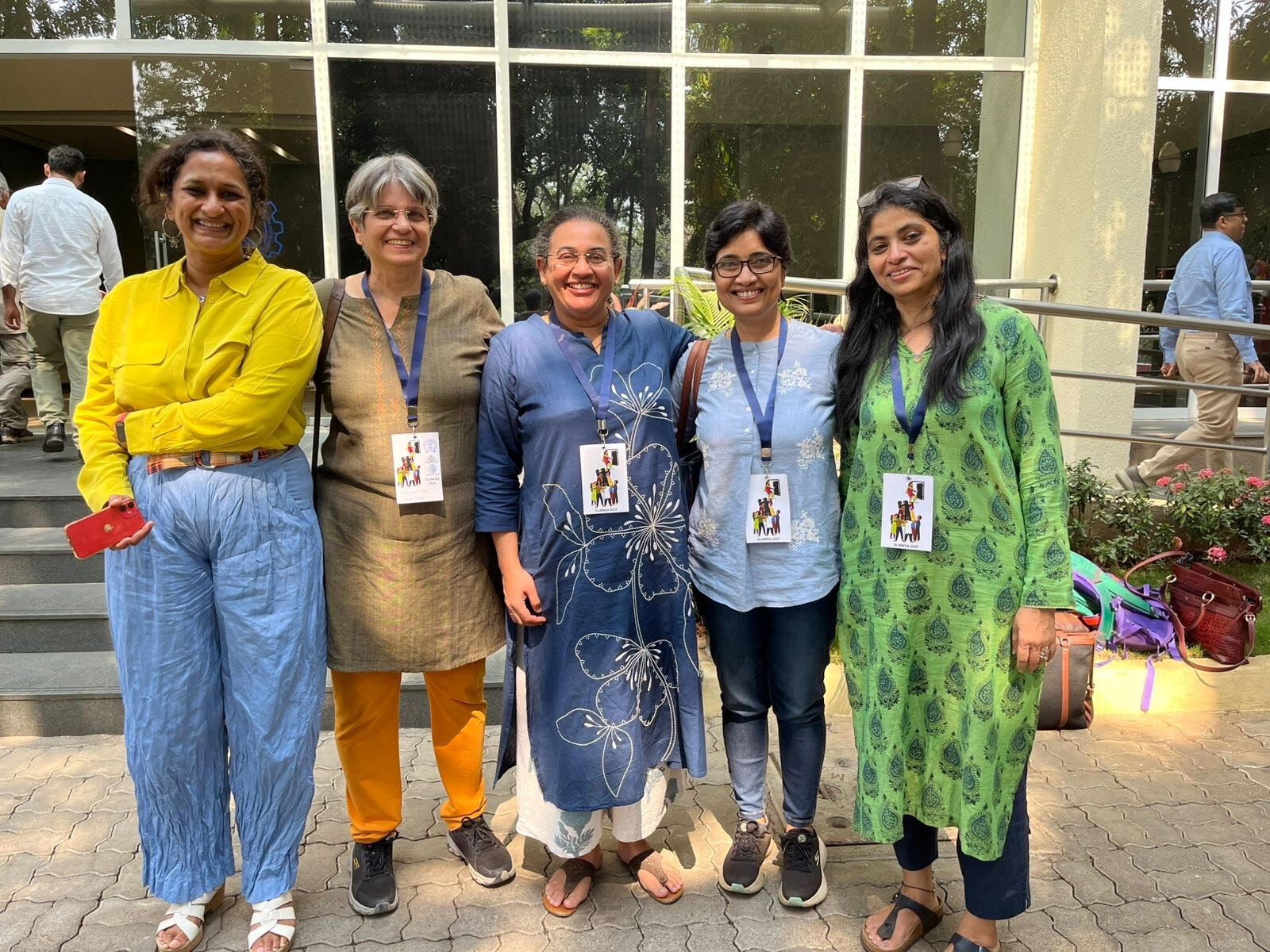
                <p dir="ltr">In this <a href="https://indiabioscience.org/columns/resilience-and-representation-in-research" target="_blank" rel="noreferrer noopener">Resilience and Representation in Research</a> feature, <a href="https://www.curaj.ac.in/faculty/deeksha-tripathi" target="_blank" rel="noreferrer noopener">Deeksha Tripathi’s</a> journey traces the realities of building a scientific career alongside motherhood and institutional constraints. From creating a lab from scratch to navigating systemic gaps, her story underscores resilience, mentorship, and the urgent need for support systems for women in academia.</p>              ]]></summary><id>tag:indiabioscience.org,2026-05-08:/columns/resilience-and-representation-in-research/rrrdk</id><published>2026-05-08T10:00:00+05:30</published><updated>2026-04-20T10:21:47+05:30</updated><author><name>Gayathri Sreedharan</name><uri>https://indiabioscience.org/authors/GayathriSreedharan</uri></author><content type="html"><![CDATA[
                
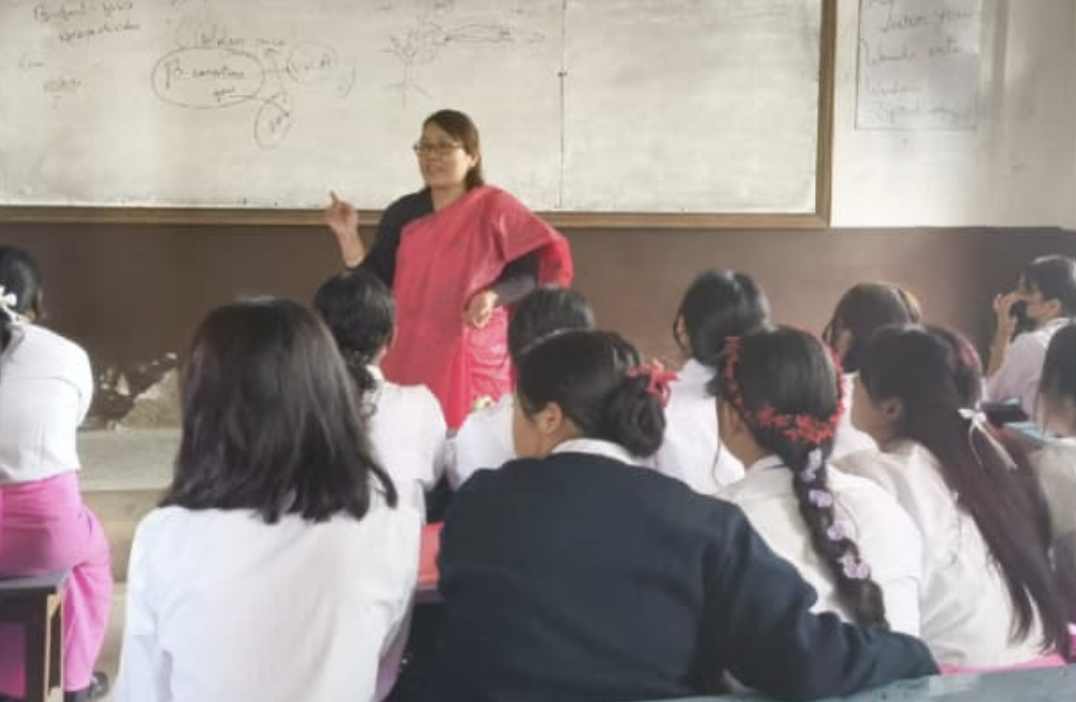
<p>In this <a href="https://indiabioscience.org/columns/resilience-and-representation-in-research" target="_blank" rel="noreferrer noopener">Resilience and Representation in Research</a> feature, <a href="https://www.curaj.ac.in/faculty/deeksha-tripathi" target="_blank" rel="noreferrer noopener">Deeksha Tripathi’s</a> journey traces the realities of building a scientific career alongside motherhood and institutional constraints. From creating a lab from scratch to navigating systemic gaps, her story underscores resilience, mentorship, and the urgent need for support systems for women in academia.</p><figure><a href="https://indiabioscience.org/columns/resilience-and-representation-in-research/rrrdk"><img
                width="1738"
                height="974"
                style="max-width: 100%; height: auto"
                src="https://cdn.indiabioscience.org/media/articles/unnamed_2026-04-19-055700_nerj.png"></a></figure><p dir="ltr">Deeksha grew up in Delhi watching her father Sheo Dutt Tripathi, a professor of history at <a href="https://sbs.du.ac.in/" rel="noopener" target="_blank">Shaheed Bhagat Singh College, Delhi University</a>, build his days around teaching and scholarship. Raised in Saket in South Delhi, Deeksha completed her schooling at New Green Fields. As she reflects on those early days, she feels that what stayed with her was this atmosphere that encouraged ambition and excellence in academics. </p><p dir="ltr">Deeksha’s father, she recalls, was deeply invested in his children’s futures. <em>“He used to stay awake all night, giving time to all of us”,</em> she says. <em>“Even though he had an evening college, he would stay up till four in the morning. </em>Today, two of her siblings live abroad — one in the United States and the other in Dubai. Deeksha is the only one who stayed back in India.</p><p dir="ltr">Her own academic trajectory began in University of Delhi as well. She pursued her bachelor’s degree in microbiology at the <a href="https://ihe.du.ac.in/" rel="noopener" target="_blank">Institute of Home Economics</a>, University of Delhi. From there, she moved to <a href="https://www.du.ac.in/index.php?page=south-campus" rel="noopener" target="_blank">South Campus</a>, University of Delhi for her master’s in microbiology, and later joined <a href="https://www.jnu.ac.in/" rel="noopener" target="_blank">Jawaharlal Nehru University (JNU)</a> for her PhD. Here, she worked with <a href="https://www.jnu.ac.in/Faculty/rakeshbhatnagar/cv.pdf" rel="noopener" target="_blank">Rakesh Bhatnagar</a> on infection biology, focusing on tuberculosis. A portion of her doctoral work was conducted at the <a href="https://www.icgeb.org/" rel="noopener" target="_blank">International Centre for Genetic Engineering and Biotechnology (ICGEB)</a>, where she worked with Nirupama Banerjee for almost two and a half years. </p><p dir="ltr">Deeksha completed her PhD at 27 — an age when many researchers are still settling into the uncertainties of their doctoral work. Like most freshly-minted PhDs, she began applying for postdoctoral positions and soon secured one at the <a href="https://www.upenn.edu/" rel="noopener" target="_blank">University of Pennsylvania</a>. Although this seemed like a straightforward next step, her parents had other expectations, as they wanted her to get married before moving abroad. </p><p dir="ltr">In the interim, Deeksha decided to take up a postdoctoral position in India. She joined <a href="https://home.iitd.ac.in/" rel="noopener" target="_blank">IIT Delhi</a> to work with Padma Shri, <a href="https://beb.iitd.ac.in/hasnain.html" rel="noopener" target="_blank">Seyed Hasnain</a>, whom she describes as one of the pioneers in her field. She spent one and a half years there, strengthening her research base. It was also here that she met Saurabh Pandey, then a PhD student in the lab, who later became her husband. </p><p dir="ltr">After her partner completed his PhD, the couple decided to move to the US, where he had secured a postdoctoral position. In October 2016, Deeksha moved with him on a dependent visa, planning to find a second postdoctoral position there so they could stay in the same city. Soon, she received two postdoctoral opportunities in the US in the same city. But to accept either, she would need to return to India to get her own J1 visa sponsored by these Universities. She flew back and that was when her career took a sudden, unexpected turn.</p><p dir="ltr"><em>“When I turned on my phone on the flight, I saw a job offer from the Central University of Rajasthan”,</em> she recalls. <em>“I had given that interview eight months earlier. But in India, it takes time — stay orders, delays — so I had almost forgotten about it”. </em>This was a permanent academic position in a central university — rare, stable, and highly valued in Indian academia. “<em>For my parents and in-laws it was a huge thing”,</em> she says.</p><p dir="ltr">Though it was the first year of her marriage and her husband was already in the US, both families strongly encouraged her to accept the offer. The logic was pragmatic: even after a postdoc abroad, there was no guarantee that one would land in such a position. After consulting her PhD guide and postdoctoral mentor, Deeksha decided to join the Central University of Rajasthan. She reasoned to herself that a postdoc or research opportunity abroad could always come later, a permanent faculty position may not.</p><p dir="ltr"><strong>A campus far from the city </strong></p><p dir="ltr">The <a href="https://www.curaj.ac.in/" rel="noopener" target="_blank">Central University of Rajasthan</a> was not just a new workplace — it was a new world. Located 80 kilometres from Jaipur and 60 kilometres from Ajmer, the campus sits in a remote stretch of land with Kishangarh, a small town 30 kilometres away, as the nearest urban access point. For someone raised in Delhi, and fresh from Pennsylvania, the transition required a significant adjustment. The isolation was immediate, but the job mattered. It was permanent, and it aligned with a long-standing aspiration — she had always wanted to teach, like her father. At the same time, her personal life was entering a difficult phase. She was newly married, but living alone. The long-distance relationship was further challenged by time zones, leaving them with limited opportunities to connect.</p><p dir="ltr"><em>“I had to start everything from scratch”,</em> she says. “<em>There is one year of probation in central universities. Also, you don’t get much in terms of seed grants or research funding when compared to IITs, IISERs and other research institutions.” </em>Her research ambitions, however, were non-negotiable.<em>“My Vice Chancellor gave us a small amount as a seed grant with which I could purchase a pipette set”, </em>she recalls. <em>“And I remember thinking — what will I even do with this”? </em>The question was not rhetorical. It reflected the reality of many Indian universities where faculty members are hired before research infrastructure is fully built. To do research, the faculty must create the lab ecosystem almost from nothing.</p><p dir="ltr">During her probation period, Deeksha secured a UGC startup grant of ten lakh rupees. She purchased a workstation and began <em>in silico</em> work while waiting for the lab to take shape. </p><p dir="ltr">At the time, she had no family around. She lived in a hostel room, and from the first day was appointed warden because the university had very few women faculty members. <strong><em>“In the whole university, there were very few women, out of 150 faculty members”,</em></strong> she says. “<strong><em>So I was living like a student, but also managing responsibilities. The students were just five or six years younger than me”. </em></strong>Her days were consumed by teaching, grant-writing, administrative duties, and the relentless effort of establishing credibility as a young faculty member in a remote institution. That is how Deeksha’s career began. </p><p dir="ltr"><strong>Motherhood and lab taking shape hand-in-hand </strong></p><p dir="ltr">Two years later, Deeksha’s husband returned to India and joined <a href="https://www.jamiahamdard.ac.in/" rel="noopener" target="_blank">Jamia Hamdard</a> in Delhi as a faculty. The couple wanted to start a family, but living in different cities made the decision complicated and her doctor advised not to delay since she was already 31. </p><blockquote dir="ltr" class="pull-quote"><em>For women in academia, the pressures of career advancement and motherhood do not arrive in sequence. They arrive simultaneously... There is no convenient pause button, and no version of the timeline that does not ask for sacrifice”.</em></blockquote><p dir="ltr">Deeksha was soon able to conceive. </p><p dir="ltr">Around the same time, Deeksha had applied for a women-specific research grant DBT Biocare grant worth fifty-five lakh rupees. She cleared all rounds and attended the interview while seven months pregnant. She got the grant, but the timing was brutal. “<em>The sanction letter came the same day I was starting maternity leave”,</em> she says. <em>“I had to utilise the funds before March, otherwise they would lapse”. </em>She requested a six-month extension, which the funding agency approved. That small administrative decision made all the difference.</p><p dir="ltr">The months that followed were among the most challenging of her life. Her child was born premature and spent two weeks in the NICU. When her maternity leave ended, she returned to the university campus with her three-month-old baby because she had to begin utilising the grant. With no faculty quarters available, she stayed in the guest house. Her father-in-law came to support her, staying with her to help care for the baby. Even basic healthcare access was a struggle. The nearest hospital was 35 kilometres away. <em>“But I managed to utilise the entire grant, set up my lab”,</em> she says.</p><p dir="ltr">Then COVID hit. The pandemic intensified everything — professional uncertainty, personal isolation, and the everyday responsibility of childcare. Her husband could visit only on weekends. <em>“It has been a long-distance marriage throughout”, </em>she says.</p><p dir="ltr">Her child has now started school, but even that comes with logistical strain. She chose not to enrol him in the campus school, which she felt was inadequate in terms of facilities. Instead, her child travels 70 kilometres to and fro every day to attend school in Kishangarh. “<strong><em>I cannot move to Jaipur because I have no support system there”,</em></strong> she says. <strong><em>“I have to stay on campus so I can be available for him”.</em></strong></p><p dir="ltr">This is the quiet, often invisible labour behind many academic careers, especially for women. The research output may be visible, but the personal costs rarely are. </p><p dir="ltr">When her first batch of PhD students joined, something shifted. <strong><em>“They became my strength”,</em></strong> Deeksha shares. </p><blockquote dir="ltr" class="pull-quote"><em>When you are motivated, your students also become motivated—it percolates”. </em></blockquote><p dir="ltr">The lab began producing results. The team worked hard, published papers, and built momentum. But a larger challenge soon emerged. After returning from maternity leave, Deeksha realised that her university lacked a BSL-3 facility which was critical for the kind of research she intended to do. Instead of changing her research direction, she chose to build what did not exist. She along with <a href="https://www.curaj.ac.in/faculty/inshad-ali-khan" rel="noopener" target="_blank">Inshad Ali Khan</a> in her department collaborated with five institutions, applied for a grant, and secured funding worth 9.6 crores. The result was the establishment of an ABSL-3 facility on campus — the only university in the state to have this. It became one of the defining milestones of her career, Deeksha says</p><p dir="ltr">In the early stages of her career, Deeksha says she often felt that she lacked international research exposure. Determined to address this, she applied for the <a href="https://serb.gov.in/page/sire" rel="noopener" target="_blank">SERB-SIRE fellowship</a> and received the opportunity to work at <a href="https://www.ucl.ac.uk/" rel="noopener" target="_blank">University College London (UCL)</a> for six months. The fellowship allowed her to step into neuroscience and expand her research from microbiology into interdisciplinary work involving Alzheimer’s disease and immunology. <strong><em>“That experience gave me exposure to international labs, ethical practices, and new research perspectives”,</em></strong> she says. Her child accompanied her, and her father-in-law joined them to help manage childcare.</p><p dir="ltr"><strong>Mentorship beyond academia</strong></p><p dir="ltr">Deeksha recognises how important mentors can be in shaping one’s path in science and academia. Reflecting on her own journey, she expresses deep gratitude to Rakesh Bhatnagar and Seyed E. Hasnain — both eminent figures in Indian science — whose mentorship has been a constant thread through her career. From navigating the uncertainties of her doctoral work to finding her footing as a young faculty member, their guidance shaped not just her research but her sense of what was possible. She also gratefully acknowledges <a href="https://www.ncbs.res.in/faculty/lsshashidhara" rel="noopener" target="_blank">L.S. Shashidhara</a>, whose guidance at a critical juncture offered her a wider perspective on her scientific journey and left a lasting impression on how she thinks about her work and her role in the larger scientific community.</p><p dir="ltr">Having benefited from such mentorship, Deeksha now thinks about what it means to guide the next generation of scientists, especially women. She shares a common concern shared by many women in science: the “leaky pipeline”. <strong><em>“At the bachelor’s and master’s levels, most students are women”, </em></strong>she says.<strong><em> “But at the faculty level, the numbers drop drastically. In the School of Life Sciences, Central University of Rajasthan of 30 faculty members, only three are women”. </em></strong>For her, the explanation is not complicated. She points to the lack of support systems, especially for women navigating dual-career marriages. Her own decade-long long-distance marriage is not something she presents as a heroic sacrifice, but as an example of what many women are forced to navigate. <strong><em>“Not everyone can sustain that”, </em></strong>she says. She believes institutions must build mechanisms that support dual-career couples, enabling them to work in the same city. Without such systems, women will continue to leave academia at higher rates. She also stresses the importance of financial independence and stage-specific fellowships that can provide stability when careers and caregiving responsibilities overlap.</p><p dir="ltr">Deeksha says she did not find many women role models navigating similar challenges in her early years, and this has guided her own mentoring style. <strong><em>“I try to mentor my students not just academically, but also personally”,</em></strong> she says. <strong><em>“Guiding them on how to manage their careers, make decisions, and stay motivated”. </em></strong>She also believes exposure is crucial, particularly for students from smaller institutions who may never have seen a high-functioning research ecosystem. <em>“Programmes like the SERB-SIRE fellowship help a lot”, </em>she says. <em>“They open up new perspectives and improve confidence”.</em></p><p dir="ltr">One story remains especially close to her. Her first PhD student was from Afghanistan, a mother of three who came to India for her PhD. During COVID, she had to return home — and then the Taliban took over. She was stuck and reached out for help. Deeksha coordinated with her university and managed to bring her back to India. The student completed her PhD and is now doing a postdoc in Germany. <strong><em>“That experience was very meaningful for me”,</em></strong> Deeksha says. “<strong><em>It showed how important support systems and mentorship are. It made me realise that as mentors, we have a responsibility that goes beyond academics”.</em></strong></p><p dir="ltr"><strong>Research focus and future directions</strong></p><p dir="ltr">Today, in <a href="https://www.curaj.ac.in/faculty/deeksha-tripathi" rel="noopener" target="_blank">her lab at the University</a>, Deeksha has carved out a research programme centred around mycobacterial pathogenesis.While maintaining focus on this theme, she has developed distinct research directions addressing stress adaptation mechanisms, enzymatic functions influencing immune modulation, and structure-guided therapeutic targeting in other bacterial pathogens like <em>Bacillus anthracis</em>. </p><p dir="ltr">Deeksha’s team has also worked on <em>Mycobacterium indicus pranii</em> (MIP) as a surrogate tuberculosis model, demonstrating its resilience to stress, antibiotic tolerance, and immunomodulatory potential and characterised various enzymatic activities in mycobacteria as novel drug targets. Under her SIRE grant, she revealed neuroprotective effects of <em>MIP</em> in Alzheimer’s models. With over 25 peer-reviewed publications and sustained grant leadership, her work continues to advance host–pathogen research and therapeutic development. Additionally, she contributes as an editorial board member for prestigious journals such as <a href="https://journals.asm.org/journal/iai" rel="noopener" target="_blank"><em>Infection and Immunity</em></a> and <a href="https://www.nature.com/srep/" rel="noopener" target="_blank"><em>Scientific Reports</em></a>.</p><p>Deeksha hopes to build more collaborations and fully utilise the BSL-3 facility she helped establish. But beyond research, she remains committed to the broader question of representation — particularly the question of why women disappear from the academic pipeline as careers advance. For early-career researchers, her advice is direct. <strong><em>“There will be challenges, both personal and professional”, </em></strong>she says. “<strong><em>But if you stay motivated and keep working, things do fall into place”.</em></strong> She pauses before adding something that reflects the emotional architecture of her journey. <strong><em>“Don’t hesitate to ask for help. Build networks, seek mentorship, and support each other”,</em></strong> she says. <strong><em>“And most importantly, believe in yourself”.</em></strong></p>
              ]]></content><category term="other" label="Other" /><category term="women-in-science" label="Women in Science" /><category term="personal-experience" label="Personal Experience" /><category term="advice" label="Advice" /></entry><entry><title>Resilience and representation in research: In conversation with Manisha Goel</title><link
                  rel="alternate"
                  href="https://indiabioscience.org/columns/resilience-and-representation-in-research/rrrmg"
                  type="text/html"
                  /><summary type="html"><![CDATA[
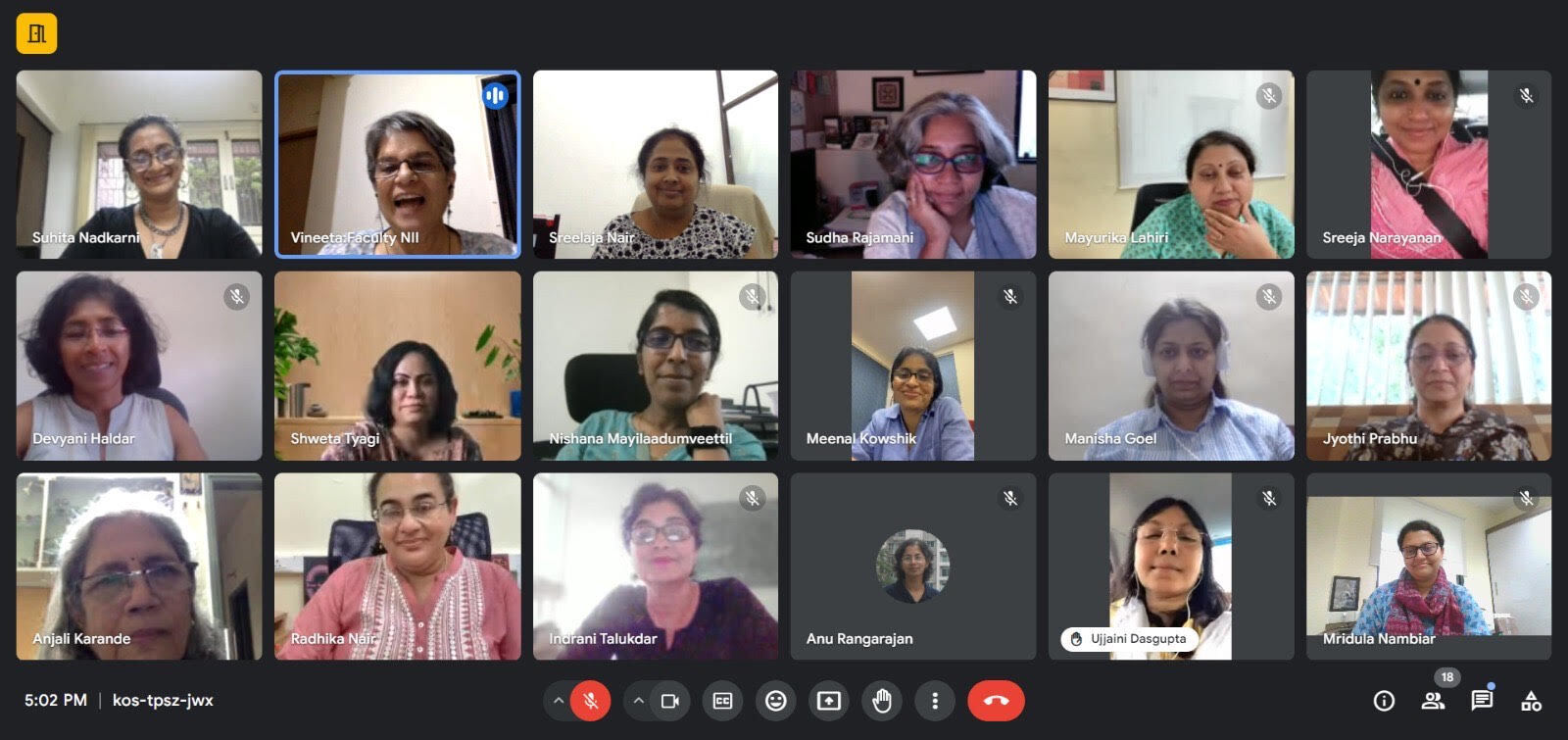
                <p dir="ltr">In this Resilience and Representation in Research interview article, Manisha Goel reframes equity as an investment, not charity. Her journey through bias, career pauses, and motherhood underscores the importance of choice without guilt. By challenging systemic barriers, she highlights how inclusive support and visible role models can reshape scientific spaces for future generations.</p>              ]]></summary><id>tag:indiabioscience.org,2026-04-20:/columns/resilience-and-representation-in-research/rrrmg</id><published>2026-04-20T10:00:00+05:30</published><updated>2026-04-20T10:33:32+05:30</updated><author><name>Gayathri Sreedharan</name><uri>https://indiabioscience.org/authors/GayathriSreedharan</uri></author><content type="html"><![CDATA[
                
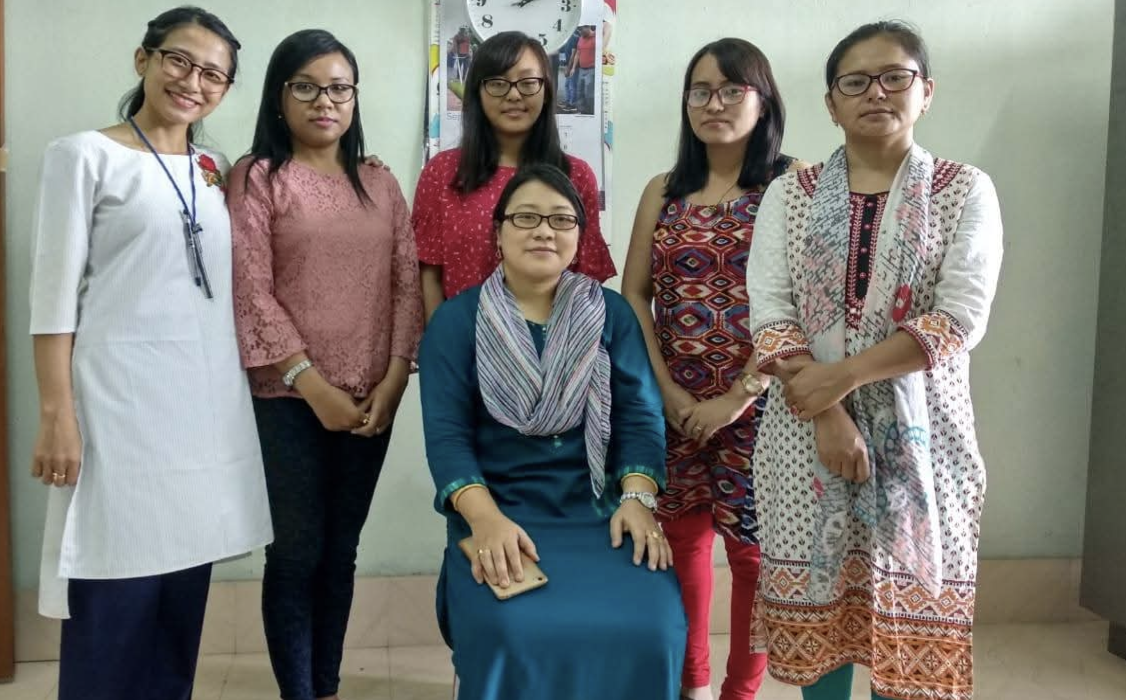
<p>In this <a href="https://indiabioscience.org/columns/resilience-and-representation-in-research" target="_blank" rel="noreferrer noopener">Resilience and Representation in Research</a> interview article, Manisha Goel reframes equity as an investment, not charity. Her journey through bias, career pauses, and motherhood underscores the importance of choice without guilt. By challenging systemic barriers, she highlights how inclusive support and visible role models can reshape scientific spaces for future generations.</p><figure><a href="https://indiabioscience.org/columns/resilience-and-representation-in-research/rrrmg"><img
                width="2048"
                height="1144"
                style="max-width: 100%; height: auto"
                src="https://cdn.indiabioscience.org/media/articles/Screenshot-2026-04-16-at-10.18.21-AM.png"></a></figure><p dir="ltr">For <a href="https://biophysics.du.ac.in/manisha-goel/" rel="noopener" target="_blank">Manisha Goel</a>, equity is neither a slogan nor an indulgence. It is a commitment to inclusivity, ensuring that every individual can contribute meaningfully to society. The pursuit of equity may be mistaken for a demand for concessions, or even practised as charity or just a moral choice. To her, this misses the point entirely. She emphasises that equity is not charity; it is an investment, one that enables more people to participate fully and contribute positively to both society and its systems.</p><p dir="ltr">The reality that women may need support systems in their professional lives to navigate societal expectations does not diminish their scientific calibre. It simply reflects practical necessity. Creating such support systems is not preferential treatment; it is a rational step toward unlocking potential. What we need, she believes, is a fundamental shift in perspective, a willingness to “flip that switch” in our minds.</p><p dir="ltr">Over the course of her journey, from a biotechnology student in Dehradun to a structural biologist and bioinformatician leading a department at the University of Delhi’s (DU) South Campus, Manisha’s story is defined by her choices: some naïve, some stubborn, some slowed by doubt, but all guided by the belief that the freedom to choose without guilt or judgment is the true yardstick of equity.</p><p dir="ltr"><strong>Finding structural biology</strong></p><p dir="ltr">Owing to her father’s transferable job, Manisha’s schooling spanned multiple towns, before settling in Dehradun. She completed her undergraduate degree at <a href="https://www.hnbgu.ac.in/home" rel="noopener" target="_blank">Hemavathi Nandan Bahuguna Garhwal University</a> and went on to pursue a Master’s in Biotechnology at the <a href="https://www.iitr.ac.in/" rel="noopener" target="_blank">Indian Institute of Technology (IIT) Roorkee</a>, where she graduated as a gold medallist.</p><p dir="ltr">She went on to do a PhD in structural biology at the <a href="https://www.nii.res.in/" rel="noopener" target="_blank">BRIC-National Institute of Immunology (NII)</a>, New Delhi. She attributes her initial interest in the subject to classes with Ritu Barthwal during her Master’s, which led to an instinctive connection to the subject. </p><p dir="ltr">At NII, she was trained as a crystallographer with Dinakar M Salunke. She describes NII as a special academic place where she was offered not only equal opportunities, but also held to equally high expectations. It gave her a sense of a level playing field and an adrenaline rush. The training was rigorous yet motivating, allowing her to test her capabilities and grow in confidence about pursuing scientific research. </p><p dir="ltr">Later, during her postdoctoral years at the <a href="https://www.stowers.org/" rel="noopener" target="_blank">Stowers Institute for Medical Research</a> in Kansas City, she transitioned into structural bioinformatics in the lab of Arcady Mushegian. In the early 2000s, bioinformatics had yet to acquire a clear identity. <em>“It wasn’t taught; we learned hands-on”</em>, she recalls. <em>“Some people were still sceptical of its utility, while others were beginning to explore its promise. Our generation helped shape its syllabus”.</em> The genomics boom opened new possibilities, and her early entry into the field gave her a distinct advantage. Her hybrid interdisciplinary expertise proved to be a valuable asset during her hiring at the University of Delhi.</p><p dir="ltr"><strong>The myth of neutral systems</strong></p><p dir="ltr">As a young student, with supportive and encouraging parents, Manisha did not imagine that gender would significantly influence her professional trajectory. <em>“I was probably naive”,</em> she says. <em>“I had expected commitment, hard work, and productivity to be the key attributes shaping professional success”.</em></p><p dir="ltr">Two early incidents, however, led her to redefine her assumptions. </p><p dir="ltr">While seeking help for securing an internship, she was told that the boys needed to be accommodated first, because they “needed it more”. On another occasion, a well-meaning professor advised her to pursue molecular biology in PhD instead of structural biology. Structural biology, he suggested, was too specialised and could be challenging as a woman whose career may be constrained by family responsibilities.</p><p dir="ltr">Her younger self did neither engage with or challenge the advice, rather chose to continue down the path she felt was right for her. It was only later that she understood the deeper impact of such encounters. These incidents revealed how biases often operate subtly — not through overt hostility, but through assumptions framed as practicality.</p><p dir="ltr"><strong><em>“Biases are often deep-rooted”,</em></strong> she reflects. <strong><em>“People may carry their best intentions to be fair, and yet be influenced by implicit biases”.</em></strong> Such biases represent the invisible fault lines of inequity—assumptions so normalised that they often go unquestioned.</p><p dir="ltr"><strong>A department in formation</strong></p><p dir="ltr">In 2010, Manisha joined the <a href="https://www.du.ac.in/index.php?page=department-of-biophysics" rel="noopener" target="_blank">Department of Biophysics at DU’s South Campus</a> as an Assistant Professor. The department was in its formative stages, with only two faculty members initially, and another joining a few months later. Together, they built a Master’s programme in biophysics, launched in 2020, and steadily strengthened the department’s research profile.</p><p dir="ltr">The institutional culture in South Campus, she notes, respects scientific and academic calibre. The direct hiring system meant faculty positions were permanent, fostering research stability. Until then, her singular focus had been her own career, but as a teacher and mentor, Manisha became more aware of the “leaky pipeline” pattern. While many Master’s and PhD students in biology are women, only a few continue to postdoctoral positions or pursue long-term academic research careers. Some step away after Master’s; and many even after successful PhDs. Academic Research is, as she puts it, “a long road” and she often sees women give up in “fatigue” - that comes from fighting the system, and, often their own families' and society’s expectations. </p><p dir="ltr"><strong>Pause, not an exit</strong></p><p dir="ltr">The early years of Manisha’s career were defined by expansion into new scientific territory, but soon, her career was punctuated by an unexpected pause.</p><p dir="ltr">After her marriage, Manisha relocated briefly to the US, where she found a suitable postdoctoral position. She thought she was prepared “mentally” for the challenges that motherhood would bring in creating a new work-life balance, but life has a way of showing you that you could never be prepared enough. She conceived twins and the doctor’s evaluation marked it as a “high-risk pregnancy”. Even as she was in the midst of winding up her work before proceeding to her “expected/planned” maternity leave, she developed complications, forcing her to be confined to bed rest. Her twin children were born prematurely at seven months. One was critically ill and both the infants spent nearly two months in the neonatal intensive care unit. Given the circumstances, she was certain that it would be impossible to go back to work in the near future. She informed her postdoctoral adviser that she would need to resign. His response remains etched in her memory. There was no expression of disappointment, only understanding.</p><p dir="ltr">For the next one year, Manisha devoted herself to caregiving. The following year she returned to India without a fellowship or re-entry grant, a move many colleagues advised against. But this was not a calculated career decision; it was, she says, simply what she needed to do. <em>“The only thing I was sure about was that I would go back to work when I was ready”</em><em>,</em> she recalls. Whether the path ahead was going to be academic or industry did not matter, <strong>“</strong><strong><em>I was as flexible about the kind of career I would pursue as I was determined to treat this as a break, not as an ending”</em></strong><strong>, </strong>she mentions. </p><p dir="ltr">Meanwhile, it was her postdoc adviser who spotted an advertisement for faculty positions at DU and forwarded it to her. Such small gestures from a mentor can make a tremendous difference. She applied, and acknowledges with appreciation that the break in her career wasn’t held against her. While the career gap was discussed in the interview, the final question from the chairperson, Deepak Pental,<em> "whether everything was in place and if she was ready to be back”</em>, put an end to any further speculation, gently and firmly. She had hoped that her eager and resolute “<em>yes</em>” had carried the decision in her favour. Reflecting on the process, she says, <em>“The interview itself offered me a glimpse of the kind of positive leadership at my future workplace. It reassured me that this would be a good place to build a career”</em>. It took her about a month to reorganise her living situation, before she joined the position offered, which would anchor the next phase of her career. </p><p dir="ltr">Here, she set up a lab that is an amalgamation of bioinformatics and structural biology, probing protein folding systems and “proteastasis” in cellular systems, hoping to contribute to the yet unresolved “protein folding problems” while also designing possible interventions for “protein misfolding” diseases. </p><p dir="ltr"><strong>Ambition and noise</strong></p><p dir="ltr">While her return was largely celebrated, it was frequently accompanied by cautionary remarks about the difficulty of balancing research and family, especially with young twins. In retrospect, she recognises that such narratives subtly influenced her choices. She found herself holding back instead of fully engaging with her potential. This phase, however, was temporary. Support from mentors, colleagues, and role models helped her regain her footing. This experience leads her to emphasise the importance of visible role models.</p><p dir="ltr">Motherhood, she reflects, does open a new “tab” in your brain, one that runs parallel to everything else you do. Initiality, it felt like “conflict” - a constant battle for her time and energy between work and childcare, until she learnt to let the two co-exist without guilt. Instead of drawing rigid lines between home and work, Manisha now believes in allowing them to intersect. She shares her work life experiences with her children, making them part of her professional journey. This balance is now grounded in the belief that “My children, too, deserve a chance to be proud of my professional achievements, as much as I look forward to being of theirs”. <strong><em>“But, of course, there were trade-offs”</em></strong><strong>, </strong>she acknowledges, including fewer travels and conferences, <strong><em>“but there are no regrets”</em></strong><strong>.</strong> The key learning, she says, is that decisions should come from clarity, not external noise.</p><p dir="ltr"><strong>Rethinking equity: The freedom to choose</strong></p><p dir="ltr">In the long time she has been in academics and scientific research - watching friends, former classmates and colleagues, and her own students make these decisions in their individual lives, she has come to respect every version of courage, the courage to persist, and the courage to step away. </p><blockquote dir="ltr" class="pull-quote">For her, equity now has a newer meaning: <strong><em>“being able to reach that decision without fear of judgment”</em></strong><strong>.</strong></blockquote><p dir="ltr">Organisations such as <a href="https://powerbio.in/" rel="noopener" target="_blank">POWERBio</a>, she believes, could play an important role in sustaining dialogue for creating awareness - the first step towards mending the fault lines of bias. She joined POWERBio in the hope that interactions with like-minded women would refine her line of thinking and strengthen conversations around equity, enabling her to encourage people to reflect on the status-quo and be more willing to address their unapparent biases. </p><p dir="ltr">Within her own sphere, she focuses on a quieter intervention: bringing families into the conversation. She emphasises that many women treat their work as a “black box” at home - not only do their struggles remain invisible, but their achievements also often go undiscussed. Manisha encourages her students to share their journey with parents, spouses, siblings - to explain what it means to publish a paper, to articulate why their work matters to them and to the world. When families understand the self-worth tied to these achievements, she believes they are less likely to ask women to forgo them lightly. She respects students who choose to take a break, as much as she does those who continue, fully aware of how difficult that decision can be. The goal is not uniform persistence, but informed autonomy. Whether continuing, pausing, or stepping away, women should not feel embarrassed or guilty for making those choices. </p><p dir="ltr">As a professor, head of a department, lab leader, and a mother, Manisha sees equity as a system, with both the infrastructure and the mindset, that enables individuals to contribute fully, without friction or guilt. Her journey is an example of what that might look like: biases encountered, yet failed to limit her; a career paused but not extinguished; ambition dampened briefly but ultimately reclaimed; all pursued without guilt or the need to sacrifice.<br></p>
              ]]></content><category term="other" label="Other" /><category term="women-in-science" label="Women in Science" /><category term="personal-experience" label="Personal Experience" /><category term="advice" label="Advice" /></entry><entry><title>Resilience and representation in research: In conversation with Anjali Karande</title><link
                  rel="alternate"
                  href="https://indiabioscience.org/columns/resilience-and-representation-in-research/rrraj"
                  type="text/html"
                  /><summary type="html"><![CDATA[
                <p dir="ltr">When <a href="http://www.chg.res.in/www.chg.res.in/AnjaliAnoopKarande.html" target="_blank" rel="noreferrer noopener">Anjali Karande</a> reflects on her career in science, what surprises her most is not how far she has come, but how unhurried the journey has felt. Nearly five decades in academia — spanning continents, institutions, and generations of students — unrolled without what she calls “rushing behind awards or accolades”. Instead, her compass was directed towards values that mattered to her deeply: contentment in teaching, joy in discussing science, and the belief that this satisfaction is essential to do good science. <br /></p>              ]]></summary><id>tag:indiabioscience.org,2026-03-09:/columns/resilience-and-representation-in-research/rrraj</id><published>2026-03-09T10:00:00+05:30</published><updated>2026-02-23T12:06:53+05:30</updated><author><name>Gayathri Sreedharan</name><uri>https://indiabioscience.org/authors/GayathriSreedharan</uri></author><content type="html"><![CDATA[
                
<p>When <a href="http://www.chg.res.in/www.chg.res.in/AnjaliAnoopKarande.html" target="_blank" rel="noreferrer noopener">Anjali Karande</a> reflects on her career in science, what surprises her most is not how far she has come, but how unhurried the journey has felt. Nearly five decades in academia — spanning continents, institutions, and generations of students — unrolled without what she calls “rushing behind awards or accolades”. Instead, her compass was directed towards values that mattered to her deeply: contentment in teaching, joy in discussing science, and the belief that this satisfaction is essential to do good science. </p><figure><a href="https://indiabioscience.org/columns/resilience-and-representation-in-research/rrraj"><img
                width="1920"
                height="1080"
                style="max-width: 100%; height: auto"
                src="https://cdn.indiabioscience.org/media/articles/RRR_AJ.png"></a></figure><p dir="ltr">Anjali completed her Master’s in Zoology at <a href="https://nagpuruniversity.ac.in/" rel="noopener" target="_blank">Nagpur University</a> in 1973 and moved to Mumbai soon after for her PhD at the Cancer Research Institute (CRI), now known as <a href="https://actrec.gov.in/home" rel="noopener" target="_blank">ACTREC</a>. A postdoctoral stint in tumour biology took her to <a href="https://ki.se/en" rel="noopener" target="_blank">The Karolinska Institutet</a>, Stockholm, Sweden, for two years, offering her valuable international exposure at a young age. Yet, despite the opportunities abroad, she chose to return to India. </p><p dir="ltr">After brief stints at ACTREC and the <a href="https://kmio.karnataka.gov.in/en" rel="noopener" target="_blank">Kidwai Memorial Cancer Institute in Bengaluru</a>, Anjali joined the <a href="https://iisc.ac.in/" rel="noopener" target="_blank">Indian Institute of Science</a> (IISc) in 1983. She became a faculty member in 1987 and retired in 2018 as a professor. Retirement, however, did not put a full stop to her career. She continues to mentor students as an adjunct professor and currently serves as Dean at the <a href="http://www.chg.res.in/www.chg.res.in/index.html" rel="noopener" target="_blank">Centre for Human Genetics</a> in Bengaluru. <em>“I hope to continue till I can speak and teach”,</em> she says simply.</p><p dir="ltr"><strong>Choosing both science and family</strong></p><p dir="ltr">Anjali married in 1975, a choice she states was entirely her own. At 24, when she left for Stockholm, she also made what she describes as one of the hardest decisions of her life: leaving behind her young family which included her first child. Though she had a strong support system that encouraged her to go, the separation weighed heavily on her and eventually played a role in her decision to return to India. Five years later, she had her second child.</p><p dir="ltr">Her parents later moved to Bengaluru after her father’s retirement, helping raise her children. Two years into this arrangement, her mother was diagnosed with cancer and passed away, a loss that reshaped her personal life. Her father stayed on, becoming her central support system during those years. Looking back, Anjali reflects, “<em>I hardly had any struggle and easily went on with my life. This was also probably a result of me never being highly ambitious. I was very content with having my students and discussing science”.</em></p><p dir="ltr">Her husband, she adds, was an equal partner. He was self-sufficient, deeply involved in parenting, and was a patient cheerleader of her career. Raised by a doctor mother himself, he understood the importance of shared responsibility. That model of mutual respect, she believes, shaped her sons’ understanding of relationships and partnership.</p><p dir="ltr"><strong>Institutions and their uneven evolution</strong></p><p dir="ltr">During the course of her career, Anjali witnessed significant changes in the scientific ecosystem in India — better infrastructure, more governmental funding, and greater institutional support. Yet, the experience of women across institutions varied widely. At ACTREC, she recalls, women scientists were as numerous as men, and gender discrimination was not apparent. IISc, however, presented a different picture.</p><p dir="ltr">In the Department of Biochemistry, women faculty were initially two among ten or twelve men, eventually increasing to only four. Other departments fared worse. Chemistry, for instance, had no women faculty for years. <em><strong>“</strong>Back then, we wondered whether this was a regional difference or something else”,</em> Anjali recalls. Even within the Dept. of Biological Sciences, gender imbalance was more pronounced at the faculty level than among students.</p><p dir="ltr">Recruitment practices, she notes, often worked subtly against women. While there existed unwritten rules to favour women candidates when qualifications were equal, these were frequently ignored. The justification was familiar: doubts about women’s commitment due to childbirth or caregiving. Over time, some of these practices evolved at IISc, shares Anjali. Publication criteria began factoring in career breaks for pregnancy and childbirth. Anjali sees these as important, even though belated, amends. <strong><em>“Such measures”,</em></strong> she says, <em>“will accelerate the growth of women recruitment”.</em></p><p dir="ltr"><strong>Learning what not to do</strong></p><p dir="ltr">Interestingly, Anjali does not recall having formal mentors. Instead, her approach to mentorship was shaped by observing behaviours she chose not to replicate. Early in her career, Anjali observed that senior faculty were inclined to guard knowledge as personal capital, unwilling to share protocols or reagents with colleagues/students from the discipline. She rejected this model outright. <em>“If I agree to help or teach, no matter who, I have to give one hundred percent. Otherwise, I should not”.</em> Though conditions are much better now, Anjali believes that sharing resources is not just a kind gesture, it is essential to keep the scientific community going. </p><p dir="ltr">Her philosophy extended to student relationships. “<em>You’ve got to be friends with your students”,</em> she says. <em>“You cannot be a schoolmaster”. </em>Trust, transparency, and mutual respect, she believes, are essential when working closely.</p><p dir="ltr">If she had a role model, Anjali says, it was her mother — a postgraduate in political science who instilled independence in her daughters and encouraged them to make their own choices. One conversation with her mother in particular proved pivotal for Anjali’s career. While working at IISc in a temporary position, she received an offer for a permanent assistant professorship at another institute. Torn between security and intellectual fulfilment, she turned to her mother for advice, who asked her a simple question: </p><blockquote dir="ltr" class="pull-quote"><em>Where will you be happy? If you’re happy, you’ll do well,</em><em>if you're happy, your family will do well. So you need to be where you listen to your head and your heart, don't think about the financial aspect</em><em>”</em>. </blockquote><p dir="ltr">her mother told her. Anjali stayed at IISc, a decision she believes shaped her career.</p><p dir="ltr"><strong>Bias, spoken and unspoken</strong></p><p dir="ltr">Despite overall progress, Anjali is aware of the persistent biases in academia. While this does not apply to excellent candidates, borderline male candidates, she observes, are still more readily accepted than borderline female candidates. Serving on recruitment committees, she made it a point to speak up for women. Beyond professional mentoring, she often found herself advising young women on navigating life — childcare, time, and guilt. <em>“Even if half your salary goes into a good crèche, it’s worth it, because you will be able to work better”. </em>she would tell them. Today she admits to seeing encouraging signs of change – like a male colleague who openly asked for a half-day leave to take care of a sick child. </p><p dir="ltr">Having entered academia at a young age, Anjali did not begin her career with a heightened awareness of gendered inequities. One incident, however, stands out as particularly painful, but it made her aware of how biases shape women’s experiences in academia. Early in her career, she was encouraged by a senior professor to apply for a faculty position. Though she performed well, the position went to a male colleague. When she questioned the decision, she was told, <em><strong>“</strong>Your salary is cheese and jam; his salary is bread and butter”.</em> The implication that her income was dispensable because she was married left her shaken. The experience sharpened her awareness of an unspoken, often unacknowledged truth within academic systems: when decisions have to be made, men and sometimes women tend to instinctively lean towards supporting a man for positions of responsibility. It is not always a conscious choice, she recognises. Most of us move through these systems unaware of the blinders that society has placed on us, mistaking familiarity for merit. She recalls being deeply upset, though later somewhat vindicated when the selected candidate himself acknowledged that she had been the stronger applicant. The incident, she says, taught her to always be prepared, to never hold back, and to give her best regardless of the outcome.</p><p dir="ltr">For Anjali, the solution to gender inequity lies not only in mentoring women but in sensitising men. Many forms of discrimination, she argues, are unconscious. She recalls organising a symposium where speaker selection appeared balanced until she and another female colleague pointed out that only they [women] had suggested female speakers. The men had not even noticed their bias. She describes this as a “male club” or informal networks formed through casual conversations, coffee breaks, and shared time, from which women often exclude themselves due to domestic responsibilities. Over time, these networks translate into visibility and opportunity. <em>“Perhaps they are not doing it consciously”,</em> she says. <em>“That’s why discussion and awareness matter”.</em></p><p dir="ltr">Academia may be populated by intellectuals committed to inquiry and scientific progress, yet it often mirrors the social hierarchies and biases it exists within. This is why groups like Power Bio exist today and Anjali underscores the need for such platforms to mentor men by sensitising them to the unspoken biases within academia. In a <a href="https://powerbio.in/event-1.php" rel="noopener" target="_blank">POWERBio meeting</a> that happened at <a href="https://www.iitb.ac.in/" rel="noopener" target="_blank">IIT Bombay</a> last year, Anjali says that she was happy to see a few male colleagues participate in discussions. These participants pointed out that when women are sole representatives in male-dominated committees, it can be challenging to speak up – especially if they are early/mid-career researchers. They emphasised the responsibility of male colleagues to be attentive to this imbalance and to create space for these voices through encouragement and open discussion. Anjali strongly believes that these conversations should move beyond gender and that is probably the only way that platforms like Power Bio will stay relevant and sustainable. Change, she insists, must be conversational rather than confrontational. </p><blockquote dir="ltr" class="pull-quote"><em>You cannot make your point with aggression”, </em></blockquote><p dir="ltr">Anjali says. </p><p dir="ltr"><strong>Building lasting structures</strong></p><p dir="ltr">One of Anjali’s most tangible contributions was helping establish a better day-care facility at IISc. Triggered by an administrative staff member’s struggle to find quality childcare, she and her colleagues pushed for change despite resistance. It took over a year, but the new crèche, now operational since 2015, serves faculty, students, postdocs, and staff. <em>“That’s my contribution to women and motherhood”,</em> she says with quiet pride.</p><p>Starting her academic career at 26, Anjali sometimes wonders if being so young made things harder — or easier. <em>“I was very malleable”,</em> she reflects. <em>“Maybe that helped”.</em> What remains constant is her belief in listening — to science, to one’s instincts, and to the people around her. Academia may be filled with intellectuals striving to change the world, but it remains a mirror of society and its biases. Progress is on-going, but incomplete. The way forward, she believes, lies in empathy, reflection, and collective responsibility, not just among women, but across the system. As a scientist, mentor, and human being, Anjali continues to shape futures quietly, one conversation at a time.</p>
              ]]></content><category term="other" label="Other" /><category term="women-in-science" label="Women in Science" /><category term="personal-experience" label="Personal Experience" /><category term="advice" label="Advice" /></entry><entry><title>Resilience and representation in research: In conversation with Vidhya Venugopal</title><link
                  rel="alternate"
                  href="https://indiabioscience.org/columns/resilience-and-representation-in-research/rrrvv"
                  type="text/html"
                  /><summary type="html"><![CDATA[
                <p dir="ltr">For many scientists, career trajectories are imagined as a steady progression of predictable milestones, with clearly demarcated roles. <a href="https://www.srmc-ehe.org.in/facultys/81" target="_blank" rel="noreferrer noopener">Vidhya Venugopal</a>’s journey, however, unfolds differently. From early academic detours to leadership roles in global health research, Vidhya’s story shows us what it means to build a meaningful research career while navigating structural constraints, caregiving responsibilities, and persistent gendered perceptions in academia.</p>              ]]></summary><id>tag:indiabioscience.org,2026-02-23:/columns/resilience-and-representation-in-research/rrrvv</id><published>2026-02-23T10:00:00+05:30</published><updated>2026-02-18T16:46:22+05:30</updated><author><name>Gayathri Sreedharan</name><uri>https://indiabioscience.org/authors/GayathriSreedharan</uri></author><content type="html"><![CDATA[
                
<p>For many scientists, career trajectories are imagined as a steady progression of predictable milestones, with clearly demarcated roles. <a href="https://www.srmc-ehe.org.in/facultys/81" target="_blank" rel="noreferrer noopener">Vidhya Venugopal</a>’s journey, however, unfolds differently. From early academic detours to leadership roles in global health research, Vidhya’s story shows us what it means to build a meaningful research career while navigating structural constraints, caregiving responsibilities, and persistent gendered perceptions in academia.</p><figure><a href="https://indiabioscience.org/columns/resilience-and-representation-in-research/rrrvv"><img
                width="1920"
                height="1080"
                style="max-width: 100%; height: auto"
                src="https://cdn.indiabioscience.org/media/articles/RRR_VV.jpg"></a></figure><p dir="ltr"><strong>An early detour that shaped direction</strong></p><p dir="ltr">Vidhya completed her schooling at a government-funded school in Chennai in 1986, with aspirations of becoming a medical doctor. Missing a government medical seat by a narrow margin led her to pursue a bachelor’s degree in chemistry, which she went on to complete in 1989. During this period, environmental chemistry captured her interest as she saw it as an interdisciplinary space that brought together physics, chemistry, and biology. Despite intense competition, she secured one of only seven available seats (from over 400 applicants) for a Master’s programme in Environmental Chemistry at the <a href="https://www.unom.ac.in/" rel="noopener" target="_blank">University of Madras</a>, eventually graduating with first rank.</p><p dir="ltr">Following her Master’s degree, Vidhya began her career as a lab chemist at <a href="http://www.rnc72.com/" rel="noopener" target="_blank">Richardson and Cruddas</a>, but within six months moved to <a href="https://www.neeri.res.in/" rel="noopener" target="_blank">CSIR- National Environmental Engineering Research Institute (NEERI)</a>, Nagpur. Relocating from Chennai to Nagpur felt daunting at the time, yet encouragement from P Khanna, then Director of CSIR-NEERI, proved pivotal. Although unsure about her interview performance, she remembers the panel chaired by Khanna as supportive. Soon after, she received an offer letter and moved to Nagpur, where she worked for three years before joining the Chennai Zonal Office after her marriage.</p><p dir="ltr">It was Khanna who encouraged her to apply for a CSIR fellowship and register for a PhD. With this support, Vidhya completed her doctoral work at CSIR-NEERI, followed by postdoctoral research at the <a href="https://www.uq.edu.au/" rel="noopener" target="_blank">University of Queensland</a>, Australia. In 2000, she was awarded the British Chevening Scholarship, enabling her to work in the UK. She later returned to India for a postdoctoral position with <a href="https://sriramachandra.edu/sriher-research/about/office-of-dean-research/" rel="noopener" target="_blank">Kalpana Balakrishnan</a> at the <a href="https://sriramachandra.edu/" rel="noopener" target="_blank">Sri Ramachandra Institute for Higher Education and Research (SRIHER)</a> in Chennai.</p><p dir="ltr"><strong>Industry experience and a return to academia</strong></p><p dir="ltr">Vidhya’s career took another turn when she immigrated to Canada to join Johnson & Johnson as a Stability Coordinator, a role she held until 2009. During this period, she developed a strong interest in health and safety, complemented by her voluntary work with <a href="https://sja.ca/en?srsltid=AfmBOooth_dMJ05EzYO_UpZmuXSlJDlQ9m1Mnc3KZ6zAjiPfHIALb_lV" rel="noopener" target="_blank">St. John’s Ambulance Canada</a>. Serving on and later chairing the health and safety committee, she gained hands-on experience in industrial hygiene alongside her core responsibilities.</p><p dir="ltr">Family reasons eventually brought her back to India, and she was offered a professorship by SRIHER, recognising the value of her industry experience. <em>“In 2009, the offer was lucrative considering the balance between work and family,”</em> she reflects. <em>“However, I went for research and continue to engage in a competitive rat race. So I’m still running the race now. </em><em>There was a choice not to do research, but only teach. Academic teaching alongside research is what I choose because of my passion for improving workers' workplace conditions</em><em>”.</em></p><p dir="ltr">At SRIHER, Vidhya began teaching occupational and environmental health to Master’s students in Public Health. She recalls an experience from this period that would later shape her foray into industrial hygiene. “<em>Once, there was a course on industrial hygiene which showed me the stark but preposterous difference in the kind of protections used in India compared to Canada and other developed nations. That pushed me to become a certified industrial hygienist, and I started consulting with the industry through the university”.</em></p><p dir="ltr">This period also revealed an unexpected passion for teaching. <em>“I was glad that I could impart learnings from the industry side as well”,</em> she says, describing how this dual engagement with practice and pedagogy aligned naturally with her interest in public health.</p><p dir="ltr"><strong>Mentorship and building research capacity</strong></p><p dir="ltr">In 2010, Kalpana introduced Vidhya to <a href="https://www.researchgate.net/profile/Tord-Kjellstrom" rel="noopener" target="_blank">Tord Kjellstrom</a>, an international expert in heat stress and occupational health. Although she had no prior background in heat-stress research, his mentorship guided her initial work consolidating data on heat stress in the automotive manufacturing sector. Eight months later, she was invited to attend a course on climate change and health at <a href="https://www.umu.se/en/" rel="noopener" target="_blank">Umeå University</a>, Sweden. Supported by Kalpana and partially funded by Umeå University and Kjellstrom, Vidhya joined an international cohort at the University. </p><p dir="ltr">Towards the end of the course, Vidhya had the opportunity to lead a project to design a questionnaire to assess occupational heat exposure. This work later evolved into the <a href="https://pmc.ncbi.nlm.nih.gov/articles/PMC2799255/" rel="noopener" target="_blank">HOTHAPS (Hot Occupational Temperatures and Work on Productivity Suppression)</a> questionnaire. In 2012, Kjellstrom invited her to serve as Co–Principal Investigator on a funded project from India. <em>“His trust was valuable not just in bringing me my first project but also in the establishment of the Centre of Excellence - National Institute of Health Care Research Centre. As an homage to the one I consider my Guru in heat research, I have dedicated a conference room in his name in the Centre”</em>, she reflects, acknowledging the long-term impact of Kjellstrom’s mentorship on her journey.</p><p dir="ltr"><strong>Navigating systems, leadership, caregiving, and drawing boundaries</strong></p><p dir="ltr">Vidhya believes her professorship was rooted in her extensive industry experience. She is currently the Country Director for the <a href="https://ghrcentre-ncdec.nihr.ac.uk/about/" rel="noopener" target="_blank">NIHR Global Health Research Centre for Non-Communicable Diseases and Environmental Change</a> (NIHR–GHRC NCD-EC) SRIHER, India, leading efforts to improve the health of marginalised populations, alongside Indonesia and Bangladesh. The centre hosted by the <a href="https://www.georgeinstitute.org/" rel="noopener" target="_blank">George Institute of Global Health</a> is one of five global health centres under this NIHR initiative. Although the position is funded by <a href="https://www.nihr.ac.uk/research-funding/global-health/funding-programmes/global-health-research-centres" rel="noopener" target="_blank">NIHR UK</a>, she credits the university for its consistent institutional and infrastructural support.</p><p dir="ltr">Balancing teaching, research, limited staffing, and funding pressures has shaped her leadership philosophy. </p><blockquote dir="ltr" class="pull-quote"><em>This balancing act taught me to prioritise quality over quantity</em>”, </blockquote><p dir="ltr">she explains. </p><p dir="ltr"><em>“</em><em>Hence, in my latest project, I have paid from the project fund to be able to release 75% of my time from the university, and so the university does not pay me my salary anymore, which offers me more time for research”</em>, Vidhya says. <em>“To manage the remaining workload, especially in my absence, I hire and train post-docs/scientists, who are my vital pillars of support.</em></p><p dir="ltr">Married during her PhD, Vidhya practiced early on to approach research as a structured job. In Canada, she worked part-time for 1.5 years after becoming a mother, coordinating schedules with her partner so their daughter spent limited hours in day-care. Returning to Chennai with her daughter while her partner remained in Canada required careful planning and reliance on extended family support.</p><p dir="ltr">There were moments when asserting boundaries became necessary. <strong><em>“I had to hear, ‘research is twenty-four hours; scientists are twenty-four hours,”</em></strong> she recalls after leaving a meeting early to pick up her child. Over time, she learnt to express boundaries through consistent actions rather than confrontation. <strong><em>“Sometimes passive assertion is more effective in grey areas at work,”</em></strong> she notes, even if it led to labels such as “rigid” or “inflexible, qualities she observes are often perceived differently in men.</p><blockquote dir="ltr" class="pull-quote"><em>I would not regret a career setback if it resulted from actions aligning with my values,</em><em>as I think job titles are meaningless without job satisfaction and the ability to care for the family. What is the point of working so hard with a PhD and postdoc and everything if there is no freedom to care for my family?”</em><em>,</em></blockquote><p dir="ltr">Vidhya asks. </p><p dir="ltr">She acknowledges the continued gendered differences in leadership perception within academia and emphasises the importance of women supporting other women, particularly in navigating insecure or exclusionary systems.</p><p dir="ltr">Her resilience, she explains, is reflective — choosing when to speak up, when to wait, and when to prioritise collective impact over individual advancement. <strong><em>“Over time, age, experience, and achievements give you the confidence to confront, knowing the system values your contribution”</em></strong><em>,</em> she adds.</p><p dir="ltr"><strong>Building protective spaces — and letting go</strong></p><p dir="ltr">Since 2024, Vidhya has been a fellow of WomenLift Health, a forum that has helped her hone her leadership skills. Today, she shares these lessons with her students and postdocs. As head of a Centre located within SRIHER’s Faculty of Public Health, Vidhya secures complete funding for the unit. She defines this system as a “fully provisioned kitchen” where scholars have access to necessary resources and higher funding than other scholars within the university. Heading this centre has created in her what she describes as a “mother hen” instinct – creating a fully funded, well-resourced environment that shields scholars from many external pressures she herself faced.</p><p dir="ltr">At the same time, she remains conscious of the need to encourage independence. <em>“I worry that too much protection may hinder long-term growth”</em><em>,</em> Vidhya admits, emphasising why it is important to let go and allow her students to face the realities of the system sometimes. Vidhya also explains that while the Centre acts like a cocoon shielding the scholars from external pressure, the protective space itself would not have enabled excellence in research. She names collaboration and accountability as key drivers of excellence. <strong><em>“Success hinges less on structure and more on how well we sustain collaborative relationships”</em></strong><em>, </em>she adds.</p><p dir="ltr">Vidhya’s journey illustrates that resilience in science is not always loud. It is sometimes defined by quiet persistence, principled choices, and the courage to define success on your own terms.</p>
              ]]></content><category term="other" label="Other" /><category term="women-in-science" label="Women in Science" /><category term="personal-experience" label="Personal Experience" /><category term="advice" label="Advice" /></entry><entry><title>Resilience and representation in research: In conversation with Sreeja Narayanan</title><link
                  rel="alternate"
                  href="https://indiabioscience.org/columns/resilience-and-representation-in-research/rrrsreeja"
                  type="text/html"
                  /><summary type="html"><![CDATA[
                <p>Indian science is shaped as much by its systems as by its discoveries. In this landscape, resilience is rarely dramatic—it is built through steady choices, adaptation, and persistence. <a href="https://biotech.cusat.ac.in/faculty-details.php?id=MjA%3D" target="_blank" rel="noreferrer noopener">Sreeja Narayanan</a>’s journey reflects this quiet strength, as she builds an interdisciplinary research career in India while mentoring students and navigating institutional and personal transitions.</p>              ]]></summary><id>tag:indiabioscience.org,2026-02-09:/columns/resilience-and-representation-in-research/rrrsreeja</id><published>2026-02-09T10:00:00+05:30</published><updated>2026-01-23T08:51:52+05:30</updated><author><name>Gayathri Sreedharan</name><uri>https://indiabioscience.org/authors/GayathriSreedharan</uri></author><content type="html"><![CDATA[
                
<p>Indian science is shaped as much by its systems as by its discoveries. In this landscape, resilience is rarely dramatic—it is built through steady choices, adaptation, and persistence. <a href="https://biotech.cusat.ac.in/faculty-details.php?id=MjA%3D" target="_blank" rel="noreferrer noopener">Sreeja Narayanan</a>’s journey reflects this quiet strength, as she builds an interdisciplinary research career in India while mentoring students and navigating institutional and personal transitions.</p><figure><a href="https://indiabioscience.org/columns/resilience-and-representation-in-research/rrrsreeja"><img
                width="1920"
                height="1080"
                style="max-width: 100%; height: auto"
                src="https://cdn.indiabioscience.org/media/articles/RRR_UD_2026-01-22-132656_blfe.jpg"></a></figure><p dir="ltr">Indian science is shaped not only by our laboratories and publications, but also by the systems that enable (or constrain) those who work within them. Today, early-career researchers navigate dynamic funding landscapes, evolving institutional expectations, and personal life transitions, all at once! In this context, resilience rarely presents as a dramatic turning point. Instead, it is built through consistent and intelligent choices like choosing to stay, questioning established paths, and building careers where structures do not yet fully exist.</p><p dir="ltr">Sreeja’s career is a reflection of this quiet, sustained form of resilience. Trained as a nanomedical scientist, she has spent over a decade working at the intersection of engineering and biology, developing approaches that connect nanotechnology with immunology and translational medicine. Her journey is as much about building research systems and mentoring young scientists in India as it is about scientific outputs themselves.</p><p dir="ltr"><strong>From nanotechnology to translational Science</strong></p><p dir="ltr">In 2015, Sreeja completed an integrated MTech–PhD in Nanomedical Science from <a href="https://www.amrita.edu/faculty/deepthymenon/" rel="noopener" target="_blank">Deepthy Menon</a>’s group at <a href="https://www.amrita.edu/" rel="noopener" target="_blank">Amrita Vishwa Vidyapeetham</a>, Kochi. Her doctoral research focused on adjunct strategies to manage chemotherapy-induced inflammation in cancer patients. Working within a hospital environment exposed her early to clinical realities. Interactions with patients and clinicians helped her take the pulse of the system, and identify areas where research interventions could help.</p><p dir="ltr"><em>“It was a valuable experience”,</em> she reflects. This early exposure shaped her long-term interest in translational, impact-oriented science. Rather than remaining within a single disciplinary silo, she wanted her research trajectory to integrate nanotechnology, immunology, microbiology, and materials science.</p><p dir="ltr">After her PhD, Sreeja received the UGC D.S. Kothari Postdoctoral Fellowship in 2016, which she used to expand her research into infectious diseases. Joining <a href="https://biotech.cusat.ac.in/faculty-details.php?id=MTY%3D" rel="noopener" target="_blank">Sarita Bhat</a>’s laboratory at the <a href="https://www.cusat.ac.in/" rel="noopener" target="_blank">Cochin University of Science and Technology (CUSAT)</a>, Sreeja worked on microbial exometabolite-based nanoparticle systems for inflammation management, calling this a foundational experience, setting the stage for her current work on immunomodulatory therapeutics.</p><p dir="ltr">Two years later, she was awarded the <a href="https://www.indiaalliance.org/" rel="noopener" target="_blank">DBT/Wellcome Trust India Alliance</a> Early Career Fellowship, enabling her to consolidate an interdisciplinary research programme and begin establishing an independent scientific identity within CUSAT.</p><p dir="ltr"><strong>Building a lab without a formal title</strong></p><p dir="ltr">At the time, Sreeja did not hold a permanent faculty position. Her early career fellowship coincided with the COVID-19 lockdown, a period marked by uncertainty. </p><p dir="ltr"><em>“While that was a challenging period, the fellowship gave me significant </em><em>independence within the department. The institute allowed me to present my five-year research plan and explain how I intended to carry out my project during such uncertain times”</em>, Sreeja says. With the support of her mentor, Sarita, she approached the university to explore the possibility of supervising PhD students.</p><p dir="ltr">After months of discussion, she was formally recognised as a PhD guide under the Faculty of Sciences in early 2021.</p><blockquote dir="ltr" class="pull-quote"><em>This would not have been possible without the India Alliance grant. It gave me the confidence and independence to approach the institution, secure space, and take on greater responsibility — not just as an Early Career Fellow, but as a research guide capable of running a PhD programme. It was a major leap for me”</em>, </blockquote><p dir="ltr">Sreeja shares.</p><p dir="ltr">During the lockdown, she inducted two women students into her immunotherapy-focused programme. Both are now close to completing their doctoral work.</p><p dir="ltr"><strong>Negotiating institutional complexities</strong></p><p dir="ltr">Within her department, Sreeja found mentors who treated her on par with assistant professors, encouraging her to teach postgraduate courses in immunology and nanotechnology, recruit PhD students, and participate in administrative work. She especially mentions the role of her mentor – Sarita – who ensured that her growth was not confined to the lab. Sarita pushed her to establish her own independent space and work within CUSAT. </p><p dir="ltr">Yet the absence of a permanent position also meant navigating bureaucratic hurdles.</p><blockquote dir="ltr" class="pull-quote"><em>Processes like approvals and signatures required multiple layers of verification. Often, I was told that this was necessary because the institution could not hold me accountable in the same way as permanent staff”</em>, </blockquote><p dir="ltr">Sreeja shares, as she reflects on those initial days as quite frustrating. </p><p dir="ltr">Rather than withdrawing, she chose to engage more deeply with administrative systems, learning procedures, handling accounts, and preparing indents. <em>“At times, it meant putting everything else aside and starting from ground zero. While challenging, this process helped build rapport over time, and the administration gradually became more supportive”</em>, she shares.</p><p dir="ltr"><strong>The role of mentorship across career stages</strong></p><p dir="ltr">Sreeja’s trajectory has been shaped by mentors at different points in her career. Her PhD supervisor <a href="https://www.amrita.edu/faculty/deepthymenon/" rel="noopener" target="_blank">Deepthy Menon</a>, a biomaterials scientist at <a href="https://www.amrita/" rel="noopener" target="_blank">Amrita Center for Nanosciences and Molecular Medicine, Kochi</a>, introduced her to nanotechnology as an interdisciplinary field and welcomed all her questions and encouraged her to learn from mistakes. This mentorship helped Sreeja develop problem-solving skills and confidence in navigating research challenges.</p><p dir="ltr"><em>“Later, when I joined Sarita’s lab, I was very intentional about the areas I wanted to explore. She helped me bridge disciplines and taught me early lessons in leadership. She trusted me with mentoring students and encouraged me to take responsibility, eventually pushing me to apply for research guideship”</em>, shares Sreeja, reflecting on this period as truly one of the most pivotal moments in her career.</p><p dir="ltr">During the early phase of her postdoctoral career, Sreeja came in contact with <a href="https://instem.res.in/people/praveen-k-vemula/" rel="noopener" target="_blank">Praveen Vemula</a> from <a href="https://instem.res.in/" rel="noopener" target="_blank">BRIC–inStem</a>. Praveen has since influenced her thinking on translational research and societal impact. Observing how he embodies that purpose-driven approach to science, while nurturing motivation and aligning research with societal impact, has deeply influenced Sreeja’s own approach to her research.</p><p dir="ltr">This layered mentorship, she believes, is critical for early-career researchers navigating complex academic systems.<br></p><p dir="ltr"><strong>Discovering a scientific identity while negotiating personal life choices</strong></p><p dir="ltr">Sreeja did not always imagine a career in science. As a student, science was simply another subject until she began to see how it translated into everyday technologies like the internet and medical advances. In her early twenties, Sreeja’s interest in science truly crystallized, and supported by timely opportunities, she was ready to embark on her academic journey.</p><p dir="ltr">Alongside her academic journey, Sreeja’s life has been shaped by significant personal decisions. Sreeja met her partner during their PhDs. While her partner’s career took him to the US and Europe, she remained in India, navigating her doctoral training alongside motherhood to two children.</p><p dir="ltr"><em>“The conventional suggestion was to move abroad on a family visa, and eventually find opportunities overseas”,</em> Sreeja recalls. Instead, she chose to stay back, supported by her father, to build both her family and career in India. </p><blockquote dir="ltr" class="pull-quote"><em>We were a young family, and I didn’t want to feel burnt out or overwhelmed away from home.</em><em>I didn't want to be in such a situation where I lost confidence and felt low about myself. I've come a long way already! So I consciously decided that I would stay back in India so that my children and I could get the care and emotional strength necessary for growing years and not feel displaced in a foreign land.”</em></blockquote><p dir="ltr">While her decision to stay back in India was an informed choice, she says that postdocs from India seeking a faculty position in the country are often asked, <em>“Why not a postdoc abroad?”,</em> Sreeja questions the relevance of this expectation in an era of digital collaboration. <em>“International mobility is no longer limited to physical relocation”</em>, she says. </p><p dir="ltr">Sreeja agrees that making these choices did not come easily, but she is aware that it came from a place of confidence and decisiveness. She says, <em>“You have to identify where your base is, where your support is. Take decisions that are authentic to your situations. You have a long life to live. The world has come a long way so let's not follow trends that are already outdated”</em>.</p><p dir="ltr">After his career in the US and Europe, Sreeja’s partner eventually moved back to India and established himself as a faculty member, joining Amrita Vishwa Vidyapeetham, Kochi. Today, their daughters are thriving teenagers, reflecting the stability and balance the family worked hard to build. Sreeja adds, <em>“Now, I happily look back that my decision had the power to change the decisions of an entire family.</em> “</p><p dir="ltr"><strong>The power of women’s collectives in supporting the next generation</strong></p><p dir="ltr">Sreeja has seen similar negotiations among her students, including those balancing doctoral work with family responsibilities. These experiences inform her commitment to mentoring young women scientists.</p><blockquote dir="ltr" class="pull-quote"><em>I want the girls, both at home and in the lab, to not sit back and feel they cannot do anything. Let's bring out our own dreams. And India needs a lot of innovation in thought as well.”</em></blockquote><p dir="ltr">She also reflects on the role of women’s collectives such as POWER Bio. While policies like “Beti Bachao Beti Padhao” in India encourage girls’ education, she argues that leadership and sustained career growth must also be supported. She believes progress must be holistic, where women are supported to make their own choices — whether that involves building families, pursuing careers, or taking on leadership roles. <em>“Equity has to percolate into all spheres of life.”</em></p><p dir="ltr">Collectives, such as POWER Bio, Sreeja believes, facilitate support, sharing and exchanging stories and opportunities, sisterhood and most importantly, mentorship. Other than offering a common platform to learn to navigate academia from highly accomplished fellow women scientists, Sreeja adds that what she finds most valuable in <a href="https://powerbio.in" target="_blank">POWERBio</a> is its role in <em>“supporting women through life transitions like, motherhood, caregiving, etc., I see friends and members like Radhika, Vineeta, Suhita and many more build an overall supportive environment. They lend their ears, give us strength, and also remind us that as women we're not alone, we have that empathy.”</em></p><p dir="ltr">She adds that this shared empathy and understanding will go a long way in ensuring that women will no longer need to compromise their professional journeys for ‘biological timing’, and vice versa. <em>“A visionary country like India needs young people, bolder women, which institutions like POWERBio can help develop”</em><em>,</em> Sreeja adds<em>. </em></p><p dir="ltr">In tracing Sreeja’s journey, it becomes clear that resilience in research is not a singular act, but a continuous practice of adapting, choosing, and building, often within imperfect systems. Her story is an example of what Indian institutions can enable when flexibility, trust, and mentorship align. As India looks to strengthen its scientific ecosystem, narratives like Sreeja’s remind us that representation is built through sustained support for diverse life paths. These everyday negotiations between science and systems, ambition and care, are what it takes to shape a more inclusive research culture.<br></p>
              ]]></content><category term="other" label="Other" /><category term="women-in-science" label="Women in Science" /><category term="personal-experience" label="Personal Experience" /><category term="advice" label="Advice" /></entry><entry><title>Resilience and representation in research: In conversation with Keithellakpam Sanatombi</title><link
                  rel="alternate"
                  href="https://indiabioscience.org/columns/resilience-and-representation-in-research/rrrsanatombi"
                  type="text/html"
                  /><summary type="html"><![CDATA[
                <p dir="ltr">How does perseverance in research and passion for teaching come together? <a href="https://www.manipuruniv.ac.in/faculty/71" target="_blank" rel="noreferrer noopener">Keithellakpam Sanatombi</a>, Professor at <a href="https://www.manipuruniv.ac.in/" target="_blank" rel="noreferrer noopener">Manipur University</a>, answers this with her journey. Read on to know more about diversity in leadership, focusing on teaching through MOOCs at an important phase of life, discovering one's own leadership voice, and the power of community and support systems.<br /></p>              ]]></summary><id>tag:indiabioscience.org,2026-01-30:/columns/resilience-and-representation-in-research/rrrsanatombi</id><published>2026-01-30T10:00:00+05:30</published><updated>2026-01-19T12:47:57+05:30</updated><author><name>Sreshtha Mondal</name><uri>https://indiabioscience.org/authors/Sreshtha</uri></author><content type="html"><![CDATA[
                
<p>How does perseverance in research and passion for teaching come together? <a href="https://www.manipuruniv.ac.in/faculty/71" target="_blank" rel="noreferrer noopener">Keithellakpam Sanatombi</a>, Professor at <a href="https://www.manipuruniv.ac.in/" target="_blank" rel="noreferrer noopener">Manipur University</a>, answers this with her journey. Read on to know more about diversity in leadership, focusing on teaching through MOOCs at an important phase of life, discovering one's own leadership voice, and the power of community and support systems.</p><figure><a href="https://indiabioscience.org/columns/resilience-and-representation-in-research/rrrsanatombi"><img
                width="1710"
                height="962"
                style="max-width: 100%; height: auto"
                src="https://cdn.indiabioscience.org/media/articles/Screenshot-2026-01-16-at-11.40.49-AM.png"></a></figure><p><strong>The seeds of teaching nurtured with grit from childhood </strong></p><p>Sanatombi’s passion for teaching started early in school, despite her family, particularly her parents’ wishes to follow the same profession of medicine as her sisters. The decision-making process after finishing 12th grade was lengthy, taking months.​</p><p><em>"I was very interested in learning and sharing knowledge, and fascinated by how a teacher could inspire students and how sharing knowledge could lead to empowerment or inspire the younger generation".</em><br></p><p>Proving to her parents that teaching was indeed her true calling was an uphill task. Sanatombi began her academic journey with a BSc from <a href="https://mcmdavcwchd.edu.in" target="_blank">MCM DAV College</a> in Chandigarh, followed by an MSc from <a href="https://puchd.ac.in" target="_blank">Punjab University</a>. After securing a CSIR-JRF fellowship, she returned to Manipur to pursue her PhD, aiming to understand the education system in her home state. The PhD years saw her travel across various institutions in Jorhat and Kolkata to learn new techniques and technology as the research evolved.<br></p><p><strong>Perseverance pays off</strong><br></p><p>After completing her PhD, she qualified for the prelims and mains of the state civil services examinations. Yet her steadfast resolve to become a teacher did not waver, and she decided to withdraw her name from the interview stage, making the hard choice to be jobless for a while.​</p><p>Next year, she applied and got the CSIR Research Associateship. At the same time, her applications to a government college in Manipur and <a href="https://www.google.com/search?client=safari&rls=en&q=Manipur+University&ie=UTF-8&oe=UTF-8" target="_blank">Manipur University</a> for Assistant Professor positions also came through. She joined Manipur University as a teacher and researcher, but it came with its own set of challenges, as the department was also being established at the University. In 2021, she was appointed as an Associate Professor, and in 2023, as a Professor, through direct recruitment.<br></p><p><strong>Silver lining to the challenges of starting from scratch</strong><br></p><p>Starting the new department was a challenge from the ground up, literally, as the Department lacked a proper building. Another challenge, which Sanatombi sometimes views as a regret, was the lack of postdoctoral experience abroad, as she secured a faculty job right after her PhD. She laments missing out on the confidence-building benefits of active networking, which are generally gained during postdoctoral research years.</p><p>One of the major tasks of starting out was securing lab funding first. At that time, they were also focused on the demanding work of establishing the department, which included setting the syllabus and running the 5-Year Integrated MSc Biotechnology programme with limited infrastructure and a small workforce. Despite this, starting her research was essential, hence from 2009-2011, Sanatombi concentrated on writing and submitting numerous proposals and, fortunately, secured two grants at the same time- the SERB Fast Track Young Scientist grant and the <a href="https://rcb.res.in/DBTBioCARe/" target="_blank">DBT BioCARE-Women Scientist grant</a>. These two grants from different agencies helped her establish her lab. In 2013, she received a DBT agricultural biotechnology project, which has supported her research on plant cell cultures to date. <br></p><p><strong>Temporary pivot meets lifelong passion</strong><br></p><p>When both her kids were little, being in a nuclear family meant Sanatombi could not actively network by attending conferences or commit more time to research in her role. She remembers the difficulties of managing two kids without any daycare facilities at the university. For someone who derived great satisfaction from teaching and research, particularly guiding and mentoring students, making the profession intellectually and personally rewarding, this phase was not easy.<br></p><blockquote class="pull-quote"><em>Teaching is a deeply fulfilling experience for me. Even when faced with personal difficulties, such as a sleepless night tending to a sick child, I feel rejuvenated the moment I enter the classroom</em>”.<br></blockquote><p>Considering that she would not be able to conduct research as actively as before, but that APIs needed to be accumulated for professional growth, Sanatombi began taking on assignments to develop online modules for the university in collaboration with the Electronics and Multimedia Research Centre (EMRC) at the university. By 2019, she floated two Massive Open Online Courses (MOOCs) on the SWAYAM platform - one on Plant Biochemistry and Biotechnology and the other on Cell Biology. Every alternate semester, these courses are run and see 2000-3000 students enroll across India. Working on educational content was very helpful to her at that time, helping her balance her work and look after the kids in their early years<br></p><p><strong>The various shades of leadership</strong></p><p>Being in the <a href="https://www.womenlifthealth.org/southasia-india/2024-women-leadership-in-stem-cohort/" rel="noopener" target="_blank">inaugural cohort</a> of the 2024 Women Leadership in STEM programme conducted by BIRAC, Grand Challenges India, and WomenliftHealth, helped Sanatombi immensely and made her confident to share her journey and experiences with other women. She shares that communities like these foster a sense of belonging, assuring individuals that they are not isolated by creating avenues for shared learning, interaction, and the exchange of experiences.​</p><blockquote class="pull-quote"><em>We never had formal training like this for leadership. After attending the leadership sessions, it made me realise that science and leadership go together".</em><br></blockquote><p>A key takeaway from the programme was realising this diversity in leadership among all participants. The training highlighted the different approaches to leadership, and reflecting on it afterward, she says it now makes her more conscious of the various tools available and, specifically, how to cultivate resilience in leadership.<br></p><p><em>"We can choose different leadership styles depending upon the different situations".</em><br></p><p>The most valuable gain from the programme was self-awareness. In her words, “<em>Whenever we face any conflict or any challenge, it becomes very challenging with no one to reach out to, which makes us very reactive. But now I have become more aware and intentional- I just ask myself if I want to be affected by this”. </em>Sanatombi says she feels much more confident than her earlier self and believes she will be able to take on leadership assignments more assuredly in the future. <br></p><p><strong>Pushing out of the comfort zone</strong></p><p>The mandatory leadership project, as part of the leadership programme, saw Sanatombi popularising the role of biotechnology for sustainable development in Manipur, specifically targeting girl students in schools and colleges. While some schools and colleges were receptive, she also had to face the institutions that were challenging, too. <em>“I had to visit the schools and colleges, then arrange and deliver the talks. This gave me a chance to network actively and made me work on how to make such talks interactive and inspirational”.</em></p><figure style="margin-left: auto; margin-right: auto; text-align: center; width: 345px; max-width: 345px;"><img src="https://cdn.indiabioscience.org/media/meetings/Screenshot-2026-01-19-at-11.23.49-AM.png" data-image="830928" width="345" height="225"><figcaption style="text-align: center;">One of Sanatombi’s outreach sessions at schools</figcaption></figure><p><strong>On inspiration, mentorship and support systems</strong></p><p dir="ltr">Sanatombi has drawn inspiration from numerous individuals throughout her career.</p><p dir="ltr"><em>“My teachers, in particular, made a lasting impression with their highly effective classroom instruction. This inspired me to follow their example, constantly seeking innovative ways to convey knowledge effectively and to make my own teaching both inspirational and beneficial to my students; this remains a key focus for me”.</em></p><p dir="ltr">Throughout her research career, despite facing her own set of challenges, Sanatombi acknowledges receiving significant support and valuable guidance from her PhD supervisor and, later, from other seniors at Manipur University. Further, meeting collaborators and other professionals was greatly helpful; some helped her refine her technical skills or experimental ideas, and others offered timely encouragement. Her journey, therefore, has been one of continuous learning from a wide network of supportive people, including seniors, peers, and collaborators. </p><p dir="ltr">The PhD Scholars in her lab are mostly girls, where five have already graduated from their PhD programmes. Sanatombi says she still sees them grappling with similar work-life balance issues as she faced in her days. She tries to offer support, advice, or connection as needed by them.</p><blockquote dir="ltr" class="pull-quote"><em>I also encourage my junior students and doctoral scholars to be aware of their choices, avoid undue pressure or guilt, and reach out for help".</em><br></blockquote><figure style="margin-left: auto; margin-right: auto; text-align: center; width: 434px; max-width: 434px;"><img src="https://cdn.indiabioscience.org/media/meetings/Screenshot-2026-01-19-at-11.26.52-AM.png" data-image="830930" width="434" height="270"><figcaption style="text-align: center;">Sanatombi with her PhD graduates [Standing, from left: Oinam Priyoda Devi, Rajkumari Lunphasana Devi, Sanatombi Rajkumari, Khaidem Kabita Chanu, and Mayengbam Nganthoi Devi]</figcaption></figure><p dir="ltr">On support systems, Sanatombi says with gratitude reflecting in her smile, “<em>I have been very fortunate to have a supportive private life, particularly my husband and parents”. </em>She describes teaching as both deeply fulfilling and intellectually enriching, a pursuit inseparable from her research. In the classroom and laboratory alike, it becomes a space for nurturing curiosity, sharpening critical thinking, and generating new knowledge through dialogue and inquiry.</p><p>Combined with rigorous training and opportunities that have expanded her leadership capacity and strengthened her scientific voice, the interconnected systems of support have enabled her to navigate challenges with resilience. Sanatombi underscores the significance of initiatives such as <a href="https://www.womenlifthealth.org/" rel="noopener" target="_blank">WomenLift Health</a>, which do more than create opportunities. They actively confront the structural gender inequities that continue to shape STEM fields. Through such collectives, she notes, individual potential is translated into lasting impact, ensuring that women scientists are not only included but empowered to lead and thrive.</p>
              ]]></content><category term="other" label="Other" /><category term="women-in-science" label="Women in Science" /><category term="personal-experience" label="Personal Experience" /><category term="advice" label="Advice" /></entry><entry><title>Resilience and representation in research: In conversation with Reeteka Sud</title><link
                  rel="alternate"
                  href="https://indiabioscience.org/columns/resilience-and-representation-in-research/rrrreetekasud"
                  type="text/html"
                  /><summary type="html"><![CDATA[
                <p dir="ltr">As part of our <a href="https://indiabioscience.org/columns/resilience-and-representation-in-research" target="_blank" rel="noreferrer noopener">Resilience and Representation in Research</a> series, this conversation with <a href="https://www.cbmnimhans.org/cbm-team/dr-reeteka-sud" target="_blank" rel="noreferrer noopener">Reeteka Sud</a> traces her non-linear academic journey and her critique of systemic barriers faced by women in Indian science. She reflects on mentorship, community, and the urgent need to redesign research ecosystems for equity and sustainability.<br /></p>              ]]></summary><id>tag:indiabioscience.org,2026-01-23:/columns/resilience-and-representation-in-research/rrrreetekasud</id><published>2026-01-23T10:00:00+05:30</published><updated>2026-01-19T11:35:46+05:30</updated><author><name>Gayathri Sreedharan</name><uri>https://indiabioscience.org/authors/GayathriSreedharan</uri></author><content type="html"><![CDATA[
                
<p>As part of our <a href="https://indiabioscience.org/columns/resilience-and-representation-in-research" target="_blank" rel="noreferrer noopener">Resilience and Representation in Research</a> series, this conversation with <a href="https://www.cbmnimhans.org/cbm-team/dr-reeteka-sud" target="_blank" rel="noreferrer noopener">Reeteka Sud</a> traces her non-linear academic journey and her critique of systemic barriers faced by women in Indian science. She reflects on mentorship, community, and the urgent need to redesign research ecosystems for equity and sustainability.</p><figure><a href="https://indiabioscience.org/columns/resilience-and-representation-in-research/rrrreetekasud"><img
                width="1920"
                height="1080"
                style="max-width: 100%; height: auto"
                src="https://cdn.indiabioscience.org/media/articles/RRR_RS.jpg"></a></figure><p dir="ltr">According to the <a href="https://www.pib.gov.in/PressReleasePage.aspx?PRID=1999713&reg=3&lang=2" rel="noopener" target="_blank">All India Survey on Higher Education (AISHE)</a>, nearly half of India’s higher education student enrolment is composed of women. Yet, this picture changes sharply as one looks at who teaches, leads, and shapes research agendas in the country. A 2024 <a href="https://www.nature.com/articles/s42003-024-06058-z" rel="noopener" target="_blank">report by BiasWatchIndia</a> shows that only around 16% of faculty positions across Indian institutions are held by women. This attrition in women researchers as they move higher up the career ladder is referred to as the “leaky pipeline. Perhaps it is time to change that narrative – instead of continuing to plug the leaks temporarily, we should turn our attention towards the structural workings of the pipeline itself. </p><p dir="ltr"><a href="https://www.cbmnimhans.org/cbm-team/dr-reeteka-sud" rel="noopener" target="_blank">Reeteka Sud</a>, Senior Scientist at the <a href="https://www.cbmnimhans.org/" rel="noopener" target="_blank">Centre for Brain and Mind (CBM)</a> within <a href="https://www.nimhans.ac.in/" rel="noopener" target="_blank">National Institute of Mental Health and Neurosciences (NIMHANS)</a>, Bengaluru, and one of the foundational members of <a href="https://powerbio.in/" rel="noopener" target="_blank">POWERBio</a>, embodies this call for a systemic shift in how the academic ecosystem is shaped. Reeteka’s professional journey has evolved alongside her growing understanding of how academic systems work, and, more often, how they don’t. Rather than unfolding along a conventional, linear timeline, her professional journey has been shaped by curiosity, choice, and a desire for change - that reflects the persistence and resolve required to build a career in academia as a woman. </p><p dir="ltr"><strong>Charting a career through reflection and choice</strong></p><p dir="ltr">Reeteka pursued a PhD focused on chronic pain, trying to understand why the same treatments work for some people but not for others. This central question continues to shape her research even today, though the focus has shifted to mental illnesses: why might different people with the same psychiatric diagnosis respond differently to the same treatment?</p><p dir="ltr">Between then and now, she says, it’s been quite a journey. When she returned to India after her postdoctoral training in 2014, family and health emergencies made it impossible to continue research immediately. “<em>It was a whirlwind”</em>, she recalls, “<em>and I was just trying to make the best of the cards I was dealt</em>”. When she was able to resume work, she began teaching, but research was never far from her mind. “<em>I would always try to bring research-based thinking into the classroom</em>”, she says.</p><p dir="ltr"><em> “I love doing research. There’s really nothing else I would rather do</em>”, she adds. “<em>So when this position at NIMHANS opened up, it felt like I could finally scratch that itch</em>”. She re-entered active research in 2017 and has been at NIMHANS ever since. Now, as a Senior Scientist at the <a href="https://www.cbmnimhans.org/" rel="noopener" target="_blank">Centre for Brain and Mind (CBM)</a>, she describes her role as one that lets her work closely with a deeply interdisciplinary group. “<em>CBM is a collaborative venture—clinicians and scientists with different kinds of expertise coming together to understand severe mental illness</em>”, she says. “<em>It’s a fantastic place to work”</em>.</p><p dir="ltr">She also feels strongly that scientists have a responsibility beyond the lab. “<em>I’ve always believed scientists have an obligation towards society at large</em>”, she says, describing how this conviction led her to join other researchers during the pandemic to form the <a href="https://indscicov.in/" rel="noopener" target="_blank">Indian Scientists' Response to CoViD-19 (ISRC)</a> and contribute popular science <a href="https://www.thehindu.com/profile/author/reeteka-sud-22609/" rel="noopener" target="_blank">articles</a> that made research accessible to wider audiences. Looking back, she feels these experiences have shaped her career in unexpected ways.</p><p dir="ltr"><em>“These different experiences</em>”, she believes, “<em>have enriched my science, giving me new collaborators, perspectives, and ideas. For instance, one of the grants we’re currently working on focuses on incorporating the voices of people with lived experience (of mental illnesses) into genomics research”</em>. </p><p dir="ltr">But academia doesn’t always see it that way. Time taken away from formal academic work is frequently viewed as a weakness, rather than a necessary path towards growth, reinforcing the [flawed] idea that only uninterrupted career trajectories are legitimate. While institutions claim to account for career breaks on paper, she has found that in practice, this consideration is applied inconsistently, and often subjectively.<br></p><p dir="ltr"><strong>Systemic changes, not individual solutions</strong></p><p dir="ltr">The academic structure can be rigid and challenging to navigate. Reeteka points out that while some people manage to navigate this systemic rigidity of academia with strong personal support systems or helpful mentors, access to such support structures is uneven. She advocates building better systems, making it less bureaucratic. </p><p dir="ltr">The burden of this rigid system falls disproportionately on women, who are constantly reminded that their gender shapes how their commitment and competence are judged—particularly when navigating caregiving responsibilities, career breaks, or flexible work arrangements.. <em>“We keep telling women to plan better or prepare differently”,</em> she says. <em>“That itself is part of the problem”.</em></p><blockquote dir="ltr" class="pull-quote"><strong><em>It’s not fair to expect women to find individual solutions to structural inequities”</em></strong>, Reeteka says. <strong><em>“Why don’t all research institutes have crèches, childcare facilities, or flexible re-entry options”?</em></strong> she asks<em>. </em><strong><em>“A career break — for any reason — shouldn’t define a woman’s career trajectory. But it often does”.</em></strong></blockquote><p dir="ltr">Even today, Reeteka sees many female PhD students tussling with the pressure to conform to societal norms, including pressure from families to get married. Societal attitudes may take longer to change, but facilitating better systems within academia can ensure that such pressures don’t derail women’s careers. <br></p><p dir="ltr"><strong>The quiet work of mentorship</strong></p><p dir="ltr">When institutional structures fall short, mentorship becomes even more crucial. Early-career researchers must navigate complex decisions about collaborations, and these choices are shaped not only by scientific interest, but also by funding structures, geography, and access to infrastructure.</p><p dir="ltr">Reeteka considers herself fortunate to have had multiple mentors throughout her career. <em>“Even if someone couldn’t help directly, they’d point me to others who could”,</em> she says. During her postdoctoral work, her mentor <a href="https://pathology.med.upenn.edu/department/people/496/gerard-d-schellenberg" rel="noopener" target="_blank">Gerard Schellenberg</a>, Professor at the <a href="https://www.upenn.edu/" rel="noopener" target="_blank">University of Pennsylvania</a>, played a key role in shaping her own philosophy as a supervisor. She shares that while he had an incredible grasp of fundamentals, what struck her even more was how he handled people. </p><blockquote dir="ltr" class="pull-quote"><strong><em>Science is hard, but working with people is harder. Most problems in the lab are people problems. The way he resolved conflicts, ensuring no one felt bulldozed, letting everyone feel heard, and calmly highlighting misunderstandings, was something I really admired”</em></strong>, she reminisces, adding that this is something she aspires to.</blockquote><p dir="ltr">For Reeteka, working alongside clinician-scientists in CBM has been especially valuable. <a href="https://www.cbmnimhans.org/cbm-team/dr-biju-viswanath" rel="noopener" target="_blank">Biju Viswanath</a>, the Clinical-Basic Science Coordinator and her immediate supervisor, is her first call for navigating internal processes, identifying collaborators, or assessing whether an idea is fundable. “He has been an incredible support over the years.” Reeteka also adds, the structure of research collectives like CBM might facilitate more impactful research, collaboration,and mentorship, compared to the conventional PI-centric academic models. </p><p dir="ltr">Within POWERBio, <a href="https://www.hutmentlab.com/people" rel="noopener" target="_blank">Vidita Vaidya</a> has helped her transform early, amorphous ideas into grant-ready proposals. Mentorship also involves guiding your trainees to think like a reviewer, a perspective that only evolves with time and guidance.. <em>“When you write a grant, or you’re building your project, the ideas are close to your heart”, </em>she says<em>. </em><em>“Switching roles and critiquing them objectively doesn’t come naturally to anyone”, </em>Reeteka reflects<em>.</em> Clarity emerges through iterations. When you reach a point where someone can read the proposal and understand exactly what is being said – that’s the difference between an idea and a fundable grant for Reeteka. </p><p dir="ltr">Now a mentor herself, Reeteka is acutely aware that science is never detached from culture. <em>“None of us leave our family or cultural baggage at the door.</em><em>The way your thinking has been shaped over the years shows up at your work”,</em> she says. This awareness shapes her mentoring style, especially with women students who often internalise perfectionism and self-doubt. Helping her students not to be so hard on themselves is a big part of mentorship for Reeteka. <br></p><p dir="ltr"><strong>Individual experience to collective action</strong></p><p dir="ltr">It was this shared, often unspoken experience that eventually brought Reeteka together with other women scientists to form POWERBio. Unlike physics or mathematics, biology has thus far lacked a professional women’s network. </p><p dir="ltr"><em>“For women scientists, your experience as a woman and as a scientist can’t really be separated”,</em> Reeteka says. <em>“There are struggles that are hard to explain, even to people who mean well, because they haven’t lived them”.</em></p><p dir="ltr">Years of living with an inner voice repeating <em>“it’s probably me”</em> can take a quiet toll. <em>“Having a community where you don’t need to explain, where someone just says, “I know exactly what you mean”, makes a huge difference”</em>, Reeteka says. POWERBio aims to create a space built on understanding and solidarity for women in biology, and Reeteka believes that this will help the future generations of women researchers. </p><p dir="ltr">POWERBio, has metaphorically just built its first floor. Alongside plans to register POWERBio as a society, the group is also focused on mainstreaming conversations on systemic barriers faced by women in biology. An ongoing effort has been to create a space within meetings at members’ institutions to discuss what POWERBio is, issues faced by women, and how these concerns might be addressed; even this is not always welcomed. <em>“The resistance to the very idea that women have a different reality than men,</em><em>just that basic fact is not palatable to so many”,</em> she says. But Reeteka believes that understanding the root of this resistance is key to shaping the narrative of their conversations more effectively. </p><p dir="ltr">Reeteka has engaged with a spectrum of responses, from genuine allies to outright dismissal. “<em>The conversations need to be broad enough to capture all of this</em>”, she says, “<em>especially among those who make hiring and promotion decisions</em>”.</p><p dir="ltr">For Reeteka, the work, both scientific and systemic, is ongoing. Her approach is neither confrontational nor passive, but persistent. <strong><em>“Keep talking</em></strong>”, she says. <strong><em>“Keep putting these issues out there”.</em></strong> Visibility and voice, she believes, are forms of progress in themselves. By staying in the system, questioning it, and building alternatives alongside it, Reeteka stands for a different way of thinking about resilience in research — one that is grounded in the belief that science, like the people who do it, deserves better systems to thrive.</p><p dir="ltr">For her, the future of Indian research must be built around flexibility, systems that recognise life transitions as normal, support diverse career pathways, and make it possible for more people to stay in science and thrive.<br></p>
              ]]></content><category term="other" label="Other" /><category term="women-in-science" label="Women in Science" /><category term="personal-experience" label="Personal Experience" /><category term="advice" label="Advice" /></entry><entry><title>Resilience and representation in research: In conversation with Anuradha Vaidya</title><link
                  rel="alternate"
                  href="https://indiabioscience.org/columns/resilience-and-representation-in-research/rrranuradhavaidya"
                  type="text/html"
                  /><summary type="html"><![CDATA[
                <p>In a country where barely 11% of universities (<a href="https://www.careers360.com/courses-certifications/articles/why-is-the-percentage-of-women-heading-higher-education-institutes-in-india" target="_blank" rel="noreferrer noopener">1</a>,<a href="https://www.dailypioneer.com/2025/columnists/women-pioneering-change-in-indian-higher-education.html#:~:text=Indian%20higher%20education%20remains%20male,globally%20are%20occupied%20by%20women." target="_blank" rel="noreferrer noopener">2</a>,<a href="https://www.newindianexpress.com/thesundaystandard/2025/Aug/24/not-fair-only-11-per-cent-women-vice-chancellors-in-indian-universities" target="_blank" rel="noreferrer noopener">3</a>) are headed by women, Anuradha Vaidya’s ascent within academia holds a certain narrative power. As the Director of Symbiosis School of Biological Sciences and the Head of Symbiosis Centre for Stem Cell Research, Anuradha holds together two thriving research ecosystems under her vision. Hers is more than just a professional success story, it offers us a window into what academic leadership is like for a young woman in the country, inhabiting a space not primarily designed with her in mind.</p>              ]]></summary><id>tag:indiabioscience.org,2025-12-29:/columns/resilience-and-representation-in-research/rrranuradhavaidya</id><published>2025-12-29T10:00:00+05:30</published><updated>2025-12-04T17:22:01+05:30</updated><author><name>Gayathri Sreedharan</name><uri>https://indiabioscience.org/authors/GayathriSreedharan</uri></author><content type="html"><![CDATA[
                
<p>In a country where barely 11% of universities (<a href="https://www.careers360.com/courses-certifications/articles/why-is-the-percentage-of-women-heading-higher-education-institutes-in-india" target="_blank" rel="noreferrer noopener">1</a>,<a href="https://www.dailypioneer.com/2025/columnists/women-pioneering-change-in-indian-higher-education.html#:~:text=Indian%20higher%20education%20remains%20male,globally%20are%20occupied%20by%20women." target="_blank" rel="noreferrer noopener">2</a>,<a href="https://www.newindianexpress.com/thesundaystandard/2025/Aug/24/not-fair-only-11-per-cent-women-vice-chancellors-in-indian-universities" target="_blank" rel="noreferrer noopener">3</a>) are headed by women, Anuradha Vaidya’s ascent within academia holds a certain narrative power. As the Director of Symbiosis School of Biological Sciences and the Head of Symbiosis Centre for Stem Cell Research, Anuradha holds together two thriving research ecosystems under her vision. Hers is more than just a professional success story, it offers us a window into what academic leadership is like for a young woman in the country, inhabiting a space not primarily designed with her in mind.</p><figure><a href="https://indiabioscience.org/columns/resilience-and-representation-in-research/rrranuradhavaidya"><img
                width="1920"
                height="1080"
                style="max-width: 100%; height: auto"
                src="https://cdn.indiabioscience.org/media/articles/RRR_UD_2025-12-02-091942_vvny.jpg"></a></figure><p dir="ltr"><a href="https://www.ssbs.edu.in/faculty-anuradhaVaidya" target="_blank">Anuradha’s</a> interest in biosciences began early; however, she was more inclined towards a career in Medicine. Yet financial constraints led her to choose a parallel path towards being a “doctor”. She remembers telling her father,<em> “I will become a doctor, but not through the usual path”</em>, and feeling content rather than disappointed with her choice at the time. Today, she calls this decision “perfect”. She went on to major in zoology from the University of Pune, completed a masters in health sciences. A PhD at the <a href="https://nccs.res.in/" rel="noopener" target="_blank">DBT- National Centre for Cell Sciences (NCCS)</a>, Pune, followed, and immediately after, in 2011, she started her postdoctoral journey at <a href="https://www.ssbs.edu.in/" rel="noopener" target="_blank">Symbiosis School of Biological Sciences</a> – a step that would fundamentally shape her career in science. <br></p><p dir="ltr"><strong>The unexpected leap from “researcher” to “director” </strong><br></p><p dir="ltr">For Anuradha, it would be right to say that leadership found her before she went looking for it. While she owns it effortlessly, and acknowledges the responsibility that came with becoming the “woman” at the head of the table, she recalls experiencing a cocktail of doubt and determination when she was first offered the role in 2021. <strong>“</strong><strong><em>Can I handle this? Can I do justice to the role? Would other faculty see me as the right leader”?</em></strong><br></p><p dir="ltr">For about six months Anuradha interrogated her own suitability for the role, perhaps shaped by an academic culture that is conditioned to equate leadership with seniority and number of years spent in the system. </p><p dir="ltr"></p><blockquote dir="ltr" class="pull-quote"><em>I realised being a director is not just administrative; it’s a demanding vision-setting position. I had to develop a vision, not only as a leader but focusing on institution building, mentoring students and young faculty, and most importantly, creating an enabling environment for the next generation of scientists”.</em><br></blockquote><p dir="ltr"><strong>Mentorship: The undercurrents that map the academic ecosystem</strong><br></p><p dir="ltr">Formal mentors like teachers offer structured academic guidance, but colleagues, friends, parents, or relatives offer something more crucial which Anuradha calls “navigational mentorship” that helps you move through systems. She also shares with us what emotional mentorship means, “<em>It’s an unwavering belief, probably nurtured by parents, that you can succeed. We all go through phases of doubt, where belief in ourselves falters. This kind of mentorship fosters emotional resilience, and forms an essential part of your navigational toolkit to move through not only the academic landscape but through life itself”. </em>Emotional mentorship, she notes, is subtler but essential, especially for young women researchers.<br></p><p dir="ltr">She also speaks passionately about another layer of mentorship that she called “sponsorship”. These come from people who might advocate for you in rooms where you are not present. <br></p><p dir="ltr">Under her leadership, Anuradha tries to deliberately create such opportunities for younger faculty including Assistant Professors, Postdocs, teaching associates, or research associates, bringing them into administrative discussions and meeting rooms that traditionally tend to overlook them. <br></p><p dir="ltr"><strong>Women leading women</strong><br></p><p dir="ltr">With leaders like Vidya Yeravdekar at the helm of Symbiosis serving as its Principal Director and Pro Vice Chancellor, Anuradha senses the beginnings of a systemic transition in academia. In this context, she emphasises the importance of fostering a transgenerational mentorship to make academic leadership a realisation for women. She says, <em>intelligent, hardworking women get stuck because they don’t know how to navigate. This is where handholding is needed — one generation of women guiding the next”.</em></p><p dir="ltr"><br>She herself remembers being asked to pause, take it slow, or to wait for her turn, while opportunities were passed on to men in the system. </p><blockquote dir="ltr" class="pull-quote"><em>Giving the opportunity to our women academics to sit at the table and be heard —seeing how people discuss things — is critical”.</em></blockquote><p dir="ltr">Her own mentorship is rooted in this awareness – especially in her lab with an all-women PhD cohort, many of whom have carried her mentorship into their postdoctoral careers abroad. <strong>“</strong><strong><em>Mentorship is a continuous process, not a six-month programme”.</em></strong><br><br></p><p dir="ltr"><strong>Mastering the art of institution-building </strong><br></p><p dir="ltr">As the head of two prominent schools of bioscience research, Anuradha’s leadership rests on two pillars: Microfocus and macrovision. While reflecting on the dynamic nature of her role, Anuradha explains, “<em>Micro focus involves curriculum development and understanding where the institution stands relative to other institutes and academic entities in the country, whereas </em><em>macro vision is about holding the future of biosciences in perspective when thinking of how to position the university as a good research institution.” </em><br></p><p dir="ltr">While discussing the myriad challenges of her role, ranging from navigating academic administration, managing and securing funds and infrastructure, policy-making, attracting students, and handling accreditations requirements, Anuradha emphasises her vision for the School – a space where teaching anchors cutting-edge research. Private universities, she notes, are primarily teaching-focused centres, but research evolves slowly as capacity builds. <br></p><p dir="ltr">Anuradha’s story of being a woman academic leader from a private university adds an often-overlooked detail to our series on resilience and representation in research. Much of the scientific leadership discourse in the country centres around men, and the small minority of women leaders we have are also from public/government institutes, while women leaders from private universities almost always miss the spotlight. <br></p><p dir="ltr">Anuradha candidly addresses the challenges within a private academic ecosystem. Balancing teaching, research, admissions, and accreditation data is demanding. As admissions form the main focus of private universities, building a strong network becomes critical to attract students. She shares that young faculty in private universities are often faced with heavy teaching loads while simultaneously building labs, and may find this balancing act overwhelming. <br></p><p dir="ltr">She also highlights the visibility barrier, “<em>building your academic identity not only within the university but outside can be daunting for faculty in private universities.</em><em>For example, I work in stem cell biology — I've been in this field for 14 years. There’s a major conference in this field, yet we’re never invited as speakers. Never”!</em><br></p><p dir="ltr"><strong>Work-life integration, skilling, anchoring</strong><br></p><p dir="ltr">If “work-life balance” is what we expected to hear from her, we were surprised to hear her say, </p><blockquote dir="ltr" class="pull-quote"><em>There can never be a work-life balance — it’s more about work-life integration. How can you integrate the two? That’s what’s really important. Prioritisation matters”.</em><br></blockquote><p dir="ltr">She adds that skilling is crucial – upskilling, reskilling, and transferring skills. Additionally, learning to translate personal qualities into professional strengths helps immensely, particularly those like patience, conflict resolution, and time management. She stresses the need to identify what grounds you — an emotional anchor. </p><blockquote dir="ltr" class="pull-quote"><em>You have to be grounded and develop empathy. That’s how you retain people. They work hard because they feel valued. Empathy motivates commitment”.</em><br></blockquote><p dir="ltr"><strong>Visibility matters</strong><br></p><p dir="ltr">On women collectives in academia like <a href="https://powerbio.in/" rel="noopener" target="_blank">POWERBio</a> and <a href="https://www.womenlifthealth.org/" rel="noopener" target="_blank">WomenLift Health</a>, Anuradha believes these are not just support groups, but strategic agents that catalyse structural transformation in academic spaces, creating more equitable environments for women. <br></p><blockquote dir="ltr" class="pull-quote"><em>I think such groups play a critical role in enhancing or elevating visibility for women researchers. Because, if you can’t see, you can’t believe”.</em><br></blockquote><p dir="ltr">She sees them as spaces where women can learn from each other to upskill, advocate, negotiate, and influence institutional policies, from flexible work arrangements to equitable funding and promotion systems.<br></p><p dir="ltr"><em>“If such groups convert their shared experiences into collective action dismantling structural and mental barriers, that would be fantastic.”</em></p><p dir="ltr">Anuradha leads with clarity, mentors with care, and is building institutions with a vision to bring many others like herself along. In a system that is still learning how to imagine women at the head of the table, Anuradha Vaidya’s story shows how women can be excellent leaders while steadily reshaping the set narratives of our academic ecosystems. We hope that her story inspires a generation of women who will no longer ask, <em>“Is this role meant for me?</em>” but instead say, <em>“I see her. I can do this too”.</em></p>
              ]]></content><category term="other" label="Other" /><category term="women-in-science" label="Women in Science" /><category term="personal-experience" label="Personal Experience" /><category term="advice" label="Advice" /></entry><entry><title>Resilience and representation in research: In conversation with Mayurika Lahiri</title><link
                  rel="alternate"
                  href="https://indiabioscience.org/columns/resilience-and-representation-in-research/rrrmayurikalahiri"
                  type="text/html"
                  /><summary type="html"><![CDATA[
                <p><a href="https://drils.org/team/aarti-sevilimedu/" target="_blank" rel="noreferrer noopener"></a>During a conversation with <a href="https://www.iiserpune.ac.in/research/department/biology/people/faculty/regular-faculty/mayurika-lahiri/289" target="_blank" rel="noreferrer noopener"><strong>Mayurika Lahiri</strong></a>, Associate Professor of Biology at <a href="https://www.iiserpune.ac.in/" target="_blank" rel="noreferrer noopener">IISER Pune</a>, as she shared about geographic transitions, systemic challenges for women in science, and finding 'her tribe', we saw a career path with adaptability and determination to speak up for herself and for her community. From training in the UK and the USA to establishing her research lab in Pune, Mayurika's story underscores that considerable personal strength is required to navigate systemic and cultural challenges.<br /></p>              ]]></summary><id>tag:indiabioscience.org,2025-11-24:/columns/resilience-and-representation-in-research/rrrmayurikalahiri</id><published>2025-11-24T10:00:00+05:30</published><updated>2026-01-19T11:36:31+05:30</updated><author><name>Moumita Mazumdar</name><uri>https://indiabioscience.org/authors/moumita</uri></author><content type="html"><![CDATA[
                
<p><a href="https://drils.org/team/aarti-sevilimedu/" target="_blank" rel="noreferrer noopener"></a>During a conversation with <a href="https://www.iiserpune.ac.in/research/department/biology/people/faculty/regular-faculty/mayurika-lahiri/289" target="_blank" rel="noreferrer noopener"><strong>Mayurika Lahiri</strong></a>, Associate Professor of Biology at <a href="https://www.iiserpune.ac.in/" target="_blank" rel="noreferrer noopener">IISER Pune</a>, as she shared about geographic transitions, systemic challenges for women in science, and finding 'her tribe', we saw a career path with adaptability and determination to speak up for herself and for her community. From training in the UK and the USA to establishing her research lab in Pune, Mayurika's story underscores that considerable personal strength is required to navigate systemic and cultural challenges.</p><figure><a href="https://indiabioscience.org/columns/resilience-and-representation-in-research/rrrmayurikalahiri"><img
                width="1920"
                height="1080"
                style="max-width: 100%; height: auto"
                src="https://cdn.indiabioscience.org/media/articles/RRR_UD_2025-10-17-093602_ryki.png"></a></figure><p dir="ltr">Marked by both transcontinental moves and institutional transitions, Mayurika’s story reveals how personal conviction can evolve alongside professional growth.</p><p dir="ltr"><strong>Navigating transitions across continents</strong></p><p dir="ltr">Mayurika traces her academic beginnings to her master's degree, completed in 1997, and her PhD, which she earned between 1998 and 2001 in the UK. Having grown up partly in England, where her parents, both doctors, studied, this move felt natural. <em>"That wasn't a huge jump for me. I had already lived in England during my early education"</em>, she says.</p><p dir="ltr">The bigger leap came with her postdoctoral years in the USA. Initially sceptical about moving, she chose Boston to be with her partner, who had secured a position at<a href="https://hms.harvard.edu/" rel="noopener" target="_blank"> Harvard Medical School</a>. She joined<a href="https://www.tufts.edu/" rel="noopener" target="_blank"> Tufts University</a> in a woman PI's newly established lab, becoming her first postdoc.<em> "That experience gave me a lot of training, not just in research but also in managing a lab, mentoring undergraduates, and handling lab logistics"</em>.<br></p><p dir="ltr">Later, she moved to the<a href="https://www.massgeneral.org/" rel="noopener" target="_blank"> Massachusetts General Hospital Cancer Center</a>, where the culture was strikingly different, entirely postdoc-driven and without graduate students.<br></p><p dir="ltr">Looking back, she says the move to the US turned out smoother than she expected. <em>"Boston felt very much like England in many ways. I adjusted easily, enjoyed my work, and built lasting networks and friendships"</em>.<br></p><p dir="ltr">Yet, while international experiences helped her grow as a scientist, they also set the stage for the toughest transition, coming back home.</p><p dir="ltr"><strong>Returning to India: Building systems, breaking hierarchies</strong></p><p dir="ltr">The real challenge, she recalls, was returning to India in 2007. <em>"I had never worked in India and found the bureaucracy overwhelming. However, having mentors like Shashi (</em><a href="https://www.ncbs.res.in/faculty/lsshashidhara" rel="noopener" target="_blank"><em>LS Shashidhara</em></a><em>) really helped". </em>Practical lessons, such as learning to set up a cell culture facility, manage purchases, and work with administration, became essential survival skills.<br></p><p dir="ltr">One piece of advice stayed with her: never make an enemy of the administrative staff. At IISER Pune, she consciously broke hierarchies. <em>"Rather than summoning staff, I would go to their offices myself"</em>, she says. This approach, grounded in respect, helped her create a collaborative environment within the institution. These adjustments not only helped her settle in but also shaped her approach as a mentor to newer faculty.</p><p dir="ltr"><strong>"You cannot remain quiet"</strong></p><p dir="ltr">Staying candid about personal and systemic struggles, Mayurika says that when faced with situations like inappropriate behaviour, administrative biases, or even medical negligence, silence is not an option. She chose to confront them directly.<em> "For me, it's not just about my own case; I raise these issues for the larger community". </em>Her courage to speak out became a defining element of her leadership, one that inspired others to do the same. This insistence on speaking up had ripple effects, but colleagues and staff later thanked her for voicing concerns they themselves felt powerless to raise.</p><p dir="ltr"><strong>Finding community in networks</strong><br></p><p dir="ltr">Networking, Mayurika stresses, was central to her journey. Her first YIM meeting in 2009 in Kerala helped her build connections within the Indian science community, many of which grew into lasting collaborations and friendships. Almost a decade later, at the 2018 meeting, she returned to the YIM alumni meet. She is now a mentor at YIM 2026.<br></p><p dir="ltr">That meeting marked a turning point: for the first time, sexual harassment in academia was openly discussed. <em>"When Shubha (</em><a href="https://en.wikipedia.org/wiki/Shubha_Tole" rel="noopener" target="_blank"><em>Shubha Tole</em></a><em>) asked how many had experienced harassment, almost the whole room raised their hands. It was a stark moment that showed how pervasive the problem is". </em>For Mayurika, such conversations must be confronted directly, without excuses. <em>"Sometimes people excuse inappropriate behaviour by saying, 'Oh, abroad it's normal to hug students.' But that's not acceptable anywhere, not in India, not even in the US. Consent matters".</em></p><p dir="ltr">Mayurika found strength in experiences shared at these collective spaces, realising that advocacy in science must also be communal.</p><p dir="ltr"><strong>Advice for the next generation</strong></p><p dir="ltr">As a cancer biologist, Mayurika believes women in science must cultivate confidence and visibility. <em>"Networking is very important. Conferences help you become visible, and visibility leads to opportunities. Don't hold back from putting yourself forward". </em>She also urges women to be assertive with their work. </p><blockquote dir="ltr" class="pull-quote"><em>If you believe in your science, don't accept dismissive comments or meekly respond to reviews. Write rebuttals with confidence".</em><br></blockquote><p dir="ltr">On balancing family and career, she is clear-eyed about the guilt many women face. <em>"I myself have faced guilt, sometimes imposed by family members, about leaving my daughter for work or travel. But I have also seen that it makes children stronger, more independent, and respectful".</em><br></p><p dir="ltr">At IISER, Mayurika advocated for policies that benefit everyone. This included no late evening or weekend meetings, as well as childcare support, regardless of gender.<em> "These changes help build a fairer workplace"</em>, she reflects. Her advice to young women scientists is simple yet powerful: </p><blockquote dir="ltr" class="pull-quote"><em>Don't feel guilty, don't be meek, make yourself visible, and build networks. You can excel in both career and family life; it's tough, but possible".</em></blockquote><p dir="ltr">In essence, her perspective bridges the personal and institutional, showing how individual choices can spark systemic change.</p><p dir="ltr"><strong>How POWERBio came up</strong></p><p dir="ltr">Mayurika strongly believes that measures to improve women's representation must move beyond tokenism. It is this conviction that ties her to <a href="https://powerbio.in/index.php" rel="noopener" target="_blank">POWERBio</a>. Multiple conversations with peers facing similar struggles led her to this collective. <em>"We realised we were often fighting the same battles, only in silos. POWERBio gave us a platform to turn those isolated experiences into collective action", she recalls</em>.</p><p dir="ltr">In many ways, POWERBio represents the culmination of her journey, a coming together of the resilience, mentorship, and advocacy that have defined her path. Her words reflect the same resolve that has shaped her career, a reminder that resilience in science often lies in the everyday choices to persist, speak out, and support others along the way.<br></p>
              ]]></content><category term="other" label="Other" /><category term="women-in-science" label="Women in Science" /><category term="personal-experience" label="Personal Experience" /><category term="advice" label="Advice" /></entry><entry><title>Resilience and representation in research: In conversation with Sudha Rajamani</title><link
                  rel="alternate"
                  href="https://indiabioscience.org/columns/resilience-and-representation-in-research/resilience-and-representation-in-research-in-conversation-with-sudha-rajamani"
                  type="text/html"
                  /><summary type="html"><![CDATA[
                <p><a href="https://drils.org/team/aarti-sevilimedu/" target="_blank" rel="noreferrer noopener"></a>In the next interview in this series, we spoke with <a href="https://www.iiserpune.ac.in/research/department/biology/people/faculty/regular-faculty/sudha-rajamani/322" target="_blank" rel="noreferrer noopener"><strong>Sudha Rajamani</strong></a>, a Professor at the <a href="https://www.iiserpune.ac.in/" target="_blank" rel="noreferrer noopener">Indian Institute of Science Education and Research, Pune</a>, whose career spans biochemistry, astrobiology, and now, strengthening the community of Indian women in science.<br /></p>              ]]></summary><id>tag:indiabioscience.org,2025-10-31:/columns/resilience-and-representation-in-research/resilience-and-representation-in-research-in-conversation-with-sudha-rajamani</id><published>2025-10-31T10:00:00+05:30</published><updated>2025-10-31T21:56:56+05:30</updated><author><name>Moumita Mazumdar</name><uri>https://indiabioscience.org/authors/moumita</uri></author><content type="html"><![CDATA[
                
<p><a href="https://drils.org/team/aarti-sevilimedu/" target="_blank" rel="noreferrer noopener"></a>In the next interview in this series, we spoke with <a href="https://www.iiserpune.ac.in/research/department/biology/people/faculty/regular-faculty/sudha-rajamani/322" target="_blank" rel="noreferrer noopener"><strong>Sudha Rajamani</strong></a>, a Professor at the <a href="https://www.iiserpune.ac.in/" target="_blank" rel="noreferrer noopener">Indian Institute of Science Education and Research, Pune</a>, whose career spans biochemistry, astrobiology, and now, strengthening the community of Indian women in science.</p><figure><a href="https://indiabioscience.org/columns/resilience-and-representation-in-research/resilience-and-representation-in-research-in-conversation-with-sudha-rajamani"><img
                width="1920"
                height="1080"
                style="max-width: 100%; height: auto"
                src="https://cdn.indiabioscience.org/media/articles/RRR_UD.jpg"></a></figure><p dir="ltr"><strong>From biochemistry to astrobiology</strong></p><p dir="ltr">Sudha’s research trajectory has been anything but conventional. After completing her PhD in Biochemistry at the <a href="https://www.nii.res.in" target="_blank">National Institute of Immunology</a> in Delhi, she moved to the University of California, Santa Cruz (UCSC), for a postdoctoral research project focused on Parkinson’s disease. But soon, her path shifted.</p><p dir="ltr"><em>“An unforeseeable change in my career trajectory led me to astrobiology"</em>, she recalls. She joined Dr David Deamer at UCSC, immersing herself in prebiotic chemistry, which is the study of how simple chemical elements found on Earth combined to form relatively complex organic compounds, such as amino acids, sugars, and nucleotides. Subsequently, she worked with Dr Irene Chen at the <a href="https://www.mcb.harvard.edu/department/news/fas-center-systems-biology-reflects-two-decades-research-camaraderie/#:~:text=The%20Bauer%20Fellowship%20experience%20has,whether%20we've%20succeeded.%E2%80%9D" rel="noopener" target="_blank">Harvard Centre for Systems Biology</a> before returning to India. Back in India, her group at the <a href="https://www.sudharajamani.com/" rel="noopener" target="_blank">Chemical Origins of Life (COoL) lab</a> at IISER Pune studies how life first emerged by decoding the chemical processes and environments that shaped Earth’s earliest biology.</p><p dir="ltr"><a href="https://www.ncbs.res.in/faculty/lsshashidhara" rel="noopener" target="_blank">L.S. Shashidhara</a>, an invaluable mentor, whose trust in this emerging field, and the unwavering support of both him and IISER Biology colleagues, were crucial in laying the foundations of Sudha’s astrobiology career in India. ​“<em>I had to carve a niche in an area that was barely existent in India</em>”, she says. ​“<em>There were challenges in terms of recognition and acceptance, but over time the work gained traction</em>”. </p><p dir="ltr">She now ensures that she is a mentor to other early-career researchers in the field who wish to return to India to establish their own labs in the broader area of astrobiology. </p><blockquote dir="ltr" class="pull-quote">Even though empathetic and good mentors and allies are not easy to come by, when they do, it is crucial to make the most of their time, experience, and presence in your life. Importantly, these interactions inform your own mentorship skills, shaping and moulding your ability to mentor when it’s your turn”.<br></blockquote><p dir="ltr"><strong>A platform to support women in biology</strong></p><p dir="ltr">Many of the founding members of <a href="https://powerbio.in" target="_blank">POWERBio</a> are connected with IISER Pune. Sudha attributes ​“over chai conversations” and other informal discussions, which laid the foundation that turned into a shared vision of creating a platform to support women in biology.</p><p dir="ltr">As the Chair of IISER Pune’s Women in Science Committee, Sudha was already aware of the structural barriers women face. She realised, <em>“It’s not enough to just acknowledge that representation is low—we need proactive measures to improve it"</em>. </p><p dir="ltr">She highlights the PhD experience as one example. <em>“We’ve seen women students take six months to a year off to start a family, but their fellowship clocks don’t stop. They fall behind in finishing their PhDs".</em> The same pattern also affects young faculty. <em>“A woman assistant professor may have a baby soon after joining. Policies exist that are well-meaning on paper. However, ‘apples to apples’ comparisons with male peers still happen, which is unfair and needs to be acknowledged and addressed. They lose valuable time in publishing and grant-writing, which disadvantages their careers".</em></p><p dir="ltr">POWERBio emerged from numerous such conversations to bridge these gaps by advocating for systemic changes at multiple levels, helping women restart their careers after significant life events. “<em>Scaling these efforts is challenging, because every institute functions differently, but we hope to be able to create modules that can be adapted more widely</em>”, Sudha notes.</p><figure style="margin-left: auto; margin-right: auto; text-align: center; width: 582px; max-width: 582px;"><img src="https://cdn.indiabioscience.org/media/articles/unnamed-4.jpg" data-image="808680" width="582" height="437"><figcaption style="text-align: center;"><em>Participants of the IIT Bombay workshop pictured with their mentors and allies. | Photo Credit: POWERBio/IndiaBioscience</em></figcaption></figure><p dir="ltr"><strong>The need to ‘formalise’ informal networks</strong></p><p dir="ltr">POWERBio is not yet a registered body, but its members believe that formalisation may be necessary to amplify their voice. For now, much of POWERBio’s support is informal. <em>“Our focus is on facilitating workshops that are specifically tailored to discussing issues that women faculty face in their careers. These workshops include panels where senior women researchers and allies discuss measures that could potentially mitigate the more common problems that most of us face in our workplaces. Additionally, people reach out privately—‘I’m facing this issue, can you help?’ Sometimes we can, sometimes we can’t"</em>, Sudha explains. She points out that biology has not received the same organised focus as physics or mathematics, where Women in Science groups are long-standing and institutionalised. <em>“There’s a perception that biology has more women, but faculty numbers still hover at a quarter or less in most departments. The leaky pipeline is very real",</em> she says.</p><figure style="margin-left: auto; margin-right: auto; text-align: center; width: 469px; max-width: 469px;"><img src="https://cdn.indiabioscience.org/media/articles/unnamed-3.jpg" data-image="808678" width="469" height="352"><figcaption style="text-align: center;">5 out of the 7 core POWERBio members are in this pic who were all present at IIT Bombay for the 1st workshop that was conducted earlier this year. (L to R: Suhita Nadkarni, Vineeta Bal, Radhika Nair, Indrani Talukdar, Meenal Kowshik. Photo Credit: POWERBio/IndiaBioscience</figcaption></figure><p dir="ltr"><br><strong>Bias and resilience</strong></p><p dir="ltr">While Sudha has been fortunate with mentors (sadly, not common in science), she has not been immune to bias. In addition to having to deal with the widely prevalent everyday biases, she has also had to contend with the prejudices that stem from being a single woman (by choice). </p><blockquote dir="ltr" class="pull-quote"><em>When men are forthright, they’re called straightforward. When women do the same, we’re labelled aggressive"</em>, she says. <em>“I’ve been told often that people are afraid of me. I call it ‘healthy respect’, and my response is: let them be. I don’t demand respect, but I will command it". </em></blockquote><p dir="ltr">While she may not be raising a family in the traditional sense, she does have to care for her elderly parents, which comes with its own set of challenges.</p><p dir="ltr">She has also witnessed many women friends and colleagues drop out of science, whether due to unsupportive advisors, abusive environments, or the need to prioritise family. <em>“The spectrum is wide, and the losses are real"</em>, she reflects.</p><p dir="ltr"><strong>Changing the conversation</strong></p><p dir="ltr">Through POWERBio and, especially, IISER Pune’s Women in Science Committee, Sudha has been experimenting with new ways of engaging the community. Instead of stand-alone “Women in Science” events, they began embedding gender conversations within departmental seminars given by invited women researchers from diverse science careers. <em>“Attendance went up dramatically"</em>, she says. <em>“Now, we ask speakers to weave their scientific story with their personal journey, so audiences engage with both".</em></p><figure style="margin-left: auto; margin-right: auto; text-align: center; width: 592px; max-width: 592px;"><img src="https://cdn.indiabioscience.org/media/articles/unnamed-5.jpg" data-image="808682" width="592" height="279"><figcaption style="text-align: center;">The team connects from across the country for their monthly Zoom meeting — attendance can be a challenge, but the tradition continues without a break! Photo Credit: Mridula Nambiar</figcaption></figure><p dir="ltr">The turnout has, however, been low at awareness workshops, including those on sexual harassment, which they have been trying to make mandatory. <em>“It showed us the need to work with internal committees, which can mandate attendance"</em>, she notes. She also highlights the need for greater inclusion of administrative and technical staff, who often face more entrenched hierarchies but rarely approach committees for support - </p><blockquote dir="ltr" class="pull-quote">These structures should serve everyone in the institute, not just academics. I also strongly believe that not everyone trained in science has to remain in academia. There are fulfilling careers in communication, pedagogy, illustration, outreach, and policy. Representation in those spaces is just as important."</blockquote><p dir="ltr">POWERBio, as Sudha sees it, is still evolving. Its workshops and peer networks are designed to demonstrate what is possible when driven, clear-minded women come together to facilitate change. The long-term goal is to create structures that allow women to thrive without apology.</p><p dir="ltr">For her, the vision is clear: dismantling guilt, strengthening mentorship, and building horizontal support networks across institutions. In doing so, she hopes to make Indian science a place where women can not only survive, but flourish.</p><p dir="ltr">Ultimately, the sincere hope and aim is to help address and resolve these issues with POWERBio colleagues, whether through institutional-level changes or by positively influencing science policy for a broader impact.<br></p>
              ]]></content><category term="other" label="Other" /><category term="women-in-science" label="Women in Science" /><category term="personal-experience" label="Personal Experience" /><category term="advice" label="Advice" /></entry><entry><title>Resilience and representation in research: In conversation with Meenal Kowshik</title><link
                  rel="alternate"
                  href="https://indiabioscience.org/columns/resilience-and-representation-in-research/resilience-and-representation-in-research-in-conversation-with-meenal-kowshik"
                  type="text/html"
                  /><summary type="html"><![CDATA[
                <p><a href="https://drils.org/team/aarti-sevilimedu/" target="_blank" rel="noreferrer noopener"></a>In the series of interviews with members of the PowerBio collective, IndiaBioscience is documenting the personal accounts of women in Indian science, to understand how individual journeys converged into a shared purpose. These conversations help us understand what led to the creation of this collective. In this interview, we spoke with <a href="https://www.bits-pilani.ac.in/goa/meenal-kowshik" target="_blank" rel="noreferrer noopener"><strong>Meenal Kowshik</strong></a>, a microbiologist and the Dean of Administration at <a href="https://www.google.com/search?client=safari&amp;rls=en&amp;q=BITS+Pilani%2C+Goa&amp;ie=UTF-8&amp;oe=UTF-8" target="_blank" rel="noreferrer noopener">BITS-Pilani, Goa</a>.<br /></p>              ]]></summary><id>tag:indiabioscience.org,2025-10-13:/columns/resilience-and-representation-in-research/resilience-and-representation-in-research-in-conversation-with-meenal-kowshik</id><published>2025-10-13T10:00:00+05:30</published><updated>2025-10-14T08:52:43+05:30</updated><author><name>Siuli Mitra</name><uri>https://indiabioscience.org/authors/PRYwLlb3kA1gO0Q</uri></author><content type="html"><![CDATA[
                
<p><a href="https://drils.org/team/aarti-sevilimedu/" target="_blank" rel="noreferrer noopener"></a>In the series of interviews with members of the PowerBio collective, IndiaBioscience is documenting the personal accounts of women in Indian science, to understand how individual journeys converged into a shared purpose. These conversations help us understand what led to the creation of this collective. In this interview, we spoke with <a href="https://www.bits-pilani.ac.in/goa/meenal-kowshik" target="_blank" rel="noreferrer noopener"><strong>Meenal Kowshik</strong></a>, a microbiologist and the Dean of Administration at <a href="https://www.google.com/search?client=safari&amp;rls=en&amp;q=BITS+Pilani%2C+Goa&amp;ie=UTF-8&amp;oe=UTF-8" target="_blank" rel="noreferrer noopener">BITS-Pilani, Goa</a>.</p><figure><a href="https://indiabioscience.org/columns/resilience-and-representation-in-research/resilience-and-representation-in-research-in-conversation-with-meenal-kowshik"><img
                width="1600"
                height="902"
                style="max-width: 100%; height: auto"
                src="https://cdn.indiabioscience.org/media/articles/unnamed_2025-09-03-110218_rvws.png"></a></figure><p dir="ltr">Meenal Kowshik's life has come full circle with this appointment: after earning a PhD from the <a href="http://www.unipune.ac.in/" target="_blank">University of Pune</a> (now Savitribai Phule Pune University), she joined <a href="https://www.unigoa.ac.in/" target="_blank">Goa University</a> for a short postdoctoral fellowship before becoming one among the first faculty members to join the newly built BITS Pilani, Goa campus in 2004.</p><p dir="ltr"><strong>The foundational years at BITS Pilani, Goa</strong><br></p><p dir="ltr">A new campus meant the opportunity to take on varied roles. Although BITS Pilani, Goa, was conceived as a teaching-focused campus, its first Director, T.C. Goel encouraged the team of young faculty members to also prioritise research. This required a shift in institutional culture. Meenal remembers him saying, “<em>If you don't do research for the next five years, then you all will never do research”.</em></p><p dir="ltr">For Meenal, joining as one of the first members of the faculty also meant early leadership opportunities, an experience she values deeply and one she feels is not always easy to come by for women in Indian science. Her administrative responsibilities have evolved significantly, from overseeing the setup of the library and hostel to serving as Associate Dean (Research), and now as Dean of Administration.<br></p><p dir="ltr">Still, the most rewarding part of her role remains teaching. “<em>No matter how stressed I am, stepping into a classroom lifts my mood”,</em> she reflected.<br></p><p dir="ltr"><strong>Research trajectory</strong><br></p><p dir="ltr">Spending her early years at the interface of microbiology and nanotechnology, Meenal worked on the biosynthesis of nanoparticles. She soon shifted toward chemical synthesis and biological applications, recognising the limitations of the initial approach. “<em>Applications began in antimicrobial and biofilm work, then expanded when we found our hydroxyapatite nanoparticles were fluorescent and taken up by cells. This led to work in gene delivery, first in prokaryotic systems, then eukaryotic, and later in stem cell differentiation</em>”, she explained. <br></p><p dir="ltr">Her current research focuses on exploring the translational potential of nanobiotechnology for muscular dystrophy, a condition with which she has a personal connection. “<em>Our nanoparticles turned out to be effective in delivering large plasmids, making them promising for muscular dystrophy therapies. Now, we’re also working on other forms, like FSHD, in collaboration with the Dystrophy Annihilation Research Trust (DART) in Bangalore”.</em><br></p><p dir="ltr"><strong>Collaborations and mentorship</strong><br></p><p dir="ltr">“<em>Honestly, I haven’t always been lucky with collaborations</em>”, Meenal says about collaborations, creating which has not always been straightforward.<br></p><p dir="ltr">In the early stages of her career, the absence of a postdoctoral stint limited her networking opportunities, and many of her attempts at building research partnerships, particularly with male collaborators, were shaped as much by complex dynamics as by scientific goals. Several promising efforts, she recalls, fell apart for reasons that had little to do with the science itself. <br></p><p dir="ltr">Over time, however, she has found more meaningful partnerships, such as her ongoing work with <a href="https://www.bits-pilani.ac.in/goa/indrani-talukdar/" target="_blank">Indrani Talukdar</a> from BITS Pilani, Goa and with the <a href="https://dartindia.in/" target="_blank">Dystrophy Annihilation Research Trust (DART)</a> in Bengaluru. Her experiences highlight a reality many women scientists in India face: that mentorship and collaboration are not only essential for research, they are also profoundly influenced by structural and cultural barriers within academia.<br></p><p dir="ltr">These uneven experiences with collaboration also shaped Meenal’s thinking about mentorship in Indian academia. “<em>I haven’t had a ‘godfather’ in research</em>”, she reflected, noting that while her Ph.D. guide at Pune’s <a href="https://aripune.res.in/" target="_blank">Agharkar Research Institute</a> (ARI) was supportive, acceptance of a research scholar who was married was rare 25 years back. At another institute, she was outright rejected after disclosing her marital status, an experience that, she says, “<em>stayed with me</em>”. Those early exclusions have informed her approach as a faculty leader; she is determined that her students and younger colleagues should not miss out on opportunities she could not pursue, such as international postdocs or conferences. “<em>At any given point, I had some other funding, so when new faculty joined, I always helped them until they were established”</em>, she explains.<br></p><p dir="ltr">But her reflections are also candid about systemic shortcomings. Peer mentorship, she argues, is both underrated and largely absent in Indian academia, regardless of gender. </p><blockquote dir="ltr" class="pull-quote"><em>I try to be inclusive because I know what it feels like to be an outsider”</em></blockquote><p dir="ltr">she says, recalling her own experiences of shifting schools frequently as a child.<br></p><p dir="ltr">Yet the generosity has not always been reciprocated. She points to instances where she felt disadvantaged in proposal writing, or when her rise to Dean of Administration was met with scepticism: “<em>There are always people who don’t like you or think you got there for reasons other than your capability</em>”. For Meenal, these patterns highlight a cultural gap in which hierarchies dominate, but horizontal networks of support remain fragile, even among women scientists.<br></p><p dir="ltr"><strong>Leading with empathy</strong><br></p><p dir="ltr">For Meenal, leadership has been shaped both by personal experiences and professional accomplishments. Frequent changes in schools, as a child, made her more adaptable and develop a deep empathy for newcomers. “<em>It made me protective of my students’ opportunities</em>”, she notes, recalling how she advocates for their growth so they do not face the exclusions she once did.<br></p><p dir="ltr">Her leadership has also been tested in more difficult circumstances. One such episode damaged professional relationships and likely cost her scientific opportunities. “<em>Though it likely cost me scientific opportunities, I don’t regret it”</em>, she reflects. These experiences, in turn, strengthened her commitment to supporting women in science.<br></p><p dir="ltr">Meenal played a key role in initiating PowerBio, which was drawn out during the Society of Biological Chemists (SBC) conference in Goa in 2023. To her, such platforms are vital in creating safer, more supportive research environments.<br></p><p dir="ltr">“<em>A happy mother is more effective than one who constantly feels guilty</em>”, Meenal says.</p><p dir="ltr">Looking back on the two decades of balancing administration, teaching, research, and family, she distils her lessons into a few essentials: women must not hesitate to ask for help; they should not feel guilty about investing in themselves; and they should recognise that personal well-being fuels professional success. She stressed that personal time, research, and goals are not luxuries but necessities for sustainable leadership.<br></p><p dir="ltr"><strong>Owning the step forward </strong><br></p><p dir="ltr">… For Meenal leads to a place where women can thrive unapologetically.<br></p><p dir="ltr">Meenal is clear about both PowerBio’s promise and its limits. “<em>It’s no magic fix</em>”, she says, </p><blockquote dir="ltr" class="pull-quote"><em>but two things matter: finding the right mentors, women who have faced challenges and, creating a platform for mentorship</em>”. </blockquote><p dir="ltr">The other, she stresses, lies with the mentees themselves: the readiness to seek help and to do so without guilt.<br></p><p dir="ltr">Meenal’s own story illustrates the point. </p><p dir="ltr"><em>“When my daughter was very young, I had to leave for the U.S. for two months. People questioned me, but I had made my decision</em>”, she recalls. She feels that this ability to listen, reflect, and then act decisively is what enables women to move forward. PowerBio, she believes, can offer examples, solidarity, and guidance, but “<em>the step has to be taken individually</em>”.<br></p><p dir="ltr">At the heart of her vision is dismantling the guilt that society often uses to hold women back. By normalising the act of seeking mentorship, creating structures of peer support, and encouraging women to prioritise their own goals, PowerBio hopes to foster a more equitable research ecosystem, one where women researchers can thrive without apology.<br></p><p dir="ltr"><em>Being part of collectives like PowerBio, Meenal’s focus has been on empathy, opportunity, and solidarity among women in science. As she notes, organisations and collectives can provide examples and support, but the step has to be taken individually. For her, the way forward lies in this balance between mentorship and self-determination, and in rejecting the guilt society often uses to hold women back.</em><br></p>
              ]]></content><category term="other" label="Other" /><category term="women-in-science" label="Women in Science" /><category term="personal-experience" label="Personal Experience" /><category term="advice" label="Advice" /></entry><entry><title>Resilience and representation in research: In conversation with Ujjaini Dasgupta</title><link
                  rel="alternate"
                  href="https://indiabioscience.org/columns/resilience-and-representation-in-research/resilience-and-representation-in-research-in-conversation-with-ujjaini-dasgupta"
                  type="text/html"
                  /><summary type="html"><![CDATA[
                <p><a href="https://drils.org/team/aarti-sevilimedu/" target="_blank" rel="noreferrer noopener"></a></p><p>Nearly 100 women from diverse scientific institutions across India came together in 2025 to discuss inclusivity, representation, and the advancement of women in academia. IndiaBioscience facilitated the event, after which we spoke with a few founding members of <a href="https://powerbio.in" target="_blank" rel="noreferrer noopener">PowerBio</a>, a collective that initiated the discussions leading up to the main event at IIT Bombay. Through our article series <em>Resilience and Representation in Research</em>, we are sharing insights from these conversations and highlight the meaningful discussions shaping this movement.</p>              ]]></summary><id>tag:indiabioscience.org,2025-09-22:/columns/resilience-and-representation-in-research/resilience-and-representation-in-research-in-conversation-with-ujjaini-dasgupta</id><published>2025-09-22T10:00:00+05:30</published><updated>2025-10-07T09:46:23+05:30</updated><author><name>Moumita Mazumdar</name><uri>https://indiabioscience.org/authors/moumita</uri></author><content type="html"><![CDATA[
                
<p><a href="https://drils.org/team/aarti-sevilimedu/" target="_blank" rel="noreferrer noopener"></a>Nearly 100 women from diverse scientific institutions across India came together in 2025 to discuss inclusivity, representation, and the advancement of women in academia. IndiaBioscience facilitated the event, after which we spoke with a few founding members of <a href="https://powerbio.in" target="_blank" rel="noreferrer noopener">PowerBio</a>, a collective that initiated the discussions leading up to the main event at IIT Bombay. Through our article series <em>Resilience and Representation in Research</em>, we are sharing insights from these conversations and highlight the meaningful discussions shaping this movement.</p><figure><a href="https://indiabioscience.org/columns/resilience-and-representation-in-research/resilience-and-representation-in-research-in-conversation-with-ujjaini-dasgupta"><img
                width="1920"
                height="1080"
                style="max-width: 100%; height: auto"
                src="https://cdn.indiabioscience.org/media/articles/RRR_UD.png"></a></figure><p dir="ltr">Biologist <a href="https://www.ashoka.edu.in/profile/ujjaini-dasgupta/" target="_blank">Ujjaini Dasgupta</a> is the Research Group Leader and a SERB-POWER Fellow at <a href="https://www.linkedin.com/company/ashoka-university/" target="_blank">Ashoka University</a>’s Koita Centre for Digital Health (KCDH-A). She specialises in lipid biology, with a research focus on metabolic reprogramming in cancer cells and the tumour microenvironment. When she first stepped into Presidency College as an undergraduate, she couldn’t have foreseen the winding, uncertain path that would lead her back into academia, this time, as a mentor and independent researcher. Her story is not just about a career in science but about resilience, identity, and carving out space in a system that often leaves little room for pause.</p><p><strong>The spark of science</strong></p><p dir="ltr">During her early years in academia, Ujjaini studied botany, chemistry, and zoology at Presidency College, Kolkata, where she was mentored by Arun K. Mukherjee, a teacher she credits with inspiring her curiosity despite limited resources. <em>“We didn’t have much, but our teachers pushed us to do things with what we had,”</em> she said.</p><p dir="ltr">This foundation was followed by a rigorous Master’s training in biophysics, molecular biology and genetics at Calcutta University, where she was mentored by Chanchal K Dasgupta, AR Thakur, Utpal Chatterjee, and many others who motivated her to take up a career in research. The department, despite its limitations, fostered a culture of critical thinking. “<em>They were giants</em>,” she recalled. “<em>They taught us genetics and molecular biology and sparked the quest in me.”</em></p><p><strong>The PhD years</strong></p><p dir="ltr">Ujjaini continued her academic pursuit at the Department of Plant Molecular Biology, Delhi University South Campus (DUSC) for her PhD, working with Jitendra Khurana.</p><p dir="ltr"><em>“Working with him was transformative,” she said. “He taught me how to think with dexterity, how to question, and how to speak clearly.” </em>While she didn’t fully appreciate his pursuit of perfection at the time, the lessons stayed with her.<em> “Years later, when I started my own lab, I would find myself repeating his words to my students.”</em></p><p dir="ltr"><em>“He was a perfectionist and a perfect gentleman, and what I learned from him still shapes me today,” </em>she added. “<em>At the time, I didn’t always appreciate it, but his insistence on rigour, questioning, and meticulousness stayed with me. When I became a PI, I even told him once, ‘Now I understand why you were so particular.” I remember how happy he was when I sent him the first paper my group published as an independent PI, though it was far from plant biology. </em></p><p dir="ltr">Tragically, Khurana passed away after the COVID-19 pandemic. <em>“I had missed the celebrations for his 60<sup>th</sup> birthday, and I never got to meet him again. The regret that I couldn’t say goodbye still stays with me.”</em></p><p dir="ltr">During the final year of her PhD, Ujjaini also got married.</p><p><strong>Life abroad and coming home</strong></p><p dir="ltr">Ujjaini’s postdoctoral research took her to the <a href="https://www.umass.edu" target="_blank">University of Massachusetts</a>. The shift from the close-knit academic culture of DUSC to a more independent and open system abroad was jarring, but ultimately empowering. Challenges were manifold: she transitioned from studying plants to fruit flies; her first supervisor shut down the lab abruptly; and she had to start afresh in another lab. </p><p dir="ltr">The birth of her daughter during her postdoctoral tenure gave her cherished memories and taught her lessons in balancing work and home. <em>“I changed my field of research, I learned how to manage projects independently, and how to collaborate across disciplines.” </em>By the end of her post-doctoral tenure, her interest in lipids as signalling molecules had been ignited so strongly that she knew it would stay with her for a lifetime. </p><p dir="ltr">“<em>Even though the experience was rewarding and my family stood by me, certain unexpected events during this tenure shook me to the core. When I came back, the dream of setting up my own lab in India was no longer there,” </em>she said with a sigh!</p><p><strong>An unexpected pause</strong></p><p dir="ltr">In the following years, Ujjaini moved away from academic research. She worked in scientific administration and infrastructure support, first at Labindia Lifesciences Pvt. Ltd. and Delhi University, and later at the Advanced Technology Platform Center at the <a href="https://www.rcb.res.in" target="_blank">Regional Centre for Biotechnology, a Department of Biotechnology</a> initiative at the NCR Biocluster, Faridabad. </p><p dir="ltr"><em>“I was away from academics for six years. But I never stopped reading and following journals to stay abreast with contemporary literature. Actually, my love for science stayed throughout,”</em> she reflected. </p><p dir="ltr">Invigorating scientific discussions with faculty friends rekindled her passion. “<em>A particularly thought-provoking discussion one evening with someone as impressionable as Satyajit Rath sealed my decision! My ever-supportive family, along with the unshakable confidence and mentorship from seniors and friends like Sagar Sengupta, Vinay Nandicoori, and Avinash Bajaj, helped me stick to one of the toughest decisions of my life: to get back to science.”</em></p><p dir="ltr">In retrospect, this quiet persistence, reading, thinking, talking, staying connected, and relying on supportive friends, became the thread that tied her back to a scientific career.</p><p dir="ltr">“<em>But that return was not easy! For a while, I didn’t know how to come back,”</em> she admitted<em>.</em><br></p><p><strong>The struggle behind the return</strong></p><p dir="ltr">It wasn’t merely a career break. It was a break without publications, followed by the struggle to return to mainstream science after six years. She had left her comfort zone and was now competing with fresh postdocs with strong publication records. </p><p dir="ltr"><em>“I was neither a fresh postdoc nor someone with PI experience, and therefore I wasn’t even shortlisted anywhere I applied,” she said.</em></p><p dir="ltr">Yet she refused to give up. <em>“Luckily, I was constantly reminded, ‘You haven’t given up, you have just paused. You have to keep trying.”</em></p><p dir="ltr">Eventually, she found an opportunity at Amity University Haryana, where Director Rajendra Prasad gave her a second chance. Along with teaching, she began her work as an independent PI, building her lab from scratch and depending largely on extramural grants. </p><p dir="ltr"><em>“It was hard, getting grants, equipment, and students, especially since I had once again changed my area of research. My first early career grant was rejected, as were many others, but I kept writing. Finally, after a year, I got two grants back-to-back!” she recalled.</em></p><p dir="ltr"><em>She added, “Naturally, I sometimes compared myself with my peers who became faculty members earlier, ran labs, published papers on time, while I was still trying to beat the odds.</em><em>But slowly, it came together. The incredible joy of doing the first experiment with the students, running the first gel in the lab, and publishing the first paper after three rejections and rebuttals from the same journal made it all worthwhile!”</em></p><p dir="ltr">What carried her through was the discipline and perspective she had gained over the years. <em>“Having experienced the system from the outside gave me a different kind of empathy,”</em> she said. “<em>I now try to ensure no one in my lab feels isolated, the way I once did.”</em></p><p><strong>Building a lab</strong></p><p>Ujjaini believes that a research program becomes successful only when it is interdisciplinary and that it must be built brick by brick. Above all, she emphasises that the real pillars of strength are her multifaceted students and fantastic collaborators who make it all possible.</p><p dir="ltr">“There is no shortcut to success,” she insists, adding that mentorship is more than academic guidance. <em>“I’ve had students go through mental health issues and personal crises. I try to be present, not just as a supervisor, but as someone who listens.”</em></p><p dir="ltr">Her lab, she maintains, is a space where respect is non-negotiable: <em>“Everyone has to help and respect each other.” </em>She is particularly committed to supporting women in science. <em>“I didn’t have many role models when I started. If I can be that for someone else now, then that’s a legacy worth leaving.”</em></p><p dir="ltr">After ten years at Amity University, Ujjaini recently moved to the Trivedi School of Biosciences, Ashoka University, where she is once again building her lab from scratch, with the same zeal and excitement.</p><p><strong>In pursuit of change</strong></p><p>For Ujjaini, <strong>PowerBio</strong> has been an incredibly special experience. What began as a small group of strong, like-minded individuals sharing personal stories evolved into a supportive collective, one that encouraged reflection, connection, change and the voicing of long-unspoken truths.</p><blockquote class="pull-quote"><em>We talked about women being simply recognised as individuals, about fairness, inclusivity, bias, the invisible labour women often do in academic spaces, mentorship, and what it means to navigate science while juggling multiple roles. It wasn’t just about venting or voicing opinions. It became a safe space to think constructively about how we could make things better for many of us and those younger than us.”</em></blockquote><p>The experience underscored for her the importance of empathy in leadership. It has made her more intentional in how she mentors, shapes the culture of her lab, and shows up for her students and mentees; not just as a scientist, but as a human being who understands what it means to struggle, to grow and not give up.</p><p><strong>Advice for others </strong></p><p dir="ltr">To those who have had to pause their careers, her message is clear and urgent:</p><p dir="ltr"><em>“Don’t give up. Science is a long road. A few years away doesn’t mean the journey is over. Stay connected, even if passively, and keep your enthusiasm intact. Read, talk, think, reach out, ask for help and work hard.”</em></p><p dir="ltr">Ujjaini’s voice softened when she added, <em>“You’ll be surprised - out of all the roadblocks, there will be people willing to support you if they know you’re serious about coming back.”</em></p><p dir="ltr">And finally, the advice she lives by:</p><blockquote dir="ltr" class="pull-quote"><em>You can’t pause a dream forever. Every day is brand new. At some point, you have to restart and pursue.”</em><br></blockquote>
              ]]></content><category term="other" label="Other" /><category term="women-in-science" label="Women in Science" /><category term="personal-experience" label="Personal Experience" /><category term="advice" label="Advice" /></entry><entry><title>Resilience and representation in research: In conversation with Indrani Talukdar</title><link
                  rel="alternate"
                  href="https://indiabioscience.org/columns/resilience-and-representation-in-research/resilience-and-representation-in-research-in-conversation-with-indrani-talukdar"
                  type="text/html"
                  /><summary type="html"><![CDATA[
                <p><a href="https://drils.org/team/aarti-sevilimedu/" target="_blank" rel="noreferrer noopener"></a>Close to 100 women from various science organisations across India met at an event in 2025 to deliberate on issues of inclusivity, representation and the success of women scientists in academia. IndiaBioscience facilitated the event, after which we spoke with a few founding members of <a href="https://powerbio.in" target="_blank" rel="noreferrer noopener">PowerBio</a>, a collective that initiated the discussions leading up to the main event at IIT Bombay. Through a series of articles, we will share conversations with these members to better understand the collective and the important dialogues it is fostering.<br /></p>              ]]></summary><id>tag:indiabioscience.org,2025-09-01:/columns/resilience-and-representation-in-research/resilience-and-representation-in-research-in-conversation-with-indrani-talukdar</id><published>2025-09-01T10:00:00+05:30</published><updated>2025-10-07T09:46:57+05:30</updated><author><name>Moumita Mazumdar</name><uri>https://indiabioscience.org/authors/moumita</uri></author><content type="html"><![CDATA[
                
<p><a href="https://drils.org/team/aarti-sevilimedu/" target="_blank" rel="noreferrer noopener"></a>Close to 100 women from various science organisations across India met at an event in 2025 to deliberate on issues of inclusivity, representation and the success of women scientists in academia. IndiaBioscience facilitated the event, after which we spoke with a few founding members of <a href="https://powerbio.in" target="_blank" rel="noreferrer noopener"><strong>PowerBio</strong></a>, a collective that initiated the discussions leading up to the main event at IIT Bombay. Through a series of articles, we will share conversations with these members to better understand the collective and the important dialogues it is fostering.</p><figure><a href="https://indiabioscience.org/columns/resilience-and-representation-in-research/resilience-and-representation-in-research-in-conversation-with-indrani-talukdar"><img
                width="1706"
                height="960"
                style="max-width: 100%; height: auto"
                src="https://cdn.indiabioscience.org/media/articles/Screenshot-2025-06-29-at-7.22.46-PM.png"></a></figure><p dir="ltr"><a href="https://www.bits-pilani.ac.in/goa/indrani-talukdar/" target="_blank"><strong>Indrani Talukdar</strong></a>, Associate Professor at the Birla Institute of Technology and Science - Pilani, Goa, has held fast to science and mentorship, despite being challenged at almost every step. Driven by a resolve to create space for the next generation of scientists, Indrani’s work in science spans across borders, inspiring her to tackle systemic obstacles and the challenges of being a single parent. She is also a member of the PowerBio collective and our next interviewee in this series.</p><p><strong>Returning to India, unprepared but determined</strong></p><p dir="ltr">After a Master's Degree in Biochemistry from Calcutta University, Indrani pursued a PhD at West Virginia University. Two postdoctoral fellowships followed one at the University of California, San Diego, and then at Sanford Burnham Research Institute, where her research interests included studying RNA biology, stem cell biogenesis, and metabolic syndromes. <br></p><p dir="ltr">Indrani returned to India in 2012 under unusual circumstances in her personal life, moving back with a very young child and no job. This was sudden, and the transition was not easy. Despite having an excellent academic record, she struggled for nearly a year to find a position.<br></p><p dir="ltr"><em>"I had no professional network in India. I didn’t do my PhD here, and it really matters to know people and make connections. The system here is close-knit."</em></p><p dir="ltr">She finally secured a faculty position in 2013. But the following ten years were anything but smooth.<br></p><p dir="ltr"><strong>Managing challenging work environments</strong></p><p dir="ltr">As a single parent and early-career female faculty member, she found herself facing situations that emanated from personal biases of her colleagues. This impacted the time she could give her work and the attention that her child needed at a young age. The lack of professional support was compounded with undue attention to her personal life. Colleagues would ask very intrusive personal questions related to her marital status and her mental health, and few would understand the importance of being sensitive or empathetic.<br></p><p dir="ltr"><em>“I struggled to take 8 am classes and attend meetings and workshops that ran late into the evening, clashing with my responsibilities as a single parent. Despite having access to a daycare, its limited hours often meant my child was left unattended. There were instances where I returned to find my child standing outside alone. I had to write to the administration explaining my limitations. Even though some solution was given, for example, switching the class timings in the next semester, I was accused of seeking special favours, and hardly any empathy was shown."</em><br></p><p dir="ltr"></p><p dir="ltr"><strong>Professional struggles and isolation</strong></p><p dir="ltr">Despite being awarded an early-career research grant, she soon discovered that implementing it would be nearly impossible due to limited infrastructure and support. With only one student for the first six years, research output remained low, further impacting her evaluations.</p><p dir="ltr"><em>"I wish I had a mentor. Someone to say, don’t take up a complex project without sophisticated infrastructure to support the work. Write something feasible first."</em></p><p dir="ltr">Indrani’s first student, also a mother, faced challenges that mirrored her own, including maternity leave and family relocation. This greatly affected the productivity of her lab (along with everything else), and reflected in the performance review.</p><p dir="ltr"><em>"My promotion was judged by metrics, not by context. It took me 10 years to be promoted."</em></p><p dir="ltr">These cumulative stresses led her into depression for which she eventually sought therapy and began taking medication to recover.<br></p><p dir="ltr"><strong>Surviving and thriving</strong></p><blockquote dir="ltr" class="pull-quote"><em><p dir="ltr"><em>I don’t want my story to be about pity. I want it to be about survival. I stayed. I didn’t leave science. I built something with the help of science."</em></p></em></blockquote><p dir="ltr">Come 2017, and things started turning around. Among a few female colleagues on her campus, Indrani found a support group. She became popular among students as a teacher, and started to build meaningful collaborations for her research - both gave her a boost. </p><p dir="ltr">Indrani leads a research lab with multiple students and projects. Though modest in scale, it is a space she built from scratch and she feels supportive environments for young scholars, especially women, have a significant role to play.<br></p><p><em>"I love mentoring students. For undergrads, I relate to them like my own teenage child. For PhD students, I provide clear boundaries while remaining open. I tell them, I won’t poke into your life, but I’m here if you need me."</em></p><p dir="ltr">Indrani’s institute has also made significant progress. She believes the younger generation struggling under a similar situation would get much more support today. The administration's outlook has evolved over time, but there is a long way to go.<br></p><p dir="ltr"><strong>Why PowerBio matters</strong></p><p dir="ltr"><em>"We see a drop in the number of women as we go up the ladder. The reason isn’t lack of merit. It’s systemic. And it’s time we talk about it."</em></p><p dir="ltr">Indrani sees PowerBio as a critical platform for women in science as it will provide for women a safe space to share their challenges, talk about strategies that work, and support each other. It also helps identify blind spots for policymaking and institutional culture.<br></p><p dir="ltr"><em>"My journey is part of the broader struggle of 50% of the population (i.e., women). If institutions ignore that, how can they ever understand the struggles of smaller marginalised groups?"</em><br></p><p dir="ltr"><strong>Towards change</strong></p><p dir="ltr">PowerBio isn’t just about storytelling. It’s about shaping narratives and policies.</p><blockquote dir="ltr" class="pull-quote"><em>You’re told you started at the same time as everyone else, so your finish line should be the same. But our paths are not the same. Until that’s acknowledged, equity remains a myth."</em></blockquote><p dir="ltr">Indrani hopes that speaking up inspires others, demonstrating that science has enabled her to live with dignity and independence.</p><blockquote dir="ltr" class="pull-quote"><em>I survived. I stayed. And I built a space for myself and others. That’s the story I want to tell."</em><br></blockquote>
              ]]></content><category term="other" label="Other" /><category term="women-in-science" label="Women in Science" /><category term="personal-experience" label="Personal Experience" /><category term="advice" label="Advice" /></entry></feed>