<?xml version="1.0" encoding="UTF-8"?><feed xmlns="http://www.w3.org/2005/Atom" xml:lang="en"><title>IndiaBioscience - News from 2025</title><link
    rel="alternate"
    href="https://indiabioscience.org/news/2025"
    type="text/html"
    /><link
    rel="self"
    href="https://indiabioscience.org/news/2025/feed"
    type="application/atom+xml"
    /><id>https://indiabioscience.org/news/2025/feed</id><updated>2026-07-12T10:50:36+05:30</updated><entry><title>Building pathways to interdisciplinary research at state-funded institutions: Insights from RYIM Mumbai 2025</title><link
                  rel="alternate"
                  href="https://indiabioscience.org/news/2025/building-pathways-to-interdisciplinary-research-at-state-funded-institutions-insights-from-ryim-mumbai-2025"
                  type="text/html"
                  /><summary type="html"><![CDATA[
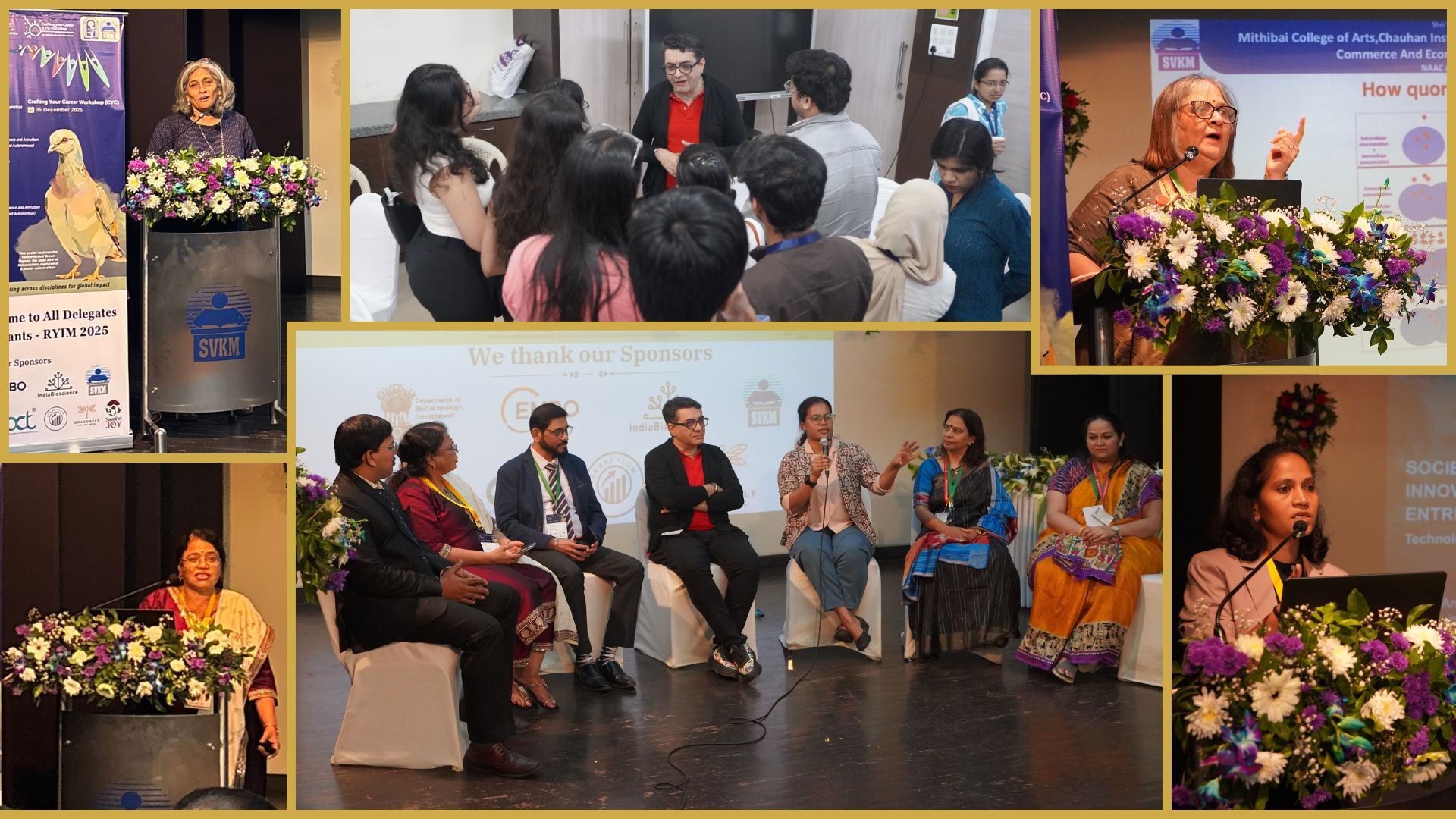
                <p dir="ltr">The Regional Young Investigators’ Meeting (RYIM) Mumbai 2025 was held on 4–5 December 2025 at <a href="https://mithibai.ac.in" target="_blank" rel="noreferrer noopener">SVKM’s Mithibai College, Mumbai</a>, in collaboration with the <a href="https://dst.gujarat.gov.in/Home/GujaratBioTechnologyUniversity" target="_blank" rel="noreferrer noopener">Gujarat Biotechnology University</a><strong>, </strong>and <a href="https://kccollege.edu.in/" target="_blank" rel="noreferrer noopener">Kishinchand Chellaram College</a><strong>, </strong><a href="https://hsncu.edu.in/" target="_blank" rel="noreferrer noopener">HSNC University</a>. The meeting brought together 112 participants, including young investigators, faculty, postdoctoral fellows, research scholars, clinicians, and industry professionals.</p>              ]]></summary><id>tag:indiabioscience.org,2025-12-19:/news/2025/building-pathways-to-interdisciplinary-research-at-state-funded-institutions-insights-from-ryim-mumbai-2025</id><published>2025-12-19T10:00:00+05:30</published><updated>2025-12-18T11:10:23+05:30</updated><author><name>Siuli Mitra</name><uri>https://indiabioscience.org/authors/PRYwLlb3kA1gO0Q</uri></author><content type="html"><![CDATA[
                
<p>The Regional Young Investigators’ Meeting (RYIM) Mumbai 2025 was held on 4–5 December 2025 at <a href="https://mithibai.ac.in" target="_blank" rel="noreferrer noopener">SVKM’s Mithibai College, Mumbai</a>, in collaboration with the <a href="https://dst.gujarat.gov.in/Home/GujaratBioTechnologyUniversity" target="_blank" rel="noreferrer noopener">Gujarat Biotechnology University</a><strong>, </strong>and <a href="https://kccollege.edu.in/" target="_blank" rel="noreferrer noopener">Kishinchand Chellaram College</a><strong>, </strong><a href="https://hsncu.edu.in/" target="_blank" rel="noreferrer noopener">HSNC University</a>. The meeting brought together 112 participants, including young investigators, faculty, postdoctoral fellows, research scholars, clinicians, and industry professionals.</p><figure><a href="https://indiabioscience.org/news/2025/building-pathways-to-interdisciplinary-research-at-state-funded-institutions-insights-from-ryim-mumbai-2025"><img
                width="1920"
                height="1080"
                style="max-width: 100%; height: auto"
                src="https://cdn.indiabioscience.org/media/articles/Figure-2-Mentor-talks-covered-research-spanning-computational-biology-diagnostics-and-neurosciences.-Young-scientists-brought-fresh-perspectives-to-the-discussion-through-presentations-on-enviro.jpg"></a></figure><p dir="ltr">Anchored at a state-funded college and supported by partner institutions from western India, RYIM Mumbai brought together colleges and a university with a shared commitment towards building interdisciplinary research programmes. The meeting created a rare opportunity to seed connections, mentorship, and aspiration among early-career researchers and students who most need access to national research networks. RYIM Mumbai contributed to building pathways to interdisciplinary research in two more ways: seeding collaboration across institutional boundaries and equipping early-career researchers with career and funding awareness.</p><p dir="ltr">Hosting RYIM Mumbai at Mithibai College demonstrated the value of placing high-quality scientific dialogue directly within teaching-focused institutions. For many participants, particularly postgraduate students and early-career faculty, this was their first opportunity to interact closely with researchers from premier institutions such as TIFR, ACTREC, and those funded by ICMR and ICAR, as well as industry. This reflected a broader reality across many state-funded colleges in India, where strong teaching ecosystems exist alongside limited access to national research networks. The meeting helped them receive mentorship on research funding in India from scientists whose research is supported by multiple central science agencies, thus giving them a sense of how to navigate funding in India.<br></p><blockquote dir="ltr" class="pull-quote"><em>Interactions with UG and PG students and faculty from Mithibai and other colleges were very fruitful, and the ‘Ask Us Anything’ session was amazing—a cherry on the top”.</em></blockquote><p dir="ltr">- Tejal Gajaria, Navrachana University, Gujarat, an young investigator who participated in RYIM Mumbai.</p><p dir="ltr"></p><p dir="ltr">Panels and workshops focused on collaboration, careers, and leadership complemented and deepened the conversations. Replicating this format could be impactful in bridging the critical gap between research-intensive institutions and colleges that are building research cultures.</p><figure style="margin-left: auto; margin-right: auto; text-align: center; width: 421px; max-width: 421px;"><img src="https://cdn.indiabioscience.org/media/articles/Mentors-at-the-meeting-engaged-with-participants-both-through-formal-and-informal-conversations.jpg" data-image="822935" width="421" height="236"><figcaption style="text-align: center;">Mentors at the meeting engaged with participants both through formal and informal conversations. Picture Credit: RYIM Mumbai team | Collage by Siuli Mitra</figcaption></figure><p dir="ltr"></p><p dir="ltr">The Mumbai meeting aligns strongly with IndiaBioscience’s broader mission to expand the reach of networking platforms such as YIMs and RYIMs, and it provided a way to do so through such engagements with state-funded academic institutions. Crucially, it reinforces a longer-term approach of building sustained engagement through repeated regional meetings and follow-up activities, bringing diverse perspectives on funding, mentorship, and career development into India’s growing scientific network.<br></p><p dir="ltr"><strong>“</strong><strong><em>Science beyond borders</em></strong><strong>” - Building collaboration across disciplines and institutions</strong></p><p dir="ltr">In line with the central theme, the panel discussion on ‘<em>Collaboration as the catalyst for scientific progress</em>’ highlighted the need to move from isolated research efforts to shared ecosystems accelerated through pooled resources, interdisciplinary thinking, and external networks. Panellists urged young researchers to approach collaboration as a <em>cultural shift</em>, not just a funding requirement. They further highlighted the role of such regional meetings in creating low-barrier entry points to collaborative research projects and leveraging national funding schemes that support high-risk, high-impact, early-stage ideas. This underscored that interdisciplinary research readiness is as much cultural as it is infrastructural.<br></p><p dir="ltr"><strong>Mentorship from India’s research ecosystem</strong></p><p dir="ltr">Across two days, participants engaged with mentors from premier research institutions, hospitals, funding-linked research centres, and industry incubators. Talks and interactions covered choosing meaningful, locally relevant research questions; translating fundamental research into applied impact; responsible publishing and research visibility; and the growing role of AI, bioinformatics, and data-driven science. These sessions helped demystify research careers and made senior scientists more accessible and relatable, particularly to participants from teaching-focused colleges.</p><p dir="ltr">Day 2 concluded with IndiaBioscience’s <a href="https://indiabioscience.org/meetings/crafting-your-career-in-science" target="_blank">Crafting Your Career (CYC) workshop</a>, which focused on mapping skills, interests, and values; exploring diverse career pathways in science (academia, industry, entrepreneurship, communication); and building transferable skills such as networking, communication, and professionalism. The workshop used interactive exercises and peer discussions, enabling participants to actively reflect on their career trajectories rather than passively receiving information.</p><p dir="ltr">Exposure to mentors across funding agencies also helped participants visualise research careers as navigable, not opaque.<br></p><p dir="ltr"><strong>Seeding long-term partnerships and looking ahead</strong></p><p dir="ltr">For IndiaBioscience, RYIM Mumbai reaffirmed the importance of meeting communities where they are and being partners in their capacity-building missions by helping them build connections, improve visibility, and sustain engagement with the wider scientific network in India.</p><blockquote dir="ltr" class="pull-quote">Beyond the formal programme, RYIM Mumbai enabled direct institutional conversations with the college leadership on capacity-building workshops for young investigators and postgraduate and UG students. </blockquote><p dir="ltr">These conversations indicate that RYIMs can serve as entry points into longer-term institutional engagement rather than standalone events.</p><p dir="ltr">As IndiaBioscience looks to extend RYIMs to more cities and institutions, the Mumbai meeting offered important lessons on the value of engaging state-funded colleges, particularly in democratising access to mentorship and networks, fostering collaboration across institutional boundaries, and supporting early-career researchers in settings where such support can be transformative.<br></p><p dir="ltr">Watch the complete event <a href="https://youtube.com/live/Nc-rg7vHZ6k?feature=share" target="_blank">here</a> and <a href="https://youtube.com/live/pzdyjT36RG0?feature=share" target="_blank">here</a>.</p><p dir="ltr">Read the RYIM Mumbai 2025 abstract book <a href="https://cdn.indiabioscience.org/media/meetings/RYIM-Complete-Abstract-Book-15.12.2025-12.05-PM.pdf" rel="noopener" target="_blank">here</a>.<br></p>
              ]]></content><category term="science" label="Science" /><category term="training" label="Training" /><category term="networking" label="Networking" /><category term="career-development" label="Career Development" /><category term="yim" label="YIM" /><category term="networking" label="Networking and Collaboration" /></entry><entry><title>What bats in central Himalayas want us to know about their caves</title><link
                  rel="alternate"
                  href="https://indiabioscience.org/news/2025/what-bats-in-central-himalayas-wants-us-to-know-about-their-caves"
                  type="text/html"
                  /><summary type="html"><![CDATA[
                <p>Bats of the central Himalayas rely on caves for survival, shifting habitats with seasons to hibernate or raise young. A recent study from <a href="https://www.ncbs.res.in/" target="_blank" rel="noreferrer noopener">National Centre for Biological Sciences</a>, Bengaluru reveals how climate change and human activity threaten these vital refuges, underscoring the need for targeted, seasonal conservation to safeguard both bats and ecosystems.</p>              ]]></summary><id>tag:indiabioscience.org,2025-12-12:/news/2025/what-bats-in-central-himalayas-wants-us-to-know-about-their-caves</id><published>2025-12-12T10:41:00+05:30</published><updated>2026-01-07T14:01:39+05:30</updated><author><name>Jenet Johnson</name><uri>https://indiabioscience.org/authors/JenetJohnson</uri></author><content type="html"><![CDATA[
                
<p dir="ltr">Bats of the central Himalayas rely on caves for survival, shifting habitats with seasons to hibernate or raise young. A recent study from <a href="https://www.ncbs.res.in/" target="_blank" rel="noreferrer noopener">National Centre for Biological Sciences</a>, Bengaluru reveals how climate change and human activity threaten these vital refuges, underscoring the need for targeted, seasonal conservation to safeguard both bats and ecosystems.</p><figure><a href="https://indiabioscience.org/news/2025/what-bats-in-central-himalayas-wants-us-to-know-about-their-caves"><img
                width="1920"
                height="1080"
                style="max-width: 100%; height: auto"
                src="https://cdn.indiabioscience.org/media/articles/Title-image-Suraj-1.jpg"></a></figure><p dir="ltr">Bats, the conquerors of the dark, value their caves just like Batman treasures his Gotham city. For some at least, these enclosed dark spaces might seem claustrophobic. But, for 48.5% of 1,400 species of bats, these areas are what they call home. They provide safety, stability, and a suitable environment for hibernation, mating and reproduction. Do these caves serve different purposes in different seasons? Do species differ in how they use such caves for hibernation or reproduction? If they do, then conservation strategies would need to be tailored to meet specific needs of each species while also prioritising caves or habitats that provide maximal conservation output.<br></p><p dir="ltr">A recent <a href="https://share.google/MGfBtLSC19eBfZ7eX" rel="noopener" target="_blank">study</a> from the <a href="https://www.ncbs.res.in/" rel="noopener" target="_blank">National Centre for Biological Sciences</a> (NCBS-TIFR), Bengaluru, published in the <a href="https://zslpublications.onlinelibrary.wiley.com/journal/14697998" rel="noopener" target="_blank"><em>Journal of Zoology</em></a>, sheds light on how bats in the central Himalayas use caves differently depending on seasonal changes. The researchers found that small changes in outside temperatures could alter the temperature within these caves during different seasons, and bats may be able to track such changes in temperatures to optimise energy conservation during hibernation and reproduction.<br></p><p dir="ltr">The research team set foot into 41 limestone caves in Nepal’s Gandaki province in central Himalayas, moving from lower to higher altitudes (400 - 2,700 metres) across seasons (mid-winter, late-winter and early-spring) in search of the dark knights. They visited the caves three times during each phase to increase accuracy. They took care to minimise disturbances- using red torches to avoid startling the bats and reducing noise as much as possible. Bats were not captured for the study, ensuring that they weren’t disturbed during these sensitive periods of hibernation and reproduction. The ecological significance of the caves were also studied using the <a href="https://www.sciencedirect.com/science/article/pii/S2351989424006000" rel="noopener" target="_blank">Bat Cave Vulnerability Index (BCVI)</a>. It looks at both the number and types of bats in a cave and the dangers they face and converts it into a score to decide which caves need the most protection.</p><p dir="ltr"><em>“Changes in air temperature outside the caves can affect the temperatures inside, especially near the entrance, while deeper areas remain more stable”</em>, says <a href="https://www.linkedin.com/in/sanjeev-baniya-a1122b281/?originalSubdomain=np" rel="noopener" target="_blank">Sanjeev Baniya</a>, the lead author of the study.</p><p dir="ltr">What’s interesting is that even though the deeper parts of caves offer a steady climate, bats in the central Himalayas tend to avoid them during winter, by heading towards the lower elevations where they could find food more easily. But when the spring arrives, they come back to these deeper quiet spots to raise their young ones. As a result, the species composition within caves shifts with changes in seasons indicating that bats possibly track insect activity, much like Batman moves from Gotham city to other quieter towns based on the crime rates.</p><p dir="ltr">Himalayas warm faster than the global average. This could lead to disrupting the microhabitats within these caves. Bat species in the central Himalayas show very distinct patterns in their cave use on seasonal terms based on factors like cave structure, elevation and temperature. For example, <em>Hipposideros armiger</em> and other bat species chose warmer spots while <em>Rhinolophus luctus</em> chose colder areas within the caves. </p><p dir="ltr">Other than the seasonal impact, human activities add to the need for conservation too. For centuries, caves were not just bat shelters but also held religious and cultural significance, as centers for meditation, places of worship, and sanctuaries for monks. They are also noticeable tourist attractions. The artificial lights, noise pollution, presence of visitors, mining activities and construction works can directly or indirectly disrupt their microhabitats, turning these caves less preferable as a roost or home. </p><p dir="ltr">Have you ever wondered what would happen if bats disappeared?</p><p dir="ltr">Well, let me start by stating this;</p><p dir="ltr">Their decline will not just be theirs, it will be ours too.</p><blockquote dir="ltr" class="pull-quote">Bats act as pollinators and seed dispersers, supporting regeneration and replenishment of nature itself. They serve as pest controllers and are involved in nutrient cycling. Any disturbance in their environment would ultimately disrupt our lives too.</blockquote><p dir="ltr"><em>“Different bat species show seasonal preferences for specific microclimates. Warmer sites in spring, for example, are chosen to support reproduction. However, even small changes in temperature due to climate change can increase the energetic costs for bats, affecting their ability to save fat or energy during hibernation. If such variations occur in the caves they rely on, they might deplete the stored fat before the reproduction phase thus risking their survival and overall fitness”</em>, says Baniya</p><p dir="ltr">Hence, this study calls for targeted conservation strategies based on a seasonal approach. Year round methods are important, but only with consideration towards their seasonal preferences during periods such as hibernation and reproduction. Restricting human activities during such crucial times could help in maintaining life within the caves. Data from BCVI, calls for legal action, patrolling and regulation of tourism to safeguard these underground sites. Long term investigation and protection of these caves are essential, not just for the survival of bats alone, but also for maintaining healthy ecosystem functioning. As cave dwelling invertebrates and vertebrates rely on bat guano, bats, directly, act as keystone species in cave ecosystems. </p><p dir="ltr">We’ve known bats through myths and fiction, as symbols of fear and darkness. While in reality, they are small, silent, winged guardians of our ecosystem. Imagine a bat as a solo traveler in search of a place called home. For us, humans, this would mean a new city, a tent under the stars, a cabin or even a room of one’s own. These places act as comfort spaces that help us grow. But the case is sadly different for bats. These bats in the Himalayas, consider their caves as their only comfort zones. Without them, survival is threatened. Hence, protecting their caves isn’t just a responsibility, rather a necessity.</p>
              ]]></content><category term="cell-biology" label="Cell Biology" /><category term="molecular-biology" label="Molecular Biology" /><category term="neuroscience" label="Neuroscience" /><category term="research" label="Research" /></entry><entry><title>Mapping epigenetic regulator changes in bladder cancer reveals new clues for immunotherapy</title><link
                  rel="alternate"
                  href="https://indiabioscience.org/news/2025/bladder-cancer-reveals-new-clues-for-immunotherapy"
                  type="text/html"
                  /><summary type="html"><![CDATA[
                <p dir="ltr">A recent study highlights how genetic changes in epigenetic regulator genes shape immune responses in bladder cancer, potentially guiding more personalised therapies.<br /></p>              ]]></summary><id>tag:indiabioscience.org,2025-11-17:/news/2025/bladder-cancer-reveals-new-clues-for-immunotherapy</id><published>2025-11-17T09:30:00+05:30</published><updated>2025-10-15T14:45:19+05:30</updated><author><name>Venugopalareddy Mekala</name><uri>https://indiabioscience.org/authors/VenugopalareddyMekala</uri></author><content type="html"><![CDATA[
                
<p dir="ltr">A recent study highlights how genetic changes in epigenetic regulator genes shape immune responses in bladder cancer, potentially guiding more personalised therapies.<br /></p><figure><a href="https://indiabioscience.org/news/2025/bladder-cancer-reveals-new-clues-for-immunotherapy"><img
                width="1920"
                height="1080"
                style="max-width: 100%; height: auto"
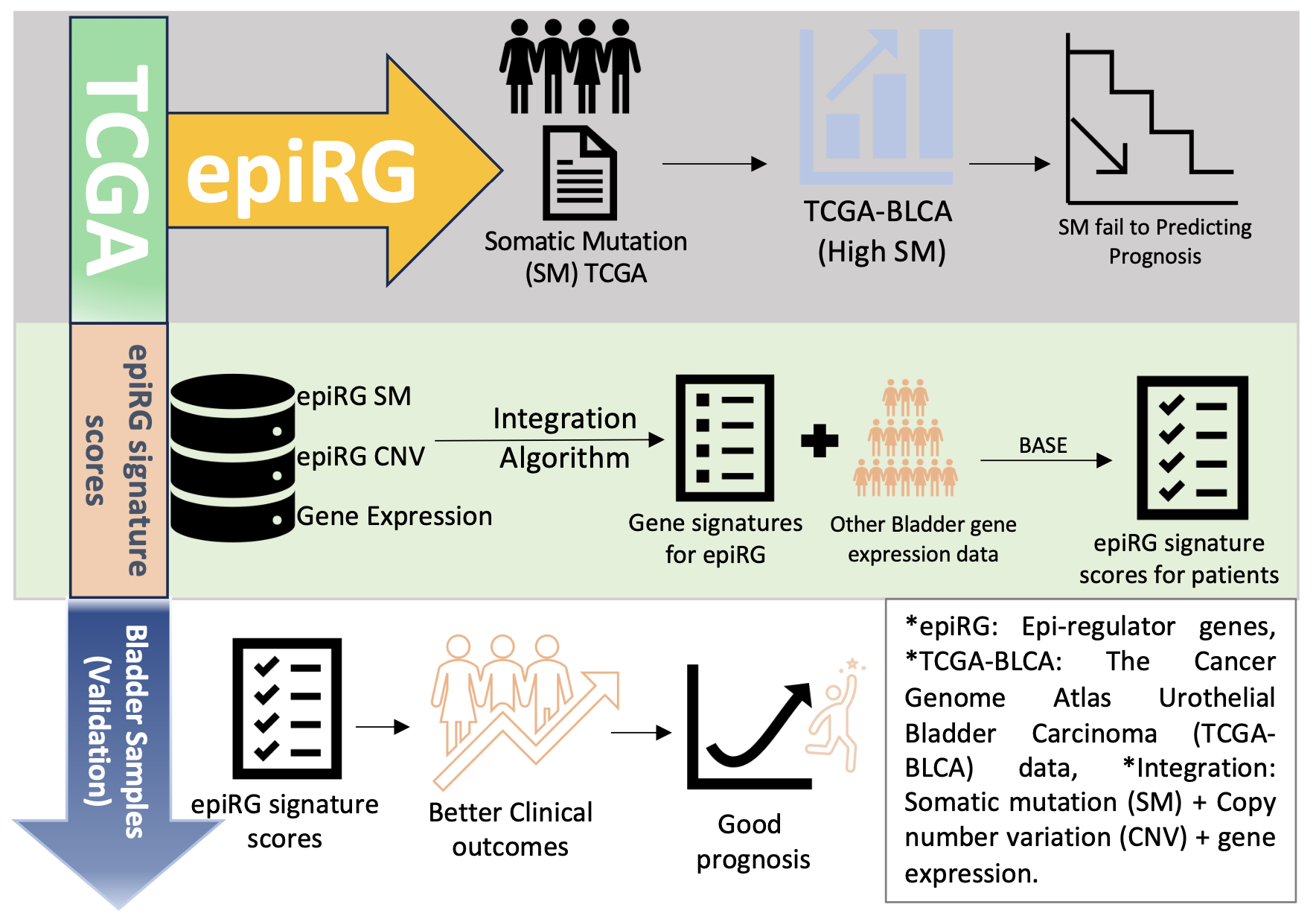
                src="https://cdn.indiabioscience.org/media/articles/SciTales-title-images_2025-10-15-085516_jgde.jpg"></a></figure><p dir="ltr"><em><em>Understanding why cancer therapies work for some patients but fail for others remains one of modern medicine’s greatest puzzles. As the field of oncology turns increasingly towards personalised medicine, uncovering the molecular and immune signatures that shape treatment response has become crucial. In this context, a new study led by </em><a href="https://scholar.google.com/citations?user=OUqbRI0AAAAJ&hl=en" rel="noopener" target="_blank">Venugopalareddy Mekala</a><em> offers fresh insights into how changes in epigenetic regulator genes (epiRGs) influence immune behaviour in bladder cancer.</em></em></p><p dir="ltr"><em>Published recently in Cancer Medicine, the study maps how specific genetic and epigenetic alterations can alter tumour–immune interactions and even predict which patients are more likely to respond to immunotherapy. By integrating multi-omics data and linking it to immune infiltration and clinical outcomes, Mekala and colleagues provide a valuable framework for refining cancer treatment strategies. Their findings not only deepen our understanding of tumour biology but also hold particular relevance for India, where bladder cancer is an emerging health concern and access to precision oncology tools remains limited. </em></p><figure style="margin-left: auto; margin-right: auto; text-align: center; width: 540px; max-width: 540px;"><img src="https://cdn.indiabioscience.org/media/articles/Screenshot-2025-10-15-at-1.55.02-PM.png" data-image="808843" width="540" height="377"><figcaption style="text-align: center;">Graphical abstract of the study | Picture Credit: Venugopalareddy Mekala</figcaption></figure><p dir="ltr">Bladder cancer continues to pose a major clinician challenge worldwide, with patients often responding differently to treatments. Have you ever wondered why some patients respond well while others don’t? </p><p dir="ltr">A team led by Venugopalareddy Mekala, an Indian-origin postdoctoral researcher shed new light on this question. Recently, Mekala and his colleagues at <a href="https://www.bcm.edu/" rel="noopener" target="_blank">Baylor College of Medicine</a> in the United States <a href="https://pmc.ncbi.nlm.nih.gov/articles/PMC12281021/" rel="noopener" target="_blank">published research</a> highlighting how genetic alterations in <a href="https://pubmed.ncbi.nlm.nih.gov/36305095/" rel="noopener" target="_blank">epigenetic regulator genes</a> (epiRGs) can influence tumour behaviour and the body’s immune response. <a href="https://www.sciencedirect.com/topics/psychology/epigenetic-regulation" rel="noopener" target="_blank">Epigenetic regulation</a> refers to the control of gene activity and protein production without altering the DNA sequence itself, and epiRGs play a central role in managing these modifications.</p><p dir="ltr">The study, recently published in <a href="https://onlinelibrary.wiley.com/doi/10.1002/cam4.71057" rel="noopener" target="_blank">Cancer Medicine</a> journal, identified 13 signature scores linked to epiRG aberrations in bladder cancer. These scores are generated by using multiple biological integration of bladder patients. These scores go beyond the usual “is this gene mutated?” approach, they capture the functional impact of these changes on the tumour, offering a more nuanced view of how epigenetic disruptions drive cancer progression.</p><p dir="ltr">By analysing data from <a href="https://www.cancer.gov/ccg/research/genome-sequencing/tcga" rel="noopener" target="_blank">The Cancer Genome Atlas</a> (TCGA) and other datasets, the researchers found that certain mutations, such as CREBBP, EP300, and CHD7, are associated with increased infiltration of immune cells, including CD8+ and CD4+ T cells, macrophages, and dendritic cells. This increased immune activity was often associated with slower tumour growth and better patient prognosis. In contrast, mutations such as PRDM9 amplification showed lower B-cell infiltration, suggesting possible immune evasion mechanisms by tumours.</p><p dir="ltr">The team also explored how these genetic aberrations affect DNA methylation, a key epigenetic mechanism that controls gene expression. Notably, KDM6A mutations were associated with lower global DNA methylation and a unique immune profile, characterised by lower infiltration of most immune cells but slightly higher B-cell presence. Such findings underscore the complex interplay between genetic changes, epigenetic regulation, and immune activity in bladder cancer.</p><p>Using these signature scores, the study assessed patients’ responses to PD-L1 immunotherapy, a widely used immune checkpoint inhibitor. The analysis revealed that patients with high scores in specific epiRGs were more likely to benefit from treatment, suggesting that these scores could serve as biomarkers to predict therapeutic response.<strong><em><br></em></strong></p><blockquote class="pull-quote"><strong><em>Our findings offer a framework for linking genetic and epigenetic alterations to immune behaviour in bladder tumours”, </em></strong>the authors note.</blockquote><p dir="ltr">In the Indian context, these results could contribute to the development of more personalised treatment strategies. Bladder cancer is a serious health issue in India with 18,921 new patients diagnosed and 10,231 bladder cancer-related deaths reported yearly, based on <a href="https://pubmed.ncbi.nlm.nih.gov/30207593/" rel="noopener" target="_blank">GLOBOCAN 2018</a>. <a href="https://ijmsweb.com/urinary-bladder-cancer-and-its-associated-factors-an-epidemiological-overview/" rel="noopener" target="_blank">The reported incidence rates</a> are 2.4 and 0.7 per 100,000 for males and females, respectively. It is clear that there is a growing burden, with increasing diversity of risk factors (that include tobacco use, contamination of arsenic and nitrate, and carcinogen exposure at work), which reiterates the necessity of personalised treatment approaches in India.</p><p dir="ltr">Although genomics-based approaches are still emerging in India, studies like this highlight the potential of integrating genetic profiling with immunotherapy decisions. Challenges remain, including access to high-throughput sequencing technologies and the need for cost-effective implementation in clinical settings. Nevertheless, the study sets a precedent for similar research and collaborations in India, which could help tailor therapies to patient-specific tumour profiles.</p><p dir="ltr">This study highlights the importance of combining genomic and epigenetic insights to better understand tumour biology and enhance patient outcomes. The research not only advances our scientific knowledge of bladder cancer but also opens new avenues for precision medicine globally. By mapping how aberrations in epiRG influence both immune infiltration and DNA methylation patterns, Mekala and colleagues have laid a foundation that could guide future research and clinical strategies. With the growing development of AI-driven tools, the author notes that such technologies could, in time, assist in identifying more personalised treatment options for cancer patients in India and beyond.<br></p>
              ]]></content><category term="health-and-medicine" label="Health &amp; Medicine" /><category term="cell-biology" label="Cell Biology" /><category term="molecular-biology" label="Molecular Biology" /><category term="research" label="Research" /></entry><entry><title>Tricking a trickster: A tale of lipids, loopholes and lessons in survival</title><link
                  rel="alternate"
                  href="https://indiabioscience.org/news/2025/tricking-a-trickster-a-tale-of-lipids-loopholes-and-lessons-in-survival"
                  type="text/html"
                  /><summary type="html"><![CDATA[
                <p>In the sprawling metropolis of the human body, order is maintained by a careful system of governance. Every cell knows its duty, follows its genetic code, and contributes to the greater whole. But sometimes, amid the quiet rhythm of breast tissue, a rebellion stirs. This is breast cancer, a faction that looks like it belongs, yet works from within to undermine balance. Luminal cancers arise from cells that still display oestrogen and progesterone receptors, masquerading as diplomatic badges. These allow the cancer to blend in, hijack hormonal signals, and quietly build strength.</p>              ]]></summary><id>tag:indiabioscience.org,2025-11-10:/news/2025/tricking-a-trickster-a-tale-of-lipids-loopholes-and-lessons-in-survival</id><published>2025-11-10T11:04:00+05:30</published><updated>2025-11-10T11:04:39+05:30</updated><author><name>Shreya Bhattacharjee</name><uri>https://indiabioscience.org/authors/ShreyaBhattacharjee</uri></author><content type="html"><![CDATA[
                
<p dir="ltr">In the sprawling metropolis of the human body, order is maintained by a careful system of governance. Every cell knows its duty, follows its genetic code, and contributes to the greater whole. But sometimes, amid the quiet rhythm of breast tissue, a rebellion stirs. This is breast cancer, a faction that looks like it belongs, yet works from within to undermine balance. Luminal cancers arise from cells that still display oestrogen and progesterone receptors, masquerading as diplomatic badges. These allow the cancer to blend in, hijack hormonal signals, and quietly build strength.</p><figure><a href="https://indiabioscience.org/news/2025/tricking-a-trickster-a-tale-of-lipids-loopholes-and-lessons-in-survival"><img
                width="1920"
                height="1080"
                style="max-width: 100%; height: auto"
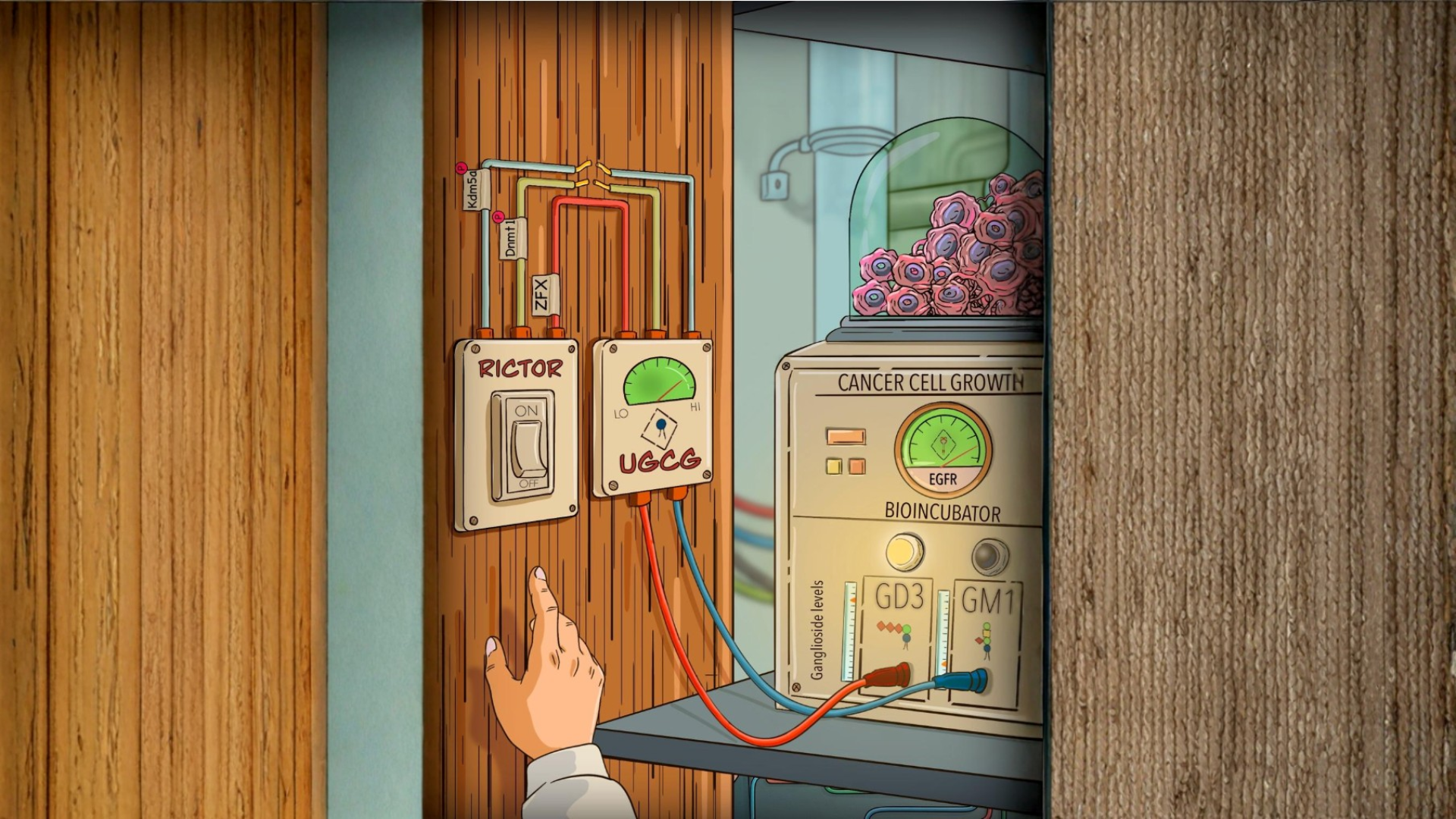
                src="https://cdn.indiabioscience.org/media/articles/SciTales-title-images.png"></a></figure><p dir="ltr">Modern medicine has fought back with hormone therapies, drugs that block receptors, and cut off cancer’s fuel like signal jammers in a digital war. Yet luminal cancers are resourceful. Some mutate and find alternate pathways; others lie low, waiting for the blockade to weaken. The immune system, normally a vigilant guard, struggles to recognise such familiar-looking foes without risking harm to healthy tissue. Luminal subtypes make up the majority of breast cancer cases worldwide, accounting for more than 50% of cases in India. They may not kill quickly, but their persistence, resistance, and ability to recur make them a formidable challenge- akin to the Hydra’s head that keeps growing back. </p><p dir="ltr">At the heart of this resistance lies metabolism, the cancer’s ability to rewire its energy and building blocks. In cancer cells, one of the important survival tricks comes from a specialized type of fat called sphingolipids. At first glance, they look like ordinary building blocks of cell membranes. But in reality, they act like secret couriers, carrying signals that tell cells when to grow, survive, or even resist treatment. When processed into gangliosides (a complex type of glycosphingolipid), they become even more powerful. Gangliosides can tweak how receptors on the cell surface behave, essentially boosting “growth signals” and making cancer cells harder to stop proliferating.</p><p dir="ltr"><a href="https://journals.plos.org/plosbiology/article?id=10.1371/journal.pbio.3003362" rel="noopener" target="_blank">A recent study</a> in <a href="https://journals.plos.org/plosbiology/" rel="noopener" target="_blank"><em>PLOS Biology</em></a>, led by <a href="https://www.ashoka.edu.in/profile/ujjaini-dasgupta/" rel="noopener" target="_blank">Ujjaini Dasgupta</a> at <a href="https://www.ashoka.edu.in/" rel="noopener" target="_blank">Ashoka University</a> and <a href="https://www.rcb.res.in/faculty/dr-avinash-bajaj" rel="noopener" target="_blank">Avinash Bajaj</a> at <a href="https://www.rcb.res.in/" rel="noopener" target="_blank">Regional Center for Biotechnology</a>, uncovered a key metabolic and gene regulatory circuit. </p><p dir="ltr">A protein called RICTOR, part of the mTORC2 complex (a central growth regulator), normally helps cells survive by activating AKT, a growth-promoting protein. But in luminal cancers, RICTOR goes further: it over activates a transcription factor called ZFX, and through AKT, it changes the cell’s epigenetic settings so that a key enzyme, UDP-glucose ceramide glucosyltransferase or UGCG, is switched on for a longer duration. </p><p dir="ltr">UGCG acts like a gateway: it converts simpler lipids (ceramides) into complex ones with a glucose residue (glucosylceramides), which then give rise to gangliosides. Among these, GD3 gangliosides are especially important because they supercharge EGFR, a receptor that drives cancer growth. This creates a vicious cycle; more gangliosides mean stronger signals, which keep the cancer growing and help it resist treatments.</p><p dir="ltr">What this study uncovered is not just a hijacked lipid supply line but a carefully wired metabolic and gene regulatory circuit. This circuit connects ganglioside metabolism with cancer progression through the EGFR–mTORC2/RICTOR complex, with multiple nodes: metabolite production, signalling pathways, and transcriptional changes, working together to keep the tumour growing. </p><p dir="ltr">One reason chemo-resistance has been so difficult to overcome is our incomplete understanding of how these networks operate and interconnect. Previous studies suggested that shutting down mTORC2 (a central metabolic regulator) or EGFR inhibition could cut off this advantage, but hitting these central hubs (mTORC2 or EGFRs) is like cutting power to an entire city- that may be effective but harmful to healthy systems. </p><blockquote dir="ltr" class="pull-quote"><em>By mapping the circuit, we identified UGCG as a precise choke point. Without it, cancer cells cannot make their protective gangliosides, and the cycle breaks. Recognising these as circuits opens the door to combinatorial strategies, where multiple nodes can be blocked at once, leaving cancer with no escape route</em>”, says Ujjaini.</blockquote><p dir="ltr">And here, a fascinating opportunity emerged: a drug called eliglustat, originally developed for Gaucher’s disease (a rare genetic disorder that causes glucosylceramides to build up in organs due to a deficiency in the glucocerebrosidase enzyme), is a known UGCG inhibitor. Though Eliglustat had been tested in breast cancer before, with promising results, more clarity on why it worked would be helpful. This study provided the missing link: eliglustat works because it disarms cancer’s metabolic escape route. In other words, it tricks the trickster by targeting the very mechanism of its proliferation. The implications extend far beyond one drug. “<em>By uncovering how UGCG drives cancer progression, researchers now have a blueprint to design or repurpose other drugs that hit different components of the sphingolipid pathway. Instead of bluntly attacking metabolism, medicine can deliver precision strikes, blocking the cancer’s backup systems without crippling the rest of the body</em>”, says Avinash. </p><blockquote dir="ltr" class="pull-quote"><em>What I enjoyed most about this project was the collaborative spirit of the team, each discussion brought fresh perspectives, and every experiment felt like a shared step forward”</em>, adds <a href="https://www.linkedin.com/in/nafees-ansari-6036671a5/?originalSubdomain=in" rel="noopener" target="_blank">Mohammad Nafees Ansari </a>(the first author of this study). </blockquote><p dir="ltr">Nafees further adds, “<em>though we had started with a hypothesis to mimic the inhibition of mTORC2 in cancer cells by modulating the sphingolipid candidates, we ended up with an entire metabolic-signaling-gene regulatory circuit with multiple nodes that can be tapped to trick the cancer cells</em>”.</p><p dir="ltr">Even more exciting, this approach could be pan-cancer. The sphingolipid–ganglioside axis is a major metabolic regulator across many cancers. Identifying more such circuits will allow researchers to combine strategies, hitting several survival nodes at once. This shift, from treating cancers as isolated problems to mapping their hidden metabolic networks, may be key to overcoming resistance, hopes Ujjaini and Avinash.</p><p dir="ltr">The war against cancer is rarely won in a single strike. It is a long campaign of adaptation, counter-adaptation, and persistence. Yet every new insight, like repurposing eliglustat and the discovery of such metabolic networks, reshapes the terrain. Cancer may be the ultimate trickster, but science is learning to play the same game. The rebellion is clever, but it's not invincible.<br></p>
              ]]></content><category term="cell-biology" label="Cell Biology" /><category term="molecular-biology" label="Molecular Biology" /><category term="neuroscience" label="Neuroscience" /><category term="research" label="Research" /></entry><entry><title>Bringing science (and scientists) into focus: Reflections from the Franco-Indian Workshop on Microscopy 2025</title><link
                  rel="alternate"
                  href="https://indiabioscience.org/news/2025/bringing-science-and-scientists-into-focus-reflections-from-the-franco-indian-workshop-on-microscopy-2025"
                  type="text/html"
                  /><summary type="html"><![CDATA[
                <p dir="ltr">The Franco-Indian Workshop on Microscopy, held from 6–10 October 2025 at Ashoka University, brought together researchers from India and France to explore cutting-edge imaging in disease biology. The five-day event fostered collaborations, hands-on microscopy learning, and vibrant scientific dialogue across borders.<br /></p>              ]]></summary><id>tag:indiabioscience.org,2025-10-24:/news/2025/bringing-science-and-scientists-into-focus-reflections-from-the-franco-indian-workshop-on-microscopy-2025</id><published>2025-10-24T10:00:00+05:30</published><updated>2025-10-16T12:28:53+05:30</updated><author><name>Ankita Rathore</name><uri>https://indiabioscience.org/authors/Ppx8KpvnoRMVQ5W</uri></author><content type="html"><![CDATA[
                
<p>The Franco-Indian Workshop on Microscopy, held from 6–10 October 2025 at Ashoka University, brought together researchers from India and France to explore cutting-edge imaging in disease biology. The five-day event fostered collaborations, hands-on microscopy learning, and vibrant scientific dialogue across borders.</p><figure><a href="https://indiabioscience.org/news/2025/bringing-science-and-scientists-into-focus-reflections-from-the-franco-indian-workshop-on-microscopy-2025"><img
                width="1920"
                height="1080"
                style="max-width: 100%; height: auto"
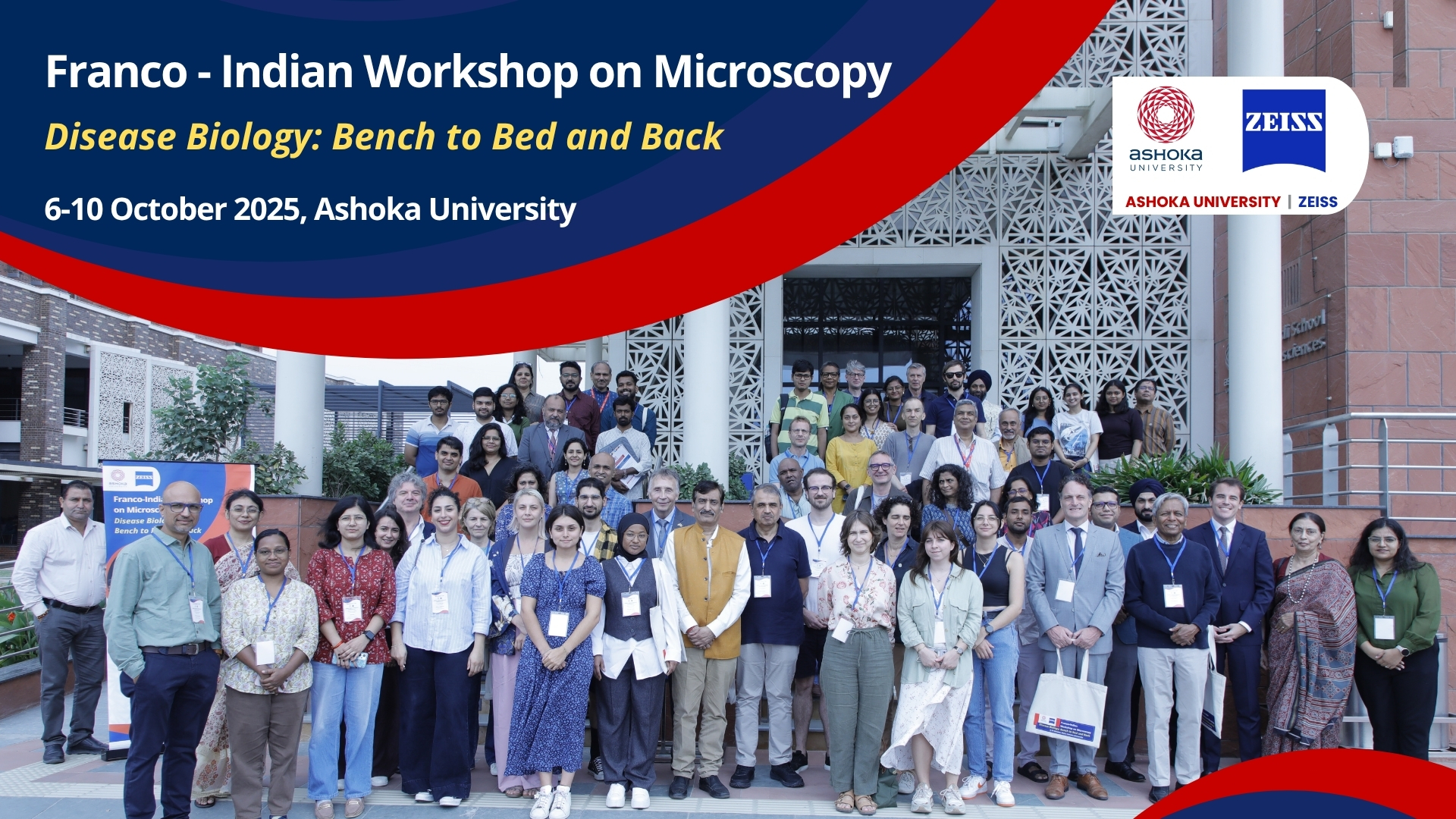
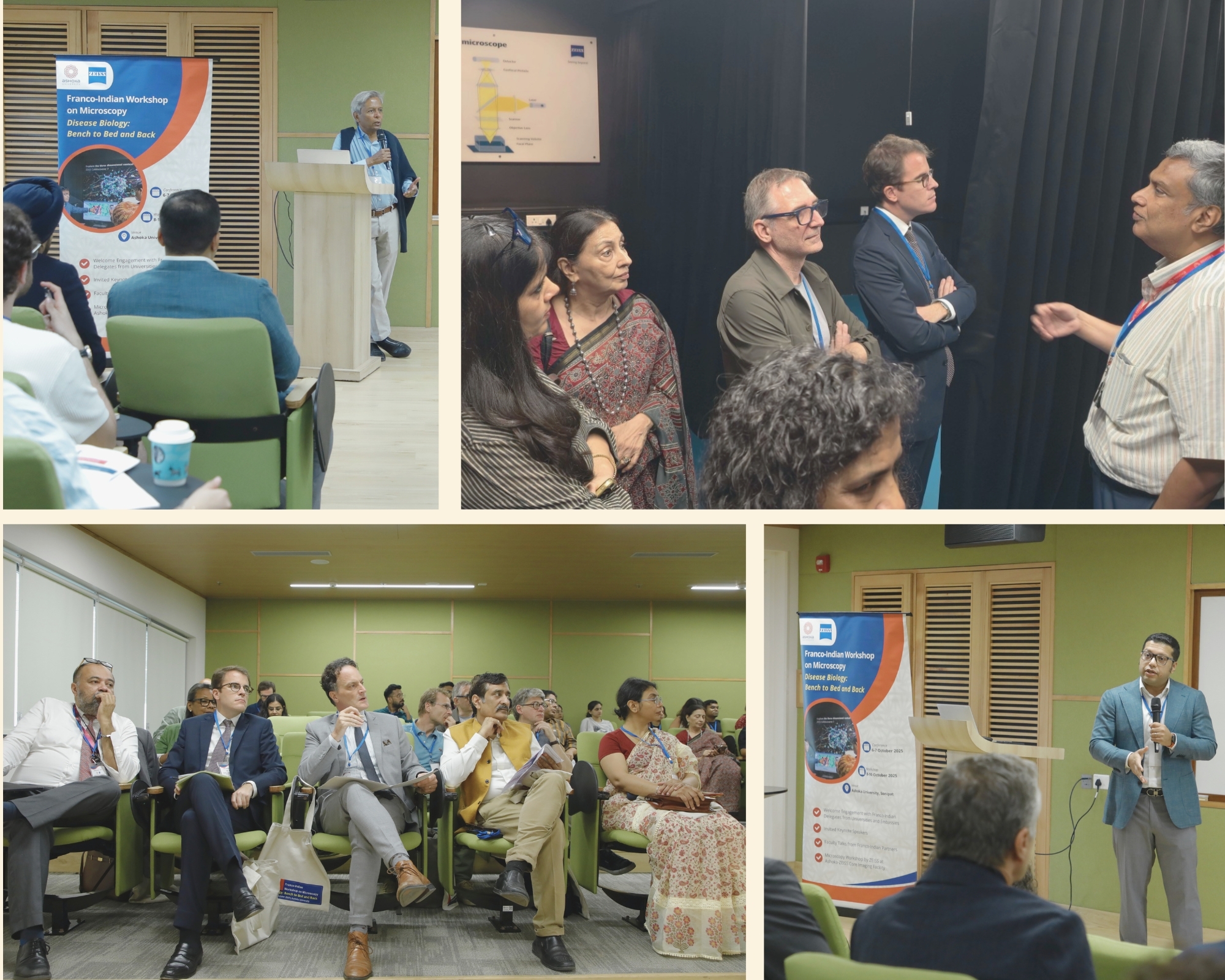
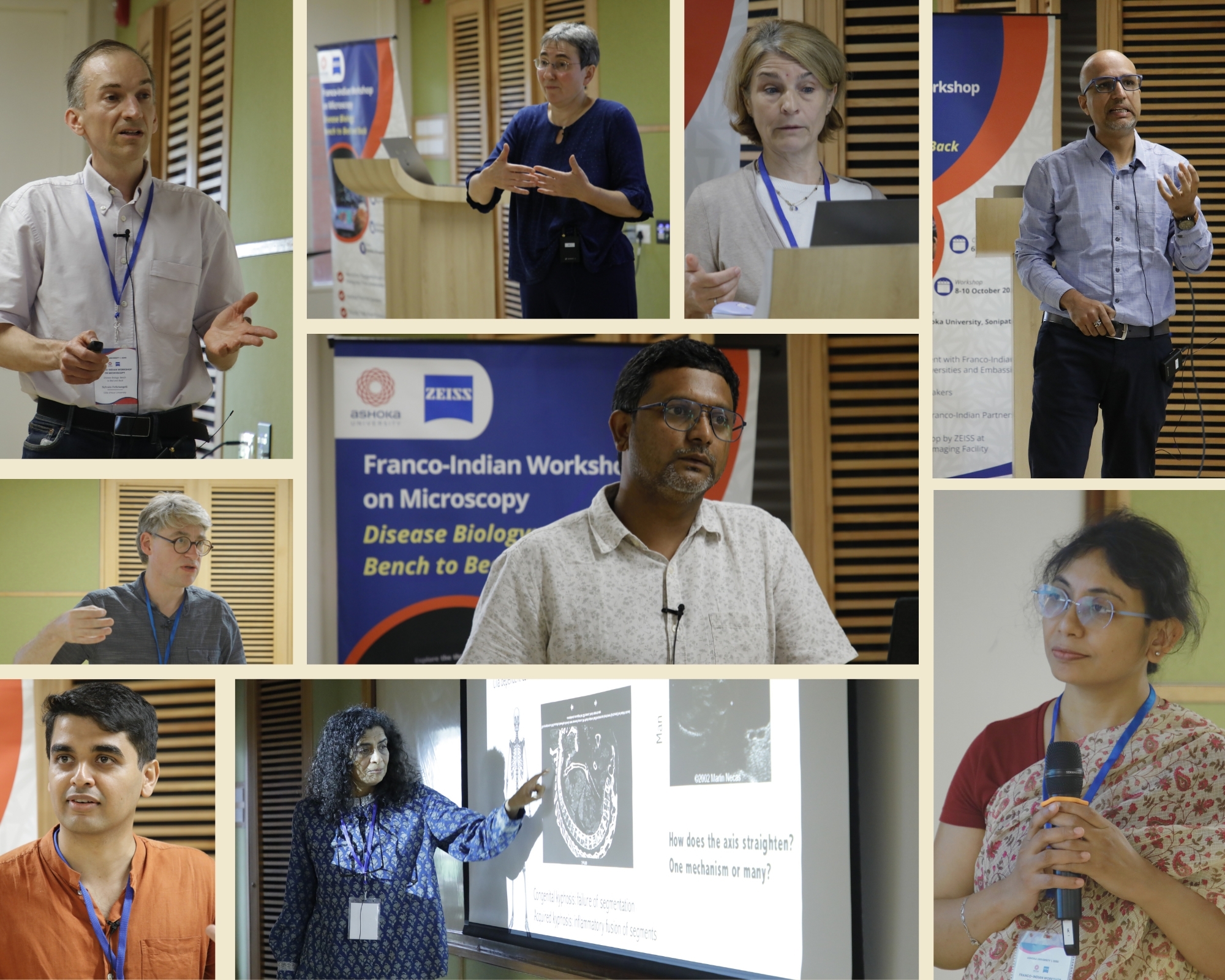
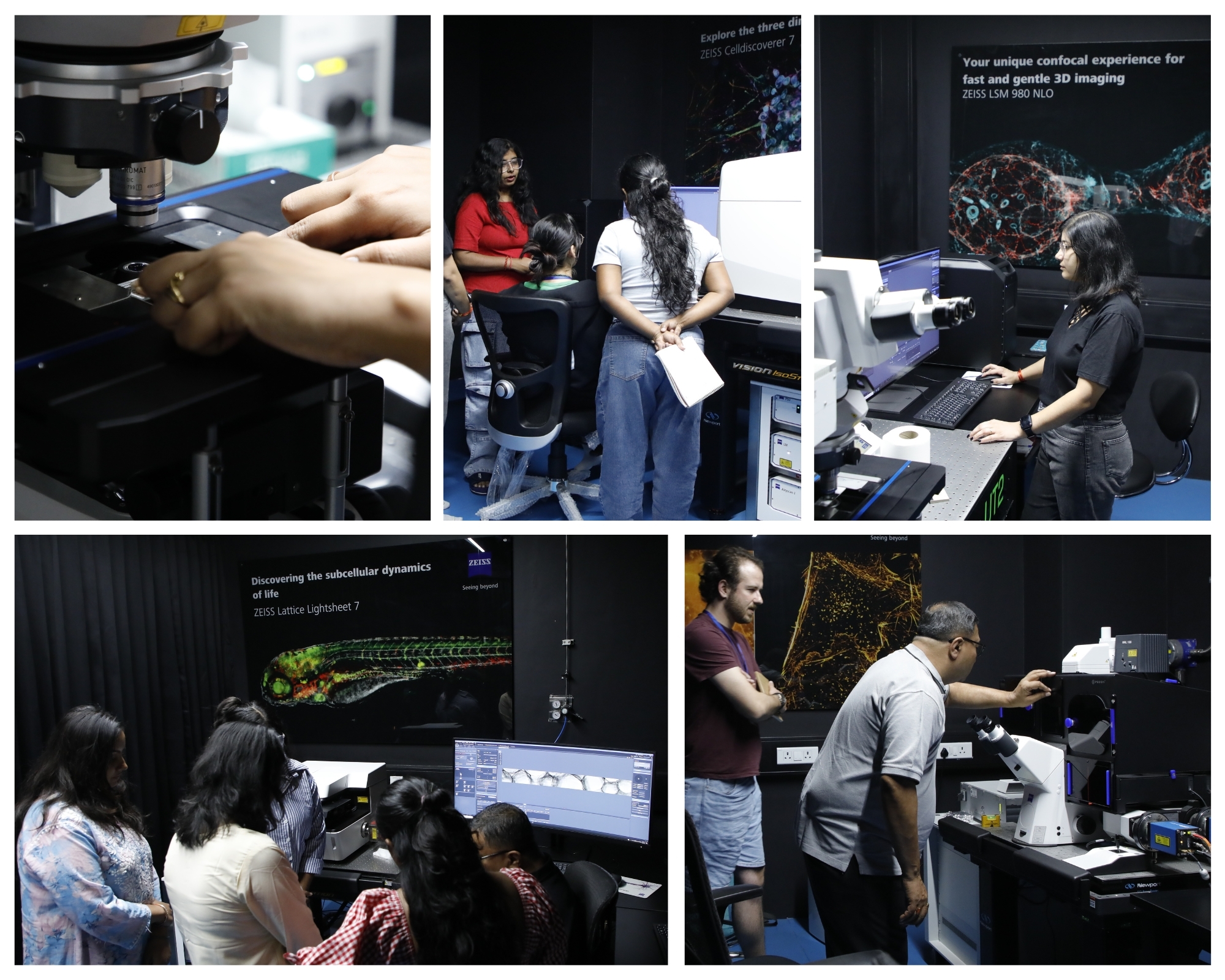
                src="https://cdn.indiabioscience.org/media/articles/Group-picture_Franco-Indian-Campus-on-Health.jpg"></a></figure><p dir="ltr">When I look back at the five days of the Franco-Indian Workshop on Microscopy 2025, held from 6–10 October at Ashoka University, I recall not only the hum of scientific conversations but also the quiet joy of watching months of planning unfold into an event alive with connections and collaborations.<br><br>This workshop went far beyond a typical academic gathering. It marked a landmark initiative under the <a href="https://www.ifindia.in/the-franco-indian-campus-in-the-field-of-life-sciences-for-health/" rel="noopener" target="_blank">Franco-Indian Campus in the field of Life Sciences for Health</a>, a virtual consortium connecting leading scientists and institutions across India and France. Nearly 20 French researchers from institutions such as <a href="https://univ-cotedazur.eu/" rel="noopener" target="_blank">Université Côte d'Azur</a>, <a href="https://www.sorbonne-universite.fr/" rel="noopener" target="_blank">Sorbonne Université</a>, and <a href="https://www.ens-lyon.fr/" rel="noopener" target="_blank">École normale supérieure de Lyon</a>, alongside Indian researchers from <a href="https://iiitd.ac.in/" rel="noopener" target="_blank">Indraprastha Institute of Information Technology (IIIT) Delhi</a>, <a href="https://home.iitd.ac.in/" rel="noopener" target="_blank">Indian Institute of Technology (IIT) Delhi</a>, <a href="https://iisc.ac.in/" rel="noopener" target="_blank">Indian Institute of Science (IISc)</a>, <a href="https://www.ncbs.res.in/" rel="noopener" target="_blank">National Centre for Biological Sciences (NCBS)</a>, and the <a href="http://iiserkol.ac.in/web/en/" rel="noopener" target="_blank">Indian Institutes of Science Education and Research (IISER) Kolkata</a> and Thiruvananthapuram, participated in the workshop. For me, it was also a deeply personal project, one I guided from the first email thread to the final group photograph.</p><p dir="ltr">We set out with an ambitious goal: to create a space where biologists from both countries could connect over a unifying theme—microscopy in disease biology. <a href="https://www.ashoka.edu.in/profile/kasturi-mitra/" rel="noopener" target="_blank">Kasturi Mitra</a> and <a href="https://www.ashoka.edu.in/profile/sandeep-ameta/" rel="noopener" target="_blank">Sandeep Ameta</a>, organisers from Ashoka University, thoughtfully curated the scientific programme and shaped the structure of the research talks and discussions across the two days of the meeting. I, along with <a href="https://www.ashoka.edu.in/profile/anupama-ambika-anilkumar/" rel="noopener" target="_blank">Anupama Ambika Anilkumar</a> from <a href="https://www.ashoka.edu.in/page/ashoka-global-research-alliances/" rel="noopener" target="_blank">Ashoka Global Research Alliances</a>, coordinated across time zones, institutions, and expectations, aligning every detail - from designing the schedule, curating sessions to managing travel logistics. When the first participants arrived on campus, I realised that every late-night call and checklist had been worth it.</p><figure style="margin-left: auto; margin-right: auto; text-align: center; width: 456px; max-width: 456px;"><img src="https://cdn.indiabioscience.org/media/articles/Collage_Inaugration.jpg" data-image="809114" width="456" height="364"><figcaption style="text-align: center;">Inauguration by French delegation on Day 1 of the workshop. Photo Credit: Ashoka University. Collage by Ankita Rathore.</figcaption></figure><p dir="ltr">The conference opened on 6 October 2025 with the theme “Disease Biology: Bench to Bed and Back.” <a href="https://www.linkedin.com/in/gr%C3%A9gor-trumel-50811865/?originalSubdomain=in" rel="noopener" target="_blank">Grégor Trumel</a>, Counsellor for Education, Science & Culture and Director, <a href="https://www.ifindia.in/" rel="noopener" target="_blank">French Institute in India</a>; <a href="https://www.linkedin.com/in/tonmoykundu/?originalSubdomain=sg" rel="noopener" target="_blank">Tonmoy Kundu</a>, Head of Global Sales, <a href="https://www.zeiss.co.in/microscopy/home.html" rel="noopener" target="_blank">Zeiss Microscopy</a>; <a href="https://www.cefipra.org/AboutUs.aspx?p=DP" rel="noopener" target="_blank">Nitin Seth</a>, Director, <a href="https://www.cefipra.org/" rel="noopener" target="_blank">Indo-French Centre for the Promotion of Advanced Research</a> (CEFIPRA); and <a href="https://iscr.univ-rennes.fr/gilles-alcaraz" rel="noopener" target="_blank">Gilles Alcaraz</a>, Director, <a href="https://india.cnrs.fr/" rel="noopener" target="_blank">CNRS India</a>, inaugurated the event and set an inspiring tone. Their remarks reflected a shared optimism about the strengthening Indo-French scientific partnership. Trumel noted, </p><blockquote dir="ltr" class="pull-quote">This workshop stands as a testament to how far a collaboration can go, with India and France advancing science for the greater good.”</blockquote><p dir="ltr"><a href="https://www.ashoka.edu.in/profile/k-vijayraghavan/" rel="noopener" target="_blank">K. VijayRaghavan</a>, Science Advisory Chair; <a href="https://www.ashoka.edu.in/profile/anurag-agrawal/" rel="noopener" target="_blank">Anurag Agrawal</a>, Dean, Trivedi School of Biosciences; and <a href="https://www.ashoka.edu.in/profile/gautam-menon-2/" rel="noopener" target="_blank">Gautam Menon</a>, Dean of Research, all from Ashoka University, welcomed the delegates. As I listened to them highlight Ashoka’s expanding role as a hub for interdisciplinary research, I felt reaffirmed about the purpose that had guided every planning step of the workshop.</p><p dir="ltr">The research talks across the two conference days covered a fascinating range of themes: from cell morphogenesis and cancer biology to neural imaging and artificial intelligence in microscopy. In the keynote lecture, <a href="https://www.tifr.res.in/~dbs/faculty/my3lab/my3pi.html" rel="noopener" target="_blank">Maithreyi Narasimha</a>, TIFR Mumbai, showed how imaging continues to redefine our understanding of dynamic biological processes and reminded us that seeing truly deepens understanding.</p><p dir="ltr"><a href="http://ibv.unice.fr/research-team/rauzi/" rel="noopener" target="_blank">Matteo Rauzi</a>, Université Côte d'Azur, opened the scientific sessions with a striking demonstration of multi-view lightsheet microscopy and laser manipulation to study tissue folding during embryonic development. <a href="https://www.ashoka.edu.in/profile/l-s-shashidhara/" rel="noopener" target="_blank">L.S. Shashidhara</a>, NCBS, offered a translational perspective through molecular and cellular profiling of triple-negative breast cancer in Indian cohorts, showing how imaging aids context-specific disease understanding. <a href="https://www.ens-lyon.fr/Joliot-Curie/spip.php?rubrique71" rel="noopener" target="_blank">Muriel Grammont</a>, ENS Lyon, examined how mechanical and genetic factors drive cell shape changes during epithelial transitions. <a href="https://www.ncbs.res.in/faculty/pratik" rel="noopener" target="_blank">Pratik Kumar</a>, NCBS, discussed how organic dyes can function as molecular tools beyond imaging, expanding their applications in probing biological systems.</p><p dir="ltr"><a href="https://www.ibps.sorbonne-universite.fr/en/ibps/directory/2308-Nicolas-Heck" rel="noopener" target="_blank">Nicolas Heck</a>, Sorbonne Université, presented 3D confocal imaging and analysis to study connectivity changes in the rodent brain, linking cellular imaging with neuroscience. <a href="https://www.iiitd.ac.in/tavpritesh" rel="noopener" target="_blank">Tavpritesh Sethi</a>, IIIT Delhi, then highlighted how transformer-based artificial-intelligence architectures, such as Vision Transformers, can transform histopathology by enabling accurate and interpretable analysis of whole-slide images for disease diagnostics.</p><figure style="margin-left: auto; margin-right: auto; text-align: center; width: 455px; max-width: 455px;"><img src="https://cdn.indiabioscience.org/media/articles/Speakers.jpg" data-image="809116" width="455" height="364"><figcaption style="text-align: center;">Speakers over 2 days of the workshop. Photo Credit: Ashoka University. Collage by Ankita Rathore.</figcaption></figure><p dir="ltr">The second day sustained this momentum with equally engaging sessions. <a href="https://www.ashoka.edu.in/profile/anup-padmanabhan/" rel="noopener" target="_blank">Anup Padmanabhan</a>, Ashoka University, explored the mechanobiology of host–pathogen interactions, while Kasturi Mitra, Ashoka University, revealed how redox-tuned mitochondrial networks prime stemness through quantitative microscopy. <a href="https://www.c3m-nice.fr/en/Teams/team-07/" rel="noopener" target="_blank">Mireille Cormont</a>, Université Côte d'Azur, along with <a href="https://biochem.iisc.ac.in/saravanan-palani.php" rel="noopener" target="_blank">Saravanan Palani</a> and <a href="https://mcb.iisc.ac.in/research-single/shovamayee-maharana" rel="noopener" target="_blank">Shovamayee Maharana </a> from IISc, expanded the discussion to cytoskeletal imaging, adipose tissue inflammation, and phase separation biology. Sandeep Ameta, Ashoka University, examined the dynamics within liquid–liquid phase-separated droplets, while <a href="https://cns.iisc.ac.in/people/deepak-nair/" rel="noopener" target="_blank">Deepak Nair</a>, IISc, and <a href="https://www.ipmc.cnrs.fr/en/member/sylvain-feliciangeli/" rel="noopener" target="_blank">Sylvain Feliciangeli</a>, Université Côte d'Azur, showcased how nanoscale organisation governs ion channel and synaptic function in the brain.</p><p dir="ltr">Participants also engaged in parallel breakout sessions exploring microscopy in fundamental and translational biology, high-throughput imaging, and image analysis approaches. Collectively, these sessions showed how microscopy today extends far beyond imaging, it drives discovery, integration, and dialogue across biological scales, from molecules to whole organisms.<br></p><figure style="margin-left: auto; margin-right: auto; text-align: center; width: 461px; max-width: 461px;"><img src="https://cdn.indiabioscience.org/media/articles/Ashoka-Zeiss-facility.jpg" data-image="809118" width="461" height="369"><figcaption style="text-align: center;">Glimpses from the three-day hands-on workshop at the Ashoka-Zeiss Core Imaging Facility. Photo Credit: Ashoka University. Collage by Ankita Rathore.</figcaption></figure><p dir="ltr">The two-day meeting concluded with a visit to the <a href="https://www.ashoka.edu.in/ashoka-university-launches-state-of-the-art-imaging-facility-in-partnership-with-zeiss-india/" rel="noopener" target="_blank">Ashoka–Zeiss Core Imaging Facility</a>, a collaborative platform supporting advanced imaging research, underscoring the shared commitment of France and India to foster excellence in life sciences research. We organised a hands-on microscopy workshop, from 8–10 October 2025, led by Rishi Kant from Zeiss Microscopy for 16 selected participants from Franco-Indian Campus partner institutions, including Université Côte d'Azur, Sorbonne Université, IIT Delhi, IIIT Delhi, Vellore Institute of Technology, and IISER Kolkata. Participants brought their own microscopy samples and trained on advanced imaging systems, exploring high-resolution microscopy techniques.</p><p dir="ltr">As one of the organisers, I experienced the other side of the story, the one that rarely appears in conference reports. The weeks leading up to the event overflowed with spreadsheets, video calls, and coordination marathons. I arranged travel for nearly 60 participants, managed logistics for international guests, and refined every detail of the scientific programme. Behind every “successful scientific meeting” stands a web of collaboration, patience, and trust. Our organising team ensured that participants could focus on science while we quietly handled everything else in the background.</p><p dir="ltr">The workshop did more than bring together researchers from two nations; it strengthened a network, inspired collaborations, and reinforced the role of microscopy as a bridge between basic and applied science. It reminded me why such platforms matter: they build not only research partnerships but also communities founded on trust, dialogue, and mutual respect.</p><p dir="ltr">We owe deep gratitude to our collaborators—CEFIPRA, CNRS India, the French Institute in India, and Zeiss Microscopy—for their unwavering support. Their belief in sustained Indo-French engagement in life sciences made this Franco-Indian Workshop on Microscopy at Ashoka University possible.</p>
              ]]></content><category term="science" label="Science" /><category term="networking" label="Networking" /><category term="networking" label="Networking and Collaboration" /></entry><entry><title>Clinicians meet technologists at the central Indian cities of Bhilai &amp; Raipur: RYIM 2025</title><link
                  rel="alternate"
                  href="https://indiabioscience.org/news/2025/clinicians-meet-technologists-at-the-central-indian-cities-of-bhilai-raipur-ryim-2025"
                  type="text/html"
                  /><summary type="html"><![CDATA[
                <p dir="ltr">The first <a href="https://indiabioscience.org/meetings/regional-young-investigators-meeting-bhilai-2025-2026" target="_blank" rel="noreferrer noopener">Regional Young Investigators’ Meeting (RYIM) for 2025-26</a> was held in Bhilai and Raipur from 12 to 14 September 2025, and was co-organised by IIT Bhilai and AIIMS Raipur. For IndiaBioscience, RYIM Bhilai was a moment of continuity and new beginnings, towards our commitment to support young researchers, and opening doors in a state that had never hosted an RYIM before.<br /></p>              ]]></summary><id>tag:indiabioscience.org,2025-09-26:/news/2025/clinicians-meet-technologists-at-the-central-indian-cities-of-bhilai-raipur-ryim-2025</id><published>2025-09-26T10:00:00+05:30</published><updated>2025-09-26T10:24:35+05:30</updated><author><name>Siuli Mitra</name><uri>https://indiabioscience.org/authors/PRYwLlb3kA1gO0Q</uri></author><content type="html"><![CDATA[
                
<p>The first <a href="https://indiabioscience.org/meetings/regional-young-investigators-meeting-bhilai-2025-2026" target="_blank" rel="noreferrer noopener">Regional Young Investigators’ Meeting (RYIM) for 2025-26</a> was held in Bhilai and Raipur from 12 to 14 September 2025, and was co-organised by IIT Bhilai and AIIMS Raipur. For IndiaBioscience, RYIM Bhilai was a moment of continuity and new beginnings, towards our commitment to support young researchers, and opening doors in a state that had never hosted an RYIM before.</p><figure><a href="https://indiabioscience.org/news/2025/clinicians-meet-technologists-at-the-central-indian-cities-of-bhilai-raipur-ryim-2025"><img
                width="1514"
                height="1049"
                style="max-width: 100%; height: auto"
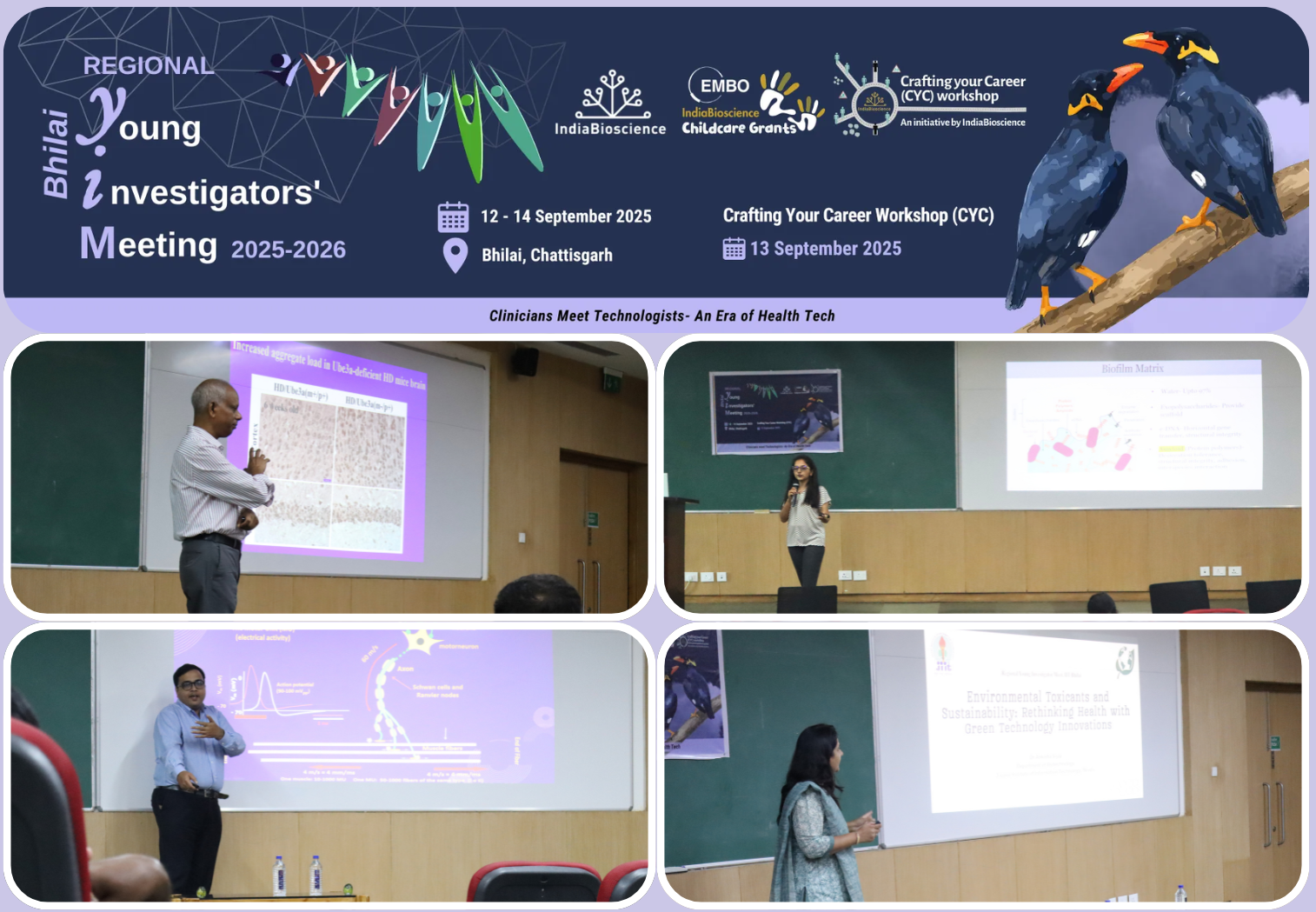
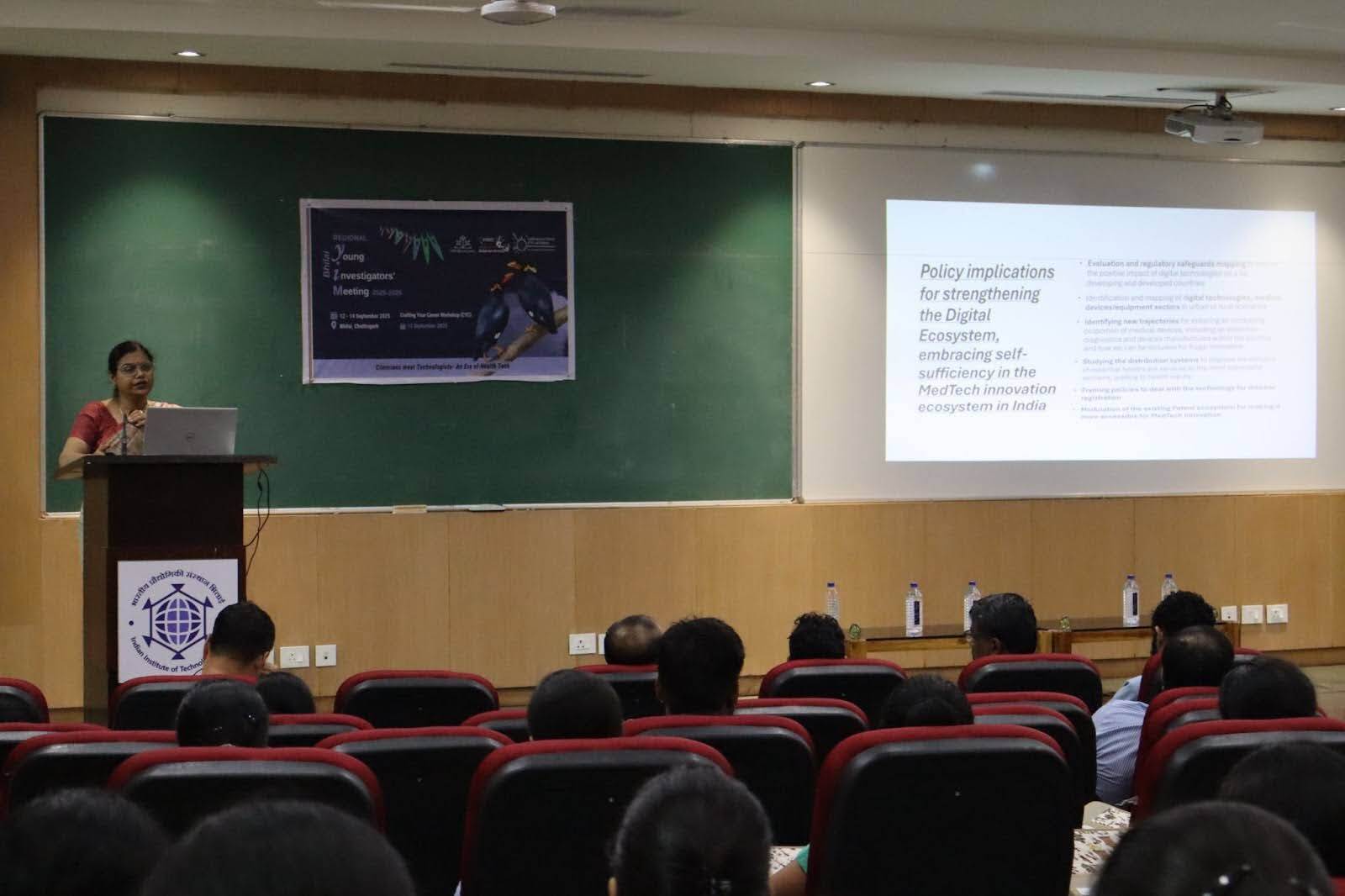
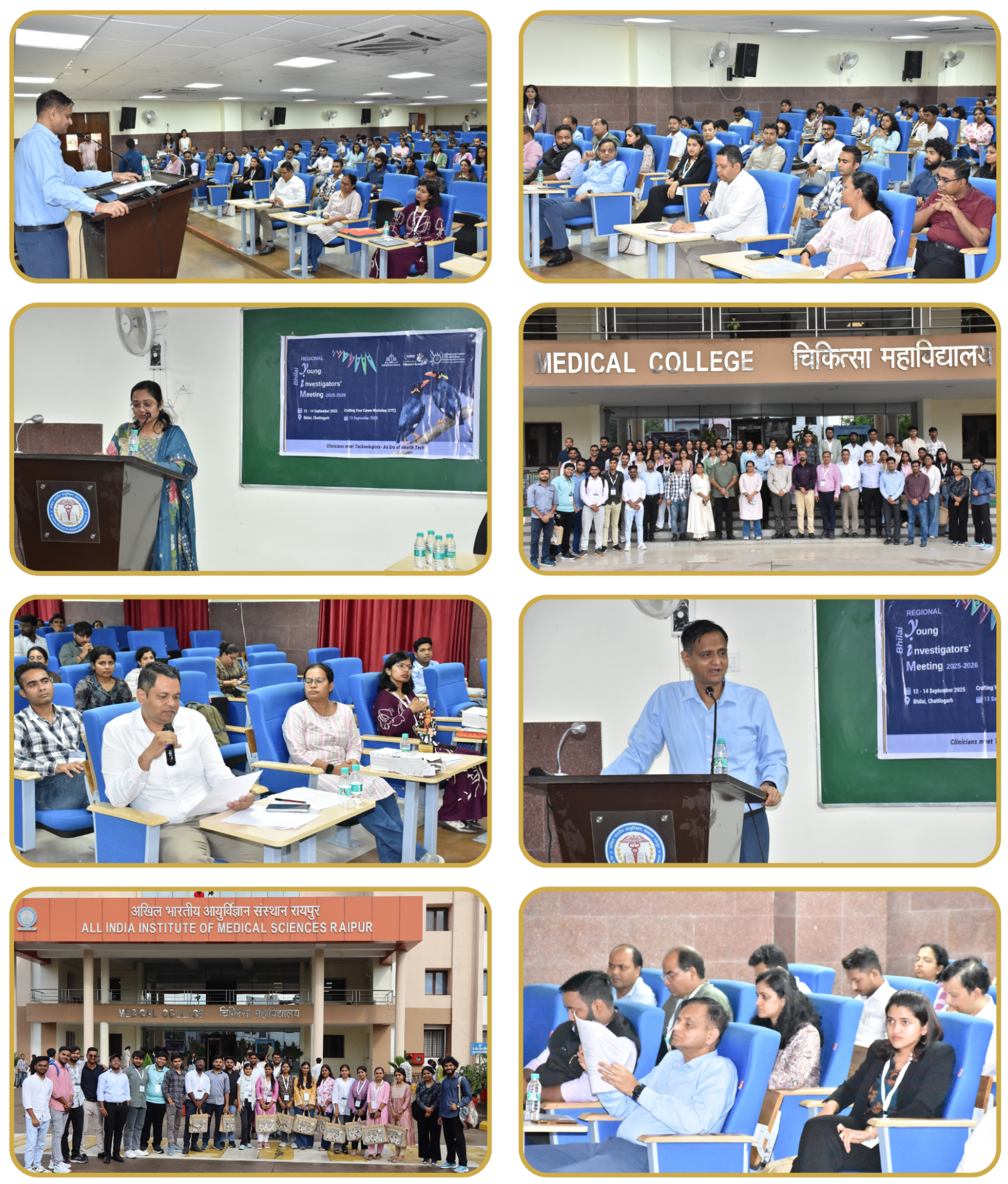
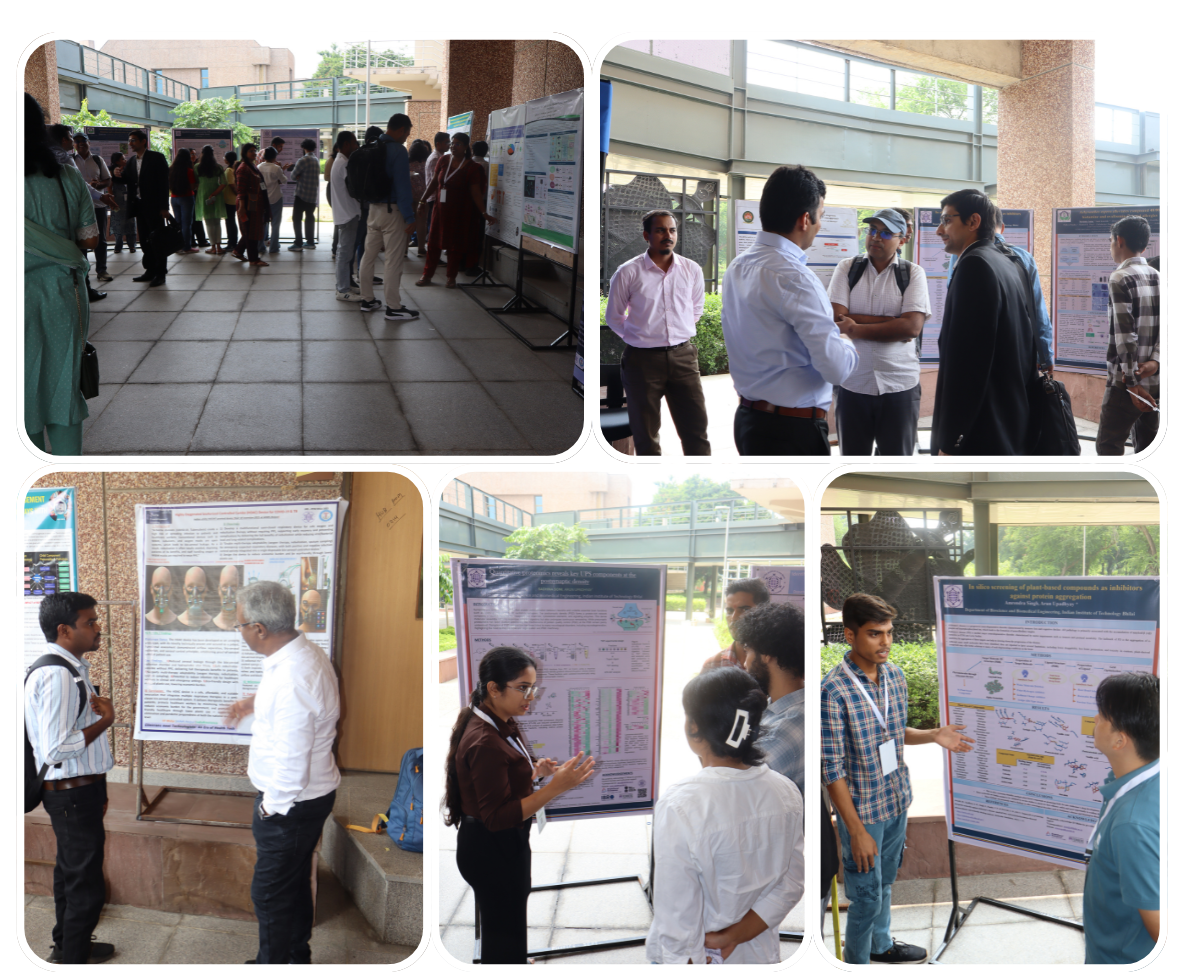
                src="https://cdn.indiabioscience.org/media/articles/Figure-2-Mentor-talks-covered-research-spanning-computational-biology-diagnostics-and-neurosciences.-Young-scientists-brought-fresh-perspectives-to-the-discussion-through-presentations-on-enviro.png"></a></figure><p dir="ltr">This was the very first RYIM in Chhattisgarh, and its timing could not have been better. With ambitious young institutes, an eager student community, and a growing ecosystem for science and technology, Bhilai and Raipur are cities on the rise. The meeting brought this potential into focus, linking regional strengths with national networks and creating space for dialogue across institutions, sectors, and career stages.<br></p><p dir="ltr"><strong>Theme and context</strong><br></p><p dir="ltr">The theme emphasising intersectoral convergence in medtech innovation, was both timely and forward-looking. Shubhini Saraf, Director, National Institute of Pharmaceutical Education and Research, Raebareli, set the tone by reminding the audience that the UN’s Sustainable Development Goal of “Good Health and Well-being” is inseparable from broader questions of development. Shubhini advocated for better data systems and robust health frameworks, especially for healthcare and technology to advance together. By centering medtech innovation, the meeting reflected Bhilai and Raipur’s position at the crossroads of industrial strength and scientific growth, and RYIM’s larger mission of encouraging collaborative science in emerging research hubs.</p><figure style="margin-left: auto; margin-right: auto; text-align: center; width: 477px; max-width: 477px;"><img src="https://cdn.indiabioscience.org/media/articles/unnamed-2_2025-09-22-103047_rdjl.jpg" data-image="801639" alt="RYIM Bhilai image 1" width="477" height="318"><figcaption style="text-align: center;">Shubhini Saraf shared India’s journey in medical devices, efforts that went behind filling regulatory gaps and challenges thereof, and creating frameworks to enable indigenous innovation | Picture Credit: IIT Bhilai</figcaption></figure><p dir="ltr"><strong>Broader impact for Bhilai and Raipur</strong><br></p><p dir="ltr">The event brought together IIT Bhilai, AIIMS Raipur, NIT Raipur, and several local colleges working side by side to spark conversations that rarely happen in day-to-day institutional silos. From budding science colleges in Bhilai to the IIT, the meeting gave visibility to local talent as young researchers from all these institutions had direct dialogues with senior leaders and peers from other parts of the country. The ‘Clinicians-Meet-Technologists’ sessions brought together physicians, biologists, and entrepreneurs to discuss how ideas can transition from the lab bench to patients and industry floors. Students not only presented their work but were also exposed to new career pathways, mentorship, and practical skills in communication.<br></p><p dir="ltr"><strong>Diversity of ideas mirroring diversity of participants: RYIM Bhilai in pictures</strong><br></p><figure style="margin-left: auto; margin-right: auto; text-align: center; width: 530px; max-width: 530px;"><img src="https://cdn.indiabioscience.org/media/articles/Figure-2-Mentor-talks-covered-research-spanning-computational-biology-diagnostics-and-neurosciences.-Young-scientists-brought-fresh-perspectives-to-the-discussion-through-presentations-on-enviro-2.png?1758776201594" data-image="802012" width="530" height="622"><figcaption style="text-align: center;">When Clinicians met Technologists: Local clinicians sat down with technologists and entrepreneurs to reflect on challenges, share insights, and imagine solutions together. Picture Credit: AIIMS Raipur | Collage by Moumita Mazumdar</figcaption></figure><figure style="margin-left: auto; margin-right: auto; text-align: center; width: 520px; max-width: 520px;"><img src="https://cdn.indiabioscience.org/media/articles/3_2025-09-22-104137_iwtm.png" data-image="801645" alt="RYIM Bhilai Fig 3" width="520" height="432"><figcaption style="text-align: center;">Community development: Different sessions, including IndiaBioscience's "Crafting Your Career" workshop, poster sessions, and lightning talks, were woven into the programme across the three days. Poster sessions and lightning talks provided a lively space for exchange, peer learning, and community building, essential for regions stepping onto the national research stage. Picture Credit: IIT Bhilai | Collage by Siuli Mitra</figcaption></figure><p dir="ltr"><br><strong>Conclusion</strong><br></p><blockquote dir="ltr" class="pull-quote">Platforms like RYIM will continue to be critical as India’s science landscape becomes more democratised, moving beyond tier 1 institutions into smaller cities to nurture new talent, empower them to connect and collaborate to find better solutions for local problems, and enhance their visibility while doing so. </blockquote><p dir="ltr">The RYIM at Bhilai was one such step towards empowering early career researchers at Bhilai and Raipur by exposing them to diverse career pathways in science and strengthening the spirit of collective responsibility for regional advancement in science through excellence. The meeting helped young researchers understand that there are networks that can be built with others across the country to help solve regional problems. <br></p>
              ]]></content><category term="science" label="Science" /><category term="training" label="Training" /><category term="networking" label="Networking" /><category term="career-development" label="Career Development" /><category term="yim" label="YIM" /><category term="networking" label="Networking and Collaboration" /></entry><entry><title>India’s 2025 IBRO Rising Stars: In conversation with Poulomi Banerjee and Proloy Das</title><link
                  rel="alternate"
                  href="https://indiabioscience.org/news/2025/indias-2025-ibro-rising-stars-in-conversation-with-poulomi-banerjee-and-proloy-das"
                  type="text/html"
                  /><summary type="html"><![CDATA[
                <p dir="ltr">Two early-career neuroscientists from India, <a href="https://www.linkedin.com/in/poulomi-banerjee-phd-0518b643/?originalSubdomain=in" target="_blank" rel="noreferrer noopener">Poulomi Banerjee</a> and <a href="https://proloydas.net/" target="_blank" rel="noreferrer noopener">Proloy Das</a>, have been awarded the prestigious 2025 <a href="https://ibro.org/grant/rising-stars-awards/" target="_blank" rel="noreferrer noopener"><em>International Brain Research Organization (IBRO) Rising Star Award</em></a>, in recognition of their research contributions and potential for the future of neuroscience. While they have taken different paths in their scientific journeys, they share a common goal: creating a research space that fills a significant gap in their field and enhances India's position in the neurosciences.<br /></p>              ]]></summary><id>tag:indiabioscience.org,2025-09-15:/news/2025/indias-2025-ibro-rising-stars-in-conversation-with-poulomi-banerjee-and-proloy-das</id><published>2025-09-15T10:00:00+05:30</published><updated>2025-10-07T14:23:36+05:30</updated><author><name>Moumita Mazumdar</name><uri>https://indiabioscience.org/authors/moumita</uri></author><content type="html"><![CDATA[
                
<p dir="ltr">Two early-career neuroscientists from India, <a href="https://www.linkedin.com/in/poulomi-banerjee-phd-0518b643/?originalSubdomain=in" target="_blank" rel="noreferrer noopener">Poulomi Banerjee</a> and <a href="https://proloydas.net/" target="_blank" rel="noreferrer noopener">Proloy Das</a>, have been awarded the prestigious 2025 <a href="https://ibro.org/grant/rising-stars-awards/" target="_blank" rel="noreferrer noopener"><em>International Brain Research Organization (IBRO) Rising Star Award</em></a>, in recognition of their research contributions and potential for the future of neuroscience. While they have taken different paths in their scientific journeys, they share a common goal: creating a research space that fills a significant gap in their field and enhances India's position in the neurosciences.</p><figure><a href="https://indiabioscience.org/news/2025/indias-2025-ibro-rising-stars-in-conversation-with-poulomi-banerjee-and-proloy-das"><img
                width="1920"
                height="1080"
                style="max-width: 100%; height: auto"
                src="https://cdn.indiabioscience.org/media/articles/Title-image-Suraj_2025-09-01-052901_hxvp.png"></a></figure><p dir="ltr">Announced annually, the <a href="https://ibro.org/grant/rising-stars-awards/#program-awardees" target="_blank">IBRO Rising Star award</a> is given to early-career neuroscientists displaying exceptional promise for advancing the field of brain research. The goal is to support researchers who are at a challenging time in their career and help them to establish independent laboratories to undertake innovative, high-risk projects that will benefit the field. “<em>IBRO is proud to support early-career neuroscientists in their transition from postdoc to PI, and to be part of their continued journey in advancing global neuroscience. Our heartfelt congratulations to all Rising Stars Awardees!”,</em> Rebecca Hadid, Director of Grants and Programs, IBRO, told IndiaBioscience.</p><p dir="ltr">The award provides financial resources for building infrastructure, purchasing equipment, and initiating new research lines. Additionally, it offers congenital benefits, including enhanced international visibility and the opportunity to collaborate with the global neuroscience community, thereby avoiding isolation within their countries or institutions.</p><p dir="ltr"><strong>An opportunity for a new chapter</strong></p><p dir="ltr">Every award brings in distinction, but for young scientists building their first labs, it can also mark the turning of a page. For Poulomi and Proloy, this support comes just as they prepare to anchor their research journeys back in India.</p><p dir="ltr">For Poulomi, the award could not have come at a more pivotal time. After eight years in the international space as a postdoctoral researcher in the <a href="https://www.ukdri.ac.uk/" target="_blank">UK Dementia Research Institute (UK DRI)</a> at <a href="https://www.ed.ac.uk/" target="_blank">University of Edinburgh</a>, Poulomi returned to India to start her lab at the <a href="https://www.skanrt.in/" target="_blank">Scientific Knowledge for Ageing and Neurological Ailments Research Trust (SKAN RT)</a> in Bengaluru. “<em>As a woman scientist returning to India after spending eight years abroad, this award feels symbolic</em>. <em>It supports my scientific vision while encouraging inclusivity in the neuroscience ecosystem</em>”, Poulomi reflected.<br></p><p dir="ltr">The funding from the award, she mentions, will help her to "<em>initiate high-risk, high-reward projects, build a strong research team, and attract collaborations and matched funding</em>". Building a lab from scratch is no easy task, and for her, this recognition gives both resources and a profile in India's expanding neuroscience research community. </p><p dir="ltr">Meanwhile, Proloy joined the <a href="https://www.nbrc.ac.in/newweb/" target="_blank">BRIC-National Brain Research Centre (NBRC)</a>, Manesar, in 2024 and is setting up what he calls his “<em>baby lab</em>”, waiting for the very first MSc and PhD students to join this year. “<em>NBRC already has some of the wet-lab facilities I’ll need, but I was hoping to buy workstations and computers so my lab is fully ready before the first batch arrives. This award will help with that</em>”.</p><p dir="ltr">For Proloy, the award is more than just funding; it is also a platform to communicate about his work with the broader research community. “<em>As with any new lab, I need some way to reach out to the wider research community and publicise our work. This award is the perfect mouthpiece for that purpose</em>”, he explains.</p><p dir="ltr"><strong>Addressing big issues with new perspectives</strong><br></p><p dir="ltr">Poulomi’s research targets the neuroimmune processes underlying neurological disorders, an interest honed during her time at the UK DRI. “<em>I explored how inflammation contributes to neurodegeneration and neurodevelopmental disorders using patient-derived pluripotent stem cells, blood macrophages, and post-mortem brain tissue</em>”, she explained, mentioning work she published in <a href="https://www.science.org/doi/10.1126/sciadv.abq0651" target="_blank">Science Advances (2023)</a>, <a href="https://pathsocjournals.onlinelibrary.wiley.com/doi/full/10.1002/path.5846" target="_blank">Journal of Pathology (2021)</a>, and <a href="https://www.sciencedirect.com/science/article/pii/S1873506120303470?via%3Dihub" target="_blank">Stem Cell Research (2020)</a>. <br></p><p dir="ltr">Now, at SKAN RT, Poulomi is keen to explore the cellular and molecular basis of early-onset Parkinson’s disease (EOPD) among Indian patients. This is critical, as Indian EOPD patients are underrepresented in large-scale studies, which are predominantly based on Western cohorts. “<em>Using patient iPSC (</em><em>induced Pluripotent Stem Cells)</em><em>-derived brain organoids and other human experimental models, I hope to uncover population-specific disease mechanisms and biomarkers</em>. <em>This could open possibilities for targeted therapies suited to Indian genetic backgrounds</em>”, she added.</p><p dir="ltr">With a background in electrical engineering and signal processing, Proloy approaches human neuroscience from a different perspective, tackling the challenge of analysing complex data. “<em>One of the primary challenges is the lack of efficient tools for analysing data generated by neuroscience studies</em>. <em>Traditionally, neuroscientists borrow methods from biostatisticians, but human neuroscience quickly becomes too complicated to rely on those concepts alone, especially when correlating neurophysiological time series with behavioural data</em>”, Proloy explained. To address this gap, he is developing new analytical techniques and modelling paradigms to “<em>summarise long neurophysiological recordings in ways that make it easier for experimentalists to make sense of their data</em>”, he added.</p><p dir="ltr"><strong>Dealing with a new ecosystem back home</strong><br></p><p dir="ltr">Transitioning to being an independent faculty has its own challenges. In commentary (<a href="https://www.sciencedirect.com/science/article/pii/S0377221709000137?via%3Dihub" target="_blank">1</a>, <a href="https://www.sciencedirect.com/science/article/pii/S0307904X20307034" target="_blank">2</a>, <a href="https://www.sciencedirect.com/science/article/pii/S0016328715000841" target="_blank">3</a>, <a href="https://www.pnas.org/doi/10.1073/pnas.0404965101" target="_blank">4</a>) on the steep learning curve of adjusting to a new research ecosystem, Poulomi says, “<em>Setting up a lab from scratch involves navigating logistical and administrative hurdles while also defining a clear scientific vision”</em>.</p><p dir="ltr"><strong>“</strong><strong><em>Different countries have different infrastructures, funding landscapes, and collaborative ecosystems, and adapting to that is an ongoing process</em></strong><strong>”.</strong><br></p><p dir="ltr">For Proloy, the challenge was being re-acquainted with India’s systems of academia and funding after training abroad. “<em>I had very little idea about the PhD admissions, NET exams, or even how grants are announced here</em>”, he recalls. “<em>Unlike the National Institute of Health (NIH) or National Science Foundation (NSF) in the US, funding calls in India often appear out of nowhere with about 30 days’ notice. It’s not disastrous, but it can disrupt your workflow in the beginning</em>”.<br></p><p dir="ltr">Proloy adds that early-career scientists working in government institutions can also experience a lack of institutional support. “<em>You just have to work a bit harder to be equally productive</em>”, he notes.</p><p dir="ltr"><strong>The neuroscience landscape in India</strong><br></p><p dir="ltr">Both Poulomi and Proloy feel that the ecosystem for neuroscience in India is growing, but still has many underexplored avenues. Poulomi believes they have seen “impressive progress in basic neuroscience”, but notes the need for stronger translational research and human-centric disease modelling. “There’s a real opportunity to integrate patient-derived models and multi-omics approaches”, she says, “especially for studying disorders in diverse populations”.</p><p dir="ltr">Proloy points to a deeper structural issue.</p><p dir="ltr">“<em>We misinterpret the ‘Make in India’ drive, focusing too much on replicating existing products rather than creating original innovations</em>”, he says. </p><blockquote dir="ltr" class="pull-quote"><em>Without more investment in basic science, it’s hard to produce truly global breakthroughs. But neuroscience offers enormous opportunities in diagnostics, monitoring, and drug development if we can align research with that vision</em><strong>”</strong>.</blockquote><p dir="ltr"><strong>Advice to the future generation</strong><br></p><p dir="ltr">Poulomi recommends budding neuroscientists to nurture their curiosity and promote interdisciplinary approaches that connect research to real-world questions. “<em>We’re in an exciting era</em>”, she says. </p><blockquote dir="ltr" class="pull-quote"><em>With AI, data science, and multi-omics, we are now better equipped to unravel the complexities of neurological disorders like never before. Build strong foundations, don’t be afraid to try new model systems, and believe great science can happen anywhere with the right mindset and support”</em>.</blockquote><p dir="ltr">Proloy offers practical advice - “<em>Don’t be afraid to get your hands dirty with fieldwork</em>”. </p><blockquote dir="ltr" class="pull-quote"><em>Treat it like a blue-collar job, the hard work pays off. And stay up to date with trends. You never know what you’ll stumble upon, so it’s always better to be prepared than to be sorry</em><strong>”.</strong><br></blockquote><p dir="ltr">Poulomi Banerjee and Proloy Das, in their own unique ways, are laying the groundwork for impactful neuroscience research in India. Their paths represent resilience, adaptivity, and vision; these qualities, combined with scientific knowledge, can create change not just in their careers, but in the landscape of neuroscience research in the country.<br></p>
              ]]></content><category term="neuroscience" label="Neuroscience" /><category term="advice" label="Advice" /><category term="research" label="Research" /></entry><entry><title>From scent to survival: The evolution of toxic food tolerance in Drosophila</title><link
                  rel="alternate"
                  href="https://indiabioscience.org/news/2025/from-scent-to-survival-the-evolution-of-toxic-food-tolerance-in-drosophila"
                  type="text/html"
                  /><summary type="html"><![CDATA[
                <p dir="ltr">Researchers from the <a href="https://www.ice.mpg.de/" target="_blank" rel="noreferrer noopener">Max Planck Institute for Chemical Ecology</a> demonstrate in a <a href="https://www.nature.com/articles/s41467-025-55971-2" target="_blank" rel="noreferrer noopener">recent study</a> that the life history of <em>Drosophila busckii</em> revolves around a toxic molecule, dimethyldisulfide (DMDS). The team has discovered that <em>D. busckii</em> is the first drosophilid species demonstrated to survive a known insect neurotoxin and could be developed further as a model to address questions of ecology and toxicology.<br /></p>              ]]></summary><id>tag:indiabioscience.org,2025-08-18:/news/2025/from-scent-to-survival-the-evolution-of-toxic-food-tolerance-in-drosophila</id><published>2025-08-18T11:07:00+05:30</published><updated>2025-08-18T13:09:26+05:30</updated><author><name>Venkatesh Pal Mahadevan</name><uri>https://indiabioscience.org/authors/VenkateshPalMahadevan</uri></author><content type="html"><![CDATA[
                
<p dir="ltr">Researchers from the <a href="https://www.ice.mpg.de/" target="_blank" rel="noreferrer noopener">Max Planck Institute for Chemical Ecology</a> demonstrate in a <a href="https://www.nature.com/articles/s41467-025-55971-2" target="_blank" rel="noreferrer noopener">recent study</a> that the life history of <em>Drosophila busckii</em> revolves around a toxic molecule, dimethyldisulfide (DMDS). The team has discovered that <em>D. busckii</em> is the first drosophilid species demonstrated to survive a known insect neurotoxin and could be developed further as a model to address questions of ecology and toxicology.</p><figure><a href="https://indiabioscience.org/news/2025/from-scent-to-survival-the-evolution-of-toxic-food-tolerance-in-drosophila"><img
                width="2048"
                height="1536"
                style="max-width: 100%; height: auto"
                src="https://cdn.indiabioscience.org/media/articles/Dbus-image.jpg"></a></figure><p dir="ltr">Imagine a kitchen that has been left untouched for a couple days — it's a breeding ground for decaying vegetables - and it smells horrible, almost sulphurous. Smelling this would turn your stomach, but for a tiny insect that most of us have overlooked, this is an opportunity. For <em>Drosophila busckii</em>, a lesser-known cousin of the typical fruit fly, the repugnant smell acts as an invitation — through a chemical signal - to do what it does best: lay eggs and thrive when others perish.</p><blockquote dir="ltr" class="pull-quote">This fly does not just exist in, but actually prefers the fumes of decay. How it does so is still being examined by scientists.</blockquote><p dir="ltr">Although tiny, insects have developed a very elaborate communication system — not through sound or sight, but through chemistry. They thrive in a world that is largely governed by smells (<a href="https://www.ice.mpg.de/94928/evolutionary-neuroethology" target="_blank">olfaction</a>): invisible signals drifting through the air that can guide insects to food, mates, safe places to lay eggs, and colonise and survive diverse ecological niches. Sometimes, this means evolving to thrive in a toxic environment, allowing for the utilisation of novel resources and avoiding competition over a single resource. <a href="https://en.wikipedia.org/wiki/Chemical_ecology" target="_blank">Chemical ecology</a>, in oversimplified words, is tapping into this ongoing communication to decipher its meaning and its basic principles. However, the mechanisms driving such rapid olfactory and tolerance adaptations remain poorly understood beyond well-known model species such as Drosophila melanogaster and its close relatives. Most of us have seen <em>D. melanogaster,</em> the small flies that are present in our kitchen around fruits. However, we fail to appreciate that the Drosophila genus contains more than 1500 species, while only up to ten have been studied in order to understand the chemical interactions between their corresponding hosts. <br></p><p dir="ltr">One such unexplored species is <em>D. busckii</em>. This species, also found in <a href="https://pubmed.ncbi.nlm.nih.gov/21220040/" target="_blank">India</a>, is known to breed from rotting vegetables, in contrast to its cousin species <em>D. melanogaster</em>, which has a strong preference for fermenting fruit. However, the olfactory basis of this adaptation was not studied before. Moreover, the sparse amount of literature suggested that the species could have developed an ability to tolerate toxic compounds emanating from rotting substrates. <br></p><blockquote dir="ltr" class="pull-quote">This new <a href="https://www.nature.com/articles/s41467-025-55971-2">study</a>, published in <a href="https://www.nature.com/ncomms/" target="_blank"><em>Nature Communications</em></a>, aimed to investigate just that, what exactly is attracting this fly (<em>D. busckii)</em> to the decomposing vegetables and how is it surviving, let alone thriving, under such extreme conditions?<br></blockquote><p dir="ltr">Using an array of classical chemical ecology techniques such as analytical chemistry: Gas chromatography–mass spectrometry (<a href="https://en.wikipedia.org/wiki/Gas_chromatography%E2%80%93mass_spectrometry" target="_blank">GC-MS</a>), electrophysiology (<a href="https://en.wikipedia.org/wiki/Single_sensillum_recording" target="_blank">single sensillum recording</a>) and behavioural bioassays, the team demonstrated that <em>D. busckii</em> prefers to breed from multiple rotting vegetables that emit large amounts of dimethyldisulfide (DMDS). Further, this fly also uses DMDS as an egg-laying cue and possesses a single class of <a href="https://www.frontiersin.org/journals/cellular-neuroscience/articles/10.3389/fncel.2021.789086/full" target="_blank">olfactory sensory neurons</a> (OSNs) in its antenna that are specifically tuned to detect even trace amounts of DMDS. </p><p dir="ltr">In contrast, no known type of OSNs in the antenna of <em>D. melanogaster</em> responds to DMDS, suggesting DMDS sensing has evolved specifically in <em>D. busckii</em>. DMDS, however, is <a href="https://pubmed.ncbi.nlm.nih.gov/12843310/" target="_blank">toxic</a> to many insects. Exposure to DMDS resulted in 100% mortality of several fly species, including <em>D. melanogaster</em>, within two hours of exposure. A particularly striking discovery in <em>D. busckii’s</em> case is that it has evolved resistance to DMDS and completed its life cycle on high amounts of DMDS. Eventually, a series of supporting experiments led to a hypothesis that this resistance is likely mediated by adaptive insensitivity of the cytochrome c oxidase (<a href="https://en.wikipedia.org/wiki/Cytochrome_c_oxidase" target="_blank">COX</a>; the last subunit of the mitochondrial electron transport chain), representing a rare instance of natural resistance evolution in an ecological context. It could further be hypothesised that this unique ability in <em>D. busckii</em> might open up access to unique resources that are void of any competition. </p><p dir="ltr">In summary, this study firmly demonstrates the potential of <em>D. busckii</em> to be established as a model species to investigate key phenomena in chemical ecology, including <a href="https://www.sciencedirect.com/topics/agricultural-and-biological-sciences/host-specificity" target="_blank">host specialisation</a> and <a href="https://www.sciencedirect.com/topics/earth-and-planetary-sciences/niche-partitioning" target="_blank">niche partitioning</a>. Moreover, COX is also a site targeted by other <a href="https://en.wikipedia.org/wiki/Gas_chromatography%E2%80%93mass_spectrometry" target="_blank">highly toxic gases</a> such as carbon monoxide and hydrogen cyanide. Therefore, <em>D. busckii</em> could also potentially serve as a model to understand adaptations to thrive in toxic environments. This study is an excellent example of the power of classical chemical ecology techniques to systematically investigate unexplored, non-model insect species — an area where India, with its vast and diverse fauna, holds immense untapped potential.</p>
              ]]></content><category term="cell-biology" label="Cell Biology" /><category term="molecular-biology" label="Molecular Biology" /><category term="neuroscience" label="Neuroscience" /><category term="research" label="Research" /></entry><entry><title>Early career researchers in science advice</title><link
                  rel="alternate"
                  href="https://indiabioscience.org/news/2025/early-career-researchers-in-science-advice"
                  type="text/html"
                  /><summary type="html"><![CDATA[
                <p dir="ltr">At a recent fireside chat hosted by the <a href="https://dstcpriisc.org/" target="_blank" rel="noreferrer noopener">DST Centre for Policy Research</a> at the <a href="https://iisc.ac.in/" target="_blank" rel="noreferrer noopener">Indian Institute of Science, Bengaluru</a>, the IndiaBioscience team had the opportunity to attend a candid discussion featuring <a href="https://www.scientifique-en-chef.gouv.qc.ca/en/" target="_blank" rel="noreferrer noopener">Rémi Quirion</a>, Chief Science Advisor to the Quebec government and President of the <a href="https://ingsa.org/" target="_blank" rel="noreferrer noopener">International Network for Governmental Science Advice</a> (INGSA). He was joined by prominent science policy voices, <a href="https://be.iisc.ac.in/~mkjolly/mohit/" target="_blank" rel="noreferrer noopener">Mohit K. Jolly</a>, <a href="https://school.takshashila.org.in/faculty/shambhavi-naik" target="_blank" rel="noreferrer noopener">Shambhavi Naik</a>, and <a href="https://www.linkedin.com/in/suryesh-k-namdeo-phd-97843b191/?originalSubdomain=in" target="_blank" rel="noreferrer noopener">Suryesh Namdeo</a>.<br /></p>              ]]></summary><id>tag:indiabioscience.org,2025-08-08:/news/2025/early-career-researchers-in-science-advice</id><published>2025-08-08T01:00:00+05:30</published><updated>2025-07-16T15:10:27+05:30</updated><author><name>Siuli Mitra</name><uri>https://indiabioscience.org/authors/PRYwLlb3kA1gO0Q</uri></author><content type="html"><![CDATA[
                
<p>At a recent fireside chat hosted by the <a href="https://dstcpriisc.org/" target="_blank" rel="noreferrer noopener">DST Centre for Policy Research</a> at the <a href="https://iisc.ac.in/" target="_blank" rel="noreferrer noopener">Indian Institute of Science, Bengaluru</a>, the IndiaBioscience team had the opportunity to attend a candid discussion featuring <a href="https://www.scientifique-en-chef.gouv.qc.ca/en/" target="_blank" rel="noreferrer noopener">Rémi Quirion</a>, Chief Science Advisor to the Quebec government and President of the <a href="https://ingsa.org/" target="_blank" rel="noreferrer noopener">International Network for Governmental Science Advice</a> (INGSA). He was joined by prominent science policy voices, <a href="https://be.iisc.ac.in/~mkjolly/mohit/" target="_blank" rel="noreferrer noopener">Mohit K. Jolly</a>, <a href="https://school.takshashila.org.in/faculty/shambhavi-naik" target="_blank" rel="noreferrer noopener">Shambhavi Naik</a>, and <a href="https://www.linkedin.com/in/suryesh-k-namdeo-phd-97843b191/?originalSubdomain=in" target="_blank" rel="noreferrer noopener">Suryesh Namdeo</a>.</p><figure><a href="https://indiabioscience.org/news/2025/early-career-researchers-in-science-advice"><img
                width="2048"
                height="1365"
                style="max-width: 100%; height: auto"
                src="https://cdn.indiabioscience.org/media/articles/HSC_0031.JPG"></a></figure><p dir="ltr">The session highlighted the many ways researchers can participate in policy formulation, ranging from passive involvement to highly active engagement. Here, we share key takeaways on the strategies and tools early career researchers (ECRs) can use to engage effectively with policymaking.</p><p dir="ltr"><strong>Trust, communication, and policy engagement</strong></p><p dir="ltr">Drawing on his experience serving under three different governments, Rémi Quirion emphasised that trust and resilience are central to science advisory roles, especially when navigating political shifts or crises like COVID-19. </p><blockquote dir="ltr" class="pull-quote">He noted that <em>science advisors do not need to “know everything”</em>—a common misconception—but <em>should instead collaborate with experts across disciplines to develop practical solutions</em>.</blockquote><p dir="ltr">Effective science advice also requires scientists to adapt their language and use storytelling when communicating with policymakers. Senior advisors can distill complex information from expert groups into clear, actionable recommendations for decision-makers. Quirion stressed the importance of resilience, as science advisors must adapt to changing political environments and urgent demands, often needing to rebuild trust repeatedly.<br></p><p dir="ltr"><strong>But why engage early career researchers?</strong></p><p dir="ltr">Mohit Jolly shared how including young scientists’ voices in strategic white papers has led to real policy shifts in India, such as the recent relaxations in procurement guidelines for scientific institutions. The traditional view that only senior scientists can serve as science advisors is outdated and needs to change. The session underscored the growing recognition, support, and opportunities for ECRs to engage in science advice, diplomacy, and policy roles—both through structured programs and international networks.</p><p dir="ltr">Importantly, ECRs need not be passive observers; they can and should be active contributors to science-policy dialogues. One area where ECRs could have a significant impact is in advocating for new research evaluation models that recognise science-society contributions.<br></p><p dir="ltr"><strong>How to get started in science advice?</strong></p><p dir="ltr">With over <a href="https://ingsa.org/about/our-story/">6,500 members across 110 countries</a>, the INGSA network offers a valuable <a href="https://ingsa.org/capacity/">platform</a> for Indian researchers to strengthen their skills in connecting evidence with policy development. The speakers also highlighted the importance of diaspora engagement and local policy collaborations as vital next steps.</p><p dir="ltr">Another impactful approach is involving citizens in the process. While this takes more time, it is incredibly rewarding. Quirion shared an example, </p><blockquote dir="ltr" class="pull-quote"><em>A citizen might notice that the colour of the river water on their farm has changed, and they can reach out to us about it. We then work together to investigate the issue. Of course, this collaborative process takes time."</em></blockquote><p dir="ltr">Even if research does not generate strong data, participants gain a deeper understanding of how science advice is developed through an iterative, back-and-forth process rather than a straightforward, linear path.</p><p dir="ltr">Shambhavi Naik also emphasised the importance of using multiple media formats to shape narratives that resonate with both policymakers and the public. She noted that consistency in messaging is crucial; a single social media post, blog, or opinion piece is rarely enough to make a lasting impact.</p><p dir="ltr">If you are an early career researcher interested in shaping the future of science policy, now is the time to get involved - seek out networks, share your insights, and become an active voice in bridging science and society. Whether it is a LinkedIn post, your personal blog, or a podcast, the key is to stay consistent and not stop at a single event.<br></p>
              ]]></content><category term="other" label="Other" /><category term="policy" label="Policy" /><category term="advice" label="Advice" /></entry><entry><title>Micronutrient found to rewire neuron-gut communication and promote longevity</title><link
                  rel="alternate"
                  href="https://indiabioscience.org/news/2025/micronutrient-found-to-rewire-neuron-gut-communication-and-promote-longevity"
                  type="text/html"
                  /><summary type="html"><![CDATA[
                <p dir="ltr">New study from <a href="https://www.nii.res.in/" target="_blank" rel="noreferrer noopener">BRIC-National Institute of Immunology</a> reveals how vitamin B12 boosts serotonin signalling and promotes longevity through brain-gut interaction.<br /></p>              ]]></summary><id>tag:indiabioscience.org,2025-07-25:/news/2025/micronutrient-found-to-rewire-neuron-gut-communication-and-promote-longevity</id><published>2025-07-25T10:30:00+05:30</published><updated>2025-07-25T10:31:25+05:30</updated><author><name>Shreya Bhattacharjee</name><uri>https://indiabioscience.org/authors/ShreyaBhattacharjee</uri></author><content type="html"><![CDATA[
                
<p dir="ltr">New study from <a href="https://www.nii.res.in/" target="_blank" rel="noreferrer noopener">BRIC-National Institute of Immunology</a> reveals how vitamin B12 boosts serotonin signalling and promotes longevity through brain-gut interaction.</p><figure><a href="https://indiabioscience.org/news/2025/micronutrient-found-to-rewire-neuron-gut-communication-and-promote-longevity"><img
                width="1280"
                height="720"
                style="max-width: 100%; height: auto"
                src="https://cdn.indiabioscience.org/media/articles/Fig_IBS_Graphical_Abstract.TIF"></a></figure><p dir="ltr">We all know that eating our greens—or reds, oranges, and purples—helps us stay healthy. But what if we told you that a tiny amount of a single vitamin, sourced from our diet and gut microbes, could profoundly alter brain chemistry, reshape our food choices, restructure communication between the brain and the gut, and help us age more gracefully?<br></p><p dir="ltr">Our brain is in constant conversation with the gut, and new research is showing just how deep this connection goes. Scientists from the <a href="https://sites.google.com/a/nii.ac.in/arnab/">Molecular Aging Laboratory</a> at the <a href="https://www.nii.res.in/" target="_blank">BRIC-National Institute of Immunology, New Delhi</a>, uncovered a surprising role for vitamin B12 in orchestrating communication between the brain and the gut. Using the tiny, transparent roundworm <em>Caenorhabditis elegans</em>, the team discovered a surprising connection between vitamin B12 and a neurotransmitter, and the happiness hormone, serotonin. The <a href="https://www.nature.com/articles/s41467-025-60475-0" target="_blank">study</a>, published in <a href="https://www.nature.com/ncomms/" target="_blank"><em>Nature Communications</em></a>, was led by <a href="https://www.nii.res.in/en/faculty/dr-arnab-mukhopadhyay" target="_blank">Arnab Mukhopadhyay</a> and <a href="https://www.linkedin.com/in/sabnam-sahin-rahman-a14bb7267/?originalSubdomain=in" target="_blank">Sabnam Sahin Rahman</a>.<br></p><p dir="ltr">Vitamin B12 is a crucial cofactor in the methionine cycle (Met-C), a metabolic pathway involved in methylation, gene regulation, and protein synthesis. Humans can only acquire vitamin B12 through diet or from certain gut bacteria. Deficiency of vitamin B12 or genetic impairments in this Met-C pathway are linked to a range of disorders, including cardiovascular disease, depression, anxiety, insulin resistance, and obesity.</p><blockquote dir="ltr" class="pull-quote"><em>I think one of the most interesting observations we made was that a vitamin B12-rich diet can profoundly influence physiology in worms with a specific genetic background—enhancing their stress tolerance, reshaping food-seeking behavior, and remarkably extending their lifespan," </em></blockquote><p dir="ltr"><em>said the lead researcher, Sabnam.</em><br><br></p><figure style="margin-left: auto; margin-right: auto; text-align: center; width: 642px; max-width: 642px;"><img src="https://cdn.indiabioscience.org/media/articles/Screenshot-2025-06-27-at-11.29.41-AM.png" data-image="783231" width="642" height="492"><figcaption style="text-align: center;">Serotonin-producing neurons of the C. elegans are marked with a green-fluorescent protein, while the serotonin they release is detected using a red fluorescent signal. When the worms are fed a diet rich in vitamin B12, both the production and release of serotonin increase, seen as a yellow overlap where the green and red signals merge. Photo Credit: Authors</figcaption></figure><p dir="ltr">The team discovered that the key player in this nutrient-brain-body dialogue is the chemosensory ADF neurons—a group of brain cells in the worm that sense external chemical cues. When B12 activates the methionine cycle in these neurons, it boosts serotonin production—the same neurotransmitter linked to mood and well-being in humans. This serotonin surge then triggers a cascade of signalling in other neurons, prompting the release of more neurochemicals, like a neuropeptide hormone that acts on the gut. The outcome: a gut-based stress response pathway, the p38 MAP-kinase pathway, is activated, improving the worm’s ability to cope with environmental stressors and promoting longevity.<br></p><p dir="ltr">This isn’t just about stress and survival in worms, though! Crucially, this is a story about internal teamwork. The worm’s brain doesn’t just sense nutrients—it uses that information to direct behaviour. <br></p><p dir="ltr">The team found that the B12-induced serotonin response motivated the worms to actively seek out B12-rich foods, revealing a fascinating feedback loop in which diet influences brain signaling, which in turn alters food preference and gut resilience. It's as if the brain and gut are working in perfect sync!<br></p><p dir="ltr">The brain registers the benefits of a B12-rich meal and makes more serotonin, which in turn tells the gut to respond with improved stress defences. Together, this shapes behaviour, nudging the worms to change their foraging pattern and actively seek out B12-rich food. </p><p dir="ltr"><em>"This work highlights a previously unappreciated link between dietary B12, serotonin signaling, and organismal stress responses,” says Arnab Mukhopadhyay. </em><br></p><blockquote dir="ltr" class="pull-quote"><em>It provides a molecular framework for understanding how micronutrients shape brain-gut interactions to influence aging and behavior. It's as if their brain and gut are in harmony, leaving a lasting impression on the body’s physiology.”</em></blockquote><p><br>While this research was conducted in worms, the implications for humans are profound. It underscores the deep evolutionary roots of diet-brain-gut communication and offers insights into how micronutrients, brain chemistry, and metabolic health may be linked in aging and disease. It’s a powerful reminder that even in creatures as small as <em>C. elegans</em>, food is more than fuel; it’s a molecular message that coordinates internal systems to promote health and longevity. </p><blockquote class="pull-quote">So the next time you have a “gut feeling,” science suggests you might want to listen—your brain and gut are talking.<br></blockquote>
              ]]></content><category term="cell-biology" label="Cell Biology" /><category term="molecular-biology" label="Molecular Biology" /><category term="neuroscience" label="Neuroscience" /><category term="research" label="Research" /></entry><entry><title>Between practice and possibility: Indian voices at PCST 2025</title><link
                  rel="alternate"
                  href="https://indiabioscience.org/news/2025/between-practice-and-possibility-indian-voices-at-pcst-2025"
                  type="text/html"
                  /><summary type="html"><![CDATA[
                <p dir="ltr">During PCST 2025, Indian science communicators discussed how science communication must move beyond simplifying research — toward equity, interdisciplinary engagement, and systemic change. The conference brought together a range of innovative formats and engaging dialogues to present a range of global perspectives. It also enabled Indian participants a chance to reflect on India's emerging role in making science communication more equitable and community oriented.<br /></p>              ]]></summary><id>tag:indiabioscience.org,2025-07-21:/news/2025/between-practice-and-possibility-indian-voices-at-pcst-2025</id><published>2025-07-21T10:00:00+05:30</published><updated>2025-08-11T11:29:45+05:30</updated><author><name>Siddharth Kankaria</name><uri>https://indiabioscience.org/authors/SiddharthKankaria</uri></author><content type="html"><![CDATA[
                
<p>During PCST 2025, Indian science communicators discussed how science communication must move beyond simplifying research — toward equity, interdisciplinary engagement, and systemic change. The conference brought together a range of innovative formats and engaging dialogues to present a range of global perspectives. It also enabled Indian participants a chance to reflect on India's emerging role in making science communication more equitable and community oriented.</p><figure><a href="https://indiabioscience.org/news/2025/between-practice-and-possibility-indian-voices-at-pcst-2025"><img
                width="1920"
                height="1080"
                style="max-width: 100%; height: auto"
                src="https://cdn.indiabioscience.org/media/articles/Illustration-by-Moumita-Mazumdar.png"></a></figure><p dir="ltr">What does science communication entail when it’s not just about simplifying complex research, but also about listening deeply, questioning power, and catalysing systemic change?</p><p dir="ltr">This is exactly what we gathered to collectively think about at the <a href="https://www.abdn.ac.uk/events/conferences/pcst-2025/" target="_blank">17th International Public Communication of Science and Technology (PCST) Network Conference</a> this May (2025) in Aberdeen, Scotland. Discussions exploring the “transitions, traditions and tensions” within science communication took centre stage — both explicitly during the conference sessions and in the interstitial spaces between talks, hallway conversations, and informal catch-ups over lunch and coffee.</p><p dir="ltr">As a returning participant and member of <a href="https://www.pcst.network/about/scientific-committee/" target="_blank">PCST’s Scientific Committee</a>, I’ve seen this conference evolve over the years. This year’s edition was particularly noteworthy in terms of foregrounding values of equity, inclusion, and reflexivity not just in its content, but also in its structuring. Formats were redesigned to support creative and critical engagement, early-career and Global South voices were especially visible, and themes like co-creation, interdisciplinarity, and relationship-building took up real space.</p><p dir="ltr">Yet the process of learning and growth is never truly finished, and there’s a lot more work to do in ensuring wider accessibility, reducing barriers to participation for attendees from low- and middle-income countries (LMICs), and embedding these values more consistently across all tracks and formats. As with science communication itself, the conference reminded us that inclusion is not a checkbox — but a practice that must be carefully nurtured and continuously examined.</p><p dir="ltr">This ethos of continuous learning and reflexivity also resonated strongly with the Indian participants at PCST 2025. From PhD students and early-career researchers to independent practitioners, each attendee came with their own questions and left with new ideas, collaborators, and resolve.<br></p><p><strong>Discovering common ground across disciplines</strong></p><p dir="ltr">One overarching theme that many of us came back with was that science communication today is not — and cannot be — an isolated endeavour. It is inherently interdisciplinary, shaped by diverse knowledge systems including research, art, design, education, social sciences, media studies, and diverse lived experiences.</p><p dir="ltr"><a href="https://www.linkedin.com/in/mrraghul/?original_referer=https%3A%2F%2Fwww%2Egoogle%2Ecom%2F&originalSubdomain=in" target="_blank">M. R. Raghul</a>, whose PhD work sits at the intersection of climate and visual communication, described his PCST experience as “a constant loop of learning and unlearning.” Conversations with peers from Nigeria, Portugal, the Netherlands, Germany, and Ireland led to several unexpected conversations and exciting tangents — including a serendipitous moment where his interest in photogrammetry sparked new ideas for a researcher working on conserving museums and studying the possibilities of incorporating science within art museums. </p><blockquote dir="ltr" class="pull-quote">A few dialogues are [still] continuing, which I hope will lead to successful research collaborations” </blockquote><p dir="ltr">he shared.<br></p><p dir="ltr"><a href="https://www.linkedin.com/in/kadambari-patil-a7744a197/?originalSubdomain=in" target="_blank">Kadambari Patil</a>, attending her first international SciComm conference, echoed a similar sentiment: </p><blockquote dir="ltr" class="pull-quote">What started as small talk about the weather or the beautiful gardens near the University of Aberdeen often turned into meaningful discussions about the conference sessions and each other's work”.</blockquote><p dir="ltr">A particularly impactful conversation with <a href="https://www.linkedin.com/in/sophie-duncan-759a5882/?originalSubdomain=uk" target="_blank">Sophie Duncan</a> encouraged her to seek mentorship to fortify her career in areas of public engagement and design-led communication, while other conversations inspired her to use evaluation and impact measurement approaches for strengthening her work projects. Overall, it made her feel like “there’s space for young science communicators like me to grow while doing what we love”.<br></p><p dir="ltr">Both Raghul and Kadambari also appreciated the space PCST created for creative formats — 3-minute flash talks, medical animations, science theatre, photography, and creative storytelling approaches — which challenged traditional formats and expanded the boundaries of communicating science creatively.<br></p><p><strong>Asking where India stands — and where we need to go</strong></p><p dir="ltr">For many other attendees, PCST offered the dual opportunity to both reflect on India’s evolving SciComm ecosystem, and learn from global innovations, approaches, and initiatives as well.</p><p dir="ltr">For <a href="https://www.linkedin.com/in/moumita-mazumdar-0b971a186/?originalSubdomain=in" target="_blank">Moumita Mazumdar</a>, attending PCST provided critical exposure to a global conference focused entirely on science communication. </p><blockquote dir="ltr" class="pull-quote">What struck me most was the range of differing opinions, philosophies, and research methodology evident in science communication globally."</blockquote><p dir="ltr">It also made her reflect on how far India has come, but also how much more needs to be done in terms of embedding research, evaluation, and policy frameworks within science communication.</p><p dir="ltr">This sense of duality — progress and possibility — was echoed by <a href="https://www.linkedin.com/in/anushkabanerjeee/?original_referer=https%3A%2F%2Fwww%2Egoogle%2Ecom%2F&originalSubdomain=in" target="_blank">Anushka Banerjee</a>, whose work intertwines research on severe mental illnesses and science communication.</p><blockquote dir="ltr" class="pull-quote">A lot of work that we’re doing in India is relevant and comparable to what’s being done globally”, but we don’t always know “how to parcel and present it in a comprehensive manner”. </blockquote><p dir="ltr">She found the use of quotes, visuals, and community stories in posters and publications particularly refreshing. “I look forward to using the knowledge and skills I picked up at the conference to publish our work and facilitate collaborations” she added.</p><p dir="ltr">Anushka also appreciated “sessions focusing on making health communication more inclusive, especially when working with people with lived experience”. She also felt they were a timely reminder to “avoid using ableist terms, especially in [our] communications, to set better examples for the public” and how it was critical to build “communication strategies with — not just for — people with lived experiences”.<br></p><p><strong>Rethinking institutional roles in media and public engagement</strong></p><p dir="ltr"><a href="https://www.linkedin.com/in/sangeetha-unnithan-aa470ab6/" target="_blank">Sangeetha Unnithan</a>, a science communication researcher and faculty at the Indian Institute of Management (IIM) Indore, found herself particularly reflecting on systemic differences across countries. “While we do have some very strong and well established science journalists in our country, science journalism still remains a niche field,” she said. But for her, “PCST opened the doors to understanding how science is prioritised and communicated in the rest of the world”. She particularly appreciated how committed scientific institutions were in countries like Germany and Ireland towards sharing their research through both traditional and digital media — something still rare in the Indian context.</p><p dir="ltr"></p><p dir="ltr">She also valued the diverse tools and approaches being used within science communication globally, such as how “scholars from China were applying traditional theories in public opinion and psychology to study public engagement with modern scientific topics”. She also appreciated a session by <a href="https://www.linkedin.com/in/rachel-mason039/?originalSubdomain=uk">Rachel Mason</a> and <a href="https://www.linkedin.com/in/thepiercy/?original_referer=https%3A%2F%2Fwww%2Egoogle%2Ecom%2F&originalSubdomain=uk">James Piercy</a> that advocated for “nurturing meaningful friendships — not merely partnerships — between researchers and science communicators to forge strong collaborations”.</p><p>For Sangeetha, the conference offered an important perspective reset: </p><blockquote class="pull-quote">Many times when we are super focused in our area of work, we lose sight of the larger cause or become completely oblivious to other perspectives. This gap is exactly what attending international conferences and events can bridge”. <br></blockquote><figure style="margin-left: auto; margin-right: auto; text-align: center;"><img src="https://cdn.indiabioscience.org/media/articles/PCST-and-Biotales-2.png" data-image="791338"><figcaption style="text-align: center;">Picture Credits: Self | Collage by Moumita</figcaption></figure><p><strong>Moving forward with purpose and possibility</strong></p><p dir="ltr">Zooming out a bit, India’s science communication ecosystem is clearly at an inflection point. The past decade has witnessed remarkable creativity and growth, but significant gaps remain in building resilient infrastructures, funding frameworks, and sustainable career progression pathways. Embedding regional-language and community-led initiatives, investing in evaluation and impact measurement, and institutionalising DEIA and decolonial frameworks will all be critical in building a more robust and equitable future for the field.</p><p dir="ltr">Globally too, there’s a marked shift in the field — which is now moving away from one-directional, extractive, and performative outreach efforts and increasingly adopting more co-creation, collective meaning-making, and community-driven efforts. This evolution challenges us to reconsider not just how science is communicated, but also who it serves in our country — and who it truly benefits.</p><p dir="ltr">Hosting an international conference like PCST in India could perhaps help accelerate these changes and catalyse new developments for the field. For instance, an international science communication event in India would not only offer global visibility to Indian initiatives and practitioners, but also spotlight India’s unique contributions: linguistic plurality, grassroots innovation, and a strong social justice orientation. It could also help place Indian science communication more firmly on the global map — by allowing Indian approaches to shape international conversations, while also strengthening communities of practice locally. Moving towards this future could begin by more Indian representation at future conferences like PCST.</p><p dir="ltr">For now, PCST 2025 was a strong reminder that the future of science communication depends as much on introspection as on innovation. It requires us to slow down, reflect intentionally, and listen with care — not just to our audiences, but to each other as well.</p><blockquote dir="ltr" class="pull-quote"><em>Between practice and possibility lies the work we must keep doing — together.</em><br></blockquote>
              ]]></content><category term="science-communication" label="Science Communication" /><category term="science" label="Science" /><category term="networking" label="Networking" /><category term="science-communication" label="Science communication" /><category term="networking" label="Networking and Collaboration" /></entry><entry><title>Some mistakes in protein translation might be good for cells!</title><link
                  rel="alternate"
                  href="https://indiabioscience.org/news/2025/some-mistakes-in-protein-translation-might-be-good-for-cells"
                  type="text/html"
                  /><summary type="html"><![CDATA[
                <p>A new study by <a href="https://www.ccmb.res.in/" target="_blank" rel="noreferrer noopener">CSIR-Centre for Cellular and Molecular Biology</a> indicates that minor mistakes while synthesising proteins can be advantageous for cells under stress by enabling them to sense and react to toxic molecules. This establishes how nature achieves precision and yet remains flexible, enabling cells to evolve and modify themselves even in very adverse conditions by way of precision-tuned molecular mechanisms.</p>              ]]></summary><id>tag:indiabioscience.org,2025-07-04:/news/2025/some-mistakes-in-protein-translation-might-be-good-for-cells</id><published>2025-07-04T13:00:00+05:30</published><updated>2025-07-07T09:54:50+05:30</updated><author><name>Somdatta Karak</name><uri>https://indiabioscience.org/authors/SomdattaKarak</uri></author><content type="html"><![CDATA[
                
<p dir="ltr">A new study by <a href="https://www.ccmb.res.in/" target="_blank" rel="noreferrer noopener">CSIR-Centre for Cellular and Molecular Biology</a> indicates that minor mistakes while synthesising proteins can be advantageous for cells under stress by enabling them to sense and react to toxic molecules. This establishes how nature achieves precision and yet remains flexible, enabling cells to evolve and modify themselves even in very adverse conditions by way of precision-tuned molecular mechanisms.</p><figure><a href="https://indiabioscience.org/news/2025/some-mistakes-in-protein-translation-might-be-good-for-cells"><img
                width="1379"
                height="669"
                style="max-width: 100%; height: auto"
                src="https://cdn.indiabioscience.org/media/articles/Somdatta-news-article.png"></a></figure><p dir="ltr">About 3.5 billion years ago, when the first living cells formed on earth, the weather conditions were far from pleasant. The ancient earth was bombarded with ultraviolet radiation and faced extreme temperatures. Such conditions are known to produce molecules broadly categorised as Reactive Oxygen Species (ROS) in cells. They help cells survive the stressful conditions successfully. However, their overproduction can also damage cells in various ways. One such adverse outcome is disruption of protein synthesis in cells. </p><p dir="ltr">A new study from <a href="https://e-portal.ccmb.res.in/e-space/sankar/sankaranarayanancv.html" target="_blank">Rajan Sankaranarayanan’s lab</a> at <a href="https://www.ccmb.res.in" target="_blank">CSIR-Centre for Cellular and Molecular Biology</a>, Hyderabad, suggests that minor errors in protein synthesis under stress might benefit cells. These mistakes might help cells detect the overproduction of ROS in cells and activate protective mechanisms in response.</p><p dir="ltr">Sankaranarayanan’s team looked at the functioning of enzymes called aminoacyl-tRNA synthetase (aaRS), which help in protein synthesis. Proteins are made of twenty different amino acids, one attached to the other in specific sequences. And for each amino acid, there is a corresponding aaRS that carries the specific amino acid and catalyses its addition to a protein being formed in a cell. Sometimes, aaRSs can pick the wrong amino acids. However, these enzymes have in-built editing domains that identify such mistakes and correct them. </p><p dir="ltr"><a href="https://www.nature.com/articles/s41467-025-58787-2" target="_blank">In this study</a>, the scientists studied functions of editing domains of two structurally very similar aminoacyl synthetases—one that picks amino acid alanine (called AlaRS) and the other for threonine (called ThrRS). Among proteins, similar structures generally suggest similar functions. However, these two enzymes exhibited discrepancies in their editing functions. In presence of ROS, ThrRS is more prone to attach the wrong amino acid than AlaRS. </p><p dir="ltr">The scientists sought reasons for this discrepancy in the structures of the two enzymes. The atomic images of their structures revealed that the editing domain of AlaRS binds to a zinc ion.</p><blockquote dir="ltr" class="pull-quote">The zinc ion in the editing domain of AlaRS is universally conserved, i.e., the AlaRS of all life forms on earth, from bacteria to humans, binds a zinc ion at this spot. Yet, it was surprising to note that such a ubiquitous zinc ion in AlaRS could not be ascribed to any of the functions that a metal ion in a protein are generally known for, such as in supporting the structure, or a role in catalytic activity,” </blockquote><p dir="ltr">said Jotin Gogoi, first author of the study. </p><p dir="ltr">Instead, the study found that the zinc ion protects the catalytic function of AlaRS from ROS in cells under stress. That is, despite stressful conditions in a cell, AlaRS consistently selects alanine and no other amino acid.</p><p dir="ltr">This is where ThrRS differs. The scientists found that the editing domain of ThrRS does not bind to a zinc ion even though it carries a pocket structurally similar to AlaRS. They found a critical difference in one position in the protein that subtly influences the structure of the ThrRS preventing the zinc ion to bind anymore. The scientists propose that the absence of zinc ion compromises the editing abilities of ThrRS under stress. This means that when ThrRS binds a wrong amino acid, the error goes unnoticed by its editing domain leading to the incorporation of an incorrect amino acid into the newly formed protein. </p><p dir="ltr">Sankaranarayanan said, </p><blockquote dir="ltr" class="pull-quote">It is clear that the editing functions of both AlaRS and ThrRS have existed at least since LUCA, with their discrepancy in binding to zinc ion.” LUCA refers to the Last Universal Common Ancestor, a hypothetical ancestor of all life forms today. </blockquote><p dir="ltr">Not only that, the scientists also suggested that the mistakes made by ThrRS in protein translation help in making a more statistical proteome in cells. Sankaranarayanan explained, “Stochastic errors in protein translation processes give rise to more variety in the same proteins. These variants are called statistical proteins. Higher number of statistical proteins increases the chances of survival under differing environmental stresses albeit with slower growth. But too many of them can also cause cell death.”</p><p dir="ltr">Such mechanisms help cells to operate on a lean model within a range of stable structures of proteins. Every time a protein is made, there is a possibility that subtle changes are brought about in their composition and structure. These changes often preserve structural stability of the protein, and some may alter the functions of proteins. If the changes prove to be beneficial, they subsequently dictate necessary changes in genes to make them more permanent.</p><p><a href="https://www.linkedin.com/in/deepak-nair-03b993118?originalSubdomain=in" target="_blank">Deepak Nair</a>, Professor at <a href="https://www.rcb.res.in" target="_blank">Regional Centre of Biotechnology</a>, Faridabad, an expert in the study of enzymes and not associated with the study, substantiated this point. He noted, “The study sheds light on how the protein synthesis apparatus balances the conflicting needs of high-fidelity and a limited amount of error to enable evolution in the presence of stress. The observed differences in the two synthetases also represents a good example of how, even with the same core structure, changes in a few key amino acids in proteins can result in new chemical attributes that have considerable impact on their function in biology.”<br></p>
              ]]></content><category term="health-and-medicine" label="Health &amp; Medicine" /><category term="cell-biology" label="Cell Biology" /><category term="molecular-biology" label="Molecular Biology" /><category term="research" label="Research" /></entry><entry><title>Unseen foundations of brain health: How blood vessel damage may trigger Alzheimer’s disease, Amyotrophic Lateral Sclerosis (ALS), and Frontotemporal Dementia (FTD)</title><link
                  rel="alternate"
                  href="https://indiabioscience.org/news/2025/unseen-foundations-of-brain-health-how-blood-vessel-damage-may-trigger-alzheimers-disease-amyotrophic-lateral-sclerosis-als-and-frontotemporal-dementia-ftd"
                  type="text/html"
                  /><summary type="html"><![CDATA[
                <p>The brain, a biological engineering wonder, depends on a delicately balanced system of cells, signals, and defense barriers to work in harmony. For decades, researchers have studied neurodegenerative diseases like <a href="https://www.nia.nih.gov/health/alzheimers-and-dementia/alzheimers-disease-fact-sheet" target="_blank" rel="noreferrer noopener">Alzheimer’s disease</a>, <a href="https://www.ninds.nih.gov/health-information/disorders/amyotrophic-lateral-sclerosis-als#:~:text=What%20is%20amyotrophic%20lateral%20sclerosis,voluntary%20muscle%20movement%20and%20breathing." target="_blank" rel="noreferrer noopener">Amyotrophic Lateral Sclerosis (ALS)</a>, and <a href="https://www.nia.nih.gov/health/frontotemporal-disorders/what-are-frontotemporal-disorders-causes-symptoms-and-treatment" target="_blank" rel="noreferrer noopener">Frontotemporal Dementia (FTD)</a> with a near-exclusive focus on neurons, the brain’s information processors. However, what if the earliest signs of damage occur not within neurons, but in the blood vessels that support and protect them?</p>              ]]></summary><id>tag:indiabioscience.org,2025-06-23:/news/2025/unseen-foundations-of-brain-health-how-blood-vessel-damage-may-trigger-alzheimers-disease-amyotrophic-lateral-sclerosis-als-and-frontotemporal-dementia-ftd</id><published>2025-06-23T13:00:00+05:30</published><updated>2025-05-06T11:21:38+05:30</updated><author><name>Ashok Cheemala</name><uri>https://indiabioscience.org/authors/AshokCheemala</uri></author><content type="html"><![CDATA[
                
<p dir="ltr">The brain, a biological engineering wonder, depends on a delicately balanced system of cells, signals, and defense barriers to work in harmony. For decades, researchers have studied neurodegenerative diseases like <a href="https://www.nia.nih.gov/health/alzheimers-and-dementia/alzheimers-disease-fact-sheet" target="_blank" rel="noreferrer noopener">Alzheimer’s disease</a>, <a href="https://www.ninds.nih.gov/health-information/disorders/amyotrophic-lateral-sclerosis-als#:~:text=What%20is%20amyotrophic%20lateral%20sclerosis,voluntary%20muscle%20movement%20and%20breathing." target="_blank" rel="noreferrer noopener">Amyotrophic Lateral Sclerosis (ALS)</a>, and <a href="https://www.nia.nih.gov/health/frontotemporal-disorders/what-are-frontotemporal-disorders-causes-symptoms-and-treatment" target="_blank" rel="noreferrer noopener">Frontotemporal Dementia (FTD)</a> with a near-exclusive focus on neurons, the brain’s information processors. However, what if the earliest signs of damage occur not within neurons, but in the blood vessels that support and protect them?</p><figure><a href="https://indiabioscience.org/news/2025/unseen-foundations-of-brain-health-how-blood-vessel-damage-may-trigger-alzheimers-disease-amyotrophic-lateral-sclerosis-als-and-frontotemporal-dementia-ftd"><img
                width="2048"
                height="1140"
                style="max-width: 100%; height: auto"
                src="https://cdn.indiabioscience.org/media/articles/IMG_1809.jpeg"></a></figure><p dir="ltr">In two recent studies conducted in the <a href="https://health.uconn.edu/vascular-biology/murphy-lab/" target="_blank">Patrick Murphy Lab</a> at the <a href="https://medicine.uconn.edu/" target="_blank">University of Connecticut School of Medicine</a> titled <em>“</em><a href="https://www.science.org/doi/10.1126/sciadv.ads0505" target="_blank"><em>Amyotrophic lateral sclerosis and frontotemporal dementia mutation reduces endothelial TDP-43 and causes blood-brain barrier defects</em></a><em>”</em> published in <a href="https://www.science.org/journal/sciadv" target="_blank"><em>Science Advances</em></a> and “<a href="https://www.nature.com/articles/s41593-025-01914-5" target="_blank"><em>Endothelial TDP-43 depletion disrupts core blood–brain barrier pathways in neurodegeneration</em></a><em>”</em> published in <a href="https://www.nature.com/neuro/" target="_blank"><em>Nature Neuroscience</em></a>, <a href="https://scholar.google.co.uk/citations?user=yV-2KFIAAAAJ&hl=en&oi=sra" target="_blank">Omar M. Omar</a> and I (<a href="https://scholar.google.com/citations?user=Fhan6yEAAAAJ&hl=en" target="_blank">Ashok Cheemala</a>) revealed a surprising and critical role for the brain’s vascular system in neurodegeneration. Our research focuses on TDP-43, a protein already well established in the context of ALS and FTD, but now shown to play an essential role in endothelial cells, which aid in the formation of the blood-brain barrier (BBB).</p><p dir="ltr">The blood-brain barrier functions as a gatekeeper, regulating what can enter and leave the internal environment of the brain. When TDP-43 is mutated or missing in these endothelial cells, the integrity of the barrier is compromised. This breach allows molecules normally kept out to penetrate the brain, initiating a cascade of harmful effects. In mouse models, we observed that targeted endothelial disruption of TDP-43 resulted in BBB leakage, glial cell activation – an early sign of brain inflammation – and <a href="https://www.nature.com/articles/s41591-024-03400-0" target="_blank">phospho-Tau</a> accumulation, a hallmark of Alzheimer's disease pathology. Remarkably, all these changes were noted prior to the initiation of neuronal death or dysfunction, which indicates that vascular compromise may be an initiating event and not a secondary consequence of neurodegeneration.</p><figure style="margin-left: auto; margin-right: auto; text-align: center; width: 505px; max-width: 505px;"><img src="https://cdn.indiabioscience.org/media/articles/title-images_2025-04-30-062441_rsit.png" data-image="760733" width="505" height="309"><figcaption style="text-align: center;">TDP-43 Mutation Induces Endothelial Dysfunction and Neuroinflammation in the Brain Microvasculature | (A) Schematic of the brain microvasculature highlighting the blood-brain barrier (BBB) structure, composed of endothelial cells, basement membrane, pericytes, and astrocytic end-feet. | (B) In healthy endothelium (Tardbp+/+), tight junction proteins (Claudin-5, VE-cadherin, ZO-1) maintain BBB integrity and support interactions with astrocytes and microglia. In contrast, TardbpG348C/+ mice exhibit a leaky endothelium with disrupted tight junctions, actin cytoskeleton remodeling, and increased activation of astrocytes and microglia, indicating neuroinflammatory responses. | Legend: Junctional proteins and cytoskeletal elements are depicted to show BBB structural components. Photo Credit: Cheemala Ashok</figcaption></figure><p dir="ltr">To determine whether similar patterns exist in human brains, we analysed postmortem brain tissue from individuals diagnosed with ALS, FTD, and Alzheimer’s disease. Our findings confirmed the presence of a distinct population of brain capillary endothelial cells that had reduced nuclear TDP-43. This correlated with reduced <a href="https://www.nature.com/articles/s41392-021-00762-6" target="_blank">Wnt/β-catenin signalling</a> and increased inflammatory activity through <a href="https://www.nature.com/articles/sigtrans201723" target="_blank">NF-κB pathways</a> in the same cells – molecular signatures that closely mirrored what we observed in the mouse models.</p><blockquote dir="ltr" class="pull-quote">This dual approach, combining human data with controlled animal experiments, provides compelling evidence that endothelial TDP-43 dysfunction is not merely an incidental finding, but a conserved and potentially central mechanism in these diseases. </blockquote><p dir="ltr">The implications are significant: if the breakdown of the blood-brain barrier occurs early and drives disease progression, then therapeutic strategies should not only aim to rescue neurons but also protect or restore vascular integrity.</p><p dir="ltr">Our findings challenge the traditional neuron-centric model of neurodegeneration and bring the spotlight to the neurovascular unit as a whole. </p><blockquote dir="ltr" class="pull-quote">Understanding how blood vessels interact with and influence brain health opens up new therapeutic windows and encourages a more integrated approach to studying and treating these diseases. </blockquote><p dir="ltr">Independent researchers in the field agree that this line of investigation has the potential to change the way we tackle diagnostics and interventions, particularly in the early phases of disease, when the blood-brain barrier is only starting to break down.</p><p>While the path from discovery to treatment continues, these results highlight the necessity of considering beyond neurons to see the complete picture of neurodegenerative disease. By revealing the vulnerability and significance of the brain’s vascular foundations, this research offers a new direction in the search for solutions to some of the most challenging conditions of our time.</p><p><em>At the request of IndiaBioscience (specifically Moumita), I am sharing a brief overview of my academic and personal journey.</em></p><p>I was brought up in a small village of Andhra Pradesh, India, by physically disabled parents whose tenacity motivated me to contribute back to society. Despite financial hardships, I excelled academically, topping both my Bachelor's and Master’s programmes, and pursued my Ph.D. at <a href="Pondicherry University" target="_blank">Pondicherry University</a>, often funding my research from my stipend.</p><p>My academic journey started in the field of cancer biology, which later branched into RNA biology during my postdoctoral work at the <a href="https://www.iiserb.ac.in" target="_blank">Indian Institute of Science Education and Research Bhopal (IISER Bhopal)</a>. Presently, at UConn Health, I investigate the role of TDP-43 dysfunction in endothelial cells in neurodegenerative diseases such as ALS, FTD, and Alzheimer's.</p><p>Led by a passion for science and mentoring, I strive to make contributions to research as well as to empowering underrepresented groups within academia.<br></p>
              ]]></content><category term="health-and-medicine" label="Health &amp; Medicine" /><category term="neuroscience" label="Neuroscience" /><category term="research" label="Research" /></entry><entry><title>Regional Young Investigators’ Meeting Delhi-NCR 2025: Bridging ideas and building networks</title><link
                  rel="alternate"
                  href="https://indiabioscience.org/news/2025/regional-young-investigators-meeting-delhi-ncr-2025-bridging-ideas-and-building-networks"
                  type="text/html"
                  /><summary type="html"><![CDATA[
                <p dir="ltr">What happens when brilliant young researchers converge under one roof, sharing a common cause? At the<a href="https://indiabioscience.org/meetings/regional-young-investigators-meeting-delhi-ncr-2024-2025" target="_blank" rel="noreferrer noopener"> Regional Young Investigators' Meeting Delhi-NCR 2024–2025</a>, the answer became obvious: Connections, collaborations, and shared vision for a more inclusive and interdisciplinary future of Indian science.<br /></p>              ]]></summary><id>tag:indiabioscience.org,2025-05-09:/news/2025/regional-young-investigators-meeting-delhi-ncr-2025-bridging-ideas-and-building-networks</id><published>2025-05-09T13:00:00+05:30</published><updated>2025-05-05T17:12:41+05:30</updated><author><name>Moumita Mazumdar</name><uri>https://indiabioscience.org/authors/moumita</uri></author><content type="html"><![CDATA[
                
<p>What happens when brilliant young researchers converge under one roof, sharing a common cause? At the<a href="https://indiabioscience.org/meetings/regional-young-investigators-meeting-delhi-ncr-2024-2025" target="_blank" rel="noreferrer noopener"> Regional Young Investigators' Meeting Delhi-NCR 2024–2025</a>, the answer became obvious: Connections, collaborations, and shared vision for a more inclusive and interdisciplinary future of Indian science.</p><figure><a href="https://indiabioscience.org/news/2025/regional-young-investigators-meeting-delhi-ncr-2025-bridging-ideas-and-building-networks"><img
                width="720"
                height="440"
                style="max-width: 100%; height: auto"
                src="https://cdn.indiabioscience.org/media/articles/RYIM-Delhi-NCR.png"></a></figure><p dir="ltr">Organised between 19 – 21 March 2025, this three-day meeting took place at two institutions the <a href="https://www.nbrc.ac.in/newweb/" target="_blank">National Brain Research Centre (NBRC)</a> in Manesar and <a href="https://www.ashoka.edu.in/" target="_blank">Ashoka University</a> in Sonipat. With the broad theme of "<em>Building networks and collaborations in interdisciplinary science,</em>" the conference hosted more than 100 participants comprising faculty, early-career researchers, PhD, postgraduate, and undergraduate students.</p><p dir="ltr"><strong>A platform to ignite collaboration</strong></p><p dir="ltr">Conceptualised by <a href="https://indiabioscience.org/" target="_blank">IndiaBioscience</a>, RYIMs aim to strengthen regional scientific communities by fostering interdisciplinary collaboration and discussion among institutions. With sessions ranging from plenary lectures, young investigator talks, mentor discussion sessions, industry perspectives, and poster displays, the event was an opportunity-rich crucible for the exchange of ideas. The deliberations were not limited to a formal structure to encourage open conversations and informal mentorship, including peer mentoring. This facilitated richer conversations and networking beyond organisational silos.</p><p dir="ltr">The RYIM Delhi-NCR 2025 received involvement from more than 20 national and international institutions, including research and academic institutions and those involved in health science and public health research. The institutes included <a href="https://www.aiims.edu/index.php/en" target="_blank">All India Institute of Medical Sciences (AIIMS, New Delhi)</a>, <a href="https://www.ashoka.edu.in/" target="_blank">Ashoka University</a>, <a href="https://iisc.ac.in/" target="_blank">Indian Institute of Science Bengaluru (IISc Bengaluru)</a>, <a href="https://cup.edu.in/" target="_blank">Central University of Punjab</a>, <a href="https://home.iitd.ac.in/" target="_blank">Indian Institute of Technology Delhi (IIT Delhi)</a>, <a href="https://www.icgeb.org/" target="_blank">International Centre for Genetic Engineering and Biotechnology (ICGEB)</a>, <a href="https://www.nbrc.ac.in/newweb/" target="_blank">National Brain Research Centre (NBRC)</a>, <a href="https://www.ncbs.res.in/" target="_blank">National Centre for Biological Sciences (NCBS-TIFR)</a>, <a href="https://www.nii.res.in/" target="_blank">National Institute of Immunology (NII)</a>, <a href="https://www.du.ac.in/" target="_blank">University of Delhi</a>, and overseas institutes like <a href="https://www.harvard.edu/" target="_blank">Harvard University</a> and the <a href="https://www.unl.edu/" target="_blank">University of Nebraska–Lincoln</a>.</p><p dir="ltr">Of the 100+ participants, about 40% were women. The attendance consisted of 30 faculty staff, 17 young scientists, 45 PhD students, and 7 postgraduate students. A total of 30 posters were presented by young researchers during the meeting.<br></p><p dir="ltr"><strong>Highlights of the event</strong></p><p dir="ltr">During the event, presentations given by mentors established the tone for interdisciplinary thinking. Topics discussed ranged from brain science and molecular biology to public health and biotechnology, providing a rich tapestry of ideas and collaborative possibilities.</p><p dir="ltr">On the first day of RYIM, <a href="https://www.ncbs.res.in/faculty/lsshashidhara" target="_blank">LS Shashidhara </a>(Centre Director, NCBS-TIFR, Bengaluru) delivered a plenary talk titled, “<em>Indian biology - are we at a crossroads? But aren't all roads equally challenging and exciting?</em>” A panel discussion on navigating research careers in India, featuring <a href="https://www.ashoka.edu.in/profile/gautam-menon-2/" target="_blank">Gautam Menon</a> (Ashoka University, Sonipat), Kavita Isvaran (IISc Bengaluru), <a href="https://scholar.google.co.in/citations?user=1mITs6sAAAAJ&hl=en" target="_blank">Pankaj Seth</a> (NBRC, Manesar), <a href="https://ces.iisc.ac.in/?q=user/30" target="_blank">Renee Borges</a><a href="https://ces.iisc.ac.in/" target="_blank">(Centre for Ecological Sciences, IISc Bengaluru</a>), SC Lakhotia (BHU, Varanasi) delved into the challenges and opportunities in interdisciplinary research in India. The event ended with a plenary talk by Renee Borges (IISc Bengaluru) titled <em>"Life within small worlds,"</em> which investigated ecological networks of wasps.</p><p dir="ltr">Mentor talks by <a href="https://www.linkedin.com/in/arpan-banerjee-9a078a13/?originalSubdomain=in" target="_blank">Arpan Banerjee</a> (NBRC), <a href="https://www.ashoka.edu.in/profile/dipyaman-ganguly/" target="_blank">Dipyaman Ganguly</a> (Ashoka University), <a href="https://ces.iisc.ac.in/?q=user/37" target="_blank">Kavita Isvaran</a> (Centre for Ecological Sciences, IISc Bengaluru), <a href="https://scholar.google.co.in/citations?user=5eUP7K9SeqAC&hl=en" target="_blank">Saman Habib</a> (<a href="https://cdri.res.in/" target="_blank">CSIR-Central Drug Research Institute, Lucknow</a>), <a href="https://www.bhu.ac.in/Site/FacultyProfile/1_160?FA000079" target="_blank">S.C. Lakhotia</a> (<a href="https://www.bhu.ac.in/Site/Home/1_2_16_Main-Site" target="_blank">Banaras Hindu University (BHU), Varanasi</a>), <a href="https://thsti.res.in/en/faculty-profile/Shinjini-Bhatanagar" target="_blank">Shinjini Bhatnagar</a> (<a href="https://thsti.res.in/" target="_blank">Translational Health Science and Technology Institute, Faridabad</a>), and <a href="https://scholar.google.co.in/citations?user=zR3N1rwAAAAJ&hl=en" target="_blank">Swati Diwakar</a> (University of Delhi) offered insights into various and ongoing studies in the life sciences in India.</p><figure style="margin-left: auto; margin-right: auto; text-align: center; width: 549px; max-width: 549px;"><img src="https://cdn.indiabioscience.org/media/articles/newsletters/RYIM-delhi-talk-collage.jpg" data-image="759952" alt="RYIM Delhi talk collage" width="549" height="309"><figcaption style="text-align: center;">Plenary and mentor talks at RYIM Delhi NCR 2025. From top left to bottom right - LS Shashidhara, Renee Borges, Arpan Banerjee, Saman Habib, Dipyaman Ganguly, Kavita Isvaran, Shinjini Bhatnagar and Swati Diwakar. Photo Credits: NBRC and Ashoka University | Collage by Moumita Mazumdar.</figcaption></figure><p dir="ltr">One of the impactful sessions was the <a href="https://indiabioscience.org/meetings/crafting-your-career-in-science#:~:text=CYC%20workshops%20are%20primarily%20aimed,these%20with%20their%20career%20choices." target="_blank">Crafting Your Career (CYC) workshop</a>, a flagship initiative by IndiaBioscience, conducted by <a href="https://indiabioscience.org/authors/bO3xKO5r68M79W5" target="_blank">Moumita Mazumdar</a> (IndiaBioscience) and <a href="https://www.ashoka.edu.in/profile/manvi-sharma/" target="_blank">Manvi Sharma</a> (Ashoka University). CYC workshops are designed for Master’s students, PhD students and post-doctoral fellows pursuing their life sciences career paths. With carefully designed and interactive content, CYC workshops enable participants to identify their strengths, interests, and values; and align them with their career choices. The interactive CYC workshops also empower participants with techniques to develop CVs and resumes, network efficiently using in-person and virtual media, and create an elevator pitch.</p><figure style="margin-left: auto; margin-right: auto; text-align: center; width: 666px; max-width: 666px;"><img src="https://cdn.indiabioscience.org/media/articles/Screenshot-2025-04-09-at-3.21.55-PM.png" data-image="759609" width="666" height="229"><figcaption style="text-align: center;"> Moumita Mazumdar (IndiaBioscience) and Manvi Sharma (Ashoka University) conducting CYC workshop at NBRC. Photo Credit: Deepti Thapliyal (NBRC)</figcaption></figure><p dir="ltr"><br>The meeting has drawn some encouraging responses from the participants and experts.</p><blockquote dir="ltr" class="pull-quote"><strong><em>It’s always enjoyable to attend meetings of this scale, as they offer the opportunity to connect with many people. However, this meeting felt particularly special because of the diversity of backgrounds represented. We often don’t get the chance to hear from individuals working in other scientific subdomains, and that made the experience intellectually rewarding. It also helped me realise that this community is filled with people who are genuinely willing to support and help one another.", </em></strong></blockquote><p dir="ltr">says one of the RYIM participants, <a href="https://scholar.google.com/citations?user=RO-pWcQAAAAJ&hl=en" target="_blank">Jithesh Vijayan</a> from University of Nebraska-Lincoln.</p><p dir="ltr">The success of the RYIMs is truly reflected in the networks built and ideas shared during the events but also those that last beyond them. Events like RYIM are building a new culture for Indian science—one of community over competition, and conversation over hierarchies. We are hopeful to create more such spaces at four new cities in the next phase.</p><p dir="ltr">While we prepare to announce the next call of RYIM grants at IndiaBioscience, do read reports about this phase of RYIMs:</p><p dir="ltr"><em><a href="https://indiabioscience.org/news/2025/ryim-chennai-2025-innovation-and-collaboration-in-health-sciences" target="_blank">RYIM Chennai 2025: Innovation and collaboration in health sciences</a></em></p><p dir="ltr"><a href="https://indiabioscience.org/news/2025/accelerating-indian-science-through-private-investments" target="_blank"><em>Accelerating Indian science through private investments</em></a></p><p dir="ltr"><em><a href="https://indiabioscience.org/news/2024/visakhapatnam-hosts-the-first-ryim-2024-2025-a-milestone-in-academia-industry-synergy" target="_blank">Visakhapatnam hosts the first RYIM 2024 – 2025: A milestone in academia-industry synergy</a></em><a href="https://indiabioscience.org/news/2025/accelerating-indian-science-through-private-investments" target="_blank"></a></p>
              ]]></content><category term="science" label="Science" /><category term="training" label="Training" /><category term="networking" label="Networking" /><category term="career-development" label="Career Development" /><category term="yim" label="YIM" /><category term="networking" label="Networking and Collaboration" /></entry><entry><title>Cheminformatics for advancing toxicity assessment of chemicals in plastic packaging</title><link
                  rel="alternate"
                  href="https://indiabioscience.org/news/2025/cheminformatics-for-advancing-toxicity-assessment-of-chemicals-in-plastic-packaging"
                  type="text/html"
                  /><summary type="html"><![CDATA[
                <p>Researchers from <a href="https://jadavpuruniversity.in/faculty-profile/kunal-roy/" target="_blank" rel="noreferrer noopener">Jadavpur University</a> have developed classification-based machine-learning models for toxicity assessment of plastic packaging associated chemicals. These <a href="https://www.sciencedirect.com/science/article/abs/pii/S0304389424032837" target="_blank" rel="noreferrer noopener">models</a> can efficiently predict the toxicity of chemicals thereby providing a valuable tool for researchers as well as regulatory bodies, overcoming health concerns.<br /></p>              ]]></summary><id>tag:indiabioscience.org,2025-05-05:/news/2025/cheminformatics-for-advancing-toxicity-assessment-of-chemicals-in-plastic-packaging</id><published>2025-05-05T13:00:00+05:30</published><updated>2025-03-20T12:04:02+05:30</updated><author><name>Akshita Puri Bajaj</name><uri>https://indiabioscience.org/authors/bO3xKOVr92L79W5</uri></author><content type="html"><![CDATA[
                
<p dir="ltr">Researchers from <a href="https://jadavpuruniversity.in/faculty-profile/kunal-roy/" target="_blank" rel="noreferrer noopener">Jadavpur University</a> have developed classification-based machine-learning models for toxicity assessment of plastic packaging associated chemicals. These <a href="https://www.sciencedirect.com/science/article/abs/pii/S0304389424032837" target="_blank" rel="noreferrer noopener">models</a> can efficiently predict the toxicity of chemicals thereby providing a valuable tool for researchers as well as regulatory bodies, overcoming health concerns. </p><figure><a href="https://indiabioscience.org/news/2025/cheminformatics-for-advancing-toxicity-assessment-of-chemicals-in-plastic-packaging"><img
                width="1613"
                height="1212"
                style="max-width: 100%; height: auto"
                src="https://cdn.indiabioscience.org/media/articles/IMG_0500.jpeg"></a></figure><p dir="ltr">The global plastic production and rising demand of plastic packaging which often comprises complex polymers, additives, and residual chemicals poses a significant risk to consumers due to the accumulation of toxic chemicals into the consumer products like food, cosmetics as well as environment, throughout the plastic’s lifecycle. Many of these chemicals are hazardous, impacting human health and wildlife. With the aim of reducing these risks, a team led by <a href="https://sites.google.com/site/kunalroyindia/" target="_blank">Kunal Roy from DTC lab</a>, Jadavpur University have developed machine learning models that can efficiently and accurately predict toxicity of chemicals. Their <a href="https://www.sciencedirect.com/science/article/abs/pii/S0304389424032837" target="_blank">study</a> published in the <a href="https://www.sciencedirect.com/journal/journal-of-hazardous-materials" target="_blank">Journal of Hazardous Materials</a>, provided a machine-learning framework enabling rapid screening of chemicals. “The study addresses a critical gap in chemical safety evaluation by providing interpretable insights into chemical toxicity”, Roy highlighted.</p><blockquote class="pull-quote">The <a href="https://www.sciencedirect.com/science/article/abs/pii/S0304389424032837" target="_blank">study</a> analysed an extensive dataset consisting of over 6,700 chemical compounds focusing on seven key toxicity endpoints: neurotoxicity, hepatotoxicity, dermatotoxicity, carcinogenicity, reproductive toxicity, skin sensitisation, and toxic pneumonitis that may occur from exposure to chemicals in plastic packaging. </blockquote><p>Data imbalance (uneven distribution in the number of samples across classes i.e., toxic and non toxic outcomes in this study) was observed in training (subset to train model) and test (subset to assess model’s performance) dataset which can lead to biased models resulting in reduced sensitivity and misleading conclusions. Thus, the dataset was balanced with four over-sampling and three under-sampling approaches generating seven balanced datasets suitable for a robust model. “The innovative use of data balancing techniques effectively addresses class imbalance, improving model reliability across multiple toxicity endpoints”, said <a href="https://www.linkedin.com/in/nirav-limbasiya-m-s-pharm-dabt-ukrt-05434311/" target="_blank">Nirav Limbasiya</a>, a board certified toxicologist and senior consultant at ToxMinds with more than a decade of experience in the field of toxicology and who is not associated with this study. The models were based on four classification approaches with their individual parameters, optimised by means of five-fold cross-validation. In addition, SHAP (SHapley Additive exPlanations) analysis was used to enhance the model’s interpretability. It also indicated key chemical descriptors for predicting toxicity associated with each toxicity endpoint. “The transparency established through machine learning allowed an understanding of chemical behaviour, as well as structural determinants causing toxicity”, Roy added.</p><blockquote class="pull-quote">Furthermore, the Sum of Ranking Differences (SRD) method was used to evaluate and systematically rank each machine learning model, thereby providing an objective means to identify the optimal model. <br></blockquote><p>Roy explained, “This unbiased ranking technique ensured that the most capable models from each toxicity endpoint were selected, most models exhibiting 80% and above accuracy.”</p><p>Overall, the developed model provides a scalable and a rapid method with high accuracy. “The integration of SHAP analysis enhances interpretability by identifying key molecular descriptors influencing toxicity, thus, making the predictions more transparent, while the SRD method provides an objective model selection approach”, Limbasiya added. Unlike traditional toxicity assessments, which are labour-intensive and time-consuming, developed machine-learning framework enables rapid screening of chemicals which makes it a constructive tool for researchers as well as industries. The study also paves way for safer design and usage of plastic materials by efficiently interpreting chemical toxicity. Further expansion of the model's applicability by integrating a wide array of chemical datasets will enhance the robustness of tools for toxicity screening.<br></p>
              ]]></content><category term="health-and-medicine" label="Health &amp; Medicine" /><category term="neuroscience" label="Neuroscience" /><category term="research" label="Research" /></entry></feed>