<?xml version="1.0" encoding="UTF-8"?><feed xmlns="http://www.w3.org/2005/Atom" xml:lang="en"><title>IndiaBioscience - PhD Cafe from 2023</title><link
    rel="alternate"
    href="https://indiabioscience.org/columns/phd-cafe/2023"
    type="text/html"
    /><link
    rel="self"
    href="https://indiabioscience.org/columns/phd-cafe/2023/feed"
    type="application/atom+xml"
    /><id>https://indiabioscience.org/columns/phd-cafe/2023/feed</id><updated>2026-06-22T03:19:04+05:30</updated><entry><title>Attending a conference as a PhD researcher? Simple tips to make the most out of the experience</title><link
                  rel="alternate"
                  href="https://indiabioscience.org/columns/phd-cafe/attending-a-conference-as-a-ph-d-researcher-simple-tips-to-make-the-most-out-of-the-experience"
                  type="text/html"
                  /><summary type="html"><![CDATA[
                <p>In this PhD café article, <a href="https://indiabioscience.org/authors/qw8pNKgnooLdJRA" target="_blank" rel="noreferrer noopener">Karishma S Kaushik</a>, IndiaBioscience, recounts her transformative experience at an American Society for Microbiology (ASM) conference during her PhD, highlighting mentorship, networking, and professional growth. She emphasises the conference's value beyond scientific input, offering tips for maximising benefits, including attending diverse sessions, and following up post the event.</p>              ]]></summary><id>tag:indiabioscience.org,2023-11-27:/columns/phd-cafe/attending-a-conference-as-a-ph-d-researcher-simple-tips-to-make-the-most-out-of-the-experience</id><published>2023-11-27T03:30:00+05:30</published><updated>2023-11-28T14:29:38+05:30</updated><author><name>Karishma Kaushik</name><uri>https://indiabioscience.org/authors/qw8pNKgnooLdJRA</uri></author><content type="html"><![CDATA[
                
<p>In this PhD café article, <a href="https://indiabioscience.org/authors/qw8pNKgnooLdJRA" target="_blank" rel="noreferrer noopener">Karishma S Kaushik</a>, IndiaBioscience, recounts her transformative experience at an American Society for Microbiology (ASM) conference during her PhD, highlighting mentorship, networking, and professional growth. She emphasises the conference's value beyond scientific input, offering tips for maximising benefits, including attending diverse sessions, and following up post the event.</p><figure><a href="https://indiabioscience.org/columns/phd-cafe/attending-a-conference-as-a-ph-d-researcher-simple-tips-to-make-the-most-out-of-the-experience"><img
                width="2048"
                height="1249"
                style="max-width: 100%; height: auto"
                src="https://cdn.indiabioscience.org/media/articles/PhD-Cafe-article_KSK.png"></a></figure><p>My first conference as a PhD researcher was the <a href="https://asm.org/events" target="_blank">American Society for Microbiology (ASM)</a> Annual General Meeting in San Francisco, USA. I had just returned to bench work after having a baby, and my research on the effect of amphipathic molecules on biofilm formation was yet to get direction. I was also seriously considering whether I wanted to continue in the PhD program. As I designed my poster for the meeting, with very preliminary results, I found myself pondering, for more than one reason, what I would be doing at the meeting. Over a decade later, I look back at the conference as a turning point in my career. </p><figure style="margin-left: auto; margin-right: auto; text-align: center; width: 556px; max-width: 556px;"><img src="https://indiabioscience.org/media/articles/IMG_1163.JPG?1700451853344?1700451914979#asset:590989" data-image="590989" alt="Karishma Kaushik's poster at The ASM Microbe 2017. Picture Credit: Karishma Kaushik." width="556" height="556"><figcaption style="text-align: center;">Karishma Kaushik's poster at ASM Microbe. Picture Credit: Karishma Kaushik.</figcaption></figure><p>At a breakfast mentoring session of the meeting, structured like a ‘speed dating’ circuit, PhD students had the opportunity to interact with early-career researchers and senior scientists across various fields of Microbiology. After a few conversations, I summoned the courage to discuss the possibility of ‘mastering out’ of the PhD program with a senior colleague on the same table. The scientist (a complete stranger) very honestly shared their views about career opportunities with a Master’s versus a PhD, concluding with a memorable line that stayed with me.</p><blockquote class="pull-quote">"Now that you’re in the PhD, if you can, stay the course. You’ll see the other side."</blockquote><p>Later in the day, I attended a discussion related to doing Microbiology in hard places, including the Global South, with women scientists from across the world showcasing their professional stories. The stories spanned attempting to build a Molecular Biology laboratory in Yemen, returning to Kenya as a faculty, and running a group that supports women researchers in Pakistan. I do not remember much of the science at that meeting, but I returned inspired and energised to continue my PhD. </p><p>While these were sessions ‘I happened to attend’ at the meeting, the experience taught me the value of a conference, not only for the scientific input (which it will very likely bring forth) but also for networking, mentorship, and professional advancement. So, what are some simple tips to make the most of a conference as a PhD researcher?</p><p><strong>1. Interactive elements to your poster or slides:</strong> Your poster or talk serves to share your research and present you as a professional. Simple enhancements like including a QR code linking to your publications, resume, lab website, or personal webpage can increase engagement, generate interest, and facilitate follow-up conversations.</p><p><strong>2. Preparing or practicing your elevator pitch:</strong> If you already have an elevator pitch, it's beneficial to practice it a few times to ensure you're comfortable delivering it. If not, crafting concise and direct lines about yourself and your work for meetings with colleagues is essential.</p><p><strong>3. Business cards and Smart resumes: </strong>Despite the shift toward digital communication, a physical business card or smart resume (a small card with basic details and a QR code to your full resume) remains a valuable tool to initiate conversations and serve as a parting exchange while concluding an interaction. Another approach is an e-business card that can be air-dropped or emailed.</p><p><strong>4. Sending an email to someone you want to meet before the conference:</strong> Conference schedules and abstract books published in advance provide an opportunity to craft your individual plan for the meeting. Alongside scheduling scientific sessions to attend, proactively reaching out via email to colleagues you wish to meet can facilitate setting up a mutual time (if they respond) or serve as a convenient icebreaker when meeting them at the conference ('I sent you an email; I'm XYZ').</p><p><strong>5. Attending a wide range of sessions:</strong>
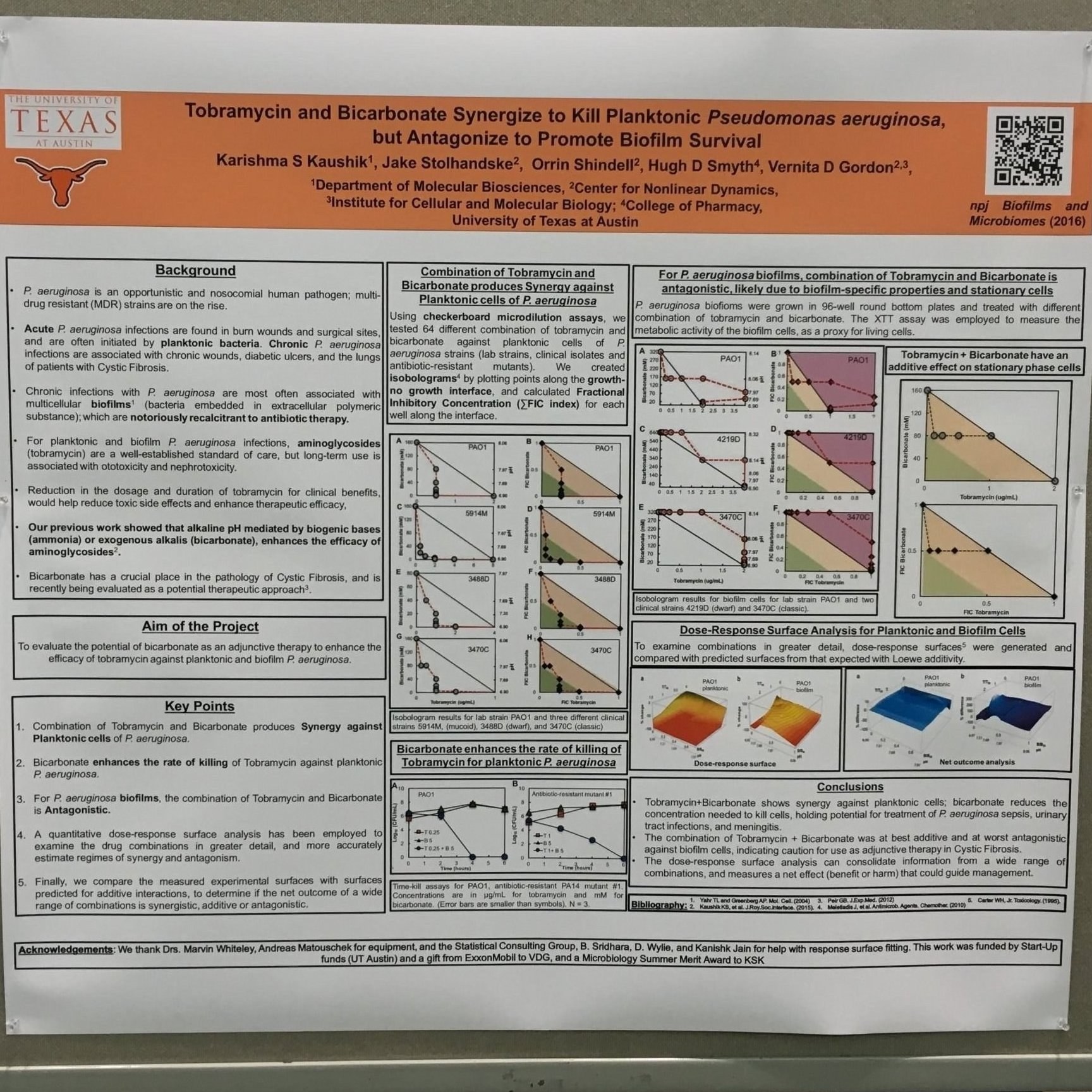
While scientific sessions typically take precedence during a meeting, other sessions like mentorship pods, networking lounges, and talks on visas and immigration for scientists, can offer valuable insights. They are often scheduled at the end of the day or towards the end of the meeting, but making time to attend these sessions can open up broader insights and opportunities.</p><p><strong>6. Joining conversations with colleagues you may not know:</strong> Engaging with colleagues you haven't met or only know through their work might seem daunting, especially as a young researcher. From my experience, joining a group discussion, and contributing when comfortable, can serve as an effective icebreaker. It's also crucial not to confine interactions solely to your lab group (if traveling together) or colleagues from a particular region, for example, your home country. Doing so could mean missing out on valuable opportunities to meet new peers and expand your scientific network.</p><p><strong>7. Staying the course of the conference: </strong>In multiple-day meetings, dropping off the conference schedule after a few days is tempting (sightseeing, anyone?). Based on my experience, spontaneous coffee conversations and invitations for dinners often happen towards the end of the meeting, with attendees becoming more familiar with each other. While these ‘sideline’ meetups can lead to collaborations and opportunities for professional development, they are also an excellent way to reflect on the conference proceedings and discuss plans for future meetings.</p><p><strong>8. Following up with emails after the meeting: </strong>Finally, it is always a good idea to follow up with emails to colleagues and organisers after the meeting, even if there are no concrete plans to work together. These can be ‘Thank you for a great meeting’, ‘Good to meet you’ or ‘Look forward to being in touch’ emails, which will ensure an exchange of email addresses, and provide a means to maintain conversation till the next meeting or reinitiate correspondence when a collaborative opportunity arises.</p><p>A rookie to large meetings, I had forgotten to exchange email addresses with the scientist I met at the breakfast table. I was fortunate that, a few years later at a subsequent ASM meeting, I encountered her again. Approaching her, I recounted the earlier incident, expressing my gratitude, 'I did see the other side of the PhD, thank you for your inputs.' Her response was a simple, 'Well, that's what conferences are for.'<br></p>
              ]]></content><category term="career-development" label="Career Development" /><category term="personal-experience" label="Personal Experience" /><category term="networking" label="Networking and Collaboration" /></entry><entry><title>Empathy: An important ingredient for a rewarding PhD journey</title><link
                  rel="alternate"
                  href="https://indiabioscience.org/columns/phd-cafe/empathy-an-important-ingredient-for-a-rewarding-phd-journey"
                  type="text/html"
                  /><summary type="html"><![CDATA[
                <p>In this PhD cafe article, <a href="https://www.linkedin.com/in/aditi-jain-ba674b78/" target="_blank" rel="noreferrer noopener">Aditi Jain</a>, Development Editor, <a href="https://pubs.acs.org/" target="_blank" rel="noreferrer noopener">ACS Publications</a>, emphasises the importance of empathy in academic settings, particularly research labs, for fostering a supportive and innovative environment. Cultivating empathy enhances relationships, supports colleagues during challenging times, and ultimately contributes to a positive and successful academic experience.</p>              ]]></summary><id>tag:indiabioscience.org,2023-10-23:/columns/phd-cafe/empathy-an-important-ingredient-for-a-rewarding-phd-journey</id><published>2023-10-23T15:30:00+05:30</published><updated>2023-10-06T10:02:05+05:30</updated><author><name>Aditi Jain</name><uri>https://indiabioscience.org/authors/AditiJain</uri></author><content type="html"><![CDATA[
                
<p>In this PhD cafe article, <a href="https://www.linkedin.com/in/aditi-jain-ba674b78/" target="_blank" rel="noreferrer noopener">Aditi Jain</a>, Development Editor, <a href="https://pubs.acs.org/" target="_blank" rel="noreferrer noopener">ACS Publications</a>, emphasises the importance of empathy in academic settings, particularly research labs, for fostering a supportive and innovative environment. Cultivating empathy enhances relationships, supports colleagues during challenging times, and ultimately contributes to a positive and successful academic experience.</p><figure><a href="https://indiabioscience.org/columns/phd-cafe/empathy-an-important-ingredient-for-a-rewarding-phd-journey"><img
                width="2048"
                height="1246"
                style="max-width: 100%; height: auto"
                src="https://cdn.indiabioscience.org/media/articles/PhD-Cafe-EMpathy.png"></a></figure><p>Have you ever been caught in a storm of discouragement and stress, feeling like you're wading through an academic abyss? If so, please know that you're not alone. Our ability to experience emotions is what makes us human. At times, we go through situations that deeply impact us, but can be hard for people around us to comprehend what we are going through. These feelings are natural during academic training and otherwise. </p><p>Although pursuing a Ph.D. can feel isolating and challenging, you have the ability to turn it into a fulfilling experience for yourself and those around you. How? The secret is by practicing empathy. <a href="https://www.emory.edu/LIVING_LINKS/empathy/">Numerous examples</a>, including my own experiences, affirm- that empathy is both unconditional and demanding. It may seem difficult, but in reality, it's also as simple as that.</p><p><strong>Empathy in research labs</strong></p><p>When you witness a research group fuelled by sustained collaborative spirit and mutual gains, you're certainly witnessing <a href="https://hbr.org/2023/02/practice-empathy-as-a-team">empathy in action</a>. The essence of empathy lies in understanding someone's circumstances without any preconceived notions. It's about cultivating a psychologically safe environment, enabling those around you to freely share their thoughts, ideas, and concerns without the shadow of judgment. </p><p><a href="https://www.gallup.com/cliftonstrengths/en/252236/empathy-theme.aspx">CliftonStrengths</a> (a talent assessment platform that describes what you naturally do best), enlists empathy as one of the 34 strengths and shows that people with empathy build strong relationships that unify a team and enhance its overall performance. This concept holds true for research labs, where empathy plays a crucial role in fostering innovation and engagement among lab mates. But it demands patience, mental fortitude, and a selfless disposition to genuinely listen and process any negative emotions being discussed. It's all about leading by example and being the person who cultivates a space for everyone to be heard and seen. Empathy facilitates the formation of deeper connections among lab mates, promoting the generation of unique ideas and benefiting everyone involved. </p><p><strong>A strong support system </strong></p><p>I completed my doctoral degree in 2020 from the Indian Institute of Science, Bengaluru, and stepped into a career in the publishing industry. It was then I took a moment to reflect on my past experiences of working in the lab with a diverse group of individuals. From interns fresh out of college to post-doctoral fellows who were also juggling the responsibilities of being parents, I witnessed a rich tapestry of life experiences. This made me realise how significantly my life has transformed, transitioning from living independently in a college hostel to embracing family life and societal norms. </p><figure style="margin-left: auto; margin-right: auto; text-align: center;"><img src="https://cdn.indiabioscience.org/media/articles/originals/Empathy-article-picture.png" data-image="568115" alt="A souvenir from Aditi’s PhD advisor, Kaushik Chatterjee, Materials Engineering, Indian Institute of Science- Bengaluru, a symbolic of mutual respect and appreciation extending beyond a Ph.D. degree. Picture Credit: Aditi Jain."><figcaption style="text-align: center;">A souvenir from Aditi’s PhD advisor, Kaushik Chatterjee, Materials Engineering, Indian Institute of Science- Bengaluru, a symbolic of mutual respect and appreciation extending beyond a Ph.D. degree. Picture Credit: Aditi Jain.</figcaption></figure><p>All of this led me to ponder if we provide enough support to our colleagues who might be navigating personal matters. Whether it’s having to leave an experiment midway to care for their children or struggling to meet deadlines while dealing with domestic issues —do we truly offer the support and understanding they need? We often underestimate the significance of having a strong support network unless life throws a curveball. I’m finding the courage to hold onto faith even amidst the swirling uncertainties.</p><blockquote class="pull-quote">As I navigate the delicate dance between my personal and professional life, I’m on this continuous journey of learning (and perhaps, improving!). </blockquote><p>It’s remarkable how a simple act of kindness can be a sprinkle of stardust, bringing positivity into the lives of those around us. <a href="https://doi.org/10.3389/fpsyg.2023.1156661">Research</a> backs this up too—when we’re in a happy state, our altruistic instincts kick in, propelling us to extend a helping hand, brainstorm solutions for others, and exhibit compassion. It’s this positive domino effect that fuels our desire to make meaningful changes in the world. </p><p><strong>Cultivating empathetic approach</strong></p><p>Cultivating empathy is essential for building trust and nurturing strong working relationships, which can provide valuable support when dealing with stressful situations. The <a href="https://www.adultdevelopmentstudy.org/">Harvard Study of Adult Development</a> reveals that the quality of our relationships strongly influences our well-being and motivation levels during uncertain times. Here are some situations for us to reflect on where your empathetic approach can have a significant impact:</p><ol><li>A colleague has returned to the lab after a family bereavement. Instead of urging them to swiftly resume their lab responsibilities, it's important to acknowledge and respect their pain by providing the necessary time and space to grieve. Doing so can lead to a quicker and more effective recovery.</li><li>Have you noticed a colleague engrossed in a time-sensitive experiment, skipping lunch or a coffee break? Consider grabbing them a drink or a samosa from the tea stall. Small acts of kindness can wield a significant impact!</li><li>If your advisor is feeling down following the rejection of their grant proposal, offering words of appreciation can be beneficial. Express how much you value being a part of their lab and emphasise working together to move forward. It's important to offer support to your mentor during tough times and otherwise.</li><li>Imagine an alumnus visiting the lab after a few years. How can we express our gratitude for their contribution, which continues to benefit the lab even though they have moved on? A little appreciation can make a lasting difference.</li><li>Before becoming upset and lodging a complaint, consider helping an intern in learning from their mistake. Giving people the benefit of the doubt can work wonders, even when things don't go as planned.</li><li>Celebrate the success of your peers rather than downplaying their achievements. Your actions can leave a lasting positive impact on others.</li></ol><figure style="margin-left: auto; margin-right: auto; text-align: center; width: 608px; max-width: 608px;"><img src="https://cdn.indiabioscience.org/media/articles/originals/Matrix-Aditi.png" data-image="568447" alt="A printable matrix to fill in with words or phrases about what empathy means to you and to remind yourself to practice it in a holistic way. Matrix conceptualised by Aditi Jain." width="608" height="215"><figcaption style="text-align: center;">A printable matrix to fill in with words or phrases about what empathy means to you and to remind yourself to practice it in a holistic way. Matrix conceptualised by Aditi Jain.</figcaption></figure><p>It would make a huge difference if our academic curriculum highlighted the power and significance of empathy not just as a training component, but also as our ambitions escalate. Meanwhile, this article strives to ignite the spark in each one of us to champion a culture of empathy and compassion within our research labs. By doing so, we can navigate challenges and achieve greater success. To help get started with this, I’ve created a matrix for you to fill in with the values that promote mutual affection, admiration, respect, and ultimately, foster happiness.</p><blockquote class="pull-quote">
Empathy comes with being mindful and regularly asking yourself, “How can I be a healing presence in the lives of those around me?”</blockquote><ol></ol>
              ]]></content><category term="personal-experience" label="Personal Experience" /><category term="advice" label="Advice" /><category term="science-communication" label="Science communication" /></entry><entry><title>Work-life balance during a PhD: Reframing the narrative</title><link
                  rel="alternate"
                  href="https://indiabioscience.org/columns/phd-cafe/work-life-balance-during-a-phd-reframing-the-narrative"
                  type="text/html"
                  /><summary type="html"><![CDATA[
                <p>In this PhD café article, <a href="https://indiabioscience.org/authors/qw8pNKgnooLdJRA" target="_blank" rel="noreferrer noopener">Karishma S Kaushik</a>, IndiaBioscience, reflects on her unique journey as a 'non-traditional' PhD candidate who juggled personal and professional commitments, including motherhood. Karishma explores the dynamic nature of work-life balance, and discusses the challenges of applying one-size-fits-all solutions for achieving balance across different phases of personal and professional growth.</p>              ]]></summary><id>tag:indiabioscience.org,2023-08-14:/columns/phd-cafe/work-life-balance-during-a-phd-reframing-the-narrative</id><published>2023-08-14T03:30:00+05:30</published><updated>2023-08-14T15:43:04+05:30</updated><author><name>Karishma Kaushik</name><uri>https://indiabioscience.org/authors/qw8pNKgnooLdJRA</uri></author><content type="html"><![CDATA[
                
<p>In this PhD café article, <a href="https://indiabioscience.org/authors/qw8pNKgnooLdJRA" target="_blank" rel="noreferrer noopener">Karishma S Kaushik</a>, IndiaBioscience, reflects on her unique journey as a 'non-traditional' PhD candidate who juggled personal and professional commitments, including motherhood. Karishma explores the dynamic nature of work-life balance, and discusses the challenges of applying one-size-fits-all solutions for achieving balance across different phases of personal and professional growth.</p><figure><a href="https://indiabioscience.org/columns/phd-cafe/work-life-balance-during-a-phd-reframing-the-narrative"><img
                width="720"
                height="440"
                style="max-width: 100%; height: auto"
                src="https://cdn.indiabioscience.org/media/articles/Monday-article-title-image.png"></a></figure><p>“<em>We would like to invite you for a talk at the </em><a href="https://meetings.embo.org/event/22-func-nucleic-acids" target="_blank"><em>EMBO Lecture Course on Functional Nucleic Acids</em></a><em> at the </em><a href="https://www.rcb.res.in/" target="_blank"><em>Regional Centre for Biotechnology, Faridabad</em></a>,” said the email from the organisers in August 2022.</p><p>Confused, I replied, “<em>I do not work on functional nucleic acids</em>!”</p><p>“<em>It is expected to be a talk on ‘Work-life balance in academic science</em>,’” said the email in response.</p><p>Having never been asked to talk on this subject before, I gathered myself and chuckled, “<em>I am not sure I am doing a good job with that either</em>.” As I reflected on the invitation, I realised, “<em>Maybe I do have something to talk about?”</em></p><p>I started my PhD at 29, after 5.5 years of a medical degree and a 3-year residency in Clinical Microbiology. In addition to being a medical doctor and an older PhD candidate, I was also married, having moved to the United States with my partner. Being a ‘non-traditional’ PhD candidate meant that my PhD was characterised by large commitments on both professional and personal fronts. In the second year of the PhD, I chose to become a mother, and as I often say in a lighter vein, that there is no better situation to ensure work-life balance than <a href="https://www.nature.com/articles/d41586-019-03162-7" target="_blank">becoming a parent during your PhD</a>. </p><p>My days started with dropping my son off to daycare, and reaching the laboratory at 9 am. I structured my day to ensure that time was well-utilised. I learnt to run experiments in parallel (fortunately, bacteria do not need too much cajoling to grow!), ordered reagents while waiting for time-points, and had quick lunches. At 4:30 pm, I wrapped up my work day in the lab, and headed home to relieve the afternoon nanny. The evenings were spent with my son; towards the end of my PhD, I used late evenings to analyse data and write my thesis. I graduated in five years with five research publications.</p><blockquote class="pull-quote">Interestingly, while I built an efficient system to incorporate work and personal choices during my PhD, I struggled with ensuring this balance as an independent investigator. This was likely due to the fact that a well-defined goal (complete the PhD) was now replaced by a range of professional responsibilities and aspirations.</blockquote><p>Building and maintaining a work-life structure is a dynamic entity that varies across people and phases in life. Therefore, while <a href="https://www.ncbi.nlm.nih.gov/pmc/articles/PMC8282063/" target="_blank">actionable steps towards work-life balance</a>
are thought-provoking, they notably, fail to account for individual situations. Along these lines, <a href="https://twitter.com/sofiavlachou28/status/1545709533984587778" target="_blank">a Twitter discussion</a> on ‘Is research 9 to 5?’, presents an interesting example, with responses that range from ‘It’s a job!’ to ‘It’s a way of life’. </p><figure style="margin-left: auto; margin-right: auto; text-align: center;"><img src="https://cdn.indiabioscience.org/media/articles/originals/PhDCafe_KSK2.png" data-image="515607" alt="A compilation of two vastly different responses to the Twitter discussion ‘Is research 9 to 5?’" width="504" height="299"><figcaption style="text-align: center;">Two vastly different responses to the Twitter discussion ‘Is research 9 to 5?’</figcaption></figure><p><strong>An exercise in finding underlying principles behind work-life balance</strong></p><p>Recognising the insufficiencies and challenges of ‘templates’ for work-life balance, I decided to deliver my talk as an exercise with the audience, a large majority of who were PhD researchers. Using a series of four exercises, we approached the subject as ‘Could we find the underlying principles behind work-life balance?’, with prompts, audience responses and take-home messages.</p><p>The four sets of exercises and examples of responses were as follows:</p><p><strong><em>Exercise 1: What does work-life balance on a daily or weekly basis (short-term) look like for you?</em></strong></p><p>Examples of audience responses:</p><ul><li>engaged in formal work during the bulk of the day time</li><li>clear start and end times to work (no digital availability at other times)</li><li>single communication channel (email, for example)</li><li>daily practices related to healthy living, weekends with family</li></ul><p><strong>Take-home message:</strong> Our work-life balance is unique to us. </p><p><strong><em>Exercise 2: How is your work-life structure different from say, 5 weeks ago, 5 months ago, 5 years ago?</em></strong></p><p>Examples of audience responses: </p><ul><li>I need to work more on finding that balance (from 5 years ago)</li><li>the structure changes with work travel, conferences, online meetings, deadlines (from 5 weeks ago)</li><li>varies children's’ sick days, family visiting, home repairs (from 5 days ago)</li></ul><p><strong>Take-home message: </strong>Work-life balance is ever changing and dynamic.</p><figure style="margin-left: auto; margin-right: auto; text-align: center; width: 661px; max-width: 661px;"><img src="https://cdn.indiabioscience.org/media/articles/originals/PhDCafe_KSK3.png" data-image="515609" alt="Examples of the dynamic nature of work-life balance, using #WorkLifeBalance on Twitter" width="661" height="169"><figcaption style="text-align: center;">Examples of the dynamic nature of work-life balance, using #WorkLifeBalance on Twitter </figcaption></figure><p><strong><em>Exercise 3: How would you think about ‘success’ at work and </em></strong><strong><em>how </em></strong><strong><em>would you think about personal ‘success’? </em></strong></p><p>Examples of audience responses (‘success’ at work): </p><ul><li>success at work is being excited about the science, about the Qs and As</li><li>building a happy and productive team</li><li>contributing to the wider science ecosystem in India </li></ul><p>Examples of audience responses (personal ‘success’):</p><ul><li>enjoying my role as a friend / partner </li></ul><ul><li>getting regular exercise </li></ul><ul><li>eating healthy meals </li></ul><ul><li>reading non-science materials </li></ul><ul><li>spending substantial time spent with family and social groups</li></ul><p><strong>Take-home message:</strong> Building our own metrics for professional and personal ‘success’ can help enforce work-life balance </p><p><strong><em>Exercise 4: How does your work-life balance change in the face of peer pressure/expectations?</em></strong></p><p>Examples of audience responses: </p><ul><li>I spent longer hours at work, but not productive hours </li><li>I neglect sleep, exercise and social interactions </li><li>I started to believe that I needed to fit into the culture of ‘overwork’</li></ul><figure style="margin-left: auto; margin-right: auto; text-align: center; width: 564px; max-width: 564px;"><img src="https://cdn.indiabioscience.org/media/articles/originals/PhDCafe_KSK4.png?1691986990108" data-image="515611" alt="An example of advocating for systemic change related to work-life balance. With permission from @AcademicChatter on Twitter" width="564" height="351"><figcaption style="text-align: center;">An example of advocating for systemic change related to work-life balance. With permission from @AcademicChatter on Twitter</figcaption></figure><p><strong>Take-home message:</strong> Believing in our choice of a way of work and life is a continuous process. On an individual level, this may require making thoughtful choices of jobs, organisations, and work portfolios. On a larger level, this can mean advocating for systemic change.</p><p><strong>Reframing work-life balance with underlying principles </strong></p><figure style="margin-left: auto; margin-right: auto; text-align: center; width: 694px; max-width: 694px;"><img src="https://cdn.indiabioscience.org/media/articles/originals/PhDCafe_KSK5.png" data-image="515476" alt="A reflexive framework for achieving work-life balance" width="694" height="330"><figcaption style="text-align: center;">A reflexive framework towards work-life balance</figcaption></figure><p>Taken together, the set of interactive exercises brought forth a framework that highlighted work-life balance as being a unique and dynamic entity, and presented a reflexive structure that could be leveraged towards building, maintaining and revisiting work-life balance across phases and stages of professional and personal growth.<strong><em><br></em></strong></p>
              ]]></content><category term="women-in-science" label="Women in Science" /><category term="personal-experience" label="Personal Experience" /></entry><entry><title>My experiments with science and its engagement</title><link
                  rel="alternate"
                  href="https://indiabioscience.org/columns/phd-cafe/my-experiments-with-science-and-its-engagement"
                  type="text/html"
                  /><summary type="html"><![CDATA[
                <p>This PhD Café article explores the science communication journey of <a href="https://www.linkedin.com/in/guptadevanshi/" target="_blank" rel="noreferrer noopener">Devanshi Gupta</a>, a PhD student at the <a href="http://cdfd.org.in/" target="_blank" rel="noreferrer noopener">Centre for DNA Fingerprinting and Diagnostics (CDFD)</a>, Hyderabad. Devanshi highlights the importance of effective science communication, the challenges she faced, and the rewarding experiences that fuelled her passion for sharing science with broad audiences.</p>              ]]></summary><id>tag:indiabioscience.org,2023-06-26:/columns/phd-cafe/my-experiments-with-science-and-its-engagement</id><published>2023-06-26T03:30:00+05:30</published><updated>2023-06-26T15:11:43+05:30</updated><author><name>Devanshi Gupta</name><uri>https://indiabioscience.org/authors/eZV71Go2on1dk8a</uri></author><content type="html"><![CDATA[
                
<p>This PhD Café article explores the science communication journey of <a href="https://www.linkedin.com/in/guptadevanshi/" target="_blank" rel="noreferrer noopener">Devanshi Gupta</a>, a PhD student at the <a href="http://cdfd.org.in/" target="_blank" rel="noreferrer noopener">Centre for DNA Fingerprinting and Diagnostics (CDFD)</a>, Hyderabad. Devanshi highlights the importance of effective science communication, the challenges she faced, and the rewarding experiences that fuelled her passion for sharing science with broad audiences.</p><figure><a href="https://indiabioscience.org/columns/phd-cafe/my-experiments-with-science-and-its-engagement"><img
                width="2048"
                height="1274"
                style="max-width: 100%; height: auto"
                src="https://cdn.indiabioscience.org/media/articles/Devanshi-Gupta.png"></a></figure><p>Since childhood, I have loved pondering new ideas and exploring them through science. I wondered why garbage smells or why we feel thirsty despite our bodies being mostly composed of water. I rarely found people who could answer my questions; most of them could only appreciate the quench for knowledge.</p><p>It's disheartening to see that our traditional education system doesn't place enough emphasis on questioning, critical thinking, and research. Instead, we're constantly pushed to memorise information to regurgitate it during exams. I never enjoyed the task of memorising the names of cranial nerves in the human body. But what truly fascinated me was understanding how the human brain functions and witnessing its lightning-fast responses to various stimuli.</p><p>While diving deep into advanced science, I took up the challenge of explaining its mind-blowing concepts to my mom. Whether it was understanding the process of milk curdling or exploring the science of floating on water, I made sure to share the science behind everyday phenomena with her. And you know what? It struck me that curiosity is like a spark that sets off a chain reaction of more curiosity.</p><p><strong>How did it start?</strong></p><p>My journey in science communication began during my PhD when I participated in journal clubs. I found most presentations dull and unengaging, lacking storytelling; they simply bombarded western blots and bar graphs on the audiences.</p><p>When my turn to present at journal club arrived, I aimed to make my work understandable to everyone. Since my research involves studying the regulation of multi-protein complex assemblies in the cell, I started my presentation with a quote by John Donne, emphasising that just as no man is an island, proteins cannot function alone. I glanced at my PhD supervisor and noticed a smile on his face — that was my green flag.</p><p>Over the years, I have given numerous presentations within the lab, at other institutes, and at conferences. I constantly experiment with storytelling angles and humour, striving to make my research engaging and memorable for the audience.</p><p><strong>The stepping stone in science communication</strong></p><p>I attended a short course on ‘Freelancing in science communication’ by Ipsa Jain, organised by <a href="https://www.scirio.in/">SciRio</a>. </p><blockquote class="pull-quote">During the course, I mustered up the courage to ask a seemingly foolish question: “Can you please clarify what exactly science communication is? There are so many different definitions, and I'm confused about which one is the real deal”. </blockquote><p>They say that it's worth risking foolishness for greatness. Surprisingly, the place where I voiced my confusion became the very place where my journey in science communication began. </p><p>When I joined SciRio, I had little knowledge about the science communication space in India and abroad. I was unfamiliar with the relevant people, media platforms, content types, target audiences, and the tools involved. All I knew was I am willing to learn whatever comes my way. </p><p>I remember organising a capacity-building workshop at SciRio, specifically designed for beginners in science communication. We aimed to provide a comprehensive overview of the science communication landscape by inviting accomplished professionals such as writers, editors, podcasters, and science artists. They generously shared their career journeys and provided valuable insights. The workshop was a transformative experience for me, as the constructive feedback from these experts greatly improved my writing skills. In fact, one of my writing pieces was selected as one of the best popular science stories in the <a href="https://www.awsar-dst.in/">DST-AWSAR</a> 2021 competition. This achievement served as a significant milestone in my journey and solidified my passion for communicating science in interactive and engaging ways.</p><p>While acquiring a skill and utilising it to the fullest is truly rewarding, sharing that skill with others for their growth is an extraordinary feeling. When I came across a call for mentors in science writing for a science outreach project ‘<a href="https://themindgala.wixsite.com/themindgala">The Mind Gala</a>,’ I knew I had to seize the opportunity. I volunteered to mentor eight participants in crafting popular science stories focused on neuroscience. Together, we compiled our articles into a captivating science book titled "<a href="https://themindgala.wixsite.com/themindgala/talesofneuroscience">Tales of Neuroscience</a>," which was recently launched. The mentorship experience turned out to be a two-way road, and I truly believe in the adage that says, "We Rise by Lifting Others." I learned just as much from my mentees as they did from me, fostering a sense of mutual growth and achievement.</p><p><strong>Taking science outside the lab</strong></p><p>To expand my horizons in science communication, I took on the responsibility of managing social media and curating content for SciRio. This allowed me to observe people, ask relevant questions, and experiment with different formats, constantly trying out new approaches. </p><p>One of the most exciting experiences was participating in the <a href="https://euraxess.ec.europa.eu/worldwide/india/science-slam">Euraxess India Science Slam Competition 2022</a>. Here, I presented my research as a story, without relying on data or results, in an entertaining way. When I was shortlisted for the <a href="https://youtu.be/jsGs4pq53us">live finals</a>, I was overjoyed. On the day of the finale, the sheer happiness and satisfaction I derived from sharing my research with strangers who may not have a science background and making them giggle, laugh, and marvel at the same time, was hugely rewarding. </p><p>In addition to my science communication endeavours, I was fortunate to secure an internship with <a href="https://www.indiasciencefest.org/">India Science Festival</a> 2023. Here, I had the opportunity to delve into diverse<a href="https://www.indiasciencefest.org/unveiling-the-rainbow-of-science-with-india-science-festival/"></a><a href="https://www.indiasciencefest.org/unveiling-the-rainbow-of-science-with-india-science-festival/">roles</a> such as content writing, speaker engagement, and emceeing. Connecting with people and getting a glimpse into their career paths at the festival proved to be an incredibly enriching experience.</p><figure style="margin-left: auto; margin-right: auto; text-align: center; width: 348px; max-width: 348px;"><img src="https://cdn.indiabioscience.org/media/articles/Curated-a-Storybox-of-bios-for-all-the-renowned-scientists-and-science-communication-experts-at-India-Science-Festival-2023.jpeg" data-image="499746" alt="Curated a Storybox of bios for all the renowned scientists and science communication experts at India Science Festival 2023. (Photo Credits: Devanshi Gupta)" width="348" height="472"><figcaption style="text-align: center;">A Storybox of bios for scientists and science communication experts at India Science Festival 2023, Hyderabad. (Photo Credits: Devanshi Gupta)</figcaption></figure><p>In India, many scientists are working on ground breaking technologies, but only a few can effectively communicate their work to wider audiences. While some academic institutions support science outreach initiatives, not all do. However, even when our institute may not provide support, we have the power to support our institute. As an <a href="https://elifesciences.org/inside-elife/f744fae0/elife-community-ambassadors-welcoming-128-researchers-to-the-programme">eLife Community Ambassador</a>, I proudly represented my institute at international events, realising that science should not be confined to the lab, but must reach a broader audience.</p><p><strong>Navigating science engagement while doing a PhD</strong></p><p>As a PhD student, I embrace the dual role of being a scientist by day and a creator by night. The skills I've gained through my research journey, such as observation, hypothesis testing, and resilience, prove invaluable beyond academia. While my days are primarily dedicated to lab work and experiments, I seize any spare moments between tasks to immerse myself in the world of science communication.</p><figure style="margin-left: auto; margin-right: auto; text-align: center; width: 426px; max-width: 426px;"><img src="https://cdn.indiabioscience.org/media/articles/Presenting-my-research-at-a-scientific-conference-AICBC-2022-at-University-of-Kashmir.jpeg" data-image="499744" alt="Presenting my research at a scientific conference, AICBC 2022 at University of Kashmir. (Photo Credits: Devanshi Gupta)" width="426" height="375"><figcaption style="text-align: center;">Presenting my research at the scientific conference AICBC 2022 at the University of Kashmir. (Photo Credits: Devanshi Gupta)</figcaption></figure><p>Driven by an insatiable curiosity, researchers like me constantly seek out new discoveries and innovative ideas. This same drive led me to explore the realm of science communication. I delved into job descriptions of science communicators, read about notable figures in the field, subscribed to newsletters, and immersed myself in relevant books. By keenly observing successful science communicators, I learned different communication styles. Though challenging initially, each small victory boosted my confidence and motivated me to strive for improvement.</p><p>A PhD not only deepens our expertise in specific research areas but also offers personal growth opportunities. It equips us with valuable skills like effective communication, storytelling, strategic thinking, mentoring, self-belief, and perseverance. These skills are not only crucial for a career in science communication but also valuable in various other aspects of professional life.</p>
              ]]></content><category term="personal-experience" label="Personal Experience" /><category term="outreach" label="Outreach" /><category term="science-communication" label="Science communication" /></entry><entry><title>My PhD journey as a woman wildlife researcher on a motorbike</title><link
                  rel="alternate"
                  href="https://indiabioscience.org/columns/phd-cafe/my-phd-journey-as-a-woman-wildlife-researcher-on-a-motobike"
                  type="text/html"
                  /><summary type="html"><![CDATA[
                <p>Brinky Desai, a PhD student at <a href="https://ahduni.edu.in/academics/schools-centres/school-of-arts-and-sciences/faculty/brinky-desai/" target="_blank" rel="noreferrer noopener">Ahmedabad University</a>, shares her challenges as a woman researcher conducting fieldwork on Mugger crocodiles in remote areas of Gujarat. In the first article of this year's PhD Cafe series, she describes the physical and mental strain of fieldwork, particularly during the COVID pandemic, as well as the challenges of working with crocodiles, including navigating hygiene facilities as a woman researcher in the field.</p>              ]]></summary><id>tag:indiabioscience.org,2023-05-01:/columns/phd-cafe/my-phd-journey-as-a-woman-wildlife-researcher-on-a-motobike</id><published>2023-05-01T03:30:00+05:30</published><updated>2023-05-07T15:16:11+05:30</updated><author><name>Brinky Desai</name><uri>https://indiabioscience.org/authors/0P6G19yvNW1Xxzy</uri></author><content type="html"><![CDATA[
                
<p>Brinky Desai, a PhD student at <a href="https://ahduni.edu.in/academics/schools-centres/school-of-arts-and-sciences/faculty/brinky-desai/" target="_blank" rel="noreferrer noopener">Ahmedabad University</a>, shares her challenges as a woman researcher conducting fieldwork on Mugger crocodiles in remote areas of Gujarat. In the first article of this year's PhD Cafe series, she describes the physical and mental strain of fieldwork, particularly during the COVID pandemic, as well as the challenges of working with crocodiles, including navigating hygiene facilities as a woman researcher in the field.</p><figure><a href="https://indiabioscience.org/columns/phd-cafe/my-phd-journey-as-a-woman-wildlife-researcher-on-a-motobike"><img
                width="2930"
                height="1798"
                style="max-width: 100%; height: auto"
                src="https://cdn.indiabioscience.org/media/articles/Brinky-Desai.png"></a></figure><p>Starting my PhD and diving headfirst into academia turned my life upside down. While I was no stranger to fieldwork, it was the only thing familiar in an otherwise unfamiliar place. The rush of adrenaline that comes with searching for data is unparalleled, but fieldwork is not without its challenges.</p><p>To outsiders, my fieldwork may seem like a fun outing, but as a wildlife researcher, I know it's anything but a walk in the park. It's important to recognize that fieldwork can be incredibly isolating, physically taxing, and mentally draining. Further, women in the field face a unique set of challenges. </p><p>As a woman conducting her PhD fieldwork on a motorbike across urban, rural, and remote areas of Gujarat, I have several stories and anecdotes to share.<br></p><blockquote class="pull-quote"><em>Despite the challenges, there's no adrenaline rush quite like fieldwork.</em></blockquote><p><strong>Fieldwork during COVID</strong></p><p>Starting my Ph.D. in mid-2019, my supervisor and I were excited to apply for funds to conduct fieldwork on Mugger crocodiles. Unfortunately, the COVID pandemic derailed our plans as medical research took priority, and our grant applications were rejected. Being someone who loves fieldwork, I felt trapped, unable to do what I love. However, at the beginning of 2021, my supervisor and I came up with a groundbreaking idea: a biometric system using drone images to non-invasively tag individual Mugger crocodiles - an Aadhar card for crocodiles! </p><p>The pandemic continued to make fieldwork difficult, but I found a way around it by traveling on motorbike with all the instruments I needed to collect data. While my supervisor and I made certain of my safety, I was determined to carry out the fieldwork, and had the support of my parents, lab-mates, and close friends. My supervisor checked on me multiple times in a day to make sure I was safe and had everything I needed. The encouragement of my professional and personal communities helped me complete the challenging journey of 3500 km across Gujarat.</p><figure style="margin-left: auto; margin-right: auto; text-align: center; width: 416px; max-width: 416px;"><img src="https://cdn.indiabioscience.org/media/articles/Me-and-my-supervisor-looking-for-scats.jpeg" data-image="491574" alt="Brinky with her supervisor in field (Photo by Brinky Desai)" width="416" height="277"><figcaption style="text-align: center;">Brinky with her supervisor in the field (Photo by Brinky Desai)</figcaption></figure><p><strong>Working with Mugger crocodiles </strong></p><p>During this time, despite the mental and physical strain of the fieldwork, my passion for working with Mugger crocodiles kept me going. After a 30-day field trip from mid-March to mid-April 2021, I had collected all the data I needed for my research, and it was time to head back to the lab. With the help of my interdisciplinary team of co-authors, we developed a deep learning algorithm to <a href="https://india.mongabay.com/2022/11/identifying-individual-mugger-crocodiles-using-drone-technology-to-minimise-conflicts/">identify individual animals</a>, and our model got <a href="https://www.sciencedirect.com/science/article/abs/pii/S1574954122003247">published</a>
at the end of the year. The fieldwork and coding work were equally challenging, but our success was a testament to our perseverance and dedication.</p><p>Recently, I embarked on the final leg of my PhD fieldwork in Vadodara, where I had to collect scat samples from a free-ranging population of Mugger crocodiles, this time with a Master's student who was interning on the project. We were in 'croc' territory, so the biggest challenge was collecting samples without becoming croc-food. One of us would look out for muggers, and the other would collect the scat sample. Sometimes, we could see scat on the bank but could not collect them due to large crocodiles basking nearby. It was dangerous for us, and we had a protocol where we do not disturb animals during basking. To overcome this, we decided to drive in bone-chilling, morning weather to reach before basking time and collect the required scat samples, a 'chilling' experience on a motorbike for 4000 kilometers, despite multiple warm layers.</p><p>Fieldwork is not a vacation. To me, a vacation means lounging by the pool with a cold drink after a refreshing swim (my version of 'basking'). But unless you see me doing that, I'm hard at work in the field, collecting the data that will push my research forward. These challenges are what every fieldworker faces, and I write this to want colleagues and community members to understand the importance of fieldwork and the dedication required to collect data that can drive scientific progress.</p><figure style="margin-left: auto; margin-right: auto; text-align: center; width: 383px; max-width: 383px;"><img src="https://cdn.indiabioscience.org/media/articles/Me-taking-seflie-with-local-community-living-on-the-banks-with-crocodiles.jpg" data-image="491575" alt="Brinky with local community during a field visit in Gujarat (Photo by Brinky Desai)" width="383" height="297"><figcaption style="text-align: center;">Brinky with the local community during a field visit in Gujarat (Photo by Brinky Desai)</figcaption></figure><p><strong>Hygiene and Isolation</strong></p><p>Being a woman in fieldwork, it can be nerve-wracking to discuss hygiene facilities with your administration or university. Past experiences have left me fearing that I'll be seen as incapable or asking too much, despite knowing that I'm physically capable of performing just as well as anyone else. Thankfully, I have a female supervisor and a supportive university that prioritise the safety and hygiene of their students.</p><p>As an extroverted person who loves being around people, fieldwork can be a rollercoaster of emotions, especially during the COVID lockdown. I'm no stranger to feeling isolated during my eight-month stint at Madras Crocodile Bank Zoo in Chennai from November 2021 to December 2022, away from my loved ones. In those moments, my guide would remind me of our mission, saying, "Brinky, remember we are doing all this for good science. A little bit more, and you'll be back in the lab with your people." My lab mates would even send me local Gujarati snacks all the way to Chennai so that I could have a little part of my home with me. One of my close friends even made a trip to Chennai just to see me. Even though my parents couldn't visit due to COVID restrictions, they made sure to call me every day to check on me.</p><p>Through my own fieldwork experiences, I've learned that every research area has its unique set of challenges, and it's crucial to be sensitive to our colleagues' experiences. Despite the challenges, there's no adrenaline rush quite like fieldwork. If I could, I would choose it all over again in a flick of a second. At the end of the day, it's all for the greater good of science and my love for crocodilians!</p>
              ]]></content><category term="ecology" label="Ecology" /><category term="women-in-science" label="Women in Science" /><category term="personal-experience" label="Personal Experience" /></entry></feed>