<?xml version="1.0" encoding="UTF-8"?><feed xmlns="http://www.w3.org/2005/Atom" xml:lang="en"><title>IndiaBioscience - Opinion from 2018</title><link
    rel="alternate"
    href="https://indiabioscience.org/columns/opinion/2018"
    type="text/html"
    /><link
    rel="self"
    href="https://indiabioscience.org/columns/opinion/2018/feed"
    type="application/atom+xml"
    /><id>https://indiabioscience.org/columns/opinion/2018/feed</id><updated>2026-06-08T18:19:59+05:30</updated><entry><title>Interdisciplinary research: the old and the new normal</title><link
                  rel="alternate"
                  href="https://indiabioscience.org/columns/opinion/interdisciplinary-research-the-old-and-the-new-normal"
                  type="text/html"
                  /><summary type="html"><![CDATA[
                              ]]></summary><id>tag:indiabioscience.org,2018-12-14:/columns/opinion/interdisciplinary-research-the-old-and-the-new-normal</id><published>2018-12-14T09:00:00+05:30</published><updated>2019-05-09T21:58:37+05:30</updated><author><name>Siddharth Jhunjhunwala</name><uri>https://indiabioscience.org/authors/SiddharthJhunjhunwala</uri></author><content type="html"><![CDATA[
                
<p>In this next article in our series on interdisciplinary research, Siddharth Jhunjhunwala from the <a href="https://indiabioscience.org/orgs/iisc">Indian Institute of Science, Bangalore</a>, discusses how all biomedical research carries an interdisciplinary component and how collaborative, multidisciplinary projects are rapidly becoming the new norm in science.</p><figure><a href="https://indiabioscience.org/columns/opinion/interdisciplinary-research-the-old-and-the-new-normal"><img
                width="747"
                height="440"
                style="max-width: 100%; height: auto"
                src="https://cdn.indiabioscience.org/media/articles/int-jhunjhunwala-laboratory.jpg"></a></figure><p>Compartmentalization of natural sciences into the science of the living and non-living possibly occurred thousands of years ago, as humans began to ponder about themselves and the world around them. And this categorization continues today with firm boundaries between various science disciplines, in school and undergraduate curricula. While such divisions may be beneficial for didactic teaching and help improve learning outcomes, a closer look shows that there is a tremendous overlap of concepts among the various disciplines.</p><p>The blurring of boundaries is further enhanced in areas of advanced research, and is especially true for biomedical research. In fact, most if not all areas of biomedical research are interdisciplinary. Many biomedical fields started out as a specialized area of research combining tools and concepts from different streams of natural sciences, and over time have established themselves as independent disciplines. For example, biochemistry or biophysics are now well-established disciplines, and other emerging areas of research such as synthetic biology and immunoengineering are beginning to develop their own identity.
</p><p><a href="http://www.be.iisc.ernet.in/~siddharth/">My laboratory</a> focuses its attention on the latter “inter-discipline”, and using immunoengineering as an example, I will share my experiences and thoughts on working in an interdisciplinary area.
</p><p>What do we do in my laboratory? A short answer to this question is – we utilize polymeric systems to understand immunological processes, and in turn apply what we learn to develop new and better therapeutics. As one might infer from this statement, research in the laboratory involves a close interaction of chemistry, material science, and immunology. Does this mean that everybody who works in my laboratory is an expert in all these areas? Not necessarily! As Sandhya Koushika and Gautam Menon point out <a href="https://indiabioscience.org/columns/opinion/interdisciplinarity-how-to-make-it-work-for-you">in a previous article on interdisciplinary research </a>(paraphrasing a letter from Mirza Ghalib), in the company of chemists and material scientists we are immunologists, and in the company of immunologists we are material scientists.
</p><p>Attributable to the above statement is the consideration of interdisciplinary researchers as a jack of all trades and master of none. In my opinion, such a researcher is likely to be the jack of many trades and is definitely a master of a new one. Further, jack of many trades usually implies only a peripheral understanding of each of the disciplines, which is a pitfall to be avoided. Rather, to become an independent interdisciplinary researcher, one must develop a strong foundation in each of the disciplines, and become conversant in the scientific language of these disciplines. 
</p><p><em>What does it take to become an interdisciplinary researcher?</em></p><ul><li><strong>Hard work:</strong> My personal experience with interdisciplinary research began during my doctoral studies, where I simultaneously worked in two laboratories, one with expertise in drug delivery and another with expertise in immunology (and attended two lab meetings). Initially, my workload was double, as I had to learn theoretical and experimental concepts in both areas. But over time it led to the development of a unique expertise that I benefit from to this day. This would be the first lesson for individuals interested in pursuing research in “interdisciplinary" areas – initially involves hard work, but you will enjoy its fruits for the rest of your research career.
</li><li><strong>Flexibility and Openness:</strong> What can an interdisciplinary researcher do on facing a problem that their expertise cannot address? Look out for ideas from outside their discipline, i.e. make themselves even more interdisciplinary. Here is a personal example that explains it. While pursuing my postdoctoral research, I was interested in developing tools to deliver therapeutics to lymphocytes. My prior expertise led me to pursue the use of nano and micro-particulate systems, which did not work very well in this case. Fortunately, a conversation over coffee with a fellow researcher introduced me to the idea of using microfluidic systems to form pores in cell membranes. Utilizing this system (with multiple adjustments that are specific for immune cells), we developed a method for delivery of small molecules, proteins, and nucleic acids into lymphocytes. My lesson from this episode was that an interdisciplinary researcher should not hesitate to collaborate with other researchers, and in fact should be more open to it.
</li></ul><p><em>Collaborations: Why must we learn to accept them as the new norm?</em></p><ul><li><strong>Problem-centric:</strong> Increasing number of researchers are beginning to realize that their sole expertise is insufficient to solve some of the most challenging problems that exist today. And the same problems may be solved with the help of a colleague with a different expertise. This colleague brings in a new approach and thought process, which generally enables better and more efficient solutions to emerge. Such collaborations also often result in a new understanding of the system under examination that neither researcher could have arrived at individually, and helps create novel interdisciplinary areas of research. The recent past has seen an exponential growth in such problem-centric collaborations, and as more researchers begin to recognize its value we would only expect these collaborations to increase.
</li><li><strong>Tool-centric:</strong> The past few decades have also seen the development of a number of new tools and techniques that may be used to answer a wide array of questions in many different fields. I personally believe that it is impossible for one individual to learn all (or many) of these techniques, and interdisciplinary teams in which each individual has expertise in a specific technique may answer new questions much more efficiently. Such collaborative teams form an integral part of modern interdisciplinary research, have resulted in high-quality research over the last few decades, and are likely to become the only option of solving problems in many disciplines. Hence, rather than looking down upon such tool-centric collaborations, they must be encouraged to ensure that we continue to perform cutting edge research that is world-renowned.
</li></ul><figure rel="vertical-align: middle; cursor: pointer; max-width: 100%; height: auto;"><img src="https://cdn.indiabioscience.org/media/articles/Interdisciplinarityinfo.jpg" alt="Interdisciplinary research infographic" title="Interdisciplinary research infographic"><figcaption>Interdisciplinary research infographic</figcaption></figure><p>In conclusion, while research at the intersection of disciplines is not necessarily new, the methods to pursue interdisciplinary research have evolved. These changes are encouraging researchers to move from being individual contributors to forming collaborative multi-disciplinary teams that are capable of tackling larger and more challenging problems.</p><hr><p><em>Did you enjoy this article? Please let us know in the comments below.</em></p>
              ]]></content><category term="personal-experience" label="Personal Experience" /><category term="advice" label="Advice" /></entry><entry><title>Interdisciplinary research: personal memoir of a biochemist</title><link
                  rel="alternate"
                  href="https://indiabioscience.org/columns/opinion/interdisciplinary-research-personal-memoir-of-a-biochemist"
                  type="text/html"
                  /><summary type="html"><![CDATA[
                <p>In this next article in our series on interdisciplinary research, Kausik Chattopadhyay from the Indian Institute of Science Education and Research (IISER) Mohali, speaks about his journey into the field of studying bacterial pore-forming toxins, and how his academic background and present scientific environment have equipped him to probe this question from multidisciplinary angles. </p>              ]]></summary><id>tag:indiabioscience.org,2018-11-23:/columns/opinion/interdisciplinary-research-personal-memoir-of-a-biochemist</id><published>2018-11-23T08:00:00+05:30</published><updated>2019-05-09T21:58:36+05:30</updated><author><name>Kausik Chattopadhyay</name><uri>https://indiabioscience.org/authors/KausikChattopadhyay</uri></author><content type="html"><![CDATA[
                
<p>In this next article in our series on interdisciplinary research, Kausik Chattopadhyay from the Indian Institute of Science Education and Research (IISER) Mohali, speaks about his journey into the field of studying bacterial pore-forming toxins, and how his academic background and present scientific environment have equipped him to probe this question from multidisciplinary angles. </p><figure><a href="https://indiabioscience.org/columns/opinion/interdisciplinary-research-personal-memoir-of-a-biochemist"><img
                width="720"
                height="440"
                style="max-width: 100%; height: auto"
                src="https://cdn.indiabioscience.org/media/articles/featured_image_KC.jpg"></a></figure><p>I define myself as a “protein biochemist”. But, when I am asked to define our research area, I get into trouble. I generally give an answer like this: <em>“We study structure-function mechanisms of bacterial pore-forming protein toxins”</em>, which is probably a very-very specific research topic in the field of biological sciences. When I was asked to write about our journey in interdisciplinary science, I was not very sure about what to write. But then I realized that addressing most, if not all, of the problems of biology these days requires some sort of interdisciplinary approach, depending on how we define interdisciplinarity. In terms of my independent research career, I am about to complete ten years in March 2019. Therefore, this is an interesting opportunity for me to look back at our journey so far, and it will allow me to consolidate my thoughts regarding our future directions.</p><p> So, let me go back a few years.</p><p>After completing five and half years of post-doctoral research experience at the Albert Einstein College of Medicine in New York, USA, I joined the <a href="https://indiabioscience.org/orgs/iiser-mohali-1">Indian Institute of Science Education and Research (IISER) Mohali </a>as an assistant professor of biology in 2009. It was a fascinating experience to start the PI job, more so to start everything from scratch, particularly since the institute itself was still at its infancy at that time. As it is probably true for many new PIs, the main challenge for me was to pick and establish the theme of my lab’s research – a theme that would allow me to get grants, attract and motivate PhD students and/or post-docs to join my lab, fetch us quality publications, and would not go out-of-fashion over the coming years. I considered taking up a research problem that we could start pursuing immediately with the basic infrastructure available with us, with the potential to expand its dimension as more advanced infrastructure would develop. And thus, our journey into the fascinating world of bacterial pore-forming toxins (PFTs) began.</p><p>Mechanisms of the membrane pore-formation processes employed by the PFTs offer many unsolved questions in the context of protein structure-function paradigm, and connect to some of the most intriguing issues that are relevant to the structure, folding and function of membrane proteins. Being potent virulence factors of bacterial pathogens, PFTs also serve as important targets to study in the context of bacterial pathogenesis and host-pathogen interaction processes. It requires an interdisciplinary approach involving the tools and methodologies of biochemistry, biophysics, structural biology, as well as cell biology and immunology to achieve an in-depth understanding of the mode of actions of bacterial PFTs.</p><figure><img src="https://cdn.indiabioscience.org/media/articles/PFTcartoonl.jpg" alt="Bacterial Pore Forming Toxins (PFT)" title="Bacterial Pore Forming Toxins (PFT)"></figure><p><br></p><p>We started our journey in the field of PFT-biology by exploring some of the basic mechanistic issues that we could address by employing mostly biochemical and biophysical approaches. However, over the years we made attempts to venture into new areas, particularly exploring the consequences of the PFT functionalities in the context of host-pathogen interaction processes and host immunity. </p><p>For example, in the earlier years, we had mostly used the tools of protein and membrane biochemistry/biophysics to elucidate the physicochemical properties of the PFTs, to study how they interact with target membranes, and to understand mechanistic details of the oligomeric pore-formation processes in the membrane lipid bilayer environment. Now, in recent years, we have also started looking at how PFTs can trigger diverse cellular responses in the host eukaryotic cells. In particular, we are trying to explore whether and how the cells of the innate immune system, as the first responders, can mount any response against PFT-mediated attacks. </p><p>For this, we have tried to develop new expertise within the lab, and have also established collaborative efforts. I must say here that our journey so far would not have been possible at all without the hard work, and passionate involvement of all the past and present lab members.</p><p>I did my B.Sc. in Chemistry, followed by M.Sc. in Biochemistry. Subsequently, I pursued my PhD and post-doc research career in the field of biochemistry and structural biology in the broader context of microbiology and immunology. Obviously, due to my academic and research background, I developed an inclination toward addressing problems with biochemical, biophysical, and structural approaches, with a strong impetus to understand their cellular and organismal implications. Therefore, I seek constant discussions, and collaborative interactions, if needed, with cell biologists, neurobiologists, immunologists, and computational biologists to address these problems from a broader perspective.</p><figure><img src="https://cdn.indiabioscience.org/media/articles/OurGroup.jpg"><figcaption>Our group at IISER Mohali</figcaption></figure><p>Any biological question can be queried from different angles. What we see in nature has evolved over millions of years and any biological function is regulated at multiple organisational levels: from genetic to cellular to organismal and finally ecological. Each level is highly complex and usually studied by a specific group of experts, such as geneticists, molecular biologists, biochemists, cell biologists to ecologists and evolutionary biologists. With tremendous advancement in each of these areas, specialization has taken deep roots in academia. However to get a complete picture, one needs to study it using multidisciplinary approaches. This requires two very important settings: (1) a broad academic background, and (2) a niche conducive to performing such interdisciplinary studies.<br></p><p>I had acquired some breadth in my approach to biological problems, but I am lucky to have found a suitable academic setting at IISER Mohali. Here, constant interactions with the faculty colleagues, who are cell biologists, neurobiologists, immunologists, computational biologists or evolutionary biologists, allow me to think about other exciting possibilities that could be ventured in the context of our studies on PFT-biology. In my opinion, the need for doing interdisciplinary science depends purely on the particular research problem. It cannot be imposed forcefully. But, what is important is to appreciate and explore the possibilities, if the need arises. And, for that, you need to be in a place where such possibilities can be ventured upon. Once again, for this I consider myself to be fortunate enough to be at a place like IISER Mohali.</p><p>At IISER Mohali, I am surrounded by faculty colleagues who are not only biologists, but are from all the disciplines of basic sciences, as well as from the field of humanities and social sciences. Even within our department of biological sciences, we have enormous diversity in terms of themes of the research fields and expertise among the faculty colleagues. Such an environment, along with an ambience of scientific and academic freedom, provides ample opportunity to build up collaborative efforts, whenever your research demands it. Apart from the direct opportunity of collaborative research, such an interdisciplinary environment encourages to at least think about the research possibilities beyond your expertise and comfort zone. Indeed, this has been true in my case.</p><p>I would rather say here that my own inhibition to go beyond my comfort zone was possibly the main challenge to use interdisciplinary approaches. One can always say that more funding would have been helpful, but I guess an experimental biologist can never possibly be satisfied with the available fund support, anyway.</p><p>I would also like to mention another very important aspect that I enjoy while being at IISER Mohali. We are all actively engaged in teaching here. I personally feel that teaching, particularly to the fresh undergraduate students who are coming to our program straight from the schools, gives me a different kind of flavour and satisfaction. They ask lots of questions. Many times, I do not know the answers, sometimes the answers are not yet known. But, in an attempt to meet their queries, I am forced to go back and read textbooks and literature to study the topics that are way beyond my area of research. I consider that there is another plus point of being actively engaged in teaching. My research activities may not, and will not go equally well all the time. Inevitably, there are phases when the research progress and output face challenges and blockades. During those times, teaching activities can be really satisfying as well as relaxing.
 </p><p>So, altogether, it has been an exciting journey so far for me, and I can only hope that it gets more exciting in the coming years.</p><hr><p><em>Did you enjoy this article? Let us know in the comments below.</em></p>
              ]]></content><category term="biochemistry" label="Biochemistry" /><category term="interdisciplinarity" label="Interdisciplinarity" /></entry><entry><title>Interdisciplinarity: How to make it work for you</title><link
                  rel="alternate"
                  href="https://indiabioscience.org/columns/opinion/interdisciplinarity-how-to-make-it-work-for-you"
                  type="text/html"
                  /><summary type="html"><![CDATA[
                <p>In this first article in our new series on interdisciplinarity, Gautam Menon, theoretical physicist (The Institute of Mathematical Sciences, Chennai &amp; Homi Bhabha National Institute, Mumbai) and Sandhya P Koushika, neurobiologist (Tata Institute of Fundamental Research, Mumbai) provide critical insights on tackling interdisciplinary problems, gained from a decade of steadfast collaboration.</p>              ]]></summary><id>tag:indiabioscience.org,2018-11-02:/columns/opinion/interdisciplinarity-how-to-make-it-work-for-you</id><published>2018-11-02T09:00:00+05:30</published><updated>2019-05-09T21:58:34+05:30</updated><author><name>Gautam I. Menon</name><uri>https://indiabioscience.org/authors/GautamMenon</uri></author><content type="html"><![CDATA[
                
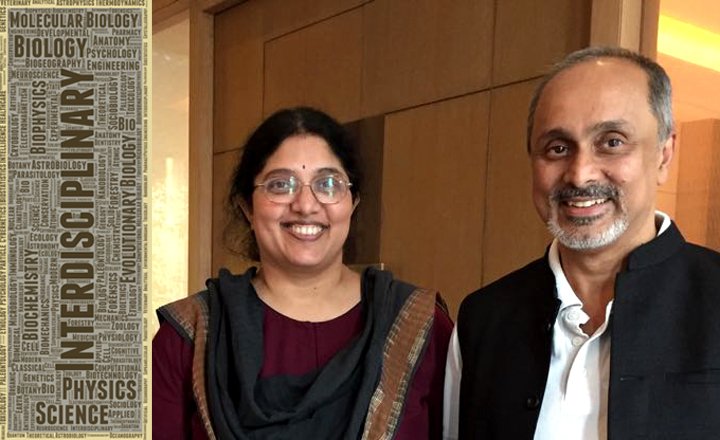
<p>In this first article in our new series on interdisciplinarity, Gautam Menon, theoretical physicist (The Institute of Mathematical Sciences, Chennai &amp; Homi Bhabha National Institute, Mumbai) and Sandhya P Koushika, neurobiologist (Tata Institute of Fundamental Research, Mumbai) provide critical insights on tackling interdisciplinary problems, gained from decade of steadfast collaboration.</p><figure><a href="https://indiabioscience.org/columns/opinion/interdisciplinarity-how-to-make-it-work-for-you"><img
                width="720"
                height="440"
                style="max-width: 100%; height: auto"
                src="https://cdn.indiabioscience.org/media/articles/Menon_Koushika.jpg"></a></figure><p><em>Before a priest, I am a physician;</em></p><p><em>Before a physician, a reverend priest.</em></p><p><em>When neither is present, I am both;</em></p><p><em>When both are present, I am neither</em></p><p><a href="https://www.researchgate.net/publication/327156836_Historical_Note_Reactions_of_Emperor_Bahadur_Shah_Zafar_and_Laureate_Mirza_Ghalib_to_the_Celestial_Events_during_1857-1858">These lines are from</a> a letter written by the poet Mirza Ghalib in 1858, quoting a Persian verse. The sense of imposter syndrome that they evoke affects, sooner or later, all scientists whose work crosses disciplines.</p><p>Here, we describe what drove a theoretical physicist and a <em>C. elegans </em>neurobiologist to collaborate and what they each gained from it. On both sides, this was the first attempt to bridge such a stark disciplinary divide. Each story of a successful interdisciplinary interaction is different. There are no easy guides to making things work. However, what we say here may be more generally useful to others interested in starting interdisciplinary work, perhaps even with a specific collaborator already in mind. Our own example shows that the benefits of interdisciplinary approaches can be transformative, even if initially accompanied by feelings of imposter-hood.</p><p>Our work together began at an interdisciplinary meeting on traffic, organised about a decade ago at the Indian Institute of Technology (IIT) Kanpur. The term “traffic” covers a surprising number of contexts, from vehicular traffic to the traffic of vesicle-encapsulated cargo by molecular machines within cells. These machines are molecular motors, driven by ATP hydrolysis. </p><p>Theoretical physicists have devised a number of models for such motor-driven cargo transport. Almost all such models avoid the complications of experimental systems, elevating elegance and simplicity over the messiness of the real world. But complexity in biological experiments, given inherent variability and experimental caprice, is the norm, unlike physical measurements where error bars can often be so small as to not be worth even displaying. </p><p>The question that seeded our work together was the following: in experiments which tracked cargo motion within specific nerve cells in live <em>C. elegans</em> worms, such cargo inevitably wound up entering regions where other cargo had stalled. Once moving cargo came up against a stationary cargo cluster, it was unclear what happened to them. Sometimes, such clusters appeared to emit more cargo than the numbers that came in. At other times, they seemed to be able to accumulate more than they released.</p><figure><img src="https://cdn.indiabioscience.org/media/articles/Traffic_Final.jpg" alt="Traffic cartoon" title="Traffic cartoon"><figcaption>Science meets art in this fun illustration of cargo crowding in neurons (Art by Anusheela Chatterjee and Sravanthi Nadiminti)</figcaption></figure><p>We now believe that we understand this observation (<a href="https://onlinelibrary.wiley.com/doi/full/10.1111/tra.12544">Sood et al, Traffic, 2018</a>; The Hindu provides <a href="https://www.thehindu.com/sci-tech/science/traffic-jams-in-the-brain/article24603833.ece">a popular take</a>). Our conclusions have been tested in detail in simulations. But to achieve this understanding, theory and experiment first had to play off against each other, with the model suggesting specific measurements and analysis. The experiments acted as a brake, discouraging unanchored theoretical speculation. Theory both drove, and in turn was driven by, the experimental observations. Several other observations and predictions from the simulations led to questions that continue to intrigue us today.<br></p><p>For the physicist, the experience of dealing with the messiness of real biological data coupled with the clumsiness of biological tools (as in, “You mean we can’t just find out what it’s doing in a cluster by looking at it?”) was new. So was experiencing the intuition of the biologist for the many processes that could explain the observations as well as the careful enumeration of different tests that one could do to eliminate or confirm each of them. For the biologist, the idea that one could and should step back to look for over-arching principles that might be general (or even, as physicists like to say, “universal”) outside of a narrow context was novel.</p><p>With this background, our first piece of advice: <strong>Finding the right scientific collaborator is key to any successful collaboration.</strong> Identifying the right problem is equally important. The interaction must also work both ways: A collaboration that is one-sided, in commitment or in intensity, will simply not survive in the long term. Having a shared sense of adventure and the ability to take risks, helps. </p><p>Most collaborations across disciplines start in plug-and-play mode, as in “experimental data with specific method meets new way of analysis or alternative method”. They are good routes to easy papers. However, they may never transition into problems with a longer horizon because neither partner needs to step out of their zone of comfort. We will reserve the term “interdisciplinary” largely for those situations where both collaborators accept the need to deviate from established disciplinary paths as well as to deal with the intellectual disruption that results from such a change.</p><p>Our second lesson: <strong>It takes time, energy and hard work to be interdisciplinary</strong>. The best and worthiest problems rarely come pre-packaged; if they did, practical problem solving would be the larger part of the interaction.</p><p>The interactions that led to our first paper took years. Much of this time was spent in discussion and arguments, as well as in learning each other’s language. We spent time with each other’s students, post-docs and project assistants. This had positive consequences. The biology students learnt new ways of thinking about data. Students with a physics or a computational background understood the complexities of an actual experiment and the crucial role of experimental skill and perseverance. The collaboration has significantly transformed students in the Koushika lab, who have learnt to pay far more attention to numbers, as opposed to qualitative behaviour, than they did earlier. The more courageous among them have even attempted simple simulations, realising their value in developing the right intuition.</p><p>Those on different sides of a collaboration must also realise that there are aspects to the other field that will seem simply incomprehensible on a first encounter. For example, to a theoretical physicist, the idea that very similar proteins with virtually identical functions can have entirely different names in different model systems can be a source of discomfort. To realise that they will have to make some effort to learn these names is disturbing. To the biologist, the physicist’s constant desire to side-step the details and look at the “larger picture” can be a source of frustration as well as not infrequent irritation. </p><figure><img src="https://cdn.indiabioscience.org/media/articles/SPK_Lab.jpg" alt="Sood et al, SPK lab" title="Sood et al, SPK lab"><figcaption>Members of Sandhya Kaushika's lab at TIFR hard at work at data analysis (left) and science outreach (right). Parul Sood (pictured in both images) took the collaborative study on cargo trafficking in neurons to completion. </figcaption></figure><p>Our third piece of advice: <strong>Be open to new experiences.</strong> The act of an interdisciplinary collaboration involves painful personal exposure, the repeated feeling of understanding nothing in a new field and wondering if the journey will be useful at all. The Nobel prize-winning physicist P.G. de Gennes, a pioneer of cross-disciplinary science, <a href="https://link.springer.com/chapter/10.1007/978-1-4612-2410-5_8">puts it beautifully</a> : “.. every time one switches to a new field, one has to catch up with the rest of the class, to learn all over again from scratch &hellip; To change research fields is as traumatic as moving to another country.” The only real way to deal with this trauma is to embrace it head-on.<br></p><p>At a practical level, this might mean forcing yourself to go to scientific meetings where your collaborator might be the only person you know, certainly at the outset, and where most of the proceedings could be entirely opaque to you. Another way to do this is to participate actively in the writing of manuscripts from beginning to end, rather than confining yourself to just those sections which include your contributions.</p><p>Some of our most enjoyable moments spent discussing science happened during the writing of our joint papers. We spent time parsing each line, clarifying where a physicist’s wording would simply irritate a reviewer for a biology journal, or where the results of a long and difficult computation, a source of some pride, would have to be pithily summarised in half a line. One of our students said of this writing process: “You both argue about every sentence and inference and nearly everything leads to revisiting the data with a new analysis.”</p><p>In difficult times, it is good to remember that the true value of a good collaborator is that they help you find your way around complex literature, sort out elementary confusions, and inject the right note of positivity into your interactions.
 </p><p>Fourth: <strong>Be confident that you have something new to contribute.</strong> It is easy to feel that a collaborator has sufficient momentum to carry on on their own, and that they would be less encumbered by a bumbling coauthor to weigh them down. This is where one’s confidence in what one brings to the table is crucial. Only then can a scientific interaction attain its natural state of flow.</p><p>We were lucky that neither of us felt that this was particularly a problem. Both of us had other things to work on as well, so our own scientific advancement was not tied solely to whether we would achieve something publishable in the short term. Working in the Indian context also meant that we could look beyond the grant cycles that factor into the practice of science in much of the first world. This certainly made our collaboration easier, since we could afford to be open-minded in identifying questions of interest.</p><p>Fifth: <strong>Communicate your joy and excitement at working together</strong>. Realise that your collaborator needs, as much as you do, a feeling of validation and excitement. Again for us, as a consequence of the long periods of discussion that preceded our even understanding what the core problems were that we wanted to address, this came naturally. But for others, in different situations, a more systematic approach to keeping the excitement alive might help your collaborator as much as you. </p><p>Sixth and finally: <strong>The best interdisciplinary interactions are those where the problem matters, not so much the method</strong>. A set of tools and our own way of thinking define us, certainly for experimentalists but also for the theoretically inclined. When we encounter a new problem, we fall back upon what we know, translating what we must learn and understand into familiar terms. This is a reasonable starting strategy, but one that is sometimes not optimal for long-term success. A tool sharpened and adapted for one problem may simply be too blunt for another. The need for flexibility and adaptation lies at the core of making interdisciplinarity work for you.</p><p>What should we expect to gain from interdisciplinary interactions? <a href="https://link.springer.com/chapter/10.1007/978-1-4612-2410-5_8">From de Gennes again</a>, “I cannot emphasise enough the importance of &hellip; transposition of methods between two apparently unrelated fields of science. What has been learnt in one field can at times help completely solve different problems”. At a subtler level, it is also the value of attempting to answer the sorts of questions that children or total novices could put to you about your field, except that it is your collaborator who might be asking them and perhaps with a specific purpose in mind. As every scientist knows, these are the questions that are often the most difficult to answer, but that also wind up teaching you the most. </p><p>For both of us, looking back on close to a decade of interactions, much of which was spent in adjusting to the philosophy, language and practice of another, very different field, we can agree that this was time well-spent.</p><figure><img src="https://cdn.indiabioscience.org/media/articles/Interdisciplinarity_Infographic1.png"></figure><p><em>Did you enjoy this article? Please let us know in the comments below.</em></p>
              ]]></content><category term="advice" label="Advice" /><category term="interdisciplinarity" label="Interdisciplinarity" /></entry><entry><title>The curious case of the missing Indian postdoc</title><link
                  rel="alternate"
                  href="https://indiabioscience.org/columns/opinion/the-curious-case-of-the-missing-indian-postdoc"
                  type="text/html"
                  /><summary type="html"><![CDATA[
                <p>When it comes to attracting and retaining quality post-doctoral fellows, India often finds itself lagging behind, which in turn exerts a cost on the scientific output of the country. In this opinion piece, Shambhavi Naik, Research Fellow, Technology and Policy Programme, <a href="https://indiabioscience.org/orgs/takshashila-institution">Takshashila Institution</a>, and Megha, India Alliance Early Career Fellow at the <a href="https://indiabioscience.org/orgs/ncbs">National Centre for Biological Sciences (NCBS)</a>, examine possible causes and suggest solutions to this issue. </p>              ]]></summary><id>tag:indiabioscience.org,2018-09-07:/columns/opinion/the-curious-case-of-the-missing-indian-postdoc</id><published>2018-09-07T10:00:00+05:30</published><updated>2019-06-03T14:33:36+05:30</updated><author><name>Shambhavi Naik</name><uri>https://indiabioscience.org/authors/ShambhaviNaik</uri></author><content type="html"><![CDATA[
                
<p>Postdoctoral fellows form the mainstay of research activities in many parts of the world, yet are curiously under-utilized and under-funded in Indian institutes. In this article, Shambhavi Naik, Research Fellow, Technology and Policy Programme, <a href="https://indiabioscience.org/orgs/takshashila-institution">Takshashila Institution</a>, and Megha, India Alliance Early Career Fellow at the <a href="https://indiabioscience.org/orgs/ncbs">National Centre for Biological Sciences (NCBS)</a>, examine possible causes and propose solutions to India's persistent problems with retaining and attracting quality postdoctoral talent.</p><figure><a href="https://indiabioscience.org/columns/opinion/the-curious-case-of-the-missing-indian-postdoc"><img
                width="720"
                height="440"
                style="max-width: 100%; height: auto"
                src="https://cdn.indiabioscience.org/media/articles/MissingIndianPostdoc.jpg"></a></figure><p>The last decade has seen the Government of India increasing the number of higher education institutions and introducing policies specifically to motivate STEM (Science, Technology, Engineering and Math) students. These interventions are expected to build a pipeline of education to produce large numbers of quality STEM graduates. </p><p>How do STEM students view this pipeline? How do they perceive opportunities to pursue STEM careers in India? To address this issue with numbers rather than anecdotal information, we initiated a <a href="https://www.surveymonkey.com/r/KYFBCWN">survey</a> for these students in May 2018. A small vignette (~85 Ph.D. students) from the survey has been used here to discuss one node of the STEM career pipeline: postdocs.</p><p>In 2015, India had ~125,000 students enrolled in a Ph.D. program, 62% of whom <a href="http://mofapp.nic.in:8080/economicsurvey/pdf/119-130_Chapter_08_ENGLISH_Vol_01_2017-18.pdf">were in STEM fields</a>. Assuming a fifth graduate in 2018, and with our <a href="https://www.surveymonkey.com/r/KYFBCWN">survey</a> showing 56% of these would pursue a postdoc after their PhD, we arrive at ~12,500 potential postdocs per year.</p><p>Despite a large base of applicants, postdocs on Indian campuses are a rarity. India’s premier STEM research institute, I<a href="https://indiabioscience.org/orgs/iisc">ndian Institute of Science (IISc)</a>, currently hosts just 174 postdocs. To understand how low this number is, we examined the Faculty:Postdoc ratio. In <a href="https://www.iisc.ac.in/iisc-in-numbers/">IISc</a> it is 2.8:1, while for <a href="https://registrar.stanford.edu/everyone/enrollment-statistics/enrollment-statistics-2016-17">Stanford University</a> it is 1:1. Correspondingly, Faculty:Ph.D. student ratio is 1:5.6 for IISc, as compared to 1:1 at Stanford. This minor analysis suggests that we are under-utilizing the trained Ph.D. students we are investing in. </p><p>Moreover, absence of a strong postdoctoral culture negatively impacts our research output. Consider one parameter: publications. In 2018, the Nature Index <a href="https://www.natureindex.com/annual-tables/2018/country/all">pegged India at 13</a>, behind countries including USA, UK, Switzerland, South Korea, Spain and Italy. Postdocs would be an ideal workforce to contribute to our publication numbers because unlike faculty, they don’t have teaching or administrative duties and unlike Ph.D. students, they have no course-work commitments. </p><p>Here, we identify reasons behind our poor postdoc numbers and propose strategies to develop this cohort of scientific research personnel.</p><p><strong>Many identifiable factors contribute to low postdoc numbers: economic, social and scientific.</strong></p><p>Postdocs are poorly paid in India and sometimes, even less than Ph.D. students. The Prime Minister’s Research Fellowship Scheme awards INR 70,000/month for outstanding Ph.D. students, while a similarly competitive National Postdoctoral Fellowship pays only INR 55,000/month. Although poor pay for postdocs is a global issue, when considered in terms of purchasing power parity, Indian PhDs prefer poor pay overseas to poor pay in India. Delay in release of salaries and grant money further compounds the poor economics of doing a postdoc in India.</p><p> The social perception of an India-trained postdoc is low. Students are strongly advised by their Ph.D. mentors to pursue a postdoc overseas. This advice is substantiated by the widespread habit of prominent research and educational institutes of hiring mostly, if not exclusively, foreign-trained postdocs. The net result: ~70% of <a href="https://www.surveymonkey.com/r/KYFBCWN">surveyed</a> students felt a need to train overseas for a job in Indian academia. There is of course, nothing wrong in students seeking work experience outside India; but, isn’t there something remiss in our system if students feel compelled to do so? </p><p>Scientifically, India-trained postdocs have less glamorous publication records compared to their overseas counterparts, an inherent challenge of doing science in India. This issue is not acknowledged by the Indian scientific community. Opaque hiring processes further fuel the perception that a bias exists against hiring India-trained postdocs. </p><p>These factors combined lead to a subpar postdoctoral population, both in quantity and quality, as well as programs that are not attractive to either domestic or foreign postdocs. Increased funding is an obvious solution for improving postdoc numbers, but more money without institutional and structural changes will be ineffective. We suggest below some broad interventions that may be considered at a policy level. </p><p><strong>Include a long-term (&gt;1 year) overseas training component to Indian postdoc fellowships</strong></p><p>Our <a href="https://www.surveymonkey.com/r/KYFBCWN">survey</a> suggests 60% of those wanting to go abroad will remain in India if such a fellowship is available. Overseas training would expose students to experiential learning from international laboratories. Structuring the Fellowship so that the last 1-2 years are spent in an Indian laboratory would help to utilize the Fellow’s foreign training in an Indian context.</p><p><strong>Encourage foreign postdocs</strong></p><p>We have dedicated schemes to attract overseas researchers at the faculty level, but perhaps these would be more valuable when applied to postdocs. Increasing foreign participation on our campuses will enable India to break into the Top 100 global university rankings, an aspiration which now has political momentum. At MIT for example, <a href="http://web.mit.edu/fnl/volume/262/sive_etal.html">more than 60% of postdocs are international</a>. Given the contractual nature of postdoctoral work, these India-trained foreign postdocs can serve as ambassadors of our research institutions. However, to promote harmony and preclude prejudice, it would be important that these postdocs are treated on par with domestic postdocs in terms of pay and opportunities.</p><p><strong>Create mechanisms for structured postdoctoral and research student training</strong></p><p>We currently fund Junior Research Fellows (JRFs) with the intention of developing them as PhD students. However, JRFs are provided no help or counselling to help them navigate through the research environment. Thus, many end up training in subjects and working on projects which may be vastly different from their education and ambitions. To structure JRF training, we envision a national program that asks postdocs to compete to employ JRFs (with the support of their lab head) for specific projects. Postdocs would have to write a 1-2yr proposal, outlining the science and the skills the JRF would learn in the training. Both pools of research personnel, JRFs and postdocs will benefit from this scheme: the JRF is guaranteed individual attention and a co-owned project, while the postdoc can improve their productivity and develop management skills.</p><p><strong>Recognize postdocs as valuable trained research personnel for academic and non-academic careers</strong></p><p>In our current set-up, an academic job is seen as the best outcome of Ph.D. and postdoc training. This needs to change. Even in the US and UK, just 8% of postdocs get an academic job. We, therefore, need to initiate non-academic training opportunities. Unfortunately, most postdocs are unaware that their training can be valuable in other professions such as research administration, consulting, policy making, journalism, curriculum development, teacher training, entrepreneurship and facility management. <em>It does not help that </em><em>these careers carry a social stigma by being labelled as “alternate”</em><em>.</em></p><p>Structured programs for professional development and paid internships during the postdoc training period would be helpful (for e.g., not one law school in India has an IP course that is run on a research campus). Institutions should also be allowed to create a slew of positions that allow them to utilize and acknowledge postdoctoral training for broader application in the research ecosystem. For e.g., imagine the usefulness of an India-trained postdoc as a lab manager to a newly appointed faculty.</p><p>In the current system, we train a large number of Ph.D. students only to encourage them to go overseas, of which a fraction return. Perhaps it is time we stop being complacent about losing our best-trained people. </p><hr><p>This article has its genesis in a career aspirations <a href="https://www.surveymonkey.com/r/KYFBCWN">survey</a> that we are running for BSc/MSc/Ph.D. students enrolled in India. We would like to use the data generated from the <a href="https://www.surveymonkey.com/r/KYFBCWN">survey</a> to inform policies that can make India a global science leader. Help us: take the <a href="https://www.surveymonkey.com/r/KYFBCWN">survey</a> and/or encourage students to do so. 
 </p>
              ]]></content><category term="career-development" label="Career Development" /><category term="policy" label="Policy" /></entry><entry><title>Idea-plagiarism and precedence: ethics in competitive research</title><link
                  rel="alternate"
                  href="https://indiabioscience.org/columns/opinion/idea-plagiarism-and-precedence-ethics-in-competitive-research"
                  type="text/html"
                  /><summary type="html"><![CDATA[
                <p>In this second article in our series on research ethics, Praveen Chaddah, former director of the UGC-DAE Consortium for Scientific Research, writes about the issue of idea-plagiarism in competitive research, and how to avoid being a victim of the same while maintaining high ethical standards.</p>              ]]></summary><id>tag:indiabioscience.org,2018-08-10:/columns/opinion/idea-plagiarism-and-precedence-ethics-in-competitive-research</id><published>2018-08-10T10:44:00+05:30</published><updated>2019-10-23T16:22:12+05:30</updated><author><name>Praveen Chaddah</name><uri>https://indiabioscience.org/authors/PraveenChaddah</uri></author><content type="html"><![CDATA[
                
<p>Praveen Chaddah is a condensed matter physicist who worked on solid helium, superconductors, and 'broad and interrupted first order phase transitions' of magnetic materials. He was the Director of the UGC-DAE Consortium for Scientific Research during 2005-2013. He has been vocal about increasing the visibility of Indian research and reforming methods of research dissemination, and has written extensively about plagiarism, including in his book <em>“Ethics in competitive research: do not get scooped; do not get plagiarized”</em></p><figure><a href="https://indiabioscience.org/columns/opinion/idea-plagiarism-and-precedence-ethics-in-competitive-research"><img
                width="720"
                height="440"
                style="max-width: 100%; height: auto"
                src="https://cdn.indiabioscience.org/media/articles/Idea_Plagiarism_Praveen_Chaddah.jpg"></a></figure><p>Ethical behaviour is desired in all human endeavours. Unethical behaviour may or may not be illegal, but should definitely be condemned, even if it is not yet on the statute books and is not yet legally punishable. Unethical behaviour in research can result in the public being misguided on issues of health or in tax-payer money being spent on research and development efforts that do not have a sound scientific basis. 
 </p><p>Fabrication, falsification and plagiarism are three forms of unethical behaviour that must be avoided by all researchers. The first two occur during the conduct of research, while plagiarism occurs during the communication of research output. Plagiarism has become a commonly discussed misdemeanour, and the <a href="https://indiabioscience.org/orgs/ugc">University Grants Commission (UGC)</a> has <a href="http://www.thehindu.com/todays-paper/tp-national/hrd-ministry-approves-norms-against-plagiarism/article24597766.ece">set in place procedure</a>s to be followed to punish researchers from our higher educational institutions whose thesis or research papers are detected to have portions that are plagiarized from other authors.
 </p><p>Plagiarism is the appropriation of another person’s ideas, results, or words without giving appropriate credit. There are perpetrators of plagiarism who steal credit, and there are also victims of plagiarism whose credit is stolen. In this article, I look at the plight of the victims, suggest methods to avoid becoming victims, and talk about what recourse do victims have. 
 </p><p>Software is widely available to check for plagiarism of words, and both the perpetrators (who wrote the errant paper) and the victims (authors from whose paper text is copied) are identified by such software. It is believed that if results are copied, then enough text would also be copied, and the software would identify the perpetrators and the victims. Software obviates the need for painstaking comparisons, and gives us proof on a platter. Various institutional mechanisms are being put in place in India to ‘punish’ any perpetrator of plagiarism of words.
 </p><p>However, plagiarism of words is not the only form that plagiarism can take in research. Scientists invest thought and ideas while pursuing research, whether that research be confirmatory, incremental, or path-breaking. Many researchers believe that new ideas lie at the heart of research that is subsequently classified as novel. Some new idea would be necessary for incremental research, and maybe an out-of-the-box idea for research that can be described as path-breaking. As active researchers <a href="https://indiabioscience.org/columns/indian-scenario/should-we-rethink-the-way-we-evaluate-research">are pushed</a> to move from confirmatory research to incremental or path-breaking research, the role of ideas becomes more important than the role of words in our research papers.
 </p><p>Can a researcher who (or whose byline) is not well-established, lose credit for an original idea? (Such emerging researchers will hopefully soon dominate India’s research landscape.) This can happen after the paper containing the new idea has been communicated to a journal but not released by the authors on a preprint archive. It can happen even after the paper is released on a preprint archive or has been accepted and put on-line, or published, by a journal. 
 </p><p>The former can happen if there is a leak from the journal (which is highly unlikely) or from the authors. If we have a new idea, then what precautions can we take? We must remember that if we leaked our idea without a date-stamped proof of having enunciated this idea, then there is no recourse left to us. Some care needs to be exercised in informal dissemination. 
 </p><p>The recent <a href="http://insajournal.in/insaojs/index.php/proceedings/article/view/544">Policy Statement</a> released by INSA notes that establishing priority is essential for countering idea-plagiarism. It notes that preprint archives are very popular in physics, mathematics, computer science etc., and have also been initiated in many other disciplines, including <a href="https://www.biorxiv.org/">bioRxiv</a> for biological sciences. These provide date-stamped priority, with minimal delay, before dissemination amongst the specialist community. 
 </p><p>This role has been even noted by National Institutes of Health (NIH) in a <a href="https://grants.nih.gov/grants/guide/notice-files/NOT-OD-17-050.html">Notice</a> which states “Scientists issue preprints to speed dissemination, establish priority, obtain feedback, and offset publication bias.” The present author has, as stated in the INSA document with references to his published papers, been stating these advantages over some years. <a href="https://www.nature.com/news/not-all-plagiarism-requires-a-retraction-1.15517">I have argued</a> that a researcher who (or whose byline) is not well-established will face scepticism for out-of-the-box ideas during review process and suffer delay in publication. An established researcher who usurps the idea, on the other hand, will easily get his paper accepted and it will be frequently cited. We have to start worrying about how to retain credit for our original out-of-the-box ideas if we wish to pursue path-breaking research. 
 </p><p>I have described various suggestions in my recent book <em>“Ethics in competitive research: do not get scooped; do not get plagiarized”.</em> As a starting postulate, research creates new knowledge and new knowledge can be created only once! Credit in competitive research goes to the first-past-the-post, and not to the also-ran. As we encourage young researchers to do incremental or path-breaking research, the book reminds them that many of our icons, going back to Marie Curie in the nineteenth century, were acutely aware of the need for rapid dissemination to establish priority. This book describes an instance where unusual dissemination methods helped future Nobel laureates, and also a case where pursuing ‘traditional path’ changed a paper from being a discovery announcement to a me-too paper. It emphasizes that novel methods of dissemination are essential while disseminating path-breaking research. 
 </p><p>We also noted that an idea can be plagiarized even after it is released on a preprint archive or has been accepted and published by a journal. Needless to say, the errant paper would have paraphrased the idea so that current software cannot detect any text-similarity. Experts would be able to establish that the same idea has been used without apportioning credit, but it can be an uphill task to convince experts to read your earlier paper. It is a lament that while mechanisms are being put in place to punish Indian researchers who perpetrate an ethical misdemeanour, there is no attempt to set up cells that could help researchers who believe they are victims of plagiarism. Contrast this with the proliferation of patent cells in India that help researchers who feel they have completed research with financial possibilities.
 </p><p>Idea plagiarism, with a clever manipulation of words, can result in an undeserving person being honoured and thereby getting unjustified societal credibility, a credibility that results in society accepting advice and suggestions from sources who may disseminate false information.
 </p><p>I wish to conclude by stressing that reporting results that can be termed as ‘unexpected’ is not very straightforward. Dissemination without delay but with a high level of visibility ensures both (i) ownership of the researchers and (ii) proper post-dissemination validation and evaluation of the research output. We must realize that validation of major path-breaking research output has always been linked to the post-publication acceptance by the community of researchers in the field, and not just to its being published in any journal, however ‘reputed’ it may be. As we have been reminded by the <a href="http://insajournal.in/insaojs/index.php/proceedings/article/view/544">INSA Policy Statement</a> , <a href="https://indiabioscience.org/columns/indian-scenario/should-we-rethink-the-way-we-evaluate-research">what we publish is more important than where it is published</a>.
 </p><p>=====================================================</p><p><em>Please tell us your views on this article and this subject in the comments below.</em><br></p>
              ]]></content><category term="advice" label="Advice" /><category term="ethics" label="Ethics" /></entry></feed>