IndiaBioscience - Opinion from 2025https://indiabioscience.org/columns/opinion/2025/feed2026-10-07T04:00:32+05:30Spotlight on life science research: Open access highlights from Taylor & FrancisOpen Access (OA) publishing continues to expand the visibility and impact of life science and biomedical research emerging from India. By enabling immediate and unrestricted access to scientific findings, OA articles are helping accelerate knowledge exchange globally and support wider societal application of research. This column highlights selected OA studies published by Taylor & Francis journals over the past few years, across plant biology, microbiology, environmental science, nanotechnology, and allied fields. Each featured article offers insights into scientific challenges with direct relevance to India and beyond. ]]>tag:indiabioscience.org,2025-12-26:/columns/opinion/spotlight-on-life-science-research-open-access-highlights-from-taylor-francis2025-12-26T10:00:00+05:302025-12-24T14:54:49+05:30Taylor & Francis Indiahttps://indiabioscience.org/authors/TaylorandFrancisOpen Access (OA) publishing continues to expand the visibility and impact of life science and biomedical research emerging from India. By enabling immediate and unrestricted access to scientific findings, OA articles are helping accelerate knowledge exchange globally and support wider societal application of research. This column highlights selected OA studies published by Taylor & Francis journals over the past few years, across plant biology, microbiology, environmental science, nanotechnology, and allied fields. Each featured article offers insights into scientific challenges with direct relevance to India and beyond.
Featured Article 1: Plant Drought Stress Tolerance: Understanding Its Physiological, Biochemical, and Molecular Mechanisms
As climate change intensifies water scarcity, understanding how plants respond to drought stress remains a key area of research in agriculture. This review synthesises current knowledge on the physiological, biochemical, and molecular adaptations that help plants survive water-limited environments.
With drought causing 30% of global crop yield loss and worsening due to climate change, the need for drought-tolerant crops has never been more urgent.
The authors discuss mechanisms like stomatal closure, oxidative stress response, and the role of hormones like abscisic acid (ABA) in combating water deficit. The article also highlights how advanced genome editing technologies, such as CRISPR/Cas9, enable precise modifications of genes involved in stress response pathways. By leveraging such technologies, researchers are opening doors to genetically modified crops that can thrive under increasingly challenging environmental conditions.
Source:
This article was originally published in Biotechnology & Biotechnological Equipment (Taylor & Francis).
Bacterial biofilms represent a major challenge in modern medicine, contributing to nearly 50% of hospital-acquired infections and significantly increasing bacterial resistance to antibiotics. This review examines current efforts to develop anti-biofilm therapies and provides an overview of natural and synthetic molecules that can prevent, disrupt, or eradicate biofilm-associated infections.
The authors describe a range of mechanisms of action used by anti-biofilm agents, including inhibition of quorum sensing, degradation of extracellular polymeric substances (EPS), disassembly of mature biofilms, and interference with intracellular signaling systems such as c-di-GMP and (p)ppGpp. Highlighted compounds include furanones, quercetin, lantibiotics, endolysins, and emerging peptide-based therapies, many of which show potential for combating drug-resistant pathogens like P. aeruginosa, K. pneumoniae, and S. aureus.
Amid rising antibiotic resistance, this review offers useful insights for researchers working in translational microbiology, pharmacology, and infectious disease. It outlines biofilm structure, detection methods, and therapeutic targets, and provides a consolidated landscape of molecules under investigation for anti-biofilm activity.
Source:
This article was originally published in Virulence.
Hexavalent chromium (Cr (VI)) remains one of the world’s most persistent environmental pollutants, commonly released from industrial sectors such as electroplating, leather tanning, textile dyeing, wood preservation, and metallurgy. This review examines the toxicological impact of Cr (VI), a Group 1 carcinogen, on humans, plants, and microbial communities, highlighting its genotoxic, mutagenic, and cytotoxic properties.
The authors outline how Cr (VI) enters the body through inhalation, ingestion, and skin exposure, leading to oxidative stress, DNA damage, respiratory illness, kidney and liver injury, and increased cancer risk. Its mobility and solubility allow it to persist in soil and water for long periods, increasing exposure potential.
Beyond human health, the review discusses Cr (VI)’s effects on plant biology, including impacts on seed germination, chlorophyll synthesis, photosynthesis, and biomass production, as well as its influence on soil microbial diversity. A key focus of the article is microbial strategies for Cr (VI) detoxification, such as biosorption, bioreduction, bioaccumulation, and biomineralisation, which convert the toxic oxidised form into the less harmful Cr (III).
By summarising a wide range of bacteria, fungi, and algae capable of reducing Cr (VI), the review provides a practical roadmap for implementing microbial bioremediation as a sustainable alternative to conventional chemical or physical treatment methods.
Source:
The article was originally published in Bioengineered.
Featured Article 4: Microbial Electrolysis — A Promising Approach for Treatment and Resource Recovery from Industrial Wastewater
Authors: Yamini Koul, Viralkunvar Devda, Sunita Varjani, Wenshan Guo, Huu Hao Ngo, Mohammad J. Taherzadeh, Jo-Shu Chang, Jonathan W. C. Wong, Muhammad Bilal, Sang-Hyoun Kim, Xuan-Thanh Bui & Roberto Parra-Saldívar
Microbial Electrolysis Cells (MECs) are being investigated as a biotechnology platform for transforming industrial wastewater treatment into a resource-recovery opportunity. This review discusses the principles, advancements, and future potential of MECs as an energy-positive, carbon-negative technology capable of producing hydrogen, methane, formic acid, hydrogen peroxide, and clean water, all while reducing pollutant load.
The article situates MECs within broader efforts to identify circular and bioeconomic approaches for managing wastewater, given increasing energy demand, and climate pressures. It describes how MECs can be coupled with other processes, including anaerobic digestion, membrane bioreactors, thermoelectric systems, dark fermentation, and microbial fuel cells, to improve treatment efficiency and energy recovery.
The authors provide a technical overview of MEC designs (single- and double-chamber systems), electrogenic microbial communities, substrate utilisation patterns, and degradation pathways for complex pollutants such as nitrobenzene, chlorophenols, sulfates, and heavy metals. The review also underscores current engineering and operational challenges of scaling MECs related to reactor design, electrode materials, process optimisation, cost, and life-cycle considerations.
With wastewater treatment accounting for ~3% of global electricity use yet containing 2–4× more recoverable energy, the article highlights MECs as one of the most disruptive technological pathways toward net-positive energy recovery, green hydrogen economy, and industrial decarbonisation.
Source:
The article was originally published in Bioengineered.
Featured Article 5: Sulfur Nutrition and Its Role in Plant Growth and Development
Authors: Om Prakash Narayan, Paras Kumar, Bindu Yadav, Meenakshi Dua & Atul Kumar Johri
Sulphur is an essential but often overlooked macronutrient that is necessary for plant growth, productivity, and resilience. This review explores sulphur’s critical role in plant physiology, through its presence in amino acids (cysteine, methionine), coenzymes, vitamins, glutathione, and in Iron–Sulfur (Fe–S) clusters, to its involvement in detoxification, redox regulation, and stress signalling pathways. With declining atmospheric sulphur deposition and intensifying agricultural demand, deficiency of this critical element has emerged as a global challenge affecting crop yields and nutritional quality.
The authors detail sulphur sources in soil, uptake mechanisms via high- and low-affinity sulphate transporters, intracellular transport, and assimilation processes that convert sulphate into vital biomolecules. The review also focusses on the role of arbuscular mycorrhizal fungi (AMF) and endophytic fungi like Serendipita indica in enhancing sulphur acquisition, especially under deficiency conditions. These microbial partners can significantly boost nutrient uptake, plant growth, and tolerance to environmental stresses offering sustainable alternatives to chemical fertilisers.
The paper further highlights sulphur’s role in biotic and abiotic stress tolerance, including its influence on antioxidant activity, hormone signalling, osmotic balance, and the importance of hydrogen sulfide (H₂S) as a signalling molecule that regulates how plants respond to drought, salinity, heat, heavy metals, and pathogen attack.
Source:
The article was originally published in Plant Signaling & Behavior.
]]>Anusandhan National Research Foundation (ANRF) & RDI Fund: An OverviewIn a new LinkedIn post, the CEO of the Anusandhan National Research Foundation (ANRF), Shivkumar Kalyanaraman, outlined how the foundation is evolving into India’s apex body for research, development, and innovation. Alongside strengthening core research grants, ANRF is preparing to operationalise ₹1 lakh crore Research, Development and Innovation (RDI) Fund, designed to channel patient capital into deep-tech, high-impact projects. ]]>tag:indiabioscience.org,2025-12-11:/columns/opinion/anusandhan-national-research-foundation-anrf-rdi-fund-an-overview2025-12-11T10:50:00+05:302025-12-11T14:05:59+05:30Shivkumar Kalyanaramanhttps://indiabioscience.org/authors/gGWVL6w4Y4KqA6aIn a new LinkedIn post, the CEO of the Anusandhan National Research Foundation (ANRF), Shivkumar Kalyanaraman, outlined how the foundation is evolving into India’s apex body for research, development, and innovation. Alongside strengthening core research grants, ANRF is preparing to operationalise ₹1 lakh crore Research, Development and Innovation (RDI) Fund, designed to channel patient capital into deep-tech, high-impact projects.
Disclaimer: This article is written in the author's own personal capacity and not an official document of ANRF. This is meant to be a simplified overview of ANRF and RDI. All official communication should be from GoI web pages and documents. Any errors / mis statements in this article or elsewhere in social media by this author are the author's alone. The author reserves the right to make any changes or withdraw any statements made. These should not be viewed as basis for current or future programs of ANRF (which are approved only by the ANRF Executive Council). Neither the author nor ANRF nor Govt of India will bear any liability for any impact directly/indirectly from any interpretation of what is written in this article.
Anusandhan National Research Foundation (ANRF) is a statutory body, presided by the Hon'ble Prime Minister of India, created by the ANRF Act 2023 as an apex organisation for research and innovation across all stakeholders (government, academia, industry/startups, labs, philanthropy, international etc). The organisation was notified in Feb 5, 2024, and the erstwhile Science and Engineering Research Board (SERB) was dissolved.
ANRF aims to catalyze the rise of India as a Research, Development and Innovation powerhouse. The idea of a National Research Foundation (NRF) in India had its genesis in the National Education Policy (NEP) 2020, Chapter 17. National Education Policy 2020 envisions a comprehensive approach to transforming the quality and quantity of research in India. Research and innovation at education institutions in India, particularly those that are engaged in higher education, is critical. To build on these various elements in a synergistic manner, and to thereby truly grow and catalyze quality research in the nation, NEP 2020 envisions the establishment of a National Research Foundation (NRF).
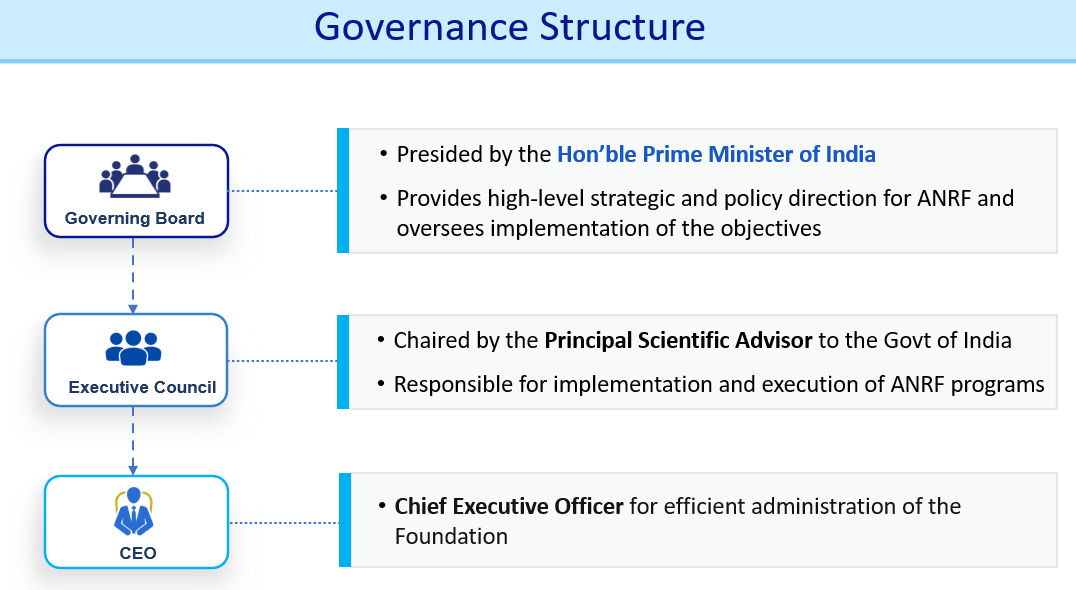
The governance structure of ANRF is a Governing Board (GB) Presided by the Hon'ble Prime Minister of India, an Executive Council (EC) chaired by the Principal Scientific Advisor (PSA) to the Govt of India, and the CEO who reports to the Executive Council. The Vice Presidents of the Governing Board are the Hon'ble Minister of Science and Technology and the Hon'ble Minister of Education. I am privileged to serve as the first full time CEO of ANRF, succeeding Prof. Abhay Karandikar who served as Interim CEO. DST is the administrative ministry for ANRF; but as a statutory body and apex organisation, ANRF serves stakeholders in all parts of the government in its focus areas. Secretaries/DGs of scientific departments, and selected ministries are members of the GB and EC.
Governance Structure of ANRF
What is ANRF Core ? What is RDI ? How are they Related?
Hon PM Narendra Modi ji on 3rd Nov 2025 announced the Rs. 1 lakh Crore RDI Scheme (https://lnkd.in/gGCvajBf ), anchored by DST and Operationalized via ANRF. Prof. Abhay Karandikar , Secretary DST, is the interim Executive Director of RDIF. DST has a RDI Cell, and a business unit called RDIF Business unit is being established in ANRF in close collaboration between the DST RDI Cell and ANRF teams. I would like to extend my congratulations and sincere thanks to DST and RDI cell for amazing work on RDI in record time. Key roles for hiring in the RDIF business unit will be announced shortly. Multiple outreach events (in Mumbai, Bangalore, Panchakula) have been held, and more is coming (Delhi, Hyderabad) as of Dec 7th, 2025. The deadline for the SLFM proposals is in January 2026.
The picture below illustrates the complementary relationship between ANRF Core (grants) agenda and RDI Fund (patient capital, non-grants) agenda.
ANRF Core focuses on grants-in-aid to the research entities of India: academia, national research laboratories (NRLs), section 8s linked to these entities (not-for-profit entities which are bridges to industry or other stakeholders), and registered DSIR-SIRO research organisations, hospitals etc. In some of our programs we support other research done by entities like Darpan-registered NGOs, startups, MSMEs etc. At the moment, due to ANRF's genesis in National Education Policy, we do not use our core budgets for the private sector grants.
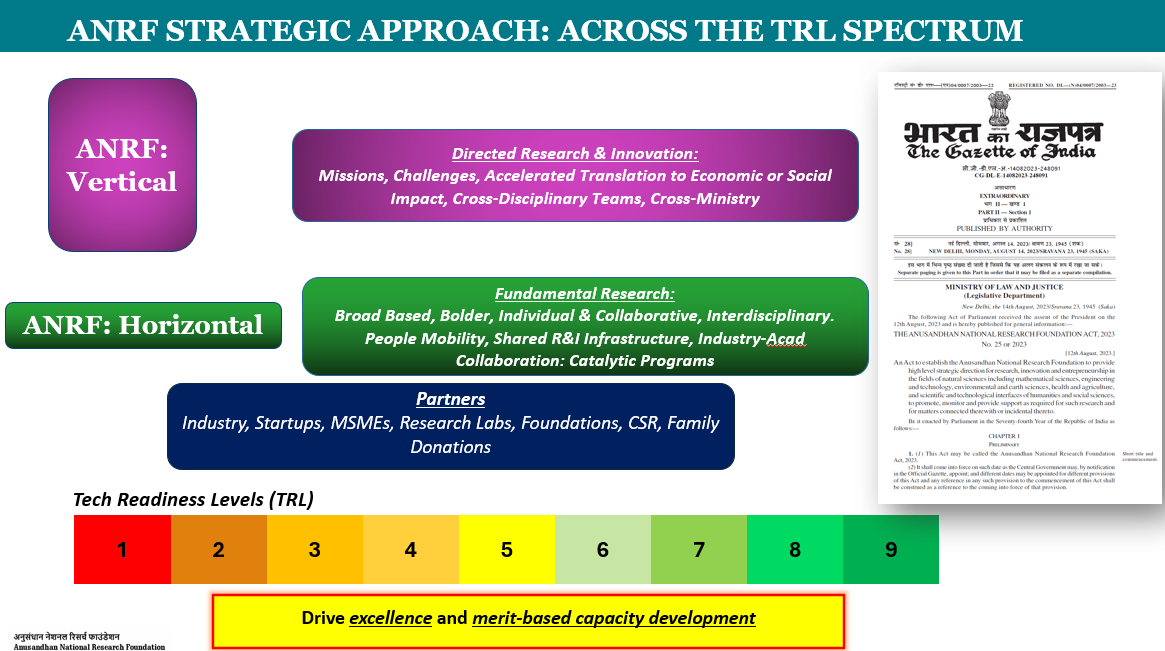
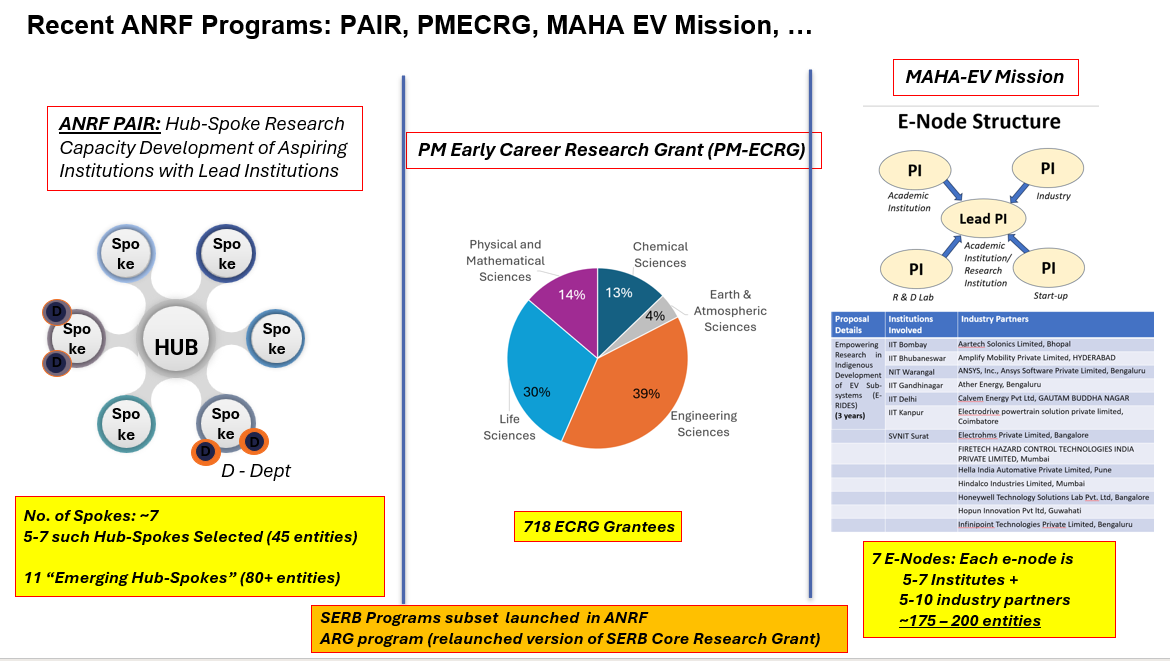
Grants are used largely for academia, national research labs, section 8 and such entities (with some differences based upon programs) to de-risk and develop technologies at lower TRL levels (1-6). Broad based grant programs (eg: ARG, PMECRG) and mission mode grant programs (eg: MAHA EV, MedTech, 2D Materials, AI for Science/Engineering etc) fall in this category. ANRF directly is involved in entire program lifecycle (formulation, selection, monitoring, governance etc), assisted by external committees, etc.
The ANRF Act 2023 has an Innovation Fund structure, which along with co-funding from non-governmental entities (eg: philanthropy, CSR, family offices, diaspora, or corporate R&D) could be used to support a combination of industry, startups and academia/labs. In other words, the partnership beyond government is helpful beyond just expansion of budget, but also in supporting a wider variety of stakeholders, and driving greater productivity through collaboration and spillovers to the broader economy.
Therefore, ANRF invites the non-govt / private sector to partner holistically with us across the entire spectrum. Philanthropy / Foundations, Corporate CSR, R&D In Kind/Cash based engagements are examples of partnership on grants (ANRF Core) at scale which in turn forms a long-term pipeline for RDI (see below).
The Act also allows the creation of Special Purpose Funds (SPFs) for special purposes determined by GoI. One such ANRF SPF is the Research, Development, and Innovation (RDI) Fund of Rs. 1 lakh Crores.
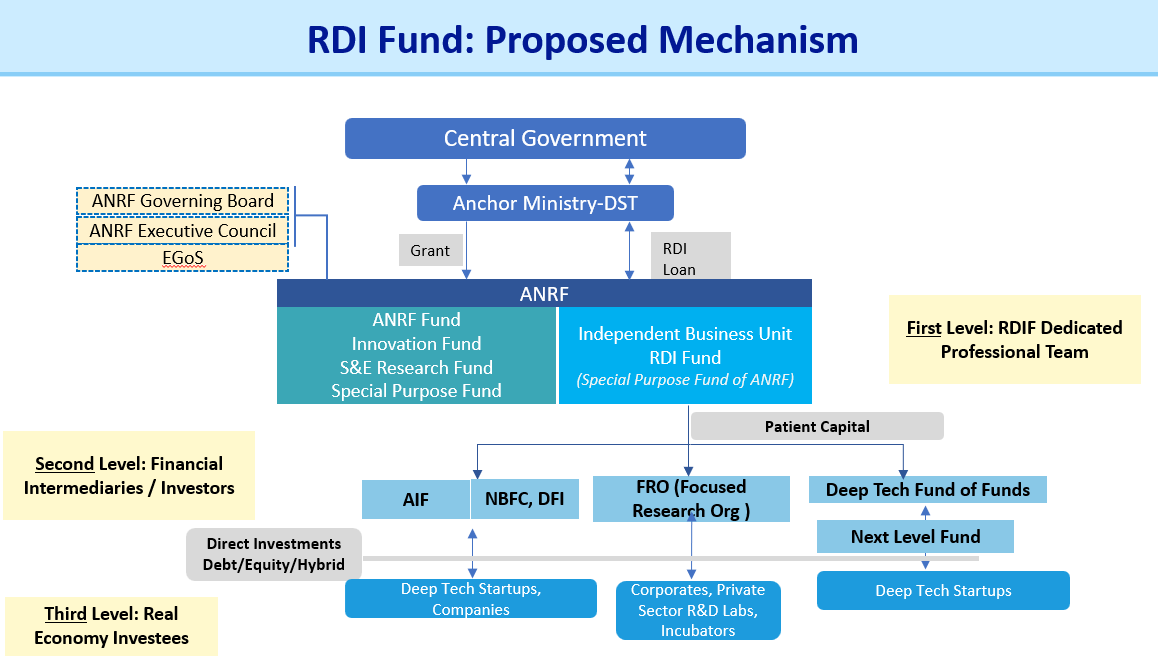
RDI fund is aimed at the private sector, and TRL 4+ (translation & scaling). These are NOT grants (i.e. capital where the tax payer expects their money back). The capital may be patient (longer tenor), unsecured, loans/debt/equity or hybrid, and have differential cost of capital (IRR expectations, deferred coupons, some part convertible etc) compared to capital available today. The figure below gives an overview of the proposed overview of RDI Fund mechanism (and how it is distinct from the grant).
RDI: Outline of Mechanisms & Governance
ANRF is a first level custodian (and NOT the decision maker on projects). So please do not approach ANRF directly with project proposals. ANRF is given the capital from Consolidated Fund of India via our Anchor Ministry DST, as a loan, specifically at 0% interest, 50 year tenor (note this does not mean end-projects get the money at these terms!).
ANRF Executive Council appoints second level fund managers (SLFMs) who in turn will design the appropriate financial instruments (debt, equity, hybrid etc) and allocate capital to eligible companies and projects. SLFMs can be AIFs, FROs, DFIs, NBFCs etc. In addition, corporate entities, GCCs may partner in the formation of AIFs (or SLFMs) as limited partners. Eligible entities must have management control by Resident Indians. Any conflict of interest must be made clear in applications.
Eligible entities may choose to apply on a project-basis to an appropriate SLFM. This RDI fund is NOT for routine R&D, and must be RDI-intensive R&D. These SLFMs (financial intermediaries) in turn make the capital allocation decisions to deploy this patient capital into specific RDI-intensive projects, companies passing on the patience and blended IRR into the real economy. There is a listing of Sectors and sub-sectors eligible for RDI on the website. These may be revised periodically by the ANRF Executive council, or by the Empowered Group of Secretaries (EGoS) chaired by the Cabinet Secretary
Note that RDI is NOT for academia, research labs etc. However, RDI will lead to a lot of indirect opportunities for technology translation, industry-academic collaboration and alumni engagement. RDI intensive (deep tech) startups spun out of academia will have more paths to market and funding via SLFMs. Further larger industry players, unicorns and MSMEs will look to academia / labs for deep tech technologies to license or partner on. They may also require ongoing backend partnerships for driving competitiveness in a world of RDI. This will drive demand for industry-academic collaboration. Academia/ labs and technology transfer offices (TTOs) should re-imagine their roles to drive greater levels of translation and engagement in a world of RDI. For students, researchers, RDI will mean more jobs in the private sector beyond the academic / labs sector. We also envision the needs for research visitorships and increased value of Professors of Practice in academia in a world of RDI.
A multiplier of between 3X to 10X+ is expected as the fund capital is invested into the real economy across sectors. At a median of Rs. 4-5 lakh crore, RDI combined w/ the grant investments of ANRF itself will drive a direct increment of 0.25% of GDP and catalyze a virtuous cycle of private R&D investments which could be much larger over time. As investments pay off, and the proceeds and gains will be re-cycled into catalyzing further R&D investments.
Please also see Prof. Abhay's posts: here and here
ANRF Core Grants Strategy
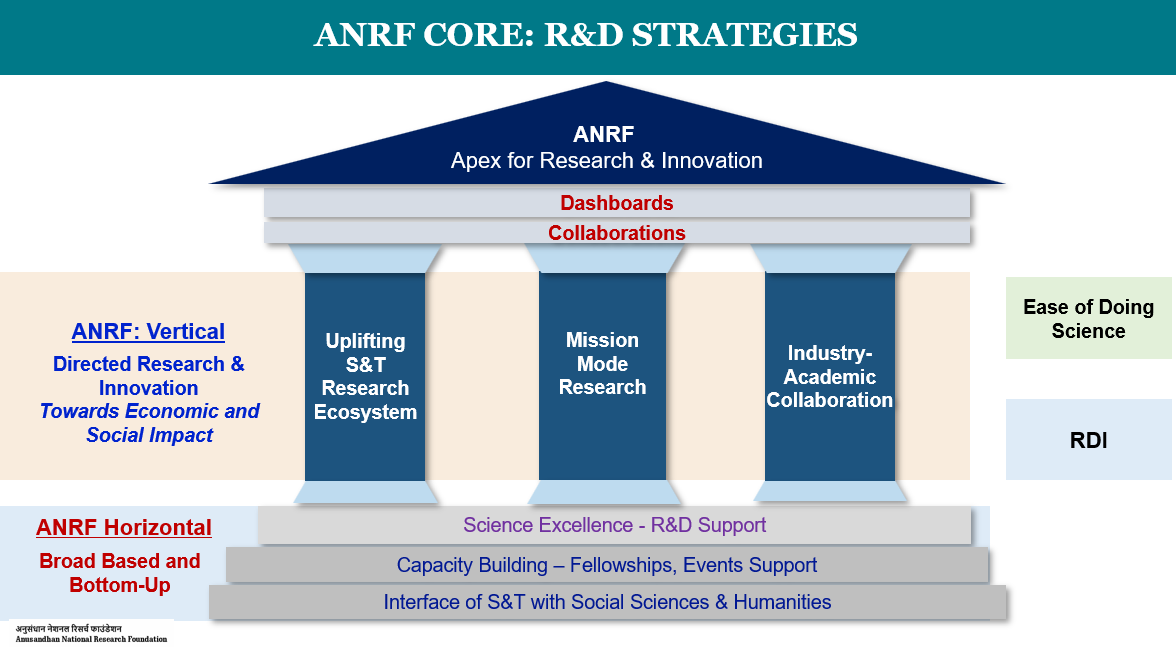
ANRF core lays the TRL 1-4 foundation for basic & fundamental research; and TRL 2-6 acceleration of applied research as a feeder into the larger RDI pipeline. ANRF targets this by a combination of a "horizontal" and "vertical" strategy outlined below.
By "horizontal" we mean broad based research, smaller projects (larger number of awards), individual fellowships, where we don't tell investigators what to do, and instead evaluate their bottom-up ideas via expert committees. ANRF also supports humanities and social sciences (including management sciences & policy studies) at the interface of science & technology. A good analogy for this is how the National Science Foundation (NSF) drives broad based basic research investments in the USA.
There has been some trepidation whether ANRF will only focus on translational research. On the contrary, we are increasing our investments in basic and fundamental research. Only that we are asking researchers to be bolder, ambitious and where appropriate, consider interdisciplinary collaboration and small teams for greater impact. Impact beyond publications is also an important aspect, which means that the researchers should do more to drive deeper dissemination of their work artifacts, creation of data sets, open software/IP as appropriate, collaborate with technology transition specialists. Retaining specialization in their core areas, while catalyzing deeper diffusion of research outcomes should be viewed more positively as normal course of expectations consistent with larger investments by society into the research enterprise. Einsteins do not have to transform into Elon Musks -- they may remain Einsteins or Elon Musks, but only communicate with each other.
ANRF will also be driving greater emphasis on research capacity development across the country, sharing of infrastructure, and research visits to other collaborators / industry. Many steps are being taken to drive up ease of doing science, including support for international travel as standard, flexibility in recurring budget in individual-centric programs, simplified procurement policies with institution head approval, and the establishment of administrative nodal officers in every institution with corresponding linkages to ANRF nodal officers to move the administrative burdens away from scientific principal investigators.
A significant feature of ANRF is also its role in catalyzing earlier stage involvement of non-governmental partners across ANRF programs. All ANRF programs are open for co-funding (initially at a higher clip level top-down) by non-governmental sources. Industry & GCC may also collaborate with ANRF in other compelling ways, and in bottom-up manner as part of academic-led consortia in ANRF programs. This will also give a strong pipeline for RDI competitiveness for industry.
Vertical programs are more targeted programs, either driven by sectors / ecosystems / value chains to be accelerated, indigenous technology capability accumulation in critical sectors, or driven by technological innovation for societal problems. ANRF takes a "DARPA" style focussed approach to these, but appropriately tailored for each target sector. These programs are typically cross-disciplinary, cross-ministerial and ideally will also involve partnership with non-governmental partners (eg: foundations, companies etc), and involve collaborative teams / consortia involvement with some co-funding expected. These projects are monitored/managed more intensely, and governed towards impact, albeit with more mentoring, and ecosystem linkages explicitly engineered via support of project management units. ANRF is developing deeper institutional capabilities on program governance across all its programs.
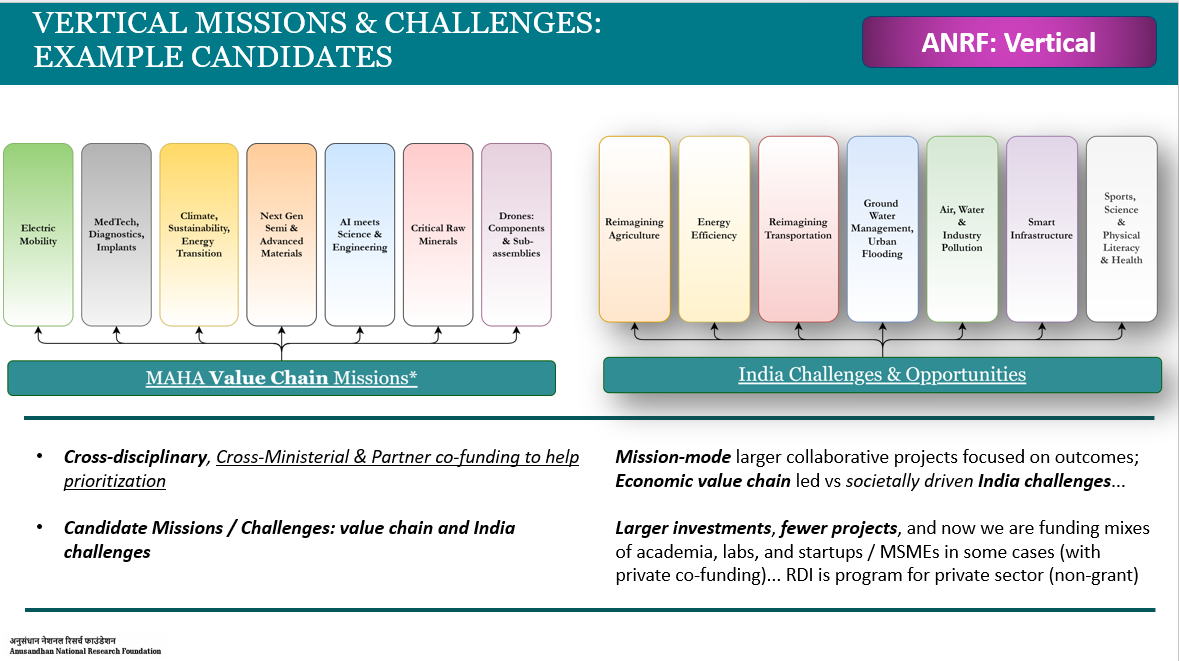
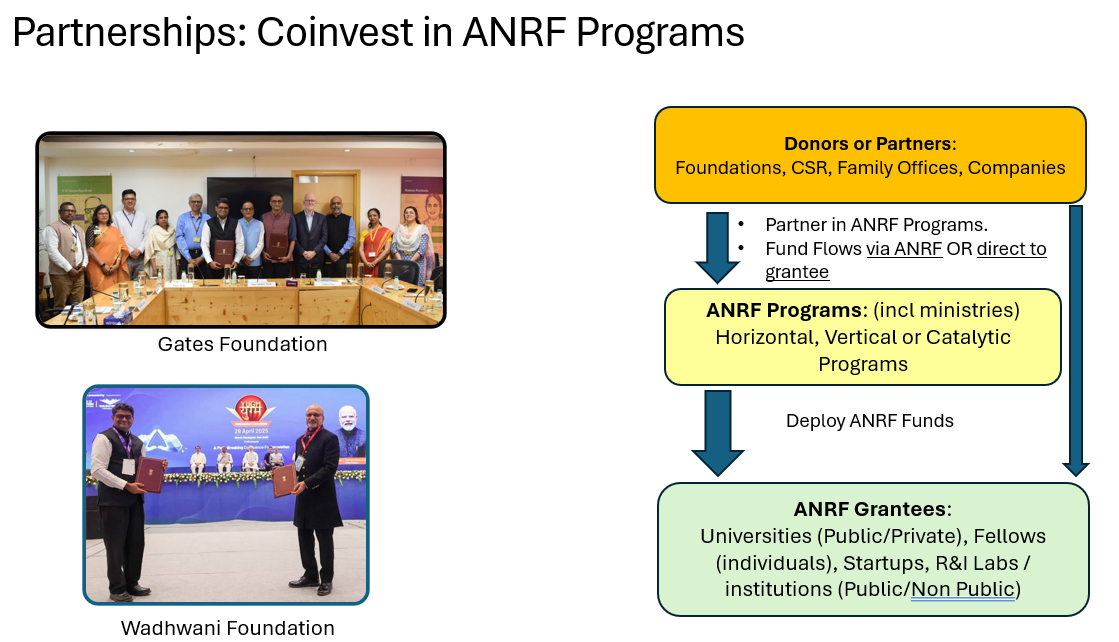
The picture below gives some candidate programs either launched or contemplated. Note that the specific approach or even the possibility of launching any specific program is dependent upon whether co-funding partners emerge from within government or from non-governmental sources. An example is the ANRF MAHA MedTech program which is created by the partnership of ANRF, Indian Council for Medical Research (ICMR) and Gates Foundation as anchor partners. Later the Wadhwani Foundation has also expressed interest in supporting some of the projects. Similarly, the ANRF MAHA AI for Science & Engineering program involves partnership with MEITY, DRDO, Ministry of Earth Sciences, DBT and non-governmental partners including the Gates Foundation, Sarvam.ai and BharatGen. We have interest from multiple other partners interested in contributing to ANRF programs.
ANRF MAHA Mission Mode Programs (Note: many of these are only indicative candidates and may/may not be launched by ANRF)
ANRF is rapidly establishing such "All of Government" and "All of Society" partnerships, and invites holistic thinking by non-governmental partners, including industry, international partners and contribute to current and future ANRF Programs. My doors are open for such conversations and partnerships.
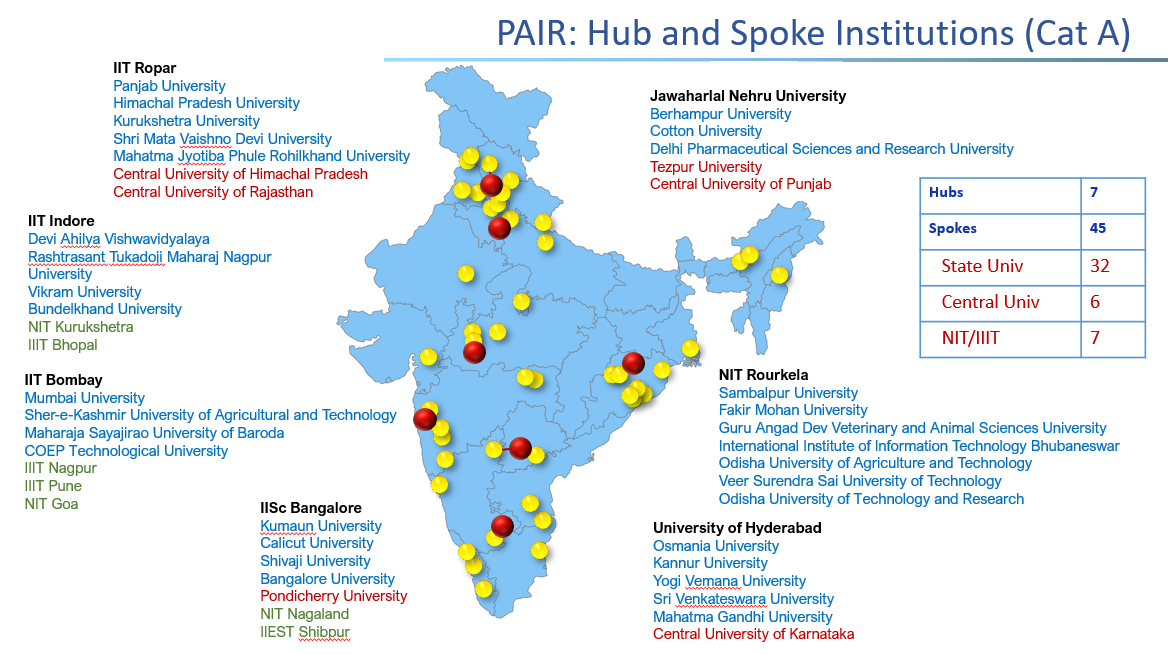
Another major class of "vertical" or focussed programs is the PAIR program, which is a hub-and-spoke approach to research capacity development and upliftment of aspiring institutions (including a large fraction of state universities) with hubs as top institutions. In the initial iteration, we have supported seven such networks including 45 spoke institutions. This is a more intensive and active capacity development driving collaboration, and with significant incentives for all parties. A map of institutions and the hub/spoke pattern is outlined in the pictures below. We will be complimenting these with PM Professorships in spoke institutions to drive mentoring and institutional development, research capacity development workshops, and technology platforms for driving collaboration, simplification / democratizing of research content for a broader set of institutions. There are also other initiatives such as One Nation One Subscription (ONOS) to help drive availability of research publications easily available for a large number of public institutions; and discussions are underway to enhance the coverage of this program in Phase 2.
Putting it together, we may consider the grant programs strategically as helping build a "Acropolis" style building depicted below. The ANRF Horizontal programs drive science excellence, capacity building and the interface of S&T with Social Sciences and Humanities. The vertical programs are like pillars driving focus in key areas important for the economy, society, industry-academic collaboration and uplifting of the S&T research ecosystem. Finally at the top we have some selected "Apex" activities ANRF performs to drive cross stakeholder visibility, collaboration, reducing frictions, sharing best practices for collaboration.
ANRF Grant Strategies: Horizontal, Vertical and Apex
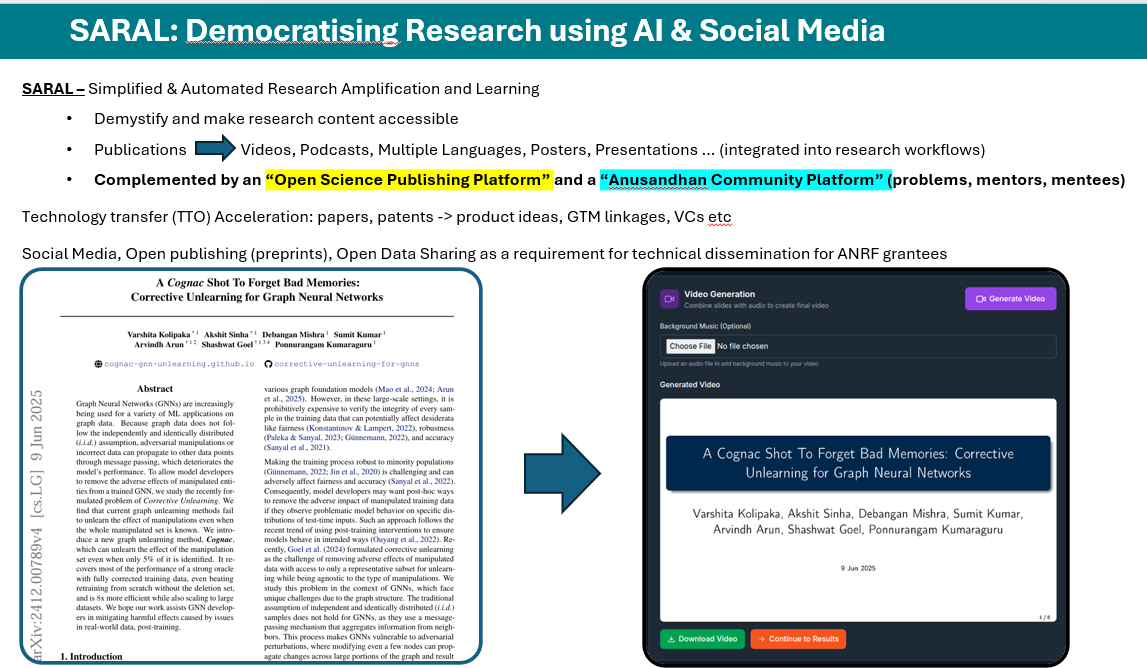
One example of this is the SARAL AI open source project ANRF is mentoring and closely collaborating with that helps democratize, demystify and diffuse knowledge at scale across language boundaries, and converting complex primary research into "SARALified" (simplified/demystified) secondary content in different forms (videos, Reels, podcasts, presentations, posters etc) automatically via AI in 19 different languages.
This is a first step and an inkling of many more interesting things to come using AI for the good of our research and innovation ecosystem. Finally, ANRF has been doing proof of concept of different types of non-governmental partnerships top down at scale. We have established early partnerships with Gates Foundation and Wadhwani Foundation, and have further linked these to co-investment by government partners (different departments such as DST, DBT, MEITY, MoES, DRDO, ICMR, Ministry of Mines etc). We welcome partners to co-invest (and leverage the investment of ANRF) in our grant programs.
All of ANRF programs - horizontal and vertical - will be open for co-investments, and we value the totality of what our partners bring to the table. We also have simple but consistent IP policies (IP is owned / titled by our grantees similar to Bayh-Dole approach in the USA, but grantees may make commercialization arrangements with their partners). In some areas (eg: our AI for Science & Engineering program) we have gone for a ANRF Open License model (building off a MIT license) to encourage the creation of public goods and rapid ecosystem development.
We welcome conversations with partners interested in co-investing in the foundation of Research and Innovation in India to reach out to us. We do deals quickly. Also this forms an important pipeline for RDI which allows more private sector participation at the second and third levels as discussed earlier.
ANRF is rapidly establishing such "All of Government" and "All of Society" partnerships, and invites holistic thinking by non-governmental partners, including industry, international partners and contribute to current and future ANRF Programs. My doors are open for such conversations and partnerships.
How Can an Organisation or a Person Engage w/ ANRF ?
Ministry / Department or State Government: We welcome partnerships (with financial co-funding contributions) in any of our programs. Most of our MAHA mission mode programs are launched with anchor partners with one or more ministries/departments who are contributing to the outlay as well (eg: MedTech with ICMR, 2D Materials with MEITY, AI for S&E with MEITY, DRDO, MoES, DBT, CRM with Ministry of Mines, and Drones with MEITY, ICMR). If your department / ministry would like to partner with ANRF and leverage our investment in your sector using R&D, please reach out to me via your Secretary rank officer. Beyond central government, we would welcome state governments who would like to align some of their investments with our GoI central govt investments (eg: in PAIR program supporting many state universities or our mission mode programs in various sectors etc). I would request the Principal Secretary of the State Govt to please reach out to me.
Foundation / Philanthropy / CSR / Family Offices: We welcome partnerships with Foundations. As per our ANRF Act 2023ANRF welcomes contributions to ANRF programs (either current or future). As mentioned in the figure above, ANRF designs, operates programs (horizontal, vertical, or in rare cases, catalytic programs) as approved by ANRF Executive Council in national interest. We welcome ideas for new programs that we can co-design with specific partners (at scale). Partners may partner with ANRF and they have capital allocation flexibility on which programs / projects / fellowships they can contribute to. We will be adding more ways for smaller contributions. Currently we are doing larger partnerships such as what we have done with Gates Foundation, Wadhwani Foundation. You may also bottom up partner with individual grantees or consortia which bid for ANRF programs (note that in this case, ANRF is not directly involved). We also welcome collaborative philanthropy where a credible entity serves as an aggregator of individuals, family offices, company CSR or foundations. If a credible counterparty emerges, ANRF will be open to partnering (and the contributions will get leverage because of the investments ANRF & GoI are making in specific sectors or programs).
Startup / MSME: Please await the formation of RDI SLFMs (second level fund managers). This will lead to a lot of financial intermediaries and capital of different forms (soft loans, vanilla loans, OCDs, equity etc). We expect startups to be big beneficiaries of the RDI fund and its multiplier effect in capital formation. On grants, please partner with any of academia / national labs / section 8 entities appropriately in proposals to ANRF. While we may (on the short term) not be able to send grant money to these entities (till we raise more capital), most of our MAHA mission mode programs welcome partnerships. In our AI for Science & Engineering program we also have an ANRF Open License (based upon MIT license).
Industry (larger) / GCCs / Industry Associations : Please await the formation of RDI SLFMs (second level fund managers). This will lead to a lot of financial intermediaries and capital of different forms (soft loans, vanilla loans, OCDs, equity etc). Industry / GCCs could also be limited partners in SLFMs, but with conflict of interest clearly declared. Our grant programs do not currently send money to industry with rare exceptions like MAHA MedTech programs. In the future we may consider ANRF special purpose funds in partnership with specific ministries (or individual ministries may run programs directly). Please also participate in consortiums led by academia / national research labs / section 8s. National research labs will be increasingly be doing more co-development and other PPP models which ANRF may choose to catalyze. For competitiveness in RDI, you are strongly encouraged to partner with academia, labs, section 8s in the backend. If you want major new MAHA mission mode programs, please come and partner top-down with ANRF (either directly or a consortium or with an appropriate industry association.
Scientists / Professors / Industry Folks / Administrators interested in ANRF positions and contributing for a fixed term or long term: ANRF is hiring at different levels:
Scientist C, D ... and deputation for Scientist G; and administrative positions: More details here. And advertisements here and here
Experts at various levels ... 2-3 year appointments in ANRF. More details here.
Committed Volunteering: We are considering a model for committed volunteers (real commitment, no pay, not a formal appointment). If you are interested, please contact Atul Batra and/or Amol Khire who are helping me organize this.
Connect with ANRF: ANRF is now on many social media platforms and quite active. We will be expanding soon to Whatsapp and Arattai. In the meantime, please follow / subscribe to ANRF in these channels. We also have channels specific for individual programs in Linkedin. Join / connect with ANRF on these social media:
Scan and connect with ANRF in LinkedIn, Twitter (X), Facebook, Instagram, Youtube... Whatsapp and Arattai coming soon
]]>Listening to forests: A field ecologist’s journey through Santhal ParganaIn this article on the Santhal Pargana uplands, Kulesh Bhandari, an independent biodiversity researcher from Jharkhand, describes walking through mist-lit Sal forests, attentive to the landscape’s quiet rhythms. His journey across Kathi Kund, Barapaghar, Danro, and Sundar Pahari blends ecological mapping with tribal knowledge, revealing an increasingly fragile yet enduring relationship between communities and their living forests. ]]>tag:indiabioscience.org,2025-12-05:/columns/opinion/listening-to-forests-a-field-ecologists-journey-through-santhal-pargana2025-12-05T10:00:00+05:302025-11-21T12:01:42+05:30Kulesh Bhandarihttps://indiabioscience.org/authors/0P6G196g0yMXxzyIn this article on the Santhal Pargana uplands, Kulesh Bhandari, an independent biodiversity researcher from Jharkhand, describes walking through mist-lit Sal forests, attentive to the landscape’s quiet rhythms. His journey across Kathi Kund, Barapaghar, Danro, and Sundar Pahari blends ecological mapping with tribal knowledge, revealing an increasingly fragile yet enduring relationship between communities and their living forests.
When the morning mist lifts over the hills of the Santhal Pargana region of Jharkhand, the forests begin to breathe in slow rhythm — Sal leaves whispering stories of roots, soil, and forgotten songs. I often begin my day there, notebook damp with dew, listening not for words but for the language of the land. In these uplands of Jharkhand, science is not just an academic pursuit; it is a dialogue between people, plants, and the spirits of the earth.
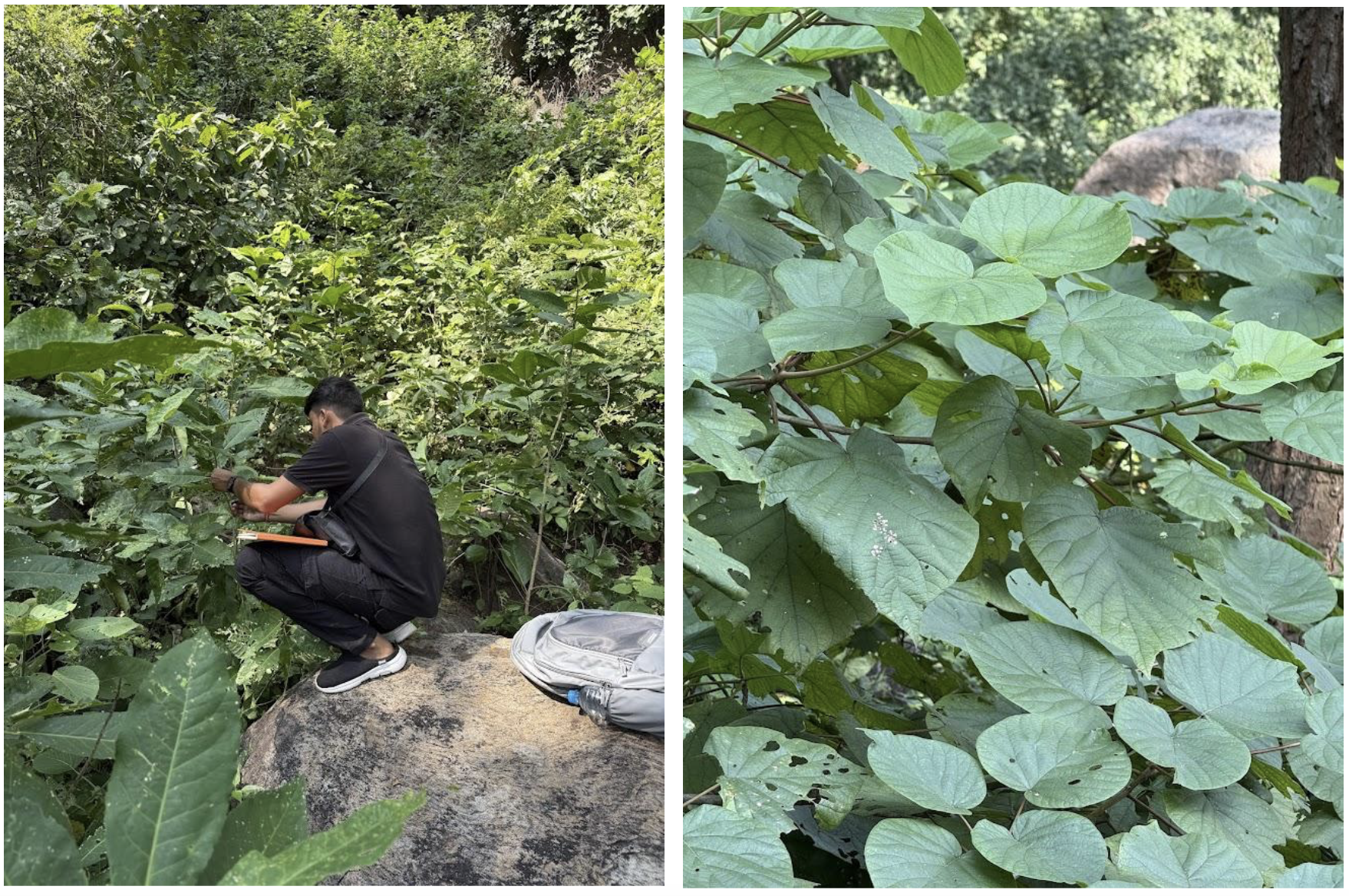
Field documentation of edible and medicinal plants, Rajapathar –Thengimo Hills forest belt | Picture Credit: Kulesh Bhandari
My research began as part of a biodiversity mapping study, exploring the geo-ecological zones across Kathi Kund, Barapaghar, Danro (Dumka, Jharkhand), and Sundar Pahari (Godda, Jharkhand )— landscapes where tribal communities have lived for centuries, weaving their survival with forest wisdom. Every hill here holds a memory. I met elders who could read the forest like a book; predicting rain from the flight of herons, naming each medicinal root with reverence, and teaching me that knowledge grows best in humility.
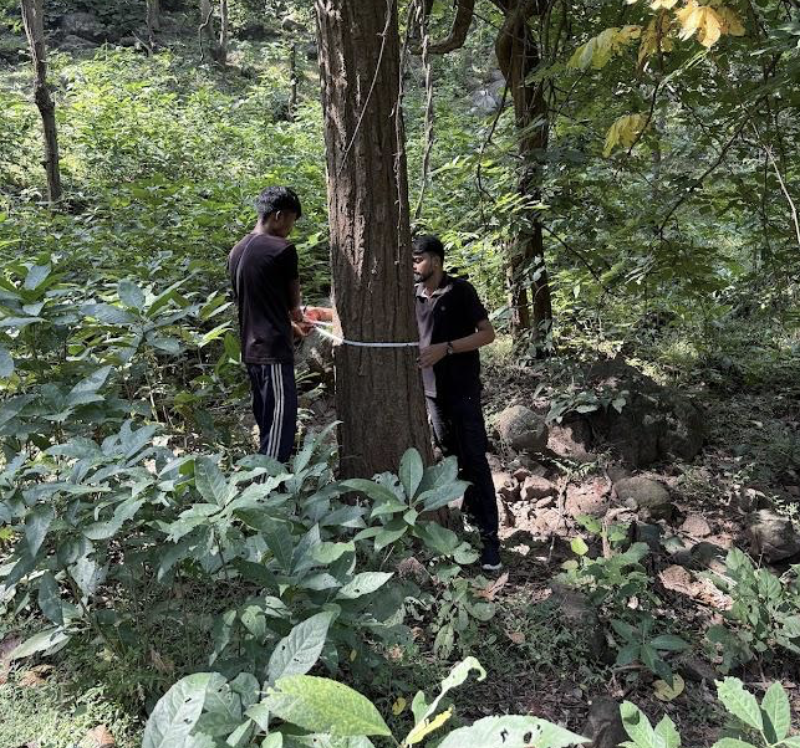
Measuring tree DBH (Diameter at Breast Height) to assess forest structure in the mixed Sal–Terminalia zone | Picture Credit: Kulesh Bhandari
I documented species from edible wild leaves to medicinal tubers, carefully collecting samples, labeling them with field notes, and tracing their ecological patterns with tools like QGIS (Quantum Geographic Information System) which is an open-source software widely used in ecological and biodiversity studies to map species distribution, analyse elevation and vegetation data, and visualise spatial patterns in the field and Google Earth Pro which helps visualise landscapes in 3D, measure altitude and slope, mark GPS locations, and track changes in forest cover or land use over time. Yet, beyond data and coordinates, what I found most powerful was the relationship between humans and the forest; a rhythm of coexistence slowly fading in modern noise. This work was not just research; it was a rediscovery of how communities become custodians of biodiversity when they see the forest as kin rather than a resource.
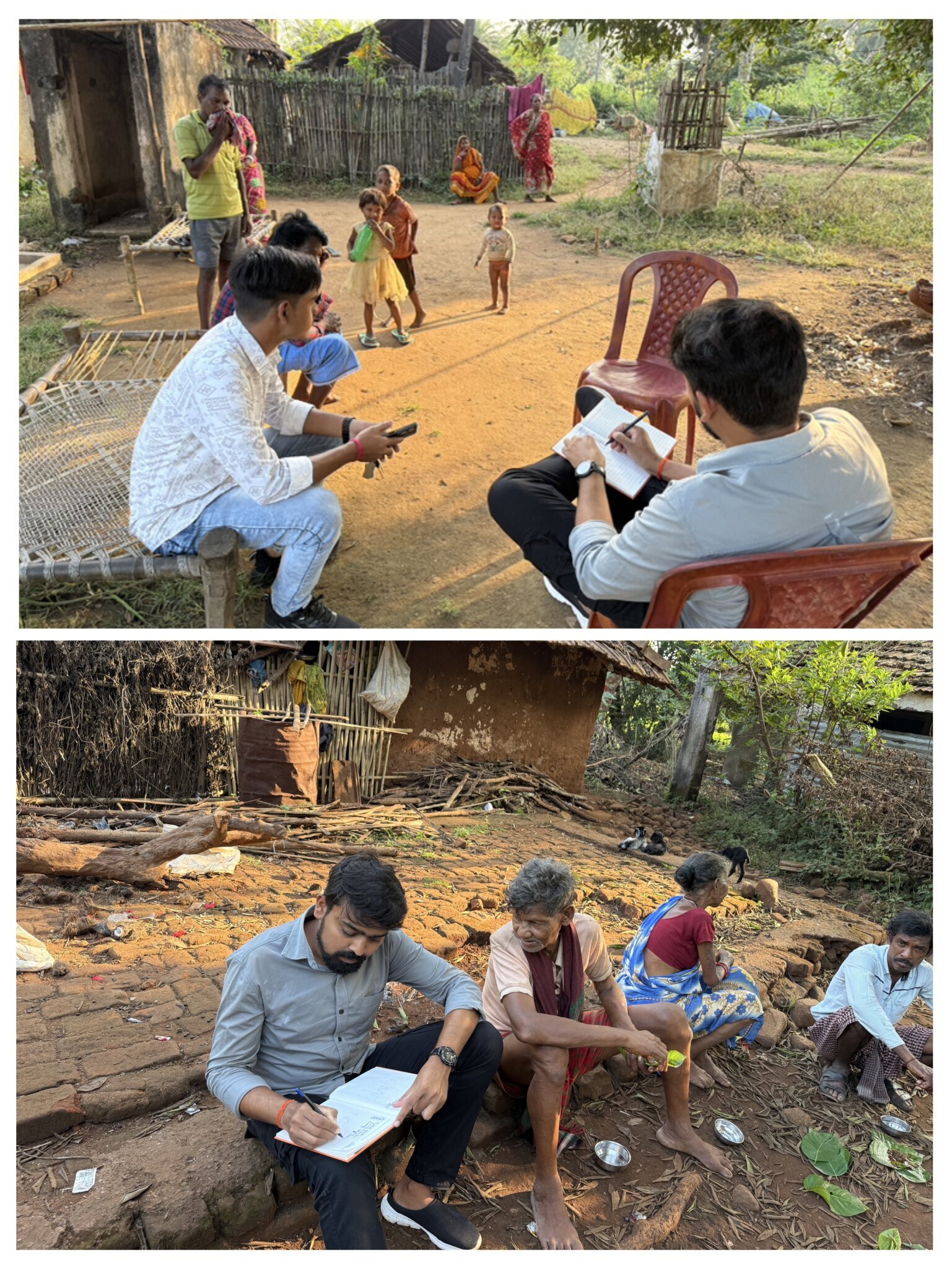
Field documentation of traditional ecological knowledge in the forests of Santhal Pargana, Kulesh capturing on-ground ethnobiological observations and conversations with local communities | Picture Credit: Kulesh Bhandari
Attending the 9th International Congress on Zoology and Technology (ICZAT 2025) in Ankara, Turkey, though happened virtually, was an experience that quietly shifted my understanding of where my work stands in the wider world. Researchers from Europe, Central Asia, and the Middle East spoke about large protected reserves, automated monitoring systems, and datasets built over decades. In that room, my work originated from a very different place: from hills where scientific documentation is still in its infancy, where biodiversity thrives not behind research fences but within the memories, practices, and rhythms of tribal communities.
Several participants told me it was the first time they had seen a systematic biodiversity gradient study from the uplands of Jharkhand.
One senior ecologist said during a conversation, “Regions like yours are the missing pages of India’s ecological atlas”. That line stayed with me. It reminded me that field notes, local names, hand-written labels, and quiet hours spent listening to forests can also contribute to science in a way that large datasets sometimes cannot.
Presenting my work at ICZAT made me realise something essential — that Eastern India holds ecological knowledge the world has not yet fully looked at. The landscapes of Kathi Kund, Sundar Pahari, Rajmahal Hills, and Rajapathar may not often appear in scientific meetings, but the stories they carry are no less important.
And sometimes, the most meaningful insights come not from big laboratories, but from hills where people have been reading the forest long before the word “biodiversity” existed.
(1) As a young field researcher working in the tribal uplands of Eastern India, my work is shaped not by laboratories alone but by landscapes, elders’ knowledge, and long walks across hills that raised me.
(2) My understanding of these forests has grown slowly over the years—visiting the same hills through monsoon, winter, and summer, watching how colours, silences, and species shift with every season.
(3) My documentation process spans field notebooks, labelled specimens, GPS-tagged photographs, geospatial layers on QGIS, and small ethnobotanical conversations with local communities—each adding a different layer to the truth of these forests.
(4) If these notes help bring Santhal Pargana’s forests into larger ecological conversations, then the voices of these hills will travel farther than I ever could.
I carried the echo of these hills with me. Each photo, each specimen label, carries the essence of Santhal Pargana, the pulse of a living landscape that still remembers its people. The journey continues, not just as a researcher, but as someone learning to listen to forests again.
]]>Trust, transparency, and the future of peer reviewThe recent move to publish all peer-reviewed manuscripts as “reviewed preprints” has sparked renewed discussion on transparency and trust in scientific publishing. In this article, Amrapali Datta discusses how open peer review challenges the traditional reliance on Impact Factor metrics and advocates for a culture of accountability, dialogue, and equitable access in science. ]]>tag:indiabioscience.org,2025-12-01:/columns/opinion/trust-transparency-and-the-future-of-peer-review2025-12-01T10:00:00+05:302025-10-14T15:01:35+05:30Amrapali Dattahttps://indiabioscience.org/authors/AmrapaliDattaThe recent move to publish all peer-reviewed manuscripts as “reviewed preprints” has sparked renewed discussion on transparency and trust in scientific publishing. In this article, Amrapali Datta discusses how open peer review challenges the traditional reliance on Impact Factor metrics and advocates for a culture of accountability, dialogue, and equitable access in science.
Unthinking respect for authority is the greatest enemy of truth”
- Albert Einstein
In late 2024, when eLife announced it would publish every manuscript passing editorial checks as a “reviewed preprint”, it rattled the academic world. For the first time, a major biomedical journal decided that the hidden back-and-forth of peer review should be visible to everyone. Reviews, author responses, and editorial notes would now be accessible to the entire community.
The move unsettled many. Could careers survive without an accept/reject stamp of approval? Clarivate quickly stripped eLife of its Impact Factor (IF), arguing that the new model no longer met the criteria for the Science Citation Index Expanded (SCIE). Yet the journal stood firm, insisting that trust in science depends on openness, not secrecy, and challenging the value of a metric that has long dominated how research is judged.
This clash highlights a deeper question: how should we evaluate scientific work, and how can researchers earn the trust of the societies they serve?
The black box of peer review
At the heart of scientific publishing lies peer review. Experts, mostly anonymous, evaluate the merit and fit of a scientific work to decide whether the paper deserves to be published. Their verdict can shape careers, influence funding, and determine which problems attract attention. Yet this crucial process is hidden from view.
While anonymity shields reviewers from backlash, it conceals bias and systemic problems. Studies have documented disadvantages for women, younger researchers, and those outside elite institutions. Richard Smith, former editor of the British Medical Journal, warned that peer review is “biased against the provincial and those from low and middle-income countries”. For many, rejection feels less like evaluation and more like exclusion.
At its best, peer review sharpens ideas. At its worst, it reinforces hierarchies and leaves those outside the system wondering whether the game is rigged.
The weight of IF
If peer review is the black box, IF of scientific journals has become the shortcut. Created in the 1970s to help librarians choose subscriptions, it measures the average number of citations articles in a journal receive in two years. Originally a practical tool, , it has since ballooned into an all-purpose proxy for scientific quality. A high IF often counts for more than the science itself. Universities use it to evaluate job applicants. Funders use it as a shortcut to gauge quality. This has distorted incentives. Researchers chase “high impact” journals, often sidelining replication studies, negative results, and research on urgent local challenges.
As critics note in the Leiden Manifesto, journal-level metrics are a poor substitute for evaluating individual contributions. Yet despite repeated calls for change, the grip of IF is still strong.
While the Impact Factor dominates how research is evaluated, it reveals little about the quality or fairness of the review process itself.
Opening the doors
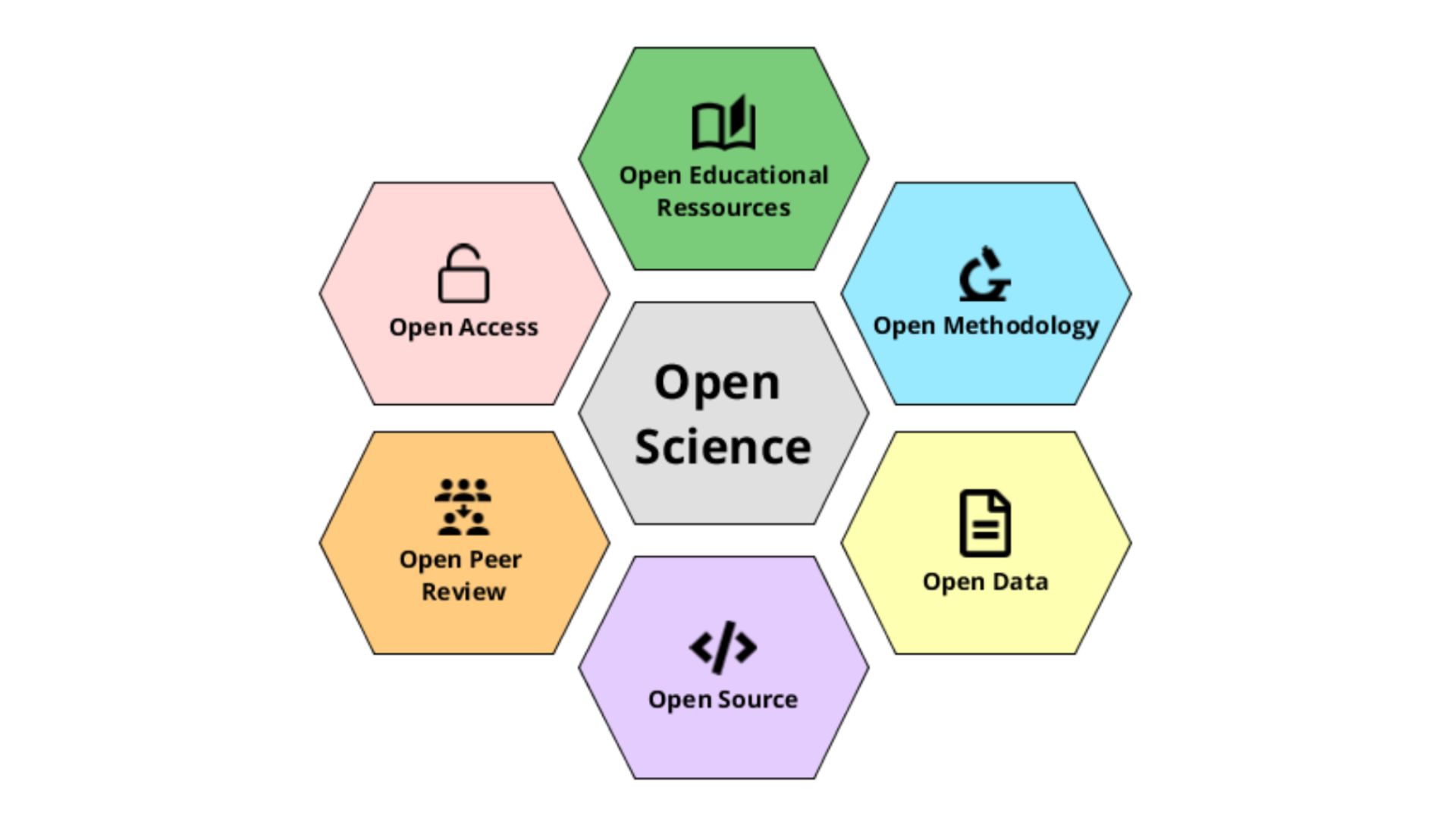
Open peer review emerged as an attempt to fix these flaws. In this model, reviews, author responses, and editorial decisions are public. Readers see not only the polished paper but the debate that shaped it. By making the evaluation transparent, this model allows readers and committees to assess the research on its merits rather than relying solely on the journal’s prestige. Transparency in peer review thus complements broader efforts to move beyond metrics and rebuild trust in science.
Advocates argue this improves accountability, documents the evolution of ideas, and teaches young scientists how critique strengthens research. Organisations like ASAPbio are pushing this further by encouraging review of preprints, even before journals are involved. Yet adoption has been limited. Many reviewers fear backlash, conflicts of interest, or a lack of protection if their names are attached to strong critiques. A flexible approach may offer a middle ground. At eLife, for example, the arguments are made public, but anonymity is preserved for those who want it. Reviewers can choose to sign their comments, but the decision rests with the individual. This balance allows openness without forcing exposure.
The first time I read an open exchange between authors and reviewers, I was struck by how much it revealed- the probing questions, the pushback, and the way a paper evolved through dialogue.
Making this process visible does not solve every flaw, but it reflects science as it truly unfolds: through debate, revision, and disagreement.
India’s bottleneck
In India, the weight of the Impact Factor is especially heavy. Hiring committees often begin by scanning CVs for “high-impact” publications. Subhash Chandra Lakhotia, a senior zoologist, has put it bluntly: “Impact factor can never be an effective tool in distinguishing good research from bad”.
When I considered sending my first PhD paper to an open review journal, peers warned me against it. Their concern was not about the model itself but about how committees would interpret my CV.
A strong paper in a journal without IF, they argued, might count for little. This hesitation is widespread, and it explains why experiments like eLife’s polarise opinion. Openness attracts support, but existing incentives keep many from embracing it.
Beyond numbers
Numbers are easy to count, but they cannot capture the value of research. The dominance of IF might have narrowed definitions of quality and skewed incentives. Trust in science will not be rebuilt by clinging to metrics, it will come from shifting attention back to substance: the reasoning, critique, and debate that shape science.
Open peer review cannot solve every problem, but it represents a step in that direction. What matters is not whether reviewers reveal their names, but that their arguments are visible. Debate must be public; identity can remain optional.
From journals to society
While this may appear to be an insider squabble within academia, it shapes the science society gets. Public trust in science has never been more contested. From COVID-19 vaccines, where people questioned trial speed, to climate change where consensus collides with politicised denial, public debates hinge on whether the scientific process is fair. The controversies extend to GM crops and drug safety as well. Each dispute reflects anxieties about rigour and transparency.
In other words, how science is judged within academia directly shapes the science society benefits from. When careers are tied to IF, researchers tend to chase “hot” topics over urgent local ones. A young scientist in India might avoid studying soil fertility or air pollution, even though these problems affect millions. A study on dengue vaccine may lose out to CRISPR research, even if the former saves more lives locally. These vital studies rarely attract “high impact” journals, which prefer global trends. Thus, if open peer review gains acceptance, committees could look beyond journal labels and judge the importance and merit of the science itself, but only if willing to invest the time.
What needs to change
For openness to make a difference, institutions must act:
Hiring committees should move beyond IF-based filters and engage directly with the science.
Funders can create incentives by recognising preprints and transparent reviews.
Universities could train PhD students in both giving and receiving peer review, helping them see critique as part of learning rather than gatekeeping.
Researchers must also take the risk of publishing in open-review platforms, signalling that they value transparency over branding.
However, one critical challenge that shadows this transition is the cost of openness. Many open-access or open-review journals require authors to pay Article Processing Charges (APCs), which can be prohibitively expensive, especially for researchers in low- and middle-income countries. While these fees sustain open publishing infrastructures, they risk reinforcing existing inequities, those who can afford to publish are heard, while others remain excluded. For openness to truly democratise science, equitable funding models or institutional support for APCs are essential.
The transition will not be quick. For young researchers like me, choosing openness can feel like a gamble: career safety versus a belief in transparency. But the risk is worth it. If science is to serve society, then society deserves to see not just the answers but the debates that built them.
]]>Maternal microbes, fetal mind: What molecules say before birthMaternal gut microbes may influence fetal brain development through metabolites. While human evidence remains limited, India’s fiber-rich diets and fermented foods may offer unique research opportunities to link maternal microbiomes with child neurodevelopment and explore culturally tailored dietary or probiotic interventions. ]]>tag:indiabioscience.org,2025-11-21:/columns/opinion/maternal-microbes-fetal-mind-what-molecules-say-before-birth2025-11-21T13:00:00+05:302025-11-10T12:57:08+05:30Siddharth Singhhttps://indiabioscience.org/authors/AzlDKADQXZLrWeXMaternal gut microbes may influence fetal brain development through metabolites. While human evidence remains limited, India’s fiber-rich diets and fermented foods may offer unique research opportunities to link maternal microbiomes with child neurodevelopment and explore culturally tailored dietary or probiotic interventions.
A quiet conversation between microbes and neurons
When we picture pregnancy, we usually think of genetics, hormones, and the mother’s diet. However, recent research points to another surprising player: the bacteria living in a mother’s body.
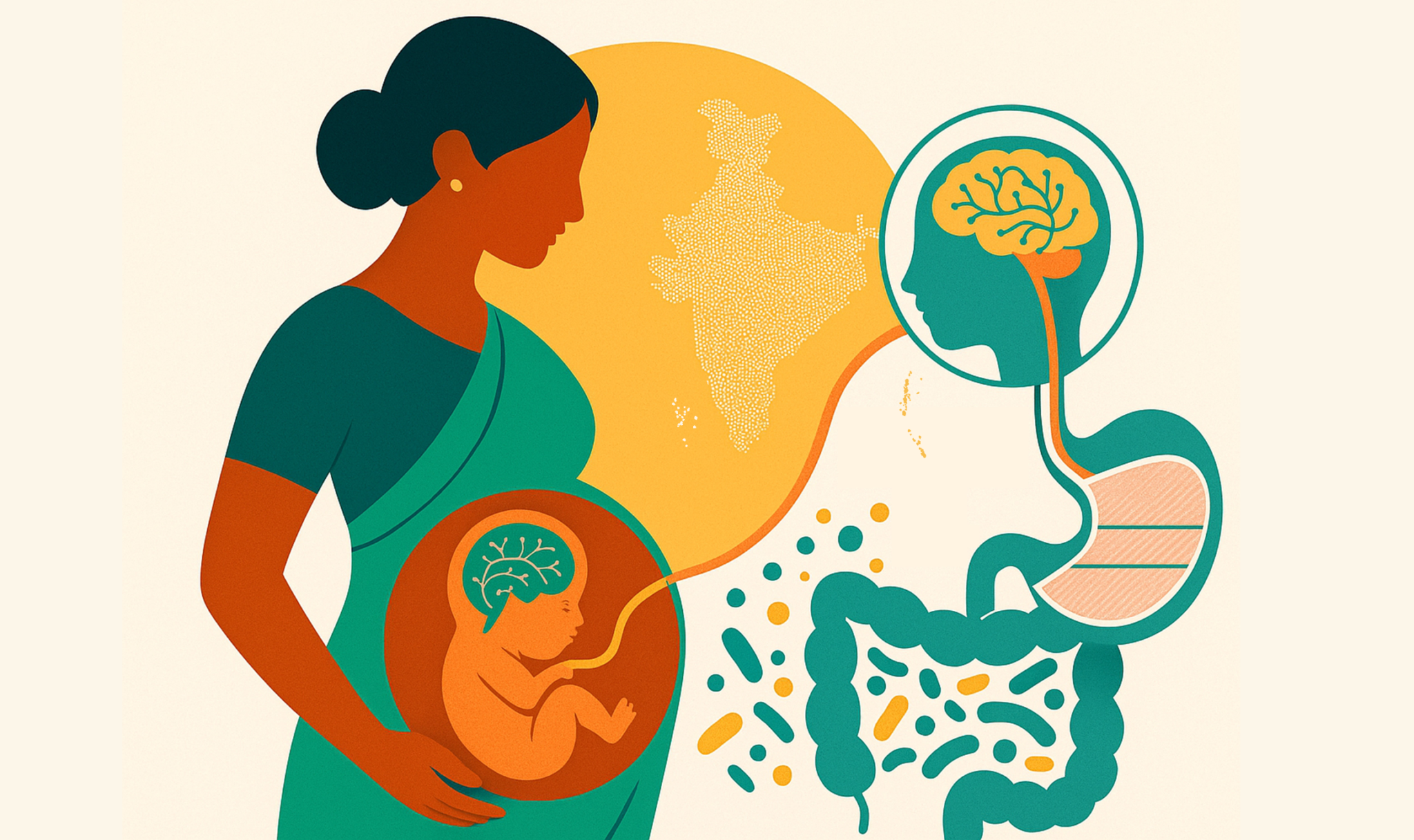
Pregnancy is now seen as a critical window when a mother’s gut bacteria can shape their baby’s brain. Laboratory studies in mice show that pregnant females without a normal gut microbiome gave birth to offspring with altered brain genes, fewer immune cells, and weaker nerve connections. But when mothers were given back key bacterial products, brain development was restored. Similarly, adding a single probiotic strain (Bifidobacterium breve) boosted nutrient flow and brain growth signals in mouse fetuses.
So how does this work? These animal findings (1, 2) highlight likely mechanisms. Some bacterial products, especially short-chain fatty acids (SCFAs), cross the placenta and help calm inflammation, creating a safer immune environment for the developing brain.
Others, made from amino acids like tryptophan, may travel in the blood and act directly on neurons or brain immune cells. In mice, together, these signals seem to boost the growth of thalamocortical axons (nerve fibers critical for sensory processing).
However, much remains speculative in humans. To date, no one has credibly found live gut bacteria in the womb; most experts think microbes do not colonise the fetus until birth. Instead, maternal microbes likely “signal” through their metabolic byproducts. Human research so far is largely observational. An Australian study found that higher diversity of gut bacteria in third-trimester mothers, especially a high abundance of fibre-fermenting families like Lachnospiraceae and Ruminococcaceae, predicted fewer anxiety/depression symptoms (internalising behaviours) in their 2-year-old children. In other words, moms with more “healthy” gut flora had toddlers with better emotional outcomes. But this was an association and does not prove cause-and-effect. Other cohort studies (1,2,3) suggest that a fiber-rich diet during pregnancy may support better child behaviour. Still, no clinical trials have tested probiotics or prebiotics in pregnant women to track brain outcomes in children.
Why this matters for India
India’s context is unique. Our diets are high in plant fibers and fermented foods, factors that shape the gut microbiome in characteristic ways. Nationwide studies (like LogMPIE) show that Indian adults tend to have Prevotella-rich gut communities, reflecting high-fiber diets, and many regional fermented foods boost Lactobacillus and SCFA production. These dietary patterns may favour microbes that generate metabolites beneficial to the fetus. On the other hand, India also faces a heavy neurodevelopmental and mental health burden: roughly one in eight Indian children (ages 2–9) has at least one diagnosed neurodevelopmental disorder (NDD) such as intellectual disability, autism, epilepsy, or hearing loss. Nationwide surveys also find that about 10–15% of the general population suffers from significant mental health issues.
Urban and westernised diets with more fat and sugar shift the gut community towards Bacteroides and reduce microbial diversity. Uneven sanitation and usage of antibiotics further shape microbiota composition. In rural areas, children are often exposed to diverse environmental microbes but may suffer recurrent infections and undernutrition, while urban mothers experience “hygienic” lifestyles, processed foods, and high antibiotic exposure. Could differences in maternal microbiomes across diets, regions, and lifestyles partly explain this?
Where research can go next
Key research opportunities in India include building on existing pregnancy cohorts (e.g., the DBT-supported GARBH-INi cohort) by adding gut microbiome and blood metabolite measurements during pregnancy and linking these data to newborn and infant brain outcomes. DRISHTI's new data platform aims to integrate imaging, nutrition, and environmental data with clinical records. Yet microbiome sampling has so far been limited. Adding modules to collect maternal stool, vaginal swabs, and breast milk, alongside detailed dietary and antibiotic use information, could open the door to addressing questions raised by the mouse studies. Blood samples from the mother in mid- and late pregnancy could be analysed (metabolomics) and matched with fetal ultrasound (brain growth) and later child developmental assessments. Such longitudinal and multi-site cohorts, ideally spanning India’s diverse regions and diets, could clarify whether specific maternal microbes or metabolites predict infant cognitive milestones or risk of NDDs. Parallel animal or cell studies could test causality, e.g., pregnant mice given Indian-style high-fiber diets or traditional probiotics (from curd, idli, etc.) to see if fetal brain wiring improves.
Moving from microbes to interventions
If microbes do shape brain development, could we harness them? Trials might test whether probiotic supplements, high-fiber diets, or even traditional fermented foods in pregnancy improve infant brain health. More complex approaches like Fecal Microbiota Transplant (FMT) are being explored abroad, but in India, simpler, culturally familiar strategies may hold more promise.
Policy and the bigger picture
Several Indian infrastructures can be leveraged. The GARBH-INi/DRISHTI birth cohort already follows thousands of mothers with detailed clinical and biosample data. It could be straightforward and high-yielding to add a “microbiome module” to it, sequencing mothers’ gut microbiota, metaproteomics, and measuring metabolites. Other long-term studies could similarly incorporate gut-brain parameters. Nationwide health surveys (ICMR’s Non-communicable diseases or Maternal health projects) might add questions on diet and collect stool from subsamples. The recently launched “OneHealth” and digital health initiatives could include microbiome data in their research agendas.
Importantly, India’s funding agencies are already seeding this field. The Department of Biotechnology (DBT) has financed extensive microbiome surveys (e.g., the Pune Microbiome project) and established centres focused on microbiome science. ICMR has prioritised neurodevelopment and mental health (e.g., autism, ADHD) in its national programs and could easily encourage microbiome components in these studies. The National Mental Health Survey (ICMR 2015–16) highlighted India’s 10–14% mental illness prevalence; adding microbiome-metabolome arms to future waves would be timely.
The “maternal microbiome-fetal brain” axis is a frontier of science with tremendous promise for India. By integrating gut flora and metabolite data into our pregnancy research, and by piloting culturally tailored dietary or probiotic interventions, Indian researchers can uncover locally relevant insights. Such work could lead to novel public-health strategies, national guidelines on fiber-rich diets in pregnancy, or probiotic supplements for expectant mothers that reduce the country’s NDD and mental-health burden.
The best advice remains for now: nourish yourself well, follow medical guidance, and trust that your body and its resident microbes are working together to build your child’s brain.
]]>Microfluidics in Indian healthcare: A silent revolution in diagnosticsImagine performing all your blood tests using a chip smaller than your palm, with just a drop of blood. Wouldn’t that make blood tests feel less daunting, more accessible, and far more comfortable? You might think this is the plot of a sci‑fi movie. But the surprising twist is, it’s real, and it’s happening right now in India. ]]>tag:indiabioscience.org,2025-11-07:/columns/opinion/microfluidics-in-indian-healthcare-a-silent-revolution-in-diagnostics2025-11-07T10:00:00+05:302025-11-06T16:18:18+05:30Anna Ananditahttps://indiabioscience.org/authors/anandita.annaImagine performing all your blood tests using a chip smaller than your palm, with just a drop of blood. Wouldn’t that make blood tests feel less daunting, more accessible, and far more comfortable? You might think this is the plot of a sci‑fi movie. But the surprising twist is, it’s real, and it’s happening right now in India.
Welcome to an era of healthcare powered by microfluidics.
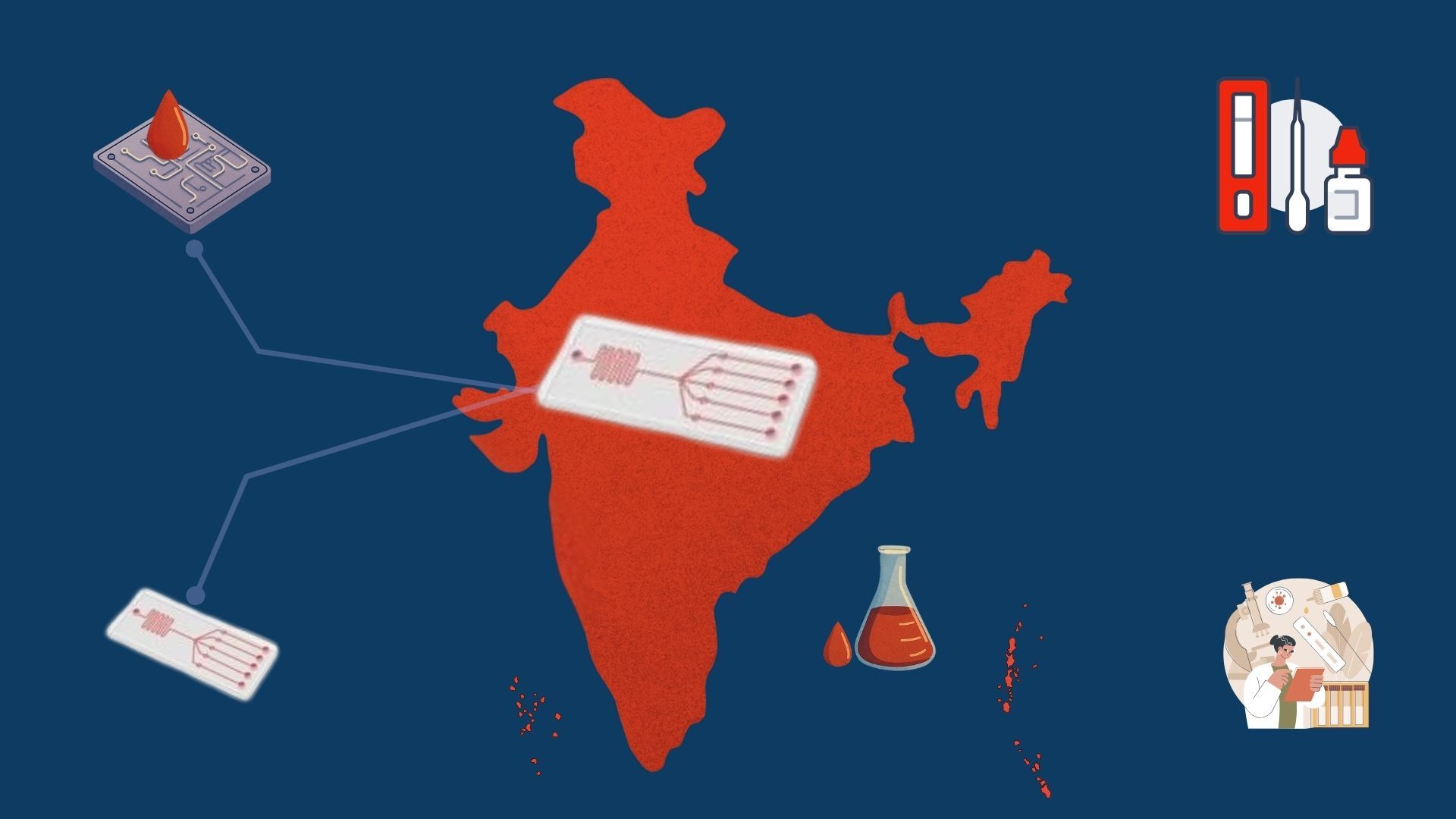
Advancements in designing and developing microfluidics devices have made it a reality to miniaturise conventional laboratories into an efficient and cost-effective microchannel tool. These devices function with a drop of blood, urine, or saliva and can be used for the diagnosis of multiple tests, within minutes, on the chips. These chips are usually etched or printed on materials like paper, glass or plastic, and control the transport of fluids to various compartments that are specific to the analyte to be tested (Kumar et. al, Songok et. al, Nielsen et.al, Smith et. al).
The Indian healthcare industry is valued at $ 98.98 billion in 2023 and is estimated to reach $193.59 billion by 2032. Although the healthcare system of the country is improving, it still remains under massive pressure due to the large rural population with limited access to diagnostic labs, long distances of travel, shortage of trained technicians, and overburdened urban hospital staff. Microfluidics becomes a game-changer for this scenario. A community health worker could simply carry a pocket-sized device to the rural areas and diagnose health issues such as tuberculosis (TB), dengue, malaria, and diabetes, right there, without the need to transport the samples to far-off labs.
Yes, this is the future that is already under trial at certain locations.
The quiet revolution of microfluidics is already underway in numerous laboratories, startups and universities across the country. Diagnosis of health issues such as TB, dengue, and malaria is being performed using microfluidics. Startups present portable tests that can deliver faster results without depending on heavy infrastructure. Rapid diagnostic test kits are also being developed for maternal and child health conditions like anaemia, gestational diabetes, and infections during pregnancy. These devices aid frontline health providers in screening women in a fast and safe manner in low-resource settings. Microfluidics also enables addressing the growing concern of lifestyle diseases such as diabetes, cardiovascular health, and thyroid disorders in the country. The majority of these health issues require continuous monitoring rather than a one-time test. Microfluidic devices enable continuous and low-cost monitoring at home or local health clinics and reduce the load on hospitals.
Numerous institutions and research laboratories have been working on the development of such innovative solutions. The recent award to Suman Chakraborty, Director, IIT, Kharagpur for developing affordable medical diagnostics is a testament to India’s homegrown innovators. A few homegrown innovators, such as Mylabs Discovery Solutions, Achira Labs, Module Innovations, SigTuple, and OmiX Labs are revolutionising the healthcare industry. Innovators are developing affordable microfluidics-based diagnostics for hormone levels, infections, and chronic conditions. Startups are also integrating AI for automating sample analysis in order to reduce dependency on skilled personnel. These key players are not just enabling the country to catch up, but rather leading in frugal and scalable healthcare solutions.
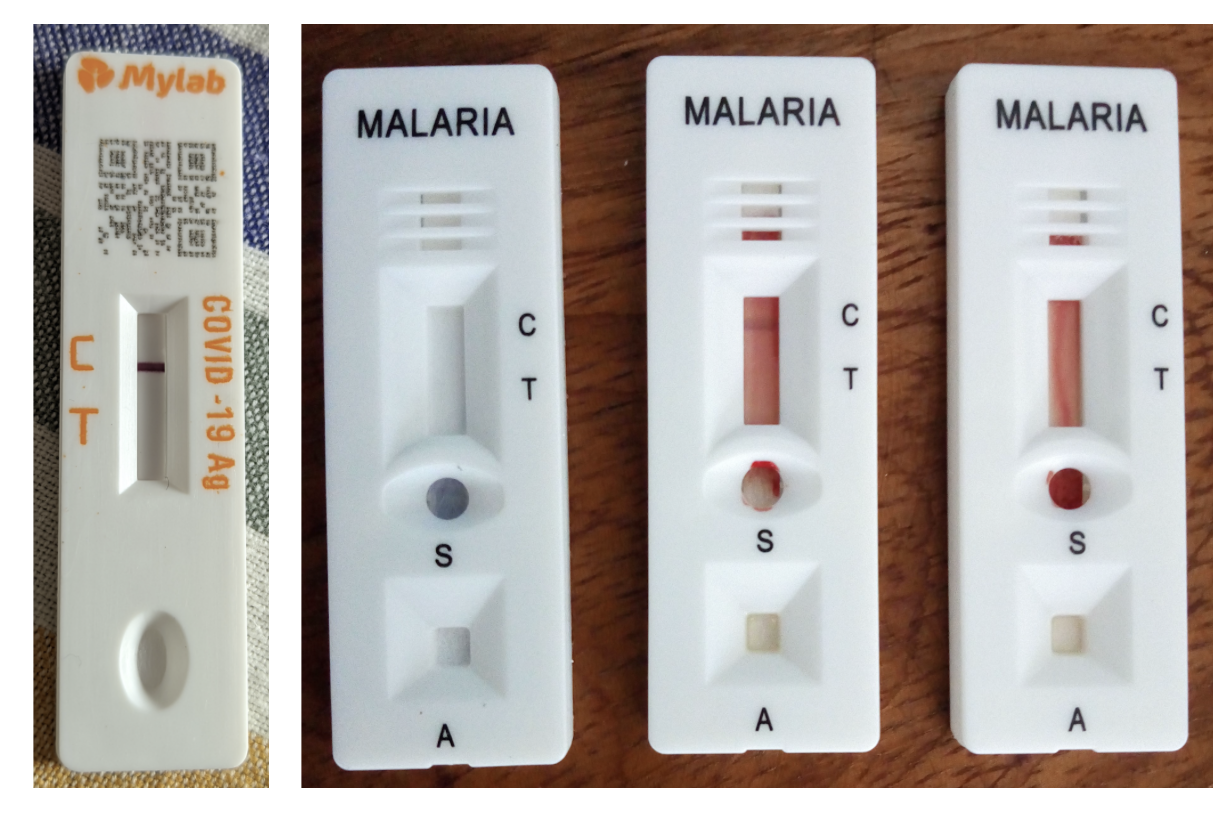
Few commercially available solutions. (COVID Self RAT, Malaria test kit) | Picture Credit: Punit Rajpal via Wikimedia Commons (left) and Adoscam via Wikimedia Commons (right)
Why now? Why are the researchers so focused now on microfluidics?
One of the major drivers behind this is the COVID-19 pandemic. The pandemic increased the demand for rapid, portable testing and microfluidics fit right into it.
The other factors driving this era are the growth of India’s startup ecosystem for biotech entrepreneurship, academic innovations in premier institutions like IITs, IISc, IISERs, CSIRs and NITs, that propel the research and aid incubating student-led innovations. The Indian government has also been extending numerous initiatives such as Make in India, BIRAC, and Startup India, funding as well as policy support, in order to promote such innovations.
In the journey of revolutionising healthcare with microfluidics, there have been innumerable challenges. Some have been addressed, whereas others still have a long way to go. Even though these solutions are cheaper than the laboratory tests per use, the development and manufacturing of these devices at a large scale still remains costly for the Indian market. Not all materials, prototyping tools and skilled personnel are readily available domestically. Another major challenge lies with the regulatory approval process from authorities. The process is time-consuming, complex, and at times exhaustive. Quite a number of innovators end up struggling to move ahead from this stage. Another factor to account for is that the device is only as good as the user. The Indian healthcare system needs training modules for frontline workers to enable them to use and trust microfluidic tests. And in order for these tests to reach the rural and low-resource settings, devices require local manufacture, reliable distribution and easy maintenance, all of which are still a work in progress.
RDT (Rapid Diagnostics Test) tests are used in healthcare facilities for COVID, a post COVID effect, for faster diagnostics. (COVID antigen rapid test)
RDT (Rapid Diagnostics Test) tests are used in healthcare facilities for COVID, a post COVID effect, for faster diagnostics. (COVID antigen rapid test) | Picture Credit: dronepicr via Wikimedia Commons, originally transferred from Flickr
So, what’s the opportunity?
Despite these challenges, the potential of microfluidics in healthcare still remains massive. India has the patient volume, disease diversity and talent pool in order to benefit from this technology and lead its development on a global stage. This potential would enable an Asha (Accredited Social Health Activist) worker to perform their primary roles in their communities, such as raising awareness about health issues, facilitating access to health services such as maternal and child care, and mobilizing the community for improved health outcomes. These trained female community health activists in India may use these devices to diagnose malaria on the spot, enable a school health checkup to screen for health issues instantly and help patients monitor their health issues at home. For India to truly harness the power of microfluidics, academia needs to facilitate interdisciplinary education across fields. A new curriculum should be designed that merges biology, engineering, design, and entrepreneurship for university-level courses. There is also a need for increased funding support in terms of grants and seed money for healthcare innovations. Startups also require support for connections to suitable government healthcare systems for increased field trials. Domestic production of the components for the development of such devices needs to be highly incentivised. Researchers should be encouraged to share designs, results, and best practices for collaborative facilitation of microfluidic healthcare innovations.
One must understand that microfluidics is not a replacement for healthcare providers or institutions. It is a revolution to bring the diagnostics closer to the common population, and the ones that need them the most, especially in remote and low-resource settings, such as villages, slums, small towns, as well as crowded clinics. This revolution is quiet, yet already on the way. The next huge leap for Indian public health might not be from a massive hospital chain or a fancier global deal. It would be from a tiny chip, powered by homegrown science, and delivered by a local health worker, to save lives. One test at a time.
]]>The science of losing yourself on stage and finding connectionLatha T, a medical pharmacology postgraduate from Shivamogga, Karnataka, combines her passion for neuroscience and psychiatry with storytelling. She explores how theatre, beyond emotional impact, shapes our brains through neuroplasticity; bridging science and art to promote mental well-being and deepen understanding of human emotions and healing. ]]>tag:indiabioscience.org,2025-10-27:/columns/opinion/the-science-of-losing-yourself-on-stage-and-finding-connection2025-10-27T13:00:00+05:302025-08-18T13:17:23+05:30Latha Thttps://indiabioscience.org/authors/LathaTLatha T, a medical pharmacology postgraduate from Shivamogga, Karnataka, combines her passion for neuroscience and psychiatry with storytelling. She explores how theatre, beyond emotional impact, shapes our brains through neuroplasticity; bridging science and art to promote mental well-being and deepen understanding of human emotions and healing.
During my bachelor's, I had the opportunity to act in a play. Those theatre days were some of the most alive moments of my life.
My mentors would often say, “Leave yourself behind the curtain and breathe life into your character.” Theatre was more than performance; it deeply shaped my connections with people and emotions.
Later, when I began exploring neuroscience, I discovered how our brains are constantly shaped by experience, connection, and environment. That was when I understood why acting had such a profound impact on me. In this article, I want to share how theatre doesn’t just move us emotionally, it changes us neurologically.
What happens in the brain when we act?
When an actor steps onto the stage, they don’t just imitate a character; they inhabit it. Their own identity begins to blur as they feel what the character feels, live where they lived, and experience their world fully. As this transformation unfolds, the audience also begins to connect—silently, deeply.
But what exactly is happening here? How does this shared space, this dim, enclosed theatre, spark such intense understanding between strangers? And what does neuroscience tell us about this exchange between actor, character, and audience?
How does our brain grasp what an actor is portraying?
We often feel a lump in our throat during a heartbreaking scene on stage or laugh until our stomachs ache during a well-timed comedic performance. Our brains possess an incredible system that allows us to resonate with such experiences—it’s called the mirror neuron system.
A study by Rizzolatti &Craighero (2004) revealed that mirror neurons play a crucial role in understanding others' emotions and intentions. It’s the same mechanism that allows us to feel connected while watching a play or reading a novel; we’re not just observing, we’re internally mirroring what the characters feel. These neurons were first discovered in macaque monkeys, where researchers noticed that specific neurons in the premotor cortex were activated both when the monkeys performed an action and when they watched someone else perform it. In humans, similar brain regions - like the inferior frontal gyrus and inferior parietal lobule get activated when we observe or perform an action, helping us simulate and understand others’ behaviour from within.
Keysers & Gazzola (2010) expanded our understanding of the mirror neuron system, showing that it is spread across several brain areas and supports a wide range of social abilities. Interestingly, they observed that some mirror neurons reduce their activity when we observe others, a feature that helps us distinguish between our actions and those of others, preventing us from simply copying what we see.
In theatre, this becomes especially clear: actors can embody the emotions and experiences of a character while still retaining their sense of self. Similarly, audiences connect with the characters on stage, while remaining aware that they are witnessing a performance.
Actors performing in a Punjabi theatre production. Image credit: Yusra Rafay / Wikimedia Commons / CC BY-SA 4.0.
Parakaya pravesha: Becoming the role
In Kannada and Indian philosophy, parakaya pravesha refers to the act of fully entering another’s being—a phrase that perfectly captures what happens when an actor becomes their character. It marks a moment of deep immersion where the boundaries between the self and the role begin to blur.
When an actor reads a script, practises dialogue, sings, or moves to bring a role to life, the brain actively supports the transformation. How? Our sensorimotor systems enable us to simulate the emotions and actions of others—an ability originally evolved to help us understand our own experiences. Gallese (2009) suggested that this simulation helps us access others’ mental states, allowing for empathy and deeper understanding.
More recently, Singh (2024) proposed that the sense of self is not fixed in the mind but shaped by how the body interacts with the world. This is evident in acting. As actors step into a role, they go beyond memorised lines. They embody the character, through posture, eye contact, gestures, and voice, adapting even to light and space. This process, known as embodied simulation, is how we momentarily see one person become another.
What changes in the brain during theatre?
So far, we have explored how our brain responds to drama. But what exactly changes inside the brain when we’re involved in theatre arts, whether watching or performing? A study by Brown et al. (2019) using fMRI revealed that emotionally engaging performances activate several brain regions, including the amygdala (for emotional processing), the precuneus (linked to self-reflection), and the temporo-parietal junction (involved in empathy and perspective-taking). Even motor areas, the governing voice, facial expression, and movement, come alive during a performance.
Theatre rewires the plastic brain
These neural responses aren’t just momentary flickers. They can lead to longer-lasting changes in how the brain is wired—a phenomenon known as neuroplasticity—repeatedly engaging in dramatic expression or emotionally rich storytelling can strengthen these brain circuits. For actors, embodying different characters and shifting between emotional states enhances their ability to empathise and regulate their own emotions. For audiences, regular exposure to performances deepens perspective-taking and emotional insight. Theatre, in this sense, becomes more than a creative outlet; it becomes an exercise for the social brain.
Drama therapy in mental health care
In mood disorders like depression, anxiety, schizophrenia, and ADHD, the ability to think, express emotions, or relate to others often becomes disrupted. A review by Jiang et al. (2023) highlights how drama therapy through role play, symbolic acting, and emotional expression can support emotional regulation, strengthen the sense of self, and enhance coping skills. Despite the promise shown by such interventions, there is limited research or clinical implementation of drama-based therapies in India. This is surprising, given that India is culturally rich in storytelling, theatre, and performative traditions. Drama is both accessible and familiar in the Indian context, yet it remains underutilised as a therapeutic tool.
With the growing burden of mental health disorders, integrating drama as a form of expressive therapy could offer a culturally resonant and emotionally empowering pathway to healing.
What drama teaches us about ourselves
Despite decades of research and countless perspectives, the brain remains the most complex organ in the human body—especially when it comes to understanding mental health. Human emotions are intricate and paradoxical: we sometimes laugh through pain and shed tears in moments of joy. This complexity calls for deeper, interdisciplinary exploration and greater collaboration. Neuroscience brings us closer to understanding who we are, and theatre, interestingly, does the same. When the stage lights come on, we witness raw emotions clothed in costumes, expressed through dialogue and movement. Theatre allows us to live through stories not our own, to momentarily become someone else, and in doing so, to discover parts of ourselves. It awakens our shared humanity and reminds us that healing, whether scientific or emotional, often begins with understanding. So, the next time you watch a play, remember your brain isn’t just watching; it's simulating, feeling, and subtly reshaping itself. Thanks to systems like mirror neurons and embodied simulation, theatre doesn’t just entertain—it rewires us.
]]>Can India lead the world in affordable biosimilars?This opinion piece, authored by Iqra Ather and K. Madan Gopal who work at the National Health Systems Resource Centre (NHSRC), explores the promise of biosimilars in making life-saving treatments—such as those for cancer, diabetes, or autoimmune diseases—accessible to all. As global healthcare systems seek cost-effective solutions, the authors examine whether India can emerge as a leading hub for affordable biosimilar production. ]]>tag:indiabioscience.org,2025-10-10:/columns/opinion/indias-bio-engineering-leap-securing-data-in-the-era-of-crispr-and-ai-22025-10-10T13:00:00+05:302025-07-28T09:13:11+05:30Iqra Atherhttps://indiabioscience.org/authors/IqraAtherThis opinion piece, authored by Iqra Ather and K. Madan Gopal from the National Health Systems Resource Centre (NHSRC), explores the promise of biosimilars in making life-saving treatments—such as those for cancer, diabetes, or autoimmune diseases—accessible to all. As global healthcare systems seek cost-effective solutions, the authors examine whether India can emerge as a leading hub for affordable biosimilar production.
Imagine if life-saving treatments for cancer, diabetes, or autoimmune diseases were available to everyone, everywhere—regardless of income. That’s the promise of biosimilars: affordable versions of complex biologic drugs. As global healthcare systems look for cost-effective solutions, India is quietly building the capacity to become a global hub for biosimilar production. But will we rise to the challenge?
What are biosimilars and why do they matter?
Biologics are advanced medicines made from living cells. They’ve revolutionised treatment—but come at steep prices. Biosimilars are not generic drugs in the usual sense; they are near-identical copies of biologics whose patents have expired, requiring rigorous testing to prove similarity, safety, and efficacy.
India’s biopharmaceutical industry is already showing what’s possible. Companies like Biocon, Zydus Cadila , and Dr. Reddy’s have launched biosimilars globally. Biocon’s Semglee, an insulin biosimilar, became the first from India to receive interchangeable status from the US FDA—a milestone not just for the company, but for the country.
Add to that:
Skilled manpower: India trains thousands in life sciences and pharmacy every year.
Cost advantage: Production costs are lower, making drugs more affordable.
Regulatory progress: With bodies like CDSCO streamlining biosimilar approval guidelines, India is increasingly aligned with global norms.
Yet, these strengths can only take us so far without addressing systemic bottlenecks.
Fig1: Growth factors of biosimilars
What’s holding us back?
Despite global recognition, India’s biosimilar sector faces challenges in manufacturing scale, global credibility, and policy clarity.
Regulatory complexity: Indian biosimilars still struggle with non-harmonised international requirements. A product approved in India often needs additional trials for the US or EU.
Data integrity and quality issues: Recent FDA warnings to Indian manufacturers highlight the need for robust quality control and compliance systems.
Insufficient R&D ecosystem: Biosimilars require not just manufacturing but advanced analytical capabilities, clinical testing, and tech transfer pipelines—areas needing urgent investment.
Moreover, cross-sectoral coordination between research institutes, biotech startups, regulators, and pharma players is currently fragmented.
What will it take for India to lead?
If India wants to lead the biosimilar revolution; not just participate—it needs more than ambition. It needs a focused gameplan, one that combines smart regulation with scientific readiness. Here's what that could look like:
Make regulation an enabler, not a roadblock Streamline biosimilar approvals with science-backed fast tracks. Align with global norms—what works for the EU or US shouldn’t require a repeat trial here.
Invest where it matters Build and scale biologics clusters—not just in metros, but in Tier-II cities. Strengthen cold chains, digital tracking, and export logistics. Let every new lab double as a training ground.
Skilling for the science of tomorrow Biosimilars need talent that understands both biology and regulation. From pharmacovigilance to digital bioprocessing, we need to skill and reskill thousands to meet global expectations.
Build bridges, not silos Work closely with global regulators like EMA and FDA. Encourage research collaborations, joint reviews, and mutual recognition. Indian science doesn’t need to work in isolation.
This isn’t about favouring big pharma. It’s about creating an ecosystem where startups, researchers, and manufacturers can collaborate and thrive.
Fig. 2: Strategic interventions
From generic powerhouse to biologics leader
India already produces over 60% of the world’s vaccines. Biosimilars could be the next big leap not just for export numbers, but for equitable, affordable healthcare globally.
If we act now, projections suggest India could meet half the world’s biosimilar demand by 2040. That’s not just a market opportunity; it's a moral one. Countries like South Korea and Singapore have built thriving biotherapeutics sectors through strategic policies, strong R&D investments, and international partnerships.
Fig. 3: Biocon India. Information Source: biocon.com
The Figures 3, 4 and 5 presents three illustrative case studies—Biocon in India, Samsung Biologics in South Korea, and Celltrion in South Korea—demonstrating how targeted patent-cliff strategies, robust infrastructure, and global collaborations can drive rapid growth. Beyond operational excellence, these examples highlight the strategic importance of building end-to-end capabilities—from R&D to regulatory readiness and export facilitation. The scale and speed achieved by these firms were not solely the result of internal efficiencies, but of broader ecosystem support, including fast-track approvals, coordinated policy push, and sustained state backing. Notably, the South Korean examples underscore how clear regulatory timelines and generous fiscal incentives can catalyse industrial scale-up, while Biocon’s trajectory reflects how long-term institutional investments and scientific leadership shape global competitiveness. Together, they demonstrate that when government policy, industrial strategy, and research priorities are aligned, biotherapeutics capacity can grow rapidly and resiliently.
By adapting these lessons, India can refine its policy frameworks, strengthen its innovation pipelines, and fast-track approval processes to establish a leadership position in global biotherapeutics.
Fig. 4 Samsung Biologics (South Korea). Information Source: samsungbiologics.com/about/fact-sheetFig. 5 Celltrion’s Biosimilar (South Korea). Information Source: celltrion.com/en-us/products/approved/biologics
The bottom line
India has the science, the talent, and the manufacturing muscle. But without focused investment, stronger regulation, and collaborative infrastructure, the window of opportunity could close fast.
]]>Shifting kharif crops into summer: A betrayal of water sustainabilityShifting kharif crops to summer may seem like smart farming, but it’s draining our groundwater in the hottest months. This short-term benefit comes at the cost of longer-term water security. In this article, the authors urge a return to climate-aligned farming practices before we run our wells dry. ]]>tag:indiabioscience.org,2025-09-12:/columns/opinion/shifting-kharif-crops-into-summer-a-betrayal-of-water-sustainability2025-09-12T01:00:00+05:302025-10-07T14:26:53+05:30Shashi K. Sharmahttps://indiabioscience.org/authors/ShashiKSharmaShifting kharif crops to summer may seem like smart farming, but it’s draining our groundwater in the hottest months. This short-term benefit comes at the cost of longer-term water security. In this article, the authors urge a return to climate-aligned farming practices before we run our wells dry.
Indian agriculture relies heavily on the monsoon, with the kharif season playing a vital role in national food security. Traditionally, kharif crops such as paddy, maize, cotton, soybean, millets, and various vegetables (including cucurbits, brinjal, lady’s finger, French beans, and others) are sown at the onset of the southwest monsoon. However, in recent decades, a notable trend has emerged, particularly in northwestern states like Punjab, Haryana, Himachal Pradesh and Uttarakhand, where the sowing and cultivation of these crops have begun much earlier— during early or mid-summer—making crop production entirely dependent on groundwater. This shift is not merely a change in agricultural practice; it poses a serious threat to the sustainability of our water resources and indicates a clear departure from ecologically sound practices.
A disconnected practice
Farmers are not to blame. They are responding to economic signals—such as assured procurement, labour availability, market demands, and attempts to escape post-harvest penalties. In Punjab, Haryana, and even hilly regions like Himachal Pradesh and Uttarakhand, the premature cultivation of water demanding crops is increasingly seen as a profitable choice. But from an ecological perspective, it is an irrational one.
Why irrational? Because this early cultivation relies entirely on groundwater to sustain crops through the driest and hottest months of the year. At a time when temperatures peak and evaporation rates soar, we are withdrawing tens of thousands of liters of groundwater per hectare to grow crops meant for the rainy season.
Source: World Resources Institute
Water crisis in the making
India is already among the most water-stressed nations globally. According to the World Resources Institute, we use nearly 80% of our available water annually, with agriculture being the primary consumer. Reports from the Central Ground Water Board (CGWB) show that most revenue districts across northwestern India are experiencing groundwater depletion at rates of one to three meters per year. When we grow water demanding crops like kharif vegetables, paddy or spring maize in summer months, the entire crop life cycle becomes groundwater-dependent, placing an unbearable strain on already fragile aquifers.
As someone who has worked closely with horticultural production systems for decades, I can say—it’s a systemic misalignment between our cropping patterns and natural ecological cycles,not merely a water issue. We are promoting farming against the climate.
Climate change adds fuel to the fire
Climate variability has further complicated the monsoon’s reliability. A recent study by the Council on Energy, Environment and Water (CEEW) reported that 11 percent of tehsils in India have experienced decrease in southwest monsoon rainfall, 68 percent experienced reduced rainfall, while 87 percent showed a decline during kharif sowing months between 1982 and 2022. Meanwhile, October rainfall has increased, delaying the Rabi sowing window. In this context, the early cultivation of kharif crops isn’t just unwise—it’s potentially catastrophic.
The pre-monsoon months now coincide with heat waves, prolonged dry spells, and erratic weather. Under such conditions, advancing sowing only amplifies evapotranspiration, increases pest burdens, and reduces yields. We are spending more inputs, extracting more water, and gaining less in return.
The fallacy of "productivity at any cost"
Behind this trend lies a deeper issue: The failure to align cropping systems with agro-climatic realities. The spring cultivation of maize—requiring as many as 18 to 20 irrigation cycles—is a prime example of a flawed practice masquerading as progress. It is ecologically unsuited to regions like Punjab or western Uttar Pradesh, yet it continues, driven by subsidies on electricity and water that make unsustainable practices appear economically viable.
This model of "productivity at any cost" is no longer tenable. It disregards the ecological costs—soil degradation, aquifer exhaustion, biodiversity loss—that will ultimately undermine the very productivity it seeks to maximise.
What must be done: A call to action
Reversing this trend requires a coordinated, science-driven, and policy-supported strategy. We must act decisively:
Enforce agro-ecological crop calendars: States must uphold laws restricting pre-monsoon sowing and incentivise adherence to rainfall-based calendars.
Promote low-water crops: Deep rooted fruit crops, millets, pulses, and less water-demanding vegetables must be supported with procurement incentives and market development.
Invest in water-saving technologies: Technologies like precision irrigation, mulching, and alternate wetting-drying need additional policy push, farmer training, and economic support.
Align subsidies with sustainability: Agricultural subsidies must be redesigned to promote ecological balance rather than prioritise short-term yields.
Educate and empower farmers: Awareness campaigns and local field demonstrations can catalyse a shift in farmer behaviour, especially when backed by viable economic alternatives.
A moral and ecological imperative
The choice before us is stark. Either we continue to encourage a farming system that depletes life-sustaining groundwater, or we reimagine our agricultural paradigm to honour ecological wisdom. The summer sowing of kharif crops may seem like a technical detail to some, but to those of us attuned to the long-term implications, it is a betrayal of our intergenerational justice.
Water is not just an input—it is a legacy. Protecting it demands not just policy reform, but a transformation in how we think about agriculture. As scientists, educators, and citizens, we must raise our voices—before the silence of our aquifers becomes irreversible.
]]>CRISPR in 2025: The next frontier in genetic engineeringIn this reflective piece, Satyajit Shinde combines his love of words with science through the evolution of CRISPR's journey and its technological leap from the laboratory to a global community, grappling with ethical challenges—through a lens that treats writing as art. ]]>tag:indiabioscience.org,2025-08-11:/columns/opinion/crispr-in-2025-the-next-frontier-in-genetic-engineering2025-08-11T00:00:00+05:302025-08-11T11:49:58+05:30Satyajit Shindehttps://indiabioscience.org/authors/SatyajitShindeIn this reflective piece, Satyajit Shinde combines his love of words with science through the evolution of CRISPR's journey and its technological leap from the laboratory to a global community, grappling with ethical challenges—through a lens that treats writing as art.
CRISPR began life as a modest line of bacterial code, yet within less than a generation it has been redrafted into a genuine sword for genome editing. By 2025, laboratories around the world routinely cite the method in grant proposals and patent filings alike. That rapid institutional uptake has put fresh pressure on researchers to sort out the ethical tangles it creates—a concern that now ranks alongside science itself.
From lab bench to field and factory
A decade ago, the conversation fixed on curing rare hereditary conditions; today it circles crops and concrete production lines just as easily. Gene-edited tomatoes in Europe resist blight and bruise, while pulses in North America pack in extra protein without extra fertilizer. Indian breeders are quietly testing rice and millet strains that require less water and withstand severe drought—moves that could soothe long-standing food-security nerves.
Industrial engineers are writing their own story. Custom microbes now break down discarded plastics, belch out delta-9-THC, and churn out cheaper biofuels by skipping costly fermentation steps. That leap—from bench-top yeast to cost-competitive factory floor—upends long-held economic assumptions by turning waste into wealth and chemistry into kindling.
I recently came across a report by Roots Analysis that really put things into perspective. According to them, the CRISPR market size is projected to grow from USD 2.87 billion in 2025 to USD 12.22 billion by 2035, representing a CAGR of 15.60% during the forecast period till 2035. This explosive growth underscores just how quickly gene editing is moving from research to real-world application—and how urgent it is to build the right guardrails around it.
Medical applications: Progress and prudence
Excitement pulses through laboratories as CRISPR moves from bench research toward real-life clinics. Sickle-cell anemia, hereditary blindness, and a host of other inherited disorders flicker on the horizon of possible cures. Yet ethical alarm bells ring just as loudly, particularly when conversations drift toward germline alteration that rewrites not just one patient, but many generations to come. International symposia reveal a scientific community fractured on this point, arguing whether such profound change is justified or simply reckless.
India presents a different but equally compelling stage. Thalassemia and other inherited conditions afflict millions here, and CRISPR offers a glimmer of hope that feels almost tangible.
The country’s regulatory landscape, however, remains rudimentary, leaving wide open questions about safety, equitable access, and the very real potential for misuse of powerful editing tools.
Democratising innovation—but at what cost?
One reason the buzz around CRISPR never seems to die down is cost: the kits are affordable, the reagents can be ordered online, and a modest lab can get started within weeks. That accessibility shatters the old monopoly that elite institutions once held over frontier biotechnology. The upside is frantic, bottom-up innovation that single central authority can easily curtail. The downside, however, is a surge of unauthorised experiments that skirt ethical review and regulatory scrutiny. Researchers in rural labs, curious entrepreneurs, and even hobbyist biohackers suddenly share the same toolkit—and not all of them exercise the same caution. India now finds itself tiptoeing between encouragement and oversight, unsure where the balance will finally settle. Clear guidelines, culturally resonant public engagement, and nimble ethics boards may temper the whirlwind—but that infrastructure is still being drafted even as science races forward.
A call for ethical foresight
Innovation typically outruns reflection, yet the rising power of CRISPR has made moral pause unavoidable. Fresh protocols will not spring fully formed from any single discipline; geneticists, philosophers, lawmakers, farmers, and ordinary citizens alike will have to deliberate face-to-face. Ideas hammered out in the Global North cannot claim the final word, or risk losing sight of uneven advantages and heavy costs felt elsewhere.
Where do we go from here?
In mid-2025, a safely edited mosquito or a plant seed carrying designer resistance may land in your hands by lunchtime. That immediacy turns yesterday’s science-fiction debate into tomorrow’s board agenda. Nations with sprawling laboratories and crowded clinics, India included, find promise tied too closely to peril.
A broad, patient dialogue may be the only compass steady enough to guide us through the knot of choices now forming on the horizon.
]]>India’s bio-engineering leap: Securing data in the era of CRISPR and AIVarun Asediya is a researcher interested in how science shapes our lives in ways which we are unaware of as it begins to happen. His work engages in developing interdisciplinary approaches to the evolving interface between biology and technology seamlessly shifting from the mechanisms associated with biological systems to the circuits of our neurons - at the nexus of innovation and imagination where truly transformative possibilities emerge. ]]>tag:indiabioscience.org,2025-07-11:/columns/opinion/indias-bio-engineering-leap-securing-data-in-the-era-of-crispr-and-ai2025-07-11T13:00:00+05:302025-06-26T12:04:37+05:30Varun Asediyahttps://indiabioscience.org/authors/VarunAsediyaVarun Asediya is a researcher interested in how science shapes our lives in ways which we are unaware of as it begins to happen. His work engages in developing interdisciplinary approaches to the evolving interface between biology and technology seamlessly shifting from the mechanisms associated with biological systems to the circuits of our neurons - at the nexus of innovation and imagination where truly transformative possibilities emerge.
His motivation behind writing this op-ed was not simply in reference to buzzwords like 'CRISPR' or 'Artificial Intelligence' but in regard to 'timing'—what we have at present are the scientific advances, skilled manpower, and funding; but what is required now is alignment and accountability - ensuring that our systems, institutions and intentions are aligned simultaneously to take discovery and move it to change.
CRISPR rewrites genes. AI deciphers life’s patterns. Synthetic biology builds living circuits. Together, they signal a shift as momentous as the discovery of DNA.
In May 2025, a newborn in Philadelphia became the first human treated with a CRISPR drug designed uniquely for him. Diagnosed with carbamoyl-phosphate synthetase 1 (CPS1) deficiency, a rare genetic disorder with no neonatal cure. He received a gene-editing therapy built from scratch. It worked.
What began as a bacterial alarm system is now the world’s most precise genetic editing tool. CRISPR (Clustered Regularly Interspaced Short Palindromic Repeats) uses a simple trick of nature. A short guide RNA leads the CRISPR-Cas enzyme to a specific stretch of DNA. Cas9 makes the cut. As the cell rushes to repair the break, scientists rewrite the script—deleting mutations, patching faulty genes, or inserting entirely new code. Think of it as a “find and replace” function for life itself.
Early CRISPR tools were bold but blunt. The cuts worked, but they often left the cell under stress. The next wave brought finesse. Base editors swap a single DNA letter without breaking both strands. Prime editors act like a molecular word processor, slipping in or removing precise sequences without collateral damage.
Even the trial-and-error phase is shrinking. AI tools like DeepSpCas9 and EvoDesign now predict where edits will work best, cutting weeks off experiments. What was once a bold idea is now entering the clinic. Prime editing is being tested to treat sickle cell anaemia, progeria, and inherited blindness—proof that CRISPR has crossed from possibility to practice.
Editing DNA is only the beginning. Every change rewrites the cell’s instructions but the real impact depends on the proteins which produce those instructions. Understanding how edited genes shape protein structures and behaviour became the next critical challenge. And that’s where the next breakthrough came—not in DNA, but in proteins.
Photo Credit: Varun Asediya
AlphaFold, ESMFold, and protein prediction
Proteins are long chains of amino acids, usually hundreds of them. These chains must fold into three-dimensional shapes in order to function. But it's hard to predict how a particular sequence will fold very hard. Old methods such as X-ray crystallography, NMR spectroscopy, and cryo-electron microscopy are slow and expensive, and plagued by issues such as the challenge of crystallizing certain proteins. Predicting a protein’s shape once took years—and often failed. AI changed that.
In 2020, DeepMind’s AlphaFold2 solved protein structure prediction. What once took years now took hours. By 2024, AlphaFold3 advanced to modelling complexes of proteins, DNA, RNA, and ligands, showing how molecules drive disease, gene regulation, and drug binding. What began as “protein selfies” became full molecular portraits. Meta’s ESMFold added speed, using language models to accelerate predictions.
Why should we care? Because structural learning leads to targeted drug development, rational (e.g., during the COVID-19 pandemic), and even the design of synthetic enzymes to combat industrial pollution.
Synthetic Biology
But biology isn’t just about editing or predicting what already exists. The next step is designing entirely new functions—building life with intent. Synthetic biology isn't just about inserting new genes; it’s about programming behaviours. One example is the toehold switch, an RNA-based sensor that activates gene expression only in the presence of a specific molecular trigger. These have enabled low-cost diagnostics for Ebola, Zika, and COVID-19.
At the frontier are SynNotch receptors: customisable proteins that let T-cells recognise complex combinations of cancer markers before attacking. This approach could reduce devastating side effects in immunotherapy.
Molecular recording with SCRIBE and CAMERA
Imagine cells that don’t just react to their environment but remember it—recording chemical exposures over time.
Systems like SCRIBE use CRISPR to write tiny mutations as memory marks. Biological tape recorders extend this concept further, storing complex biochemical memories inside DNA barcodes.
When paired with AI decryption tools, these biological records allow scientists to reconstruct a cell’s life history: when it was stressed, what signals it received, how it evolved.
OrganEx: Resurrecting tissues after death
In 2022, a team at Yale stunned the world by partially reviving pig organs an hour after its death using a system called OrganEx. After one hour of warm ischaemia, OrganEx application preserved tissue integrity, decreased cell death, and restored selected molecular and cellular processes across multiple vital organs. AI algorithms continuously adjusted perfusion pressures, minimising cellular damage during revival. Though full resuscitation remains a distant goal, OrganEx suggests that biological death might be more reversible and more complex than we believed. Applications in transplantation and trauma care are already within sight.
Engineering living medicines
Our microbiome home to trillions of microbes—could become our next pharmacy. Eligo Bioscience engineers bacteriophages to deliver CRISPR payloads, selectively killing harmful bacteria while leaving helpful ones untouched.
Europe’s GDPR and the U.S. HIPAA illustrate what strong enforcement looks like: Meta was fined €1.2bn in 2023, and Anthem paid US $48.2 million in 2018. India’s record is thinner—a ₹5 crore RBI penalty was imposed on Airtel Payments Bank for Aadhaar-KYC lapses in 2018 and the UIDAI filed complaints against Axis Bank, Suvidhaa Infoserve and eMudhra for unauthorised Aadhaar authentications in 2017. Most safeguards here remain voluntary. Until detailed technical standards, audit trails and real penalties are enacted, BioE3’s bold vision will rest on best practice rather than binding law.
India's ongoing biosecurity disaster
India can now drop a single point mutation with CRISPR or predict a protein fold in seconds, yet the same laptops let vital records walk out the back door. In one breach after another, hackers cracked CoWIN and Star Health databases, froze All India Institute Of Medical Sciences (AIIMS) with ransomware, and hauled off defence and telecom archives. Even raw biometric scans sat on open servers waiting to be copied.
The message is blunt: our code moves at 21st century speed; our firewalls stay in the last decade. If leaks keep outpacing fixes, trust in gene therapies, AI diagnostics, and engineered microbes will erode before the science matures. Locking data must now rank beside editing DNA as a national research priority.
India’s biotech races; its safeguards hobble. Five proven upgrades might close the gap:
One bioethics council. Replace scattered committees with a statutory body (UK Nuffield style) for open hearings and binding rulings.
A Bio-AI & SynBio act. Audit algorithms, license engineered organisms, enforce genetic containment mirroring FDA software rules and Singapore’s biosafety code.
Instant consent control. Launch a dynamic-consent app like Genomics England’s, so donors can grant or revoke genomic access on demand.
Citizen juries, not token outreach. Fund state-level lay panels; Denmark and Japan prove early public verdicts defuse later backlash.
India already has the talent and the tools. What remains is the resolve. Secure the guardrails now—and every CRISPR advance might leave our labs bearing a stamp of credibility and not an asterisk of caution.
]]>Farming in the age of superbugs: Are enteric pathogens becoming resistant to disinfection?Mittali Tyagi, a PhD student at Manav Rachna International Institute of Research & Studies in Faridabad, Haryana, is an environment enthusiast who works towards the promotion of sustainability. Her passion for nature has turned into a strong commitment to addressing environmental challenges and spurring change in the way we interact with the planet. As part of her PhD studies on pathogen-plant interactions, she came across fascinating research on enteric pathogen survival on plants and their implications for food safety—an observation that prompted her to author this article. ]]>tag:indiabioscience.org,2025-06-20:/columns/opinion/farming-in-the-age-of-superbugs-are-enteric-pathogens-becoming-resistant-to-disinfection2025-06-20T13:00:00+05:302025-05-09T17:28:24+05:30Mittali Tyagihttps://indiabioscience.org/authors/MittaliTyagiMittali Tyagi, a PhD student at Manav Rachna International Institute of Research & Studies in Faridabad, Haryana, is an environment enthusiast who works towards the promotion of sustainability. Her passion for nature has turned into a strong commitment to addressing environmental challenges and spurring change in the way we interact with the planet. As part of her PhD studies on pathogen-plant interactions, she came across fascinating research on enteric pathogen survival on plants and their implications for food safety—an observation that prompted her to author this article.
Over the past years there has been a consistent increase in the production of fresh fruits and vegetables worldwide. As production has steadily grown, exports have also expanded in tandem with the global market. Fresh fruits and vegetables are the cornerstone of a wholesome and balanced diet, offering protection against chronic ailments like heart diseases, cancer, diabetes, and obesity, as well as numerous micronutrient deficiencies—particularly in developing nations. However, raw vegetables are must now be recognised as crucial vectors for the spread of enteric pathogens. Since fresh greens are consumed raw or with minimal cooking to preserve their flavour and nutrients, they can become breeding grounds for various foodborne illnesses and outbreaks. Despite the rise in demand for fresh produce, this trend is under significant threat due to increasing microbial contamination.
Foodborne illness outbreaks can be caused by a variety of microbiological agents, including bacteria, parasites, viruses, fungi and mycotoxins. Among these, enteric pathogens—microorganisms that reside in the intestines of livestock, wild animals, and humans—pose a growing concern. Most reports involve pathogens such as E.coli, Salmonella, and Listeria. Bacterial contaminants can enter the fresh produce supply chain either during pre-harvest or post-harvest stages. Soil is one of the primary sources of contamination, particularly in fields that were previously used for animal farming, waste disposal, or manure-based fertilization. Another significant route is irrigation; water drawn from rivers or lakes may carry enteric pathogens due to runoff from sewage, soil or animal waste. Once in the plant phyllosphere or rhizosphere, these microbes nestle onto plant surfaces or are even absorbed into tissues.
What is concerning is that even disinfectants or simple water rinses are often ineffective at eliminating these pathogens.
Standard sanitation techniques for produce are largely superficial, designed to reduce microbial load without altering texture or flavour. Yet multiple outbreak investigations have shown that even washing with chemical sanitizers often fails to eliminate harmful pathogens. The root of the problem lies in the biology of the pathogens and the complex surface structure of fresh produce—especially leafy greens—where microbes can hide in microscopic crevices.
Enteric pathogens have evolved sophisticated survival strategies. Chief among them is biofilm formation, in which bacterial communities encase themselves in protective matrices that resist disinfectants. This not only shields the microbes but also enhances their persistence on plant surfaces and equipment. Additionally, sub lethal exposure to sanitizers—due to improper dosing or short contact time—can trigger responses in pathogens, activating genes that increase tolerance. Over time, repeated low-level exposure may lead to genetic adaptation, with resistant strains emerging that survive standard cleaning procedures.
Farming practices: A double-edged sword
Modern agricultural methods may inadvertently be contributing to pathogen resistance.
The use of contaminated irrigated water, manure-based compost, and mechanical harvesting tools can introduce and spread resistant microbes across large areas.
Moreover, plants under environmental stress—be it drought, heat, or nutrient deficiency—may undergo physiological changes that make them more vulnerable to colonisation.
In high-input systems that prioritise yield and efficiency, microbial ecology is often overlooked. Could we be setting the stage for the evolution of ‘sanitizer-hardened’ pathogens? As global temperatures rise and fresh produce consumption increases, the urgency to rethink pathogen control becomes more pressing. In my view, to truly protect our food systems, it's time to shift from a ‘kill-all’ mindset to strategies that work with—rather than against—the natural microbial communities on our farms.
The potential emergence of disinfectant-resistant enteric pathogens challenges the very foundation of current food safety systems. If the pathogens on our spinach and tomatoes are learning to survive post wash, what’s our next line of defense? Perhaps, the future of produce safety may lie beyond chemicals. Promising alternatives include biocontrol agents like beneficial bacteria or bacteriophages that outcompete or kill pathogens, plant microbiome engineering to strengthen natural defense and smart farming tools including biosensors and AI assisted hygiene systems that optimise disinfection precisely where it is needed.
]]>EMT: A normal process gone rogueSabyasachi Parija, a fourth-year undergraduate student at the Indian Institute of Science Education and Research Berhampur, is exploring the fascinating world of epithelial-to-mesenchymal transition (EMT), a critical process in cancer biology. In this opinion article, Sabyasachi reflects on the molecular intricacies of EMT and its role in cancer progression, sharing his thoughts on why understanding this process could be key to unlocking new strategies in cancer treatment and research. ]]>tag:indiabioscience.org,2025-06-02:/columns/opinion/emt-a-normal-process-gone-rogue2025-06-02T01:00:00+05:302025-04-17T17:28:35+05:30Sabyasachi Parijahttps://indiabioscience.org/authors/rbydKYXvBNLAJjGSabyasachi Parija, a fourth-year undergraduate student at the Indian Institute of Science Education and Research Berhampur, is exploring the fascinating world of epithelial-to-mesenchymal transition (EMT), a critical process in cancer biology. In this opinion article, Sabyasachi reflects on the molecular intricacies of EMT and its role in cancer progression, sharing his thoughts on why understanding this process could be key to unlocking new strategies in cancer treatment and research.
Today, if research on cancer is mentioned, it is often assumed that the goal is to find a cure. While the discovery of a cure for cancer is regarded as a remarkable achievement for both humanity and the scientific world, the question remains—is a cure for cancer merely a myth?
Undoubtedly, significant progress has been made in cancer research rapidly over the years. As human curiosity cannot be constrained, therapeutic approaches to combat this disease are being explored by researchers in pursuit of solutions that may one day be found to be effective.
In our rapidly evolving world, if a search is conducted in PubMed or within any scientific journal database for cancer-related studies, it might be observed that 20-30 articles are added daily. This shows how vast the field is.
Many amateur or learner students like me are often found in the first year of their undergraduate courses. A goal such as becoming a cancer biologist and solving the problem of finding a cure for cancer is often set—even before understanding what cancer truly is. Questions such as how cancer spreads from one body part to another or what a tumour actually is are frequently left unanswered at that stage.
By the time undergraduate studies are completed, some basic knowledge about cancer is usually acquired, regardless of the specific course pursued. . When cancer is chosen to be the research topic, the first question that must be addressed is: What aspect of cancer is to be studied?—because cancer is a vast and complex subject. This realisation was brought to me during my coursework when I was introduced to a cancer biology course conducted by R Selvi Bharathavikru. Through her teaching, many concepts in cancer biology—from the p53 gene and RB gene functions to tyrosine kinase inhibitors and cancer stem cells—were explained. However, the topic that most fascinated me during the course was presented as EMT.
EMT stands for epithelial-to-mesenchymal transition. While the acronym itself is not always explained, in science it is important that such terms are understood clearly. EMTs are the acquisition of mesenchymal features from epithelial cells that occur during certain biological processes.
EMT in cancer: The double-edged sword
Highlights in cancer research today are shedding light on veritable mysteries that seem stranger than fiction. Among these paradoxical cellular properties, EMT undoubtedly interferes as a double-edged sword. While EMT is essential for life, its role in metastasis—one of the darkest aspects of cancer progression—makes it a molecular paradox that must be carefully examined and understood.
EMT: The shape-shifter of cells
Imagine epithelial cells as disciplined citizens forming tight-knit communities. During EMT, these cells shed their communal bonds and adopt a rebellious, mobile form—mesenchymal cells. This ability to transform is crucial for embryonic development and wound healing. However, in cancer, EMT enables cells to become invasive , spreading disease across the body. In scientific words, EMT is defined as the transition of epithelial cells into mesenchymal ones, but the first step involves breaking down the tight junction that keeps epithelial cells anchored in place.
EMT’s role in cancer metastasis
Metastasis, responsible for over 90% of cancer deaths, relies heavily on EMTs. Through this process, tumour cells gain motility, detach from the primary tumour, and invade new areas via the blood or lymphatic systems. Interestingly, these cells can revert to their original epithelial state at their destination through the mesenchymal-epithelial transition (MET), forming new tumours.
The puppet masters of EMT
Behind EMT’s transformative power lies a cast of molecular actors. Proteins and transcription factors like TWIST, Snail, and ZEB1 (Zinc finger E-box binding homeobox 1) act as directors (regulators), silencing genes that uphold epithelial traits and activating genes for mesenchymal behaviour. This includes reducing E-cadherin, the “glue” that holds cells together, and increasing N-cadherin, which enhances cell mobility. Signalling molecules like TGF-β (transforming growth factor beta) trigger internal changes that further amplify EMT’s effects. In low oxygen levels, HIF-1α (hypoxia-inducible factor 1-alpha) is activated, increasing TWIST expression and fuelling EMT and metastasis.
EMT and cancer stem cells (CSCs): The deadly duo
EMT not only spreads cancer but also grants cells stem-like properties, making them self-renewing and resilient—key cancer stem cells (CSCs) traits. This ability to initiate new tumours makes EMT a critical target for cancer therapies.
The dark side of EMT
While EMT plays a vital role in natural processes such as organ development and wound healing, its involvement in cancer reveals a far more sinister side. It arms cancer cells with mechanisms to evade the immune system and resist treatment, posing significant challenges for oncologists globally. Every pathway and signalling mechanism involved in EMT presents a potential therapeutic target, but the complexity of these networks makes them extremely difficult to tackle.
Rewriting the cancer playbook
Researchers are exploring ways to counteract EMT’s dark role:
Inhibiting EMT drivers: Blocking transcription factors like TWIST or signalling pathways such as TGF-β could prevent cells from becoming invasive.
Encouraging MET: Reversing EMT at secondary sites may make cancer cells less mobile and more vulnerable.
Targeting hypoxia: Reducing tumour oxygen deprivation could slow EMT-driven metastasis.
Immune therapies: Enhancing immune responses may counteract EMT’s cloaking abilities.
The future of EMT research
The dual nature of EMT—supporting development while also promoting disease—highlights the inherent complexity of biology. By effectively targeting this process, cancer progression could be halted. This is not merely about prolonging life, but about restoring its quality, as science continues to transform once- fictional mysteries into life-saving breakthroughs. In the ever-evolving narrative of cancer, EMT remains both villain and a key player. A deeper understanding of this process may prove to be the turning point in our battle against one of the world’s most insidious diseases.
Mohit Kumar Jolly, Assistant Professor at the Centre for BioSystems Science and Engineering (BSSE) at IISc Bangalore, is an expert in the field of epithelial-mesenchymal transition (EMT) and cancer metastasis. His research focuses on understanding the regulatory dynamics of EMT and identifying phenotypic states that play a crucial role in cancer progression. On the evolving understanding of EMT, he states:
EMT was initially thought of as a binary process with cells acquiring epithelial or mesenchymal state. We predicted over a decade ago based on mathematical modeling of interactions among different EMT and MET regulators that cells could also stably acquire hybrid epithelial/mesenchymal (E/M) phenotypes that can integrate cell-cell adhesion and migration traits, enabling collective or clustered cell migration. Similar predictions have been made since by many other expert colleagues, and these hybrid E/M phenotypes have now been reported in vitro and in vivo across many cancer types. These hybrid E/M phenotypes are thought of as the fittest for metastasis, and targeting them therapeutically is an active research area in the community now.”
There is yet to be discovered and discussed, and our understanding of this complex process will continue to increase with time.