IndiaBioscience - Indian Scenario from 2025https://indiabioscience.org/columns/indian-scenario/2025/feed2026-10-25T06:35:10+05:30Stalled science: Why India’s human stem cell research has yet to take off?A recent breakthrough in China, where a diabetic woman regained insulin production through a stem cell transplant, highlights India’s urgent need to reflect on its own human stem cell research. Despite global advances, India lags behind in innovation and infrastructure. A nationwide survey now seeks to uncover why—and how to fix it. ]]>tag:indiabioscience.org,2025-11-14:/columns/indian-scenario/stalled-science-why-indias-human-stem-cell-research-has-yet-to-take-off2025-11-14T10:00:00+05:302025-11-15T12:44:06+05:30Kasturi Mahadikhttps://indiabioscience.org/authors/kZyaKo9w3OM6q5JA recent breakthrough in China, where a diabetic woman regained insulin production through a stem cell transplant, highlights India’s urgent need to reflect on its own human stem cell research. Despite global advances, India lags behind in innovation and infrastructure. A nationwide survey now seeks to uncover why—and how to fix it.
A 25-year-old diabetic woman in China made headlines last year after receiving a transplant of stem cell-derived islet cells that restored her ability to produce insulin. For India, home to the world’s largest population of diabetics, this breakthrough calls for a reflection on the state of our own innovations.
Meanwhile, just last week, researchers at the San Diego–based company Qureator unveiled a tumour-in-a-dish model, complete with a network of blood vessels. This laboratory model mirroring human cancers paved the way for testing of new drug combinations in the clinic. It stands out as both ethically responsible (animal-free testing) and human-relevant, an approach that India fully endorsed in 2023.
Such stem cell research has been transforming the landscape of modern medicine ever since Nobel laureate Shinya Yamanaka showed nearly two decades ago that ordinary adult cells can be reprogrammed into highly adaptable stem cells.
And yet, India remains oddly silent on the clinical as well as laboratory fronts in this field. It is time to ask:
Why is India’s human stem cell research broken, and what will it take to fix it?
Where ideas found allies
Frustrated by the lack of momentum in India’s human stem cell research, Manasi Srivastava—a scientist and alumna of CSIR-CCMB—approached me to explore the possibility of a collaboration to better understand the issue. At the Centre for Predictive Human Model Systems, where our goal is to translate fundamental research into better human health outcomes, I needed no convincing. Together, we designed a survey to capture the voices of human stem cell team leadsacross India, identifying challenges and potential solutions for the way forward (open from 6 October to 28 November 2025).
So, what do the early responses to the survey reveal?
A striking 88% of respondents said they face challenges in conducting human stem cell research in India, and 79% reported grappling with more than one obstacle.
At the top of the list is the lack of access to reliable, locally-made, and customisable laboratory supplies. Most robust vendors operate outside India, selling to Indian scientists only through distributors and on-demand orders. The result: higher costs and long delays that slow research to a crawl. Close behind are the absence of dedicated funding calls and limited access to human stem cells themselves.
Through it all, one sentiment emerged loud and clear: “India needs a national stem cell mission, and the time is now”.
Do you resonate? Add your voice, take the survey today.
]]>Greener cities, smarter choices: PKC’s sustainability projects for PuneThe Sustainable Development Goals 2030 (SDGs 2030) proposed by the United Nations urges governments, businesses, and individuals to take collective action against pressing social, economic and environmental challenges by 2030. With a core emphasis on sustainability and climate action, Pune Knowledge Cluster, (PKC) which is one of the eight knowledge cluster initiatives backed by the Office of the Principal Scientific Advisor to the Government of India (GoI), supports India’s commitment to the 2030 agenda. ]]>tag:indiabioscience.org,2025-09-19:/columns/indian-scenario/greener-cities-smarter-choices-pkcs-sustainability-projects-for-pune2025-09-19T10:00:00+05:302025-09-23T19:07:42+05:30Madhura Pansehttps://indiabioscience.org/authors/5oVpdMWp3WL9EZ7The Sustainable Development Goals 2030 (SDGs 2030) proposed by the United Nations urges governments, businesses, and individuals to take collective action against pressing social, economic and environmental challenges by 2030. With a core emphasis on sustainability and climate action, Pune Knowledge Cluster, (PKC) which is one of the eight knowledge cluster initiatives backed by the O/o the Principal Scientific Advisor to the Government of India (GoI), supports India’s commitment to the 2030 agenda.
Elaborating more upon PKC’s vision, Priya Nagaraj, CEO, PKC says,
By enabling partnerships between various stakeholders – civic bodies, citizens, academic/research institutes, NGOs and corporate sponsors, we are working towards understanding and providing solutions to regional problems such as the decrease in vegetation cover, lack of water security and traffic congestion and vehicular pollution.”
PKC’s sustainability programmes are broadly divided into three main themes:
Urban Forestry Initiatives
Water Security for Pune Metropolitan Region
Enabling Sustainable Transportation
Urban Forestry Initiatives
PKC’s Urban Forestry initiatives focus on promoting the plantation of native and ecologically suitable species, monitoring the regional tree cover to estimate carbon sequestration potential, and understanding carbon accounting by fostering interaction between civic bodies, citizens, NGOs, academic institutions, and sponsors to create sustainable greenery in the city. Some of its flagship initiatives include:
ConnecTree: A citizen-driven, AI-enabled platform to track the growth of young saplings
TreeVerse: A platform estimating Pune’s tree cover and development of a computational model for carbon sink estimation
Carbon Neutral Campus: An initiative which aims to trigger climate change discussion and climate action in educational and institutional campuses through carbon accounting studies
PKC partners with several local organisations to co-conceptualise and implement the initiatives and routinely involves students as well as interested citizens in the data collection and/or analysis process.
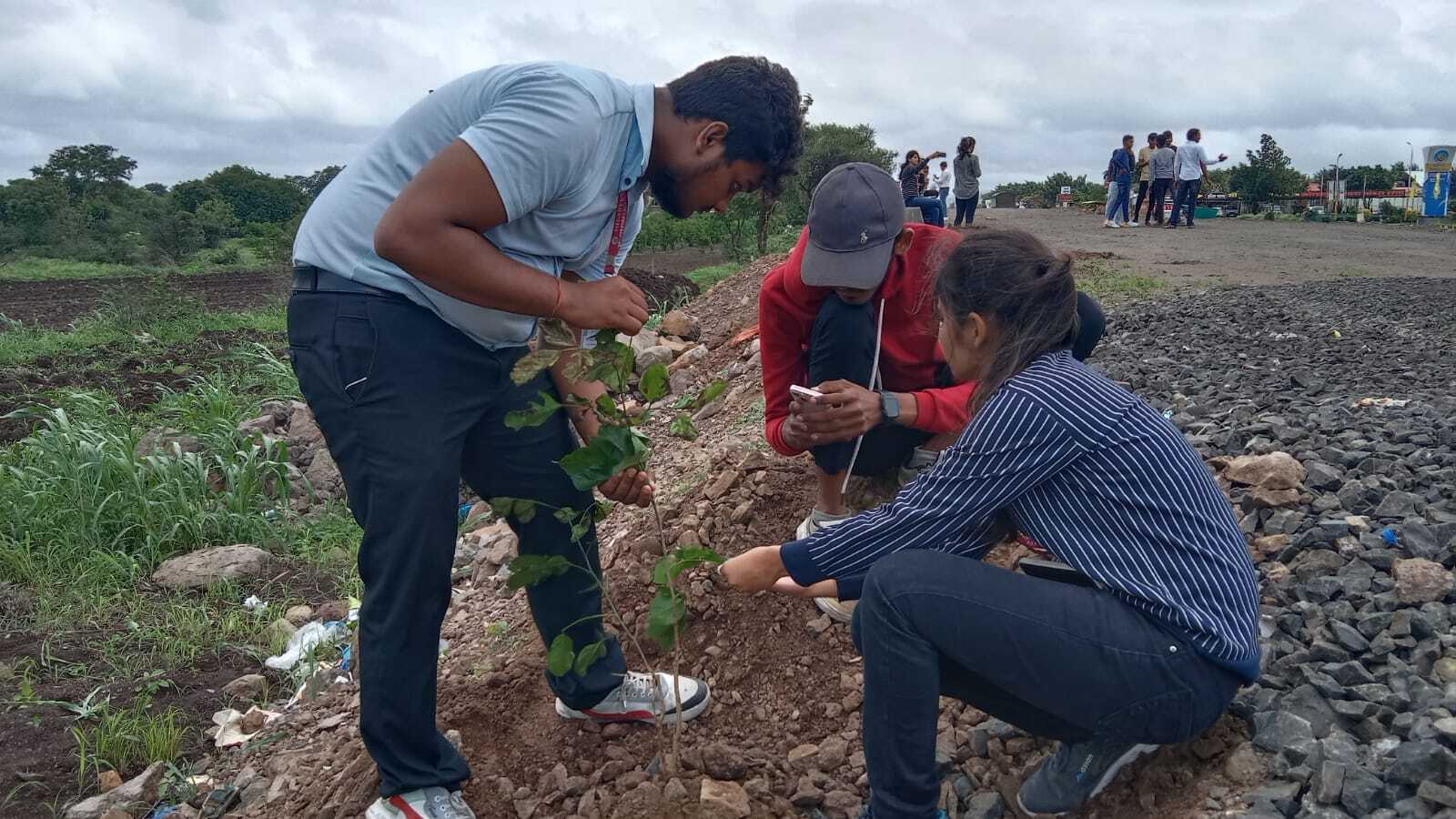
Citizens using ConnecTree app to map sapling growth. Picture Credit: PKC
Priyadarshini Karve, Founder, Samuchit Envirotech, PKC’s partner in the conceptualisation and implementation of the Carbon Neutral Campus, elaborates more upon the need for such initiatives,
In order to prevent us from entering into a regime of runaway climate change, we must start moving individual sectors towards zero carbon operations. Educational institutions are the right place to start this process because students can act as agents of change and trigger the transformation when they move out into society.”
Akanksha Kashikar, faculty at the Statistics department at Savitribai Phule Pune University (SPPU), who has collaborated with PKC to collect the data for the TreeVerse initiative, stresses that through such initiatives, students not only get the experience to handle real-world data but are also more likely to be actively involved as the problem directly affects them and the city they live in. Vinita Date, Chairperson of Environment Conservation Association, further adds that initiatives such as ConnecTree are crucial in ensuring that plantation drives are successful in contributing towards restoring the green cover in the city.
Water security for Pune metropolitan region
Water conservation is a common strategy for managing the water crisis, but it is becoming harder to sustain due to global warming, erratic rainfall, and rising demand from population growth, urbanisation, and agriculture. Water is seen as a public commodity, and this perspective largely influences policies as well as on-ground provisions for water supply. Providing good quality water is an expensive process, requiring efficient sourcing, treatment, storage, and distribution—and despite constant efforts by governments and administrations, water supply and treatment projects often operate at a loss due to poor revenue generation, leading to substandard service delivery.
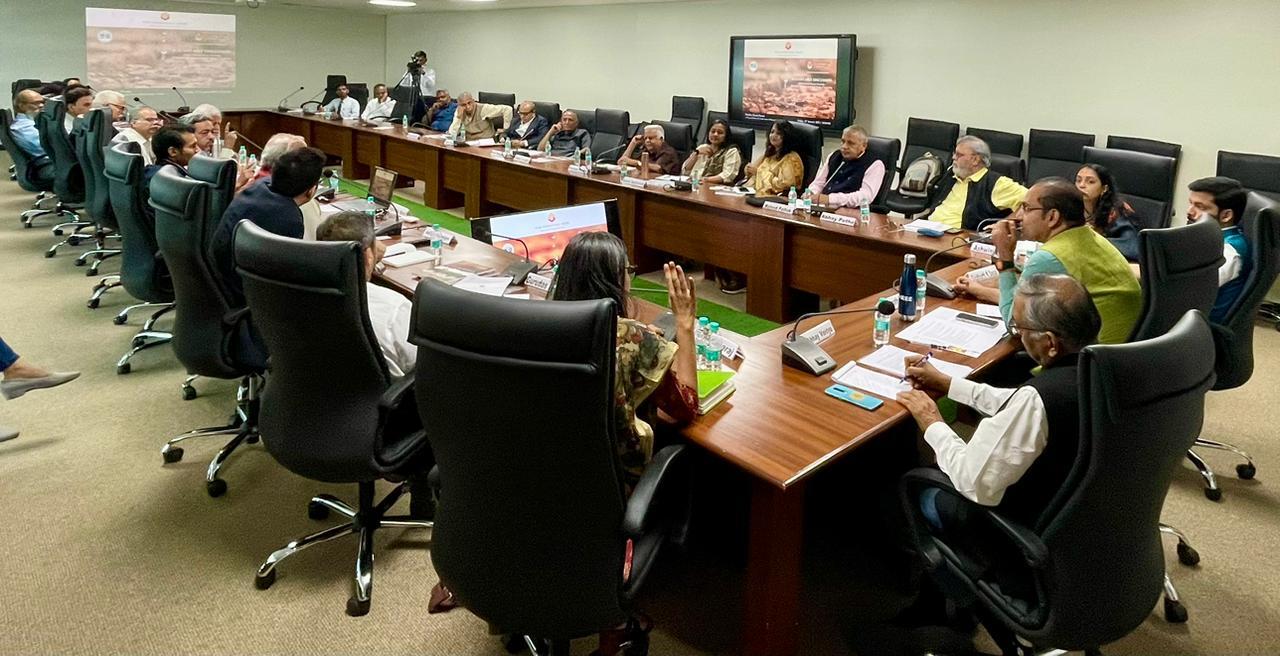
Stakeholder discussions for understanding water pricing models. Picture Credit: PKC
Recognising the need to understand the intrinsic economic value of water both to the suppliers (civic administration) and users, PKC has co-conceptualised “Project Jal Mulya” in collaboration with the Pune International Center (PIC), Center for Sustainable Development (CSD), and Centre for Development Studies and Activities (CDSA) at Gokhale Institute of Politics and Economics (GIPE), as and industry experts to develop a pricing model for water. The project aims to understand actual water usage at the household level through in-depth surveys and technological interventions and, through this, estimating the ‘cost’ of water. This can then pave the way for a sustainable supply of good quality water.
Dinanath Kholkar, who heads the research track—Science, Technology and National Innovation Ecosystem at PIC, emphasises that harnessing the power of smart technologies in data acquisition as well as informed decision-making is crucial for the success of the project. Thus, supporting technological interventions such as the installation of household metering systems and artificial intelligence-based technologies to track water usage at the micro level, the use of telescopic metering, the installation of sensors to understand leakages in water distribution systems, and the identification of different landscapes and water bodies using space technology, are some of the key elements of the project.
Gurudas Nulkar, Professor and Director, CSD, who leads this project, adds,
The main aspects of the project include gathering existing data in the right format from different sources, and understanding the different variables involved in water pricing, along with their interconnectivity. Further, we also plan to conduct a lot of secondary research and analysis of existing data in order to identify gaps.”
Over 68 interns have been onboarded to conduct this study, and more than 730 households have been surveyed so far. The analysis of these surveys is currently underway.
The project follows the STEP – Social Technology Economics and Policy methodology and each of these aspects will be examined separately, as well as in relation to each other in the context of the project. Considering the scale of the project and the involvement of the larger population in the Pune Metropolitan Region, it is essential to keep the citizens in the loop in order for a successful execution of the project. Thus, the press has been actively involved to amplify the project and to generate awareness amongst citizens. Apart from this, several social campaigns are being planned to promote circular usage of water.
By developing a process for evaluating the true cost of water, the project takes a step forward in ensuring water security for the region and also provides a replica template that can be extended from the Pune Metropolitan Region to other cities across the country.
Initiatives for sustainable transportation
The Pune Metropolitan Region has seen several policy and infrastructure changes over the last decade. Rapid economic growth, coupled with the infrastructure changes, has led to a rise in personal automobiles, leading to an increase in air pollution as well as traffic congestion and a decrease in road safety. In order to reduce vehicular pollution and traffic congestion, two alternatives can be implemented: The ‘Business as Usual’ (BAU) alternative aims to build better infrastructure for personal motor vehicles, while the ‘Sustainable’ alternative prioritises walking, as well as using public transportation and cycling as preferred modes of transportation.
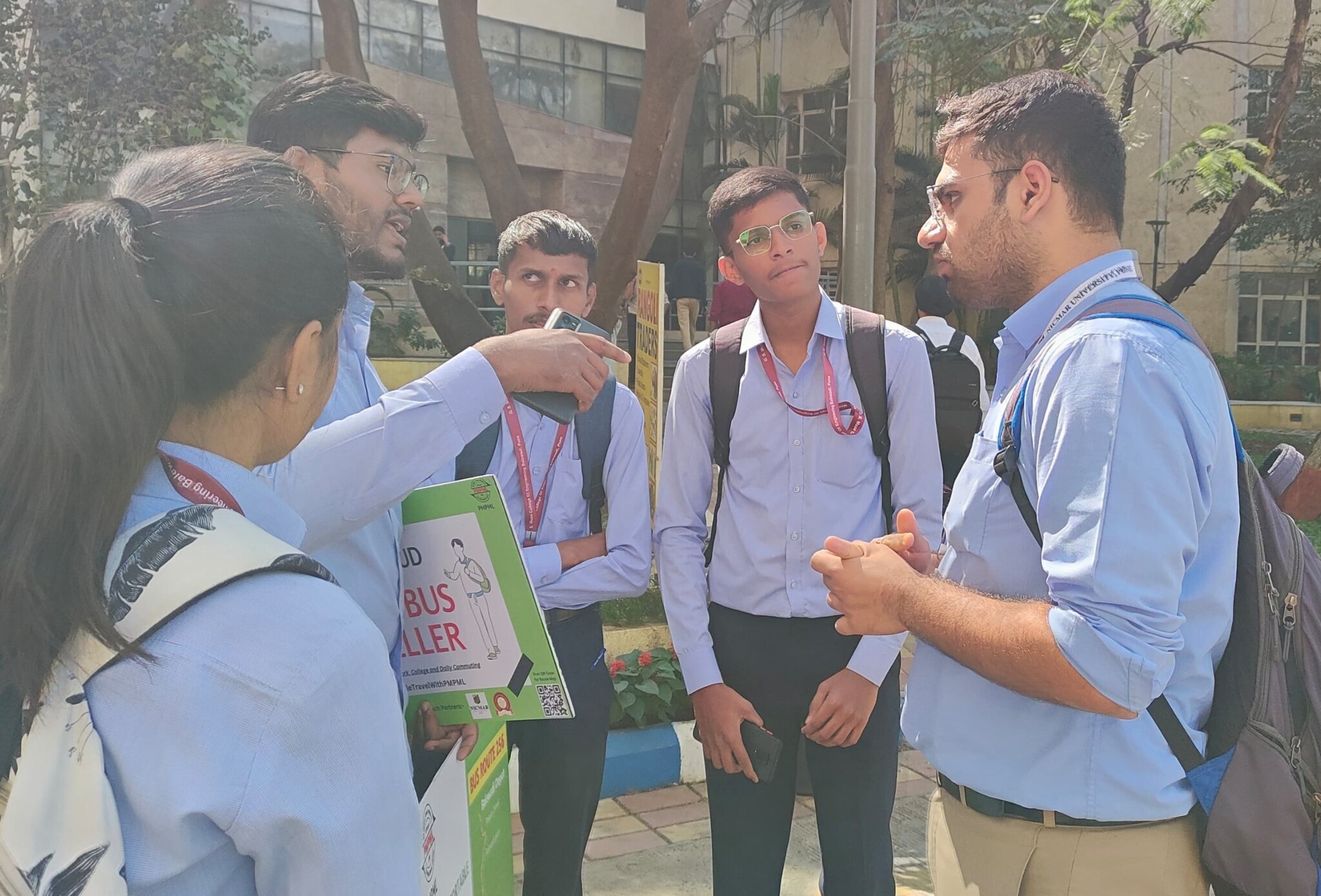
Students engaged in IEC sessions for PMPML Nudges. Picture Credit: PKC
As described in the 2008 book “Nudge”, by Richard Thaler and Cass Sunstein, ‘Nudges’ are non-intrusive interventions that predictably alter people’s behaviour without forbidding any options or significantly changing their economic incentives. Accordingly, this project was designed to introduce interventions in a systematic and controlled manner, with the goal of encouraging the citizens of Pune to view public transport as an optimal and economically viable option compared to their personal vehicles.
In order to understand these interventions, the PKC team analysed PMPML operations data to identify low-ridership routes. In collaboration with Centre for Environmental Planning and Technology University and College of Engineering Pune Technological University, they conducted a three-pronged survey: a passenger survey on usage and service improvements, a boarding-alighting survey to assess route activity, and a bus-stop survey to evaluate infrastructure and accessibility.
The survey underscored the impact of service quality, bus stop infrastructure, information access, and frequency of ridership. Findings were shared with PMPML leadership, leading to the designing of a pilot intervention/nudge—an Information and Outreach Nudge —implemented to boost awareness, focusing on one of Pune’s prime mixed locality hosting educational, corporate, as well as residential hubs. As part of this effort, around 12 awareness campaigns were conducted, reaching over 9000 individuals. In addition, 20 institutions were onboarded for outreach, and over 800 citizens were surveyed about their travel preferences.
Speaking about the survey findings, Sanskriti Menon, Senior Programme Director, CEE, says,
The reluctance of the commuters stemmed more from a lack of information rather than the availability of personal automobiles. When adequate and relevant information was provided, over 50% of the interviewed participants displayed an interest in increasing their usage of the bus.”
Building on the success of the pilot intervention study with PMPML, the project is now progressing toward phase II, which will involve a partnership with the Pune Metro to employ a similar approach and increase ridership of key routes through planned nudge experiments.
To learn more or contribute to PKC’s sustainability initiatives, get in touch: contact@pkc.org.in.
]]>Public health in practice: PKC’s ecosystem model for disease surveillance and responseThe global pandemic served as an eye-opener for the need to learn about navigating public health crises. From this crisis emerged a lesson that cannot be ignored: building a robust ecosystem that enhances communication amongst all the relevant stakeholders, especially at the city level, is crucial to mitigating public health challenges. Among the many efforts that emerged to address this need, Pune Knowledge Cluster (PKC) has taken significant strides in developing pathways towards building a comprehensive public health management framework for Pune district. ]]>tag:indiabioscience.org,2025-09-08:/columns/indian-scenario/public-health-in-practice-pkcs-ecosystem-model-for-disease-surveillance-and-response2025-09-08T00:00:00+05:302025-09-08T22:10:13+05:30Madhura Pansehttps://indiabioscience.org/authors/5oVpdMWp3WL9EZ7The global pandemic served as an eye-opener for the need to learn about navigating public health crises. From this crisis emerged a lesson that cannot be ignored: building a robust ecosystem that enhances communication amongst all the relevant stakeholders, especially at the city level, is crucial to mitigating public health challenges. Among the many efforts that emerged to address this need, Pune Knowledge Cluster (PKC) has taken significant strides in developing pathways towards building a comprehensive public health management framework for Pune district.
Established by the Office of the Principal Scientific Adviser (O/o PSA) to the Government of India, PKC is one of the eight knowledge clusters in the country, which aims to bring together a diverse range of stakeholders, including scientists, government officials, and citizen representatives, to solve regional challenges and problems using an ecosystem approach. At the heart of PKC's vision is the belief that the ecosystem developed for public health management must be rooted in adaptability and agility. PKC’s initiatives are therefore centered towards transforming the way in which stakeholders collaborate and partner to solve critical challenges in public health through three fundamental pillars: enhancing disease surveillance, empowering healthcare workers, and developing robust databases to facilitate effective disease monitoring and response.
Enhancing disease surveillance systems
Disease surveillance systems play a significant role in the fight against both endemic and emerging diseases. The absence of an efficient surveillance framework can quickly lead to the escalation of health crises and mismanagement, causing a significant burden on the healthcare system. To address this, PKC has co-conceptualised the Pune Wastewater Surveillance Project, by bringing together a group of collaborators – including local civic bodies, research organisations such as CSIR-National Chemical Laboratory (CSIR-NCL) and Symbiosis School of Biological Sciences, private organisations such as GenePath Diagnostics, and hospitals such as BJ Medical College and KEM.
Mahesh Dharne, Scientist, CSIR-NCL elaborates upon the importance of using wastewater surveillance as a complementary method to the traditional clinical surveillance in order to enhance the surveillance systems,
While clinical surveillance mainly relies on symptoms displayed by the patient, in diseases such as COVID-19, many patients were asymptomatic and such patients could as super-spreaders, with no way to track them. By using wastewater surveillance, one is able to detect the virus regardless of any symptoms displayed by the patient.”
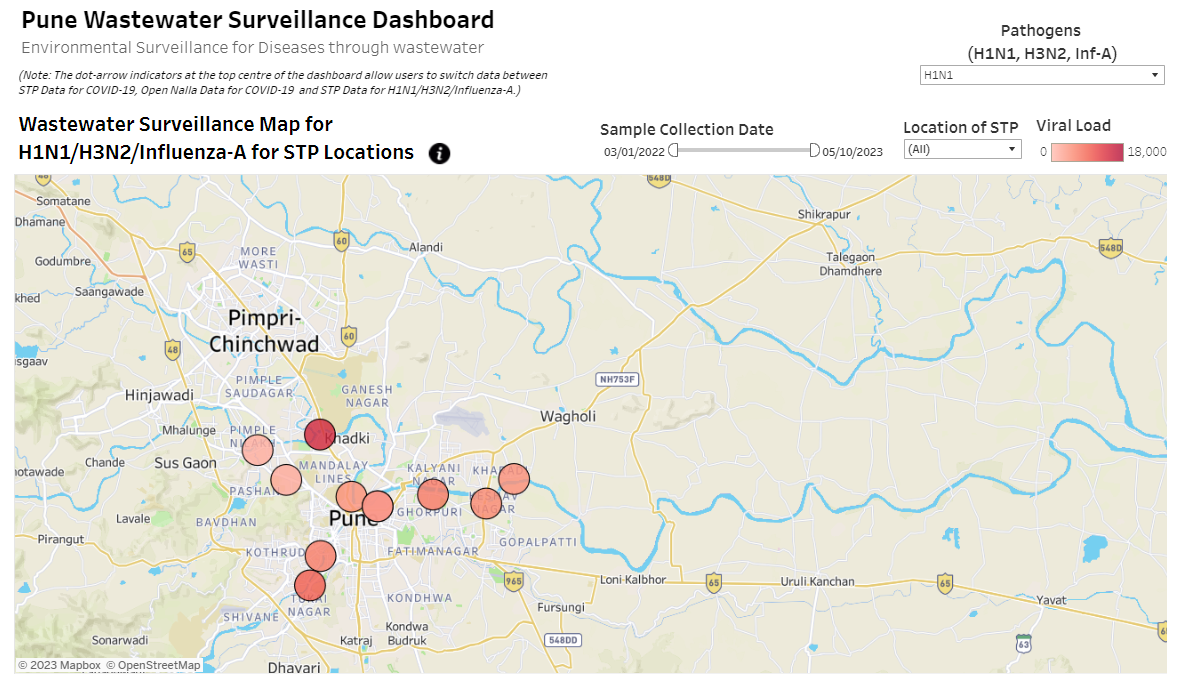
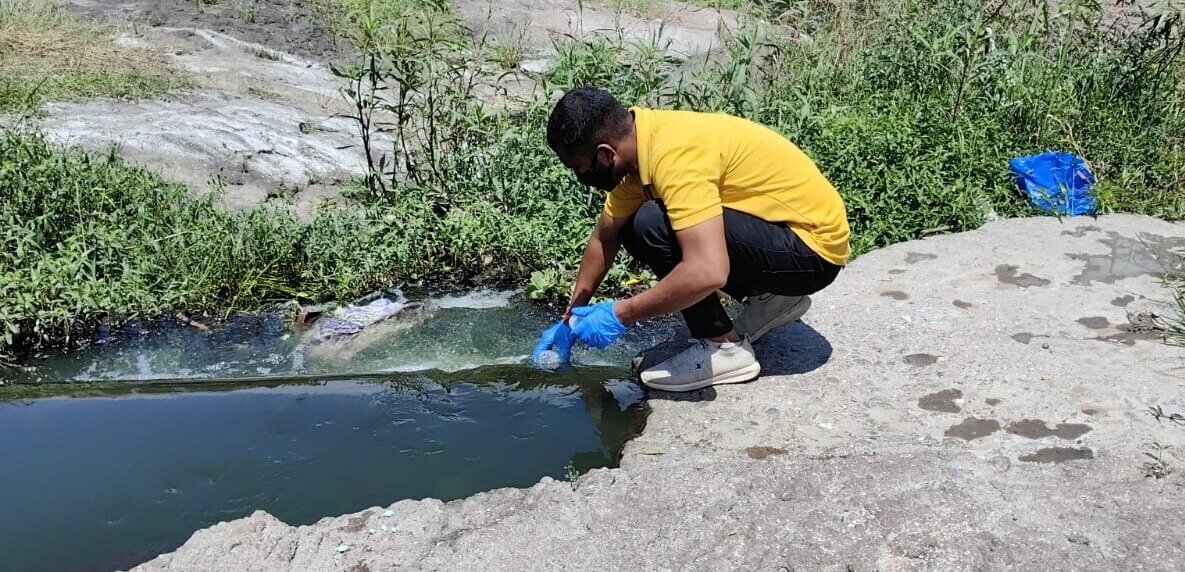
Today, the consortium built and managed by PKC has been involved in sampling and analysing untreated wastewater at sewage treatment plants (STPs) and open drains across Pune, targeting not just SARS-CoV-2, but also other infectious diseases such as H3N2, H1N1 and Influenza-A. In addition, the surveillance is also extended to understand the nature of antimicrobial resistance (AMR) within the community.
PKC has been working to enhance disease surveillance, not only in human populations but also in the environment through projects that are aimed towards understanding the spread of zoonotic diseases. Furthermore, PKC is also part of the Alliance for Pathogen Surveillance Innovations (APSI), through which it focuses on supporting the development of kits for detecting infectious diseases through wastewater. This effort reflects the cluster's commitment to building localised, effective, and scalable disease surveillance tools.
Enhancing disease surveillance systems | Picture Credit: PKC
Building capacity amongst health workers
While disease surveillance systems are essential for early detection and planning, an equally important component of effective healthcare management is the empowerment of healthcare workers, particularly the on-ground multi-purpose workers (MPWs) who are involved in disease surveillance, prevention and control. Officials from the Maharashtra State Health Department have been proactive in combating vector-borne diseases and have identified a critical gap in the capacity building of MPWs, who require periodic refresher training to safeguard their health and improve their efficiency in the field.
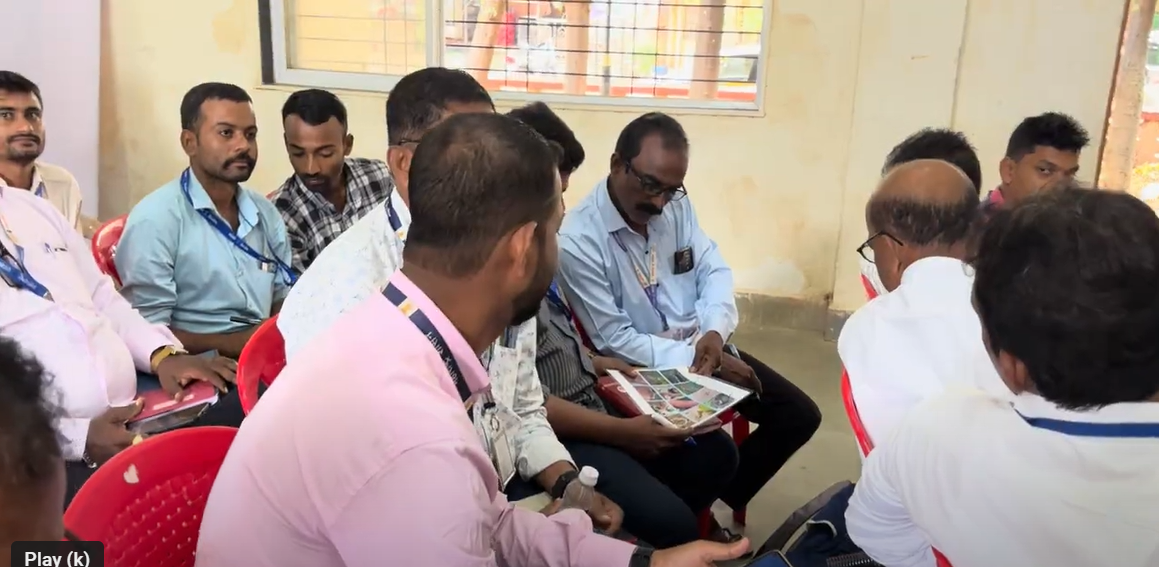
Building capacity among healthcare workers | Picture Credit: PKC
To address this, PKC, together with the National Center for Vector Borne Disease Control (NCVBDC), and District Malaria Offices within Pune and other districts, have launched SAKSHAM, a series of workshops for healthcare workers from different talukas across Maharashtra. PKC has collaborated with organisations such as ICMR-National Institute of Virology, Prayas Health Group and India Meteorological Department to provide detailed information to the healthcare workers about the different types of vector-borne diseases, methods for identification, the impact of climate change on vector life cycle and best practices for prevention and treatment of the diseases.
So far, over 1,300 multipurpose healthcare workers have been trained under this programme, across 40 talukas in the Pune, Kolhapur, and Raigad districts.
The success of the programme lies in its community-centric approach, which helps bridge the knowledge gaps in areas with limited health awareness, ensuring that the information reaches those who need it the most.
The power of data in healthcare management
In today’s world, data is the cornerstone of everything. One of PKC’s most innovative contributions towards building pathways for public health management is its approach to data collection, analysis, and application.
The organisation has developed one-of-a-kind dashboards for disease surveillance and AMR surveillance, which focus on displaying the viral load of infectious diseases or the AMR trends through wastewater sampling.
PKC's dashboards enable near real-time tracking of disease and AMR trends from wastewater samples. The dashboards are updated regularly, allowing municipal corporations and public health authorities to take timely actions. The user-friendly interface of the dashboard ensures that anyone, from government officials to citizens, can access and interpret the data. PKC’s COVID-19 dashboard has also been recognised as one of the key resources for disease monitoring using wastewater surveillance by the World Health Organization (WHO). It is the only WHO recognised dashboard of its kind from India.
In addition to the dashboards for wastewater surveillance, PKC has also enabled the development of an open-source database of in-patient data of 2000 COVID-19 patients, which will lead to better disease understanding and enable disease management and treatment, by collaborating with hospitals such as BJ Medical College, Noble Hospitals and Symbiosis University Hospital and Research Centre; research organisations – CSIR-NCL, and the companies – AIQoD (Formerly- GI Bots) and EPIC-Health Information Management. Rajesh Karyakarte, Professor and Head at the Department of Microbiology, B.J. Medical College emphasises that this database represents India’s vital contribution to medical research on infectious diseases.
These data platforms built by PKC can generate a plethora of insights, helping policy decisions and local responses to diseases and AMR.
A vision for the future
These initiatives highlight the importance of an ecosystem approach to building sustainable initiatives, where science and technology are used to solve problems of the community. With its commitment to continuous learning, data-driven decision-making, and community engagement, PKC is focused on building models for collaborative public health management.
]]>The case for a resounding framework for AI-biotech convergenceThe intersection of artificial intelligence (AI) with biotechnology has ushered in a period of innovation in healthcare. The interdisciplinary nature of AI enables it to analyse and interpret large data sets from multiple domains. In the case of the life sciences, AI-biotech convergence holds the potential to alter the landscape of diagnostics, monitoring of disease progression, precision medicine, and prediction of public health threats. ]]>tag:indiabioscience.org,2025-05-16:/columns/indian-scenario/the-case-for-a-resounding-framework-for-ai-biotech-convergence2025-05-16T13:00:00+05:302025-07-04T11:59:24+05:30Lakshmy Ramakrishnanhttps://indiabioscience.org/authors/BmXqMjerBv1yOpJThe intersection of artificial intelligence (AI) with biotechnology has ushered in a period of innovation in healthcare. The interdisciplinary nature of AI enables it to analyse and interpret large data sets from multiple domains. In the case of the life sciences, AI-biotech convergence holds the potential to alter the landscape of diagnostics, monitoring of disease progression, precision medicine, and prediction of public health threats.
While the convergence of AI with biotechnology holds immense potential for innovative developments in science and medicine it also carries the scope for misuse. Governance of AI in popular discourse includes the risk of AI-biotechnology (AI-bio) tools being utilised for malicious purposes or the production of bioweapons. Detailed understandings need to be acquired to determine the feasibility of the development of bioweapons with AI-bio tools and to formulate safeguards against such threats.
The case for governance
As AI progresses into multiple domains its governance to ensure its responsible and ethical use has come under scrutiny. The UN’s Governing AI for Humanity report underscores the need to govern AI as ‘no one currently understands all of AI’s inner workings enough to fully control its outputs or predict its evolution.’ The US and UK have made steps in this regard, but in the Indian scenario there exists a need to develop a framework to address these concerns.
Popular news articles have drawn considerable attention to how large language models (LLMs) like ChatGPT could increase the technical know-how available to malicious actors and provide them with information on how to create viruses with pandemic potential. Undue publicity over the potential of a new technology can overestimate the ease with which it can be developed. In the case of al-Qaeda’s bioweapons plan, they insisted that their attempts to produce a bioweapon stemmed from US reports that it was easy and cheap to carry out. Thus, overestimating the ease with which bioweapons can be manufactured may encourage the enemy to pursue production.
Here, OpenAI’s stress test in 2023 found that LLMs can provide information on how to order oligonucleotides, on experimental protocols, and can assist in troubleshooting experiments. Another study found that it can provide users with information on DNA technology companies that were unlikely to flag suspicious oligos, suggest mutations to enhance the pathogenicity of viruses, and suggest contract research organisations that could carry out these experiments. The information provided is publicly available but it is presented in a manner that is understandable to a non-expert. Upon closer inspection it is clear that LLMs democratise knowledge but only slightly lower the barriers to bioweapons development. Experts have long opined that bioweapons production requires not just information but also tacit knowledge – knowledge that is acquired through experimental training - in successfully carrying out a biological experiment. This is acquired primarily through advanced formal training.
Implications of the AI-Bio threat
AI is essentially a system that is based on the data it receives and its functioning depends on the users’ intent. There exists a tremendous gap in bridging the space between the digital design of a bioweapon to the physical manufacturing of one.
This relies heavily on the intent of the user and their level of scientific training. Existing AI-bio tools can ‘hallucinate’ or provide misleading information, which would not be distinguishable by a non-expert user. Further, biological experiments require expensive and specialised equipment and materials, which are a significant barrier to bioweapons production.
Possibilities exist, however, that in the future, other AI-bio tools like Biological Design Tools (BDTs), which currently aid in the design of biological molecules, can be advanced further in the future and aid in malevolent actors to develop bioweapons capable of evading immune responses or resist existing therapies. In addition, concerns exist that AI-bio tools may skew scientific knowledge triggering disinformation and misinformation particularly during public health emergencies, rendering bio-attribution (the assigning of responsibility to a biological threat) tricky.
Policy Recommendations
India is a signatory to the Bletchley Declaration, which advocates for the safe development and deployment of AI. The intersection of AI with biotechnology deserves considerable attention as well but is situated in a policy vacuum in India. A policy of dissuasion would discourage malicious actors from developing bioweapons using AI-bio tools.
India needs to formulate threat assessments using red-teaming exercises to develop an understanding of bioweapons capabilities of existing AI-bio tools in the Indian context. This entails determining the capabilities of current AI-bio tools and an understanding of India’s security architecture. These exercises can also ascertain the risks posed by future AI-bio tools. This can include intersections with other disruptive technologies including unmanned aerial vehicles (drones) and 3D printing, which are implicated in enhancing the delivery of bioweapons.
India can introduce guidelines where DNA companies mandate a know-your-customer based approach in the acquisition of biological materials. For instance, the International Gene Synthesis Consortium (IGSC), International Biosafety and Biosecurity Initiative for Science (IBBIS), and SecureDNA are examples of organisations that screen oligonucleotides. Educating and incentivising research and academia over potential areas of misuse is another long-term technical barrier. Another guardrail would be to engage with AI-bio tool developers to regulate the nature of biological data that is available.
Finally, AI Safety Institutes would foster an environment to ensure AI and its intersecting technologies are ethically driven. India’s IndiaAI Mission policy – which aims to promote ethical AI technologies – can take part in this endeavour.
Discourse on the development of bioweapons with aid from AI-bio tools is popularised by media reports. There exists a need to develop an assessment of its potentiality in the Indian context as it falls into a policy vacuum. Effective guardrails would act as a deterrent for bioweapons development.