The breakout sessions at Young Investigators’ Meetings feature semi-structured conversations among senior researchers and research professionals, as well as Young Investigators and Postdoctoral Fellows, on themes emerging from experiences in establishing a research laboratory and in career development during the early years of research.
The first decisions: Defining the “soul” of a lab
Session title: Getting started as a PI
Focus - Starting strong: Building your lab, your questions, and the research culture
What happened in the breakout groups
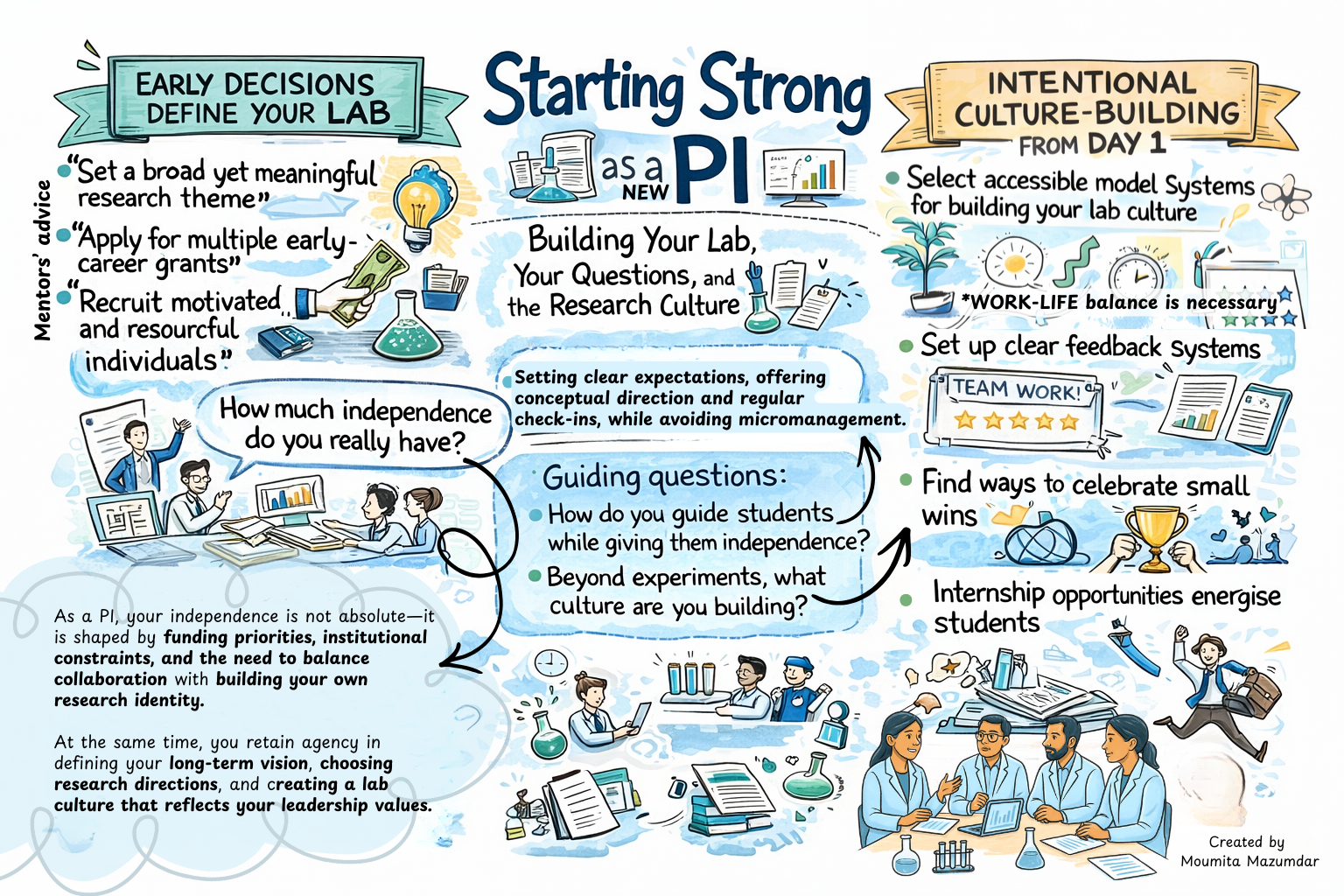
Participants reflected on the critical first few years of establishing an independent research laboratory in India. The conversations drew on personal experiences to examine what it truly means to shape a lab’s identity from the ground up, moving well beyond formal advice and best practices.
A central tension emerged early: how much should a new PI diverge from their postdoctoral work to establish an independent identity? Discussions wove together research direction, funding strategy, recruitment, and culture, with participants recognising that choices made in the first few years define the “soul” of the lab.
Questions
In your first 2–3 years as a PI, which decisions most strongly define what your lab becomes?
If you are starting with an empty room and one or two personnel, how do you intentionally shape the culture of your lab?
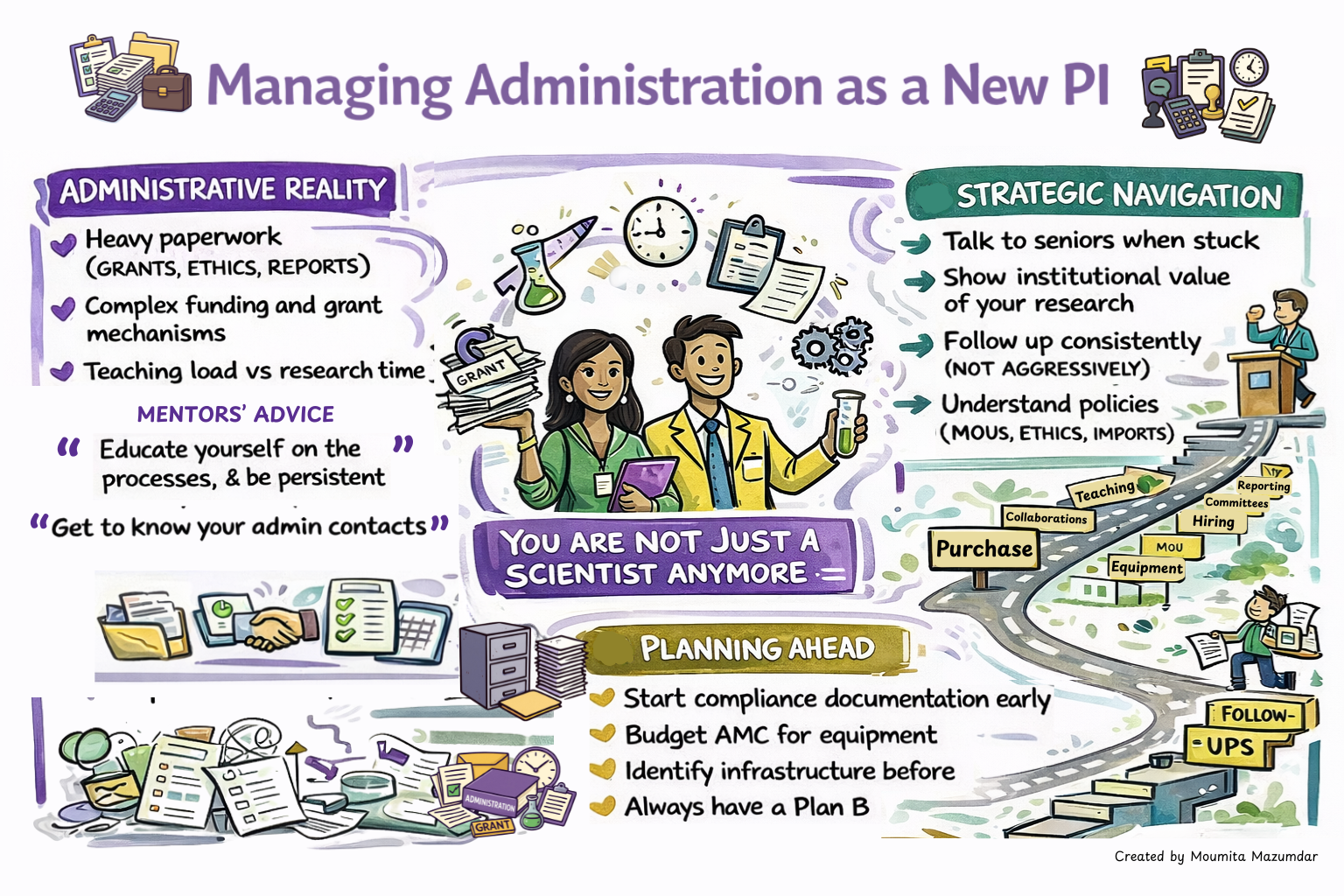
In contexts where infrastructure, administrative support, or facilities are limited, how do you maintain scientific and team momentum?
Voices from the sessions
“Sometimes you take funding, do the work, publish, and then use that momentum to do the ‘dream’ research you actually want”.
“Success lies not only in what a lab produces, but in the culture it nurtures, the people it shapes, and the resilience it sustains”.
“Use networking to outsource samples or trade resources”.
“Choosing a broad yet meaningful research theme shapes the ‘soul’ of the lab”.
“When experiments stall, literature reviews and journal clubs can sustain productivity”.
Thinking about hiring new people? Think ‘people before projects’
Session title: Beyond the Bench
Focus - Mentorship and building meaningful research careers
What happened in the breakout groups
Conversations in the second breakout session shifted the focus from building labs to shaping people’s careers. Transitioning into a mentorship role was identified as one of the most complex aspects of becoming a PI, and one that is rarely acknowledged during the course of formal training.
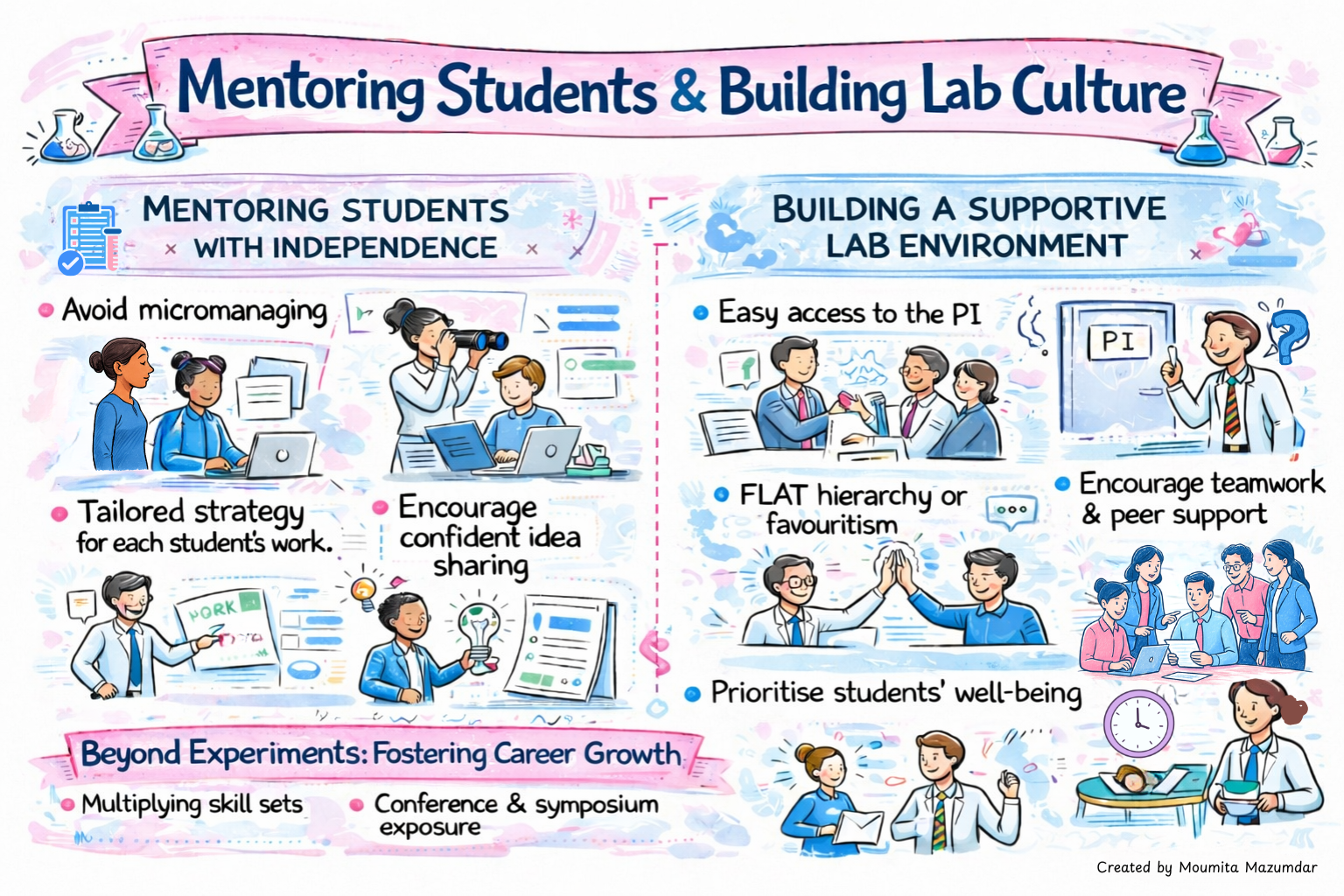
The various groups explored the challenge of guiding students without micromanaging and of being approachable without losing boundaries. Discussions also highlighted the emotional weight of leadership: how a PI’s personal stress can affect the entire lab environment, often invisibly. Career pathways, the ethical responsibilities that come with becoming a PI, and the realities of collaboration one faces during their early years in research featured prominently.
Questions
As a PI, how do you guide your students while giving them independence, without micromanaging or stepping back too much?
Beyond experiments and papers, what kind of lab culture are you building, and how does it influence your students’ careers?
How do you decide on collaborations and publication strategies in ways that build long-term careers, for both you and your trainees?
Voices from the sessions:
“Lab culture ultimately reflects the PI’s leadership style”.
“Independence should ultimately help students develop the mindset of a scientist”.
“Create an environment where students have the freedom to fail and learn”.
“There is life beyond the lab; science is not our entire identity”.
Mentorship Circles at YIM 2026
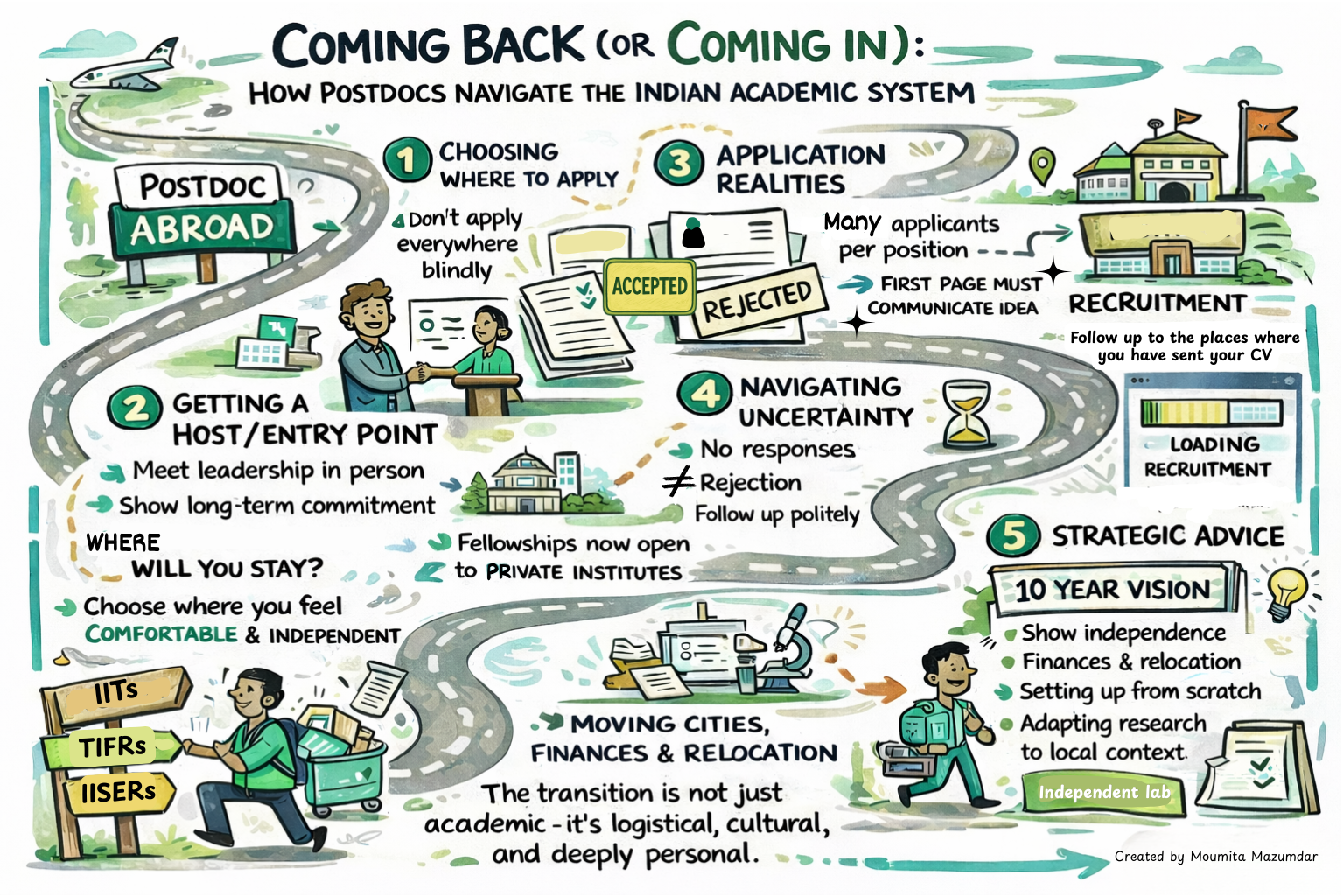
These breakout sessions were held during the two-day PDF satellite meeting, which followed the main YIM event. Here, postdoctoral fellows at YIM seek advice on starting independent careers as life science researchers in India engaged directly with institutional heads and mentors, asking a range of questions about faculty applications, research careers, infrastructure, and navigating the academic ecosystem.
Voices from the mentorship circles:
“Tailor each application carefully rather than submitting generic proposals”.
“A strong research statement should reflect your scientific journey and long-term vision, not read like a grant proposal”.
“Understanding the ‘pulse’ of the institution improves both alignment and application quality”.
“Facilities and support vary by institution, location, and your requirement”.
“Do not rely entirely on highly specialised equipment, design projects that can sustain momentum”.
“Growth of new areas depends on departmental interest and gradual expansion”. (paraphrased from discussion)
“Only shortlisted candidates are typically contacted due to large application volumes”. (paraphrased from discussion)
“Start the ethical approval process early, funding is often contingent on it”.
“Difficulty in accessing resources and lack of centralised systems remain persistent challenges”. (paraphrased from discussion)
“Written feedback is rarely provided; outcomes are usually communicated only after final decisions”.
“Evaluation is inherently subjective; success depends on timing, opportunity, and persistence”.